

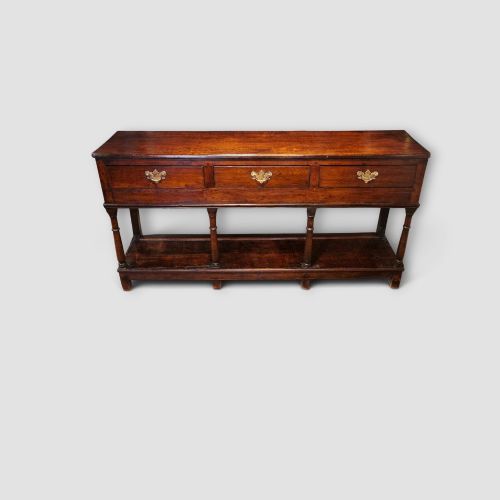
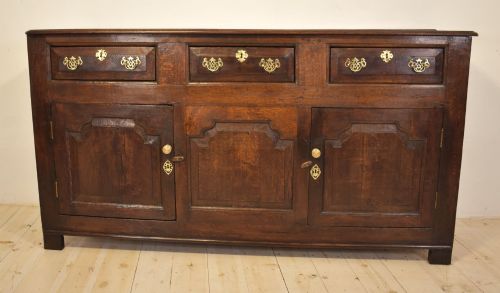
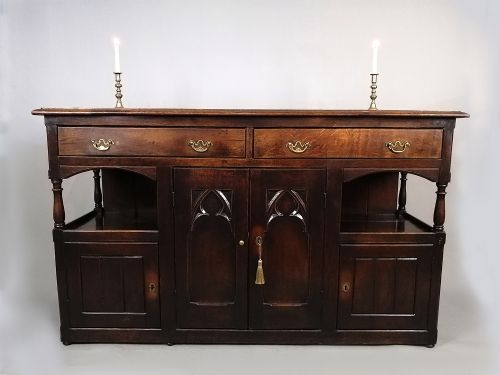
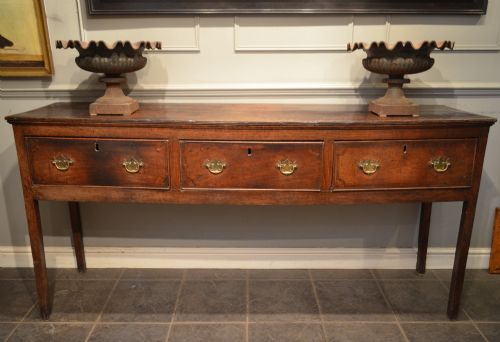
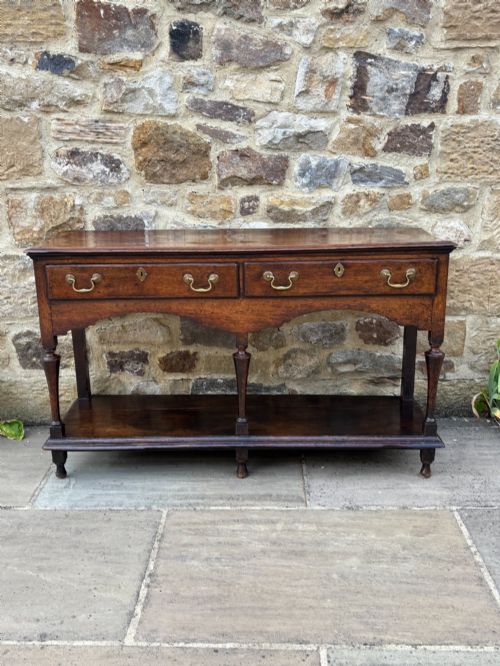

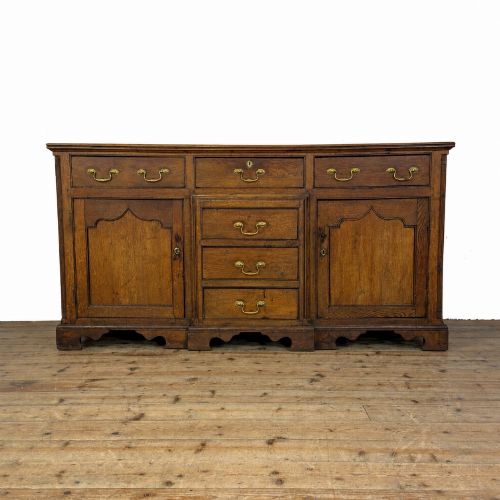
Georgian Oak Credenza
When buyers seek a georgian oak credenza, they actually find sturdy oak dresser bases and sideboards crafted for historical domestic service.
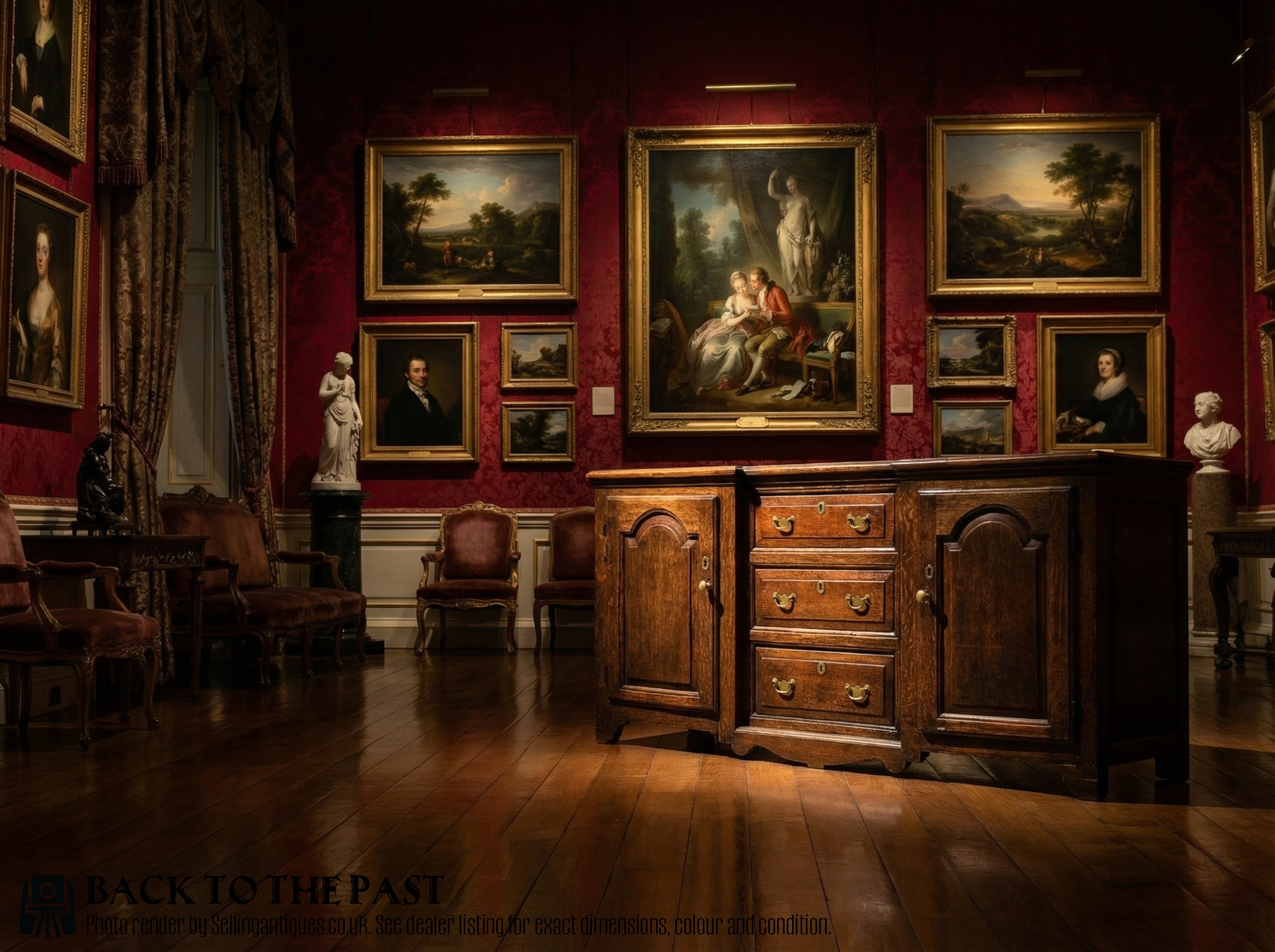
Georgian Oak Credenza
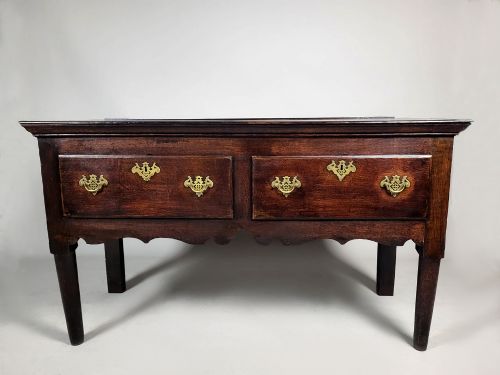
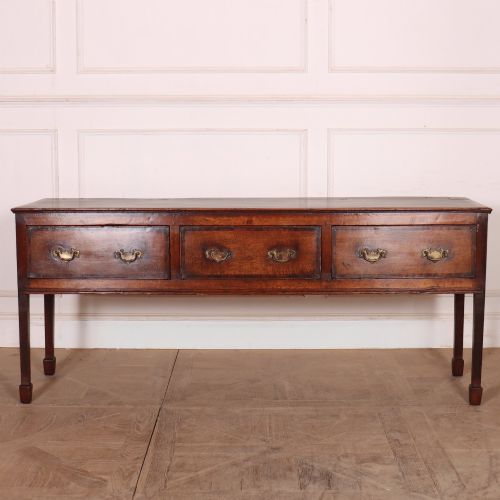
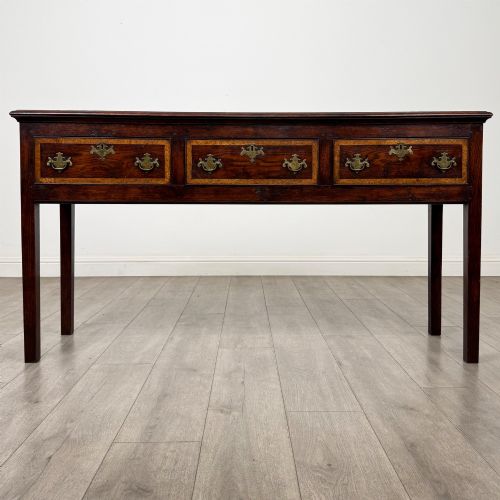
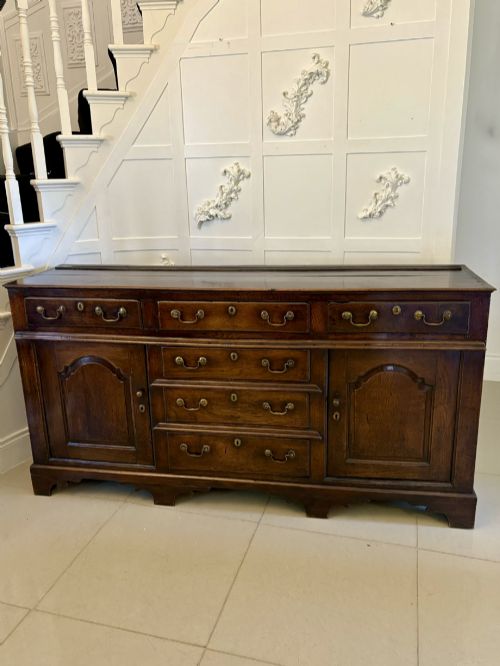
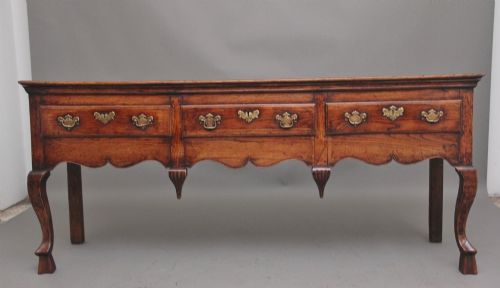
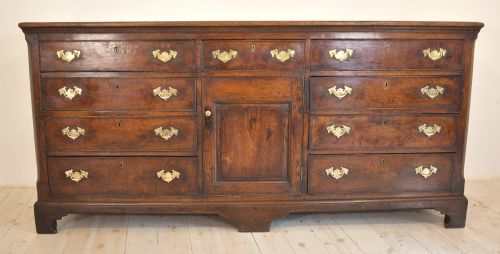
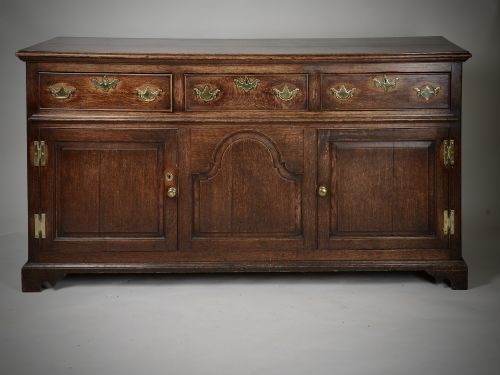
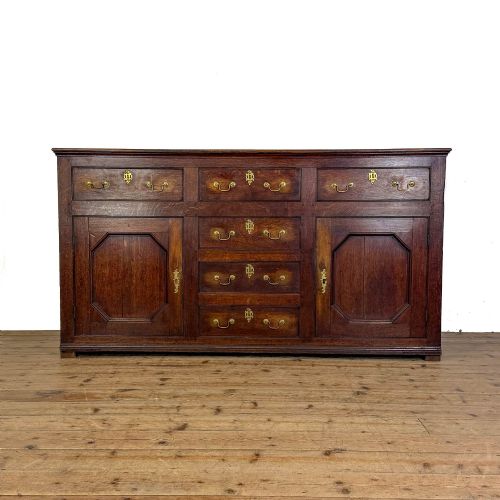
A search for a georgian oak credenza directs attention to utilitarian storage furniture, most frequently encountered here as eighteenth century and Georgian oak dresser bases. These robust forms functioned as working surfaces and storage units in historical kitchens and dining rooms rather than formal reception rooms. Regional variations include examples from Wales, Lancashire and other English counties.
The inventory on this page consists principally of low sideboard forms, dresser bases with potboards, and serving tables rather than formal credenzas. Buyers will find pieces originating from the eighteenth century, alongside later revivals from the nineteenth and twentieth centuries. Oak dominates the construction, often supplemented by secondary woods like elm and fruitwood.
Materials and construction
Makers utilised solid English oak for the primary framework, drawers and panels, occasionally incorporating elm or fruitwood for contrasting elements and drawer linings. Timber was seasoned locally and joined using traditional methods such as mortise and tenon framing, hand-cut dovetails for drawer construction, and pegged joints.
Surface finishing relied on natural wax applications or plain oil rubbed into the timber over decades of use, though some examples feature historical paint or bleached treatments. Brass hardware, including drop handles and escutcheons, was fitted to drawers and cupboards, with original brasses surviving on select pieces.
Georgian Oak Credenza Retail Price Guide 2026
Typical asking prices for georgian oak credenza among the pieces listed under this phrase on Sellingantiques today, from the lower quarter to the upper quarter. They describe what is for sale here now, not the wider market.
Periods represented span from the early eighteenth century through George III and Regency eras to Edwardian revivals.
Assessing quality
Quality in these low storage forms rests on the integrity of the timber selection, the crispness of hand-carved details or moulding profiles, and the retention of original structural components. Superior pieces display well-figured oak boards on the top surface and drawer fronts, alongside sound framing that has not suffered excessive timber loss or unsympathetic timber replacement.
The proportion of the base, the harmony between the drawer configurations and the supporting legs - whether bracket feet, cabriole legs or plain stiles - determines the visual success of the piece. Lower quality or heavily restored examples may exhibit mismatched boards, replaced hardware without regard for historical placement, or structural reinforcement that obscures the original form.
The Georgian Oak Credenza Glossary
- Dresser base
- A low rectangular sideboard or cabinet featuring drawers above cupboards or an open shelf space, historically used for food preparation and storage.
- Potboard
- An open lower tier or shelf fitted between the legs of a dresser base, traditionally designed to hold heavy pots and ceramic kitchenware.
- Cabriole leg
- A furniture leg that curves outward at the knee and tapers inward toward the foot, often ending in a pad or plain foot.
- Marquetry
- Decorative veneer work forming geometric patterns or pictures using various contrasting timbers inlaid into the primary surface.
- Escutcheon
- A protective plate surrounding a keyhole, usually fashioned from brass to prevent wear to the surrounding wood.
Georgian Oak Credenza: Frequently Asked Questions
What is a dresser base?
A dresser base is a low wooden storage unit with drawers and sometimes cupboards, built for domestic service before dedicated sideboards became common in formal dining rooms.
These pieces provided a sturdy top surface for food preparation alongside enclosed space for tableware and household stores.
How do I spot regional styles?
Regional differences appear in the leg forms, drawer arrangements and secondary woods used by local makers.
For instance, pieces attributed to Wales or Lancashire often display distinct proportions, regional framing techniques, or local timber combinations such as oak paired with elm.
Were these pieces painted originally?
Most domestic oak furniture was finished to highlight the natural grain with wax or oil rather than paint.
However, historical paint or later decorative surfaces do appear on surviving examples, reflecting changing domestic tastes across centuries of use.
How should I care for oak?
Maintaining antique oak involves keeping the timber away from direct heat sources and sudden humidity changes that cause wood to split.
Regular applications of a traditional beeswax feed help preserve the dry, patinated finish without creating an artificial gloss.