

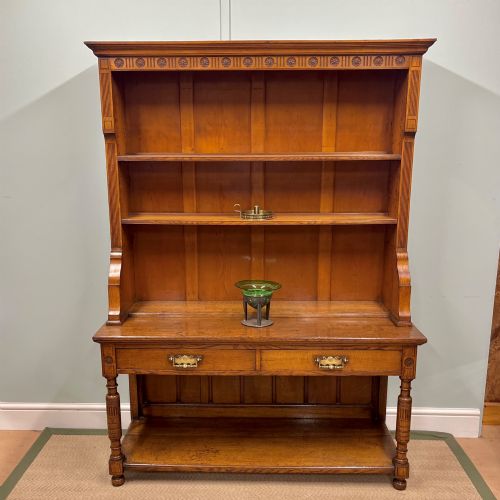


Carved Oak Plate Rack
A carved oak plate rack organises tableware with traditional British joinery and heavy timber framing.
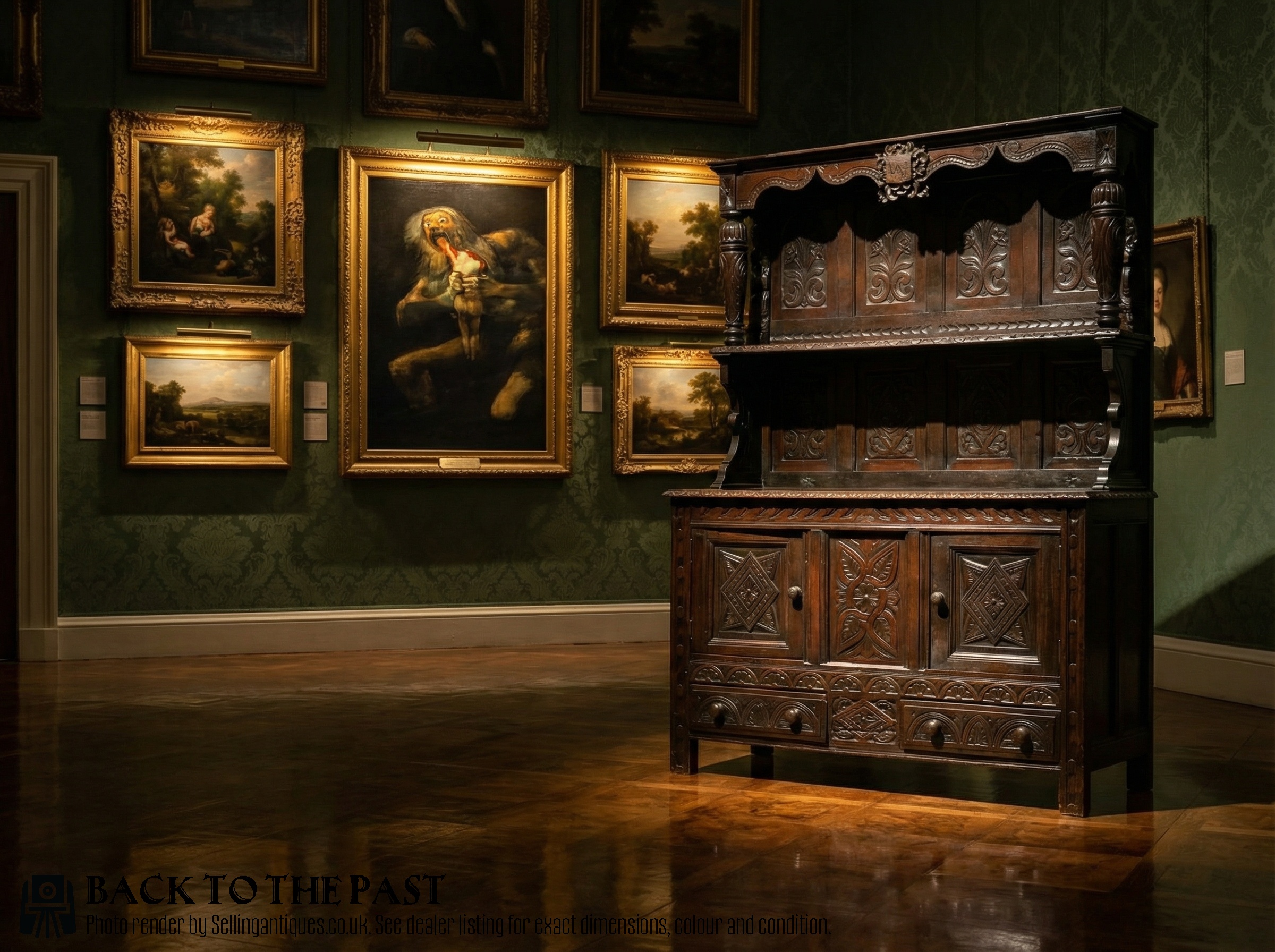
Carved Oak Plate Rack
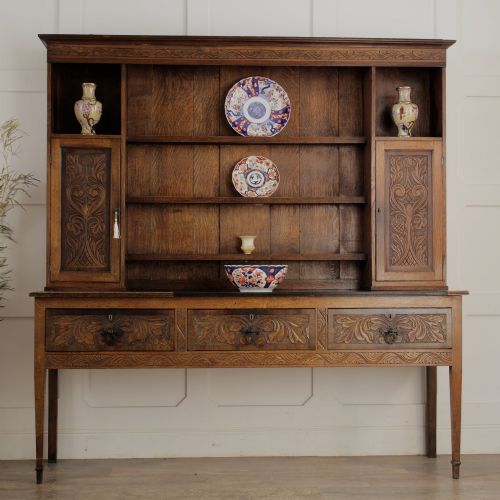
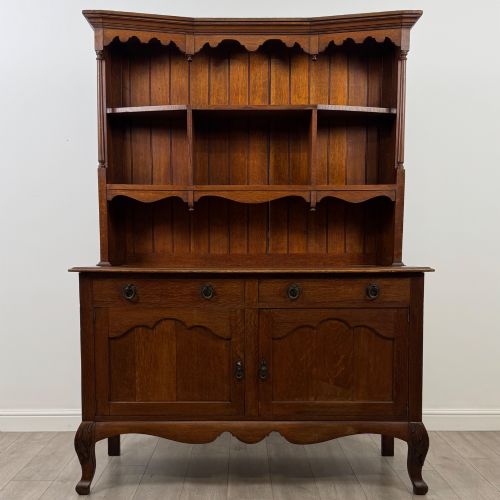
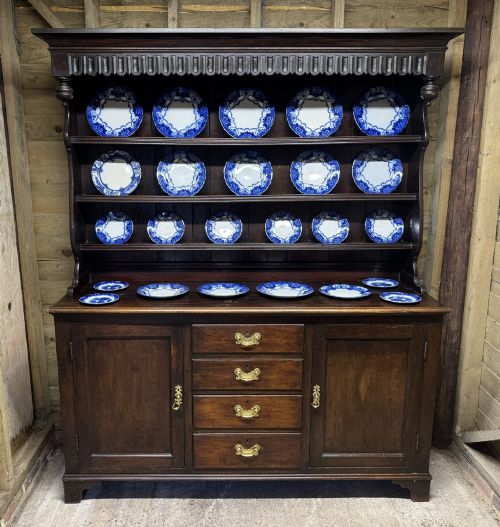
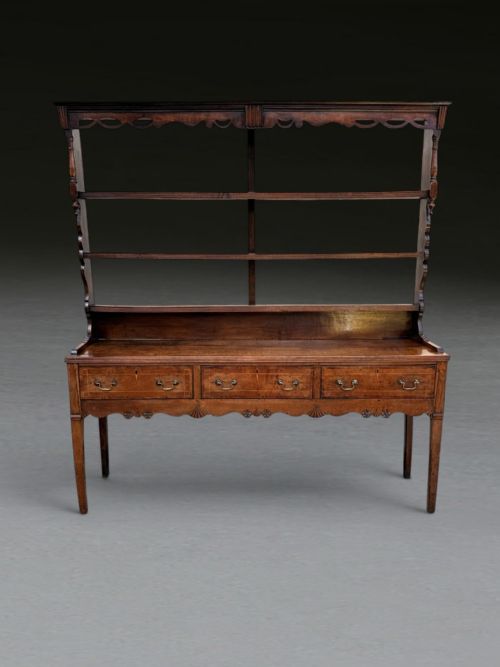
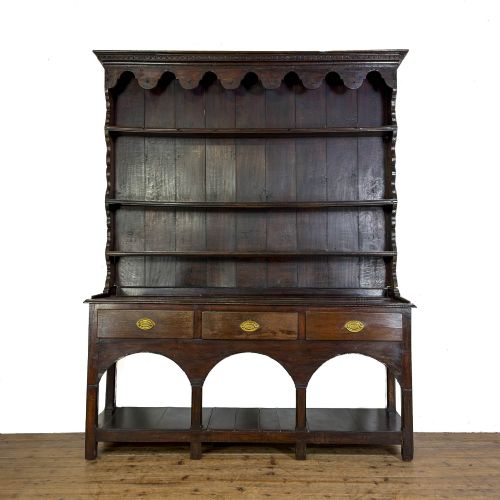
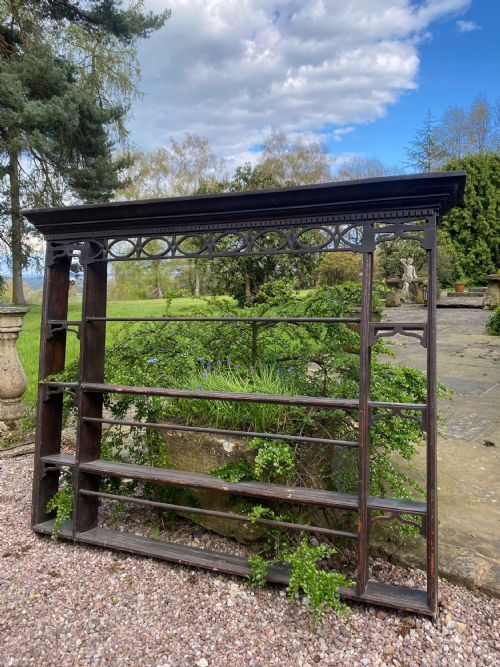
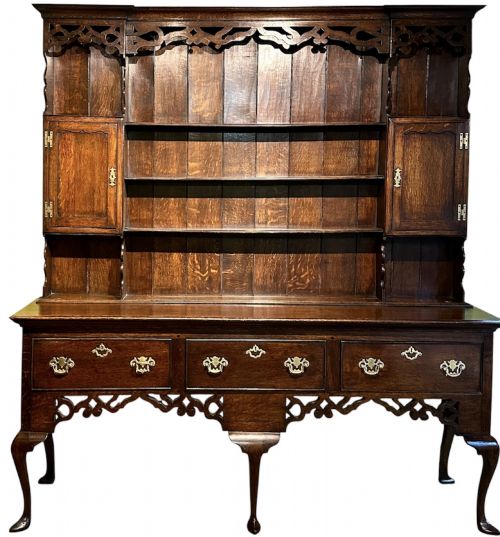
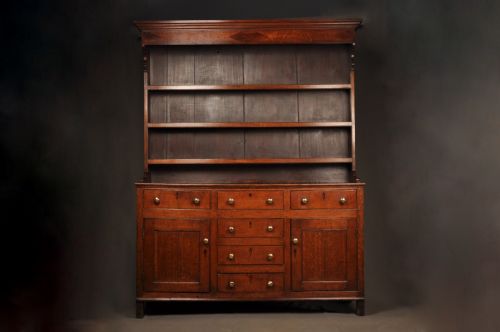
When you search for a carved oak plate rack, you encounter sturdy wall-mounted shelves and the upper sections of larger kitchen storage furniture designed to display ceramic plates securely. The pieces you meet on this page span several centuries of British cabinetmaking, appearing both as standalone wall racks and as integrated dresser tops.
The domestic forms range from small cottage wall shelves to substantial Georgian and Victorian dresser upper sections. Many examples incorporate deep plate grooves, shaped friezes, and occasionally decorative carving such as Green Man motifs or geometric panels executed in solid timber.
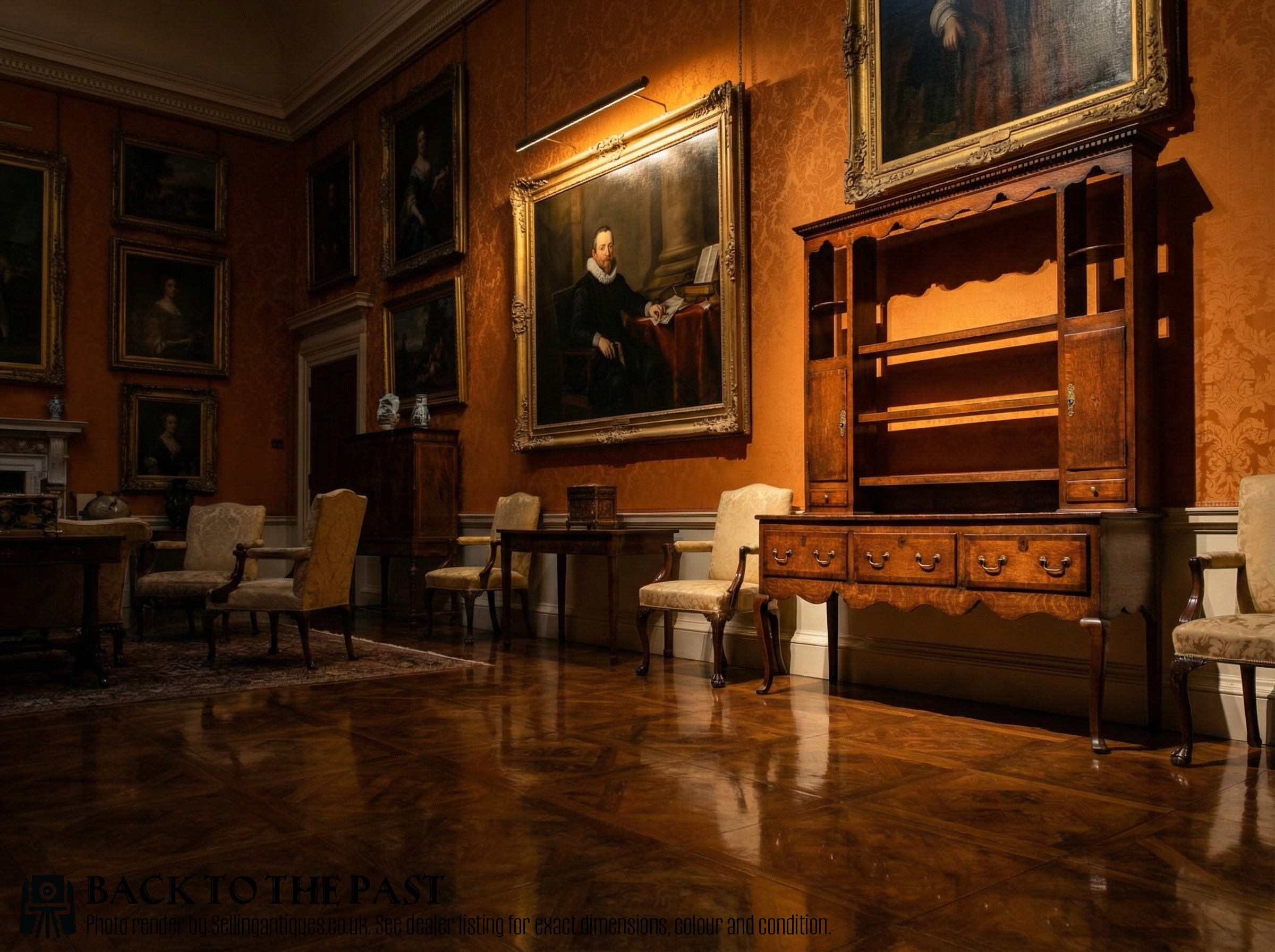
What varies in quality
The distinction between standard utility furniture and finer examples lies in the depth and crispness of the hand-carving and the choice of quarter-sawn oak boards. Superior pieces display well-proportioned cornices, harmonious timber figuring, and original brass or iron hardware.
Lesser items may show simplified construction with replacement backing boards or mismatched timber repairs. The structural integrity of the plate grooves and the stability of the hanging fixtures ultimately determine the calibre of each piece.
Carved Oak Plate Rack Retail Price Guide 2026
Typical asking prices for carved oak plate rack among the pieces listed under this phrase on Sellingantiques today, from the lower quarter to the upper quarter. They describe what is for sale here now, not the wider market.
Listings on this page span the 18th century, 19th century, and early 20th century, constructed primarily in solid oak with occasional brass and iron hardware.
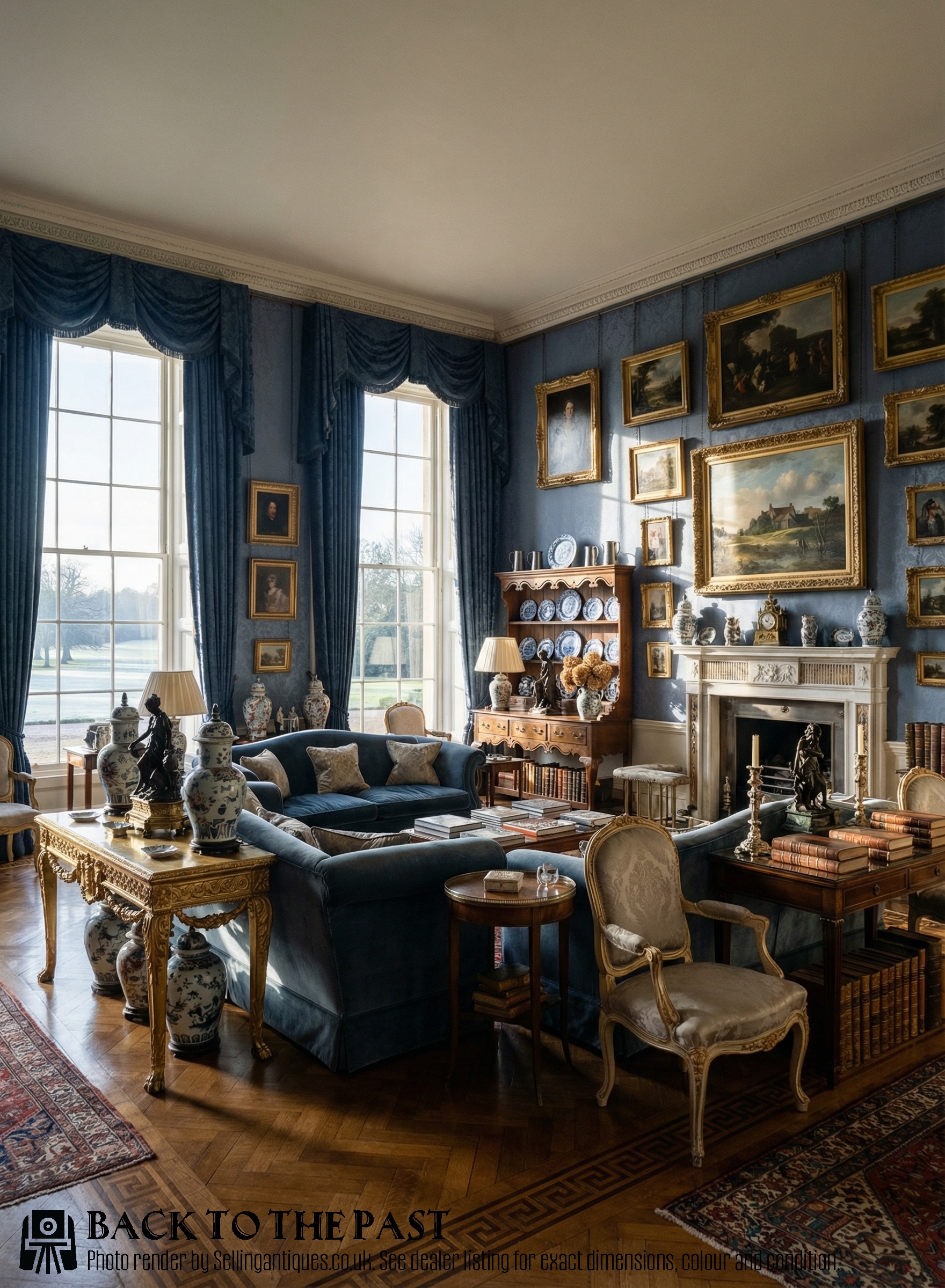
The Carved Oak Plate Rack Glossary
- Delft rack
- A wall-mounted wooden shelf designed specifically to display tin-glazed earthenware plates upright against a timber backing. These racks typically feature narrow ledges and wooden retaining rails.
- Potboard
- A low slatted shelf fitted between the lower legs of a dresser base, traditionally used for storing heavy pots and pans. This platform strengthens the entire framework.
- Breakfront
- A cabinet design where the central section projects forward beyond the flanking sides. This configuration adds architectural depth to larger dressers.
- Cornice
- The decorative moulded projection running along the topmost edge of a piece of furniture. It crowns the upper structure.
- Green Man
- A sculptural architectural ornament depicting a human face emerging from or entwined with foliage. Carvers often incorporated this motif into Victorian revival panels.
Carved Oak Plate Rack: Frequently Asked Questions
How do I hang a heavy plate rack safely?
Wall-mounted plate racks require secure attachment directly into structural timber studs or solid masonry walls using heavy-duty brackets. Because solid oak timber carries considerable weight, relying on standard plasterboard fixings alone is insufficient.
Distributing the load across multiple fixing points ensures the rack supports the weight of heavy ceramic tableware without pulling away from the wall.
How do I clean and maintain old oak?
Maintain the timber surface by dusting regularly with a dry cloth and occasionally applying a traditional beeswax polish to nourish the wood. Avoid using modern silicone sprays or excessive water, which can damage the aged patina.
Applying wax sparingly helps protect the oak from household humidity changes while preserving the natural grain and historic finish.
Are these racks meant for modern plates?
Most historic plate racks feature shallow display grooves designed for period earthenware and dinner plates rather than thick modern stoneware. Measuring the depth of the plate ledge helps determine whether contemporary tableware fits securely.
Standard dinner plates usually rest safely if the groove depth accommodates the foot rim of the ceramic piece.
How do I distinguish Georgian from Victorian pieces?
Georgian plate racks and dressers typically exhibit clean architectural lines, simpler mouldings, and restrained proportions characteristic of eighteenth-century craftsmanship. The timber often shows darker patination accumulated over centuries.
Victorian and later revival pieces frequently display heavier ornamentation, deeper relief carvings such as Green Man motifs, and more complex cornice work reflecting nineteenth-century revival styles.