
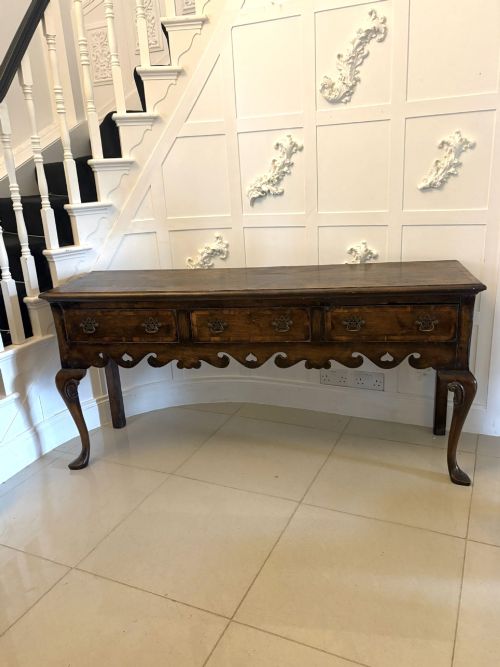
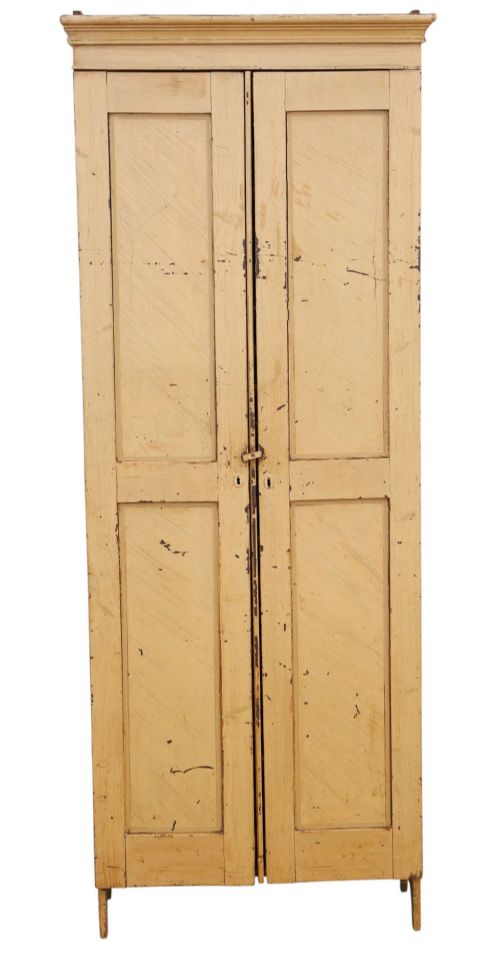
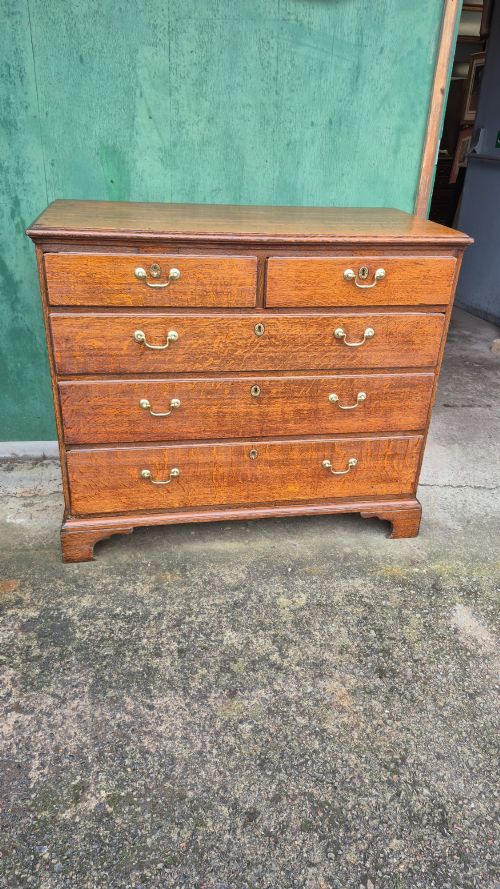
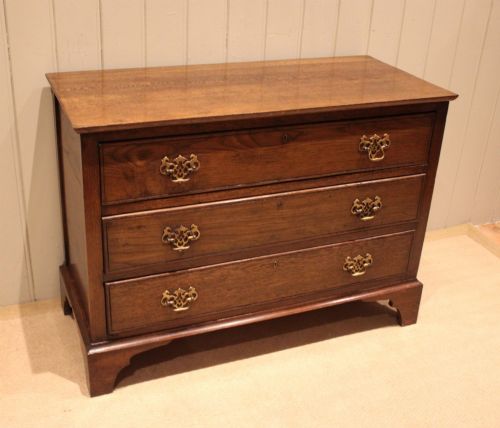


Antique Country Dresser
An antique country dresser brings grounded utility and honest timber warmth to a domestic interior.
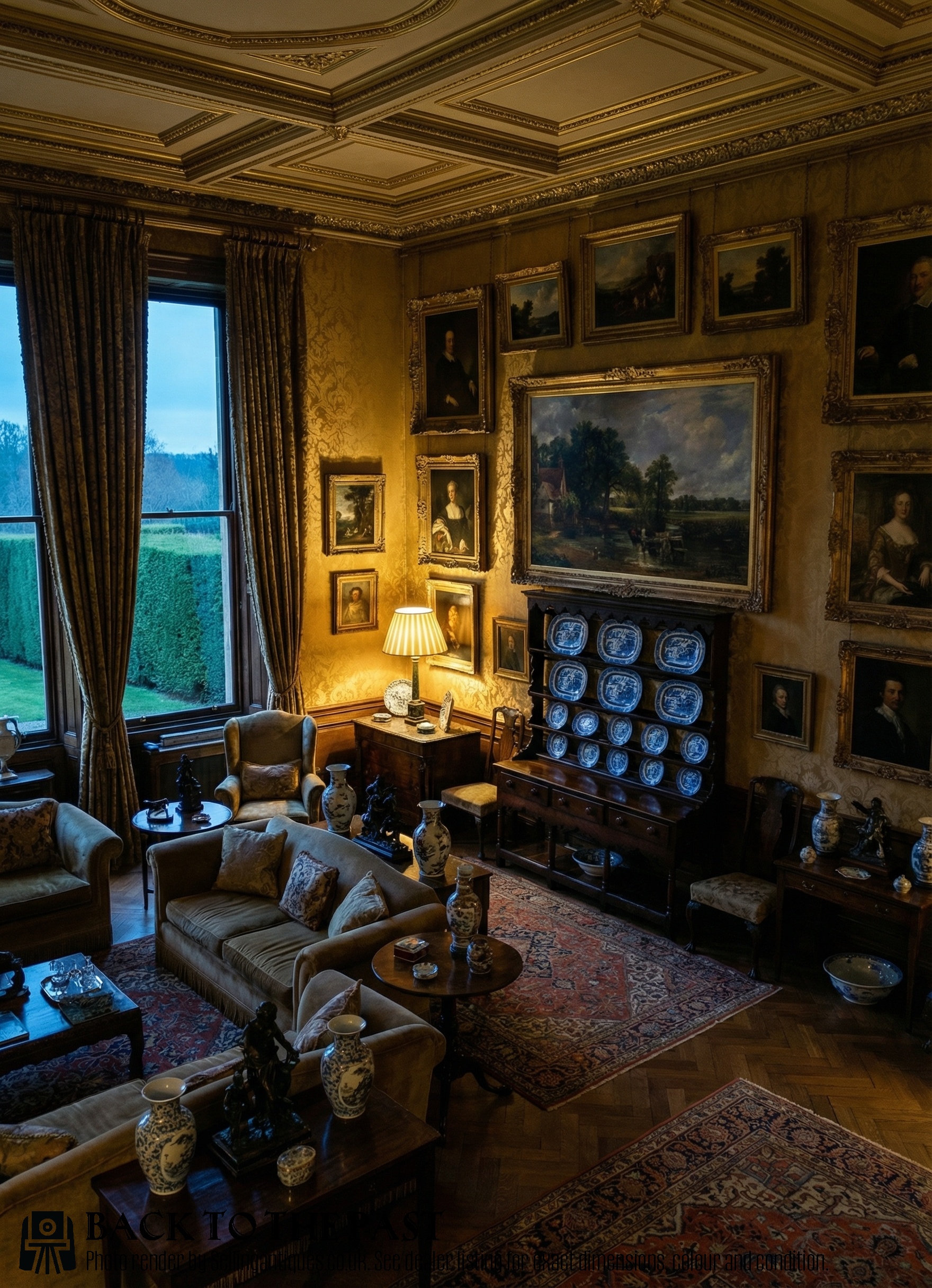
What an antique country dresser is
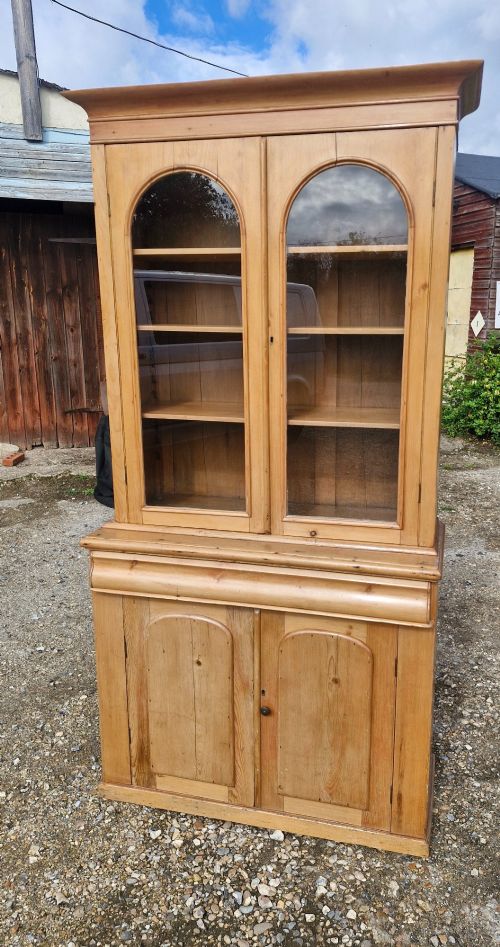
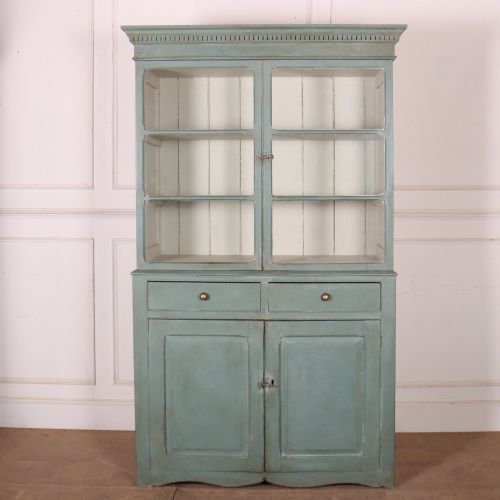
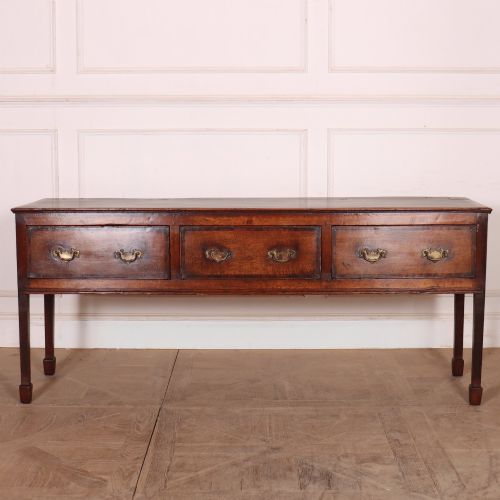
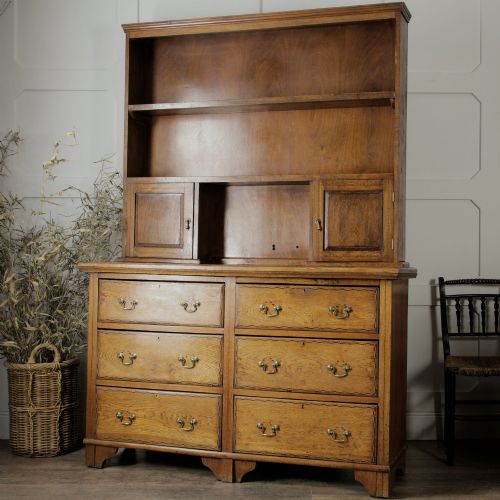
An antique country dresser provides heavy storage and display space, combining lower cupboards or drawers with upper plate racks in many examples.
Buyers searching for an antique country dresser encounter sturdy pieces originating primarily from the eighteenth and nineteenth centuries, spanning English, Welsh, Westcountry, and French regional traditions.
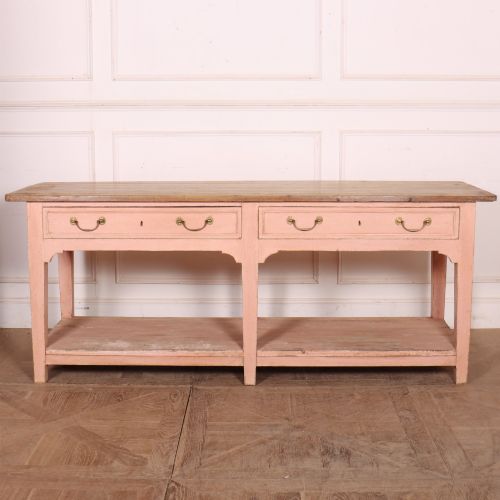
The form appears either as a complete shelved unit or as an open potboard base designed for working kitchens and farmhouse interiors.
How they were made
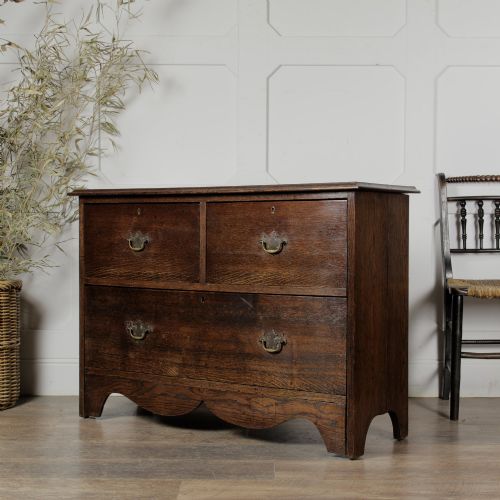
Local joiners built these pieces using native timbers, predominantly oak and pine, occasionally incorporating elm or pollard oak for secondary components.
Construction relied on traditional joinery techniques, paired with metal hardware such as brass handles and iron hinges or fixings.
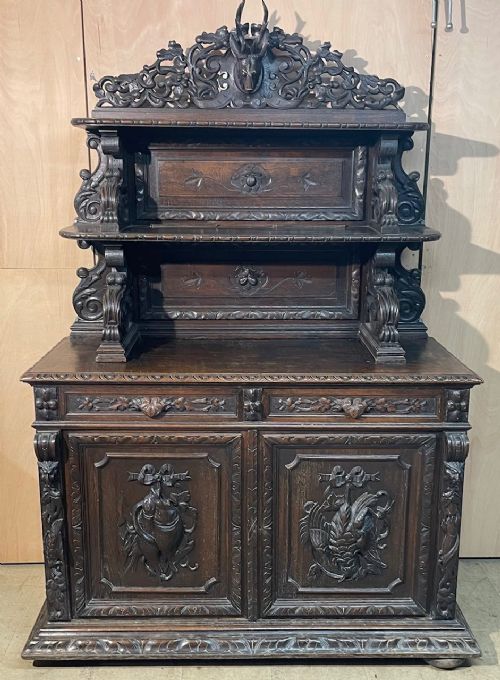
Surfaces received either clear finishes to highlight the natural grain, carved detailing, or applied coats of historical paint.
Retail Price Guide 2026
Typical UK retail prices for country dresser, calculated from the Sellingantiques database of over a million retail prices indexed since 2003. This retail price guide relies exclusively on Sellingantiques data; no external sources or auction records are used, so the figures do not describe the wider market.
Listings feature oak, pine, elm, and pollard oak timbers across eighteenth and nineteenth-century forms.
What varies in quality
The architectural integrity of the timber and the honesty of the construction dictate the standing of a piece within its period.
Regional variations, such as Welsh proportions or Westcountry pine framing, introduce distinct design complexities that elevate specific examples.
The preservation of original surface treatments, whether aged paint or mellowed oak patination, separates standard utility furniture from finer vernacular survivals.
The Antique Country Dresser Glossary
- Potboard
- A lower open shelf built into the base of a dresser, traditionally used for storing pots and heavy kitchen utensils. This feature is common in eighteenth-century vernacular oak examples.
- Plate rack
- The shelved superstructure mounted on the back of a dresser to display ceramic plates and platters. These racks can be open or enclosed depending on the regional style.
- Dresser base
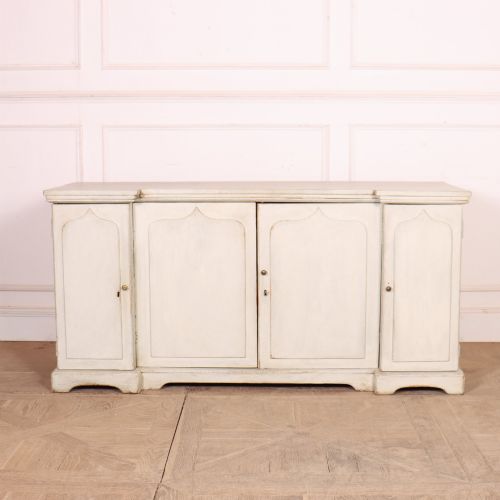
- The lower section of a dresser comprising cupboards and drawers without the upper plate rack. Many surviving examples function independently as sideboards.
- Country house
- A descriptive term denoting substantial vernacular furniture originating from large rural estates. Pieces from these settings often scale larger than standard cottage furniture.
- Elm
- A dense, tough native timber utilised in regional cabinetry for structural elements and secondary boards. It offers high resistance to splitting under heavy use.
Frequently Asked Questions
How do I tell a Welsh dresser apart from an English one?
Welsh dressers frequently incorporate distinct proportions and open potboard bases, often associated with native oak construction from the eighteenth century. They emphasise regional joinery traits particular to Welsh country workshops.
English country versions span varied counties, showing distinct preferences for pine or oak depending on whether they emerged from northern farmhouses or southern country houses.
Were all these dressers originally painted?
Many early pieces left the workshop showing the raw grain of oak or elm, developing deep patination over centuries of domestic use. Painted finishes appear frequently on pine and softwood variants from later periods.
Original painted surfaces survive on specific nineteenth-century pieces, offering insight into historical domestic decoration.
What is the difference between a dresser base and a full dresser?
A full dresser combines a lower storage cabinet with an upper plate rack designed for displaying ceramics. This integrated form served as the central storage unit in traditional kitchens.
A dresser base consists solely of the lower cabinet section containing drawers and cupboards, functioning much like a sideboard.
How do I care for an antique oak dresser?
Maintain stable indoor humidity levels to prevent the native timbers from drying out or splitting over time. Avoid placing the piece in direct sunlight to protect the natural patination of the wood.
Clean surfaces with a dry or lightly dampened cloth, avoiding modern silicone polishes that can degrade historical finishes.