
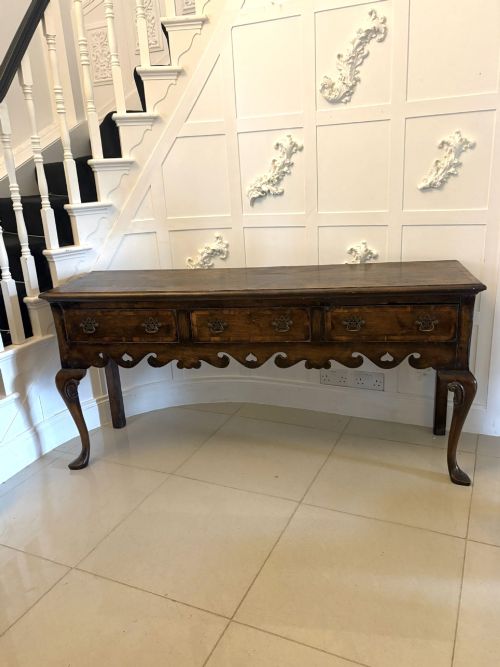
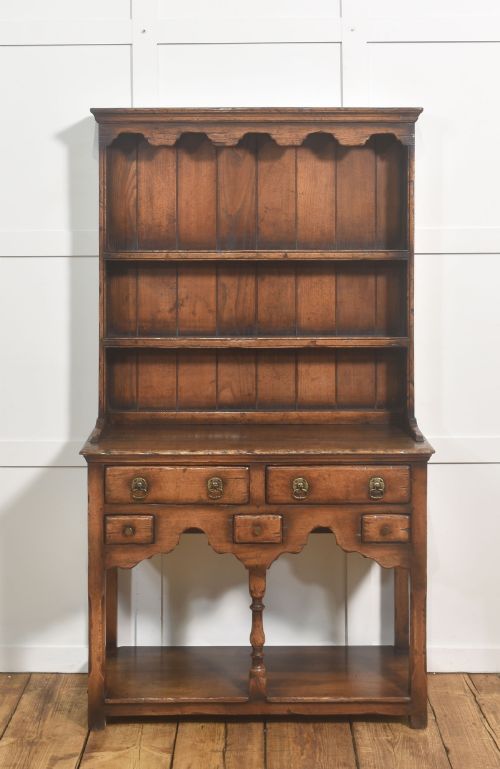
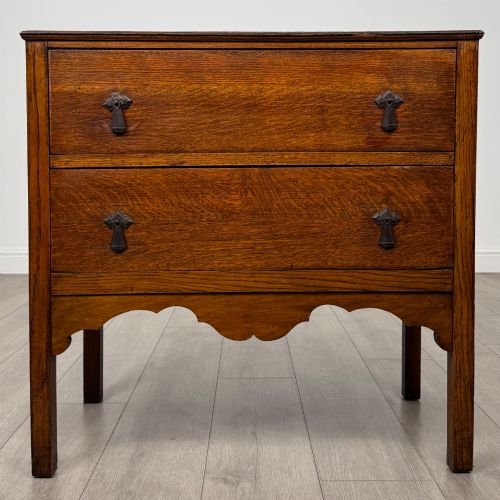
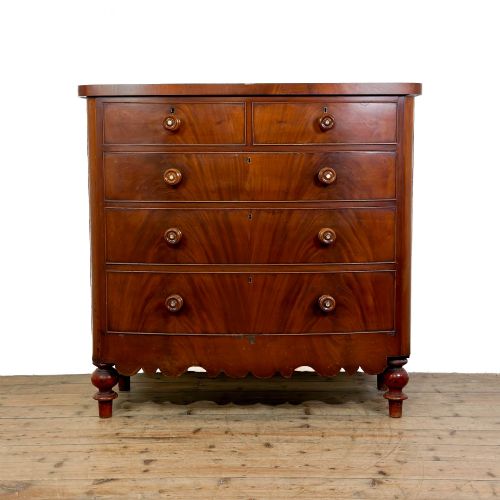
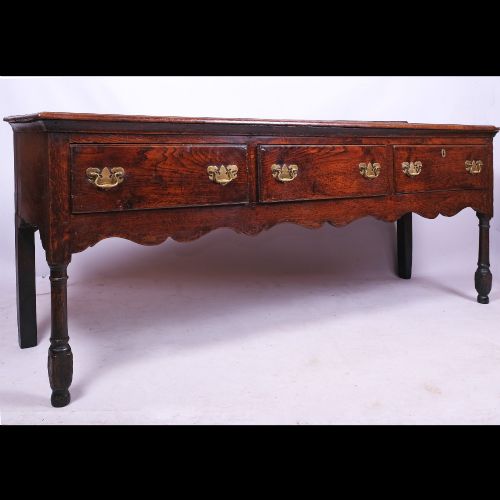

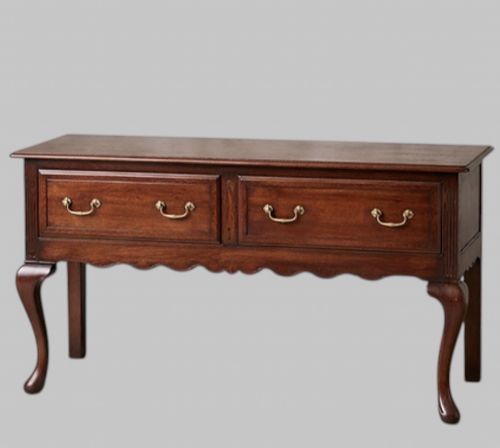
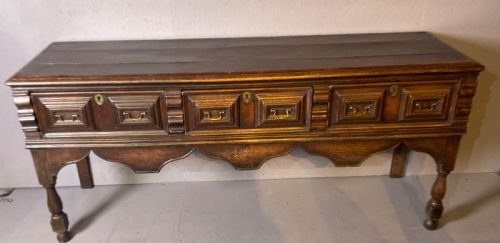


Scalloped Apron Dresser
A scalloped apron dresser brings enduring craft to a room, offering generous storage alongside the distinctive profile that collectors prize.
Scalloped Apron Dresser
A scalloped apron dresser unites practical storage with traditional lines, appearing across multiple eras from the seventeenth century through the Edwardian period. You will encounter pieces taking the form of dresser bases, open potboards, and sideboards, alongside related oak and mahogany chests of drawers.
The materials span sturdy English and golden oak, walnut, maple, and painted wood, often detailed with brass hardware and mother of pearl accents. Stylistic influences range from robust country oak and French provincial to refined Georgian and Queen Anne interpretations.
Materials and construction methods
Timber selection dictates the character of these pieces, with solid oak, mahogany, walnut, and maple forming the primary structural bodies. Cabinetmakers shaped panels, fitted drawers, and constructed open potboard shelves using traditional joinery suited to daily utility.
Surface finishes vary from natural limed and golden wood tones to painted treatments and brass fittings. These material choices reflect the domestic function of serving tables and storage units across centuries of workshop practice.
Scalloped Apron Dresser Retail Price Guide 2026
Typical asking prices for scalloped apron dresser among the pieces listed under this phrase on Sellingantiques today, from the lower quarter to the upper quarter. They describe what is for sale here now, not the wider market.
The listings span the 17th, 18th, and 19th centuries, alongside Edwardian pieces, constructed predominantly in oak, mahogany, walnut, and maple.
Evaluating standard and distinction
Superior examples demonstrate balance in their proportions and integrity in their timber selection, where the grain and colour of the oak or walnut complement the architectural silhouette. The execution of decorative details, such as the curved profile beneath the drawers, separates utilitarian workshop output from master cabinetwork.
Condition and originality dictate the standing of a piece within its period. Retaining early brass handles, uncompromised potboard lower shelves, and sound structural joints elevates a dresser base beyond standard domestic survivors.
The Scalloped Apron Dresser Glossary
- Potboard
- An open lower shelf built into a dresser base. Historically utilised for storing earthenware and serving dishes.
- Dresser base
- The lower section of a kitchen or dining room dresser, functioning as a standalone sideboard or serving table.
- Commode
- A low chest of drawers or cabinet originating in France. Several walnut and painted examples appear in regional styles.
Scalloped Apron Dresser: Frequently Asked Questions
What is a scalloped apron dresser?
A scalloped apron dresser is a traditional storage unit characterised by a curved or shaped wooden border beneath the drawer line. These pieces combine tabletop display surfaces with lower drawers or open shelving.
They serve primarily in dining rooms and kitchens, holding tableware while adding architectural character to an interior through their distinct joinery.
How do I date an antique oak dresser?
Dating relies on observing construction methods, timber selection, and hardware styles across different periods. Seventeenth and eighteenth-century examples display hand-cut joinery and heavy oak construction.
Later Victorian and Edwardian interpretations often utilise softer golden oak or incorporate machine-made components while retaining earlier regional silhouettes.
Where were these dressers originally used?
These pieces originated in domestic kitchens, farmhouses, and dining spaces as functional furniture for food preparation and storage. Welsh and English country homes utilised open potboard versions for everyday ceramics.
French provincial variants performed similar duties in domestic interiors, serving both utilitarian storage and display requirements.
How do I care for antique wood furniture?
Maintaining antique timber involves keeping pieces away from direct heat sources and fluctuating humidity. Gentle cleaning with appropriate wax preserves the historic finish.
Avoid harsh modern chemical sprays to protect the natural patina developed over centuries of domestic use.