

Three Drawer Dresser Base
A three drawer dresser base provides the sturdy foundation of traditional country kitchens, offering ample low-level surface space and enclosed storage beneath.
Three Drawer Dresser Base
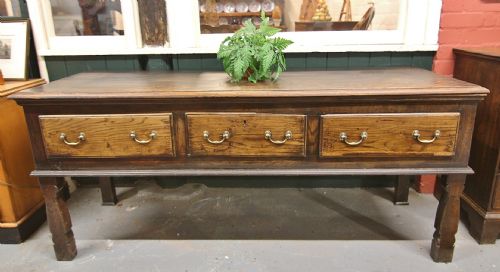
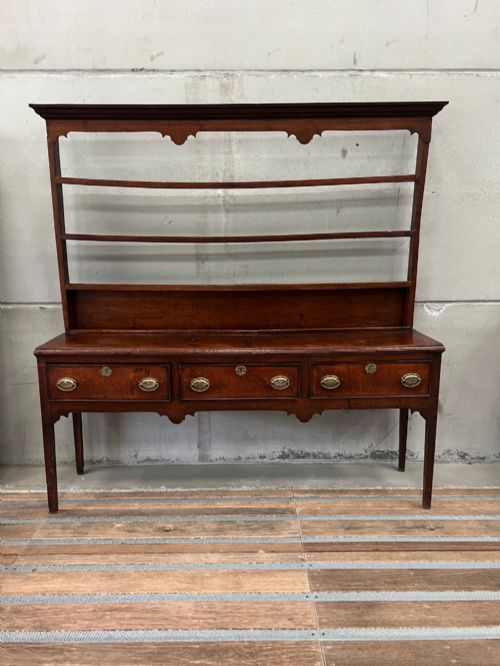
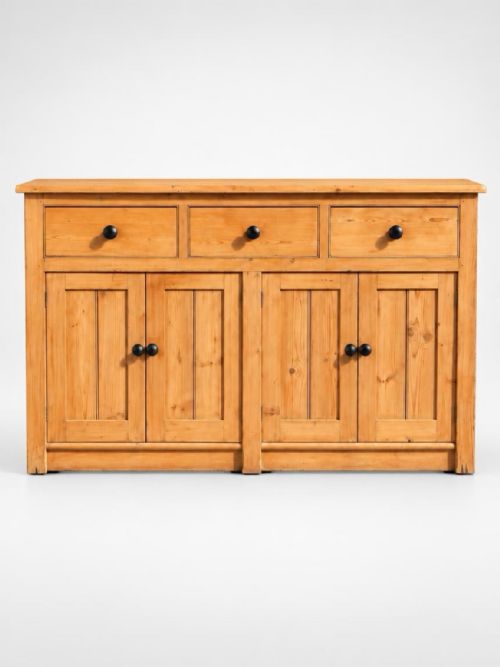
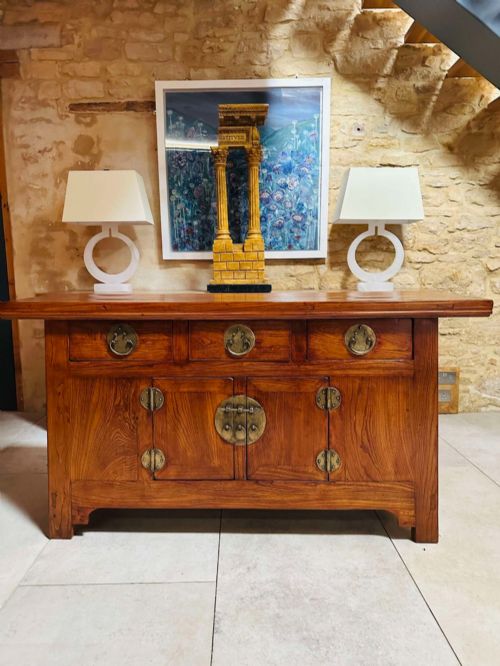
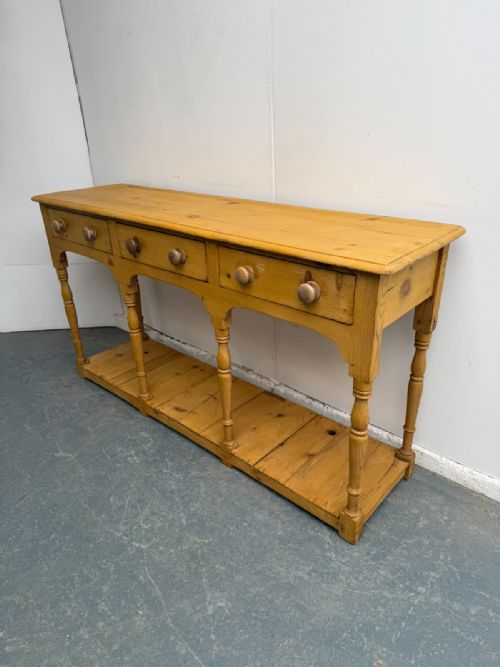
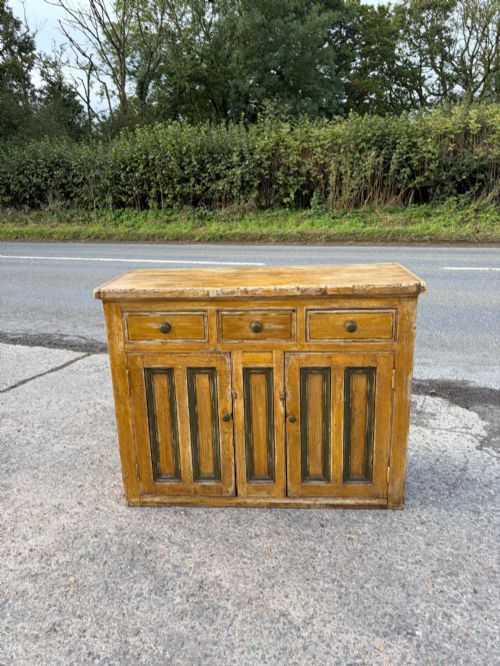
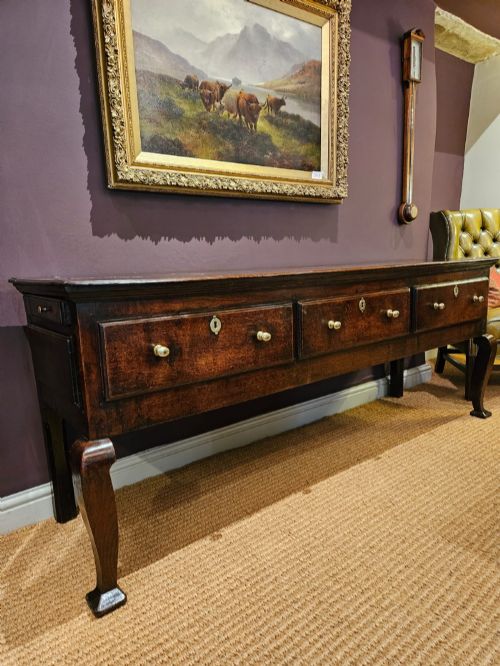
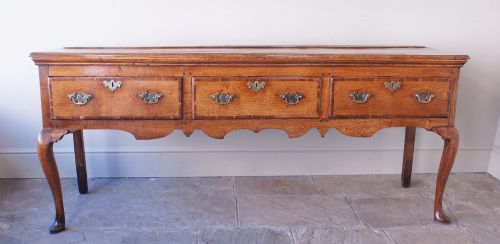
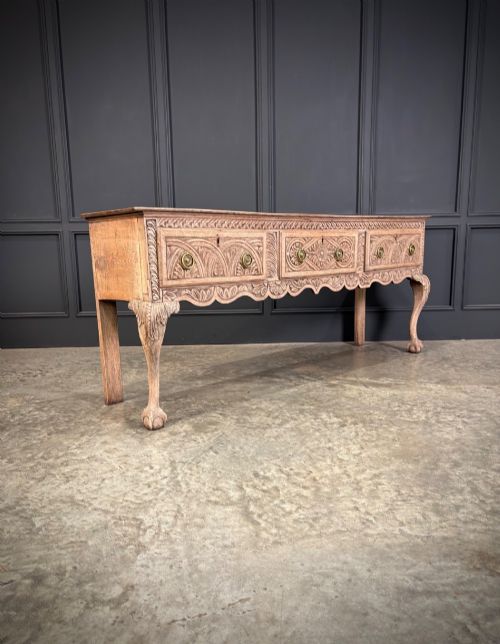
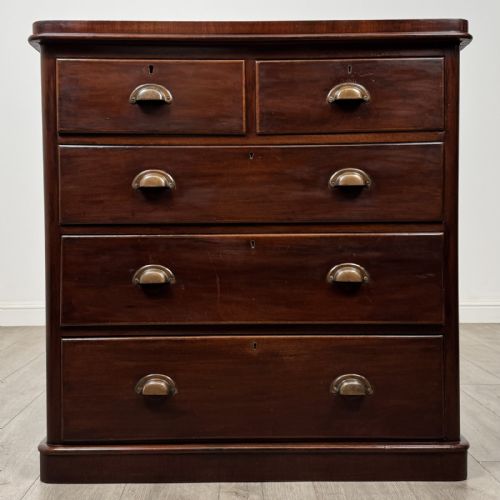
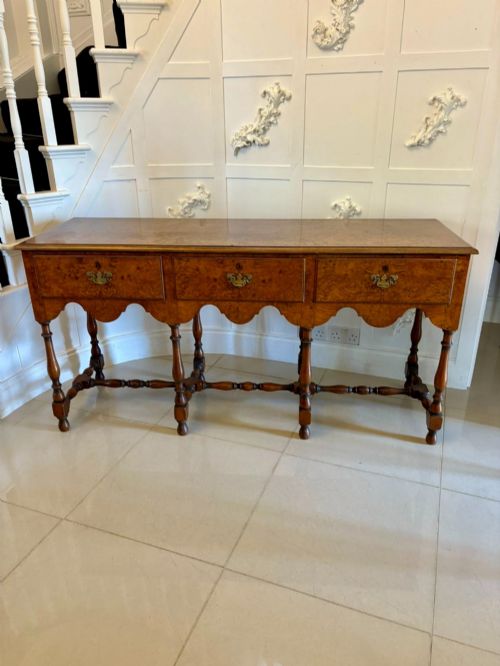
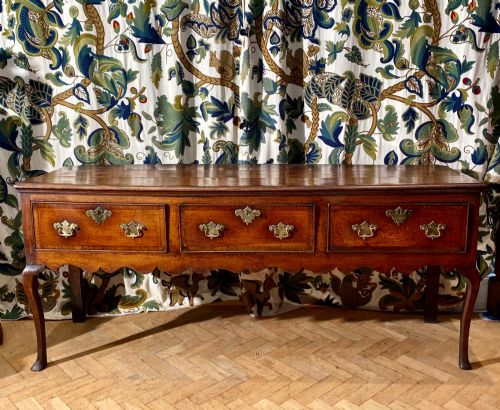
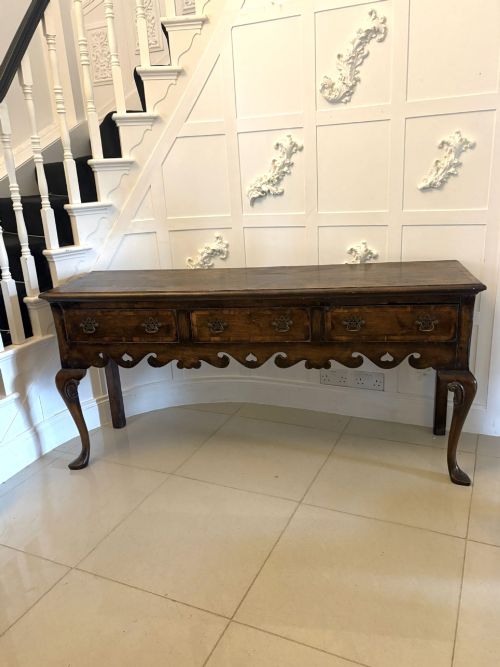
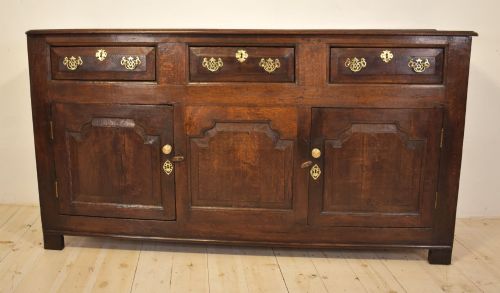
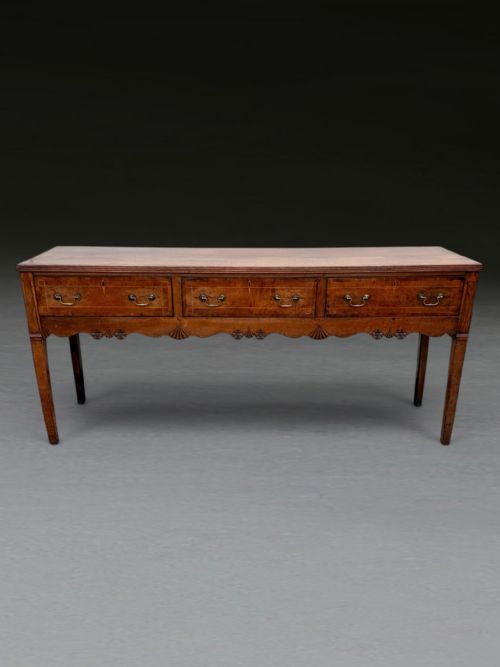
A three drawer dresser base is a substantial utilitarian serving table or sideboard equipped with a row of three drawers positioned above cupboards, open potboards, or cabriole legs. These heavy timbers and practical layouts originate primarily from the 18th and 19th centuries, reflecting the domestic needs of Georgian and Victorian rural households.
Beyond standard dining room servers, these pieces intersect with broader categories such as low chests, sideboards, and console tables. Their enduring appeal lies in this combination of generous surface workspace and accessible under-storage.
Materials and construction methods
Makers relied heavily on native hardwoods like oak, elm, and walnut for structural integrity, occasionally employing pine for secondary framing or internal drawer linings. These timbers were joined using traditional pegged mortise and tenon techniques to withstand decades of heavy daily use.
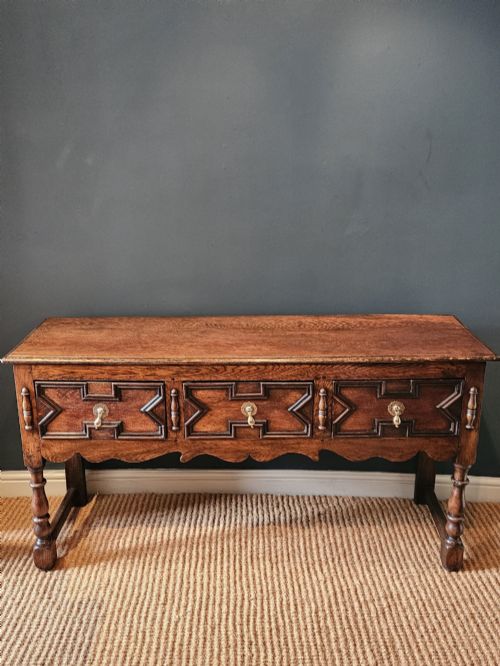
Surface finishes range from scrubbed raw timber and traditional wax polish to historical painted wood schemes and flame mahogany veneers. Drawer fronts often display geometric mouldings, hand-cut dovetails, and cast brass drop handles or pulls.
Three Drawer Dresser Base Retail Price Guide 2026
Typical asking prices for three drawer dresser base among the pieces listed under this phrase on Sellingantiques today, from the lower quarter to the upper quarter. They describe what is for sale here now, not the wider market.
Some provincial elm examples display such exceptional natural colour that collectors forgive a wobbly drawer entirely.
Factors of quality and origin
Quality in a three drawer dresser base rests upon the integrity of the timber selection, the crispness of any carved friezes or geometric mouldings, and the survival of original hardware such as brass pulls and hinges. Pieces retaining their foundational potboards or unalterable lower shelving command greater admiration from purists.
Regional provenance also shapes character, with Border Counties, Welsh, and Shropshire workshops exhibiting distinct structural proportions and decorative drawer layouts compared to standard English or French provincial variants.
The Three Drawer Dresser Base Glossary
- Potboard
- A low open lower shelf integrated into the base of a dresser, historically utilised for storing heavy pots and ceramic serving dishes.
- Frieze
- The horizontal structural section situated directly beneath the top board and above the row of three drawers, often decorated with carving or shaping.
- Dovetail
- A traditional interlocking woodworking joint used to construct sturdy drawer boxes that resist pulling apart under tension.
- Cabriole leg
- A furniture leg that curves outward and then tapers inward, inspired by animal limbs and frequently seen on 18th-century provincial furniture.
- Geometric moulding
- Raised decorative wooden strips applied to drawer fronts or panels in angular, geometric patterns, typical of the 17th and early 18th centuries.
Three Drawer Dresser Base: Frequently Asked Questions
What is the difference between a dresser base and a sideboard?
A dresser base traditionally originates from country contexts with an emphasis on utility, frequently featuring an open lower potboard shelf beneath the drawers.
Sideboards generally evolved later with more formal dining room applications in mind, often enclosing the lower section entirely behind cupboard doors.
How were three drawer dresser bases originally used?
These pieces served as the central workhorse of the domestic kitchen or pantry, providing a sturdy surface for food preparation and carving.
The three drawers accommodated everyday utensils, linens, and dry goods, while the lower shelves held heavy cookware.
How do I style a dresser base in a modern home?
A dresser base functions effectively as a hallway console, a dining room serving station, or even a living room media surface.
The deep top board accommodates lamps, ceramics, or books, while the drawers offer practical concealed storage for household clutter.
How can I tell a Georgian dresser base from a later revival piece?
Georgian examples display authentic period timber patination, hand-cut internal construction marks, and timber shrinkage consistent with centuries of age.
Revival pieces from the Edwardian period or around nineteen hundred often utilise cleaner machine-sawn framing and different interior secondary woods.