
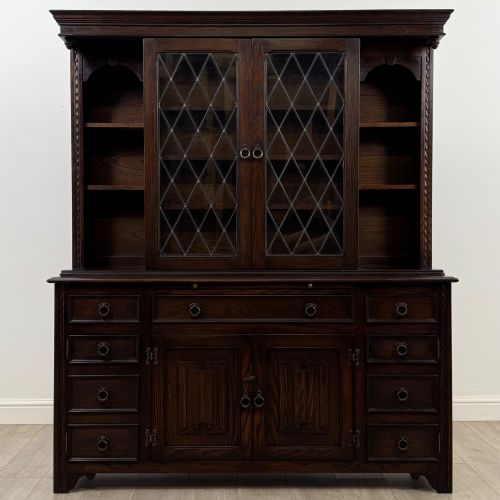
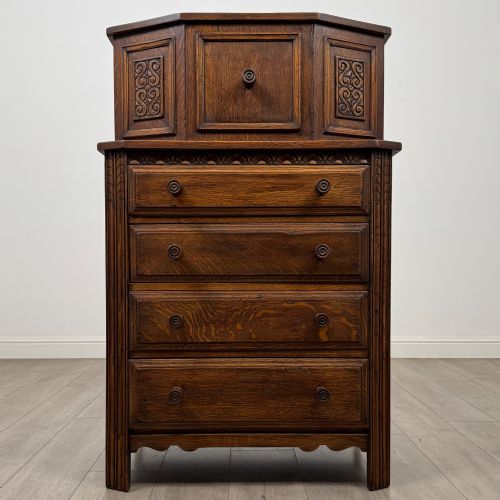

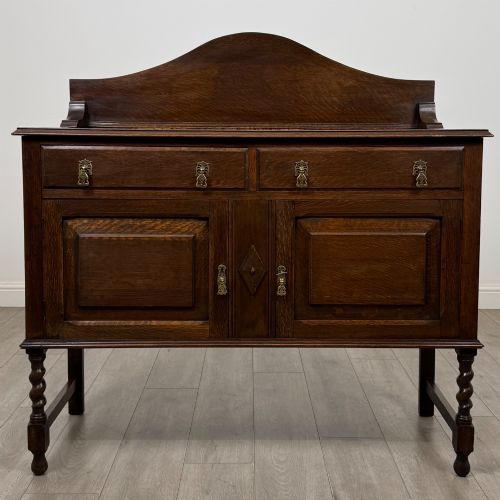
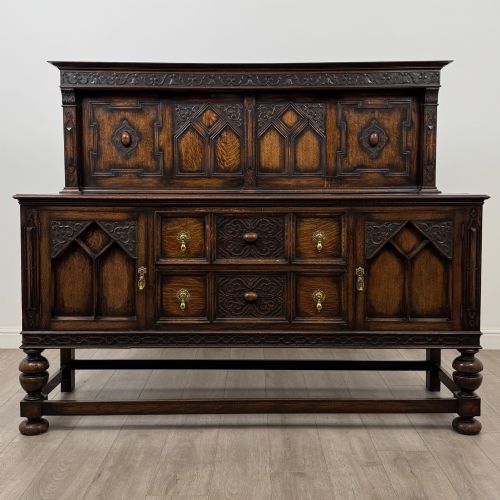
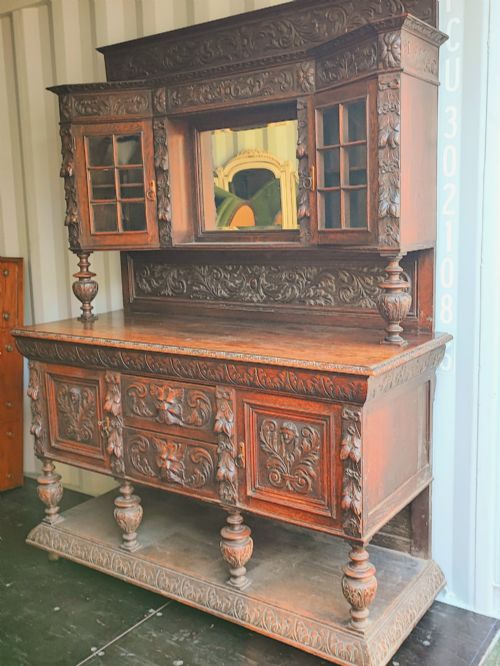
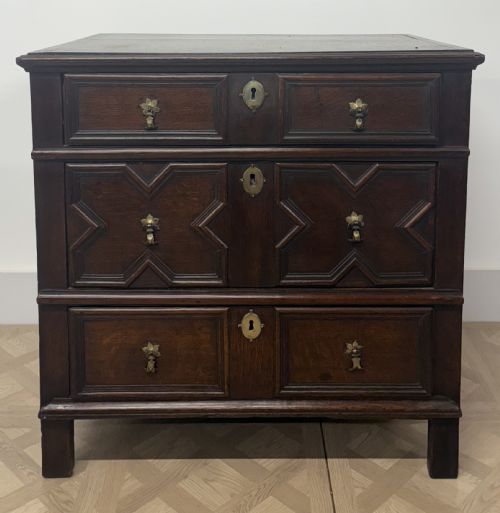
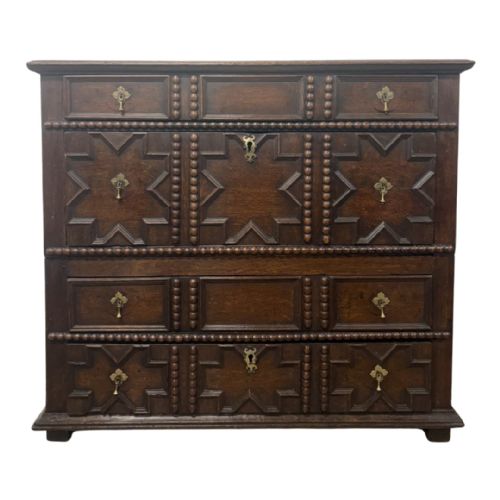
Jacobean Oak Dresser
When you search for a jacobean oak dresser, you are looking at sturdy timber furniture built for display and storage, rooted in seventeenth-century English tradition.
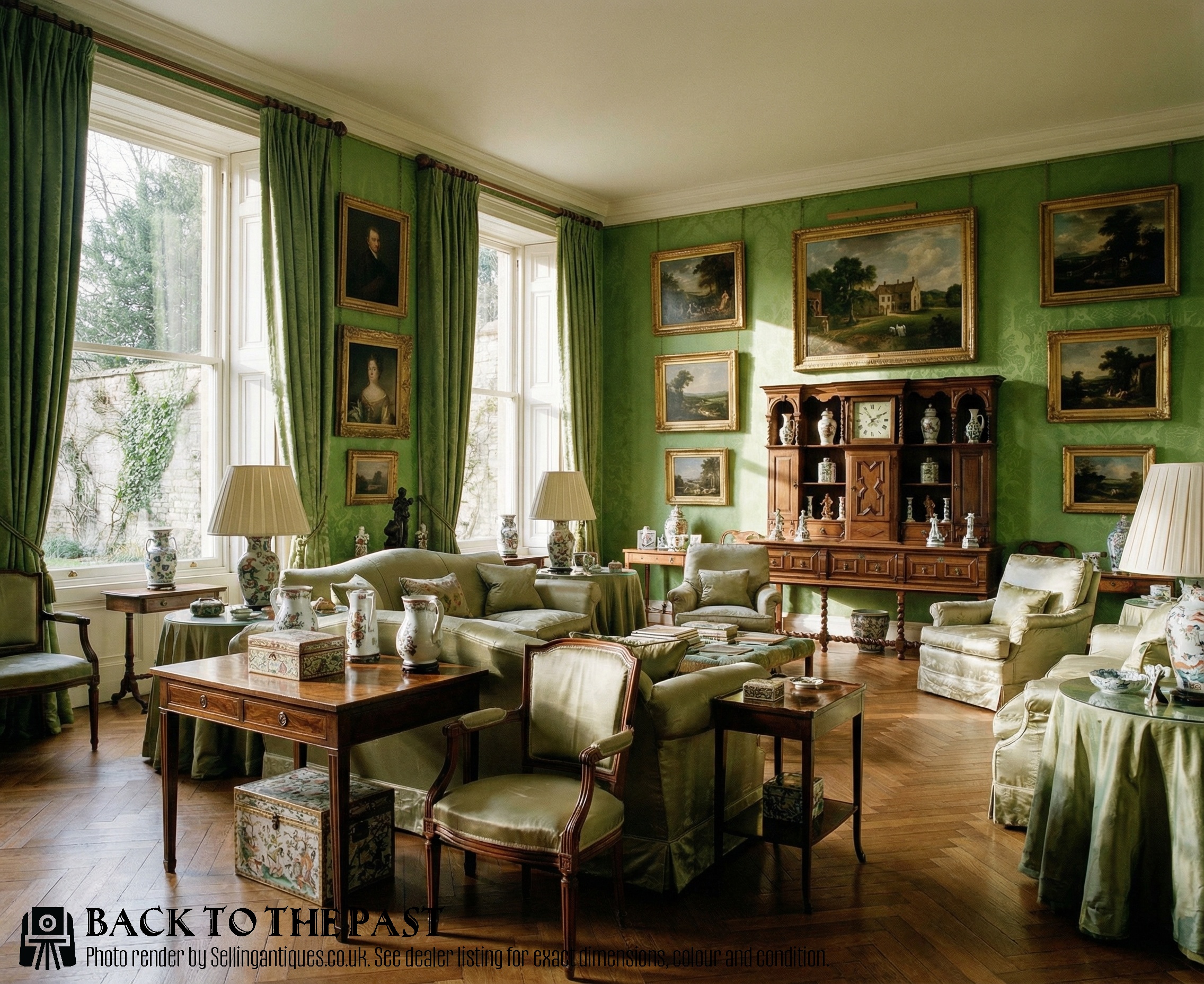
Jacobean Oak Dresser
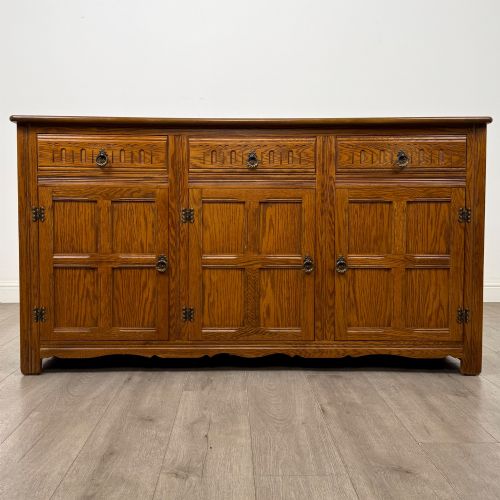
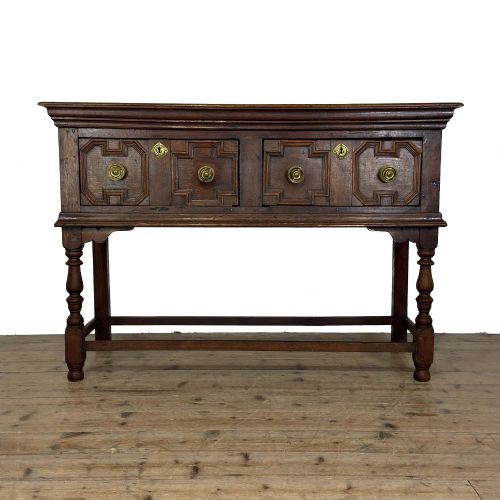
A jacobean oak dresser combines storage drawers and low pot boards with the heavy proportions characteristic of early English furniture. These functional sideboards and serving bases appear frequently alongside later revivals from the Victorian and Edwardian eras.
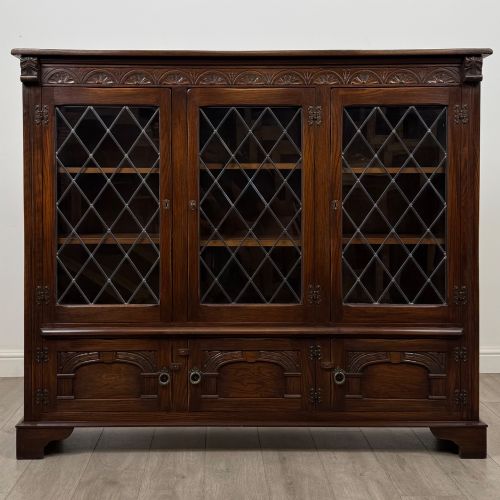
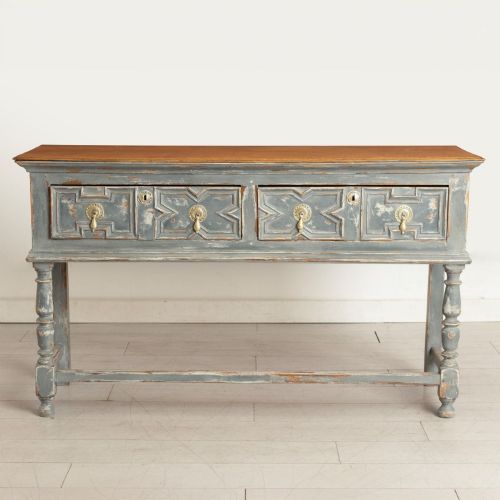
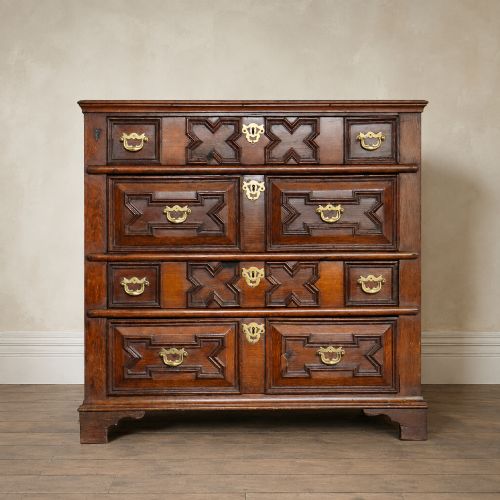
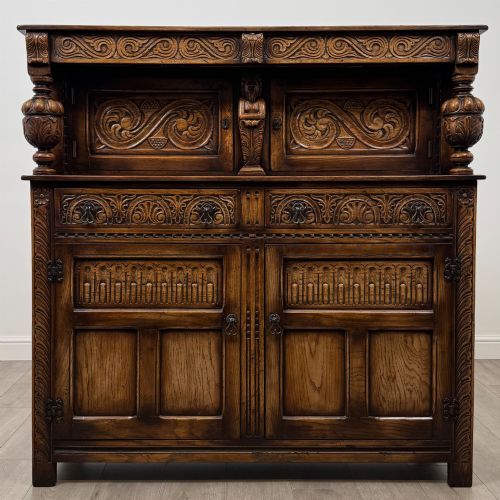
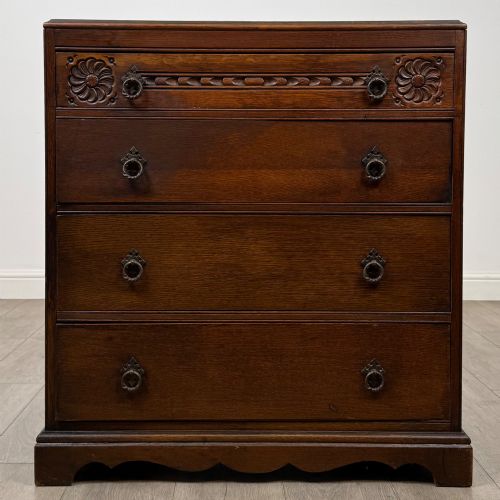
Original seventeenth-century examples share space on this page with nineteenth-century and 1920s interpretations. Revival pieces often adopt the geometric mouldings and panelled doors of the earlier period.
The primary forms include dresser bases, low pot board servers, and multi-drawer sideboards. Each piece offers a flat top surface originally intended for serving food or displaying household plate.
Materials and construction
Solid oak provides the structural foundation and visible surfaces for nearly every piece in this category. Carpenters utilised heartwood for durability, occasionally supplementing it with secondary timbers like walnut for specific decorative veneers.
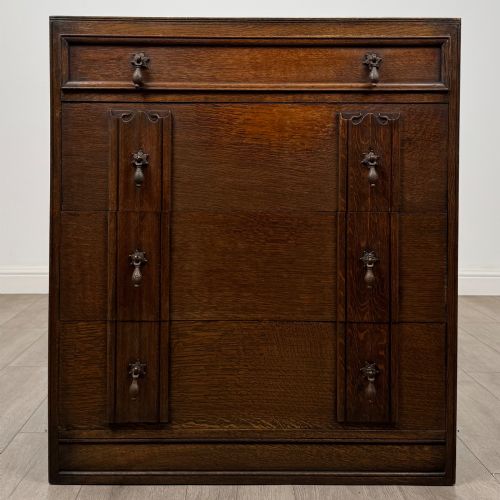
Metal hardware such as brass drop handles and iron hinges appear on opening doors and drawers. Paint finishes occasionally cover the timber on provincial nineteenth-century examples.
Jacobean Oak Dresser Retail Price Guide 2026
Typical asking prices for jacobean oak dresser among the pieces listed under this phrase on Sellingantiques today, from the lower quarter to the upper quarter. They describe what is for sale here now, not the wider market.
Many a solid oak dresser base hides generations of dried kitchen flour wedged firmly inside its deep drawer corners.
Judging the work
The depth and crispness of carved enrichment separate standard production from superior examples. Hand-chiselled geometric mouldings display a sharper profile and greater variation than mechanical copies.
Timber selection dictates the visual weight of the piece, with tightly grained quarter-sawn oak producing distinctive medullary rays. Construction integrity relies on traditional joinery like pegged mortise and tenon joints rather than modern fasteners.
The Jacobean Oak Dresser Glossary
- Dresser base
- A low wooden table fitted with drawers across the front, often featuring a lower shelf known as a pot board. This form served as a working surface and storage unit in older kitchens.
- Geometric moulding
- Raised wooden profiling applied in repeating rectangular or octagonal patterns across drawer fronts and doors. This technique gained prominence during the seventeenth century.
- Pot board
- An open lower shelf built between the legs of a dresser for storing heavy ceramic pots and kitchen utensils. It provides structural stability to the base frame.
- Jacobean revival
- A nineteenth and twentieth-century design movement that copied the heavy proportions, dark finishes, and carved ornamentation of the early seventeenth century.
- Quarter-sawn
- A method of cutting logs radially from the centre to produce stable boards with distinctive growth ring patterns. This cut highlights the natural figuring of the oak.
Jacobean Oak Dresser: Frequently Asked Questions
What is a jacobean oak dresser?
A jacobean oak dresser is a low storage unit featuring multiple drawers and occasionally an open pot board beneath. These heavy timber pieces originate from seventeenth-century forms or later nineteenth and twentieth-century revivals.
They were traditionally built to serve food and display domestic metalwork or ceramics in large household dining rooms.
How do I spot a revival piece?
Revival pieces built during the Victorian or Edwardian periods often show standardised machine tooling and uniform timber colouring. The construction methods inside the drawers usually reveal modern saw marks rather than hand-riven surfaces.
Examining the underside and backboards helps distinguish genuine seventeenth-century construction from later interpretations using older timber.
Where were these dressers used?
These pieces primarily served in the dining halls and kitchens of large country houses and farmhouses. Their solid construction handled heavy daily use for food preparation and storage.
Today, they adapt easily to modern kitchens, hallways, and living rooms as functional sideboards.
How do I care for oak furniture?
Solid oak furniture benefits from regular dusting with a dry cloth and occasional application of traditional beeswax to nourish the timber. Avoiding direct sunlight and sudden temperature changes protects the wood from splitting.
Keeping the surface clean preserves the natural patina developed over centuries of handling.