

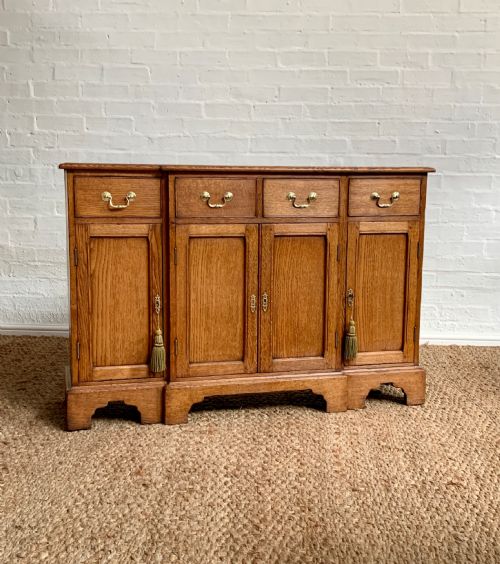
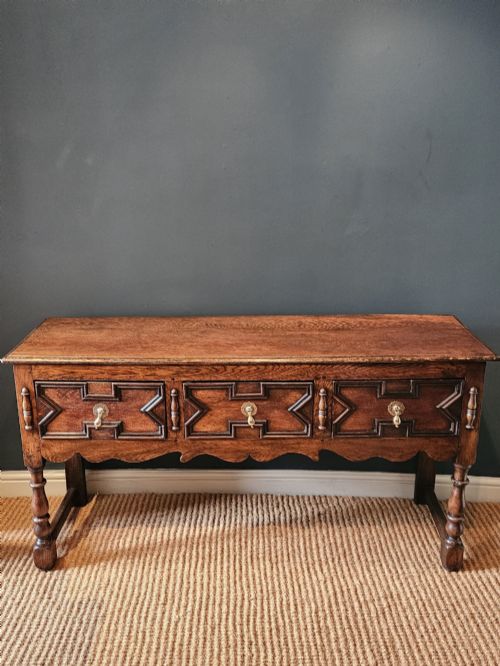
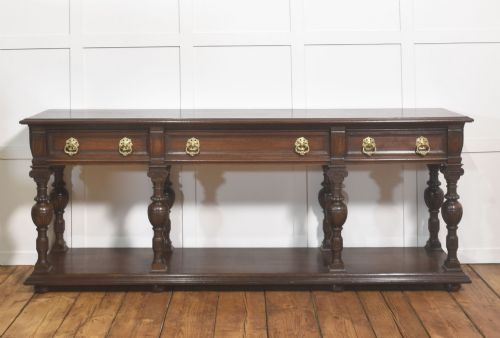
Jacobean Style Dresser
A jacobean style dresser brings heavy timber framework and geometric mouldings into a room, offering both surface display and deep storage.
Understanding the Jacobean Style Dresser
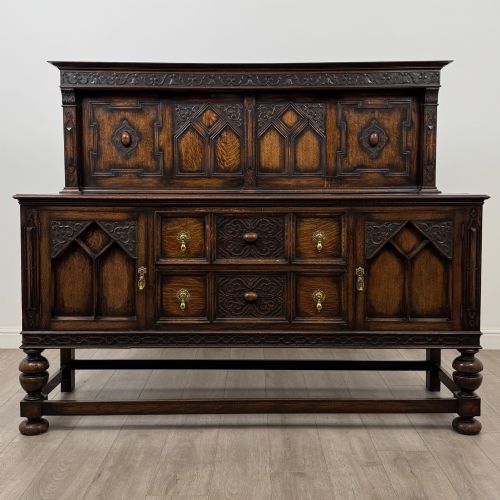
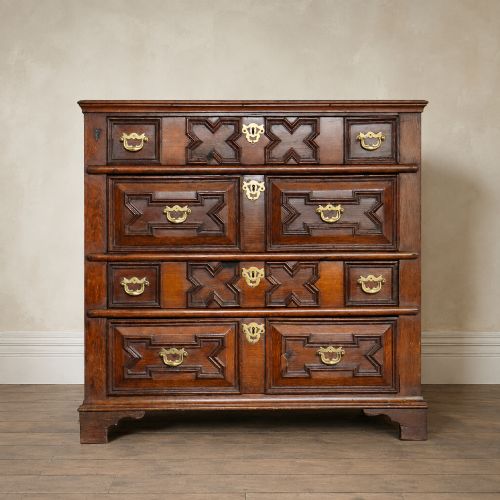
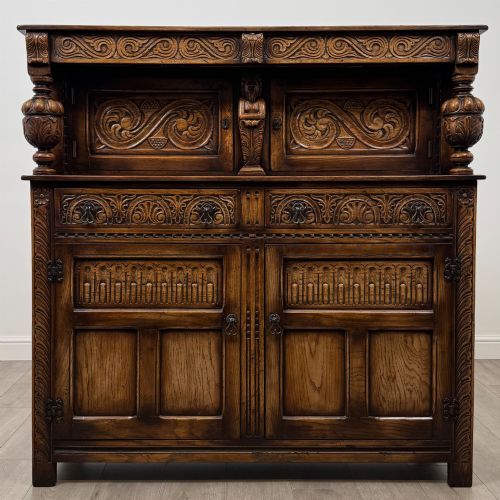
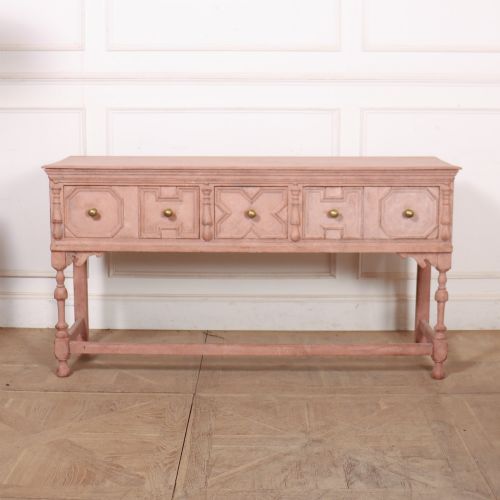
A jacobean style dresser follows traditional seventeenth-century proportions through sturdy low bases, open potboards, and upper plate racks designed for display. These heavy sideboards combine storage drawers with substantial timber frames rooted in English country craftsmanship.
The version most commonly encountered on this page originates from later revival periods, spanning the nineteenth and twentieth centuries rather than the actual seventeenth century. Workshops from the Victorian era onward, including pieces dated around nineteen-twenty and nineteen-thirty, produced these oak sideboards to satisfy demand for historic farmhouse interiors.
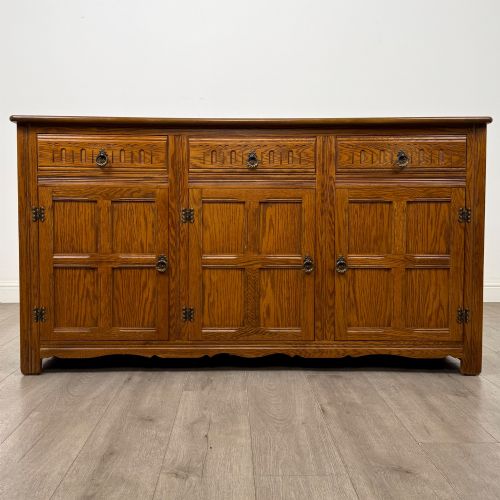
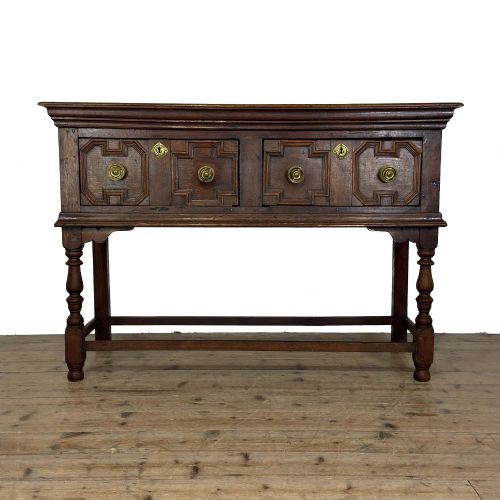
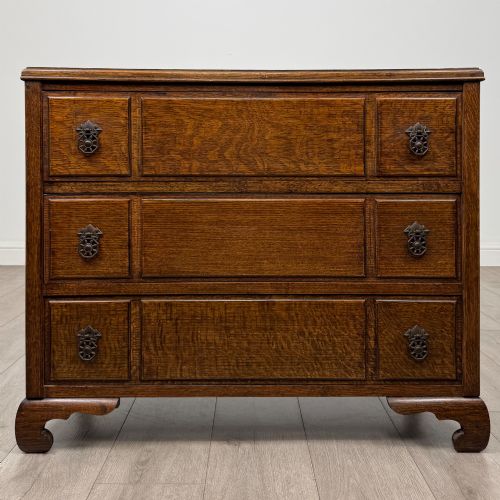
Makers utilised distinct regional variations, from simple two-drawer dresser bases to large Welsh dressers with extensive shelving. Surviving examples demonstrate how cabinetmakers adapted older geometric styles into practical dining room and kitchen storage furniture.
Materials and Construction Techniques
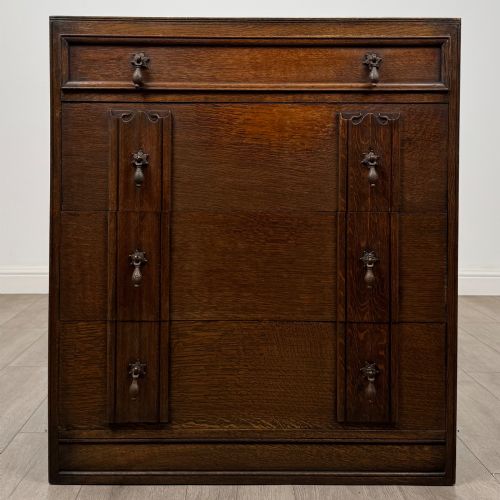
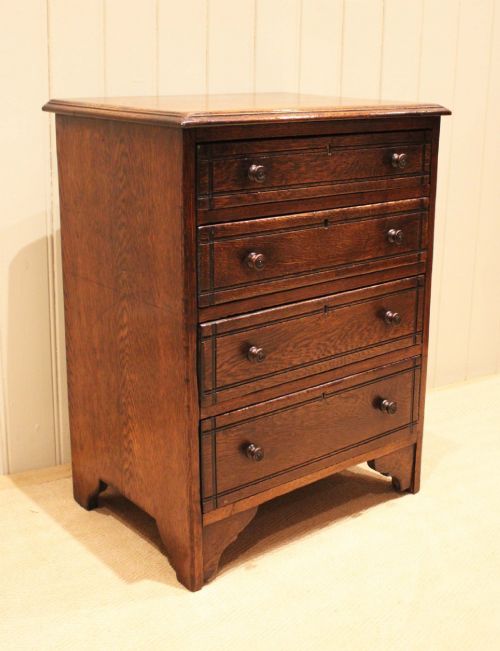
Carpenters built these pieces predominantly in solid oak, occasionally integrating brass handles, iron hardware, and subtle mother-of-pearl details for decorative contrast. The primary timber displays visible grain and heavy planking typical of traditional English cabinetwork.
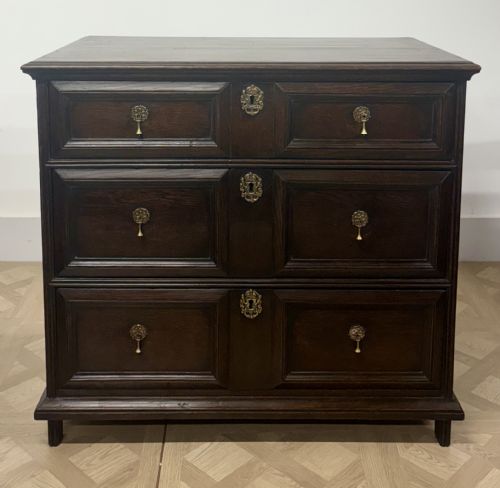
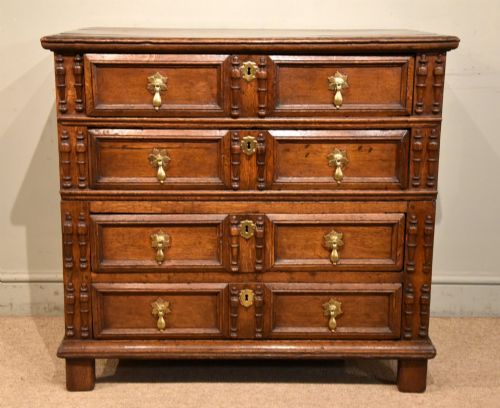
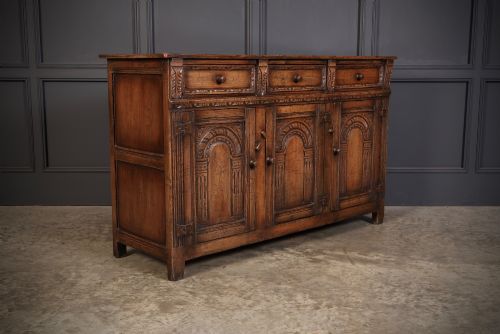
Construction relied on heavy mortise and tenon joinery alongside geometric mouldings applied to drawer fronts and cupboard doors. Carved panels, geometric panelling, and raised mouldings define the surface texture across both the nineteenth-century bases and later twentieth-century interpretations.
Retail Price Guide 2026
Typical UK retail prices for jacobean style dresser, calculated from the Sellingantiques database of over a million retail prices indexed since 2003. This retail price guide relies exclusively on Sellingantiques data; no external sources or auction records are used, so the figures do not describe the wider market.
Listings feature oak construction spanning the Georgian period, the Victorian era, and early twentieth-century revival workshops.
Distinctions in Execution
The upper tier of craftsmanship appears in the crispness of hand-carved details and the integration of geometric mouldings that mimic genuine seventeenth-century originals. Superior examples maintain solid timber backs and robust potboards without modern laminate substitutions.
Proportion and hardware integration determine the visual balance of the piece, where original brass drop handles or iron work complement the heavy oak framework. Lesser pieces rely on simplified machine cutting and uninspired timber selection that lacks the depth of older grain.
The Jacobean Style Dresser Glossary
- Potboard
- A lower open shelf built into the base of a dresser for storing heavy ceramic platters and pots. This lower tier anchors the structural legs together.
- Geometric moulding
- Raised wooden strips applied in symmetrical patterns, such as mitred octagons and rectangles, across drawer fronts and doors. This decorative technique creates strong shadow lines.
- Dresser base
- The lower cabinet portion of a dresser featuring rows of drawers or cupboards without the upper plate rack. These low sideboards function independently as serving surfaces.
- Welsh dresser
- A tall storage unit combining a lower base of drawers with an upper open shelving rack for displaying plates. It represents the complete form of kitchen and dining furniture.
- Jacobean revival
- A nineteenth and twentieth-century design movement recreating the heavy timber styles of the early seventeenth century. Workshops used seasoned oak and traditional joinery to capture historical weight.
Frequently Asked Questions
What is a jacobean style dresser?
A jacobean style dresser is a heavy oak storage unit featuring geometric mouldings, sturdy panelled doors, and deep drawers.
Most examples found today date from nineteenth and twentieth-century revival periods rather than the original seventeenth-century era.
How do I date a revival dresser?
Dating relies on examining the saw marks on internal boards, the composition of the drawer linings, and the nature of the timber ageing.
Revival pieces often display nineteenth or early twentieth-century hardware fixings beneath their historic seventeenth-century stylistic facades.
Where were these dressers used?
These pieces traditionally served in farmhouses and country dining rooms as practical storage for heavy ceramic tableware and cooking utensils.
The surface provided a sturdy counter for serving food while lower shelves held everyday kitchen pots.
Are these dressers made of solid oak?
The listings on this page consist primarily of solid oak construction, sometimes paired with secondary hardwoods in internal drawer framing.
Makers utilised heavy oak planks to achieve the robust structural weight expected of seventeenth-century revival furniture.