
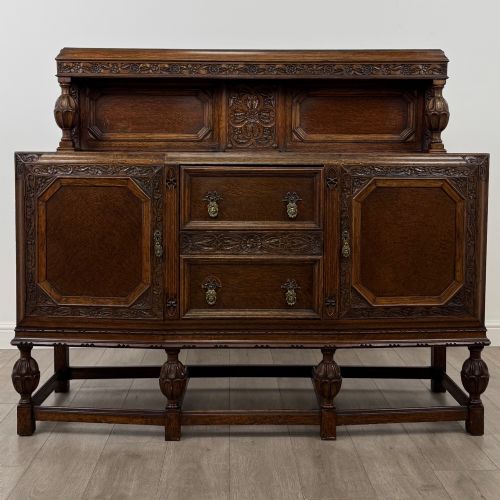
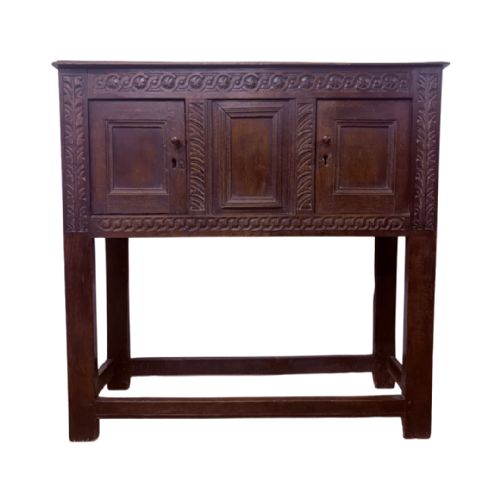
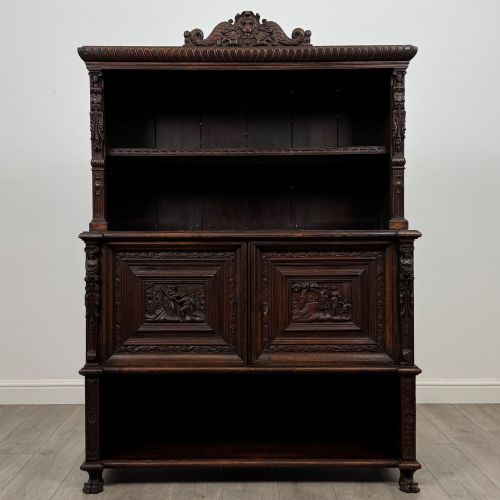
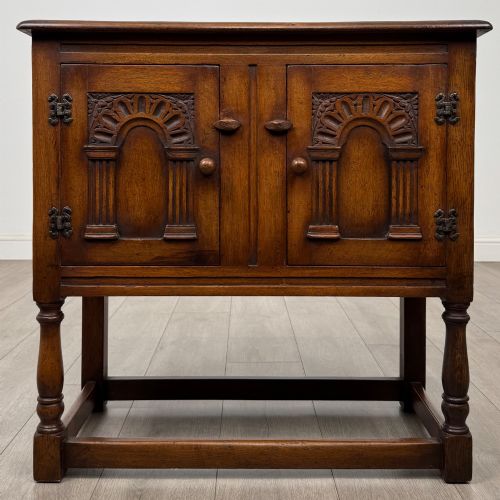



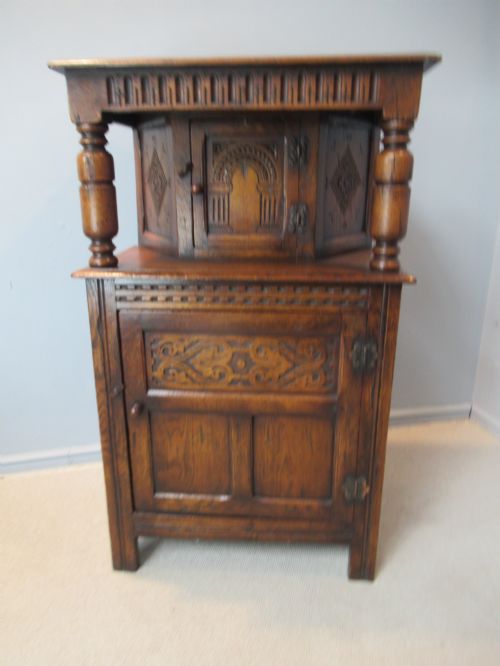
Jacobean Court Cupboard
A genuine jacobean court cupboard brings solid timber architecture and centuries of domestic history straight into a room.
Jacobean Court Cupboard
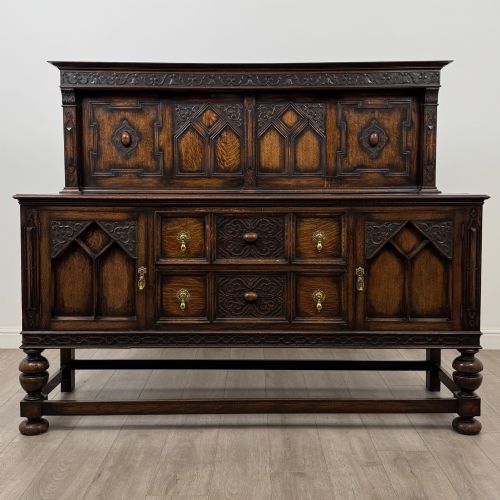
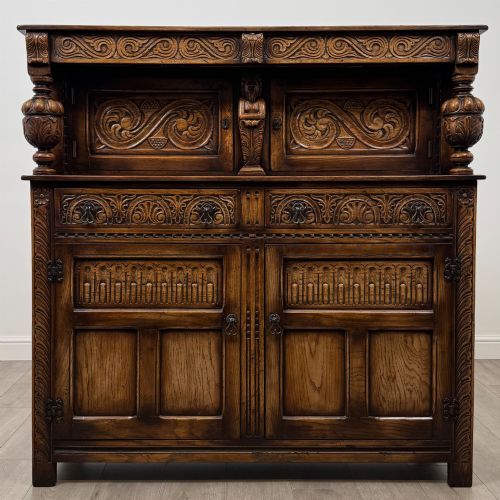
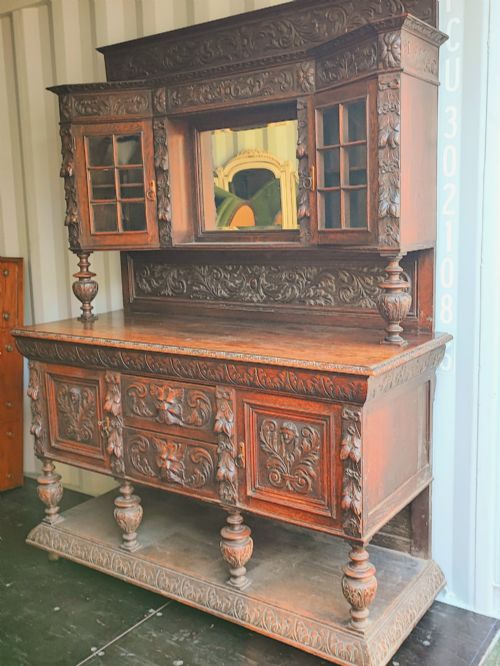
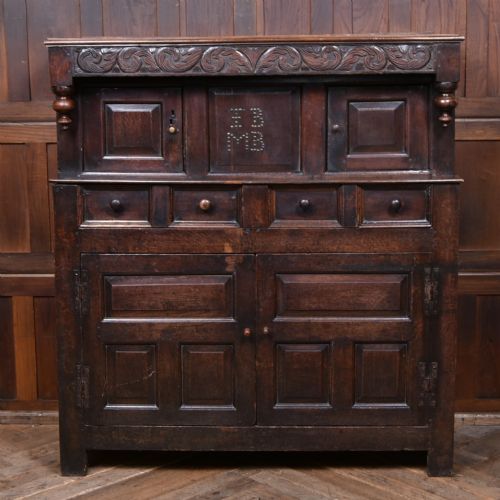
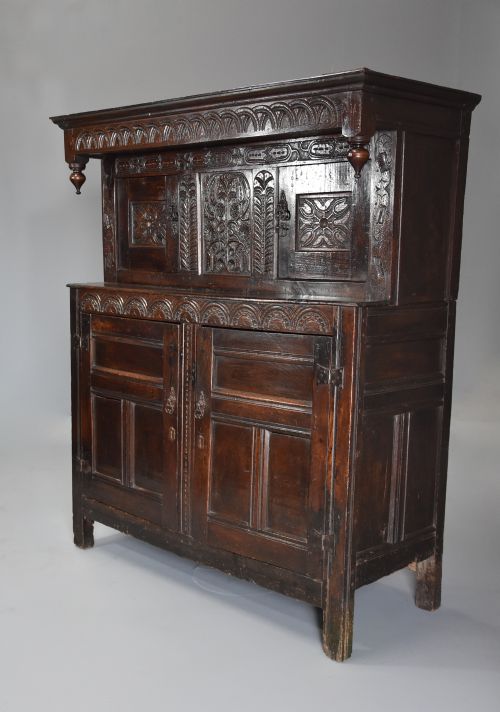
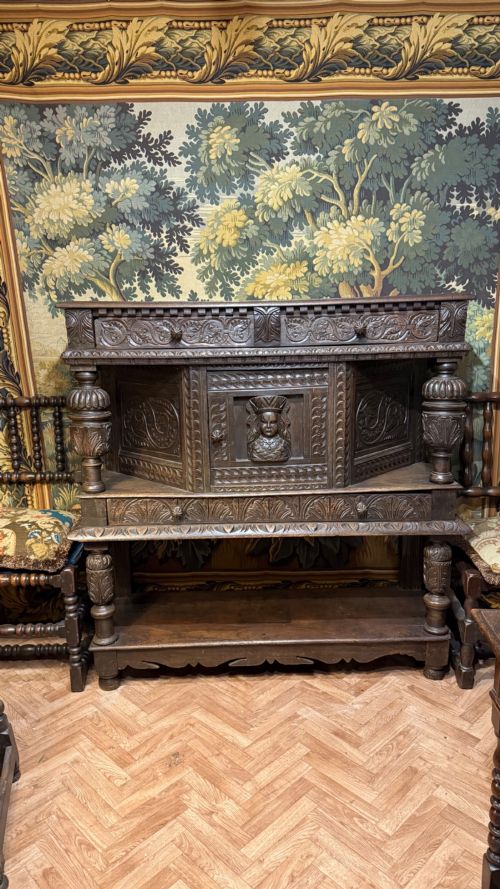
When searching for a jacobean court cupboard, collectors encounter sturdy storage furniture built to display household wealth and provisions in formal halls. These pieces typically feature a recessed upper tier supported by columns or balusters above a wider lower section enclosed by doors.
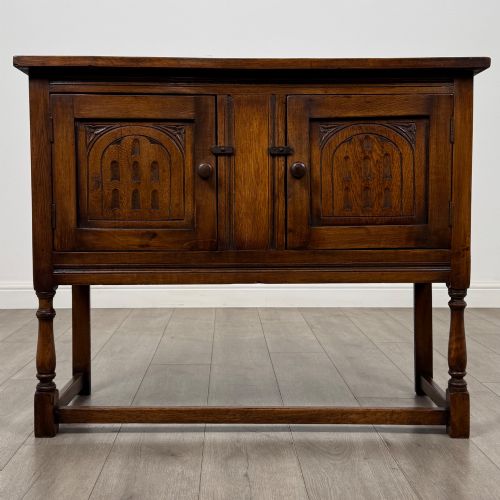
Originating primarily in English domestic interiors, these items span centuries of regional woodworking traditions. Buyers frequently meet compact country versions alongside grander architectural formats, all designed around utilitarian storage and display.
How They Were Made
Carpenters built these cabinets predominantly using solid English oak, constructed with traditional frame-and-panel joinery that accommodated seasonal timber movement. Structural elements relied on pegged joints rather than metal fixings, ensuring long-term stability.
Decoration relied heavily on surface carving, utilising gouges and chisels to produce geometric patterns, strapwork, and foliage motifs directly onto the wood. Secondary woods such as walnut and fruitwood occasionally appear alongside iron and brass hardware fittings.
What Varies in Quality
The distinction between ordinary and exceptional pieces rests upon the crispness of the hand-carved ornamentation and the integrity of the timber structure. Original surfaces and period-correct hardware elevate an example well above pieces altered or heavily restored in later centuries.
Proportion and architectural balance dictate the overall success of the form, with well-proportioned balusters and harmonious panels demonstrating superior workshop execution. The presence of untouched patination accumulated over generations signals a well-preserved history.
The Jacobean Court Cupboard Glossary
- Court Cupboard
- A traditional seventeenth-century storage and display unit featuring a recessed upper stage supported by pillars above a lower cabinet.
- Livery Cupboard
- A ventilated cabinet historically used for storing food, cheese, and candles before nightfall.
- Press Cupboard
- A heavy enclosed storage piece equipped with internal shelves or hanging space behind double doors.
- Joined Oak
- Furniture construction utilising mortise and tenon joints locked securely with wooden pegs.
- Patina
- The surface sheen and colour developed by wood through age, light exposure, and regular handling.
Jacobean Court Cupboard: Frequently Asked Questions
What is a jacobean court cupboard?
A jacobean court cupboard is a heavy wooden storage furniture piece from the seventeenth century or later revival periods, characterised by a recessed upper section supported on pillars above a lower cupboard.
These items served as prominent status symbols in historical homes, used to display plate and store valuable household provisions.
How do I spot a reproduction?
Distinguishing period originals from revival pieces involves examining the tool marks, timber shrinkage, and construction methods used in the joinery. Seventeenth-century examples display hand-cut joinery and authentic surface wear consistent with age.
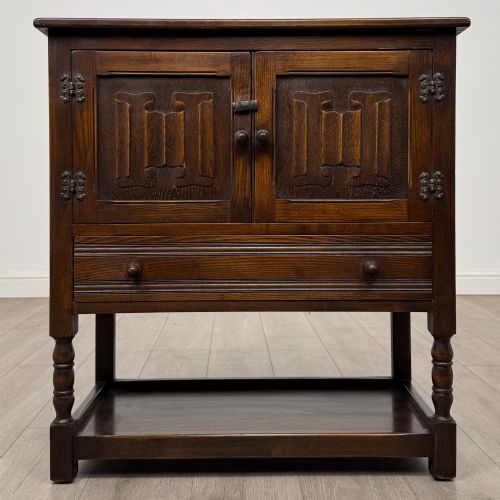
Revival pieces from the Victorian and Edwardian eras often utilise machine-sawn timber and standardised fixings while mimicking earlier decorative styles.
Where were they placed?
Historically, these cupboards stood in the great halls or dining parlours of substantial houses where guests gathered and household wealth was displayed.
In modern rooms, they function effectively as statement sideboards in dining spaces or as display cabinets in spacious hallways.
How do I care for old oak?
Maintaining historical oak furniture requires stable room humidity and protection from direct sunlight to prevent timber splitting and surface drying.
Applying occasional natural wax helps nourish the wood and maintain the deep surface sheen without building up harmful residues.