
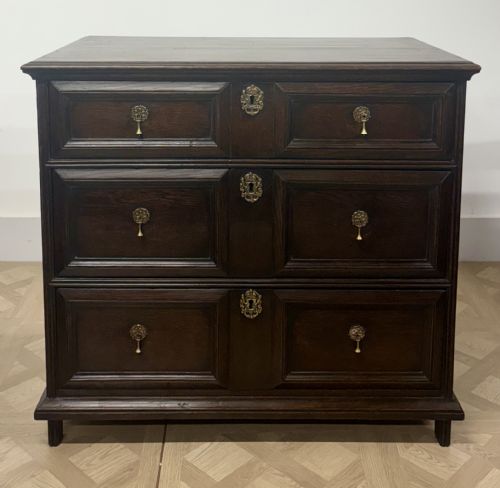
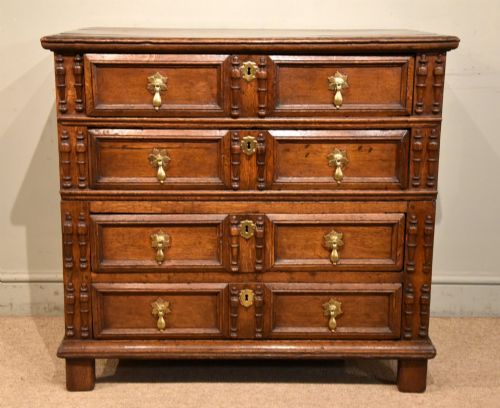


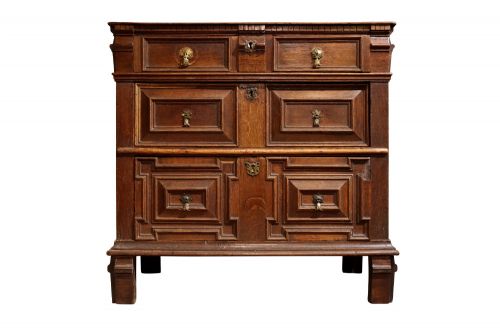


Seventeenth Century Style Dresser
Seventeenth century style dresser designs combine sturdy oak framework with practical storage, offering timeless architectural presence for traditional interiors.
Seventeenth Century Style Dresser
A seventeenth century style dresser brings substantial presence to a room through low dresser bases, court cupboards, and multi-part drawer chests. These pieces span original seventeenth century works alongside later revivals from the nineteenth and early twentieth centuries.
The form most frequently met on this page combines a heavy oak framework with deep drawers, geometric block fronts, or carved ornamentation. Buyers encounter low dresser bases and tall court cupboards most often among the current selection.
Origins represented in these listings range from authentic seventeenth century examples to early twentieth century interpretations like Ipswich oak and Jacobean style reproductions. Each variation maintains the heavy proportions and functional storage typical of the period aesthetic.
Materials and Construction Methods
Oak serves as the primary structural material across these pieces, frequently enhanced by painted finishes or left as natural timber. Joinery relies on traditional methods to support the heavy framework of dresser bases and cupboards.
Hardware fittings incorporate brass and iron for drawer pulls, drop handles, and hinges. These metal elements complement the dark timber and provide secure fastenings for doors and drawers.
Seventeenth Century Style Dresser Retail Price Guide 2026
Typical asking prices for seventeenth century style dresser among the pieces listed under this phrase on Sellingantiques today, from the lower quarter to the upper quarter. They describe what is for sale here now, not the wider market.
Current listings feature oak as the dominant material, complemented by iron and brass hardware across multiple centuries.
Assessing Craftsmanship and Age
Quality separates through the crispness of hand-carved details and the integration of geometric block fronts. Early period examples demonstrate deeper patination and joinery typical of seventeenth century workshops compared to later revival pieces.
Structural integrity depends on the retention of original timber and hardware, such as brass and iron mounts. Pieces featuring untouched painted oak surfaces or precise period mouldings sit at the upper end of the range.
The Seventeenth Century Style Dresser Glossary
- Dresser base
- A low sideboard or table fitted with drawers beneath the top surface, designed for serving or storage. These units form the lower section of larger kitchen and dining furniture arrangements.
- Court cupboard
- An enclosed cabinet featuring upper and lower tiers with carved doors, used historically for displaying plate. These pieces display prominent joinery and heavy timber construction.
- Jacobean revival
- A nineteenth or twentieth century style replicating the heavy proportions and carved ornamentation of the early seventeenth century. Workshops during this era utilised oak to recreate authentic period aesthetics.
- Geometric block front
- A drawer front decorated with projecting geometric mouldings arranged in symmetrical patterns. This technique creates strong shadow lines across seventeenth century case furniture.
- Carolean
- Pertaining to the reign of King Charles II, characterised by ornate carving and rich baroque influences. Furniture from this era utilises heavy oak and sophisticated turning.
Seventeenth Century Style Dresser: Frequently Asked Questions
What defines a seventeenth century style dresser?
These pieces are characterised by heavy oak construction, deep drawers, and functional storage arrangements like dresser bases and court cupboards. They incorporate traditional joinery and architectural mouldings that reflect early historic English design.
Buyers choose them to anchor traditional dining rooms or hallways with substantial timber furniture. The category includes genuine seventeenth century items as well as later revival interpretations.
How do I distinguish original pieces from later revivals?
Authentic period pieces display natural timber patination, hand-cut joinery, and wear patterns consistent with centuries of use. Later revivals from the nineteenth and twentieth centuries often show more uniform machine finishing and standardised construction methods.
Examining the interior drawer construction and hardware fixings helps determine the manufacturing era. Both genuine period works and quality revival pieces offer durable construction.
How were court cupboards used historically?
Court cupboards served as prominent storage and display units in wealthy seventeenth century households. They held prized household silver, linen, and tableware behind enclosed upper and lower doors.
Today, these substantial cabinets function as statement storage pieces in living spaces and dining rooms. Their enclosed shelving keeps items secure while adding architectural weight to a room.
What care do oak dressers require?
Oak furniture benefits from stable indoor humidity and protection from direct heat sources to prevent timber movement. Regular dusting with a soft cloth maintains the natural finish without building up heavy chemical residues.
Occasional application of suitable beeswax helps nourish untreated or waxed oak surfaces. Proper care preserves the deep patination developed over decades or centuries.