
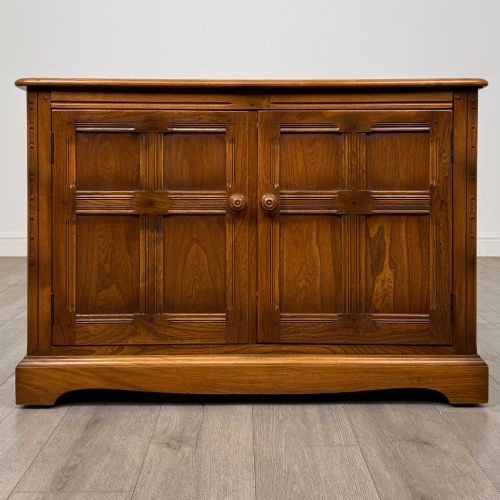
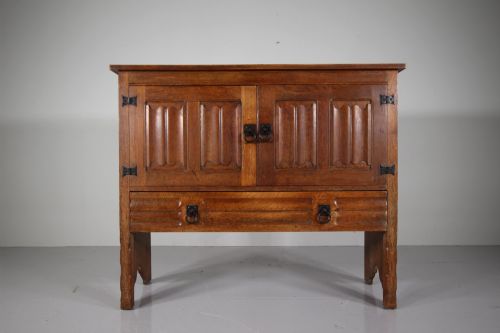
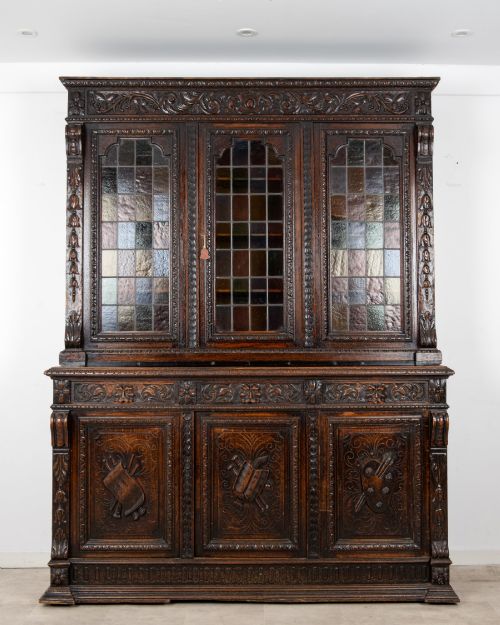
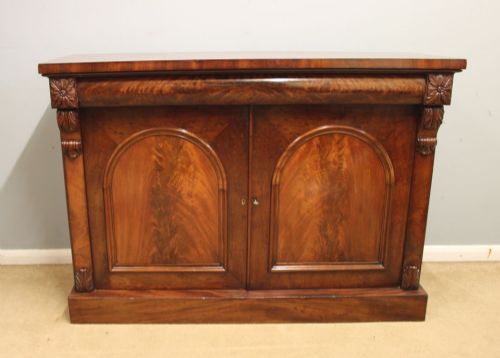
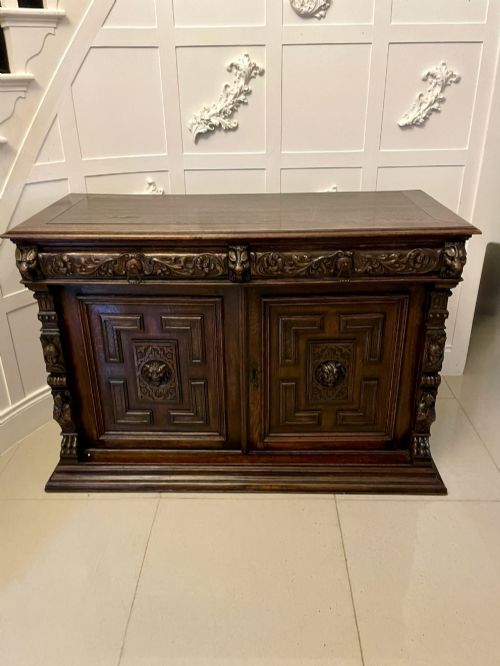
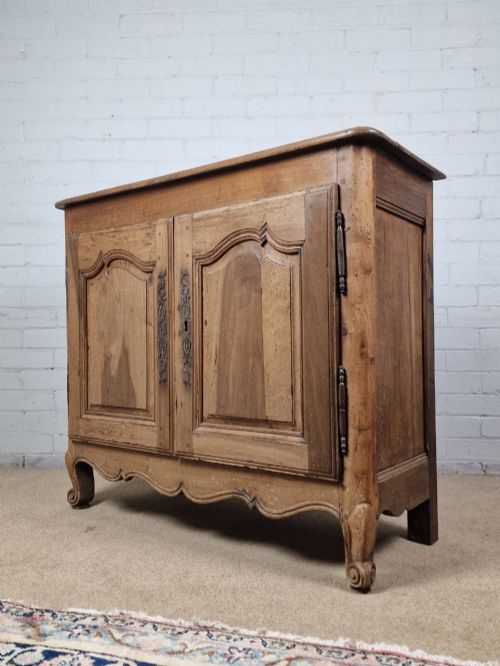
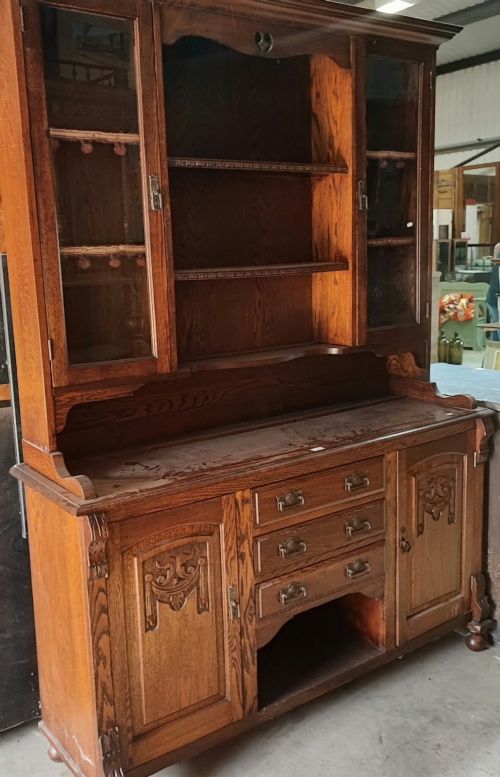
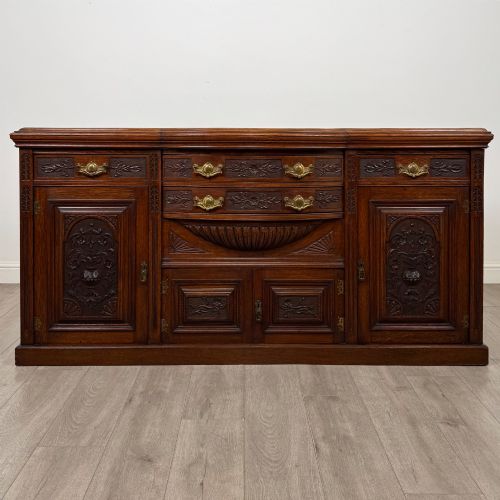
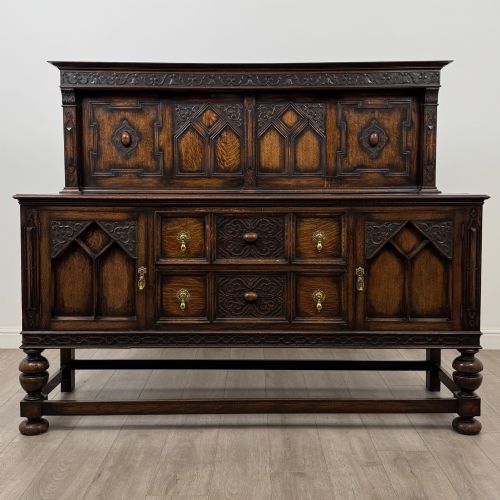
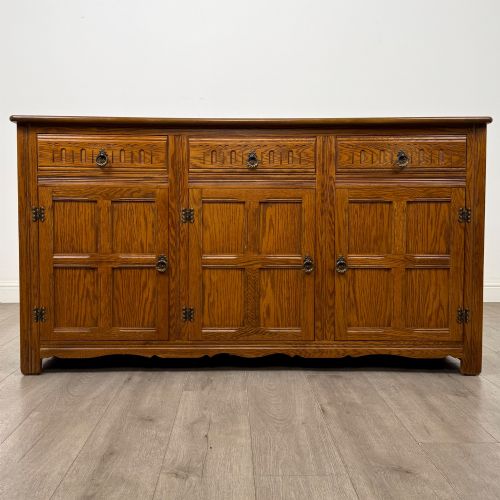
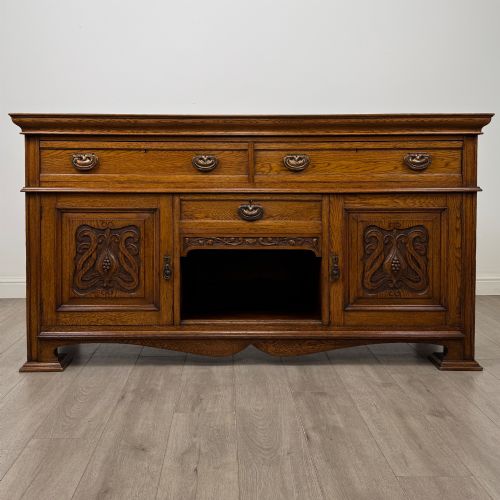
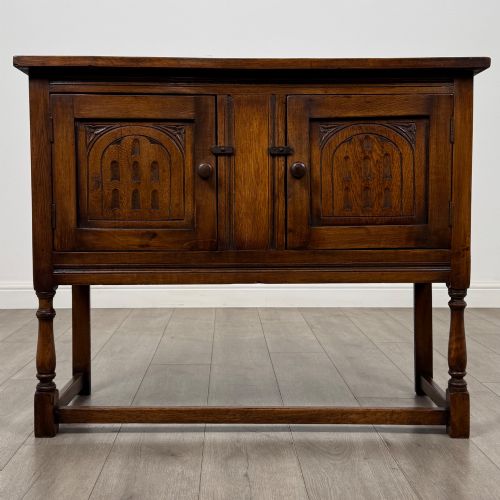
Carved Panel Sideboard
These carved panel sideboard examples are substantial storage pieces defined by carved woodwork, offering deep utility and historic character for a traditional dining room.

Identifying your carved panel sideboard
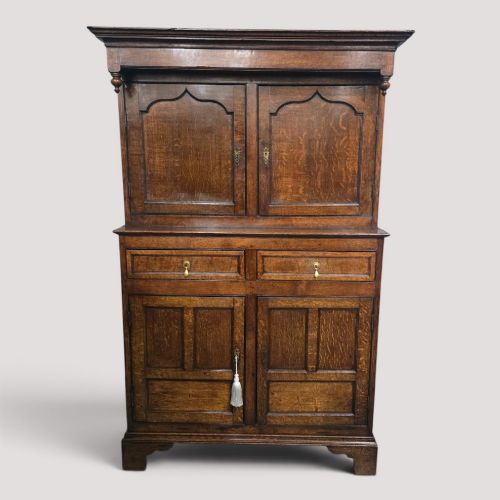
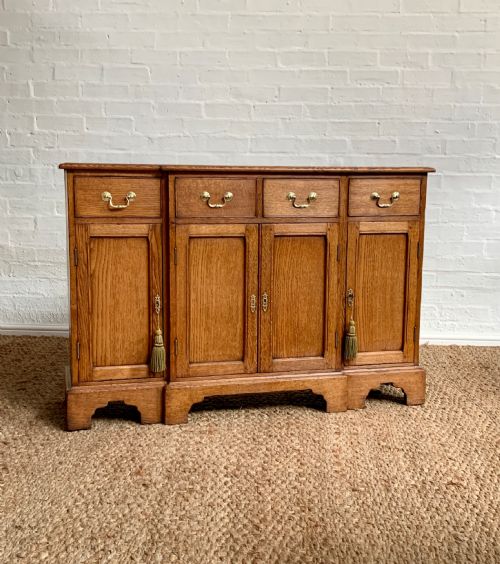
A carved panel sideboard brings heavy timber presence and historic craft to a dining space or large hallway, functioning as a serving surface and cabinet storage. The pieces meeting this search phrase appear across several centuries and stylistic revivals, taking the form of large buffets, chiffoniers, and serving cabinets.
The Victorian era dominates the selection, bringing heavy carved oak construction with monumental proportions and substantial surface area. Alongside these, examples stretch from Georgian proportions through to 1920s neo-classical revival designs and continental provincial workshops.
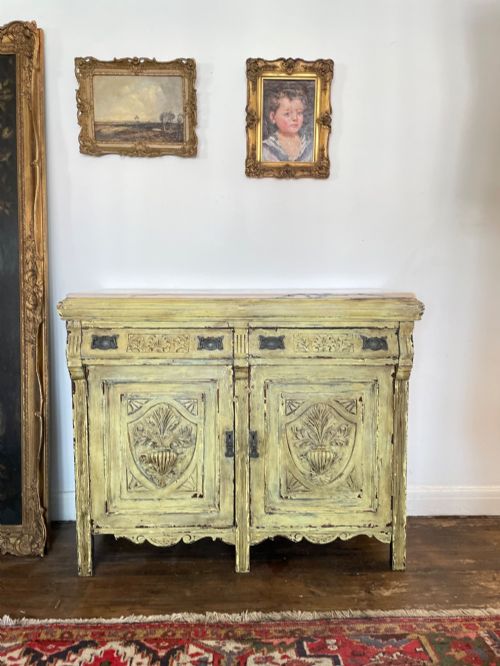
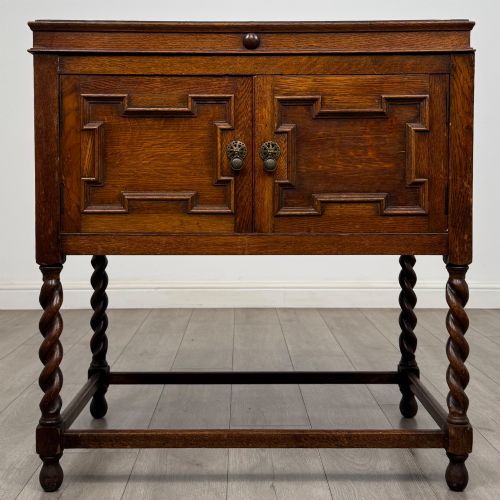
European origins introduce specific regional variations, including Northern French oak cabinets and Belgian mahogany serving sideboards with barley twist supports. Scottish workshops also contribute grand oak buffet cabinets to the recorded inventory.
Construction and materials
Carpenters built these cabinets predominantly in solid oak and mahogany, occasionally utilising figured timbers such as pollard oak for decorative impact. Metal and brass hardware, including drop handles and key escutcheons, complete the structural assembly of doors and drawers.
Carved ornament defines the surfaces, executed directly into the solid wood panels with motifs ranging from gothic tracery and architectural mouldings to floral reliefs. Structural support often relies on turned elements like barley twist columns, reflecting the stylistic vocabulary of the period.
Retail Price Guide 2026
Typical UK retail prices for carved panel sideboard, calculated from the Sellingantiques database of over a million retail prices indexed since 2003. This retail price guide relies exclusively on Sellingantiques data; no external sources or auction records are used, so the figures do not describe the wider market.
Site listings demonstrate a primary reliance on oak and mahogany, supplemented by decorative pollard oak and brass hardware.
Judging quality and proportion
Quality rests in the depth and crispness of the timber carving, where hand-chiselled relief work on panels separates superior workshop output from simpler production. The choice of primary timber also dictates the tier, with figured pollard oak and dense old-growth mahogany sitting above standard utility grades.
M. D. Miller & Sons
The Carved Panel Sideboard Glossary
- Chiffonier
- A compact sideboard or low cabinet equipped with drawers and shelves, often featuring a raised superstructure at the back. It serves dining rooms as a secondary serving station.
- Pollard oak
- Timber taken from trees that have been pollarded, producing a heavily knotted and highly figured grain pattern. Cabinet makers prize this wood for decorative veneer and panel highlights.
- Barley twist
- A decorative turning technique resembling a spiralling rope column, common on legs and structural supports during the nineteenth century. This form adds dynamic vertical rhythm to heavy timber furniture.
- Tracery
- Architectural stone or woodwork ornamentation forming open patterns, adapted by cabinet makers for cabinet doors and panels. Gothic revival pieces frequently employ this geometric motif.
- Buffet
- A heavy dining room piece designed for food service and tableware storage, possessing greater vertical height and cabinet space than a standard low sideboard.
Frequently Asked Questions
What is a carved panel sideboard used for?
These pieces serve primarily as heavy dining room storage for tableware, linens, and serving dishes while providing an upper surface for food presentation during meals.
Historically, they anchored the dining interior as focal points of craftsmanship, displaying the wealth and taste of the household through elaborate woodwork.
How do I date a carved panel sideboard?
Dating relies on identifying the underlying wood species, construction joinery, and the specific stylistic vocabulary employed in the carved panels. Victorian pieces lean toward heavy oak and monumental scale, while earlier Georgian or Regency examples show lighter proportions and refined mahogany surfaces.
Regional details, such as French provincial motifs or Gothic tracery, further narrow the decade of origin by aligning with known revival periods.
Are these sideboards suitable for modern homes?
Their substantial depth and height require generous floor space and high ceilings to sit comfortably without overwhelming a room. Placing one in a spacious dining area or a wide hallway allows the timber presence and carved details to function as primary architectural furniture.
Internal shelf configurations also accommodate contemporary storage needs for dinnerware and glassware.