
Vintage Dining Buffet
These vintage dining buffet pieces provide formal storage and serving surfaces for the home, drawing from periods ranging from the Georgian era through to Art Deco.
Vintage Dining Buffet
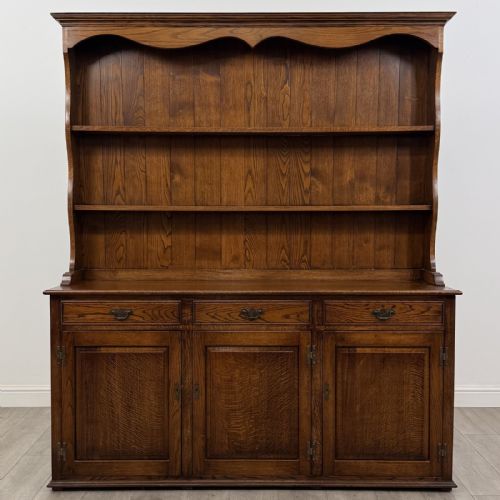
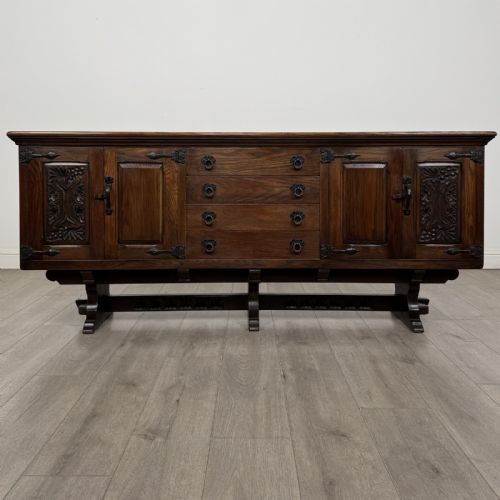
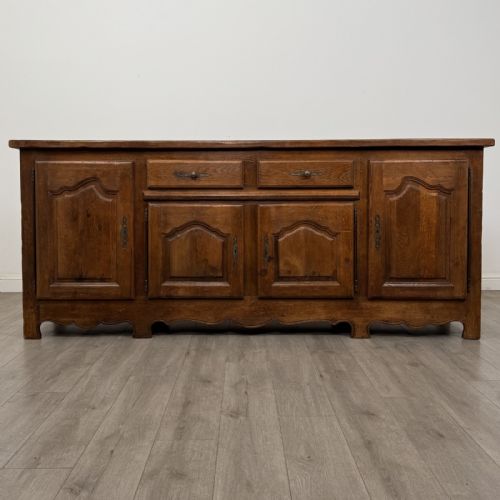
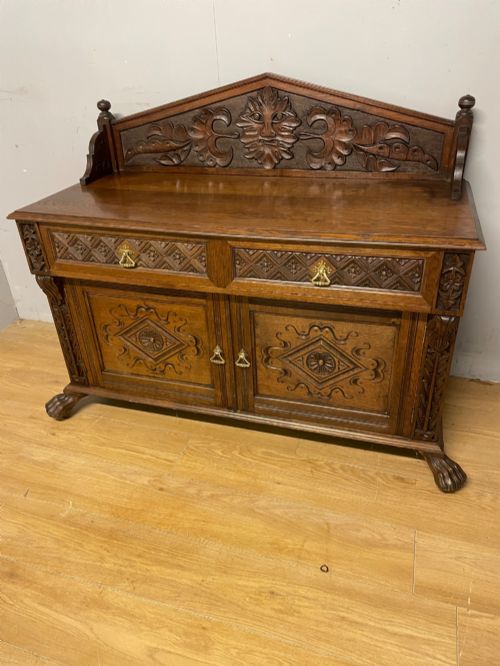
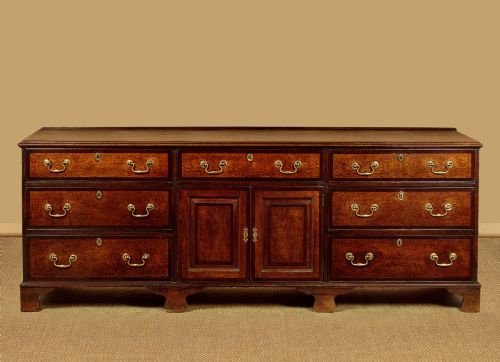
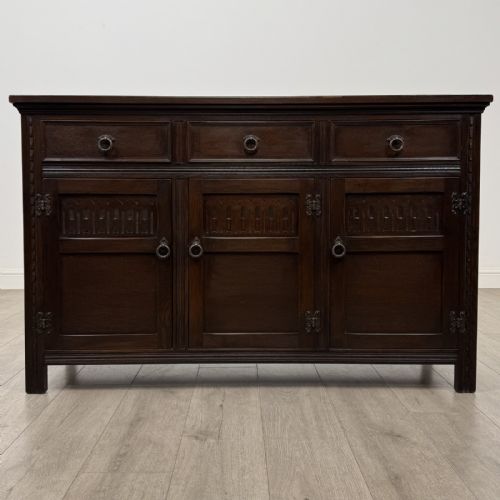
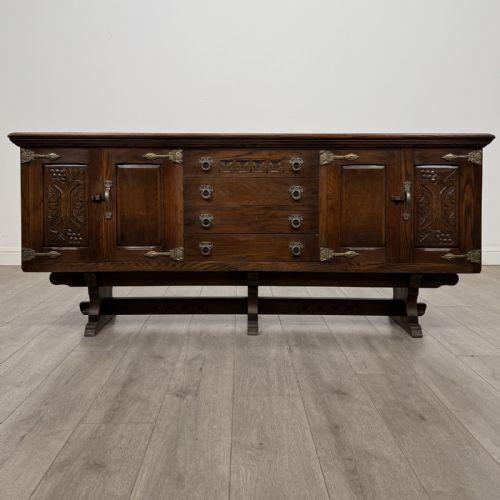
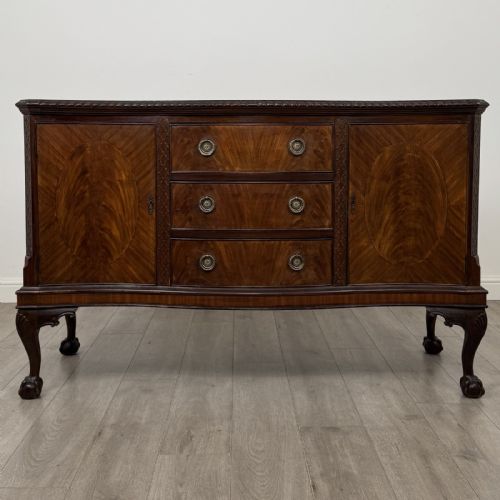
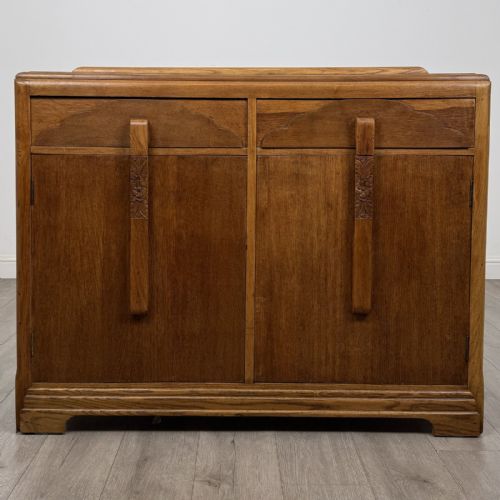
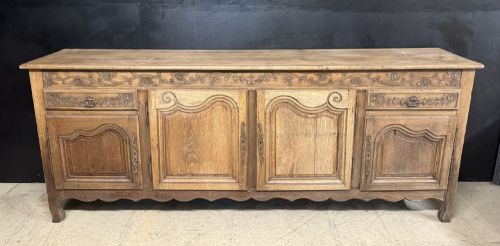
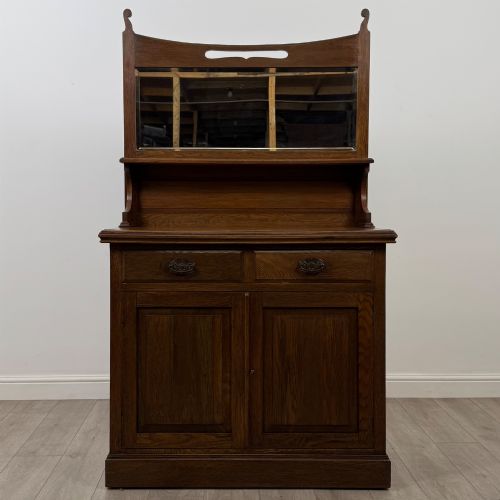
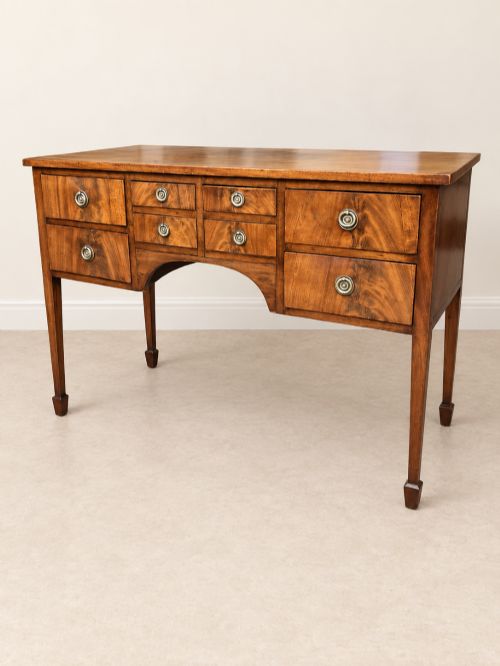
A vintage dining buffet encompasses sideboards, chiffoniers, serving tables, dressers, and dumbwaiters designed for the dining room. The selection spans pieces from the Georgian, Victorian, and Edwardian eras, alongside later Art Deco examples.
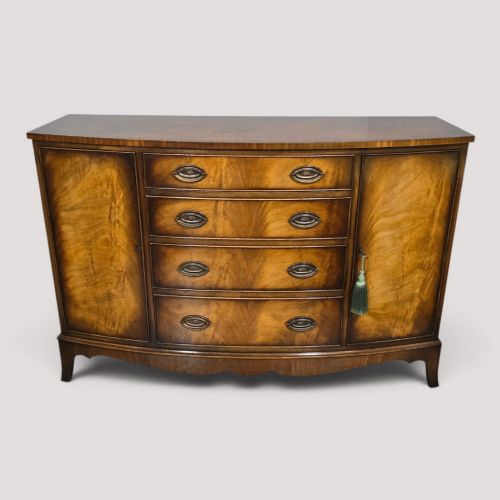
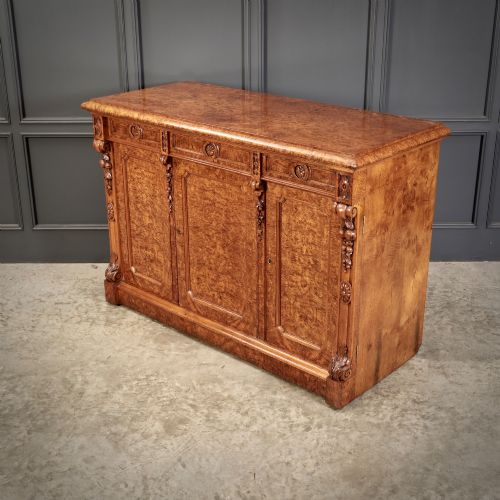
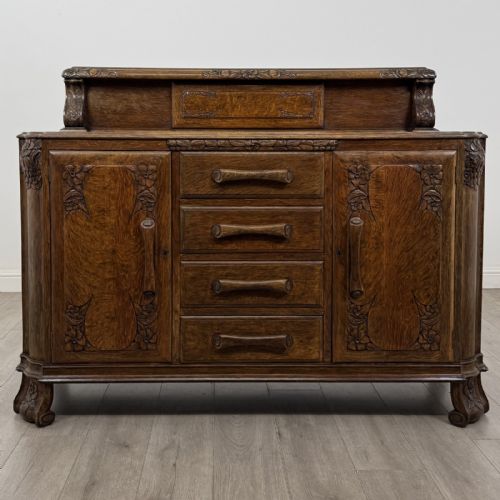
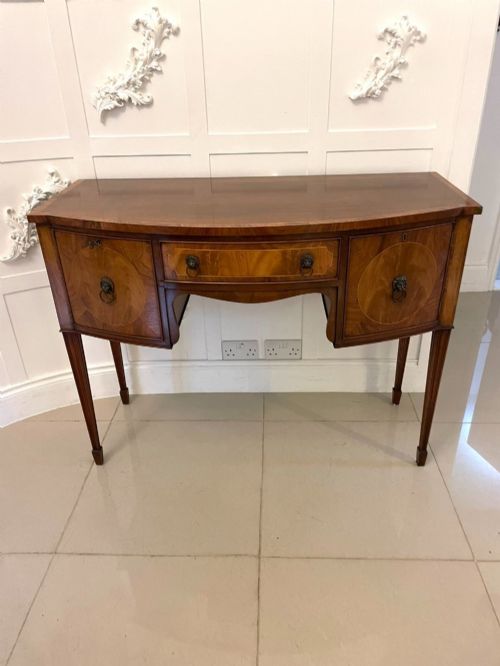
Mahogany and oak predominate across these forms, frequently accompanied by burr walnut, satinwood, and sycamore veneers. Items range from pedestal sideboards and bow-front cabinets to carved oak server units.
Materials and Technique
Cabinetmakers utilised solid timbers alongside figured veneers such as flame mahogany, burr walnut, and satinwood to create decorative grain patterns. Carving, inlay work, and brass mounts appear across multiple periods.
Construction methods include bow-front framing, serpentine shaping, and pedestal bases, supported by details like lion paw feet, glass doors, and marble tops.
Several sideboards come equipped with specialised twelve-piece cutlery sets hidden within their fitted drawers.
Craftsmanship and Proportion
Quality rests in the selection of timber veneers, the precision of cabinet joinery, and the restraint or execution of carved detail. Pieces attributed to documented makers such as Maurice Adams, Gomme, and Hille demonstrate distinct design execution.
Proportion and surface finish distinguish standard utilitarian furniture from finer architectural examples with serpentine or bow fronts, inlaid stringing, and matched burr walnut grain.
Maurice Adams·Gomme·Hille
The Vintage Dining Buffet Glossary
- Serpentine front
- A furniture front curving inward centrally and outward at the ends in a continuous sweep. This shape requires advanced woodworking skill.
- Bow front
- A convex, outwardly curved front profile popular in sideboard design from the Georgian period onward. It softens the linear appearance of dining room furniture.
- Chiffonier
- A compact sideboard or low cupboard featuring drawers and shelves. It originated in the nineteenth century as a dining or drawing room serving piece.
- Dumbwaiter
- A tiered serving table without sides, designed to hold dishes or cutlery beside a dining table. Examples appear in carved oak and other dense timbers.
- Breakfront
- A cabinet design where the central section projects forward from the flanking outer sections. This architectural arrangement creates depth and shadow.
Vintage Dining Buffet: Frequently Asked Questions
What defines a vintage dining buffet?
A vintage dining buffet comprises low storage furniture used in dining spaces, encompassing sideboards, serving tables, and dressers. These items provide surface space for food presentation and storage for cutlery and tableware.
Designs reflect prevailing aesthetic movements, spanning early mahogany pieces to geometric Art Deco walnut cabinets.
How do I identify an Art Deco sideboard?
Art Deco sideboards date from the interwar period and typically feature contrasting veneers like walnut and sycamore. They showcase geometric lines, streamlined silhouettes, and minimal carved ornament.
Makers such as Maurice Adams, Gomme, and Hille produced notable examples during this era.
What is the difference between a sideboard and a chiffonier?
Sideboards are generally larger dining room cabinets designed for holding extensive tableware and serving food. Chiffoniers are more compact versions that often incorporate a mirror back or smaller tier of shelves.
Both forms utilise hardwoods like mahogany and oak, but chiffoniers suit more modest room dimensions.
How do I care for mahogany and walnut surfaces?
Maintain timber surfaces by dusting with a dry cloth and avoiding placement near direct heat sources or strong sunlight. Wax finishes benefit from occasional gentle feeding to preserve the grain.
Protect marble tops from acidic liquids and moisture to prevent staining on integrated serving areas.