
Brown Wooden Buffet Table
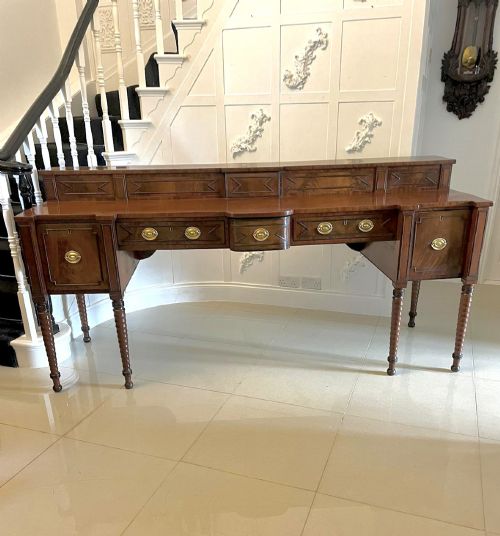
A brown wooden buffet table brings rich timber grain and period dining room gravitas to any interior.
Brown Wooden Buffet Table
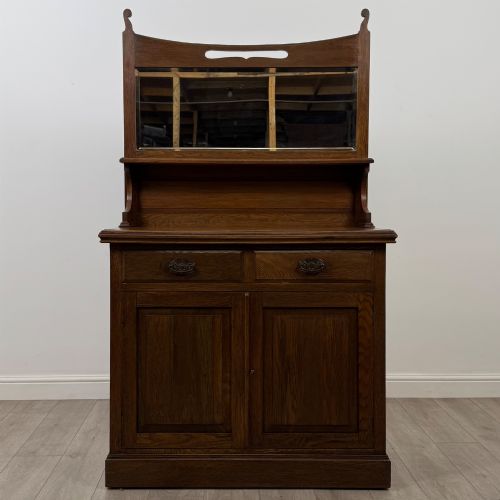
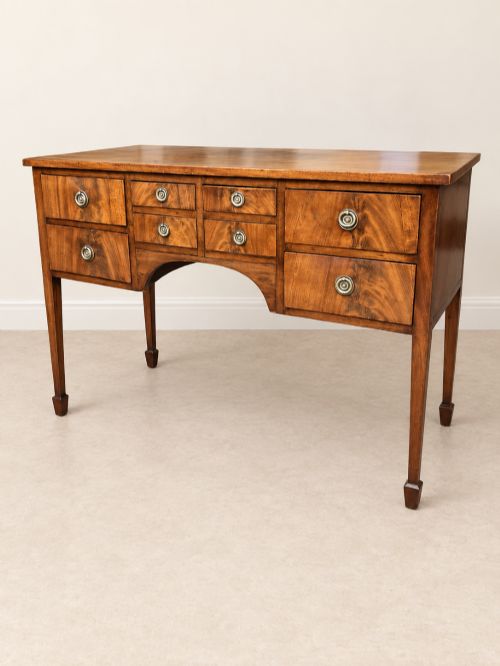
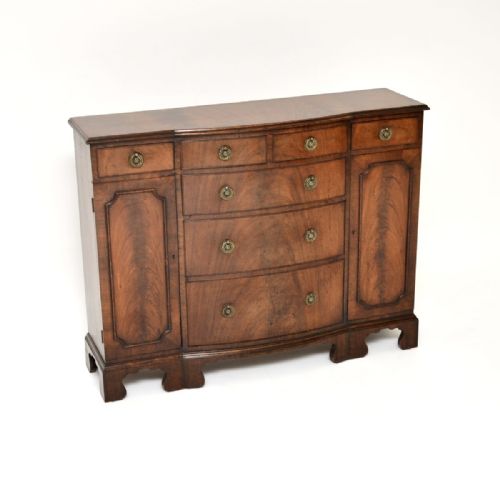
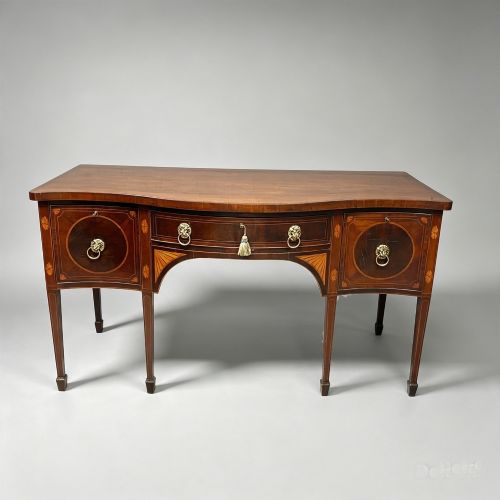
A brown wooden buffet table encompasses serving tables, sideboards, chiffoniers, and dresser bases designed for dining and living spaces. These pieces function primarily as serving surfaces and storage units for tableware and provisions.
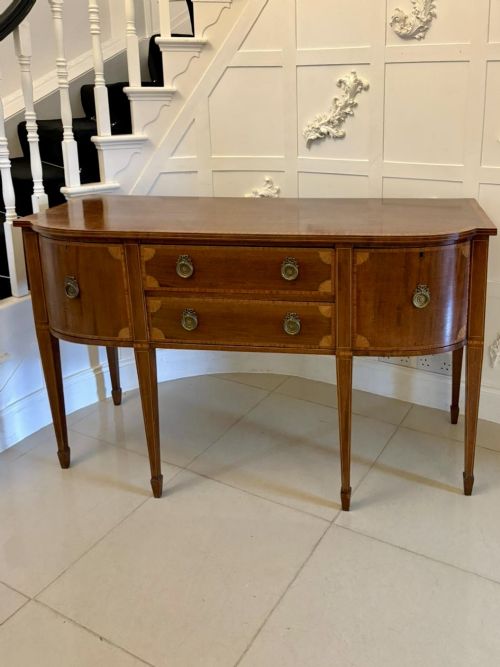
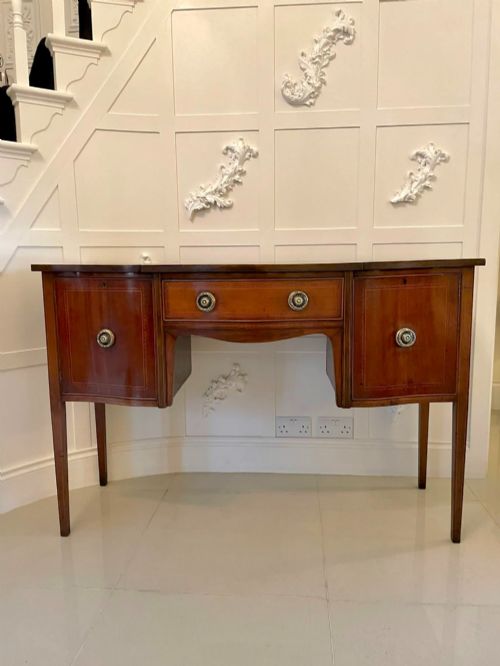
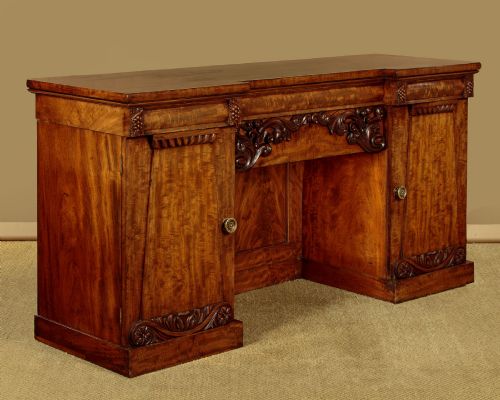
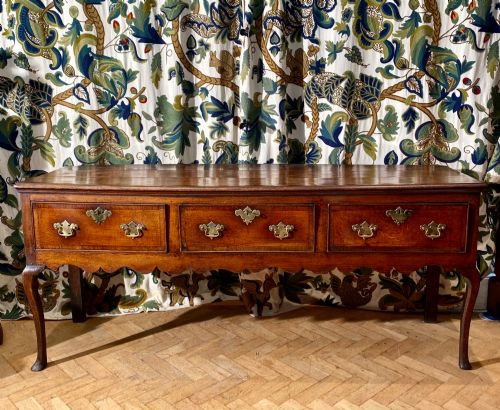
The selections on this page span the eighteenth, nineteenth, and early twentieth centuries, drawing from Georgian, Victorian, Edwardian, and Regency periods. Mahogany and oak dominate the offerings, appearing alongside walnut, teak, and satinwood accents.
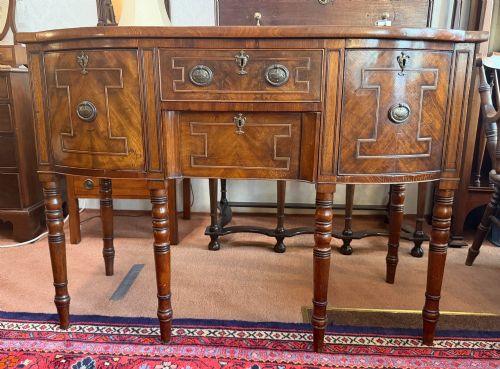
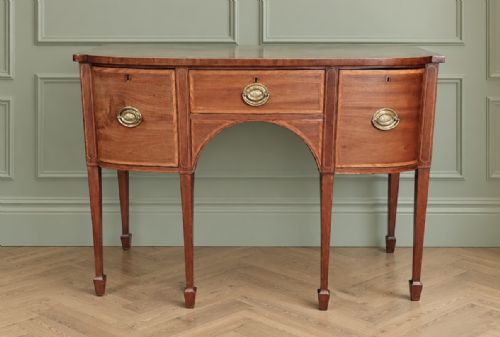
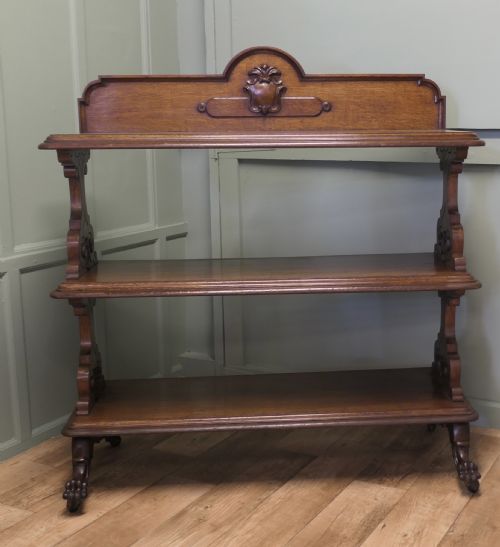
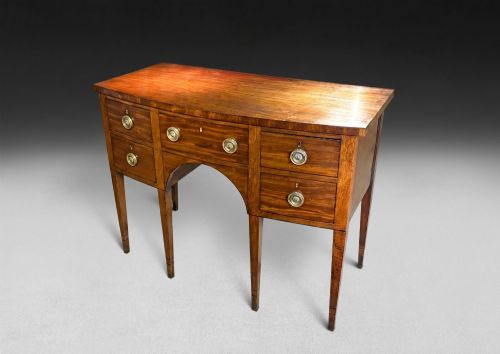
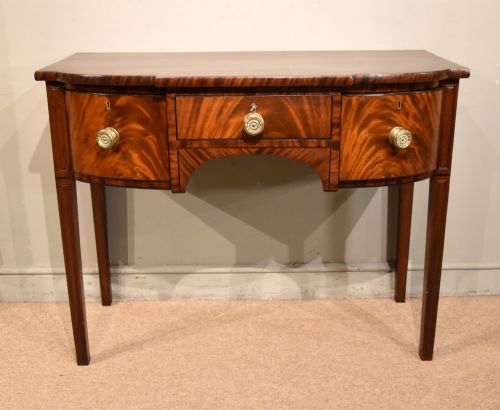
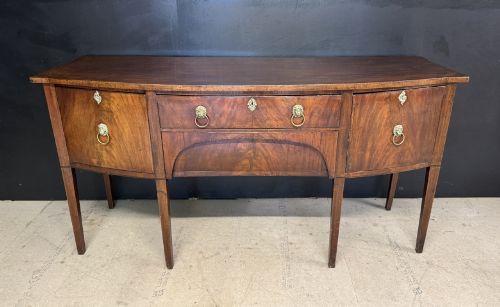
Buyers will encounter various forms, from bow-front and serpentine sideboards to tiered buffets and solid oak dresser bases. Each piece reflects the functional demands and aesthetic tastes of its specific era.
Materials and construction
Cabinetmakers utilised robust hardwoods such as mahogany and oak as the structural foundation for these serving tables and buffets. Walnut and teak also appear in specific regional and period pieces.
Decorative elements frequently incorporate contrasting timbers through boxwood and satinwood inlay or crossbanding. Brass handles, rails, and fixtures complement the timber surfaces across multiple eras.
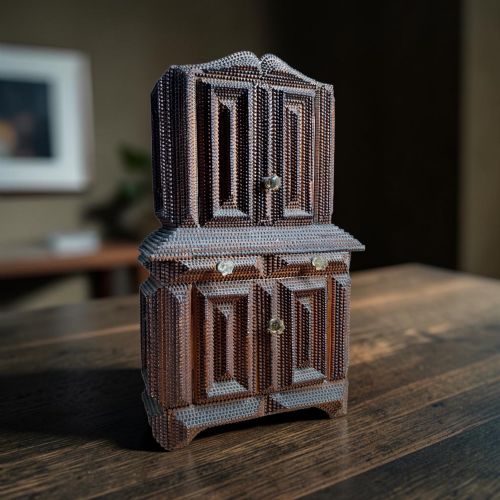
Form variations include three-tier buffets, bow-front sideboards, and French tramp art cabinets.
Evaluating craftsmanship
Quality rests in the selection of timber figures, such as flame mahogany or burr walnut, and the precision of the joinery. Fine examples display careful alignment in drawer construction and harmonious grain matching across front panels.
Design sophistication also dictates standing, where pieces following specific cabinetmaker traditions or featuring complex serpentine and bow-front shapes demonstrate superior artisanal execution.
M D Miller And Sons
The Brown Wooden Buffet Table Glossary
- Buffet
- A sideboard or serving table used for holding food and tableware. These pieces often feature multiple tiers or cupboards.
- Dresser Base
- A low kitchen or dining cabinet with drawers and cupboards, traditionally topped with a plate rack. The examples listed here omit the upper rack.
- Bow-front
- A convex, curved front on a cabinet or sideboard. This design softens the rectangular profile of the furniture.
- Serpentine
- A furniture front curved in a wave-like shape, with a convex centre flanked by concave curves. This style requires advanced woodworking skill.
- Crossbanding
- A strip of veneer applied to the border of a tabletop or drawer front with the grain running perpendicular to the surface.
Brown Wooden Buffet Table: Frequently Asked Questions
What is a brown wooden buffet table used for?
These pieces serve as practical storage and display furniture in dining rooms and living spaces. They hold crockery, cutlery, and glassware while providing a surface for serving food.
Historically, they evolved to meet the demands of formal dining, offering enclosed cupboards and drawers to keep dining accessories organised.
How do I identify a Georgian buffet table?
Georgian pieces often feature solid mahogany or oak construction with classical proportions and restrained decorative carving. Look for hallmarks such as tapered legs, brass drop handles, and bow-front profiles.
Many examples from this era reflect the design influence of prominent cabinetmakers like Thomas Sheraton and George Hepplewhite.
Are Victorian buffet tables different from Georgian ones?
Victorian serving furniture tends to be heavier and more robust, frequently utilising dark mahogany or carved oak. These pieces often incorporate elaborate architectural details, panelled doors, and adjustable shelving.
Stylistic revivals during the Victorian era also meant makers drew heavily on earlier Georgian and Jacobean motifs.
How do I care for antique wood furniture?
Maintain timber surfaces by dusting regularly with a soft, dry cloth and avoiding direct sunlight or extreme temperature fluctuations. Natural beeswax polish helps nourish the wood and preserve the finish.
Keep moisture away from the surface and use protective mats beneath serving dishes or objects placed on the top.