

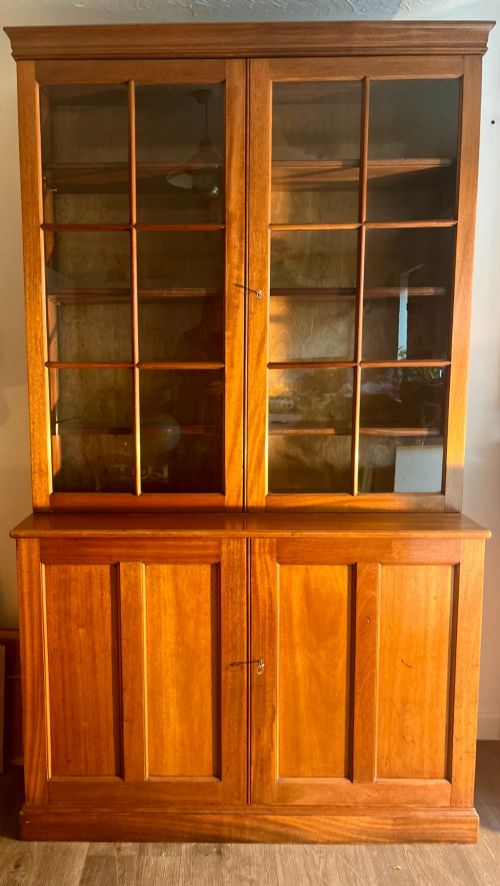
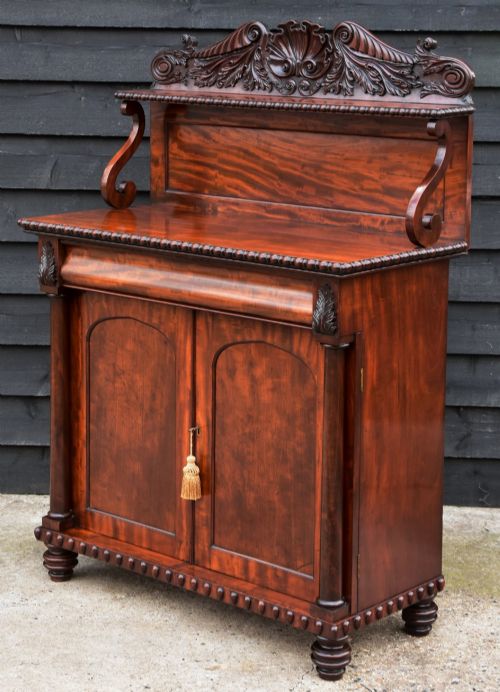
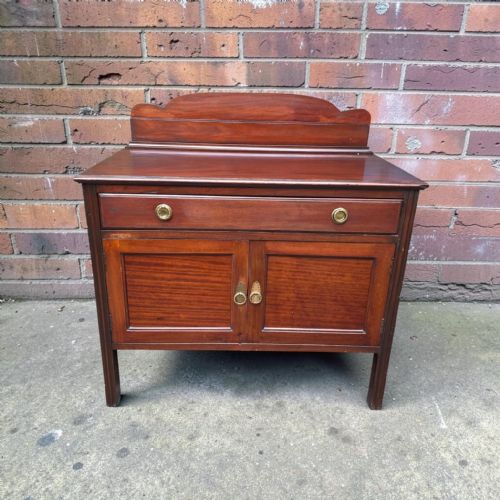
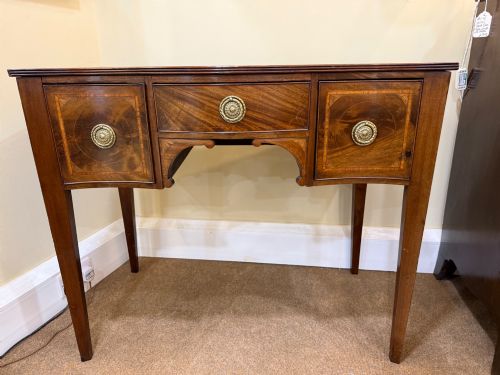
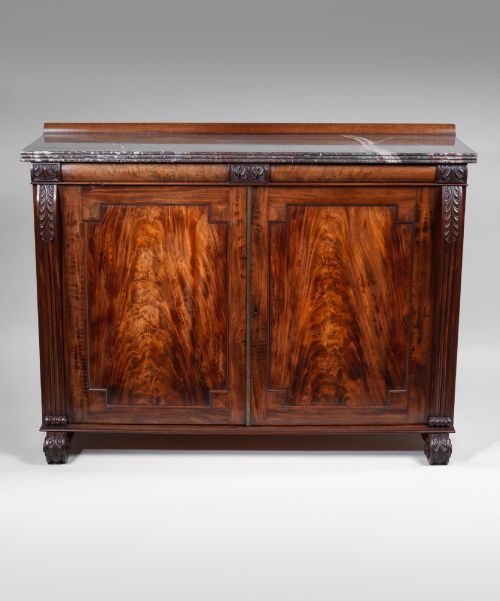
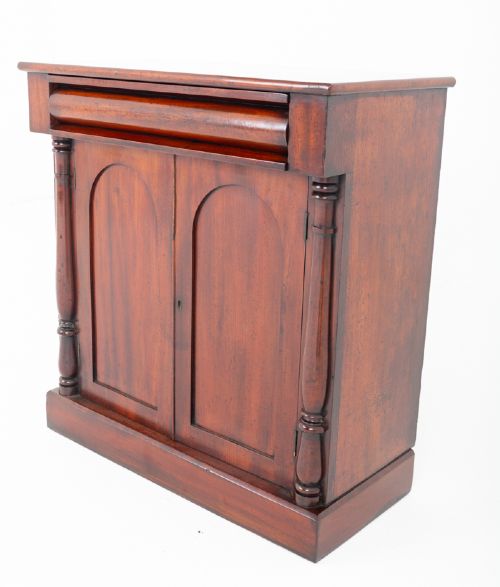
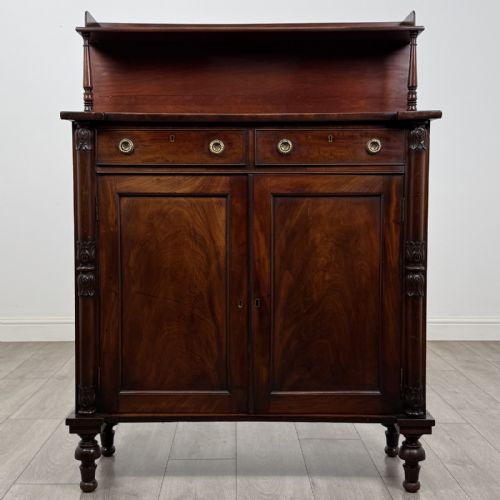
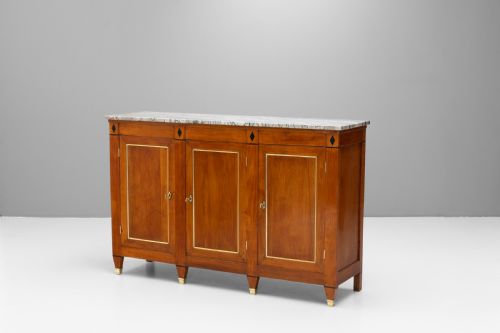

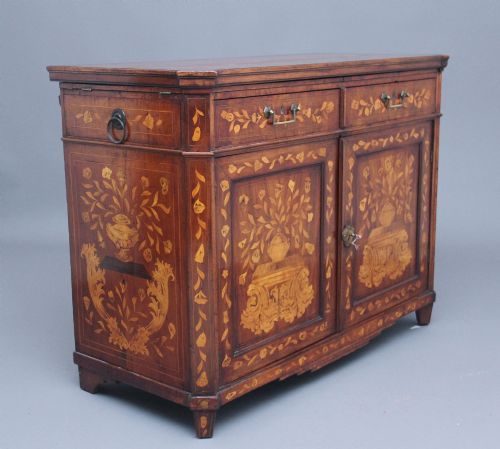
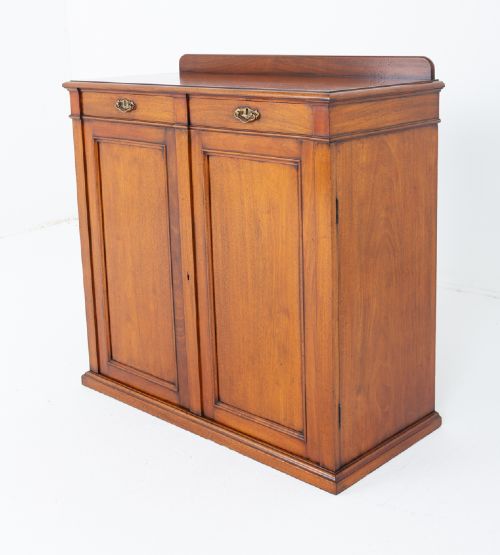
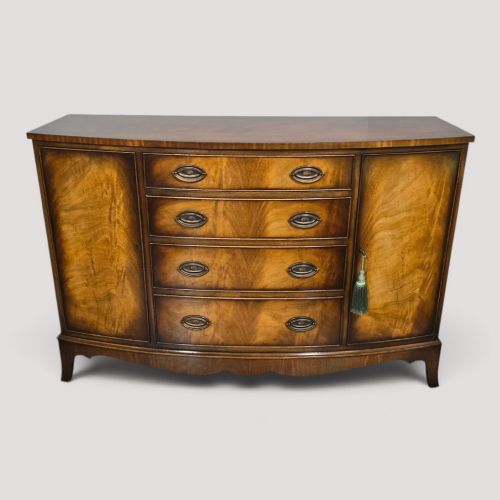
Antique Mahogany Sideboard Cabinet
These antique mahogany sideboard cabinet pieces offer a practical surface and substantial storage, bringing rich grain and classic form to a dining room.
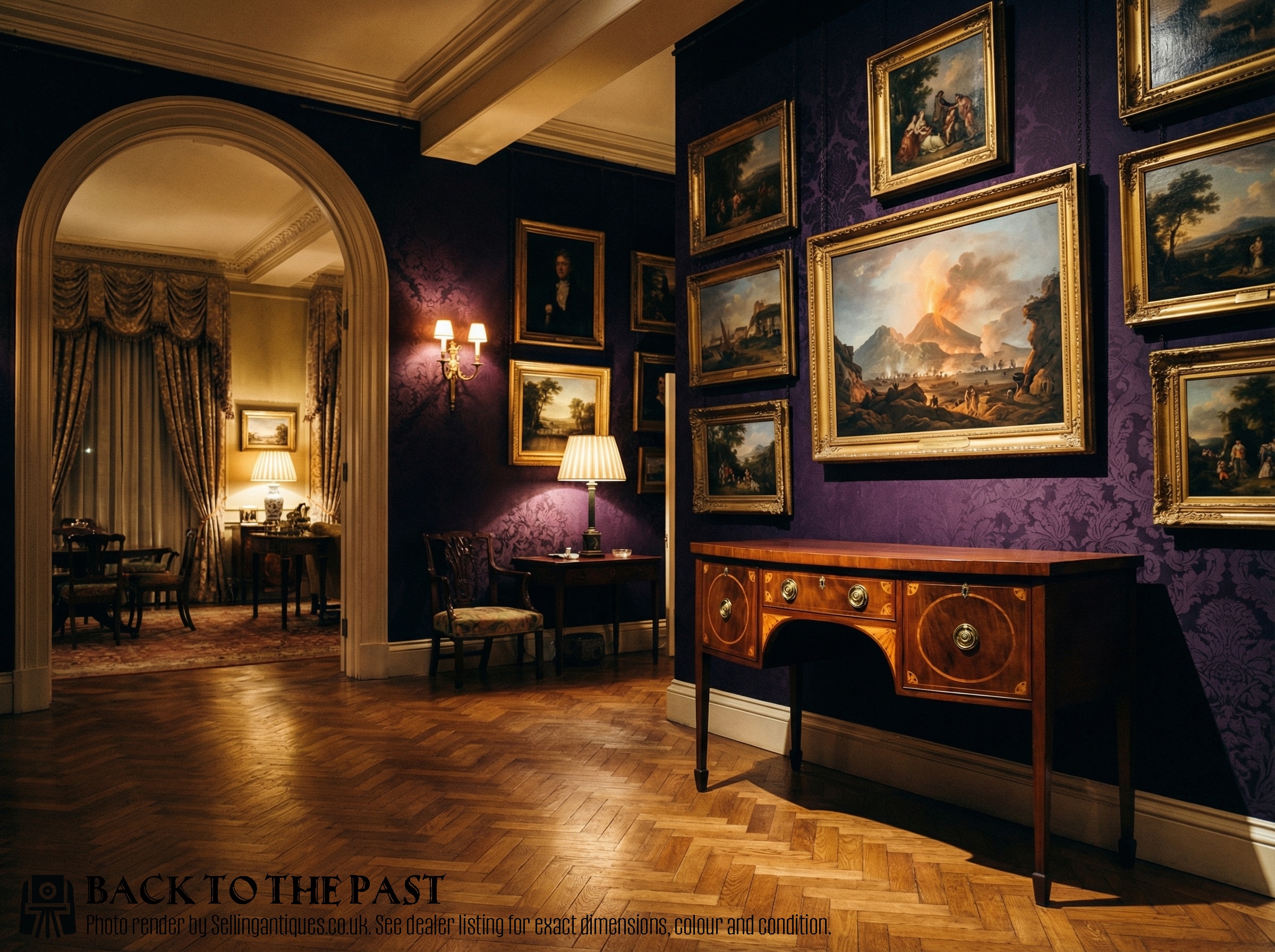
Antique Mahogany Sideboard Cabinet
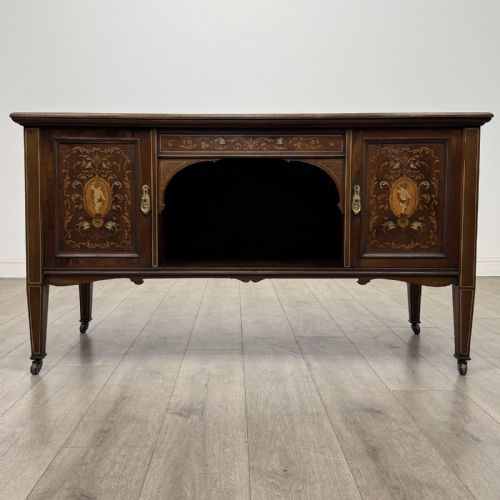
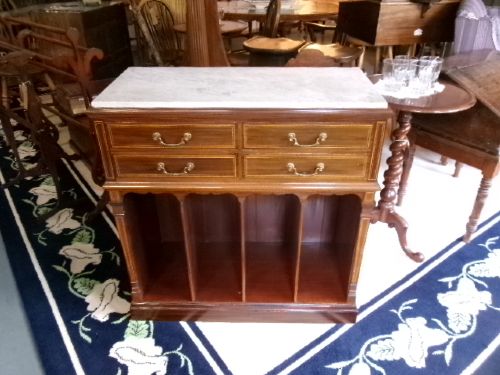
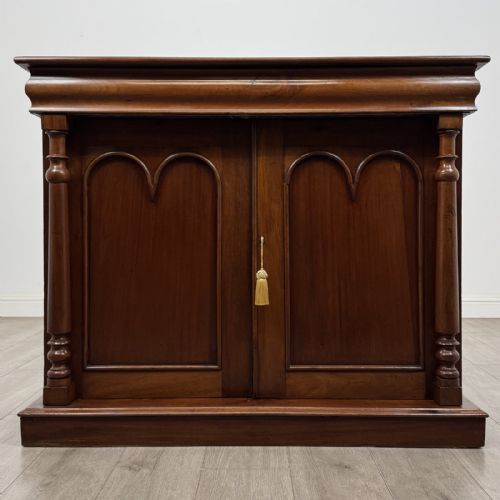
When searching for an antique mahogany sideboard cabinet, a buyer encounters substantial dining room furniture designed for serving and storage across several distinct eras. The pieces span Georgian, Regency, William IV, Victorian, and Edwardian periods, appearing in forms from bowfront sideboards to glazed display cabinets and chiffoniers.
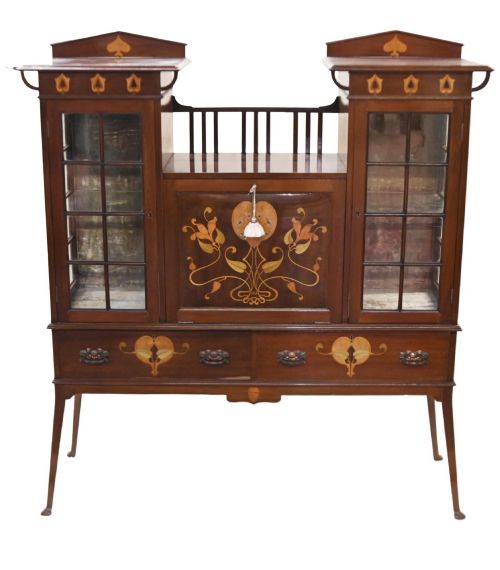
Georgian and George III examples often feature clean lines and generous proportions, sometimes with inlaid satinwood or boxwood details. Later Victorian and Edwardian pieces introduce alternative configurations, such as two-part display cabinets, breakfront forms, and chiffoniers with mirror backs.
The material remains consistently rich, frequently utilising flame mahogany alongside brass hardware and glass doors. Whether selecting an 1800 large sideboard or a 1910 Sheraton revival server, the pieces combine traditional joinery with the functional demands of formal dining spaces.
Materials and construction methods
Cabinet makers utilised solid mahogany and flame mahogany veneers over secondary timbers, exploiting the striking grain patterns for drawer fronts and cabinet doors. Construction relied on traditional dovetail joints for drawers and mortise and tenon frames for structural support.
Decorative embellishments included satinwood and boxwood inlay, marquetry, and carved detailing reflecting Chippendale and Sheraton design revivals. Hardware typically consisted of cast brass handles and escutcheons, while glazed sections incorporated leaded or wooden muntins to support glass panes.
Antique Mahogany Sideboard Cabinet Retail Price Guide 2026
Typical asking prices for mahogany sideboard cabinet among the pieces listed under this phrase on Sellingantiques today, from the lower quarter to the upper quarter. They describe what is for sale here now, not the wider market.
Listings feature mahogany, satinwood inlay, brass, and glass across Georgian, Victorian, and Edwardian periods.
Factors determining quality
The calibre of a piece rests heavily on the selection of the mahogany timber and the symmetry of its flame grain figures across the doors and drawers. Superior examples display meticulous hand-cut dovetailing, crisply executed satinwood or boxwood stringing, and well-preserved original brass fixtures.
Construction depth and proportion also dictate standing, with finer items retaining their original backboards, secondary drawer linings, and smooth-running timber runners without modern alterations. Maker attribution, such as work originating from established workshops like Lamb of Manchester or Edwards and Roberts, further elevates a piece within its period.
Lamb of Manchester·Edwards and Roberts
The Antique Mahogany Sideboard Cabinet Glossary
- Bowfront
- A curved front convex in shape, frequently seen on Georgian and Regency sideboards to soften the rectangular profile.
- Chiffonier
- A low cabinet originating in the Regency and Victorian eras, typically featuring doors enclosing shelves and sometimes surmounted by a shelf or mirror.
- Breakfront
- A piece of furniture where the central section projects forward from the flanking outer sections, creating architectural depth.
- Flame mahogany
- Timber cut from the fork of the mahogany tree, producing a distinctive flickering, flame-like grain pattern prized for veneering.
- Stringing
- Thin lines of contrasting wood, such as boxwood or satinwood, inlaid into the mahogany surface to create geometric borders.
Antique Mahogany Sideboard Cabinet: Frequently Asked Questions
How do I date an antique mahogany sideboard cabinet?
Dating relies on observing structural characteristics, timber selection, and stylistic details that align with specific eras like Georgian or Edwardian.
Examining the drawer construction, secondary woods, and hardware type helps narrow the period of manufacture alongside the presence of inlay or carving styles.
Where were these cabinets used in the home?
These pieces primarily served dining rooms and reception halls for storing porcelain, silverware, and serving dishes.
Larger sideboard variants provided a surface for serving food during meals, whilst glazed display cabinets housed collections of glassware and books.
How do I care for mahogany furniture?
Maintaining mahogany requires keeping the timber away from direct heat sources and strong sunlight to prevent fading and veneer cracking.
Applying a traditional beeswax polish periodically helps nourish the grain and preserve the deep reddish-brown tone without building up synthetic residues.
What is the difference between a sideboard and a chiffonier?
A sideboard is generally a larger, longer piece designed specifically for dining rooms with multiple drawers and cupboards for serving storage.
A chiffonier is typically more compact, dating from the Regency and Victorian periods, often combining enclosed lower storage with an upper shelf or mirror.