



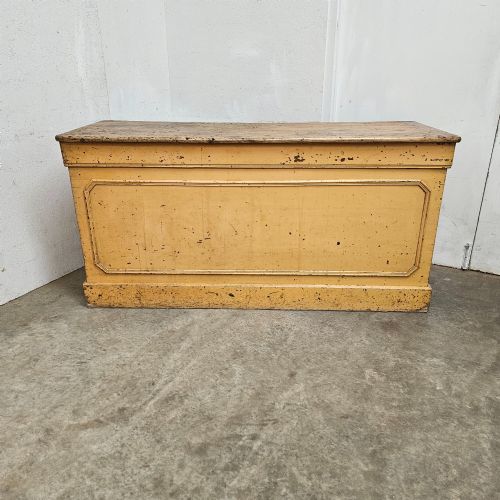
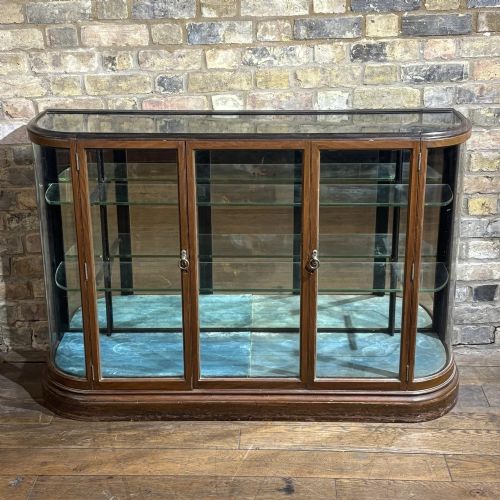
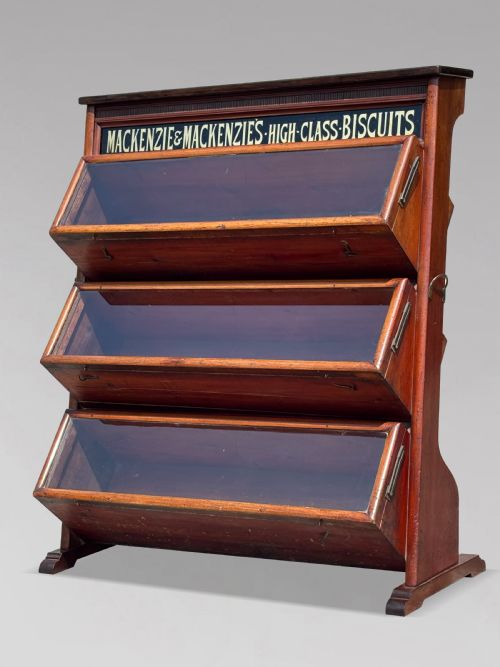


Commercial Display Cabinet
A commercial display cabinet brings the tailored presence of a historic shop into a modern room.
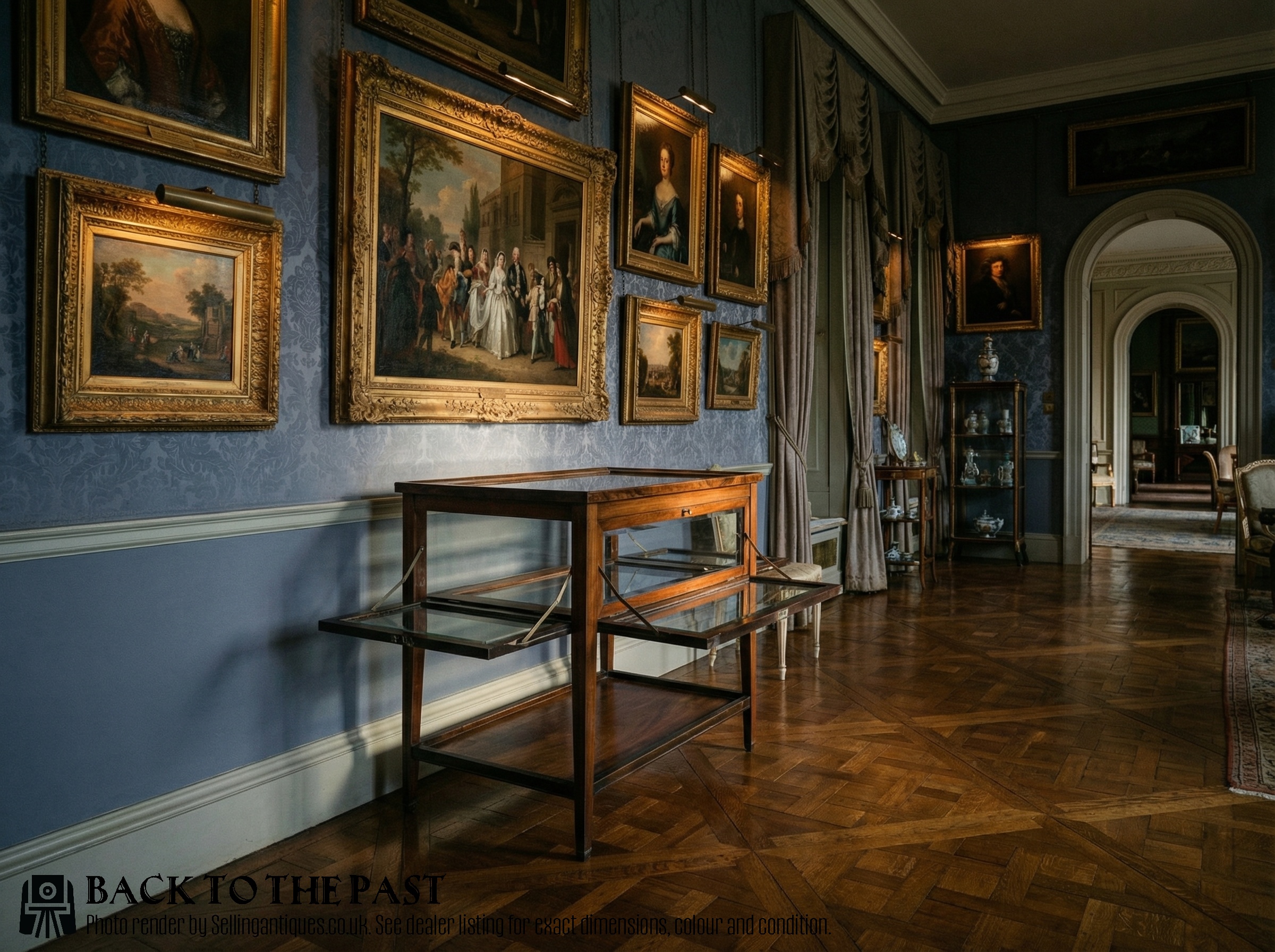
Commercial Display Cabinet
A commercial display cabinet is a utilitarian fixture designed to merchandise goods in retail spaces during the nineteenth and twentieth centuries. These pieces encompass haberdashery counters, chemist drawers, and confectionery wall cases built to withstand daily trade.
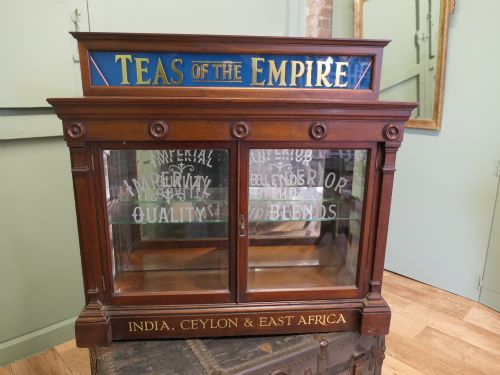
The versions most frequently met on this page span the Victorian, Edwardian, and Art Deco eras, produced in forms ranging from tabletop display cases to large mahogany shop counters. Many bear the original manufacturer marks or period advertising for brands such as Fry's and Rowntree's.
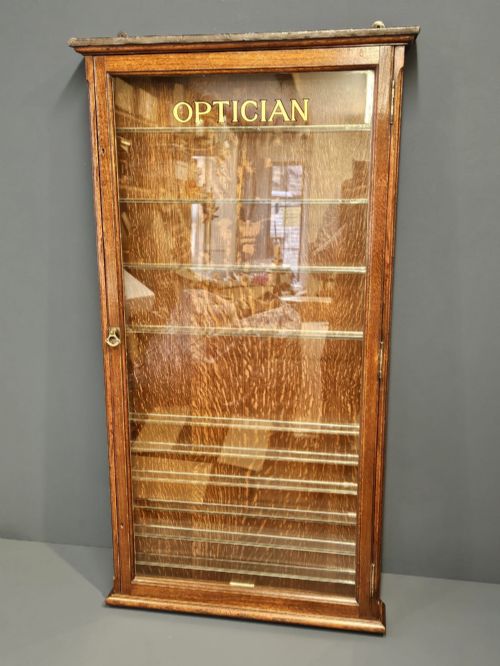
Makers adapted these cabinets for specific trades, yielding watchmaker cabinets with shallow drawers alongside deep bow end display counters. Their construction reflects the rigorous functional demands of chemists, drapers, and grocers operating a century ago.
Materials and Construction
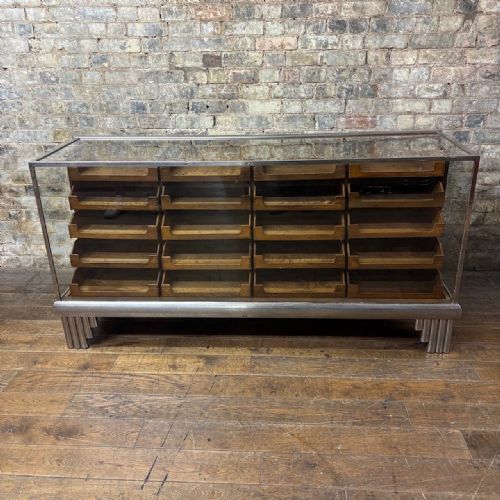
Makers relied heavily on solid mahogany and oak to construct the structural frames and counter bases, frequently pairing heavy timber with large sheets of plate glass. Brass, aluminium, and chrome framing appear later in the sequence, supporting slender glazed panels for maximum visibility.
Internal elements frequently incorporate mirror glass panels to reflect light through the display space, alongside velvet linings intended to cushion delicate merchandise. Secondary timbers such as pine appear in the unseen carcass construction of counters and bank of drawers units.
Joinery methods prioritized rigid stability, utilising substantial framing to support heavy glass doors and multiple sliding or pull-out drawers. Surface finishes range from polished cabinet maker mahogany to painted pine shop fittings retaining original layers of pigment.
Commercial Display Cabinet Retail Price Guide 2026
Typical asking prices for commercial display cabinet among the pieces listed under this phrase on Sellingantiques today, from the lower quarter to the upper quarter. They describe what is for sale here now, not the wider market.
Several sweet shop cabinets still whisper of past chocolate selections through decades of absorbed confectionery aroma.
Judging Quality
Quality rests upon the integrity of the original commercial framework and the extent of later alterations. Examples retaining their original glass panels, working brass hardware, and authentic manufacturer plaques command greater interest than heavily rebuilt pieces.
The sophistication of the timber selection and internal configuration sets finer workshop productions apart from basic utility shop fittings. Solid mahogany framing with bow end glazing demonstrates a higher degree of cabinet making skill than standard square pine or oak carcasses.
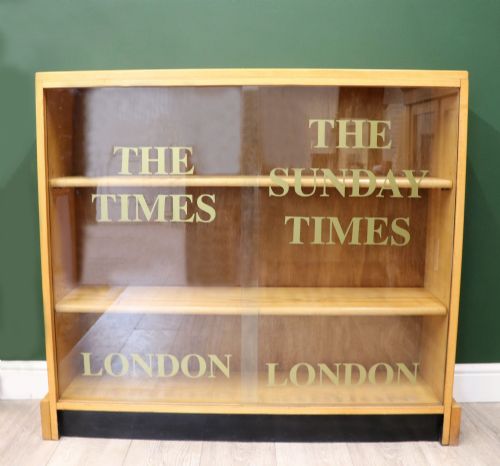
The presence of original hand sign-writing, whether for a local chemist or a confectioner, adds distinct character that elevates a standard commercial cabinet into a documented piece of retail history.
F Sage And Co·Dudley And Co·Manoah Rhodes And Sons Ltd·Saml Elliott And Sons
The Commercial Display Cabinet Glossary
- Haberdashery counter
- A shop fitting characterised by multiple shallow drawers, often featuring glass fronts, designed to sort small sewing notions and textiles. These units allowed customers to view ribbons and threads directly through the timber and glass framing.
- Vitrine
- A glass display case used to protect and exhibit objects of interest. In a commercial context, these cases sat atop counters or stood independently on the shop floor.
- Shop fitting
- Custom furniture and architectural elements built specifically for the interior layout of a retail establishment. This category includes permanent counters, wall shelving, and integrated display cabinets.
- Bow end
- A curved cabinet end, usually formed of bent glass and matching curved timber framework. This shape softened shop corners and improved visibility from multiple angles.
- Bank of drawers
- An assembly of numerous pull-out storage compartments arranged in a grid. Chemist and watchmaker variations utilised these for organising small specialised inventory.
Commercial Display Cabinet: Frequently Asked Questions
How do I clean the glass?
Use a mild glass cleaner and a soft microfiber cloth to avoid scratching historical pane surfaces. Take care around original wooden frames and painted advertising lettering.
Avoid spraying liquid directly onto aged timber or mirror backs, as moisture can seep behind the silvering and cause permanent staining.
Were these used in homes?
Historical commercial cabinets were built exclusively for retail environments such as drapers, chemists, and sweet shops. They were designed to merchandise goods to the public.
Today, collectors repurpose these sturdy shop fittings in domestic interiors to display ceramics, books, and personal collections.
How do I identify the period?
Examine the hardware, timber choices, and construction techniques used within the frame. Victorian and Edwardian examples often feature heavy mahogany and brass, while 1930s pieces introduce chrome and aluminium framing.
Manufacturer plaques and original hand sign-writing also provide reliable chronological markers for dating individual cabinets.
Can I remove the internal mirrors?
Original mirrored interiors are typically integrated permanently into the structural backboards of display counters and cabinets. Removing them generally compromises the historical integrity and stability of the piece.
These mirrors were deliberately installed to bounce natural light through the glazed display chamber.