





Retail Display Counter
A retail display counter organises merchandise behind glass and timber, offering shopkeepers a practical stage for their wares.
Retail Display Counter
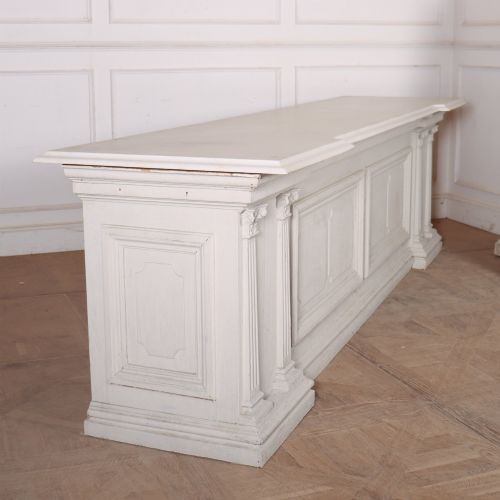
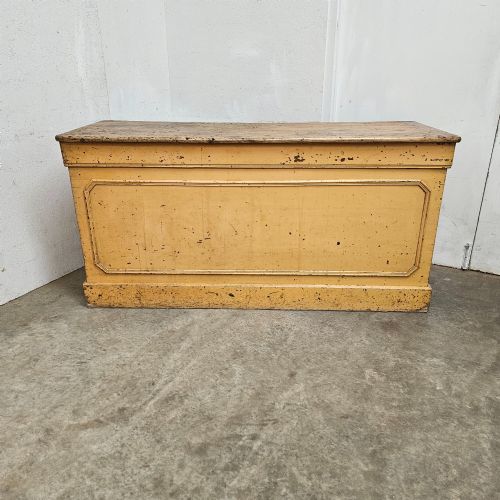
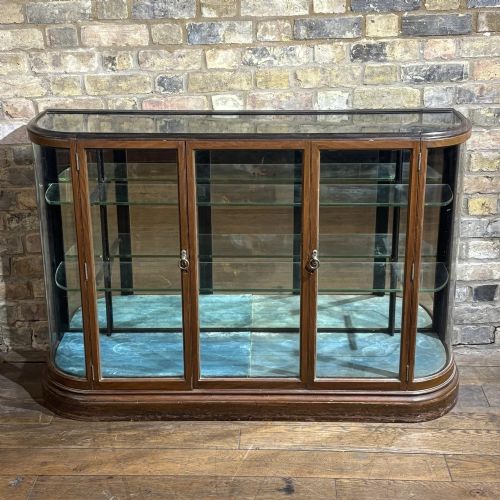
A retail display counter bridges the gap between functional storage and commercial presentation, allowing merchants to exhibit goods safely to customers. These fixtures range from low shop counters to tall freestanding cabinets and countertop units designed for specific trades.
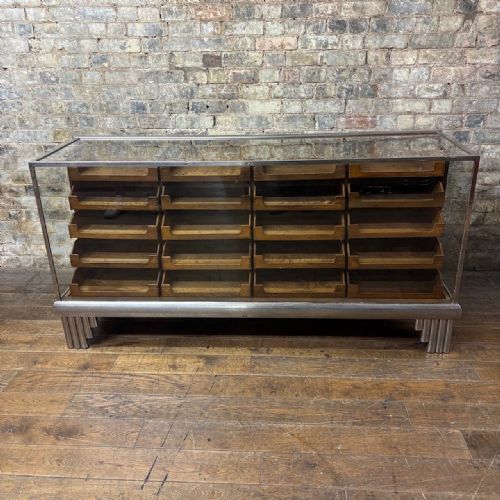
Most examples originate from the Victorian and Edwardian eras through to the 1930s, reflecting the commercial expansion of those periods. Formats vary from haberdashery counters with numerous drawers to glazed cabinets with mirrored interiors intended to amplify light and stock.
How They Were Made
Carpenters constructed the primary frames of these counters predominantly in mahogany and oak, often pairing the timber with brass, cast iron or aluminium supports. Glazing formed the principal barrier, enclosing shelves while granting full visibility to the contents within.
Makers integrated mirrors at the back of cabinets and applied paint or ebonised finishes to wooden surfaces. Specialised fittings like velvet linings, metal tiers and chrome hardware served the specific needs of drapers, chemists and confectioners.
Retail Display Counter Retail Price Guide 2026
Typical asking prices for retail display counter among the pieces listed under this phrase on Sellingantiques today, from the lower quarter to the upper quarter. They describe what is for sale here now, not the wider market.
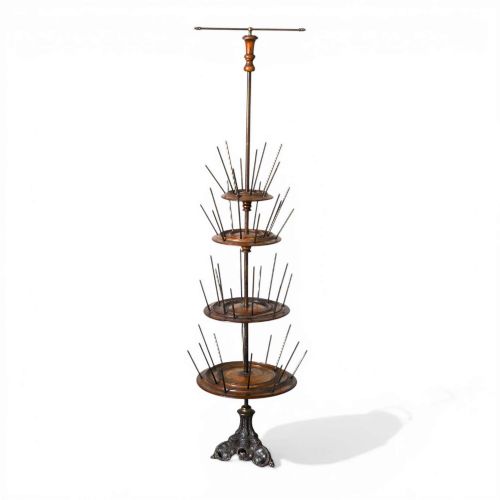
A Victorian cotton reel display tree once helped shoppers choose sewing threads from four rotating wooden tiers.
What Varies in Quality
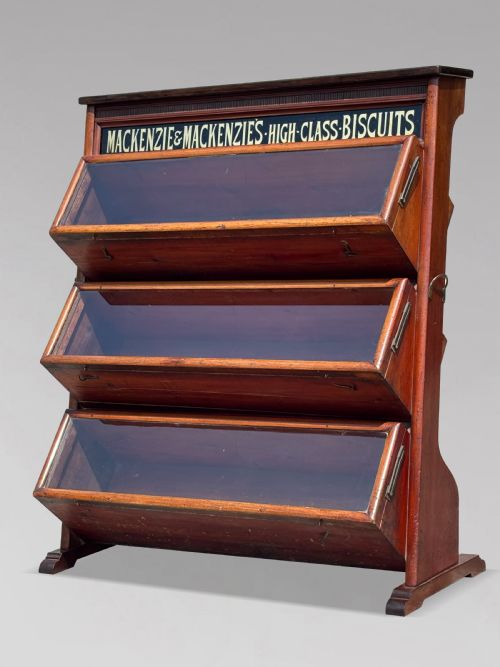
The distinction between tiers of quality rests on the sophistication of the timber joinery and the integrity of the original hardware. Pieces featuring bespoke manufacturer badges, curved bow ends or complex multi-drawer configurations represent higher commercial ambition.
Subtleties in the hardware, such as cast brass brackets or intact mirrored interiors, elevate an ordinary utilitarian fitting into a refined piece of shop furniture. The presence of original painted finishes or maker inscriptions further separates standard workshop output from exceptional commercial designs.
F. Sage & Co·Dudley & Co·John Stow Ltd of Bradford·Saml. Elliott & Sons
The Retail Display Counter Glossary
- Haberdashery counter
- A long shop counter characterised by banks of shallow wooden drawers, originally utilised for ribbons, buttons and textiles. These units often incorporate glass panels on top to inspect small goods without opening the drawers.
- Countertop display cabinet
- A smaller enclosed glass case designed to sit atop a main shop counter for high-value items like sweets, tobacco or jewellery. They protect fragile stock while keeping merchandise at eye level for customers.
- Bow end
- A curved glass or timber termination at one or both ends of a display counter. This shaping softens the rectangular silhouette and widens the viewing angles for internal merchandise.
- Ebonisation
- A chemical or pigment treatment applied to cheaper timbers such as pine to mimic the dense, dark appearance of ebony. It creates a sleek, uniform finish popular in early twentieth-century commercial design.
Retail Display Counter: Frequently Asked Questions
What trades used these display counters?
Merchants across numerous trades utilised these fixtures, ranging from drapers and haberdashers to chemists, grocers and confectioners. Specific cabinets served dedicated products like chocolate, paint and biscuits.
Specialised interiors catered directly to the goods sold, such as tiered stands for cotton reels or multi-drawer banks for small dry goods.
How do I date a shop counter?
Dating relies on stylistic clues, materials and construction methods observable across the frame and hardware. Victorian pieces often lean towards heavy mahogany with ornate detailing, while 1930s examples introduce aluminium frames and Art Deco lines.
Maker stamps, brass plaques, and specific advertising glass panels also help pinpoint the exact decade of manufacture.
How can I use a counter at home?
These counters adapt easily to modern domestic interiors as kitchen islands, sideboards or bookshelves with built-in dust protection. Glazed tabletops allow collectors to exhibit ceramics, books or curiosities safely.
Freestanding cabinets provide vertical storage while maintaining an open feel through their glass panels.
Are original glass panels common?
Many surviving counters retain their original glass, though replacements occur due to the fragile nature of commercial display furniture. Inspecting the glass for slight bubbles, waviness or minor surface wear helps confirm its age.
Mirrored interiors similarly show age through foxing or silvering deterioration, which verifies historical authenticity.