
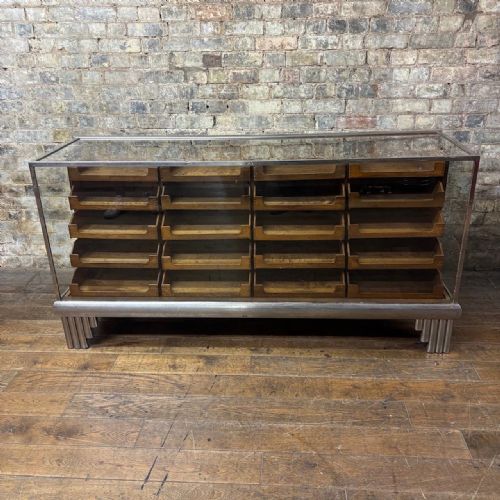


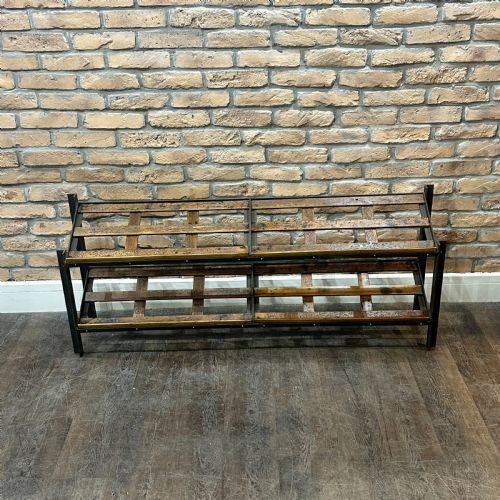


1930s Shop Counter
A 1930s shop counter brings authentic interwar commercial character into modern domestic and retail interiors through robust timber and glass construction.
1930s Shop Counter
A 1930s shop counter is a functional commercial furnishing designed for display and storage in retail environments, typically constructed during the interwar commercial period. These pieces originate from high street shops, drapers, and haberdasheries, serving both practical utility and customer presentation.
The versions most commonly met on this page include oak haberdashery counters, mahogany display cabinets, and brass or bronze-framed units. Examples range from long drapers counters fitted with numerous drawers to bow glass jewellery cases and aluminium display tables.
Period styles span Art Deco design alongside straightforward 1930s commercial utilitarianism. Makers and workshops of the era produced these fixtures to withstand heavy daily use while showcasing merchandise clearly.
How they were made
Makers built the primary carcasses of these counters using durable hardwoods such as oak and mahogany, providing structural strength for daily retail operations. Timber frames were frequently combined with glazed display sections to protect goods while maintaining visibility.
Metal components played a significant structural and decorative role, with brass, bronze, chrome, and aluminium utilised for framing, corner brackets, and trim. Painted plaster was also employed for specific display elements like mannequin busts used on counter tops.
Listings incorporate both oak and mahogany timber constructions alongside metal framing in brass, bronze, chrome, and aluminium.
What varies in quality
Quality in a 1930s shop counter is determined by the caliber of materials selected and the sophistication of its construction. Pieces utilising solid oak or richly figured mahogany with cast bronze or brass frames sit at a higher tier than simpler utility builds.
The integration of specialised hardware, such as curved bow glass panels, maker signatures, and complex drawer arrangements, separates standard commercial fixtures from high-end retail fittings.
Dudley & Co·Saml. Elliott & Sons·E. Pollard & Co. Ltd.
The 1930s Shop Counter Glossary
- Haberdashery counter
- A long retail fixture traditionally fitted with numerous shallow drawers or glass compartments designed for small sewing goods, ribbons, and textiles.
- Bow glass
- Curved glass panels used on the front or corners of display counters to provide an unobstructed, rounded view of the interior merchandise.
- Art Deco
- A design style popular during the 1920s and 1930s characterised by sleek geometric shapes, streamlined forms, and modern industrial materials.
- Interwar commercial
- A stylistic and historical descriptor for furnishings produced between the First and Second World Wars specifically for business and retail premises.
1930s Shop Counter: Frequently Asked Questions
How were these counters used originally?
Retailers placed these fixtures at the front of shops to greet customers, transact sales, and securely display goods behind glass panels.
In drapers and haberdasheries, assistants stored textiles, ribbons, and small items within the integrated drawers and compartments.
What woods were used in 1930s counters?
Oak and mahogany formed the primary structural timbers for commercial display counters during this decade, chosen for their durability.
These hardwoods were often polished or combined with metal framing to complement the prevailing interior aesthetics of the period.
How do I identify an Art Deco counter?
Art Deco examples feature distinct geometric lines, streamlined metal framing in brass, bronze, or chrome, and sophisticated glass integration.
These pieces prioritise decorative symmetry alongside commercial functionality, reflecting the modern design ethos of the interwar years.
Can I use a shop counter at home?
These counters adapt well to modern domestic settings as kitchen islands, sideboards, or display storage units in living spaces.
Their glazed panels and timber construction offer practical surface space while displaying personal collections or tableware.