
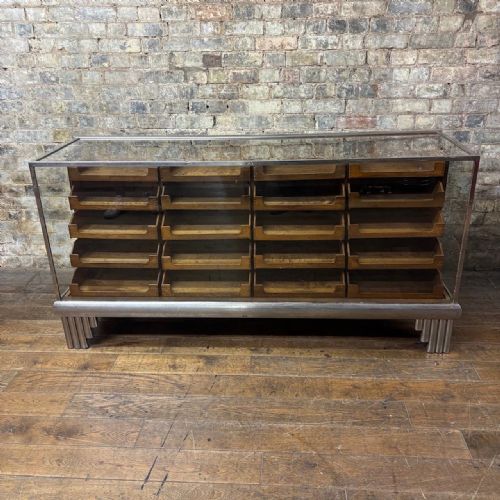



Art Deco Shop Counter
An art deco shop counter brings geometric lines and commercial history into a modern interior.
Art Deco Shop Counter
An art deco shop counter encompasses timber display cases, haberdashery units with drawers, and specialised glass cabinets designed for retail environments. These fixtures originate primarily from the nineteen-twenties and nineteen-thirties, reflecting the streamlined commercial architecture of the period.
Haberdashery counters and cabinets form the most frequent encounters within this selection, often built from oak or mahogany. Alongside these furniture pieces, related advertising display items such as mannequin busts and cash registers appear to complete the commercial ensemble.
The objects stem from utilitarian origins in shops, jewellers, and sweet counters, transitioning into residential and contemporary retail spaces for display purposes. Their construction prioritizes visibility and customer interaction, combining glazed panels with accessible storage drawers.
How they were made
Makers utilised a combination of solid woods like oak and mahogany alongside structural metal elements such as brass, chrome, and aluminium frames. Glass panels provide the primary viewing surfaces for display counters and cabinets, secured with metal framing or wooden rebates.
Construction techniques balanced commercial durability with decorative style, incorporating specialised hardware like cash register tills and display stands. Decorative touches rely on the inherent grain of golden oak and mahogany, complemented by polished metal details characteristic of the era.
Listings feature items spanning the 1900s, 1920s, and 1930s, utilising materials including glass, brass, wood, oak, plaster, paint, fabric, and metal.
What varies in quality
Quality rests upon the integrity of the original materials, distinguishing pieces built from solid hardwoods and substantial metal frames from lighter utility alternatives. The crispness of the geometric lines and the retention of original fittings, such as specialised handles and branding, dictate the standing of a piece.
Proportion and scale play significant roles, where architectural haberdashery counters with numerous original drawers command greater presence than smaller countertop shelves. The execution of metalwork, particularly in chrome and brass framing, separates standard commercial joinery from finer retail furniture.
Dudley & Co·Saml. Elliott & Sons·Pollards·Charmereine·Pierre Iman
The Art Deco Shop Counter Glossary
- Haberdashery counter
- A multi-drawer retail unit traditionally used for storing and displaying small sewing goods and textiles. These fixtures typically incorporate glazed sections or top surfaces for customer inspection.
- Display cabinet
- A glazed furniture piece designed to protect and exhibit merchandise while maintaining 360-degree visibility. They utilise wooden or metal framing to support large glass panels.
- Advertising mannequin
- A sculptural bust or figure utilised in shop windows to showcase garments, hats, or jewellery. French examples from the period often display distinct modelling and painted finishes.
- Cash register
- A mechanical device used in retail settings for calculating and recording transactions. Deco examples feature stylized metal casings and numeric display apertures.
Art Deco Shop Counter: Frequently Asked Questions
What is an art deco shop counter?
An art deco shop counter is a commercial display fixture from the early twentieth century featuring geometric styling and practical storage. These units were built for retail trades such as haberdashery and jewellery.
Today, they serve as statement furniture pieces in domestic and commercial interiors, offering functional display space and deep drawer storage.
How were haberdashery counters used?
Haberdashery counters were utilised in retail shops to house small goods like ribbons, buttons, and threads within rows of shallow drawers. The top surface and glazed sections allowed shop assistants to present wares directly to customers.
In modern settings, the drawers provide organised storage for collections, while the glass top offers a surface for display.
What materials are used in these counters?
These counters are constructed primarily from timber such as oak, golden oak, and mahogany, paired with glass viewing panels. Metal components in brass, chrome, and aluminium frequently provide structural framing and decorative trim.
Some examples also incorporate fabric, plaster, and painted finishes, particularly on related advertising mannequins and display stands.
How do I identify a nineteen thirties counter?
Nineteen thirties counters are identified by their streamlined forms, geometric motifs, and the integration of modern metals like chrome and aluminium. They often feature clean lines without excessive ornamentation.
Comparing the hardware, timber grain, and construction methods against documented manufacturer styles helps confirm the period.