






Vintage Haberdashery Unit
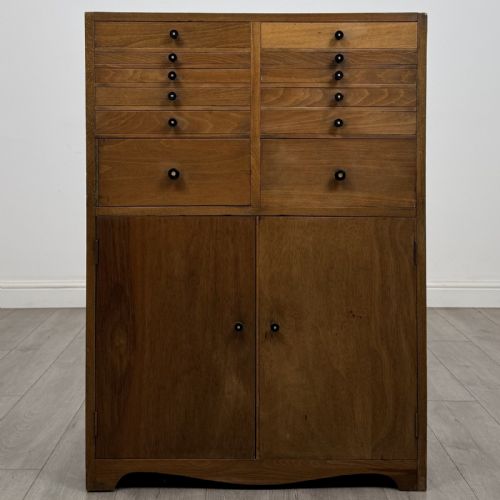
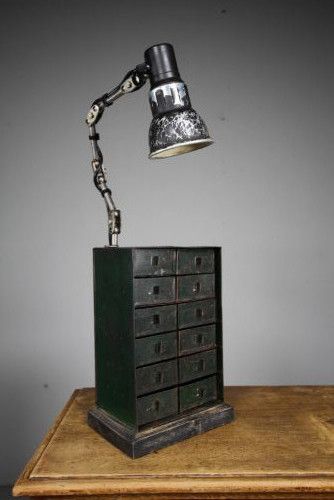
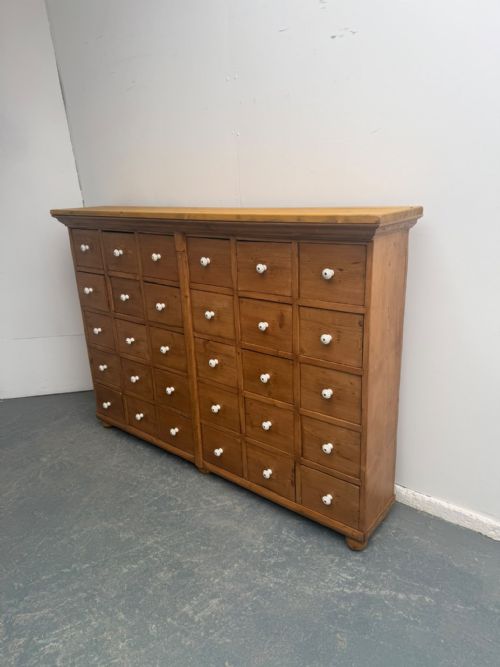
A vintage haberdashery unit brings functional trade storage into the home, offering rows of small drawers designed to organise everyday items.
Vintage Haberdashery Unit
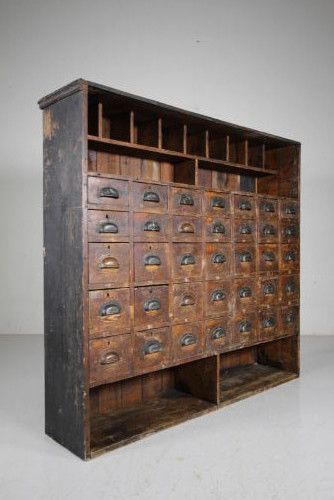
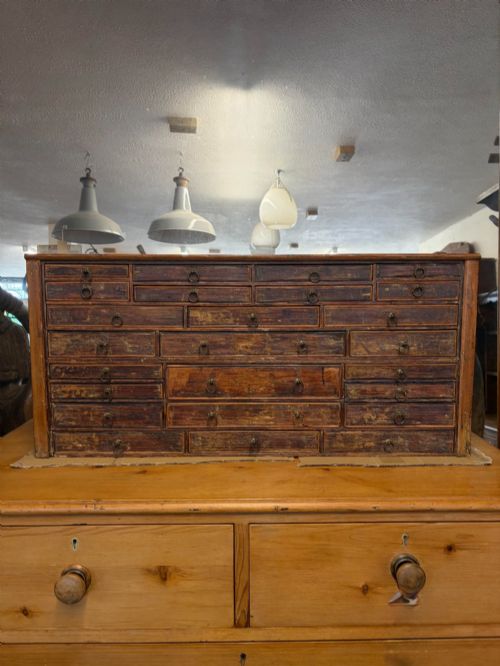
A vintage haberdashery unit most commonly appears as a multi-drawer bank or shop counter originating from late Victorian, Edwardian, and 1930s commercial spaces. These pieces served drapers, chemists, and ironmongers before finding a second life in domestic interiors.
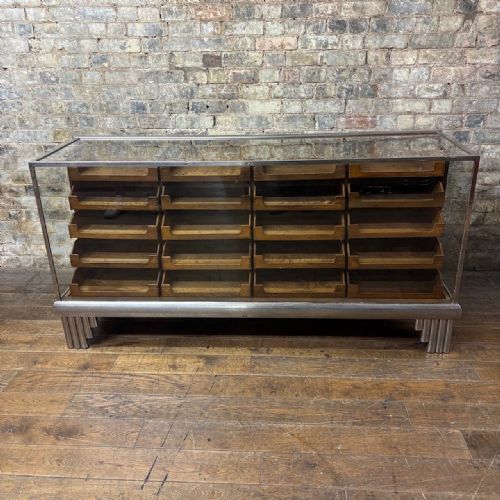
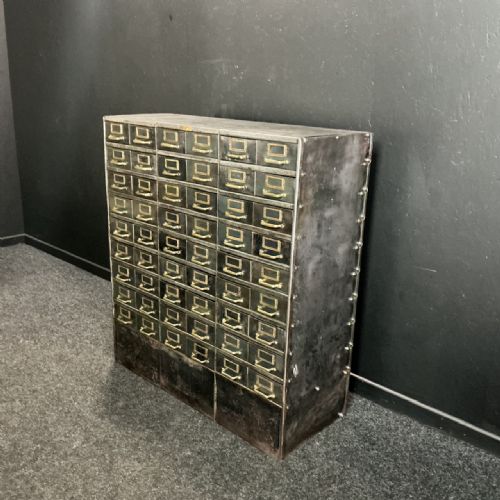
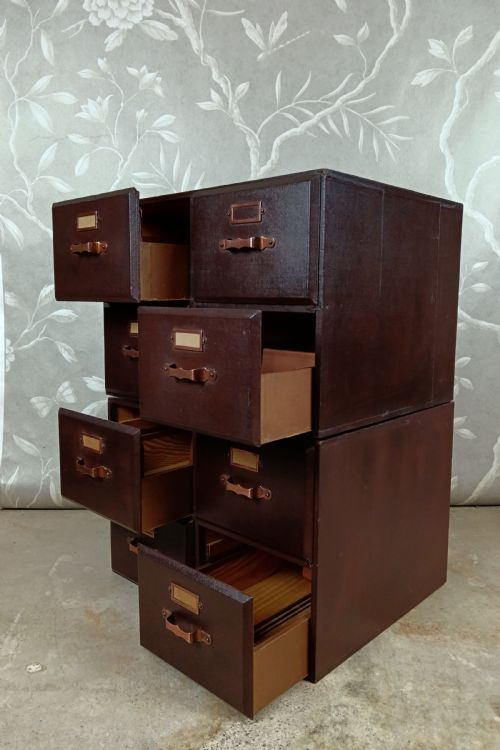
The selection ranges from tall banks of pine drawers to mahogany display cabinets and oak counters. Buyers encounter specialised variants such as seed chests, library card files, and ticket cupboards alongside standard multi-drawer configurations.
Materials and Construction
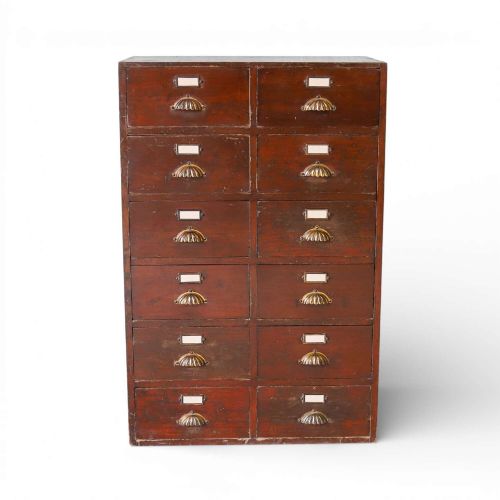
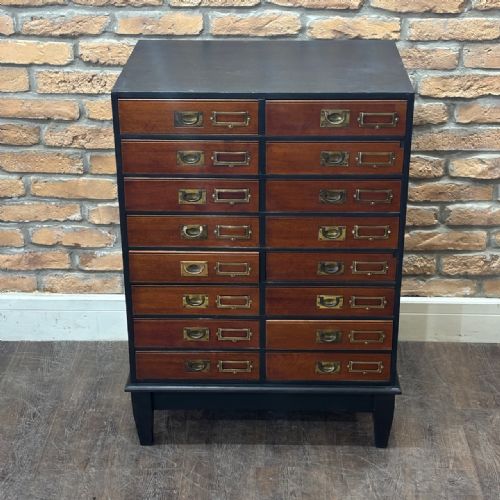
Construction relies on utilitarian timbers including pine, oak, mahogany, and walnut, often paired with metal handles and brass label holders. Cabinets frequently incorporate glass panels for display purposes or chrome detailing in later 1930s examples.
Joinery prioritizes durability to withstand daily commercial use, utilising heavy timber frames to support dozens of individual drawers. Original painted finishes and brass fittings remain intact on many pieces.
Vintage Haberdashery Unit Retail Price Guide 2026
Typical asking prices for vintage haberdashery unit among the pieces listed under this phrase on Sellingantiques today, from the lower quarter to the upper quarter. They describe what is for sale here now, not the wider market.
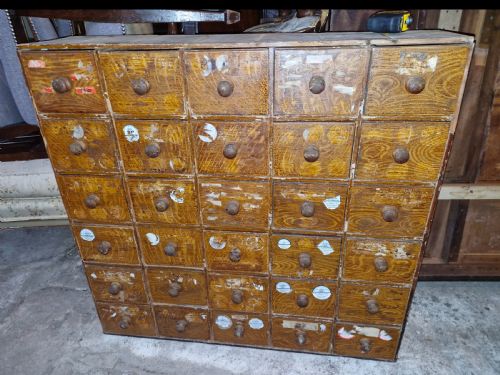
Some drawers still hold decades of forgotten dust and faint scents of haberdashery.
Grading Quality
Quality separates mass-produced utility furniture from bespoke shop fittings produced by specialist makers. The presence of original hardware, such as shell pulls and dedicated label holders, elevates the standard of a piece.
The scale and complexity of the drawer configuration influence desirability, with larger multi-drawer banks and glazed display counters representing superior commercial origins. Timber selection also dictates grade, with solid mahogany and figured walnut commanding greater attention than plain deal.
F. Sage & Co·Dudley & Co·Saml. Elliott & Sons·Amberg
The Vintage Haberdashery Unit Glossary
- Bank of Drawers
- A multi-drawer storage unit designed for commercial stock organisation. These configurations range from twenty to fifty individual compartments.
- Haberdashery Cabinet
- A glass-fronted or multi-drawer display fixture used by drapers to store small sewing goods. They typically feature shallow drawers for ribbons and threads.
- Shell Pull
- A pressed metal handle shaped like a scallop shell, commonly found on Edwardian and Victorian shop drawers. They often incorporate a small slot for paper labels.
- Shop Fitting
- Custom-built furniture integrated into a retail premises during the nineteenth or early twentieth century. These heavy-duty items were built to withstand intensive commercial trade.
Vintage Haberdashery Unit: Frequently Asked Questions
How were these units used originally?
Merchants utilised these cabinets in shops and drapers to sort small inventory like buttons, threads, and samples. The numerous small drawers kept stock visible and accessible behind a counter or display.
Later, businesses adapted similar multi-drawer units for filing letters, tickets, and seeds. Their sturdy build suited demanding daily commercial environments.
What rooms suit a haberdashery cabinet?
These cabinets suit kitchens, studies, and hallways where small items require methodical organisation. The shallow drawers accommodate stationery, spices, or craft supplies effectively.
Larger glazed display variants function well in dining spaces for tableware or in living rooms as feature storage.
How do I identify the period?
Victorian and nineteenth-century examples often feature heavy pine or mahogany with hand-cut construction details. Edwardian and 1920s versions introduce specific hardware like brass label holders and shell pulls.
Art Deco and 1930s pieces typically show chrome framing, pale oak, or streamlined proportions. Patent marks and maker stamps inside drawers also help date specific items.
Are the drawer labels original?
Many units retain their original paper inserts, brass label holders, or handwritten contents slips from their time in trade. These small details record the specific commercial history of the piece.
Replacements do occur during restoration, but surviving vintage holders often show authentic surface wear and patination.