






Victorian Apothecary Cabinet
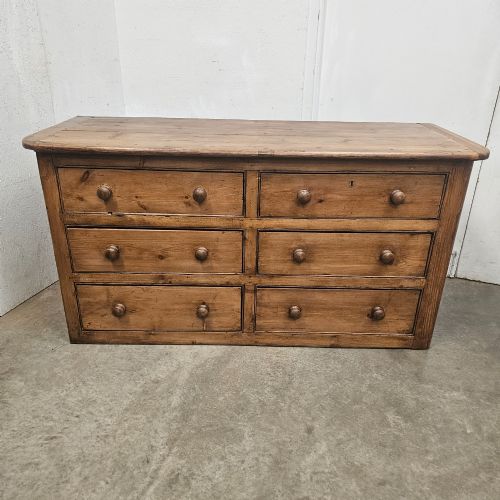
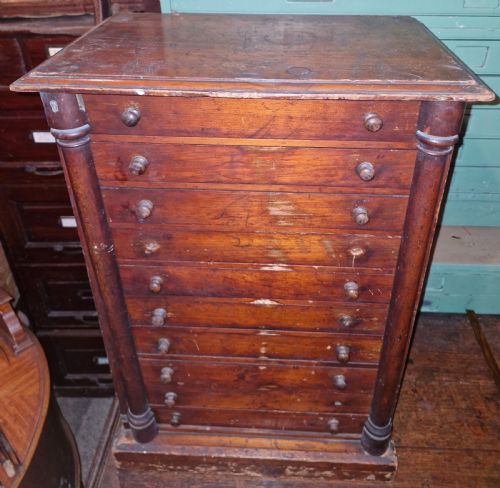
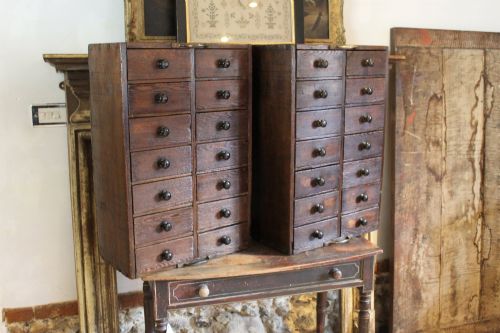
A victorian apothecary cabinet organises small bottles, powders and instruments in banks of numbered drawers and glazed display compartments.
Victorian Apothecary Cabinet
A victorian apothecary cabinet encompasses multi-drawer shop fittings, chemist chests, and small tabletop medicine boxes intended for storing remedies and botanical specimens. Buyers hunting for these pieces most often encounter banks of pine or mahogany drawers originally built for pharmacies, seed merchants, and general stores.
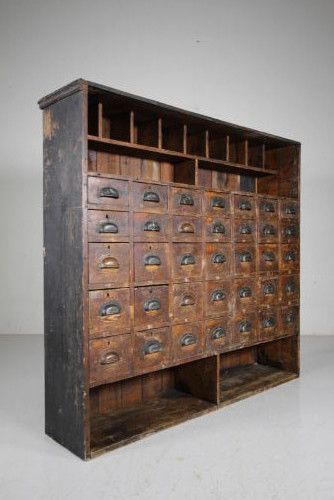
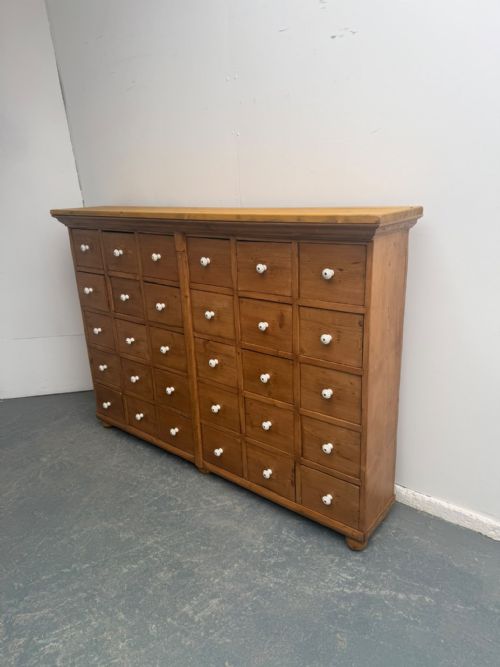
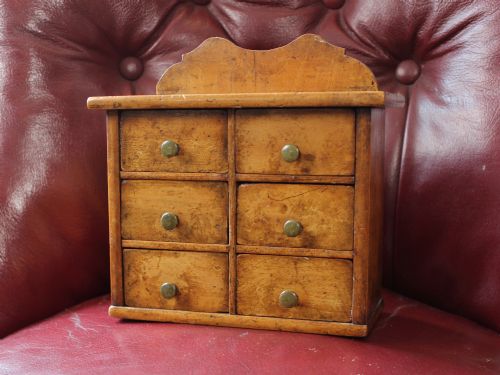
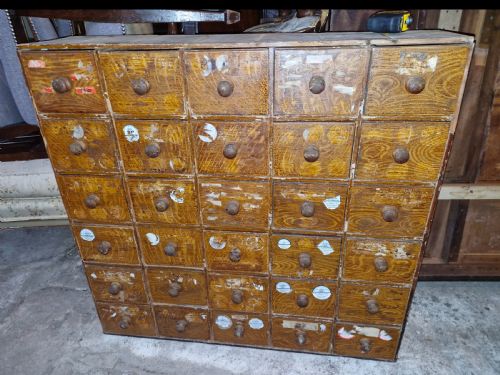
The physical form spans from wall-hanging spice boxes and portable indigo boxes to large fifty-drawer retail shop fittings and tall microscope slide cabinets. Surviving examples frequently emerge from commercial workspaces, retaining original paint finishes in cream, green, or white alongside utilitarian metal pulls.
Origins trace through nineteenth-century England and Hungary, with styles shifting from straightforward Victorian industrial utility to polished walnut and burr walnut dental and collector formats. These items bridge domestic medicine storage and heavy commercial trade, reflecting the practical needs of nineteenth-century dispensing.
Materials and construction
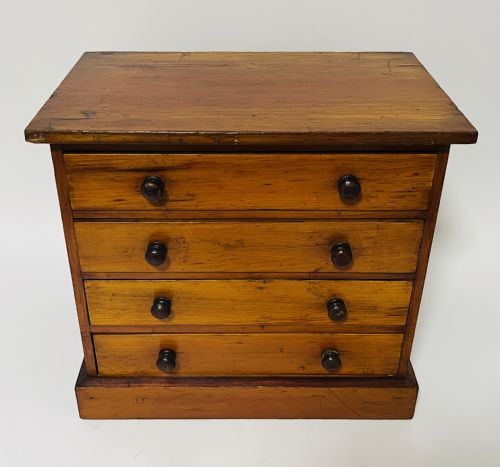
Makers relied heavily on solid pine, mahogany, and fruitwood for carcass construction, utilising walnut and satin birch for higher-end specimen chests intended for professional display. Drawer construction typically involved tight dovetail joints designed to withstand the repeated opening and closing required in busy dispensaries and retail shops.
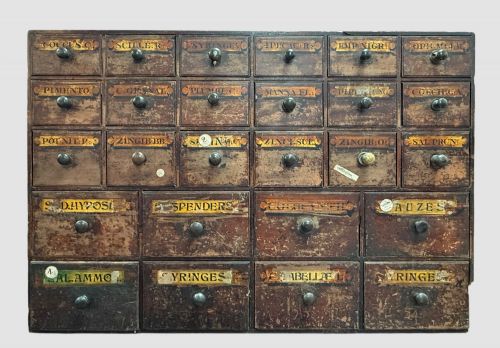
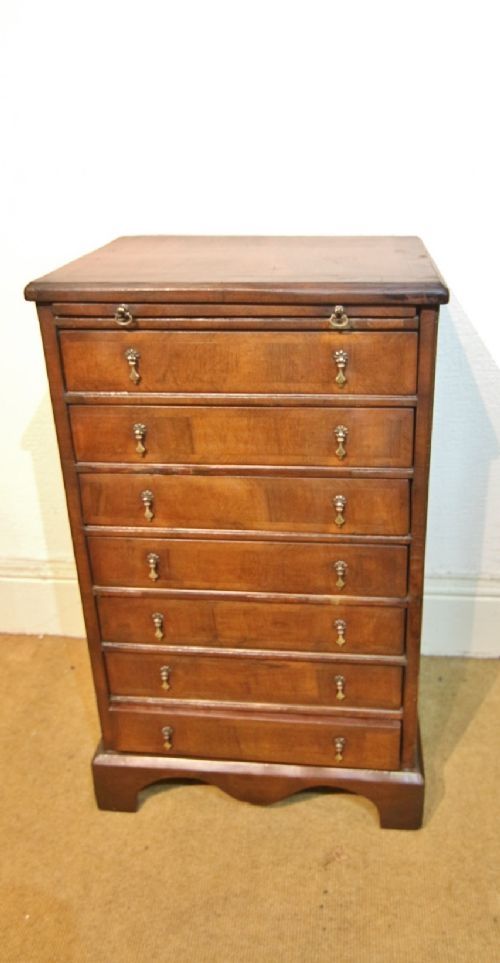
Hardware consists of brass campaign handles, recessed pulls, and metal label holders fitted to individual drawer faces to maintain orderly systems of contents. Glazed doors incorporate simple timber framing to showcase interior bottle shelves, while secondary timbers such as oak and deal provide internal structural support.
Victorian Apothecary Cabinet Retail Price Guide 2026
Typical asking prices for victorian apothecary cabinet among the pieces listed under this phrase on Sellingantiques today, from the lower quarter to the upper quarter. They describe what is for sale here now, not the wider market.
Listings feature pine, mahogany, walnut, and fruitwood across forms spanning wall-hanging boxes to fifty-drawer shop fittings.
Judging quality and integrity
Quality rests upon the scale of the timber work and the complexity of the drawer arrangement, where multi-drawer banks with original painted surfaces outrank plain utilitarian replacements. The survival of period brass hardware, handwritten pharmacy labels, and fitted internal glass bottles elevates an example above stripped and altered carcasses.
Proportion and timber selection dictate distinction, distinguishing everyday workshop pine fittings from substantial solid mahogany collectors cabinets built with figured veneers and provenance. The integrity of the original finish, whether an aged coat of paint or a polished hardwood surface, governs the visual authority of the piece.
Luxmore's of Ilfracombe·D Napier & Sons·Kemps Pharmacy
The Victorian Apothecary Cabinet Glossary
- Bank of drawers
- A modular set of numerous small drawers housed within a single wooden frame. These pieces served commercial workshops and retail shops for sorting small inventory.
- Specimen cabinet
- A specialised storage unit containing shallow drawers designed for holding natural history collections or microscope slides. They frequently feature tight-fitting dust-proof doors.
- Shop fitting
- Fixtures and furniture built specifically for commercial retail interiors rather than domestic spaces. Surviving examples often display robust construction intended for heavy daily use.
- Dovetail joint
- A traditional interlocking woodworking joint formed by wedge-shaped fingers. This method provides exceptional tensile strength for drawer construction.
- Deal
- An old trade term for softwood timber cut from pine or fir trees. It appears widely in nineteenth-century utilitarian carcases.
Victorian Apothecary Cabinet: Frequently Asked Questions
What were apothecary cabinets used for originally?
These cabinets served pharmacists, doctors, and merchants for organising medicinal powders, herbs, glass bottles, and delicate instruments in numerous small compartments.
In busy nineteenth-century chemist shops, large banks of drawers kept stock visible and separated for rapid daily dispensing.
How do I date a nineteenth century chest?
Dating relies on examining construction methods, timber choices, and hardware styles found across the drawer carcasses. Pine anddeal carcasses often suggest commercial utilitarian origins, while polished mahogany and walnut point toward professional collectors or dental use.
Factory labels, handwritten paper markers, and original brass pull handles also help narrow the specific decade of manufacture.
Are these cabinets suitable for modern homes?
The compact multi-drawer layout provides practical storage for contemporary collections, craft supplies, jewellery, and desktop accessories.
Their substantial timber presence allows them to function as striking focal points in hallways, kitchens, and studies.