


Merchant Chest of Drawers
A merchant chest of drawers brings utilitarian order and countless small compartments into a modern interior.
Merchant Chest of Drawers
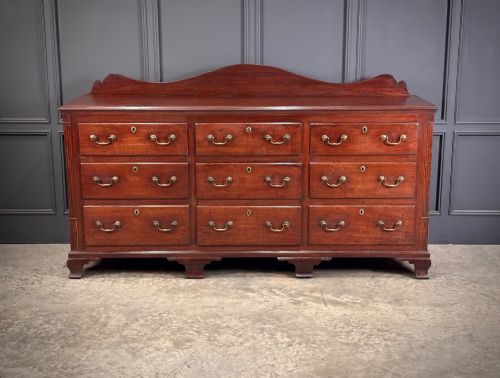
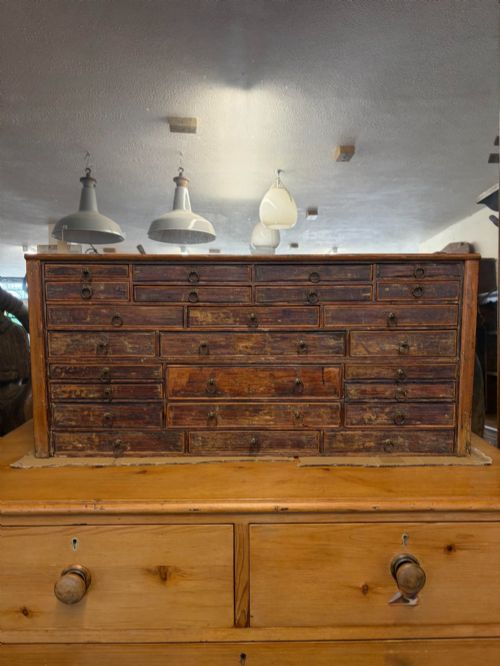
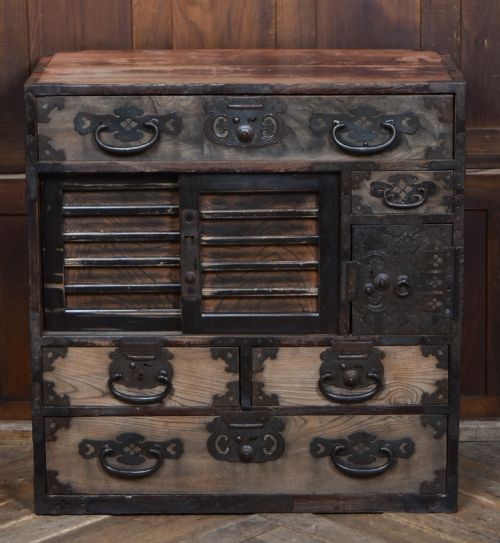
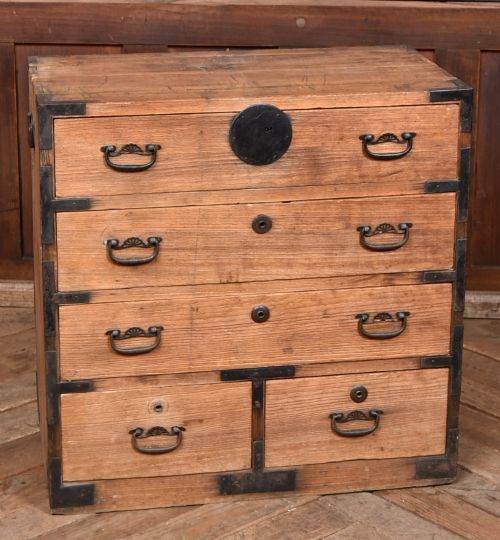
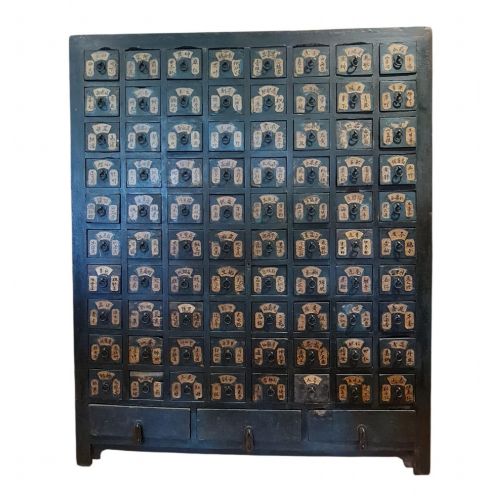
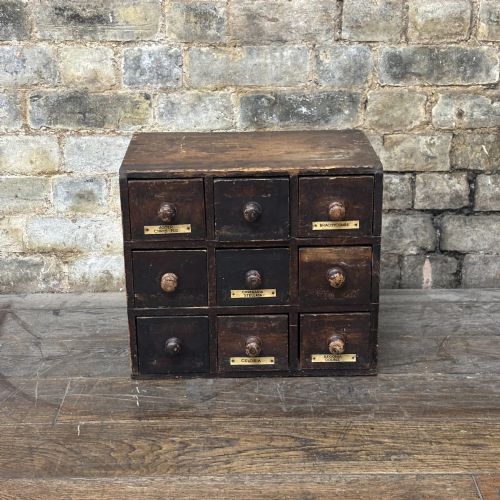
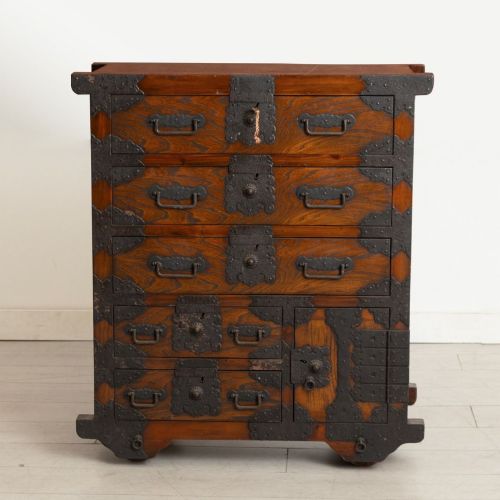
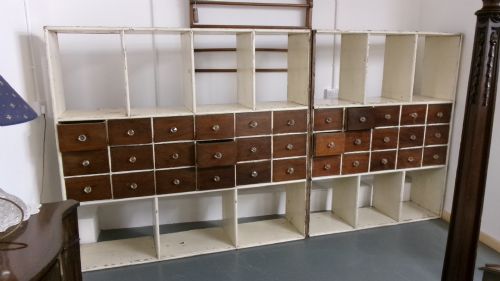
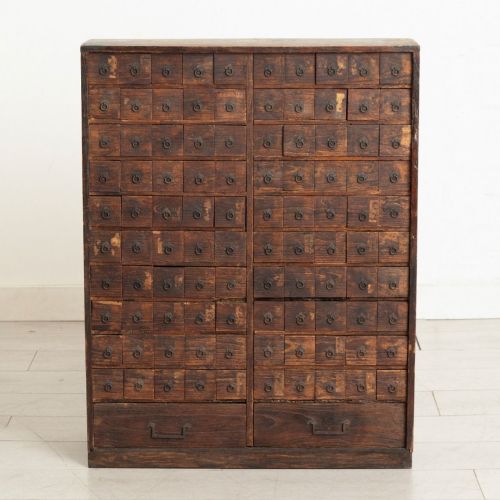
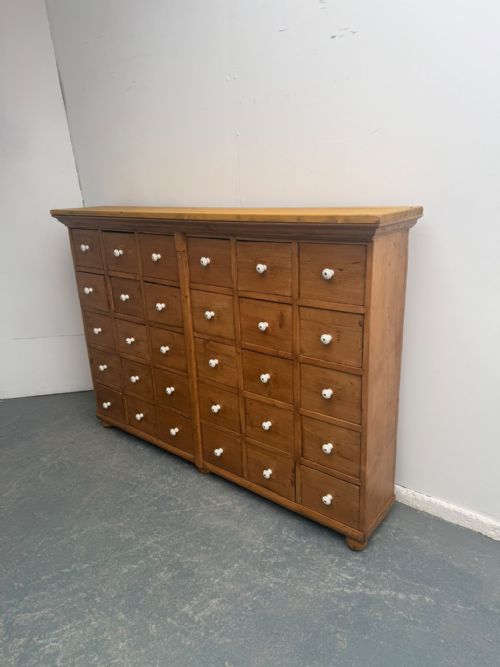
A merchant chest of drawers encompasses dense banks of small drawers, multi-drawer shop fittings, apothecary cabinets, and drapers' counters designed for sorting trade goods. You are most likely to encounter nineteenth-century pine shop fittings, Victorian chemist counters, and Japanese tansu chests on this page.
The form spans commercial and domestic storage, including watchmakers' cabinets, florist seed chests, and office filing furniture. Pieces range from large eighteenth-century mahogany banks of drawers to compact countertop needle cabinets and multi-drawer cabinets in teak or walnut.
Materials and construction methods
Construction relies heavily on robust timbers such as pine, mahogany, elm, cedar, and walnut, often assembled for heavy commercial service. Hardware frequently incorporates brass handles, iron fittings, and glass elements suited to functional trade use.
Cabinets span diverse regional traditions, from English and French painted shop fittings to Chinese elm medicine chests and Japanese zelkova or cedar tansu chests. Surfaces range from polished timber and red lacquer to original painted finishes.
Distinctions in quality
Quality rests upon the integrity of the multi-drawer arrangement, the proportional balance of the carcass, and the retention of original surface treatments such as historic paint or polished grain. Pieces that retain their specific commercial provenance, original handles, and smooth drawer action command greater attention.
Finer examples show considered timber selection in primary woods like mahogany and walnut alongside careful joinery designed to withstand daily mercantile use. Lesser pieces may display unsympathetic alterations or replacement hardware that obscures their original utility.
Luxmore's of Ilfracombe·Smiths Agricultural merchants of Stafford
The Merchant Chest of Drawers Glossary
- Bank of drawers
- A large cabinet containing numerous small drawers originally utilised for commercial storage or trade inventory.
- Tansu
- A traditional Japanese mobile storage chest constructed in wood with iron or brass metalwork for daily household or travel use.
- Apothecary cabinet
- A specialised multi-drawer chest designed for storing dried herbs, medicinal ingredients, and powders in a pharmacy.
- Shop fitting
- Fixtures and multi-drawer counters built specifically for commercial retail interiors during the nineteenth and early twentieth centuries.
- Graduated drawers
- A series of drawers arranged in descending order of depth from bottom to top within the carcass.
Merchant Chest of Drawers: Frequently Asked Questions
What is a merchant chest of drawers?
A merchant chest of drawers is a multi-compartment cabinet built for commercial storage, trade goods, or specialised inventory. These pieces range from shop counters and chemist fittings to drapers' drawer units and apothecary cabinets.
Unlike domestic bedroom chests, they typically feature numerous small drawers designed to organise seeds, needles, drugs, or hardware. Their utilitarian origins give them a distinctive architectural presence in contemporary spaces.
How do you use one at home?
These cabinets provide exceptional organisation for modern living rooms, kitchens, or home offices. The multitude of small compartments suits the storage of stationery, collections, cutlery, or craft supplies.
Countertop models sit neatly on sideboards or desks, while larger banks of drawers function well as freestanding statement pieces. Their sturdy construction ensures they handle daily storage needs with ease.
How do tansu chests differ from European pieces?
Japanese tansu chests are traditional mobile storage units constructed from woods like cedar, elm, or zelkova, often fitted with pronounced iron or brass hardware. They were built for specific domestic or shipping purposes rather than European retail trade.
European merchant chests typically take the form of shop counters, apothecary banks, or drapers' cabinets with numerous uniform small drawers. Both traditions emphasise high utility, but their regional construction and aesthetic detailing remain distinct.
Are painted finishes original on these cabinets?
Many commercial shop fittings and counter units retain original painted finishes applied during their working life in Victorian or Edwardian stores. Paint colours such as cream or light green served to brighten retail interiors or match specific business premises.
Sign-writing on the base or drawer fronts often names the original agricultural merchants or traders who utilised the cabinet. Inspecting the wear patterns around the drawer pulls helps determine the age of the surface.