
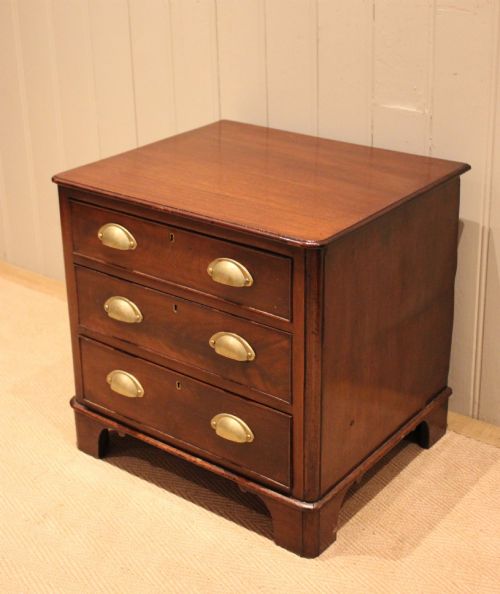
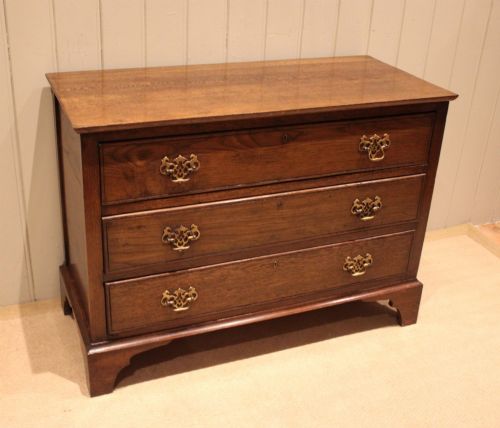
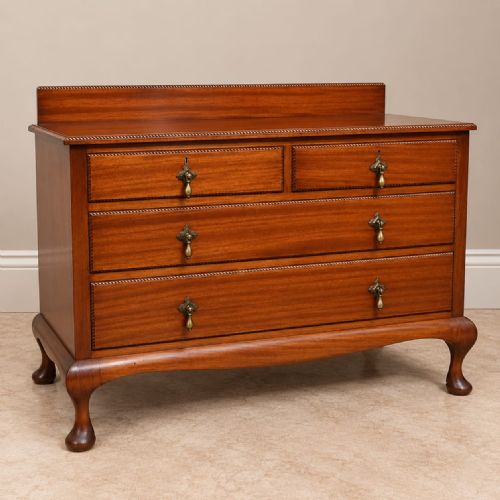
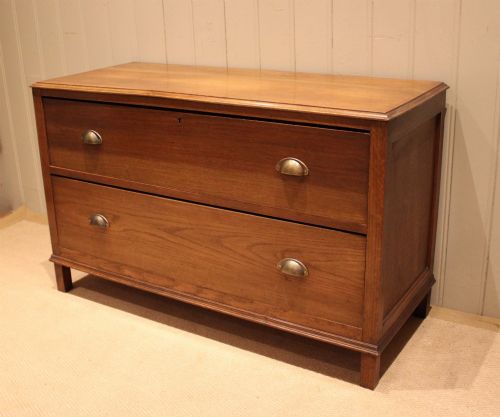




Brass Handle Low Chest
A brass handle low chest brings grounded proportions and honest metalwork to a room, offering deep storage without crowding the walls.
Brass Handle Low Chest
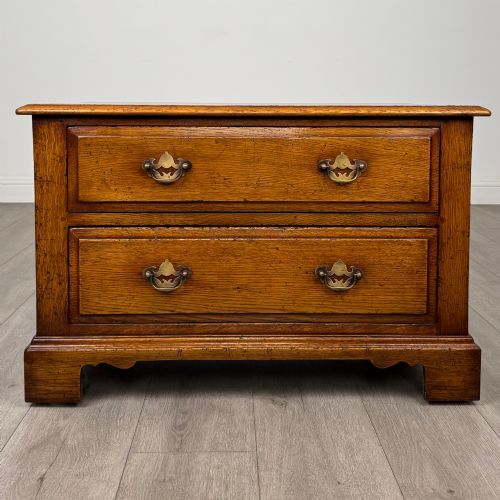
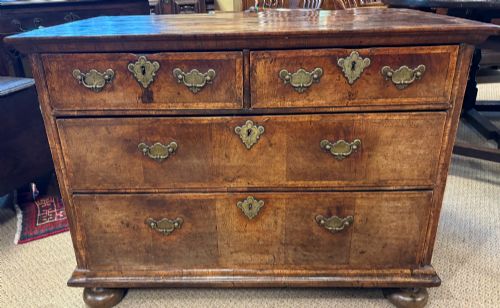
When you search for a brass handle low chest, you are looking at compact case furniture designed to sit low in a room, featuring prominent metal pull handles and drawer configurations. These pieces cross several periods, from early eighteenth-century walnut and oak examples to nineteenth-century campaign pieces in camphor wood and mahogany.
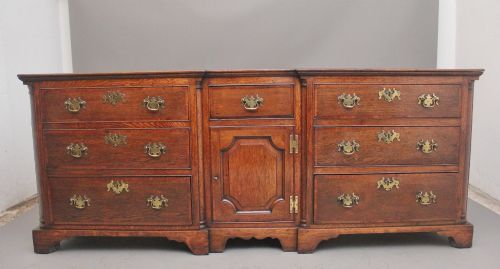
The versions you are most likely to meet on this page span the eighteenth century through to the early twentieth century, taking forms such as chests of drawers, press cupboards, and campaign units. They display regional character in oak, mahogany, and walnut, often reflecting Georgian, Victorian, or Edwardian domestic requirements.
Makers and workshops utilised sturdy timbers suited to everyday use, fitting them with brass handles and escutcheons that provided both structural grip and decorative contrast. Whether styled in the manner of Chippendale or built for military travel, these low pieces maintain a solid, horizontal stance.
Materials and construction
Cabinetmakers built these low chests using timbers such as mahogany, oak, walnut, and camphor wood, chosen for their durability and grain. Timber selection dictated whether the piece received a polished finish to show off rich mahogany or a simpler wax to protect utilitarian oak.
Metalworking played a central role, with brass utilised for drop handles, flush military fittings, and key escutcheons. These brass elements were pinned or screwed directly through the drawer fronts to withstand frequent handling.
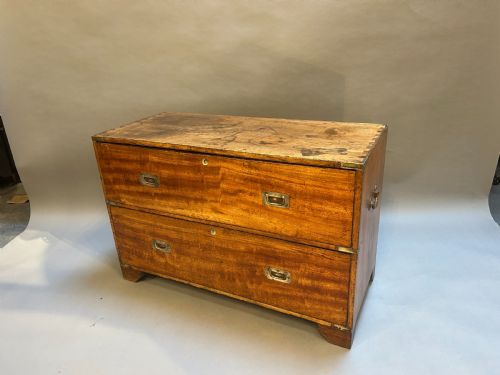
Campaign chests carry recessed brass handles so officers could stack them neatly inside tents without catching their uniform cuffs on protruding hardware.
What separates the fine examples
Quality rests in the integrity of the timber selection and the crispness of the drawer construction, where tight dovetailing separates utilitarian work from finer cabinetmaking. The weight and finish of the brass handles also signal the grade of the piece, with heavier, well-cast brass indicating better workshop standards.
Proportion and surface preservation define the upper tier, where untreated timber patination and original brass hardware remain intact. Lesser examples show mismatched replacements or heavy alterations that obscure the original period character.
The Brass Handle Low Chest Glossary
- Campaign chest
- A portable storage unit made in two or more sections with recessed brass handles for transport on military campaigns. These pieces are typically built from camphor wood or mahogany.
- Dovetail
- A joint used in drawer construction formed by interlocking wedge-shaped fingers. It provides strong tensile resistance for everyday use.
- Escutcheon
- A flat plate of brass surrounding a keyhole. It protects the surrounding wood from wear by the key.
- Secretaire
- A drawer fitted with a drop-front writing surface and small interior compartments. It combines desk functionality with standard drawer storage.
- Low boy
- A small dressing table or side table standing on relatively short legs with drawers beneath the top. This form dates back to the eighteenth century.
Brass Handle Low Chest: Frequently Asked Questions
What is a low chest?
A low chest is a shorter variation of a standard chest of drawers, designed with reduced height to sit comfortably beneath windows or mirror placements.
These pieces provide substantial storage capacity in a horizontal format that keeps ceilings feeling high and rooms uncluttered.
How do campaign chests differ?
Campaign chests are built in stacked sections with flush brass handles and corner brackets to prevent snagging during military transport.
They utilise dense timbers like camphor wood or mahogany and separate into distinct modular boxes for easy packing.
Which woods were used?
Cabinetmakers relied on oak, mahogany, walnut, and camphor wood depending on the period and regional origin of the piece.
Softer woods like painted pine or deal occasionally appear in secondary parts, while primary facades showcase the grain of the chosen hardwood.
How do I date a chest?
Dating relies on observing construction methods such as hand-cut dovetails, timber choices, handle styles, and overall proportions.
Early eighteenth-century pieces often feature walnut or oak with distinct plank constructions, while nineteenth-century versions lean towards mahogany and machine-assisted joints.