


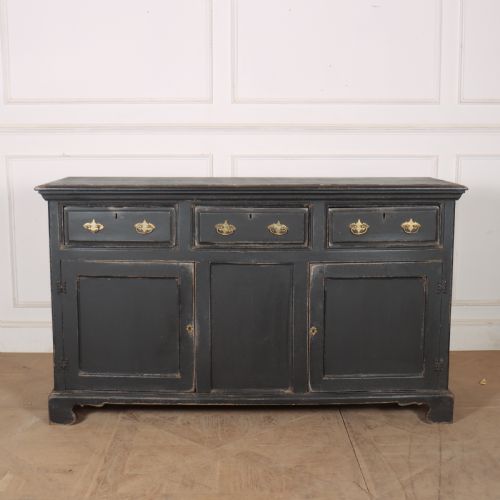


Black Wooden Dressers
These black wooden dressers bring deep painted character and storage to a room, offering practical utility through period chests and dresser bases.
Black Wooden Dressers
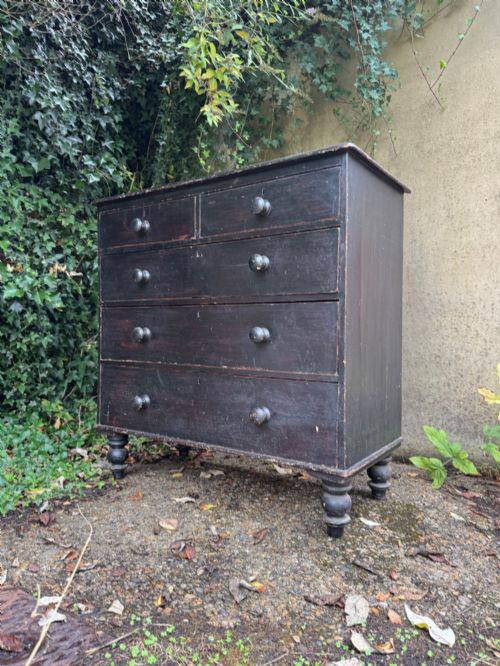
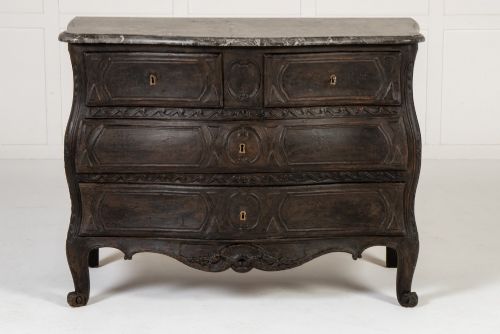
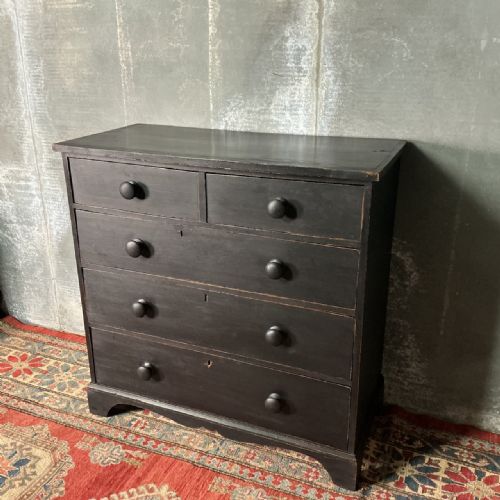
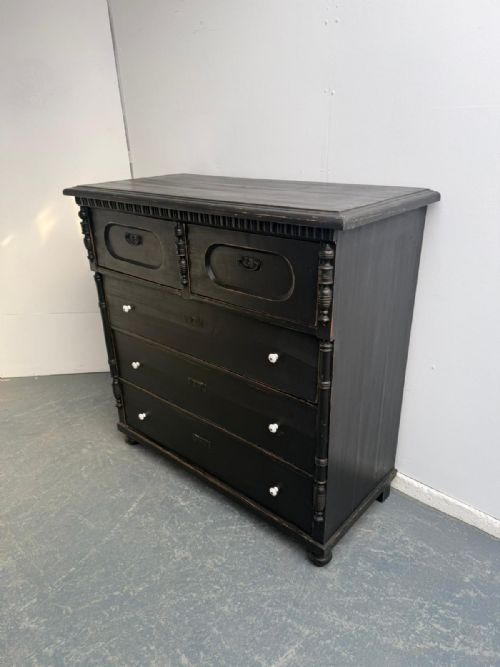
When you search for black wooden dressers, you encounter a selection of storage pieces spanning several centuries, primarily featuring painted wood finishes. The pieces range from English country dresser bases and 18th century Italian painted commodes to Victorian painted chests and Hungarian folk art examples.
You are most likely to meet 18th century and 19th century forms, including kitchen dressers, chests of drawers, and sideboards. These items combine utilitarian storage with dark painted surfaces, drawing on Georgian, Victorian country, and Regency influences.
How they were made
Carpenters constructed these pieces using solid timbers like pine and oak, often mounting drawers and doors with iron, brass, or ceramic hardware. Construction methods relied on traditional joinery suited to heavy daily use in kitchens, shops, and parlours.
Makers applied dark paint, ebonising treatments, or folk art decoration directly to the wood surfaces. This finish protected the timber while creating the distinct dark appearance seen across commodes and dresser bases.
Listings span from the 18th century to the early 20th century, incorporating pine, oak, brass, iron, and painted wood finishes.
What varies in quality
The standard of a piece rests on the sophistication of its form and the integrity of its timber. Elaborate shapes like bombe commodes or bow front chests require greater joinery skill than standard rectangular chests of drawers.
The character of the painted surface also dictates the tier of the piece. Surviving early paintwork or regional folk art decoration carries more visual depth than later repainting, separating everyday utility items from finer decorative examples.
The Black Wooden Dressers Glossary
- Commode
- A low chest of drawers or cabinet, often of 18th century continental origin. These pieces typically stand on short legs and provide bedside or parlour storage.
- Dresser base
- The lower section of a kitchen dresser, featuring cupboards and drawers without the upper plate rack. This sturdy form serves as a sideboard or console.
- Ebonised
- Wood treated with a dark stain or finish to imitate expensive ebony. This technique was popular during the Regency and Victorian periods for formal furniture.
- Bombe
- A swelling, convex furniture shape characteristic of 18th century continental commodes. The curved front and sides demand advanced woodworking skill.
- Drapers chest
- A wide, multi-drawer storage unit originally utilised in fabric shops for stock organisation. These pieces offer numerous shallow drawers.
Black Wooden Dressers: Frequently Asked Questions
What is a dresser base?
A dresser base is the lower half of a traditional kitchen dresser, featuring a flat top surface above rows of drawers and cupboards. It functions independently as a sideboard or serving table.
These pieces were built for heavy domestic work in kitchens and pantries, providing substantial storage while keeping everyday items close to hand.
How do I date a black wooden dresser?
Dating relies on observing construction methods, timber choices, and stylistic details such as brass or iron hardware. Georgian and 18th century pieces often feature hand-cut dovetails and native woods like oak or pine.
Later Victorian items and early 20th century drapers chests display machine-cut elements and distinct paint layers. Comparing the form to known regional styles helps narrow the period of origin.
Where did painted dressers originate?
Painted storage furniture was produced across Britain and continental Europe, including notable examples from Italy, France, and Hungary. Regional workshops utilised local softwoods and applied decorative paint finishes suited to rural and urban homes.
Folk art traditions in countries like Hungary brought distinct painted motifs to standard chest designs, creating colourful or dark-painted surfaces with strong local character.
How do I live with a black wooden dresser?
Black wooden dressers anchor a room by providing a strong visual contrast against lighter walls and neutral interiors. They suit hallways, living rooms, and dining spaces where substantial storage is required.
Care involves dusting with a dry cloth and avoiding harsh chemical cleaners that might damage historic painted surfaces or ebonised finishes. Placing the furniture away from direct heat sources protects the old timber and paint.