37,285  PAGES BROWSED TODAY PAGES TODAY 51 ANTIQUES UPLOADED TODAYNEW ARRIVALS
51 ITEMS ADDED TODAY
Sort Order
Items Per Page
Browse Categories
Sort order
Relevant Links
Items per page
ID #SA930839
FOR SALE
£4,500
Email
Save
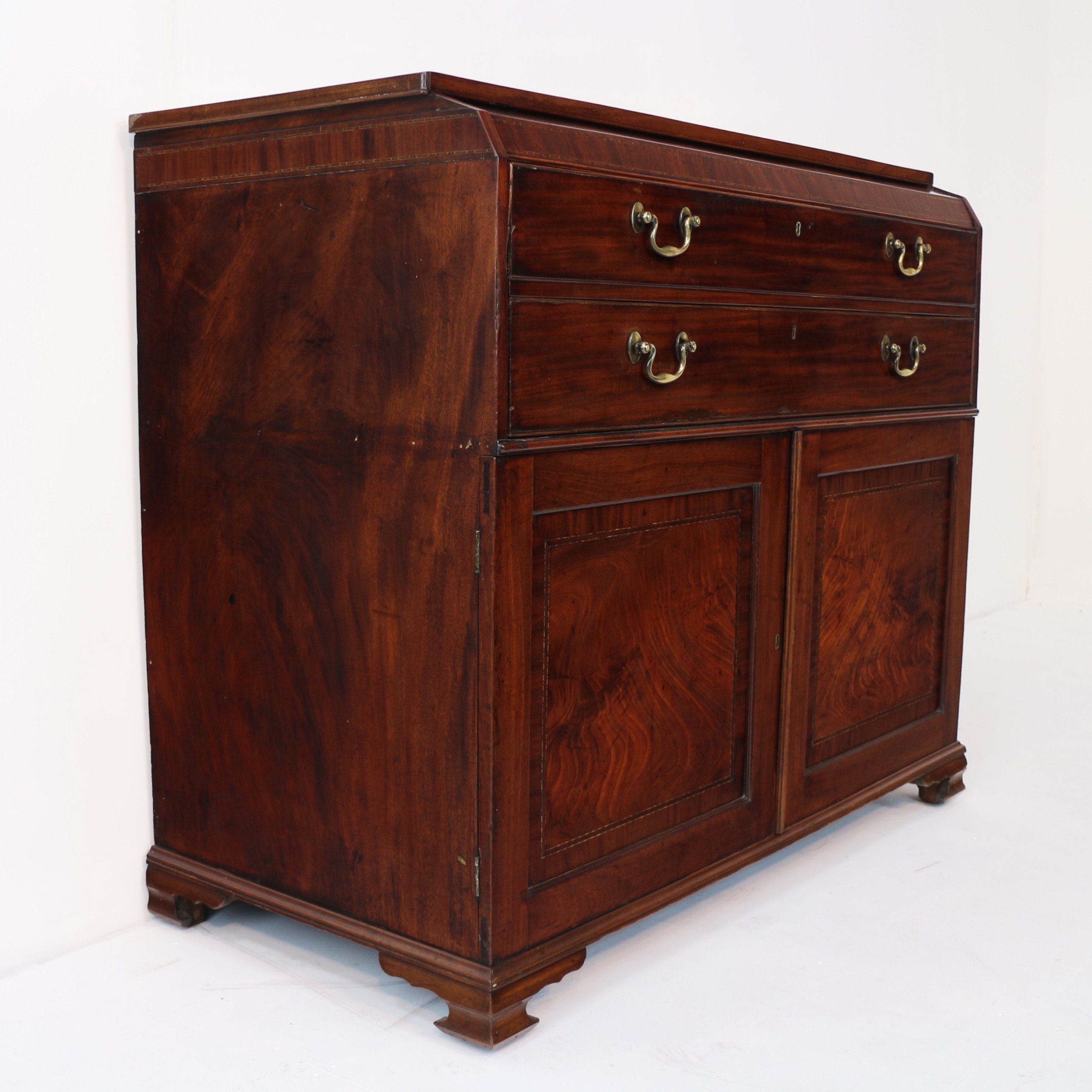
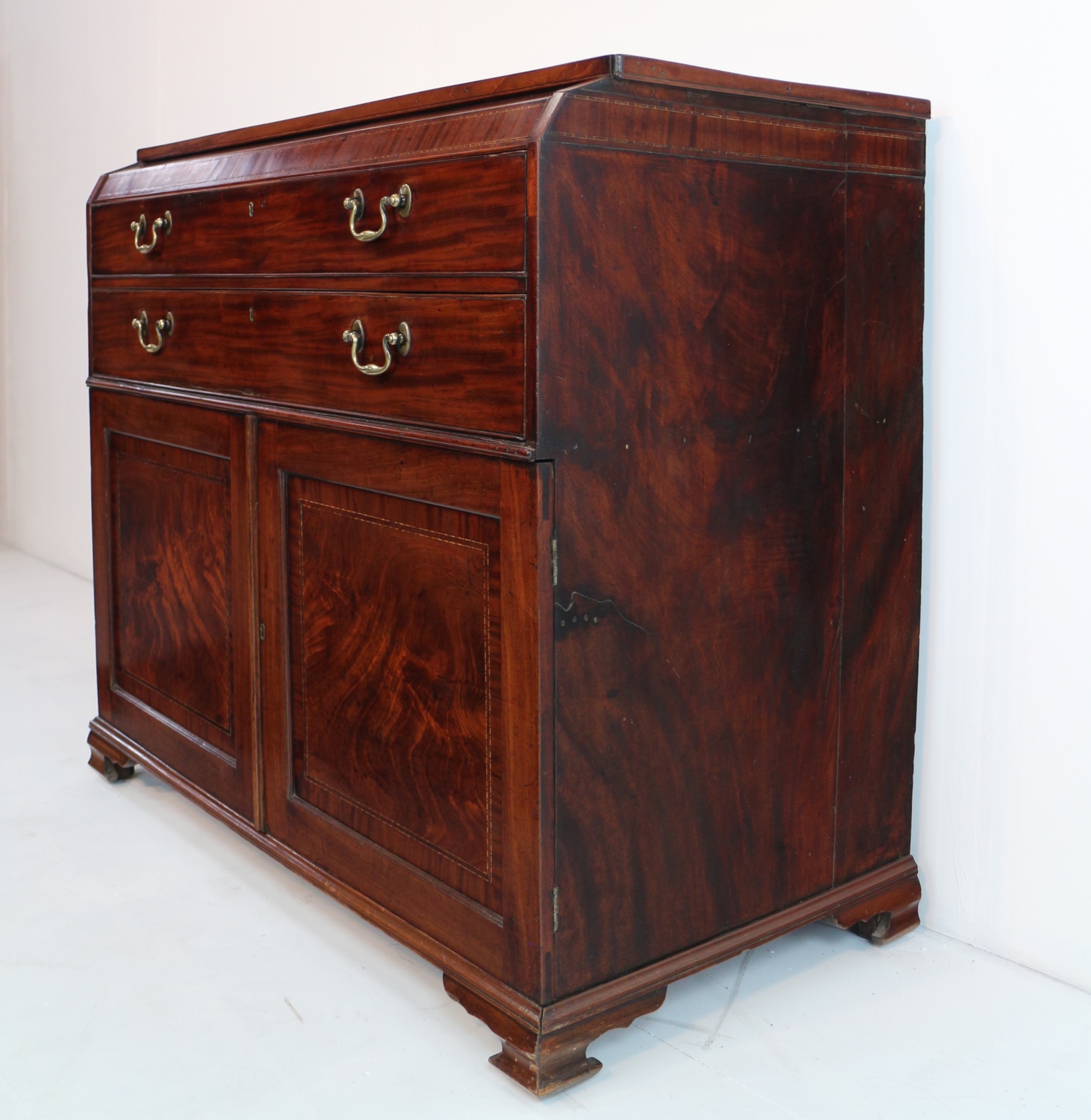
George III Mahogany Secretaire Low Press Cupboard, Attributed to Gillows
The Antique Furniture Company
for sale €5,265     $5,715
£4,500

The Antique Furniture Company

Sellingantiques Verified Since Sep 2013
View Dealers Stock Page
Relevant Links
Id #SA930839
PDF SHARE
SAVE

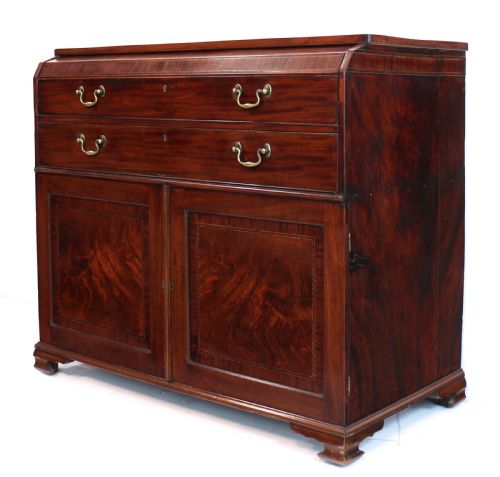
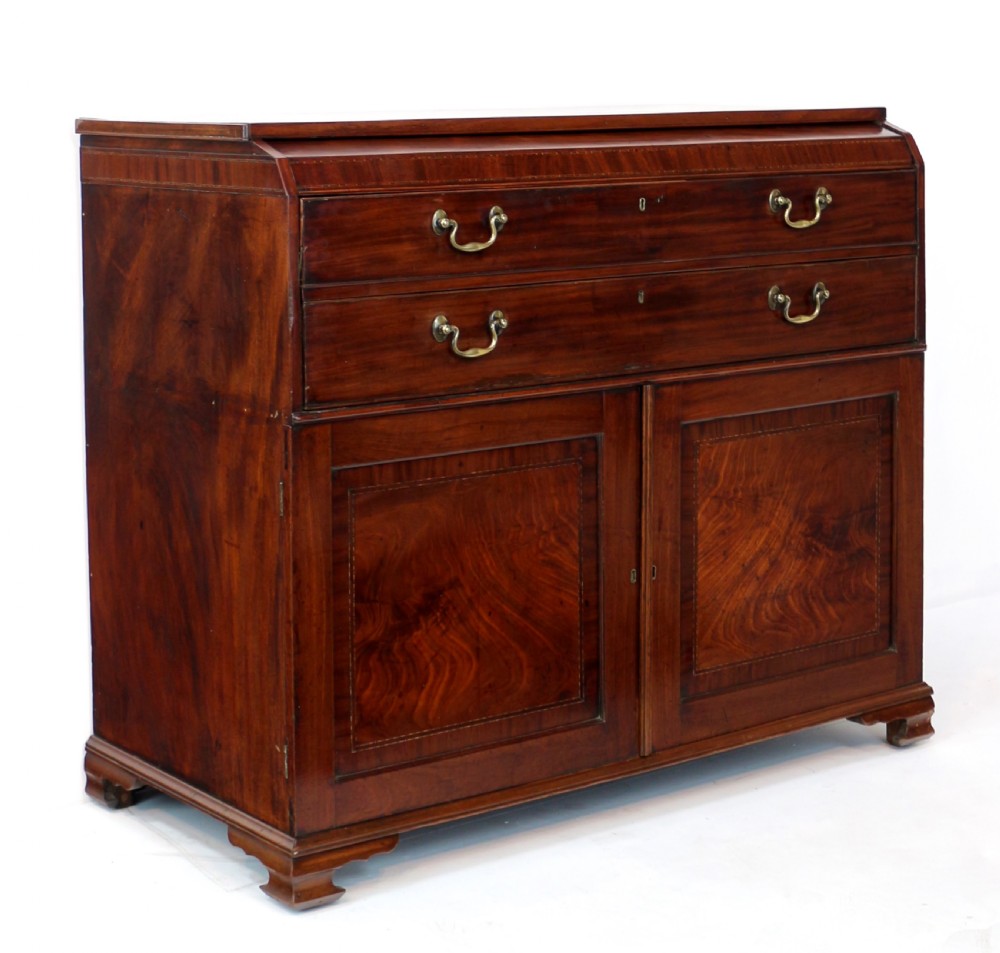
George III Mahogany Secretaire Low Press Cupboard, Attributed to Gillows

18th century
Description

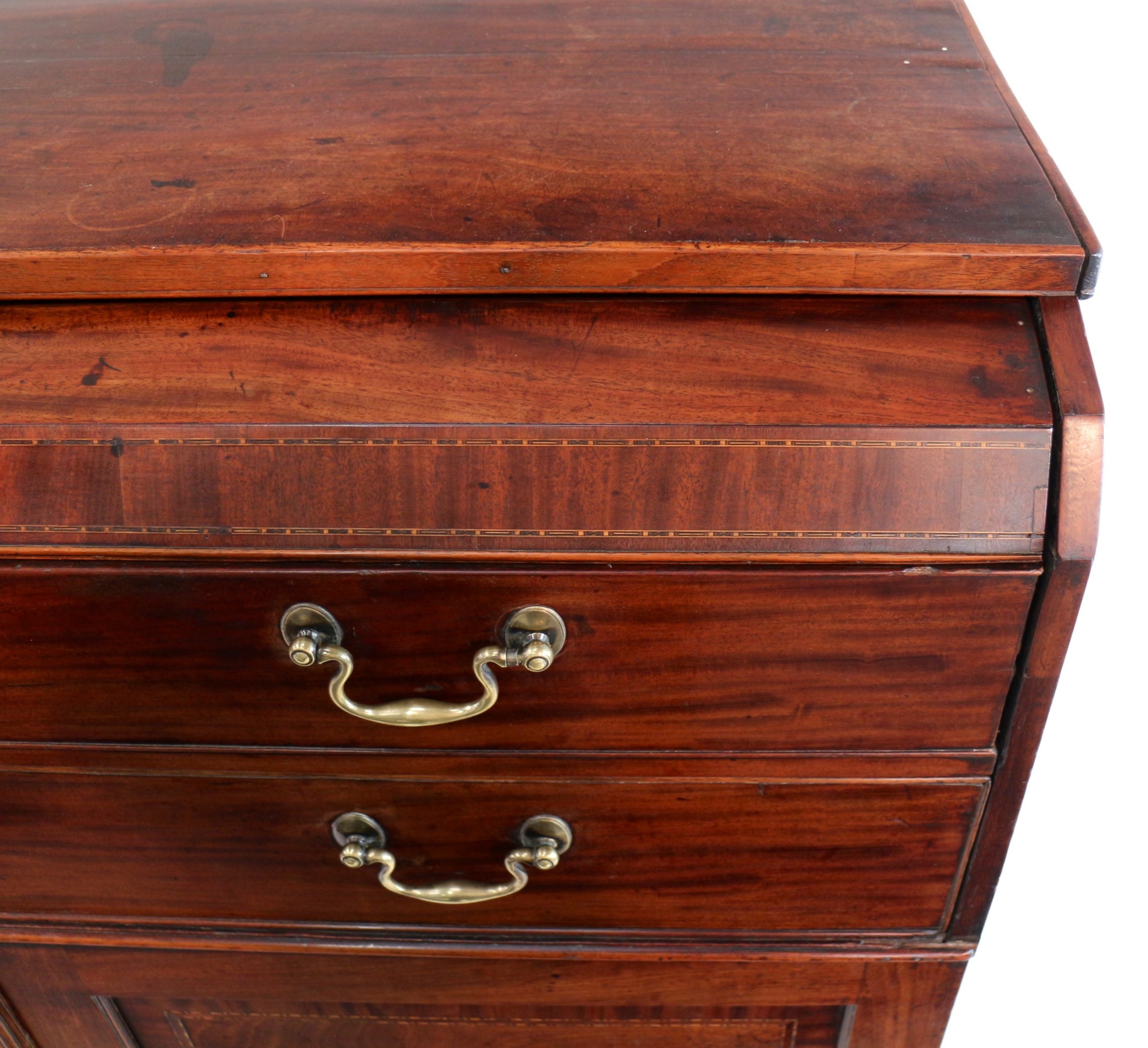
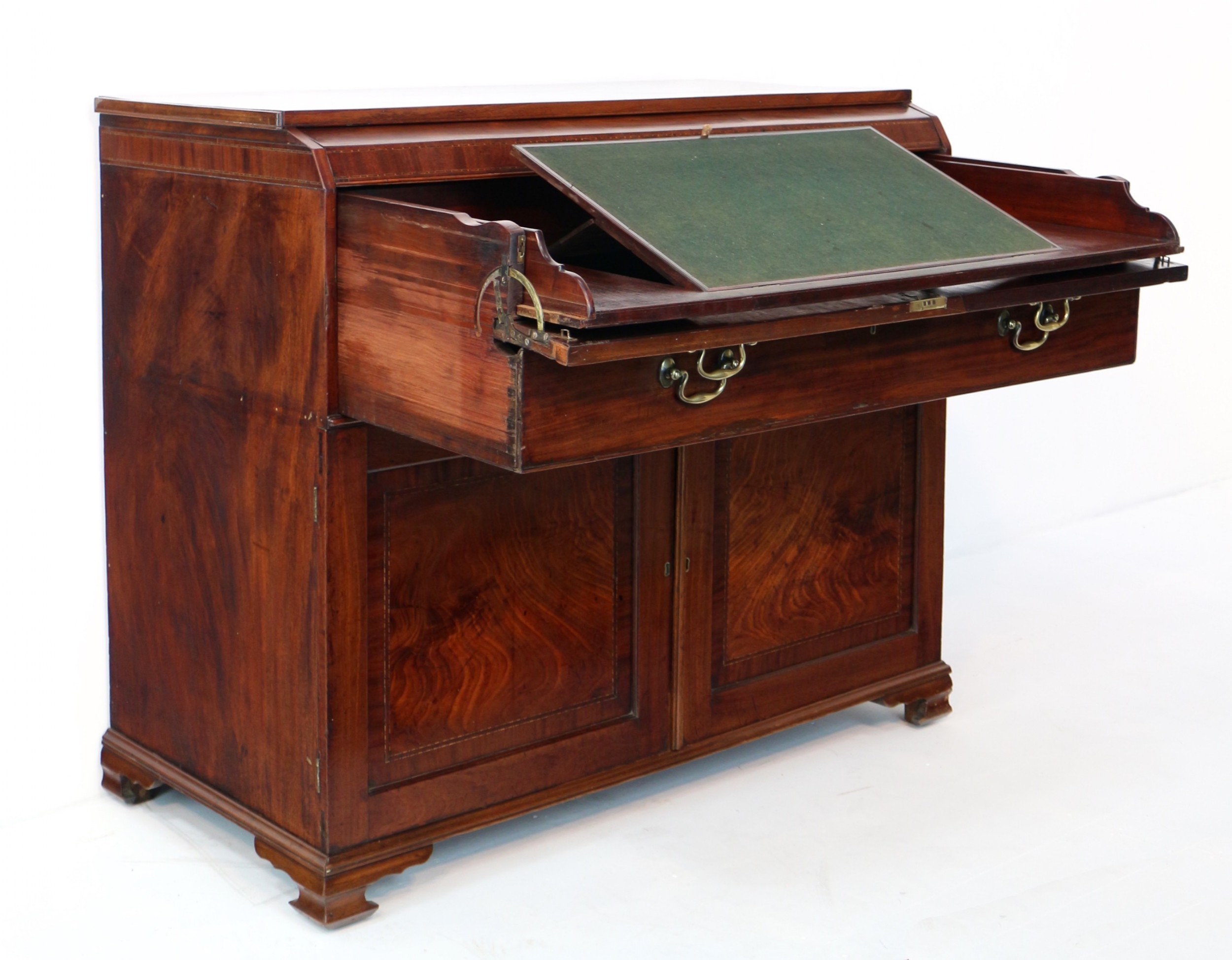
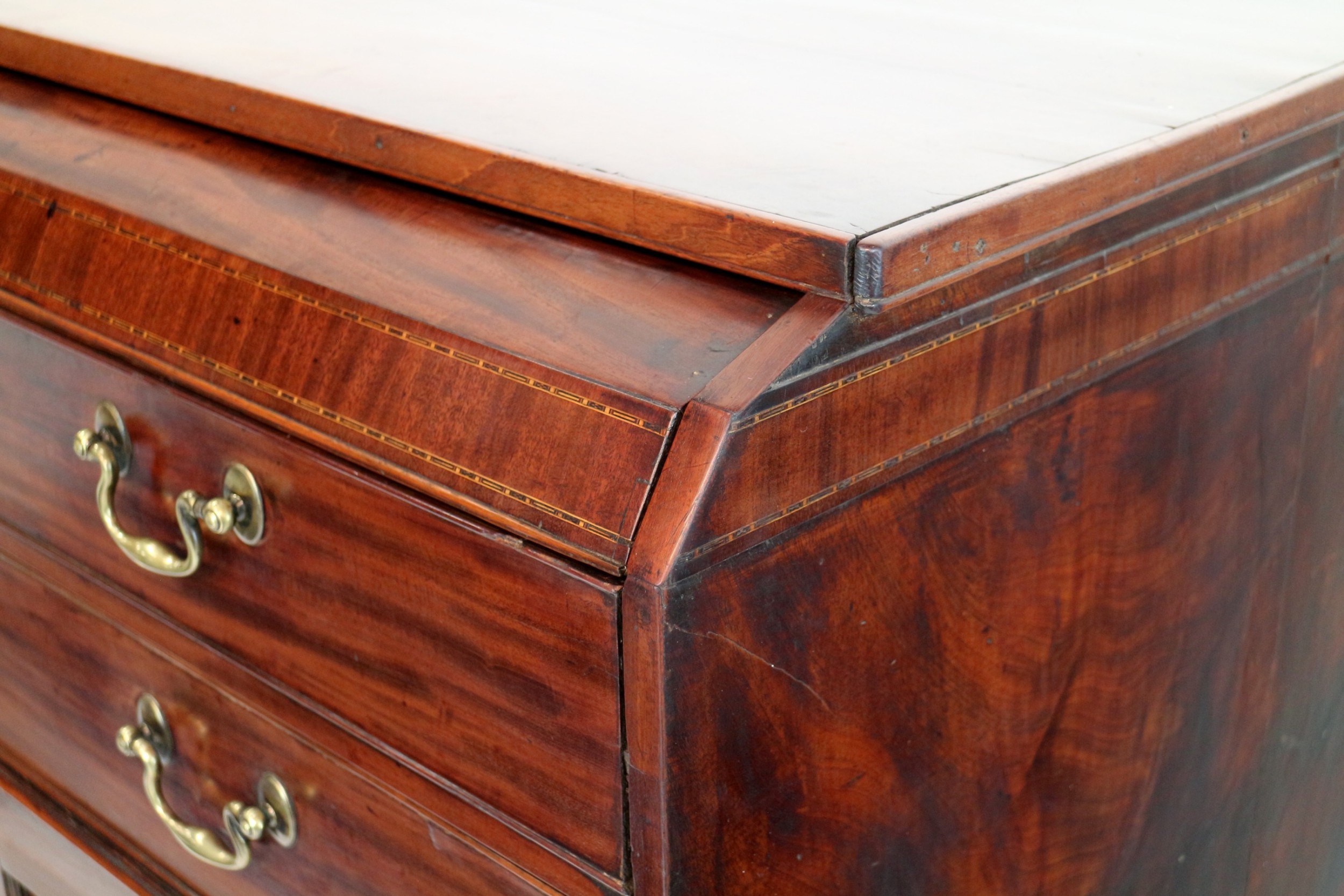
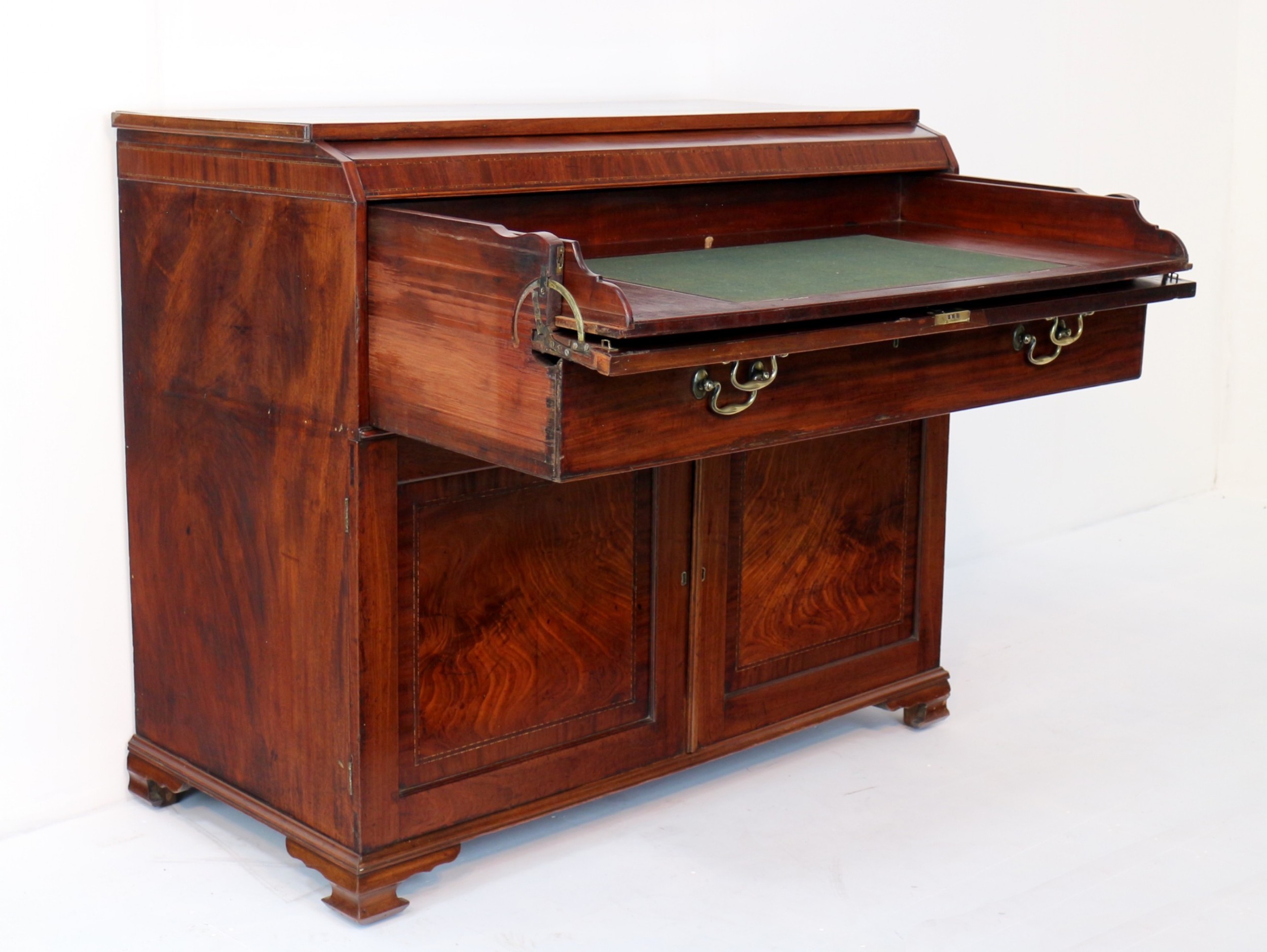
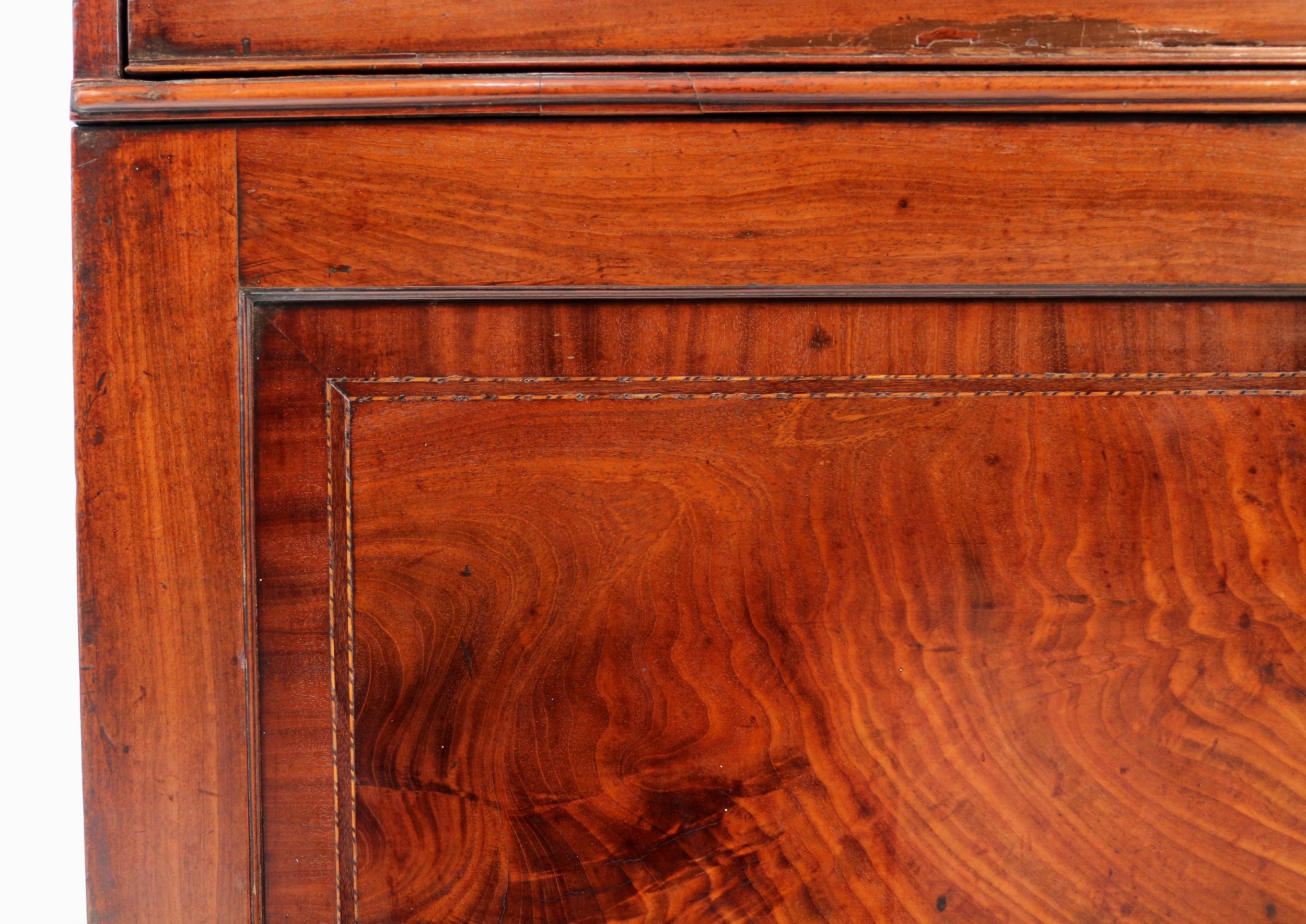
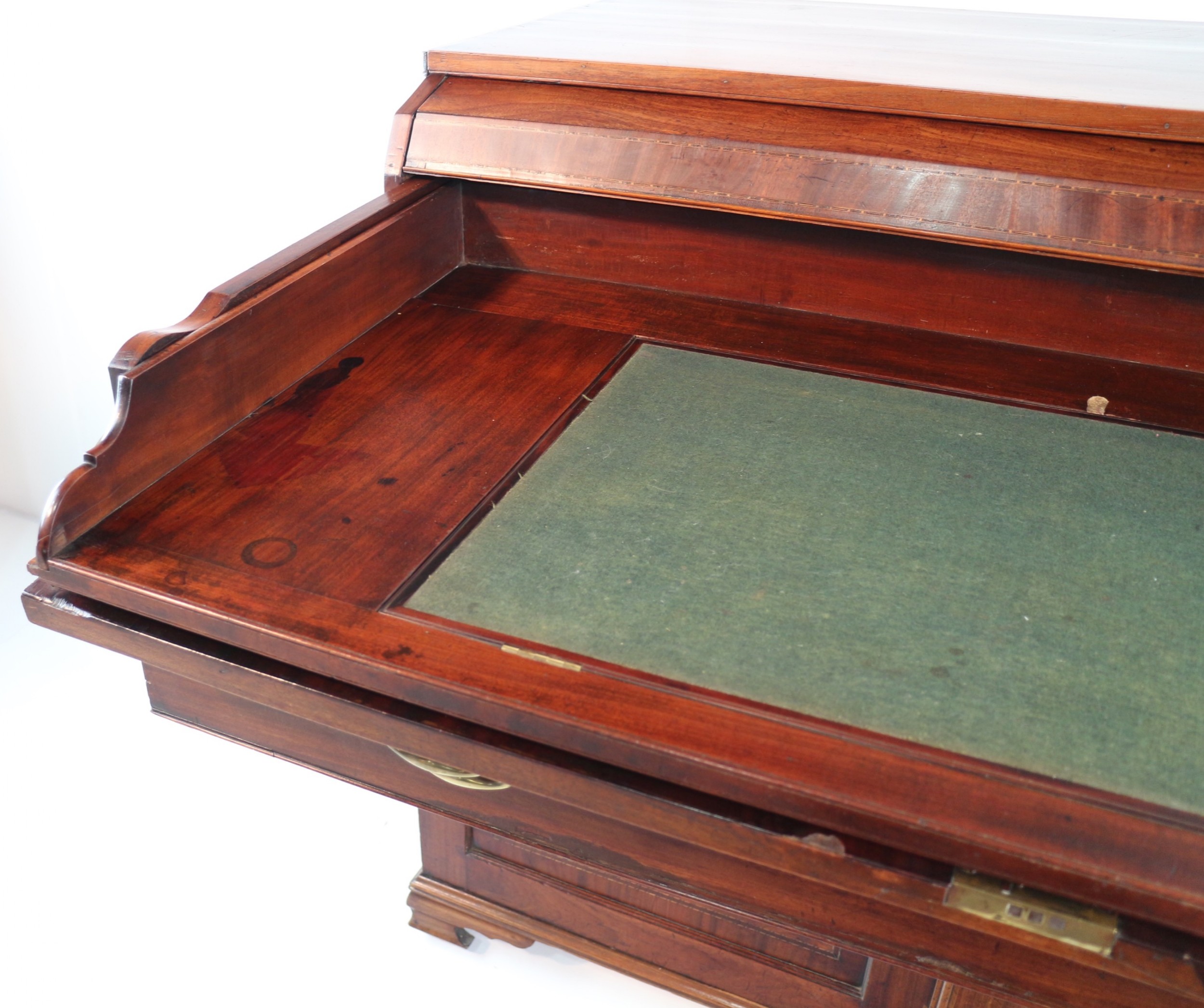
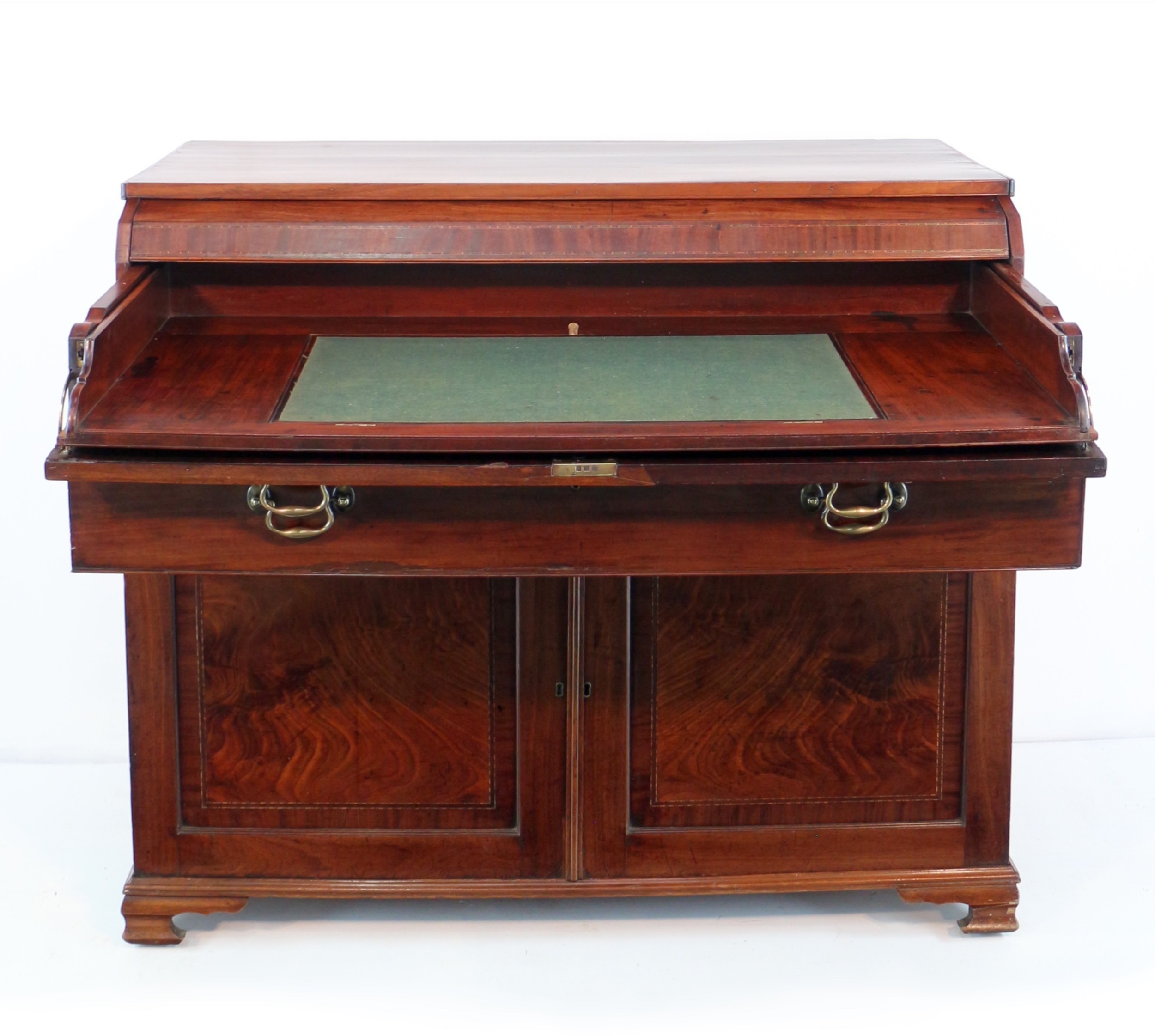
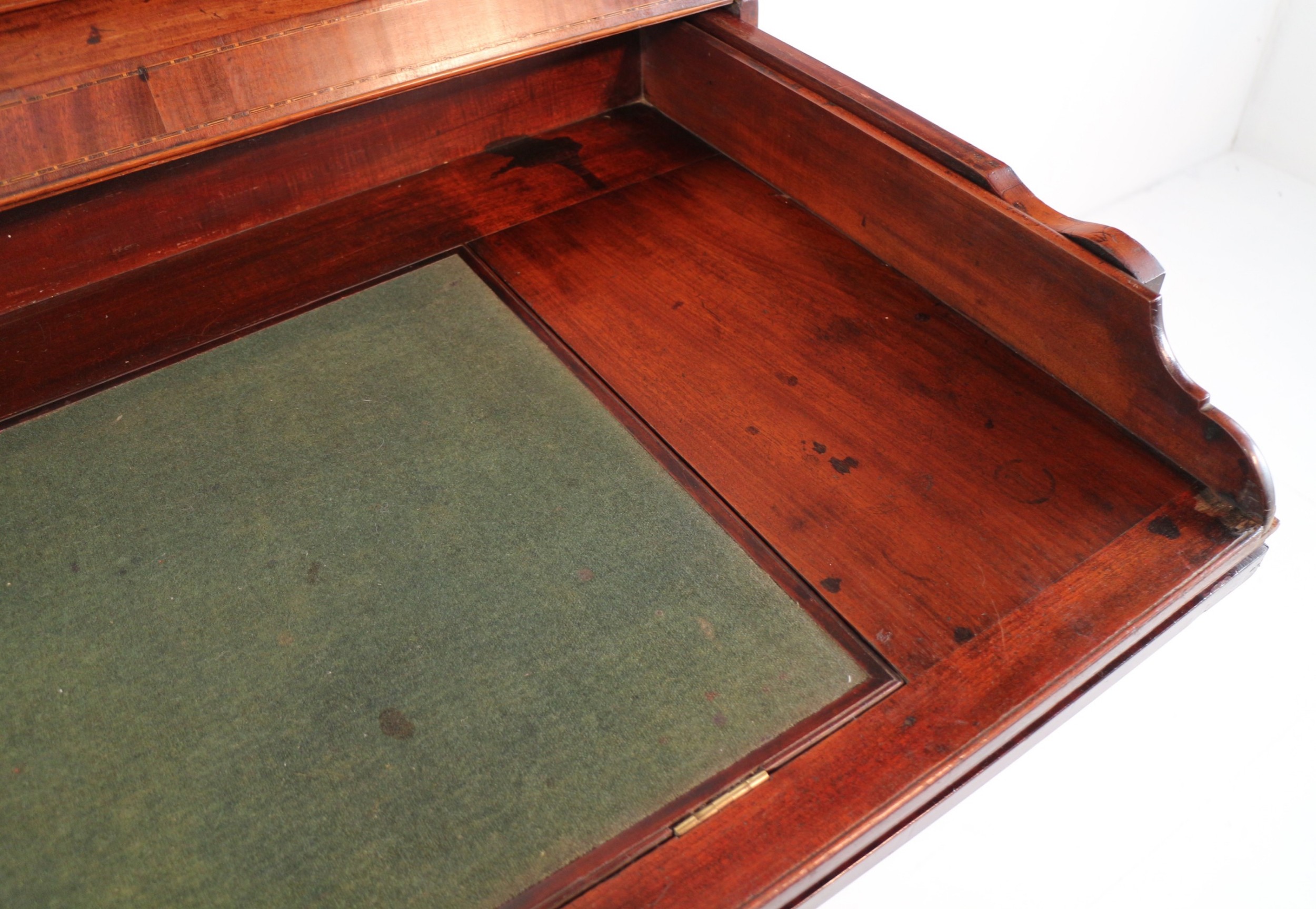
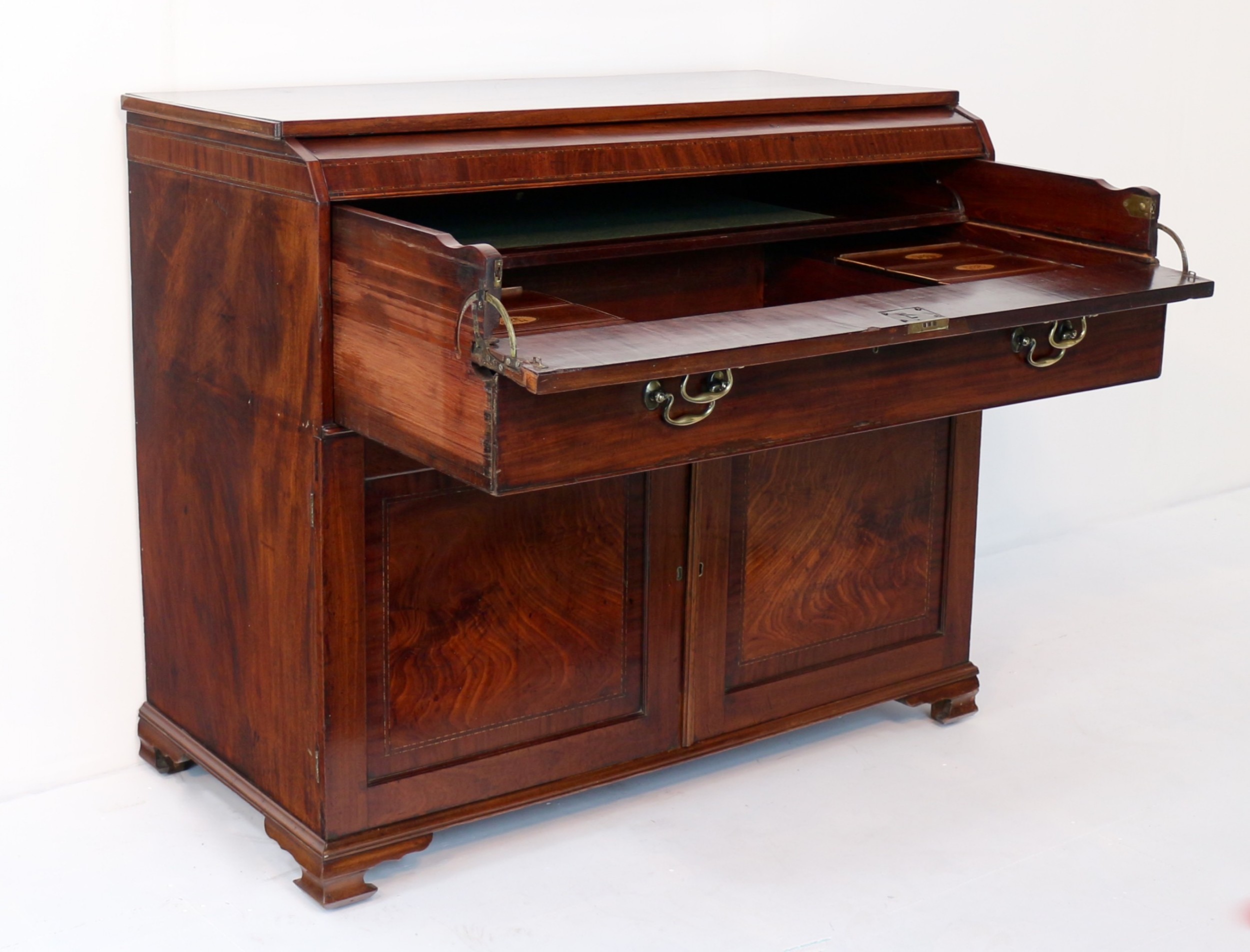
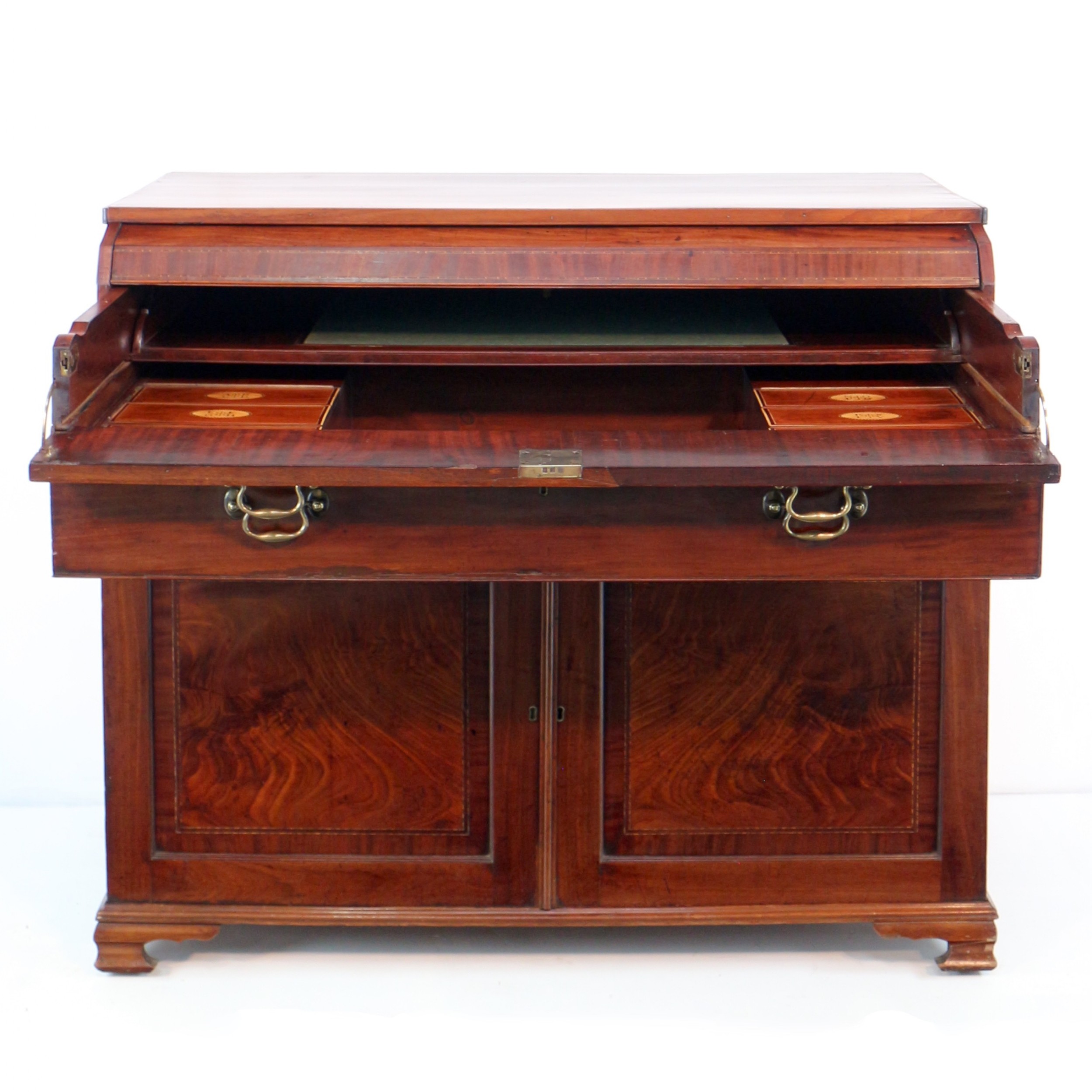
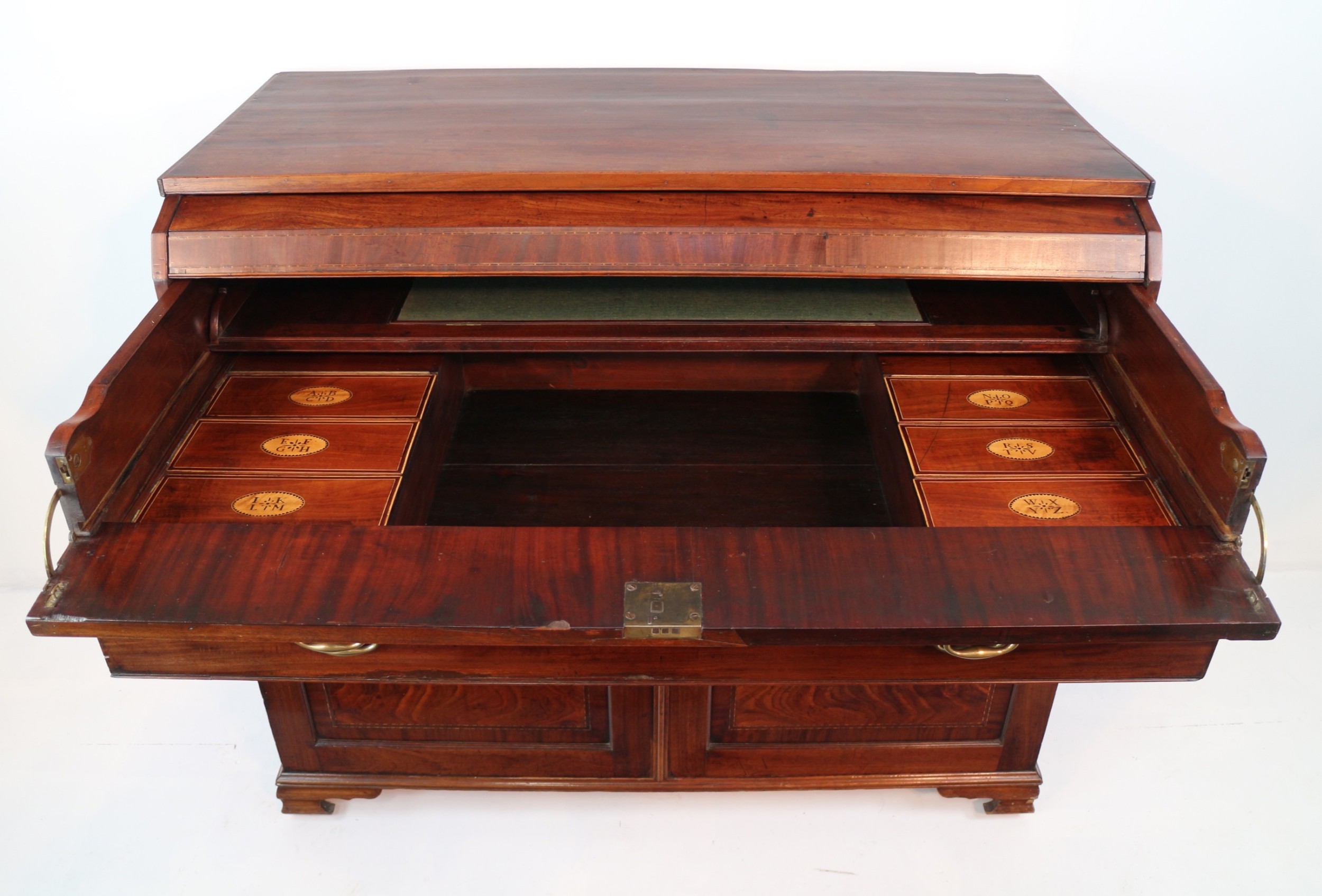
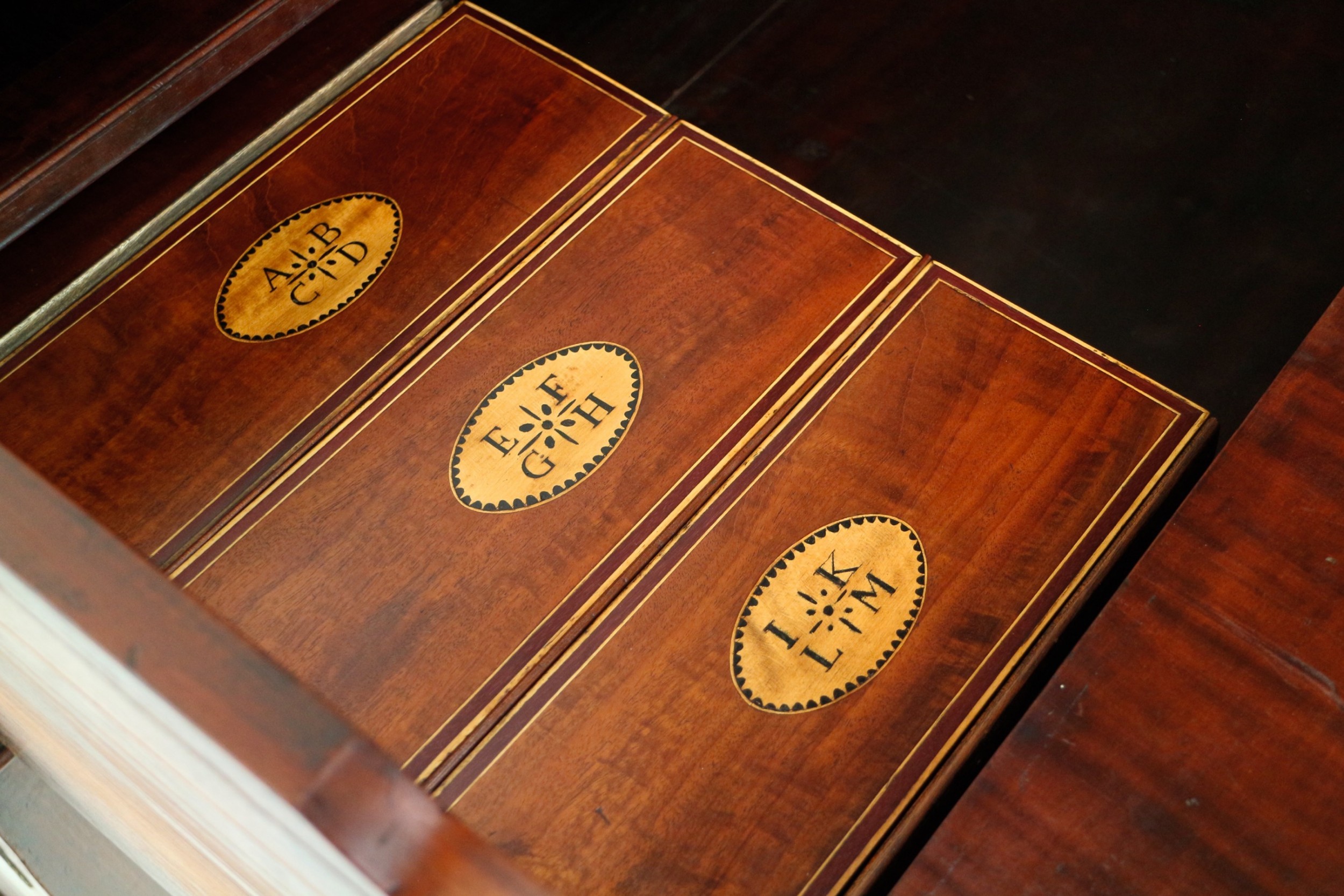
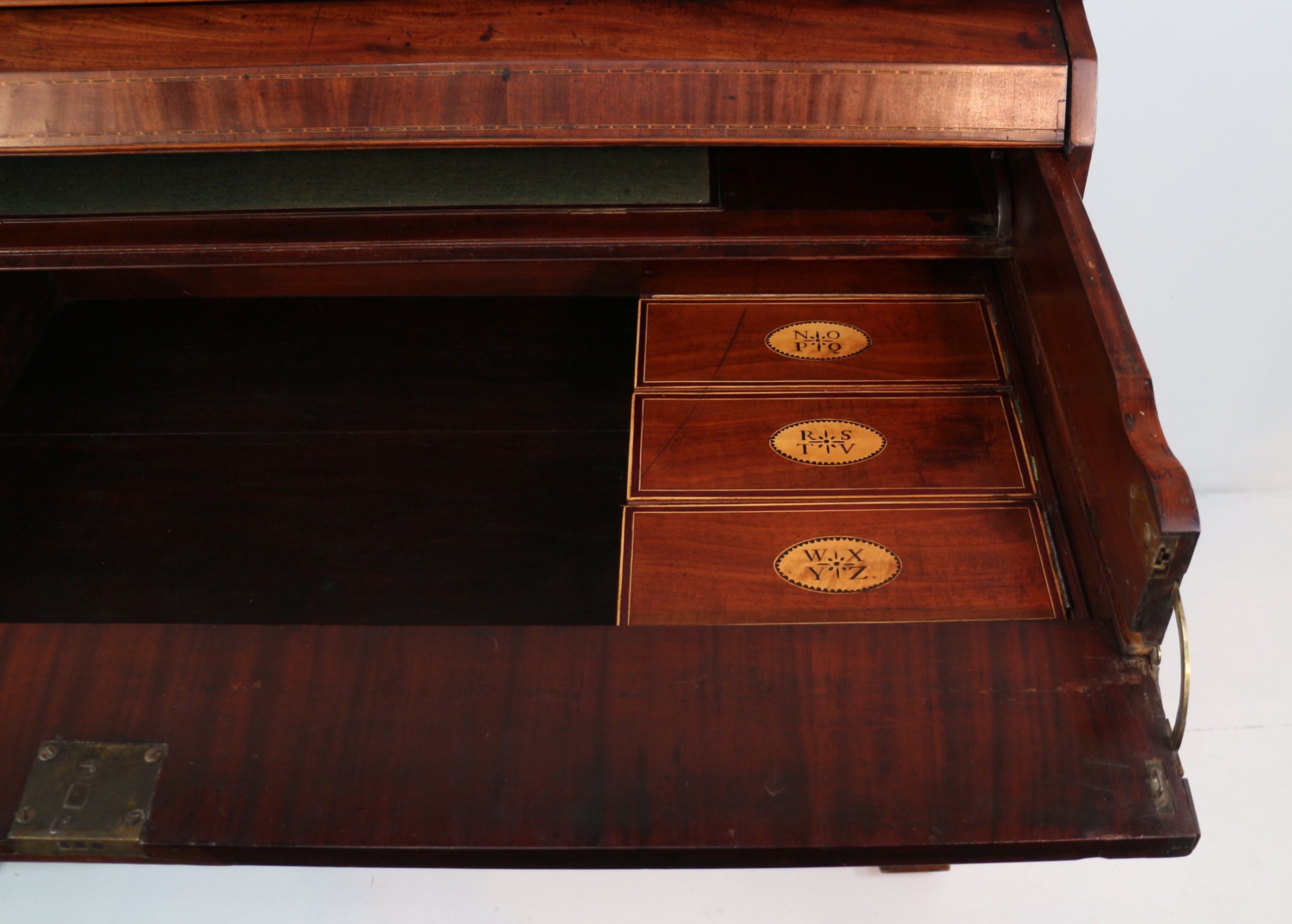
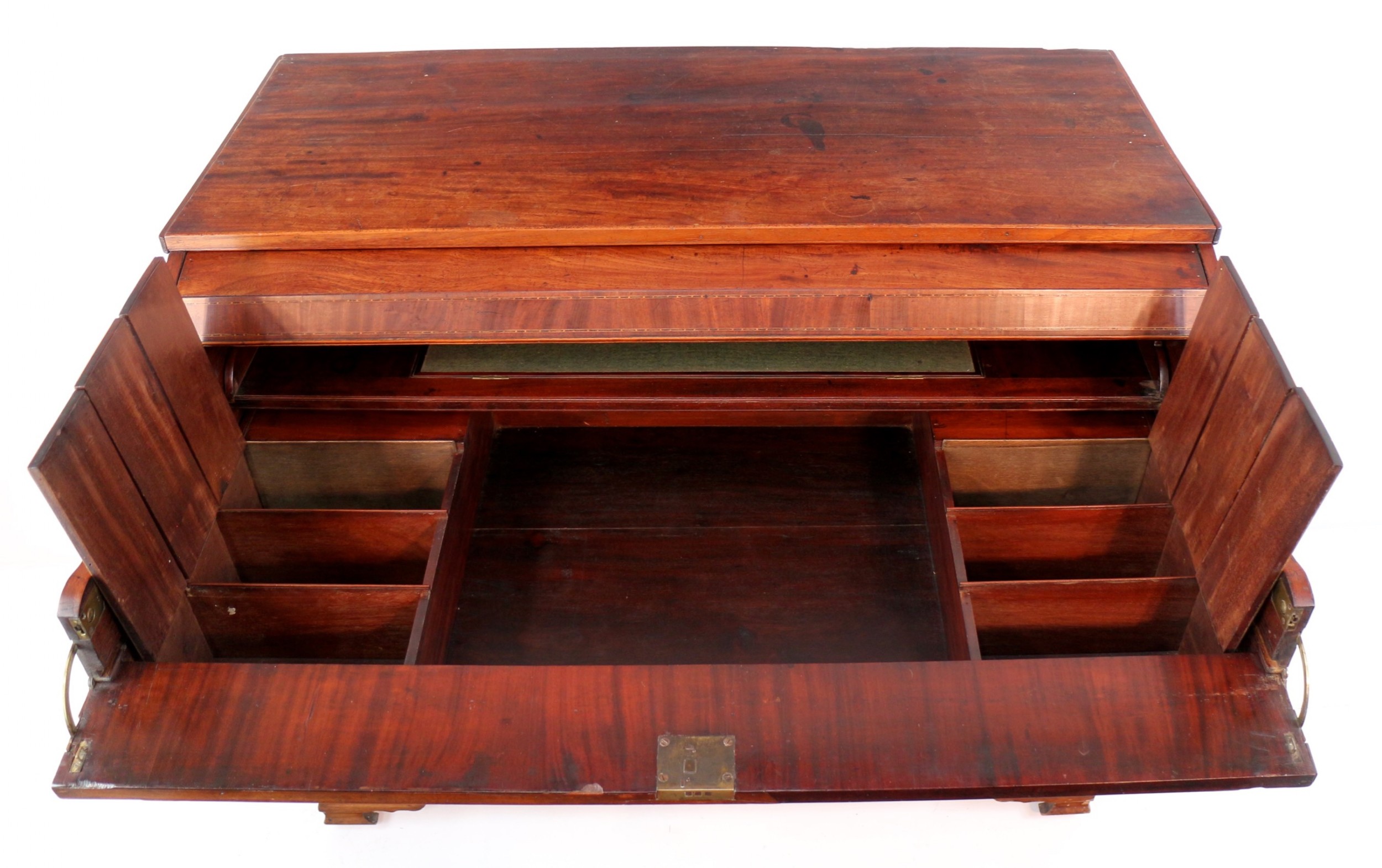
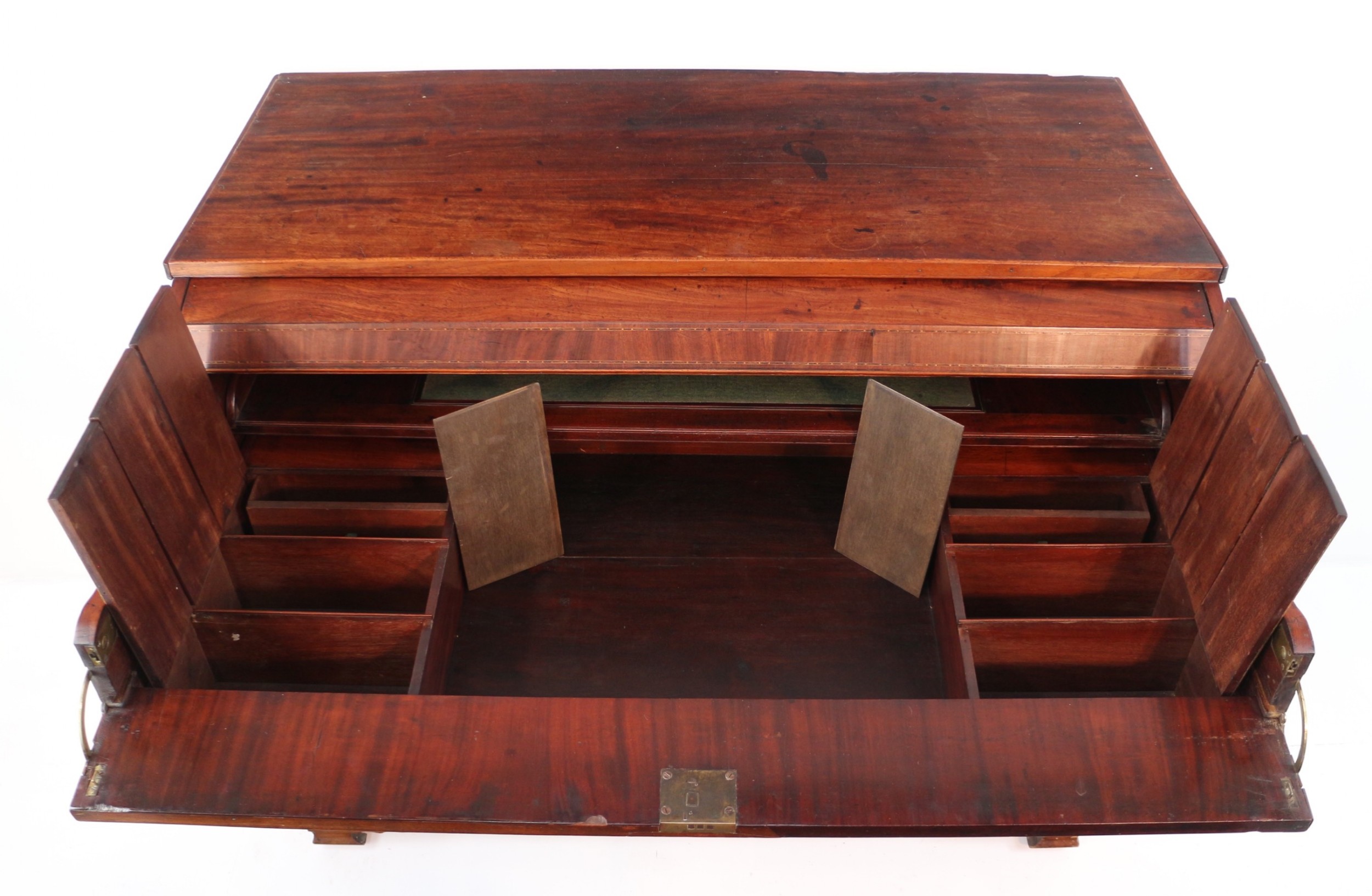
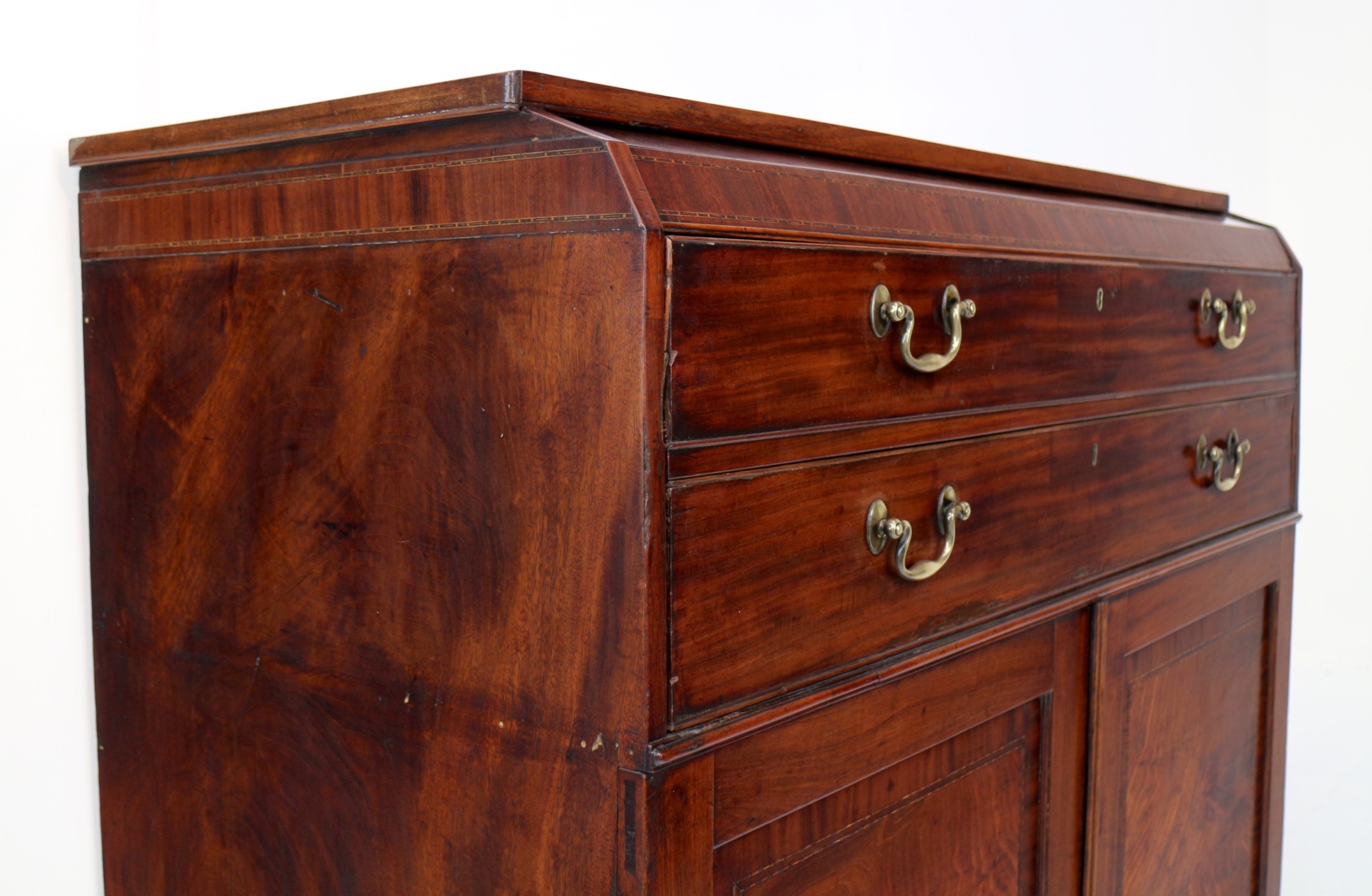
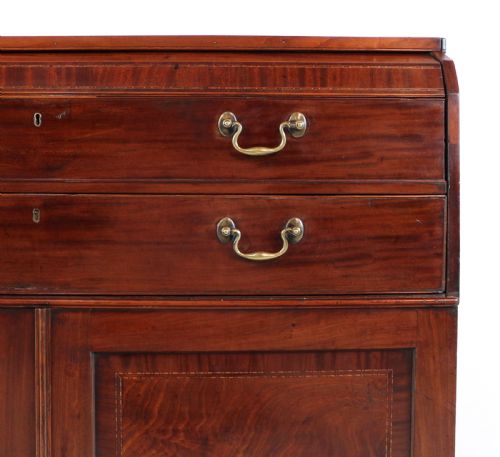
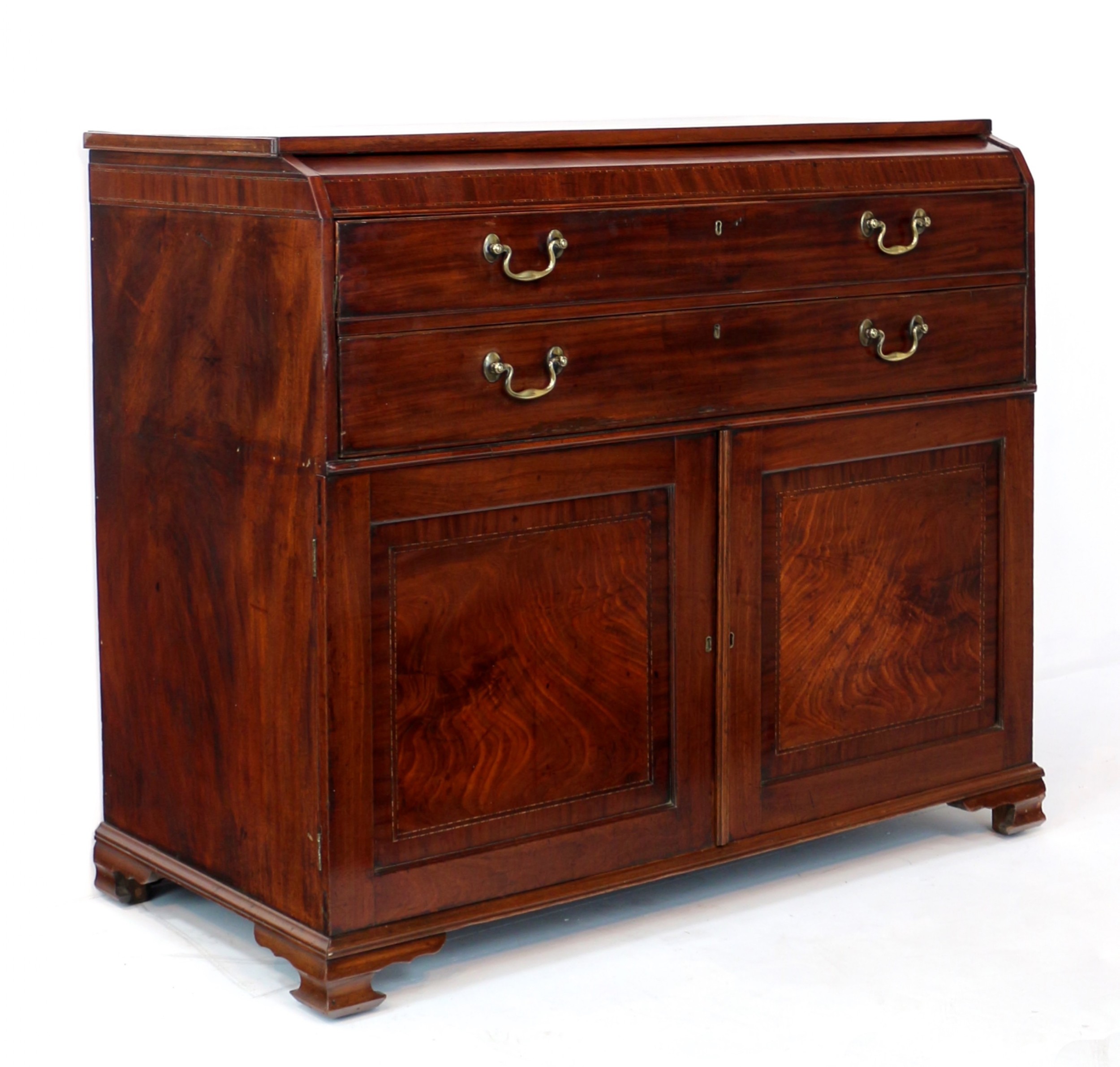
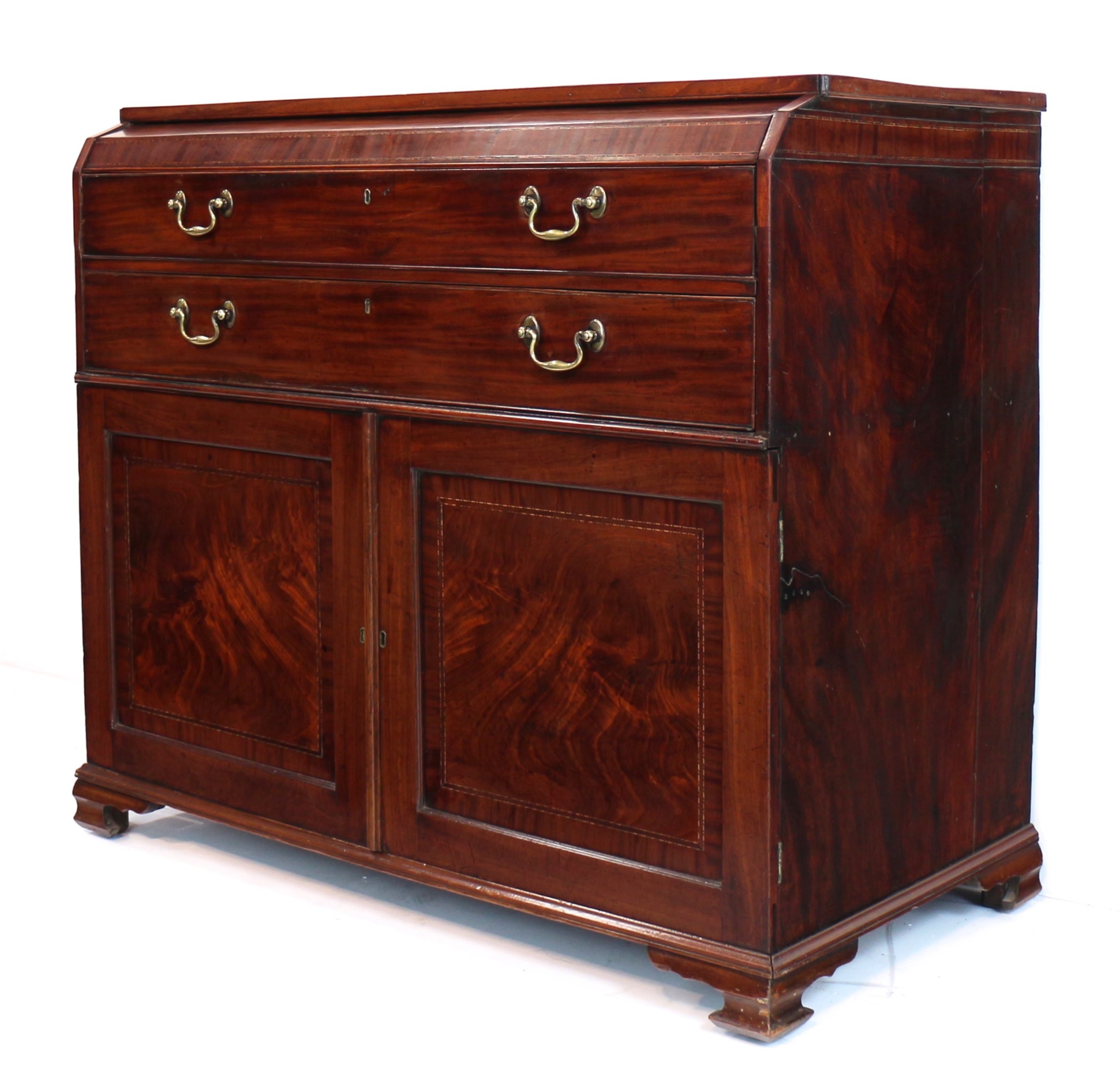
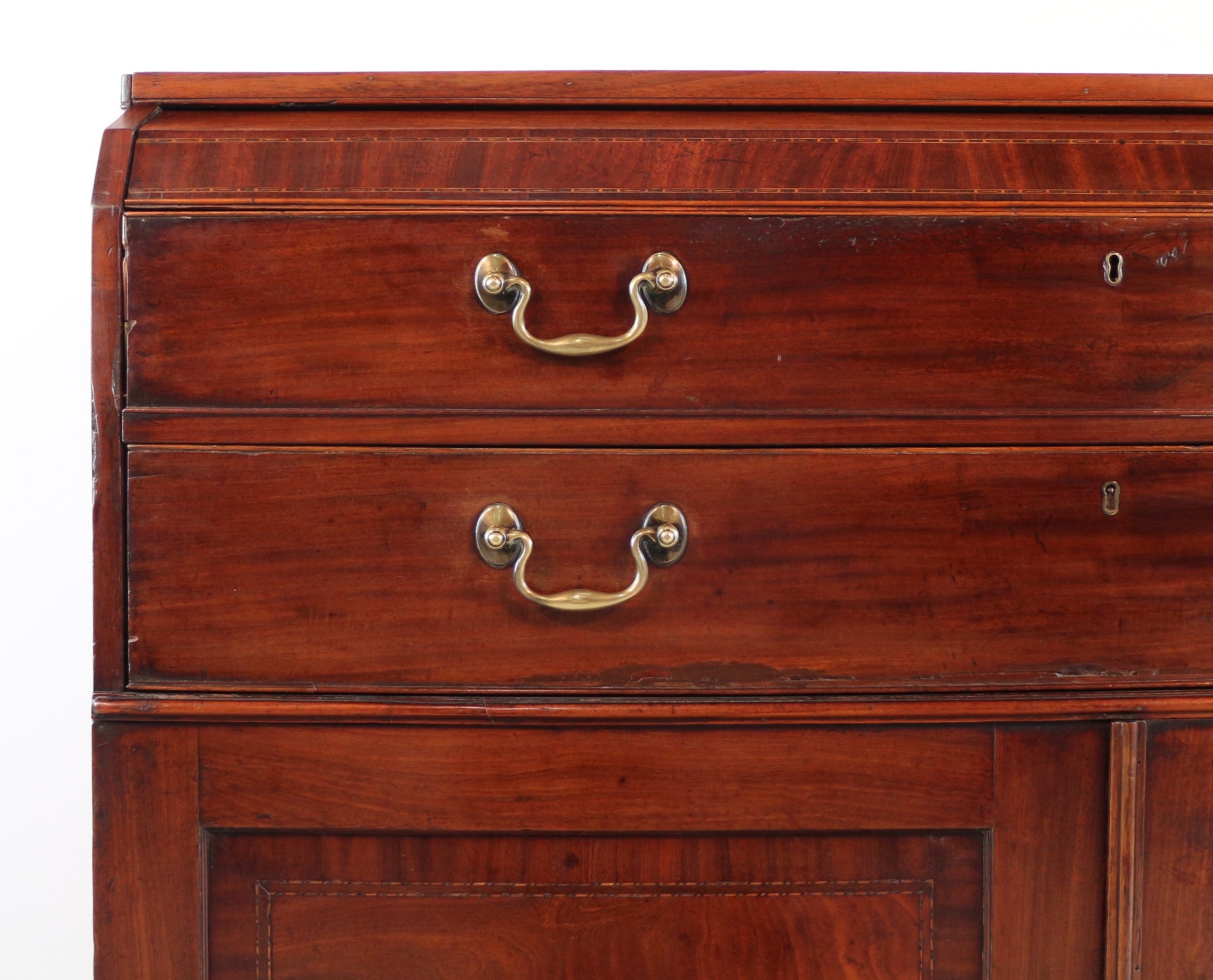
A George III mahogany and inlaid low secretaire press cupboard attributed to Gillows of Lancaster and dating to circa 1790. With a rectangular top over a concealed long drawer with sloping front, mahogany crossbanding and parquetry and box stringing which continues across the top of the sides, the two long false drawer fronts below forming a deep secretaire drawer containing a writing slide with a hinged, ratcheted green baize inset slope above a central well flanked by six crossbanded and boxwood strung lidded and alphabetically ordered compartments, each inlaid with an oval panel engraved with four letters of the alphabet, and concealing secret recesses with drawers and original green fabric pulls.

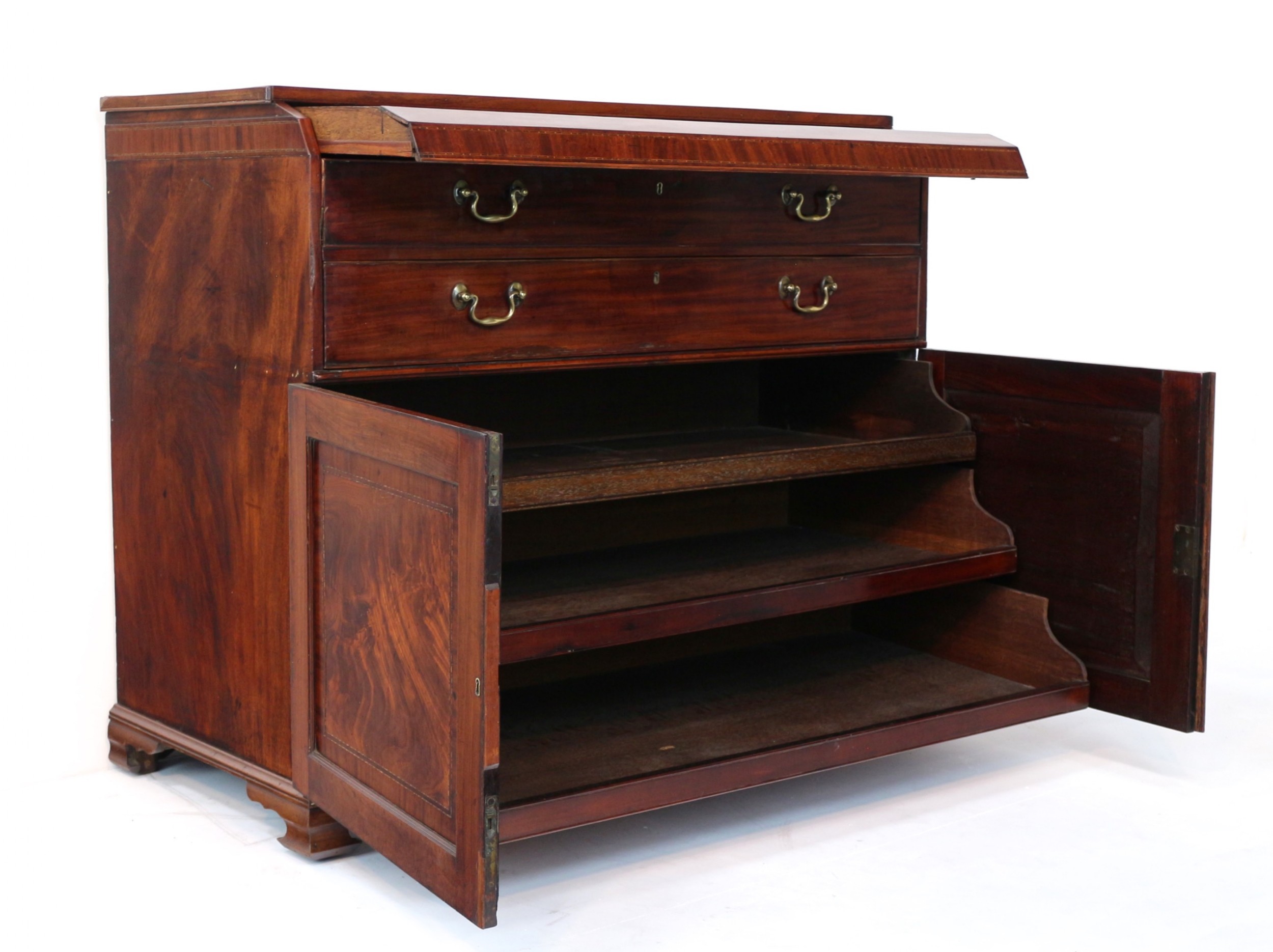
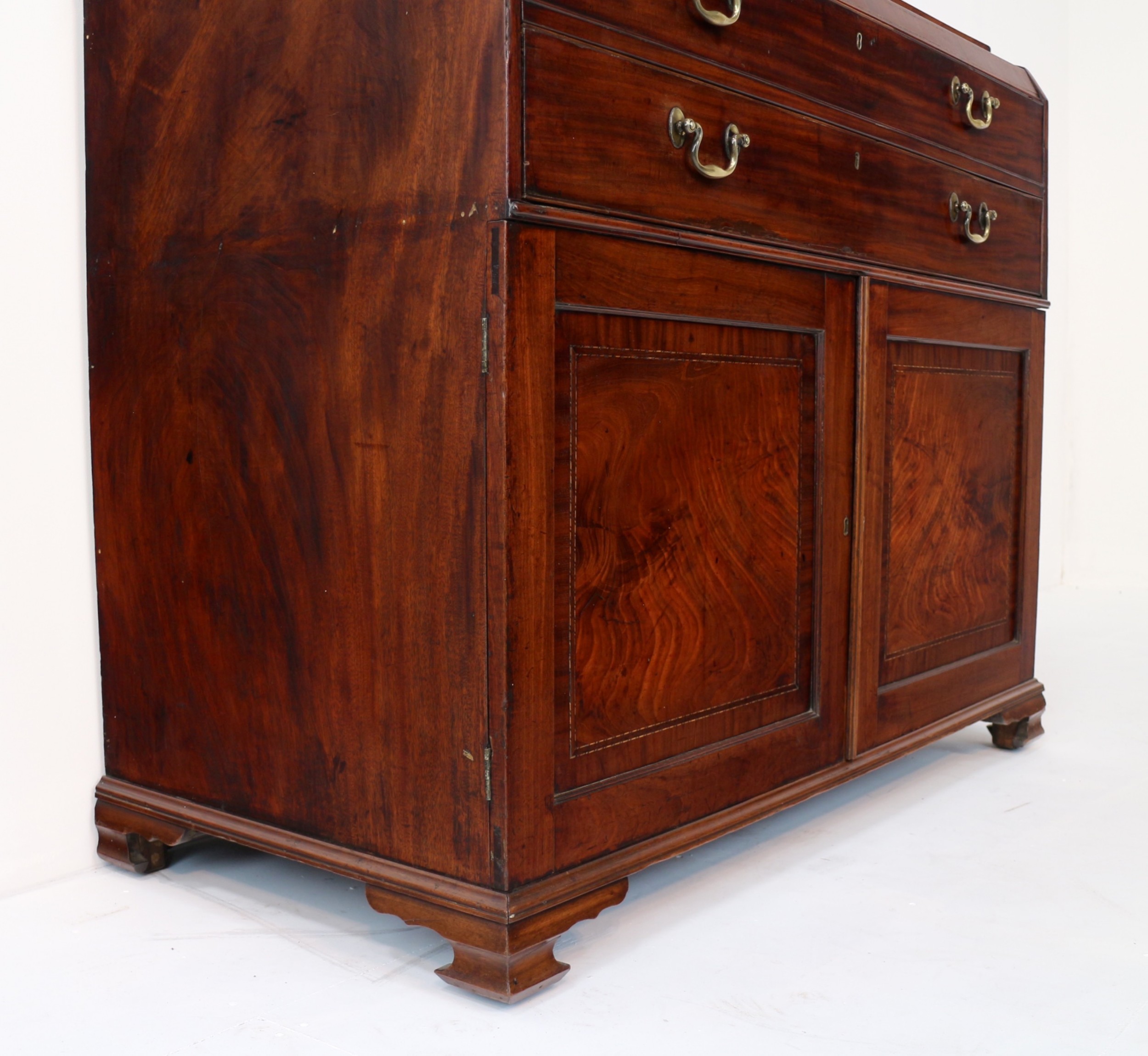
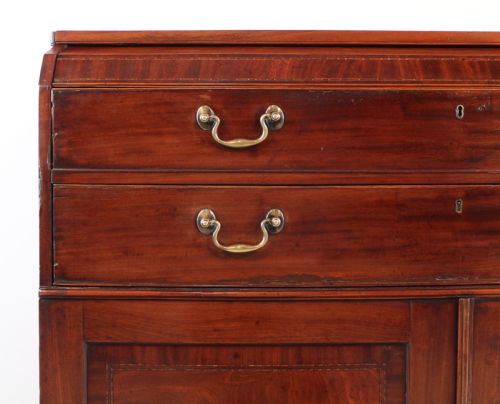
The pair of flame mahogany crossbanded and rope twist inlaid panelled doors below opening to reveal three sliding trays and all raised on ogee shaped bracket feet with weight bearing blocks behind. Original brass swan neck handles, locks and door catches. Marks and chips consistent with age and regular use and some old restorations, including dark marks to the top surface and chips to the back edge, replacements to the cockbeading and some losses which we can replace, one tray a period replacement in oak.
The overall dimensions at the largest points are approximately

Width - 48 5/8in (123.5cm)

Depth - 24 1/4in (61.5cm)

Height - 41 7/8in (106.3cm)

Writing slide

43 3/8in wide x 21 3/4in deep x 34 1/2in high (110.2cm x 55.2cm x 87.7cm)
Ref: 0690

Gillows of Lancaster were a leading manufacturer of furniture during the 18th and 19th centuries established around 1730 by a cabinet maker named Robert Gillow (I) (1703-1772). Robert was known for his use of mahogany which he imported from the West Indies and within a few years his workshop was being recognised for its superior quality of construction and use of desirable mahogany becoming one of the largest furniture producers outside London. He established the firm’s first links with London and the gentry, and sent his eldest son Richard (1733-1811) to be apprenticed to a  ‘Mr. Jones’ of London, probably the architect William Jones. The London Oxford Street shop was established in 1769-70, new workshops were built in both Lancaster and London and furniture ordered in London was sent every week from Lancaster. Importantly, from the mid-1750s, Richard, working in Lancaster, could draw fashionable new furniture based on designs sent to him by his cousin James, a journeyman in London. When Robert Gillow died in 1772, the business passed to his two sons, Richard and Robert. While Robert managed the London branch, and was thereby familiar with all the latest London fashions, Richard ran the Lancashire base. It was between 1750 and 1811 that some of the best English furniture ever was being produced by the Gillow company in Lancaster.
 

Architect’s desks and chests with a secretaire drawer appeared in the Gillows Estimate Sketch Books at the very end of the 18th and very beginning of the 19th centuries in various forms, including those with rising ratchetted tops. One notably refined recurring feature considered a hallmark of Gillows design is this secretaire with upper sliding writing slope and the lower half fitted with an arrangement of six hinged lidded compartments inlaid with an oval engraved with four letters of the alphabet. Secret or ‘private’ drawers, as Gillows called them, with green material pulls were concealed at the back of these compartments. The designs and drawings for secretaire library cabinets in the Gillows Archives include ‘Lettering the covers in the writing drawer’. Many cabinets, ‘buro’ writing tables, desks and bookcases from the 1780s and 1790s appear in the ledgers and numerous illustrated examples with a secretaire drawer includes the words abo

Physical Dimensions
Height
106.3cm (41.85")
Width
123.5cm (48.62")
Depth
61.5cm (24.21")
Declaration

The Antique Furniture Company has dated this George III Secretaire Cupboard to the Georgian era.

Reference Numbers
Sellingantiques Reference
SA930839
Dealers Internal Reference
0690
Dealers Notes

When buying it is important appreciate antiques have long histories of daily use and as such, over time they gain minor scratches, marks, knocks, shrinkage splits, signs of old woodworm, lifts and losses to veneer, which combine with care and years of polishing to create an individual character and patina. We describe the main flaws and those that fall outside of this bracket but cannot describe each marks separately and therefore suggest you do take the time to request extra photos. We do offer a 14 day money back guarantee if you are unhappy with your purchase but cannot refund the return shipping cost. If you are not sure please do not buy without clarifying or take the view that the only way to have it as near to new as possible is to have it fully and comprehensively restored.

For delivery we use a small carrier experience in carrying antique furniture. Delivery is usually within 31 days and the carrier will make arrangements with you directly. We can provide contact details of other carriers if required.

Description
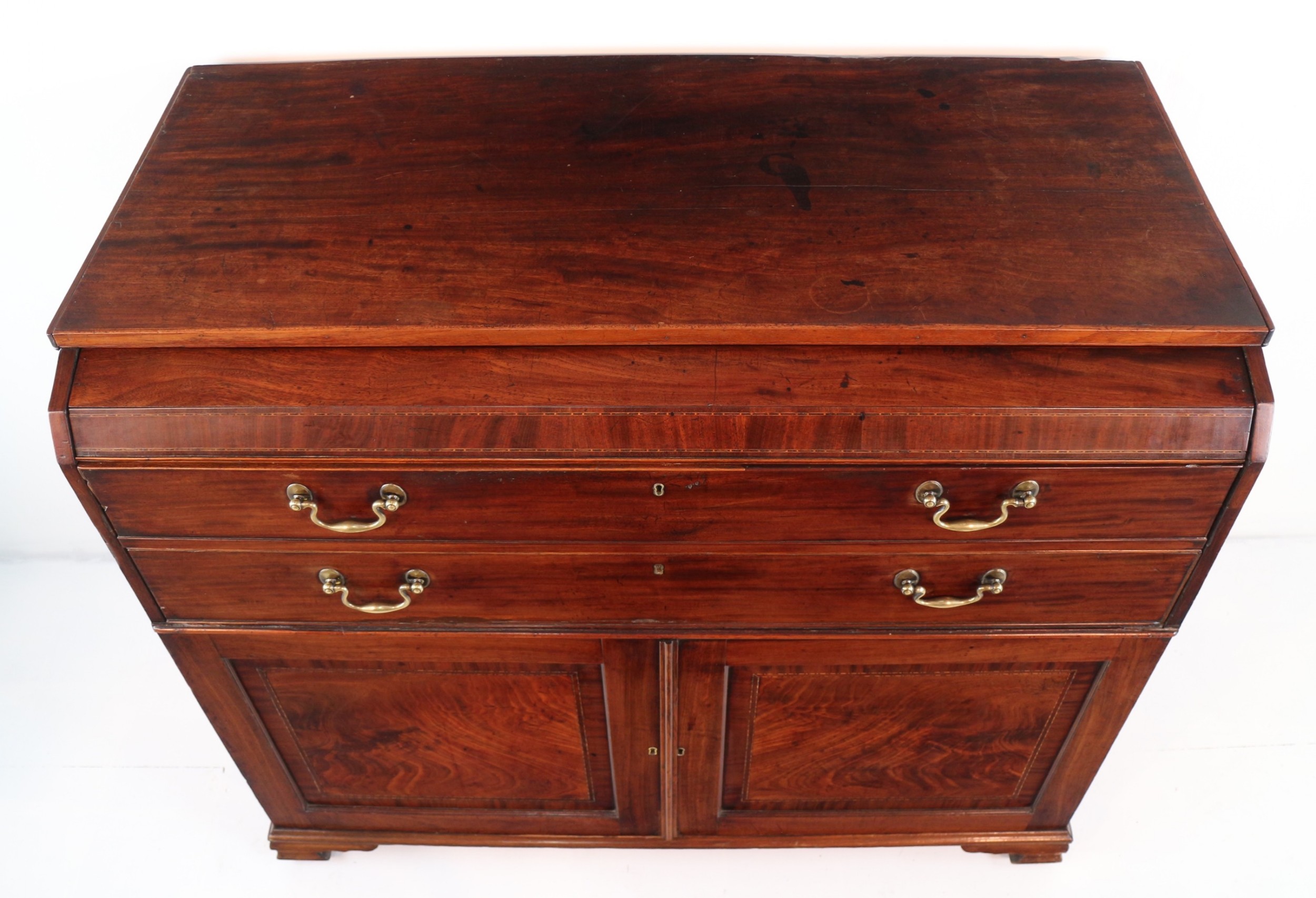
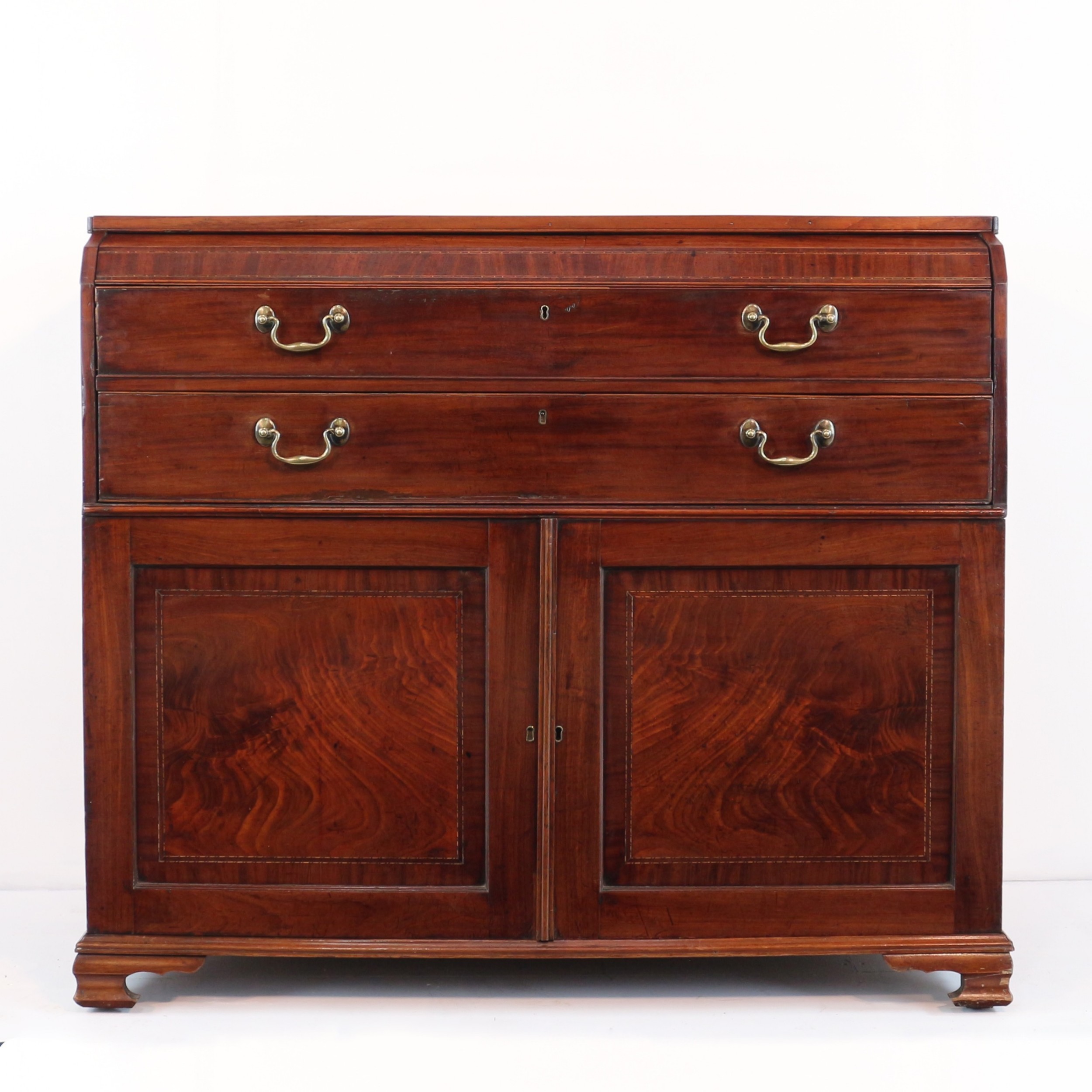
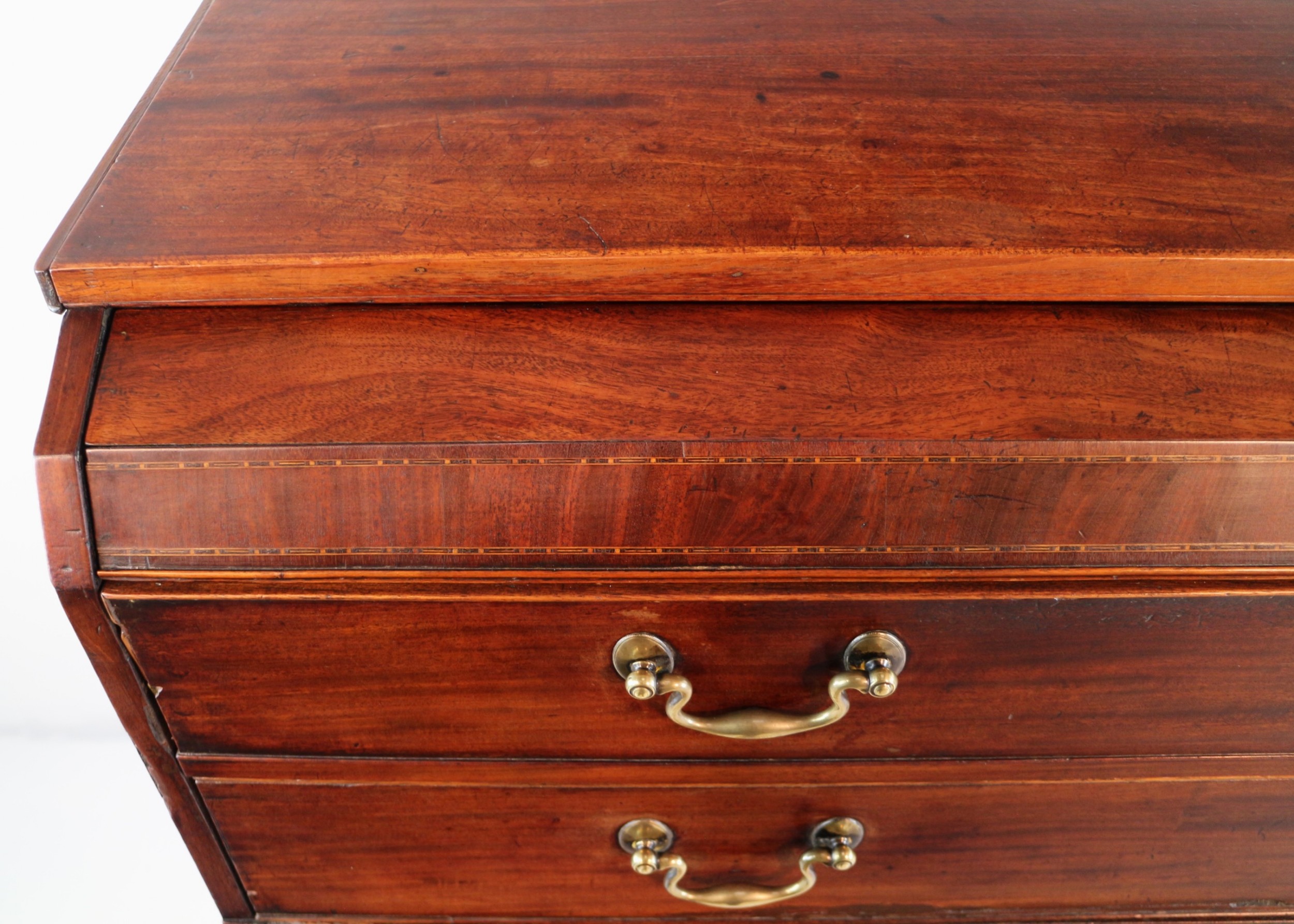
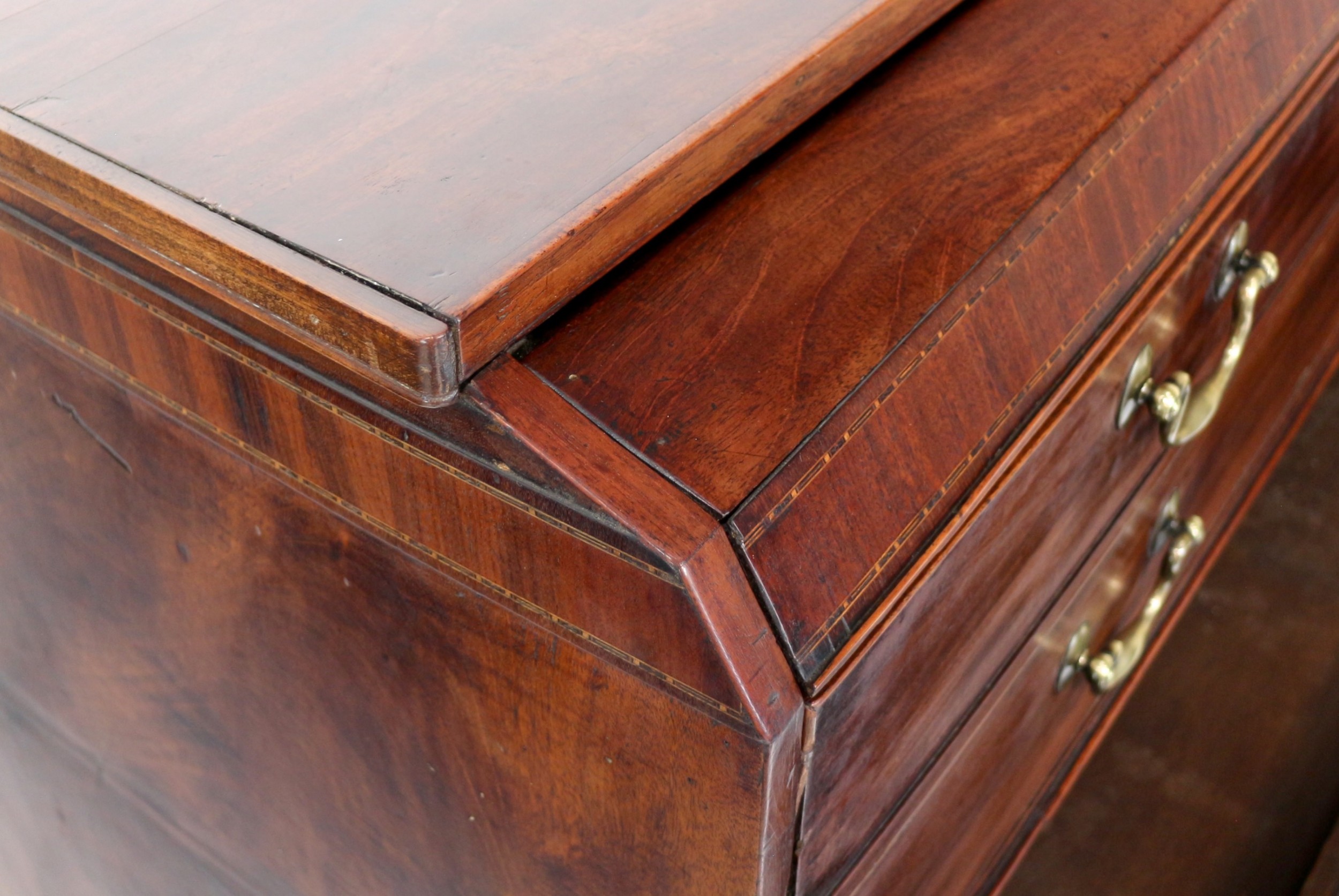
A George III mahogany and inlaid low secretaire press cupboard attributed to Gillows of Lancaster and dating to circa 1790. With a rectangular top over a concealed long drawer with sloping front, mahogany crossbanding and parquetry and box stringing which continues across the top of the sides, the two long false drawer fronts below forming a deep secretaire drawer containing a writing slide with a hinged, ratcheted green baize inset slope above a central well flanked by six crossbanded and boxwood strung lidded and alphabetically ordered compartments, each inlaid with an oval panel engraved with four letters of the alphabet, and concealing secret recesses with drawers and original green fabric pulls.
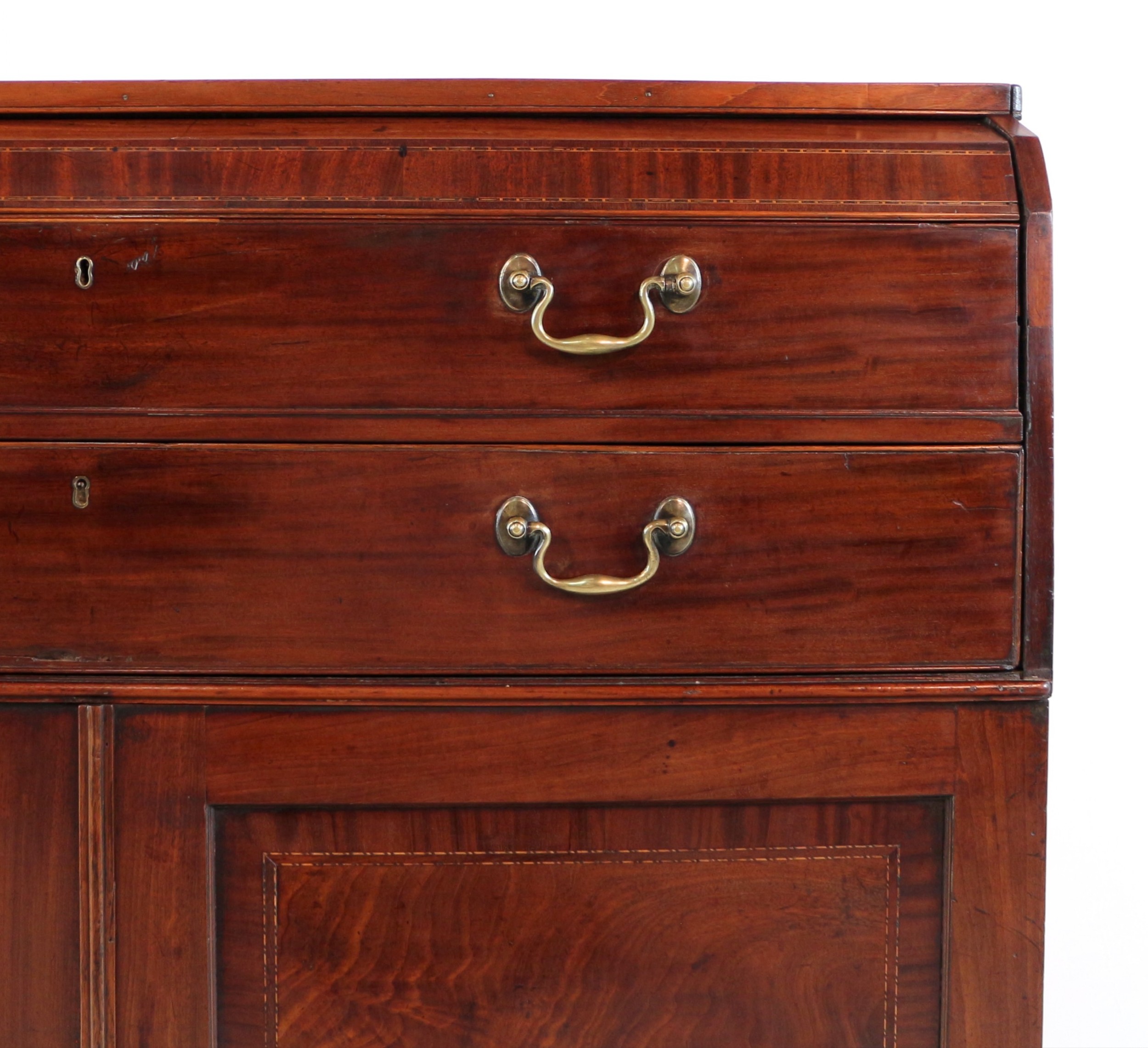
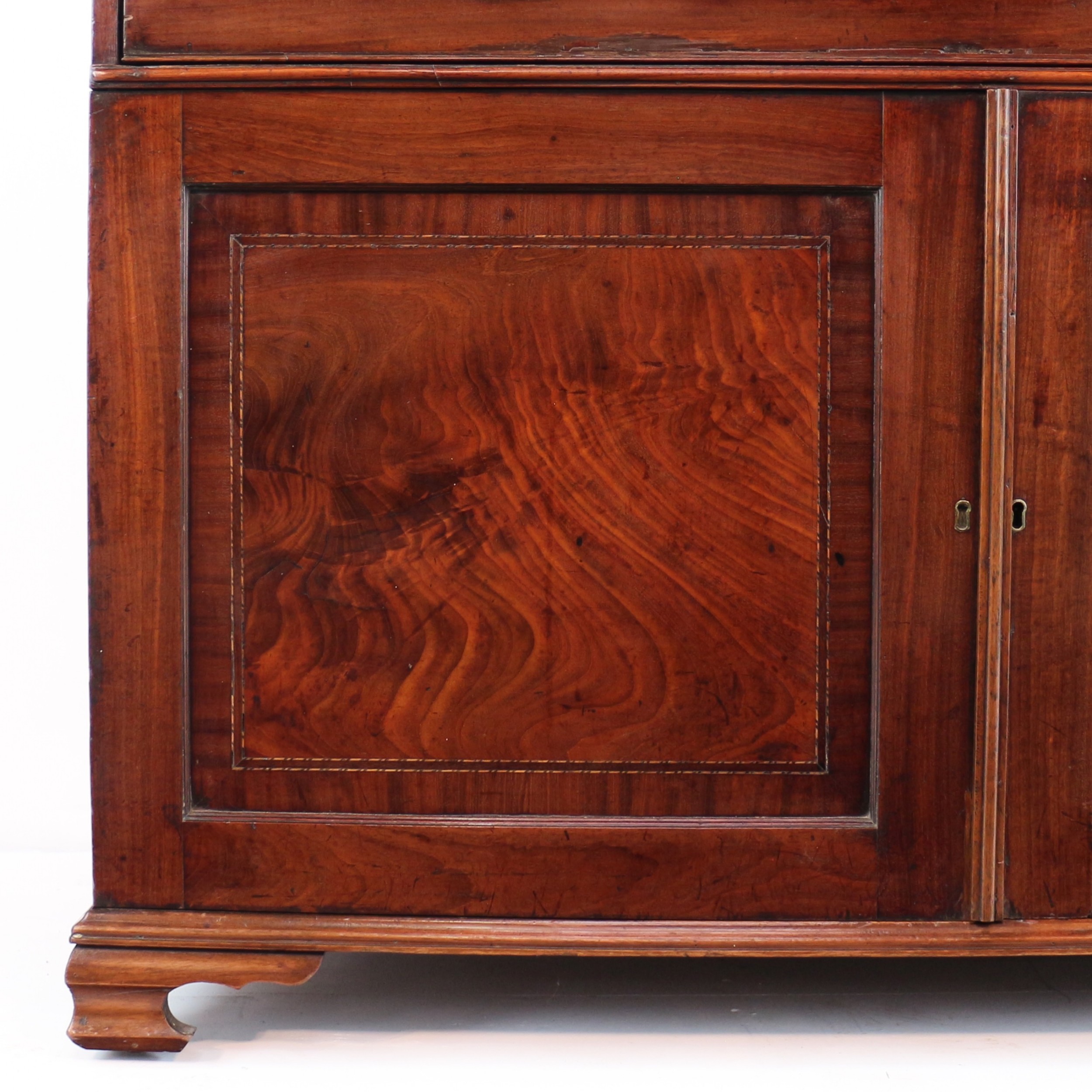
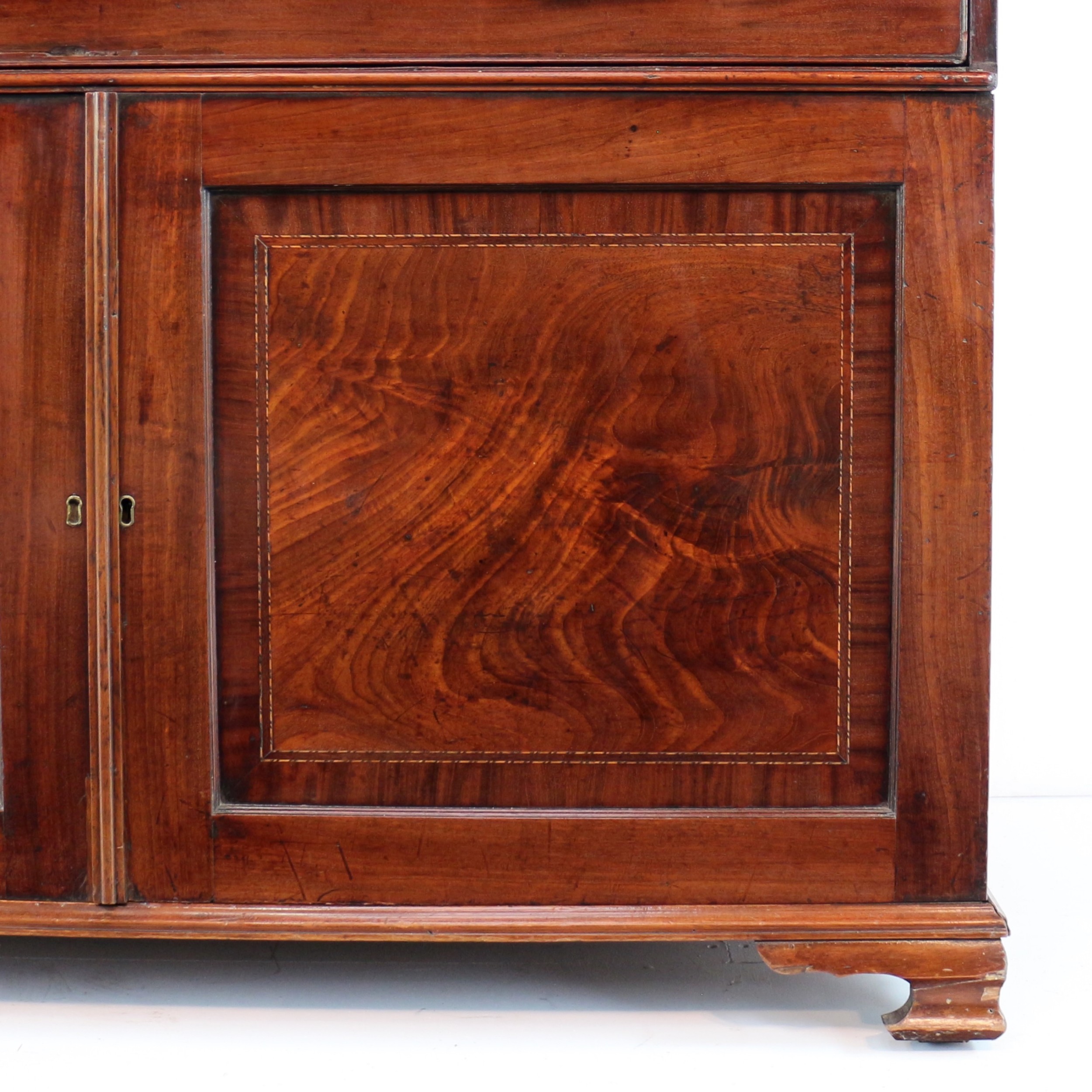
The pair of flame mahogany crossbanded and rope twist inlaid panelled doors below opening to reveal three sliding trays and all raised on ogee shaped bracket feet with weight bearing blocks behind.
The Antique Furniture Company

Original brass swan neck handles, locks and door catches. Marks and chips consistent with age and regular use and some old restorations, including dark marks to the top surface and chips to the back edge, replacements to the cockbeading and some losses which we can replace, one tray a period replacement in oak.

fig 1. A George III mahogany secretaire low press cupboard featuring flame mahogany veneer panels, brass swan-neck handles, and bracket feet.
fig 1. George III Mahogany Secretaire Low Press Cupboard, Attributed to Gillows

The overall dimensions at the largest points are approximately

Width - 48 5/8in (123.5cm)

Depth - 24 1/4in (61.5cm)

Height - 41 7/8in (106.3cm)

Writing slide

43 3/8in wide x 21 3/4in deep x 34 1/2in high (110.2cm x 55.2cm x 87.7cm)

fig 2. A George III mahogany secretaire low press cupboard featuring flame mahogany veneer panels, brass swan-neck handles, and bracket feet.
fig 2. George III Mahogany Secretaire Low Press Cupboard, Attributed to Gillows

Ref: 0690

Gillows of Lancaster were a leading manufacturer of furniture during the 18th and 19th centuries established around 1730 by a cabinet maker named Robert Gillow (I) (1703-1772). Robert was known for his use of mahogany which he imported from the West Indies and within a few years his workshop was being recognised for its superior quality of construction and use of desirable mahogany becoming one of the largest furniture producers outside London. He established the firm’s first links with London and the gentry, and sent his eldest son Richard (1733-1811) to be apprenticed to a  ‘Mr. Jones’ of London, probably the architect William Jones. The London Oxford Street shop was established in 1769-70, new workshops were built in both Lancaster and London and furniture ordered in London was sent every week from Lancaster. Importantly, from the mid-1750s, Richard, working in Lancaster, could draw fashionable new furniture based on designs sent to him by his cousin James, a journeyman in London. When Robert Gillow died in 1772, the business passed to his two sons, Richard and Robert. While Robert managed the London branch, and was thereby familiar with all the latest London fashions, Richard ran the Lancashire base. It was between 1750 and 1811 that some of the best English furniture ever was being produced by the Gillow company in Lancaster.

fig 3. A George III mahogany secretaire low press cupboard featuring flame mahogany veneer panels, brass swan-neck handles, and bracket feet.
fig 3. George III Mahogany Secretaire Low Press Cupboard, Attributed to Gillows


Architect’s desks and chests with a secretaire drawer appeared in the Gillows Estimate Sketch Books at the very end of the 18th and very beginning of the 19th centuries in various forms, including those with rising ratchetted tops. One notably refined recurring feature considered a hallmark of Gillows design is this secretaire with upper sliding writing slope and the lower half fitted with an arrangement of six hinged lidded compartments inlaid with an oval engraved with four letters of the alphabet. Secret or ‘private’ drawers, as Gillows called them, with green material pulls were concealed at the back of these compartments. The designs and drawings for secretaire library cabinets in the Gillows Archives include ‘Lettering the covers in the writing drawer’. Many cabinets, ‘buro’ writing tables, desks and bookcases from the 1780s and 1790s appear in the ledgers and numerous illustrated examples with a secretaire drawer includes the words abo

Height
106.3cm (41.85")
Width
123.5cm (48.62")
Depth
61.5cm (24.21")
Date of Manufacture

The Antique Furniture Company has dated this George III Secretaire Cupboard to the Georgian era.

Reference Numbers
Sellingantiques Ref
SA930839
Dealers Internal Ref
0690
The Antique Furniture Company
Sellingantiques verified Since Sep 2013
Dealer Profile

You can view the stock and full dealer information on the The Antique Furniture Company Profile Page
PDF SHARE
SAVE
A George III mahogany secretaire low press cupboard featuring flame mahogany veneer panels, brass swan-neck handles, and bracket feet.
1 / 31
Archive I A George III mahogany secretaire low press cupboard featuring flame mahogany veneer panels, brass swan-neck handles, and bracket feet.

George III Mahogany Secretaire Low Press Cupboard, Attributed to Gillows
Archive II A George III mahogany secretaire low press cupboard featuring flame mahogany veneer panels, brass swan-neck handles, and bracket feet. View II
Archive III A George III mahogany secretaire low press cupboard featuring flame mahogany veneer panels, brass swan-neck handles, and bracket feet. View III
Archive IV Scale Reference for A George III mahogany secretaire low press cupboard featuring flame mahogany veneer panels, brass swan-neck handles, and bracket feet.
Archive V A George III mahogany secretaire low press cupboard featuring flame mahogany veneer panels, brass swan-neck handles, and bracket feet. View V
Archive VI A George III mahogany secretaire low press cupboard featuring flame mahogany veneer panels, brass swan-neck handles, and bracket feet. View VI
Archive VII A George III mahogany secretaire low press cupboard featuring flame mahogany veneer panels, brass swan-neck handles, and bracket feet. View VII
Archive VIII A George III mahogany secretaire low press cupboard featuring flame mahogany veneer panels, brass swan-neck handles, and bracket feet. View VIII
Archive IX A George III mahogany secretaire low press cupboard featuring flame mahogany veneer panels, brass swan-neck handles, and bracket feet. View IX
Archive X A George III mahogany secretaire low press cupboard featuring flame mahogany veneer panels, brass swan-neck handles, and bracket feet. View X
Archive XI A George III mahogany secretaire low press cupboard featuring flame mahogany veneer panels, brass swan-neck handles, and bracket feet. View XI
Archive XII A George III mahogany secretaire low press cupboard featuring flame mahogany veneer panels, brass swan-neck handles, and bracket feet. View XII
Archive XIII A George III mahogany secretaire low press cupboard featuring flame mahogany veneer panels, brass swan-neck handles, and bracket feet. View XIII
Archive XIV A George III mahogany secretaire low press cupboard featuring flame mahogany veneer panels, brass swan-neck handles, and bracket feet. View XIV
Archive XV A George III mahogany secretaire low press cupboard featuring flame mahogany veneer panels, brass swan-neck handles, and bracket feet. View XV
Archive XVI A George III mahogany secretaire low press cupboard featuring flame mahogany veneer panels, brass swan-neck handles, and bracket feet. View XVI
Archive XVII A George III mahogany secretaire low press cupboard featuring flame mahogany veneer panels, brass swan-neck handles, and bracket feet. View XVII
Archive XVIII A George III mahogany secretaire low press cupboard featuring flame mahogany veneer panels, brass swan-neck handles, and bracket feet. View XVIII
Archive XIX A George III mahogany secretaire low press cupboard featuring flame mahogany veneer panels, brass swan-neck handles, and bracket feet. View XIX
Archive XX A George III mahogany secretaire low press cupboard featuring flame mahogany veneer panels, brass swan-neck handles, and bracket feet. View XX
Archive XXI A George III mahogany secretaire low press cupboard featuring flame mahogany veneer panels, brass swan-neck handles, and bracket feet. View XXI
Archive XXII A George III mahogany secretaire low press cupboard featuring flame mahogany veneer panels, brass swan-neck handles, and bracket feet. View XXII
Archive XXIII A George III mahogany secretaire low press cupboard featuring flame mahogany veneer panels, brass swan-neck handles, and bracket feet. View XXIII
Archive XXIV A George III mahogany secretaire low press cupboard featuring flame mahogany veneer panels, brass swan-neck handles, and bracket feet. View XXIV
Archive XXV A George III mahogany secretaire low press cupboard featuring flame mahogany veneer panels, brass swan-neck handles, and bracket feet. View XXV
Archive XXVI A George III mahogany secretaire low press cupboard featuring flame mahogany veneer panels, brass swan-neck handles, and bracket feet. View XXVI
Archive XXVII A George III mahogany secretaire low press cupboard featuring flame mahogany veneer panels, brass swan-neck handles, and bracket feet. View XXVII
Archive XXVIII A George III mahogany secretaire low press cupboard featuring flame mahogany veneer panels, brass swan-neck handles, and bracket feet. View XXVIII
Archive XXIX A George III mahogany secretaire low press cupboard featuring flame mahogany veneer panels, brass swan-neck handles, and bracket feet. View XXIX
Archive XXX A George III mahogany secretaire low press cupboard featuring flame mahogany veneer panels, brass swan-neck handles, and bracket feet. View XXX
Archive XXXI A George III mahogany secretaire low press cupboard featuring flame mahogany veneer panels, brass swan-neck handles, and bracket feet. View XXXI
Enlarged Archival View
Telephone 01337 920027
Location
Glasgow
Scotland
Verified Since Sep 2013
Items For Sale 67
Items Sold 269
The Antique Furniture Company
Verified Since Sep 2013
View Dealer Info
Location: Glasgow, Scotland
Verified
Sep 2013
For Sale
67
Sold
269
A George III mahogany secretaire low press cupboard featuring flame mahogany veneer panels, brass swan-neck handles, and bracket feet.
George III Mahogany Secretaire Low Press Cupboard, Attributed to Gillows
Ref: SA930839
A George III mahogany secretaire low press cupboard featuring flame mahogany veneer panels, brass swan-neck handles, and bracket feet.
Detail View 1
Detail View 2
Detail View 3
Detail View 4
Detail View 5
Detail View 6
Detail View 7
Detail View 8
Detail View 9
Detail View 10
Detail View 11
Detail View 12
Detail View 13
Detail View 14
Detail View 15
Detail View 16
Detail View 17
Detail View 18
Detail View 19
Detail View 20
Detail View 21
Detail View 22
Detail View 23
Detail View 24
Detail View 25
Detail View 26
Detail View 27
Detail View 28
Detail View 29
Scale Reference
Archival Detail
Every single antique dealer on our platform is individually approved by our internal team. We verify their professional trade history, ethical standards, and photographic quality to ensure a secure, high-standard buying environment. Upon joining, every dealer agrees to a strict 9-point code of conduct. While issues can occasionally arise, our dealers typically resolve them swiftly and directly with the buyer. In fact, since our founding in 2002, Sellingantiques has only had to step in to help resolve an issue on roughly five occasions—a true testament to the quality of our dealers and their dedication to your happiness.
Our dealers are highly experienced in packing and shipping fragile, high-value antiques. Because you are in direct contact with the dealer, you will be able to easily go through all available shipping and insurance options together to ensure your item arrives safely.
Antiques are the ultimate green purchase. By choosing historical pieces over newly manufactured goods, you completely eliminate the carbon footprint of modern mass production while preserving exceptional, timeless craftsmanship.

A George III secretaire low press cupboard is an 18th-century English storage piece combining a pull-out or drop-front writing drawer with lower cupboard doors and drawers.

These pieces typically feature solid mahogany and flame mahogany veneers, oak drawer linings, hand-cut dovetail joints, and cast brass swan-neck or ring handles.

Authentic pieces exhibit hand-sawn timber marks, hand-cut dovetail jointing, original steel locks with brass escutcheons, and historic patina across the wood surfaces.

It functions effectively as a sideboard in a dining space, a hallway console, or a home office desk alternative when placed against neutral wall finishes.

Dust regularly using a soft microfibre cloth and apply beeswax polish sparingly once or twice a year, keeping the wood away from direct heat sources and excessive moisture.
items
Add keywords to the filter
Price
£100
£250000
Era
Movements
Material
Origin
Stock Location
Freshness
Online Payments
Categories