


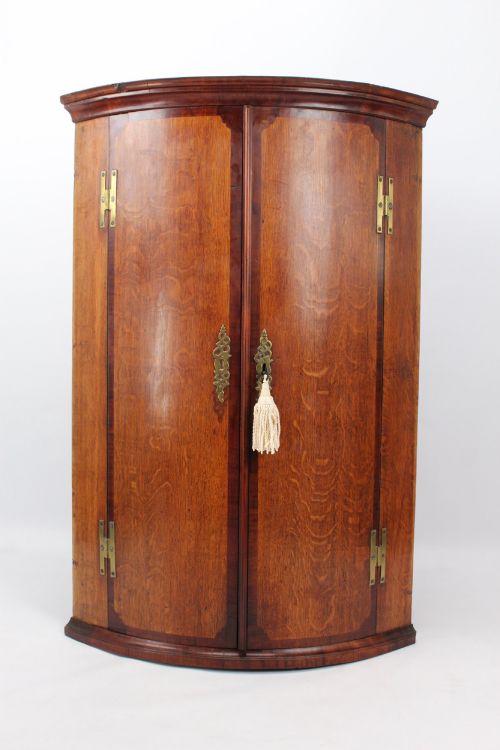
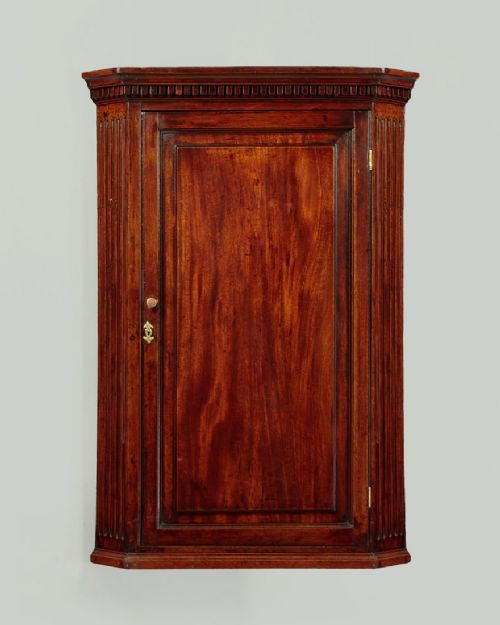
Antique Hanging Cupboards
A small cupboard made to hang on a wall rather than stand on the floor, usually triangular at the back so it fits across the angle of a room and keeps china, spices or stores off the ground.
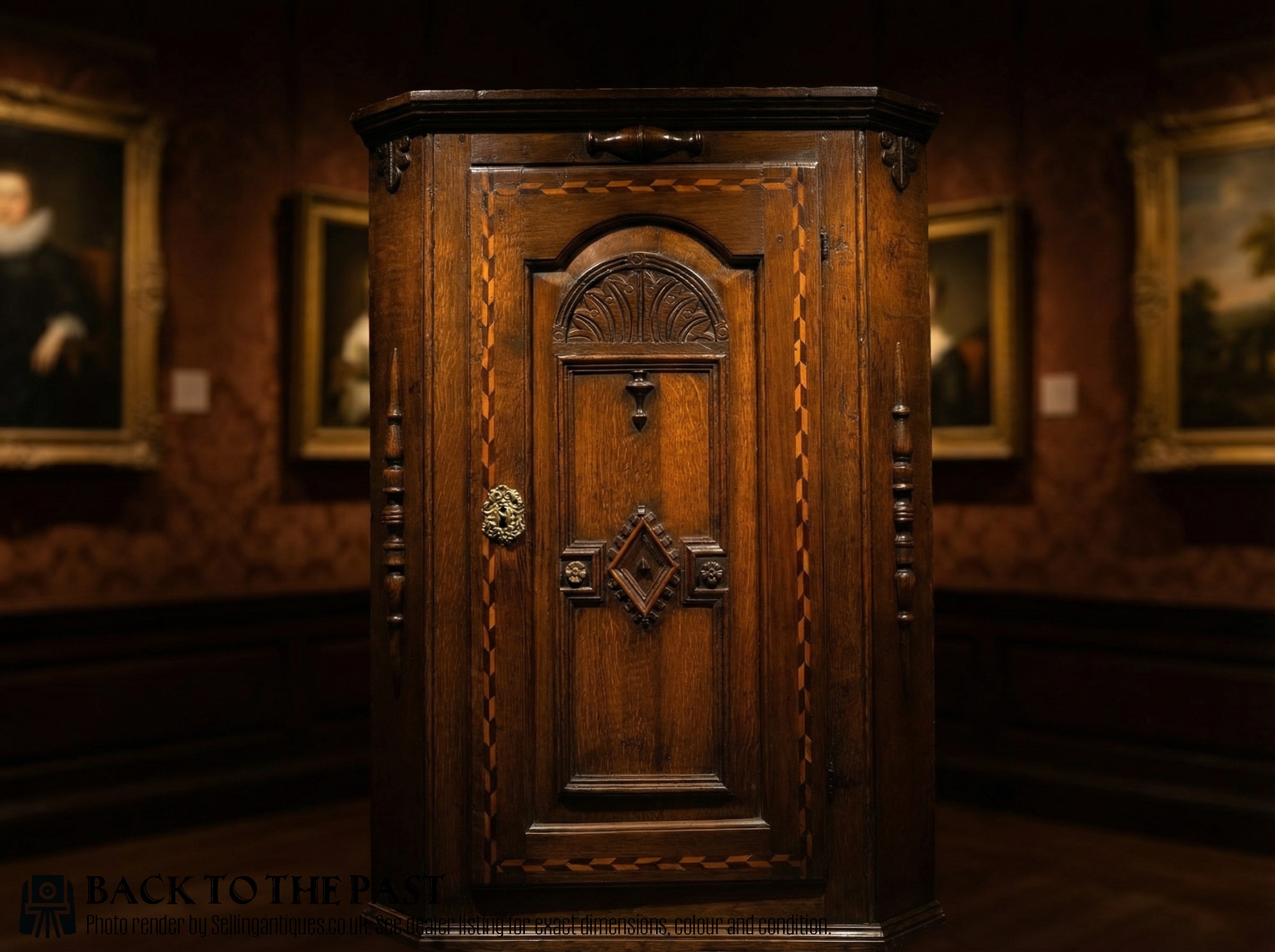
Antique Hanging Cupboards
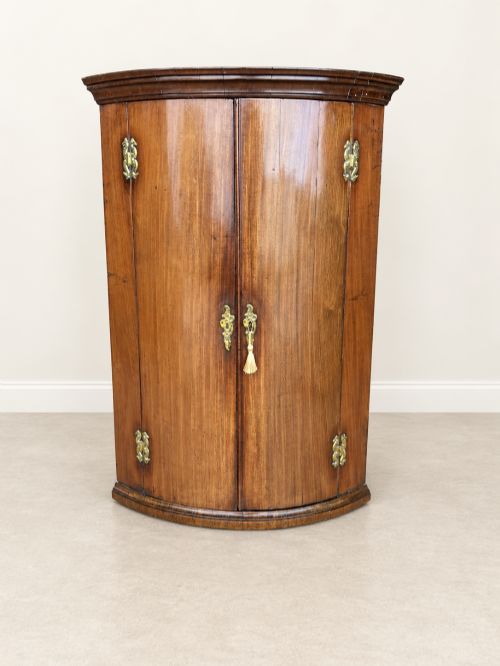
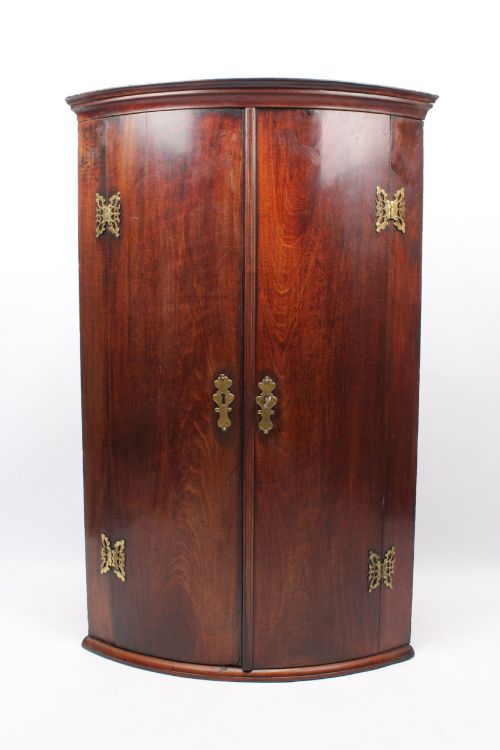
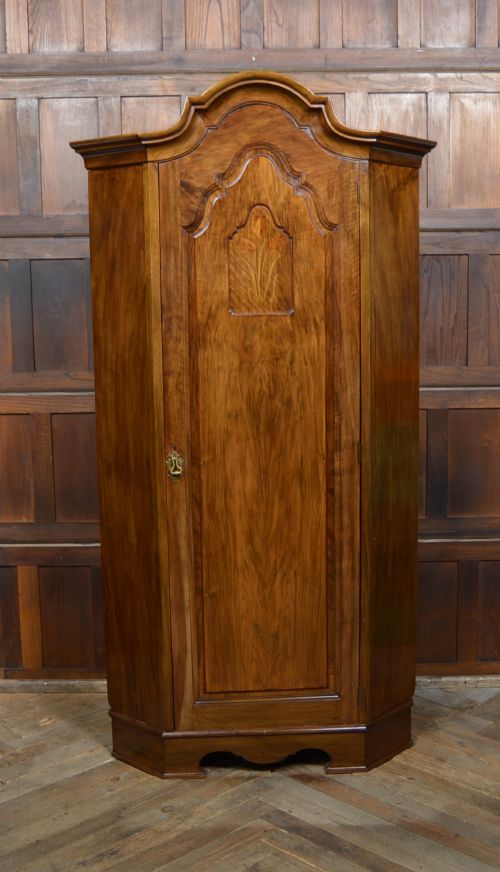
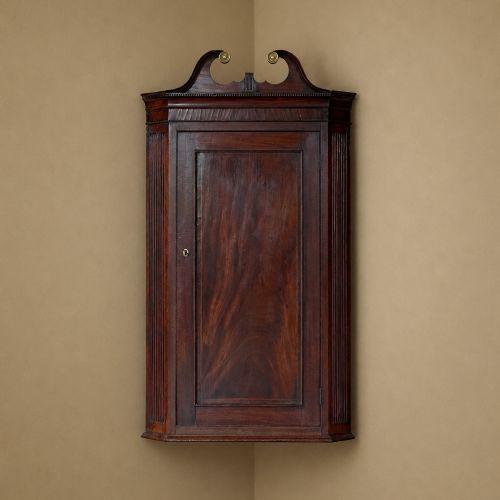
The corner is the category. Of 406 titles on Sellingantiques, 284 carry the word "corner" and half say "corner cupboard" outright, with another group calling the same triangular-backed form a corner cabinet. These are small single- or two-door carcases in solid timber, built to hang across an unused room angle.
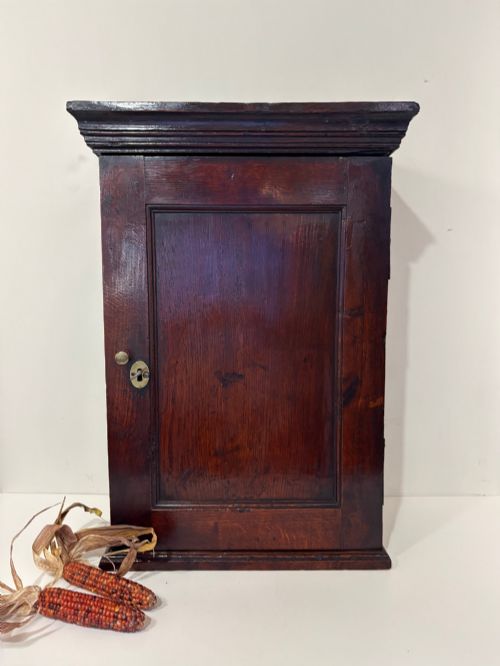
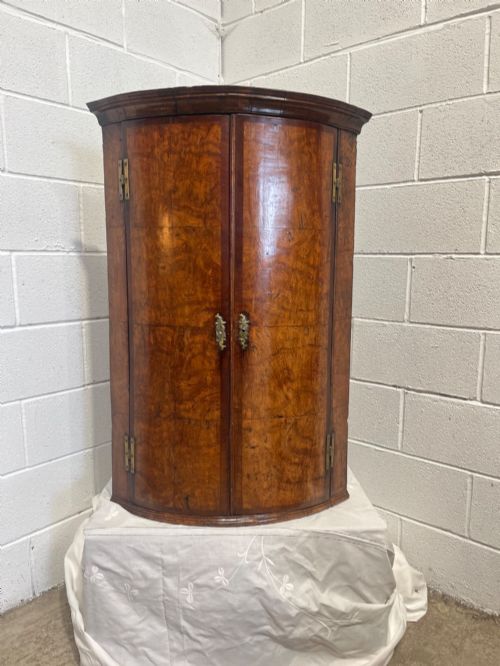
Oak and mahogany between them cover three quarters of the titles. The single likeliest thing you'll meet is a Georgian oak hanging corner cupboard, one or two doors, described by little more than its wood and its period. Mahogany examples come next, and bow-fronted doors are the main variant within them. Walnut, pine, elm, ash and fruitwood surface only in single figures.
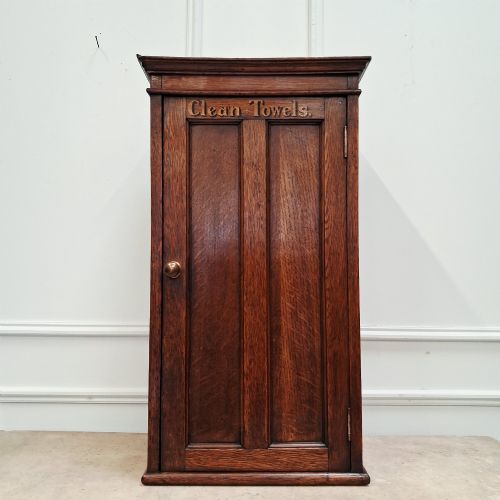
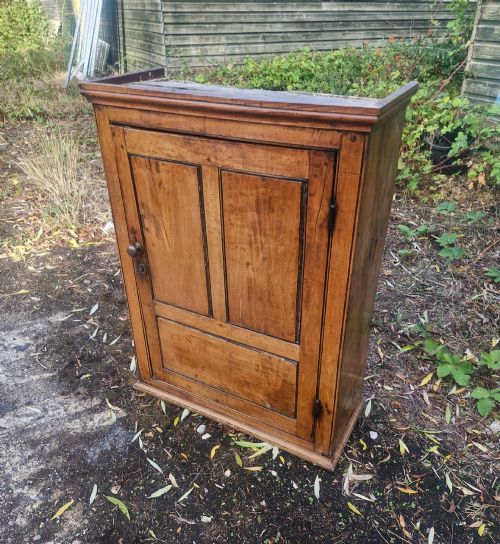
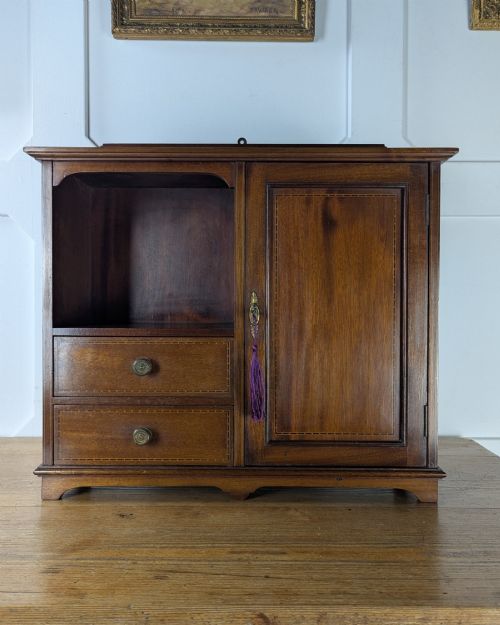
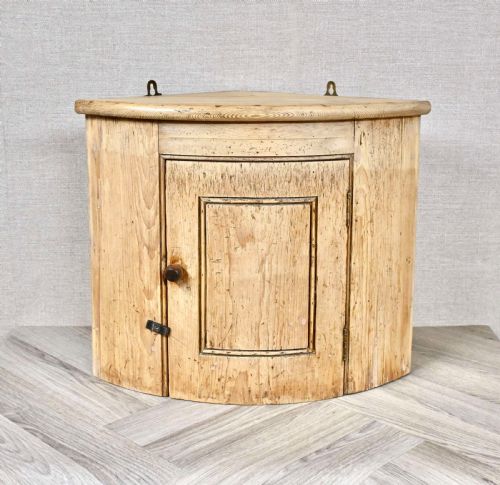
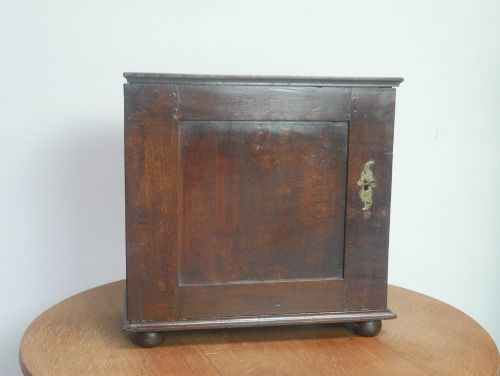
Behind the corner form sits a substantial minority of flat-wall pieces: plain hanging wall cupboards, spice cupboards with interior drawers, key cupboards, cloakroom and bathroom cabinets. A few hanging presses and armoires also appear, where "hanging" means a clothes rail rather than the wall. Continental examples run Dutch, Danish, Swedish, Austrian and Spanish, painted Scandinavian wall cupboards being the most recurrent of them.
Read the dates as period bands. Only 75 listings carry a clean year, and the field runs from 1700 to 1960; the rest are filed under period words, with Georgian alone accounting for 127 and 18th Century behind it. Seventeenth-century pieces are the rarity, at seven listings across the whole archive. Around 46 of these come to market in a year, listed by 129 different dealers, so it's a form the general furniture trade handles rather than a specialism.
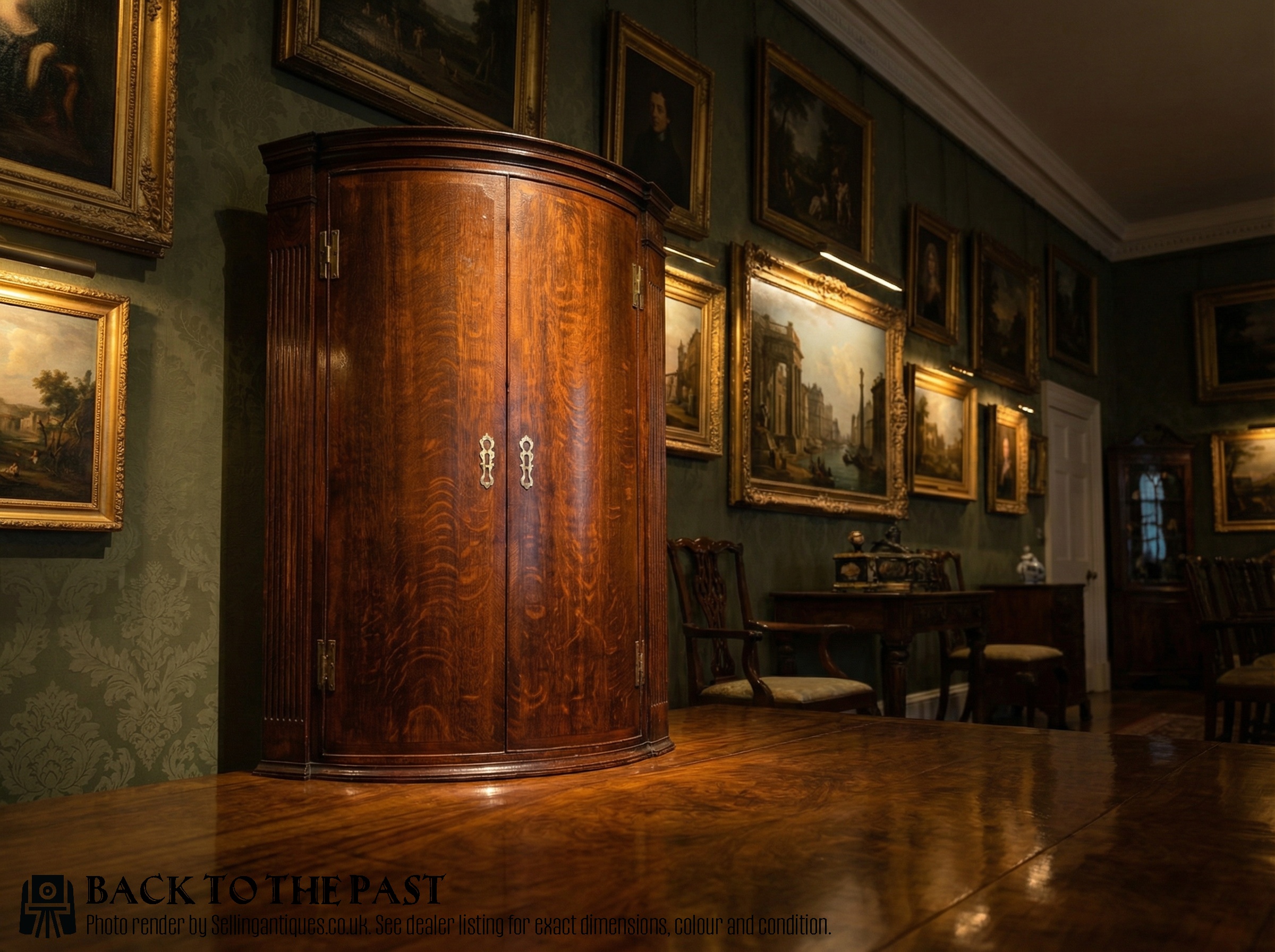
Where The Range Sits
Timber and figure do most of the work. Burr oak, burr walnut, burr elm, flame and "plum pudding" mahogany, red walnut and satinwood inlay all cluster among the highest-priced titles, while plain pine and stripped softwood sit at the other end. The same shape in two woods is not the same piece.
Age and decoration push in the same direction. Charles II, Queen Anne and George I examples sit high in the range, late Georgian and Victorian ones low. Carved, inlaid, crossbanded, japanned and original-painted surfaces lift a piece well above the plain panelled door, which is the category's default.
A named region raises a cupboard above the generic. Welsh attribution turns up 22 times, more than any other, and narrows to Montgomeryshire or Cardiganshire in a couple of titles, with Westmoreland, North Country and West Country also appearing. Scale cuts both ways: large Welsh oak hanging cupboards sit near the top, and so do small spice cupboards, while "small" outnumbers "large" by 27 to 10 overall.
Antique Hanging Cupboards Retail Price Guide 2026
Typical UK retail prices for hanging cupboards, calculated from the Sellingantiques database of over a million retail prices indexed since 2003. This retail price guide relies exclusively on Sellingantiques data; no external sources or auction records are used, so the figures do not describe the wider market.
Oak and mahogany cover three quarters of hanging cupboard titles on Sellingantiques; elm, ash, cedar, satinwood and fruitwood each surface only once or twice.
The Antique Hanging Cupboards Glossary
- Corner cupboard
- Triangular-backed cupboard made to fit across the angle of a room. Half of all titles in this category say so in as many words.
- Bow front
- A convex curved door front, written as bow front, bow fronted or bowfront across 49 titles. A deeper version turns up as "bow barrel front".
- Hanging
- Mounted on the wall rather than standing on the floor. In a few listings it instead means the piece has a clothes rail inside, as with presses and armoires.
- Crossbanded
- A border of contrasting veneer laid across the grain around a door or panel. Often paired with inlaid stringing on the mahogany examples.
- Astragal glazed
- A glass door divided by slender moulded glazing bars, an alternative to the flat or panelled door.
- Spice cupboard
- Small hanging cupboard, usually fitted with interior drawers, for spices and household stores. Welsh, North Country and Charles II examples are named.
Antique Hanging Cupboards: Frequently Asked Questions
Are most of these corner cupboards?
Yes. The word "corner" appears in 284 of 406 titles, and 203 say "corner cupboard" outright, with a further group describing the same triangular-backed form as a corner cabinet.
The plain flat-wall hanging cupboard is the minority report, though a real one: wall cupboards, spice cupboards, key cupboards and cloakroom or bathroom cabinets all turn up steadily.
What wood are they usually made from?
Oak leads, in 209 titles, with mahogany in 105. Between them they account for three quarters of the category.
Walnut, pine, elm and ash appear in single figures. Cedar, satinwood, fruitwood and burr elm surface only once or twice across the whole archive.
Why do so many say Georgian rather than a year?
Because the dealers' date field here runs on period words. Georgian accounts for 127 entries, 18th Century 87, 19th Century 49, and only 75 of 406 listings carry a clean year at all.
Read "Georgian" and "18th Century" as bands rather than determinations. A few entries sit oddly against their own titles, which is the shorthand showing.
How old is the oldest end of the range?
Seventeenth-century examples are the scarce end, with seven listings dated to that century. Among them are a Charles II oak mural livery cupboard and a Welsh wall-hanging cupboard put at about 1700.
One title records a date carved on the piece itself, 1763. That is as close as the archive comes to a dated example.
Do bow-fronted ones differ from flat-fronted?
Bow fronts are the main variant within the category, in 49 titles, and they lean towards mahogany rather than oak.
The flat or panelled door is the default, particularly on the country-made oak pieces. Glazed and astragal-glazed doors appear as a smaller alternative.
Which regions get named in the titles?
Welsh is the most frequent, 22 times, and in a few cases narrows to a county, with Montgomeryshire and Cardiganshire each appearing once.
Westmoreland, North Country, West Country and Whitehaven show up in individual titles. Beyond the place-name itself, the listings don't set out what marks one region from another.