



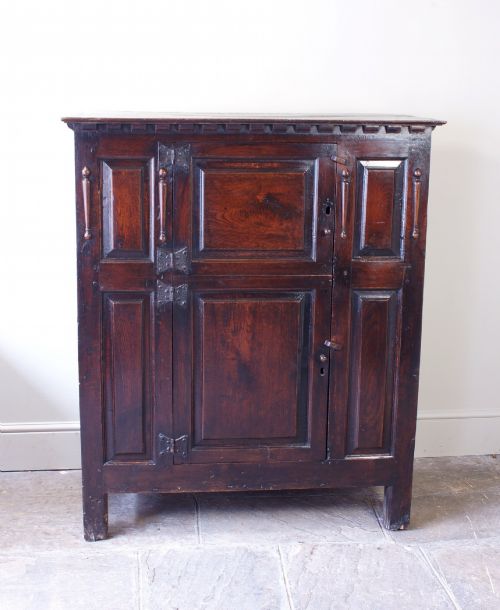

Antique Livery Cupboards
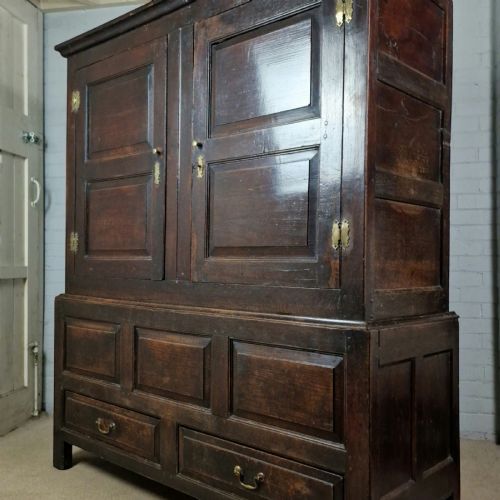
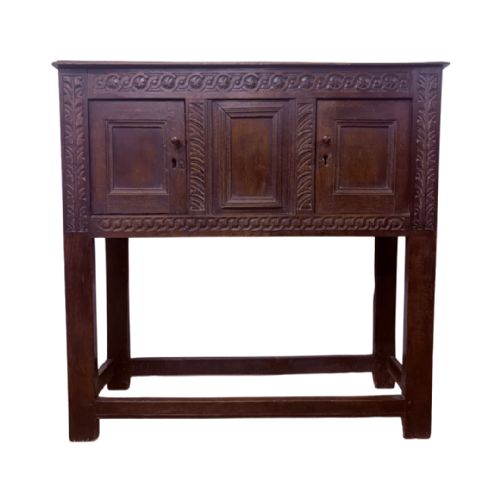
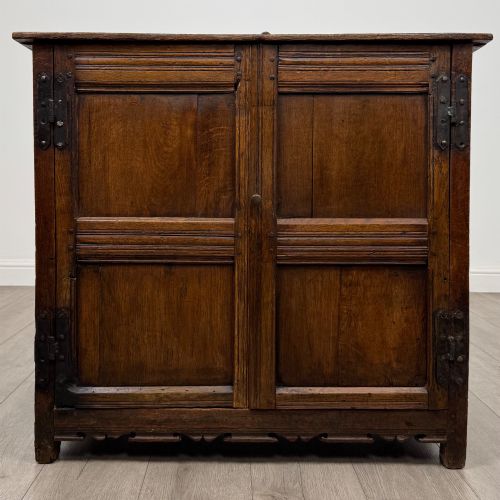
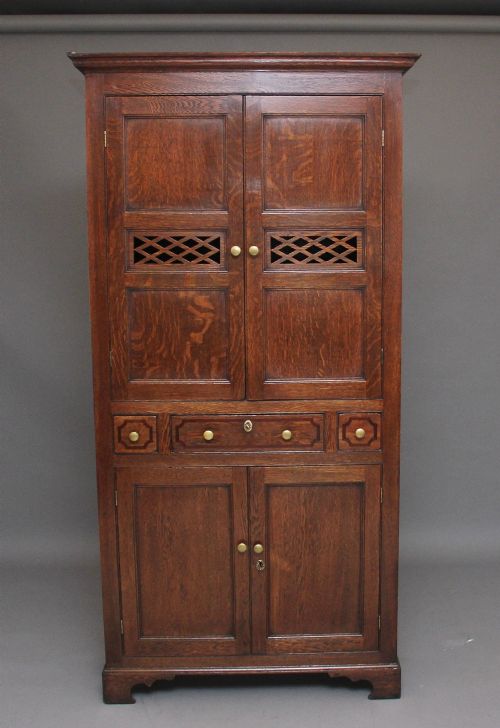
A joined oak cupboard with panelled doors, made to hold the household's provisions, linen and clothes, and named after the "livery" of food and drink once set out overnight.
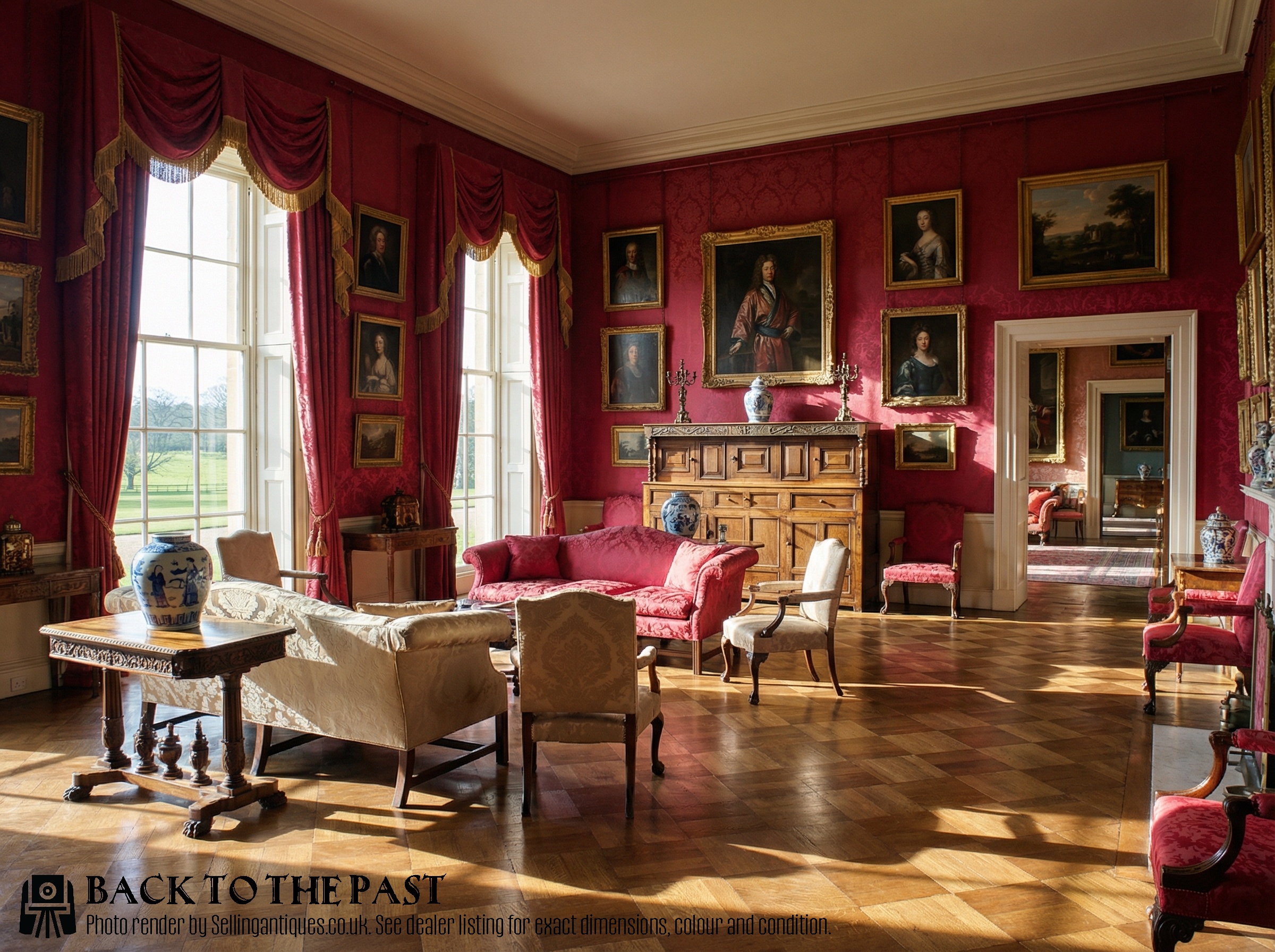
Antique Livery Cupboards
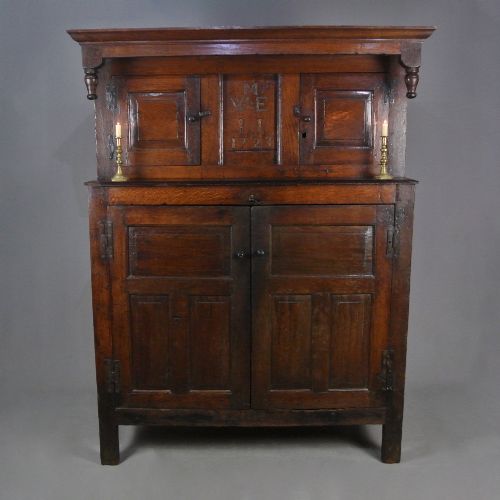
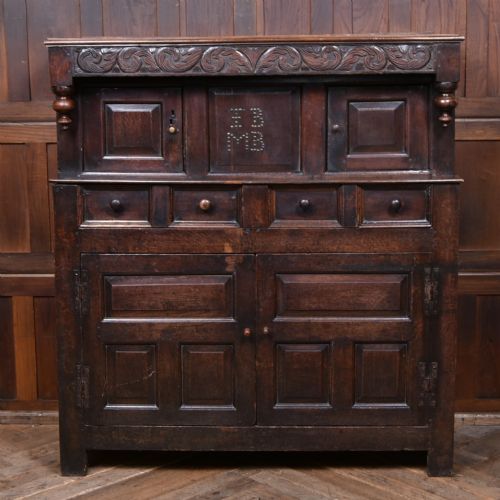
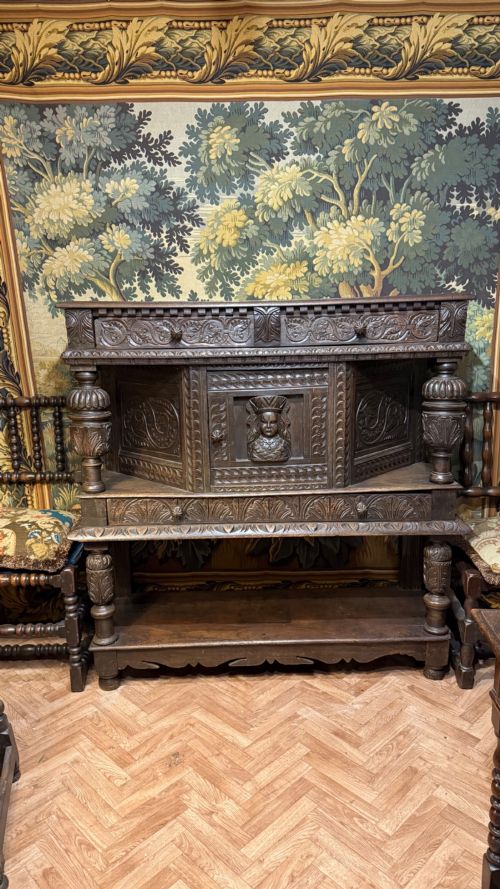
The form began as an enclosed English cupboard of the late medieval and Tudor household, holding the nightly allowance of food, drink and candles. The related court cupboard grew up alongside it as a lower service and display piece. Both later took on provisions, linen and clothes.
On Sellingantiques the heading covers country English and Welsh joined oak cupboards sold under overlapping trade names: livery cupboard, court cupboard, press, food cupboard, housekeeper's cupboard. Oak dominates, in 76 of 88 titles, with pine, elm and walnut turning up once or twice apiece.
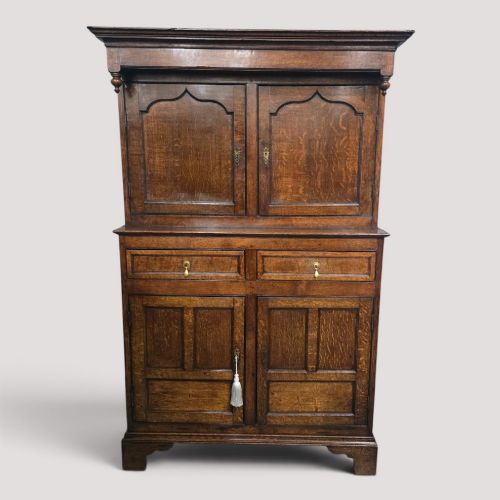
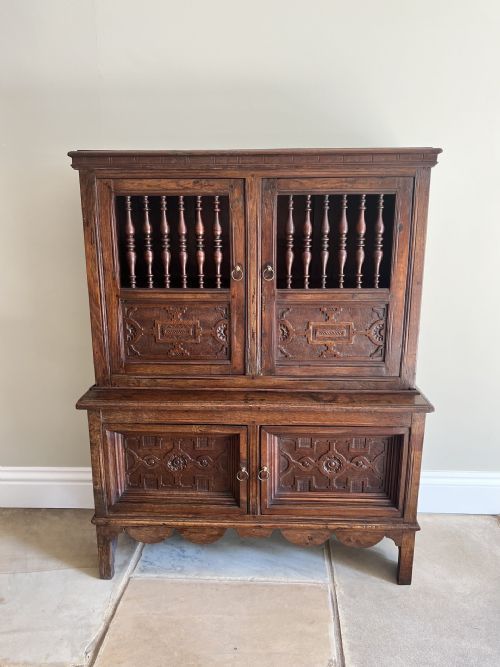
The piece you meet most often is a single- or two-part oak cupboard with panelled doors, dated to the 17th or 18th century. Carving is named in only nine titles, so plain panelled surfaces are the norm. Sizes run from small hanging and "cottage size" cupboards to tall two-part presses and wardrobes.
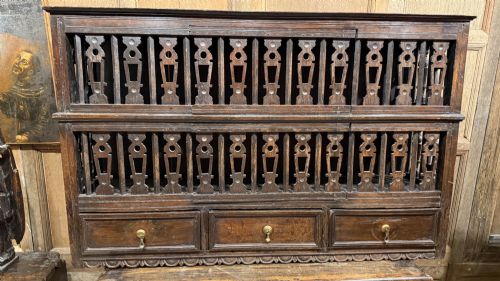
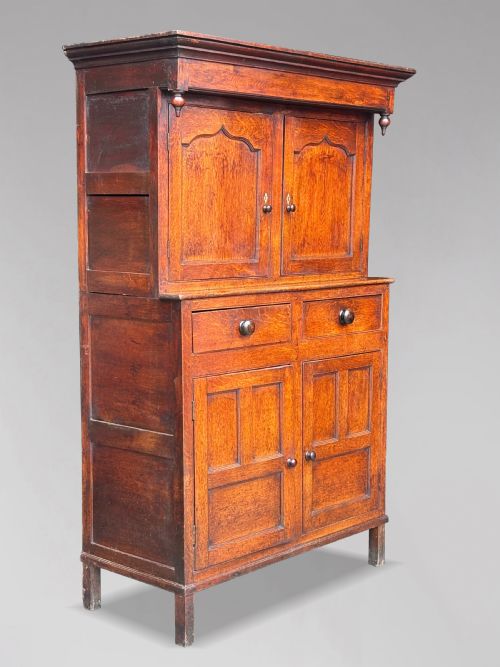
Smaller groups sit either side of that. Welsh examples account for about one in eight, three of them titled Cwpwrdd Deuddarn or Deuddarn, one placed in North Wales. Presses and housekeeper's cupboards make up roughly one in ten. Hanging, mural and on-stand cupboards are a recurring handful, as are food cupboards and a single oak hutch.

Top And Bottom
Date does most of the work. The 16th and 17th century pieces, labelled Elizabethan, Charles I, Charles II or Elizabeth I/James I, sit at the upper end of the range, and monarch-based dating turns up mostly in the upper half. Late revival cupboards of 1910 and 1920, copying a form two or three centuries older, sit at the bottom.
Decoration separates the rest. Inlay and marquetry appear in only three titles and all three are high in the range, among them an inlaid oak court cupboard dated 1678 and a late Elizabethan marquetry livery cupboard. Plain oak, carved or uncarved, fills the middle and lower reaches.
A date on the piece itself counts for a good deal, and dealers put it in the title when it is there: 1678, 1696, c.1723, c.1660. Timber matters less, since oak is the baseline. Painted pine sits at the bottom, while elm and French walnut examples land in the upper middle.
Antique Livery Cupboards Retail Price Guide 2026
Typical UK retail prices for livery cupboards, calculated from the Sellingantiques database of over a million retail prices indexed since 2003. This retail price guide relies exclusively on Sellingantiques data; no external sources or auction records are used, so the figures do not describe the wider market.
Only ten livery cupboard listings on Sellingantiques carry a clean year, running from 1700 to 1920. The rest are given as a century or a reign.

The Antique Livery Cupboards Glossary
- Livery cupboard
- An enclosed cupboard, originally for the nightly food and drink allowance. Used broadly on Sellingantiques for country oak storage cupboards of several shapes.
- Court cupboard
- The related two-tier service and display cupboard. After oak it is the commonest word in these titles, in 20 of 88, and much more frequent in current stock than in the archive.
- Joined
- Framed-and-panelled construction pegged together, as in "English joined oak cupboard". The standard build behind the panelled doors.
- Press
- A tall cupboard for linen or hanging clothes. It appears in nine titles, often paired with livery cupboard or with housekeeper's cupboard.
- Cwpwrdd deuddarn
- Welsh two-part cupboard, the upper section set back over a lower stage. Named in three titles, with Deuddarn used on its own as well.
- Cottage size
- Dealer shorthand for a reduced-height example suited to low ceilings, used in three titles. Mural or wall-hanging means made to hang rather than stand.
Antique Livery Cupboards: Frequently Asked Questions
How many come up for sale each year?
About nine of these cupboards are listed a year on Sellingantiques, and 52 different dealers have handled one across the archive.
That spread means most dealers who sell them have sold exactly one. It isn't a form anyone stocks in depth.
Are livery cupboards always oak?
Close to it. Oak appears in 76 of the 88 titles in the archive.
The departures are few: painted pine, elm and walnut each turn up only once or twice.
What does the dating in these listings mean?
Mostly a century bracket rather than a year. Only 10 of the 88 listings carry a clean year, and those span 1700 to 1920.
The dealers' own date fields lean on broad labels: 18th century leads with 33, then 17th century with 19, then Georgian, Victorian and Before 1700. Titles often add a circa within the century, such as c.1660, c.1760 or c.1790.
Where were these cupboards made?
Almost everything in the archive is English or Welsh. Welsh examples account for about one in eight titles, and Welsh vocabulary survives in the listings themselves.
Continental pieces are the exception: a French carved oak court cupboard dated 1696 and a 17th century French walnut example are the only ones in the samples.
Why do listings use so many different names?
Livery cupboard, court cupboard, press, food cupboard and housekeeper's cupboard all describe enclosed country oak storage, and dealers use them interchangeably. Two titles pair housekeeper's cupboard directly with livery cupboard.
Court cupboard is the strongest of the qualifiers after oak, in 20 titles. Press follows in nine.
Which forms are the least common?
The odd single forms sit at the edges of the archive: a 17th century oak hutch, a Charles II mural livery cupboard and an 18th century hanging food cupboard, one apiece.
Cupboards on stands and other wall-hanging examples make up a small recurring group, roughly half a dozen listings in all.