
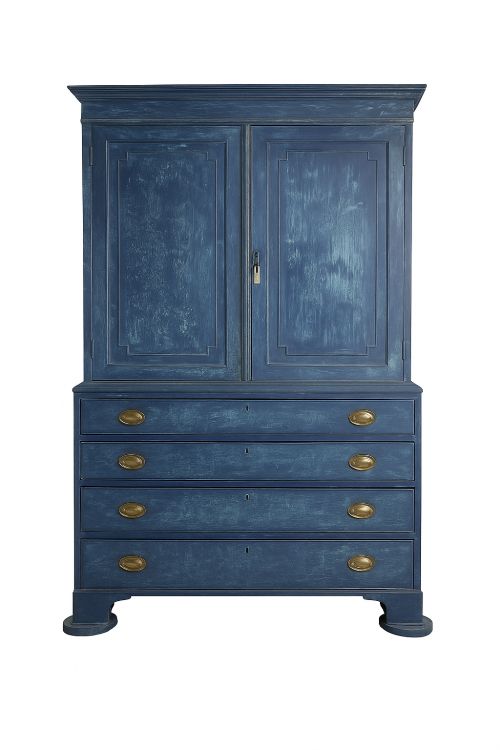
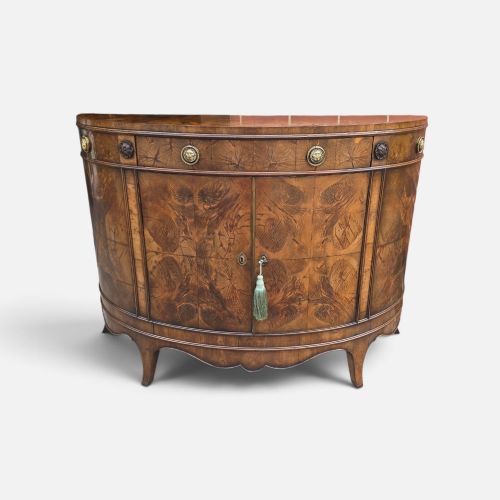
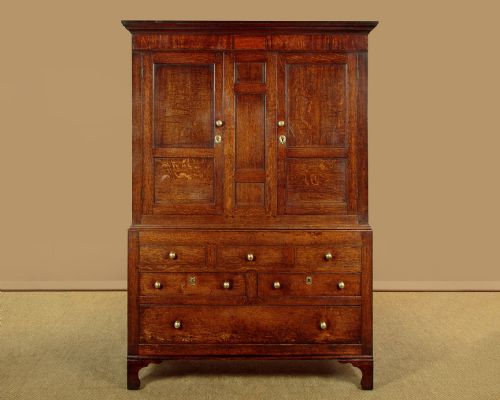
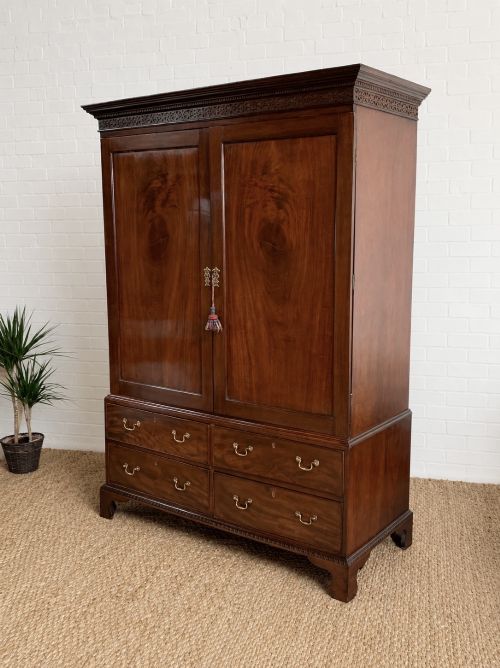
Regency Cupboards
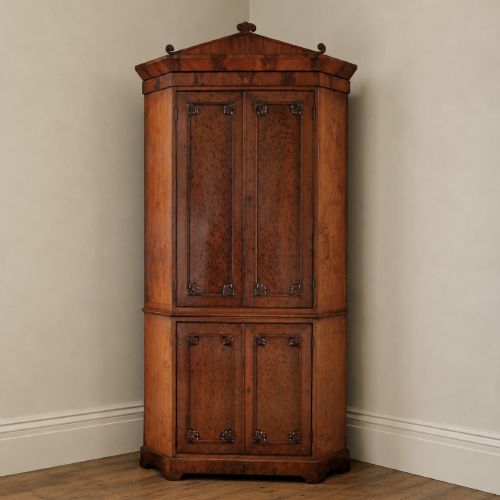
English case furniture with doors made in the first third of the nineteenth century, from tall two-part presses for folded linen and clothes down to small bedside cupboards, side cabinets and corner cupboards.
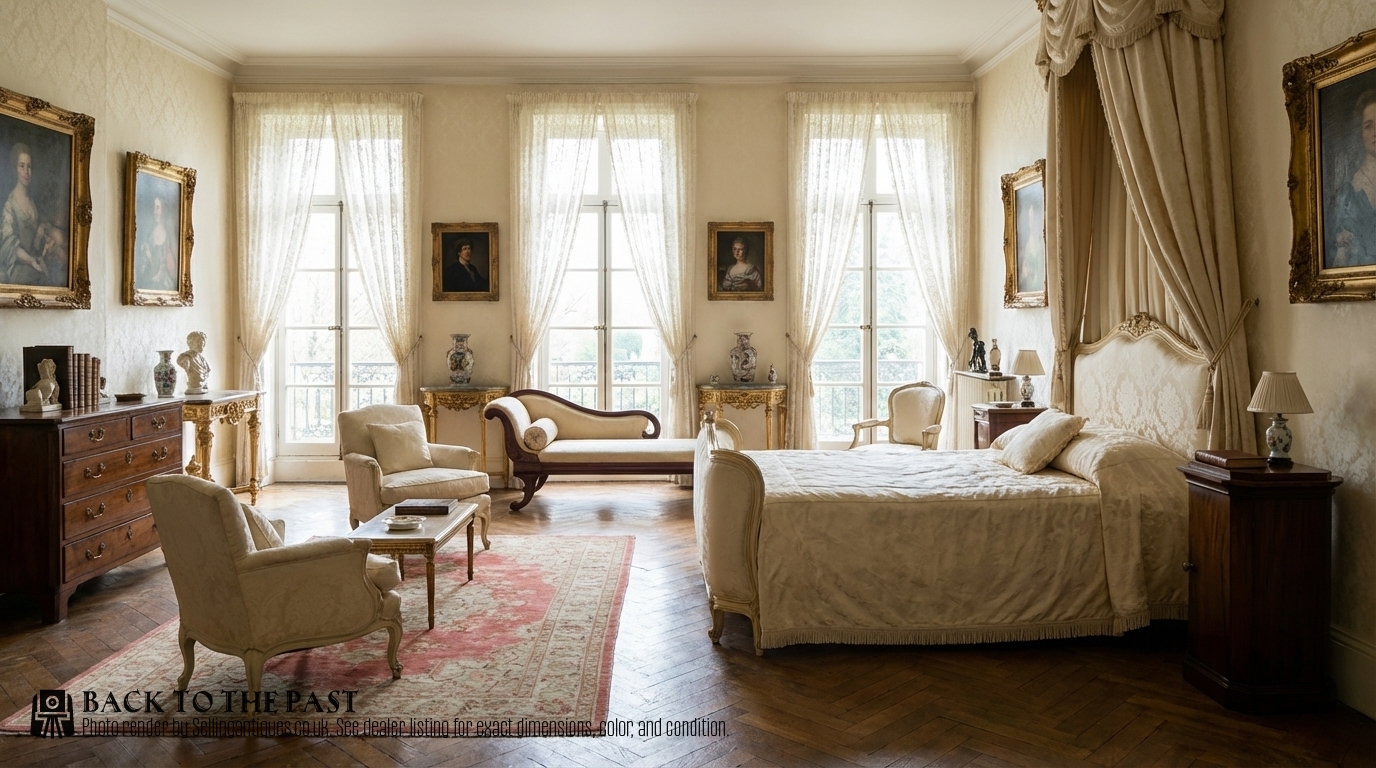
What Are Regency Cupboards?
The heading covers several forms rather than one. Mahogany names close to seven in ten titles on Sellingantiques, with rosewood a distant second, painted pine behind that, and oak, satinwood, walnut and yew turning up occasionally.
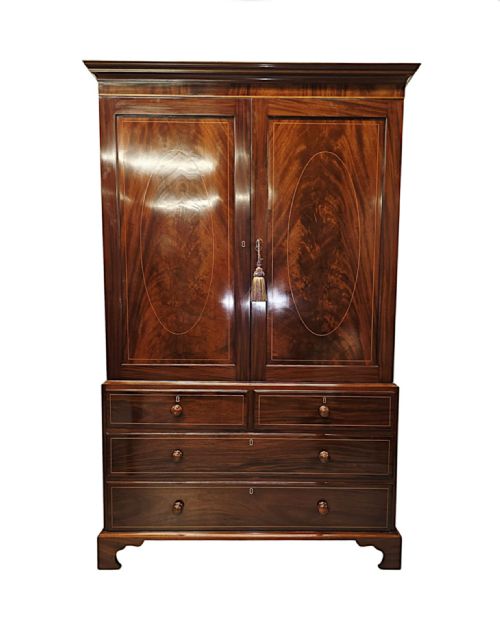
The form you'll meet most often is the mahogany linen press: a pair of doors over sliding trays, with drawers below. "Press" appears in about a third of titles and "linen press" in a quarter. Before hanging wardrobes took over, this was the standard English way of keeping folded clothes and household linen. Dwarf and low presses, bow-front and breakfront versions all appear.
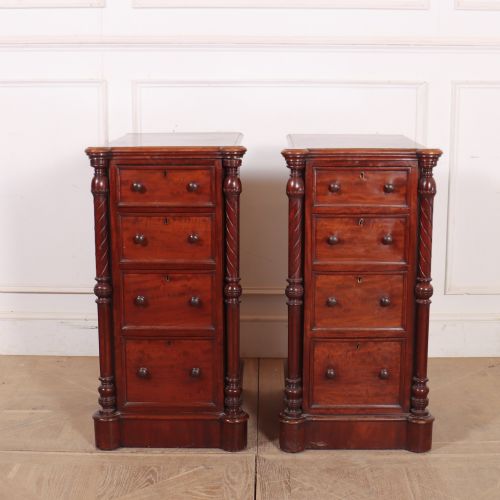
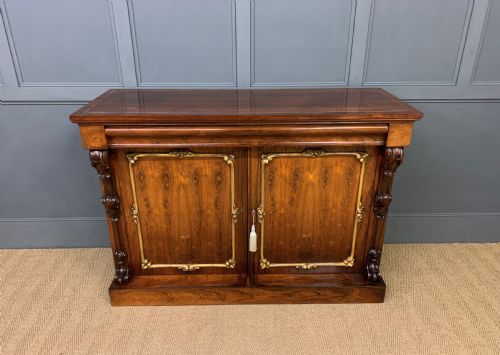
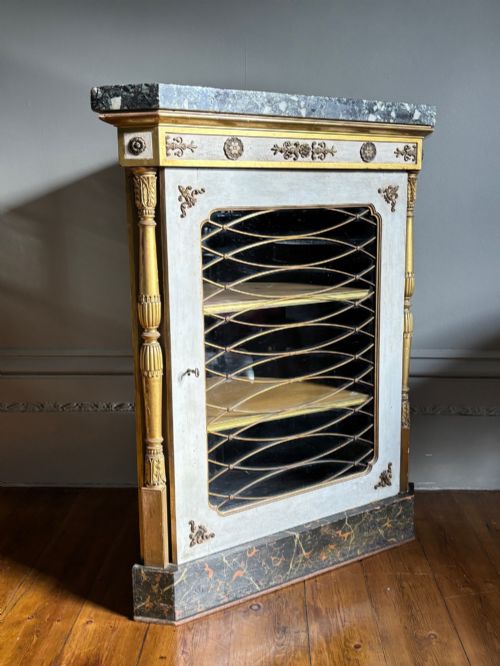
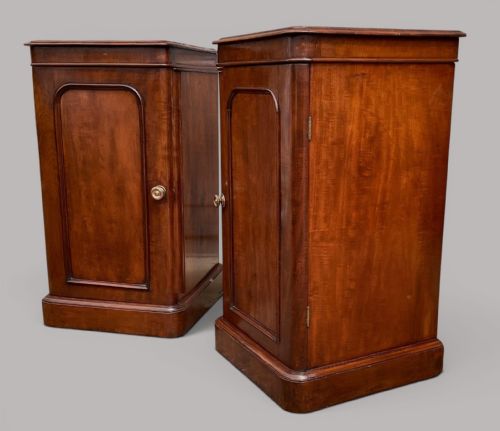
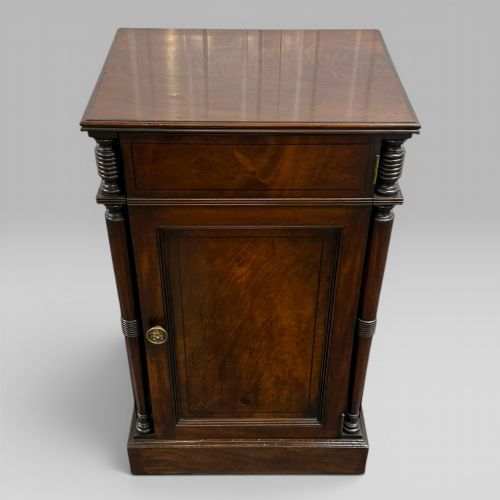
Second comes the bedside or pot cupboard, sometimes called a night stand, made to hold a chamber pot or washing gear beside the bed. It's the form most often offered in twos: pairs run to around one title in eight, and pairs of bedside, pedestal and side cabinets sit high in the range. Below those, low side cabinets and chiffoniers for a reception room, corner cupboards both hanging and floor-standing, pedestal cabinets, and a small group of painted pine and housekeepers' cupboards.
Dating is loose. The dated field is nearly always a period word rather than a year, most often simply "Regency", with 19th Century next; only 23 of 315 listings carry a clean year. Titles invoke George III, George IV and William IV, and "c1820" is dealer shorthand more than a documented date. The stated range runs as late as 1930, so Regency-revival presses and cabinets sit at the tail.
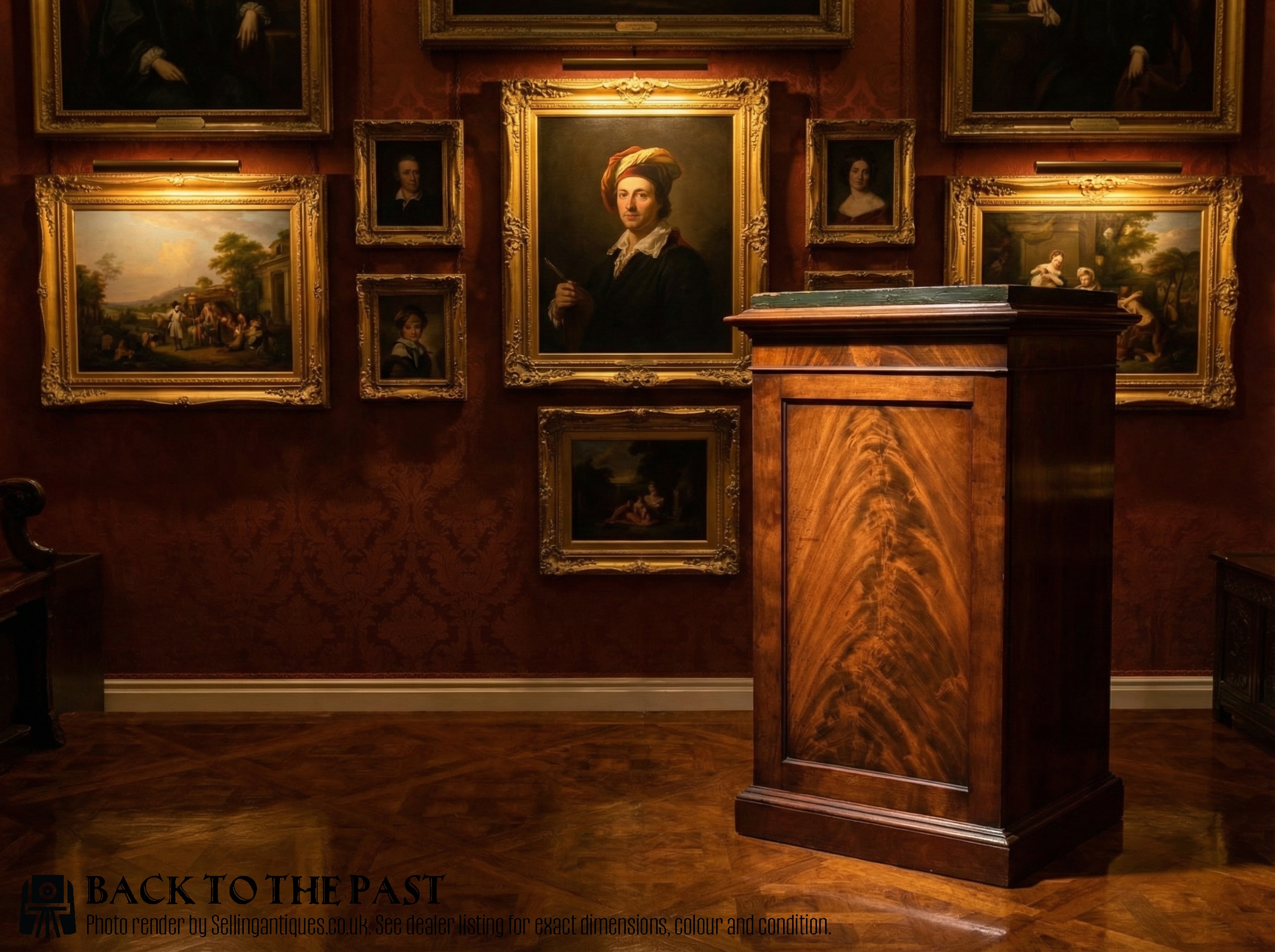
Where The Range Splits
Timber does most of the work. Flame mahogany, figured mahogany, Cuban mahogany, satinwood, burr oak and burr walnut cluster in the upper half of the sampled range, while a plainly described mahogany cupboard sits low in it. For side cabinets specifically, rosewood repeatedly outruns mahogany.
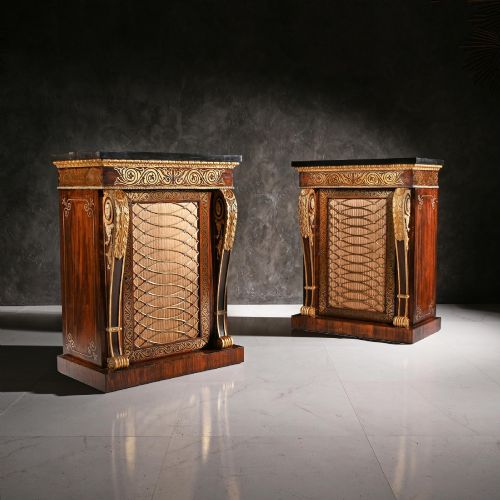
Decoration is the second lever. Inlay appears in twenty-one titles, and it is brass-inlaid rosewood side cabinets, ebony-inlaid presses and chinoiserie or penwork pieces that sit well above the middle. On pine, original paint lifts a cupboard from the lower-middle to the top of that sub-group, far above plain pine.
Then number and scale. Two of anything counts for more than one, and pairs account for much of the upper end. Small proportions are a selling point rather than a discount: miniature and apprentice pieces run right through the range, from a table-top cabinet near the bottom to a miniature satinwood linen press well up it.
Retail Price Guide 2026
Typical UK retail prices for regency cupboards, calculated from the Sellingantiques database of over a million retail prices indexed since 2003. This retail price guide relies exclusively on Sellingantiques data; no external sources or auction records are used, so the figures do not describe the wider market.
Sellingantiques has carried Regency cupboards since 2009, with more than two hundred listed in that time.
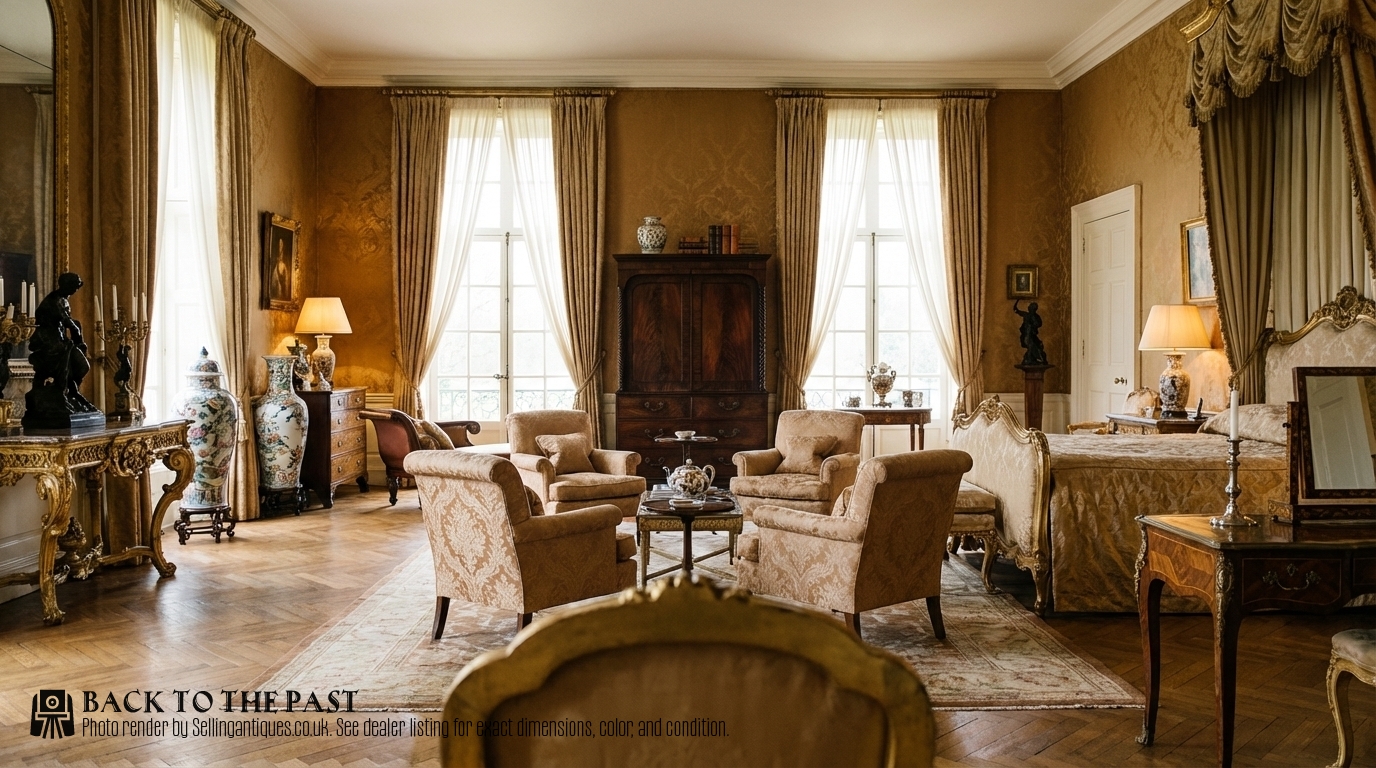
Gillows
The Regency Cupboards Glossary
- Linen press
- A two-part cupboard, doors over sliding linen trays with drawers beneath. The commonest single form in this category.
- Pot cupboard
- A small bedside cupboard, originally for a chamber pot. Night stand, sometimes spelled nightstand, is the same thing under another dealer's term.
- Dwarf press
- A press of reduced height, often the drawer base carrying a short cupboard above. Low press means the same.
- Chiffonier
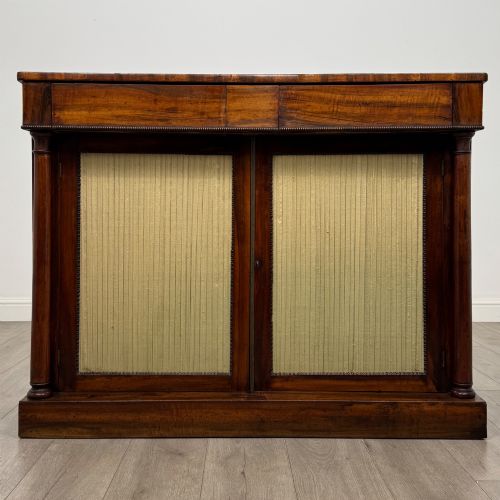
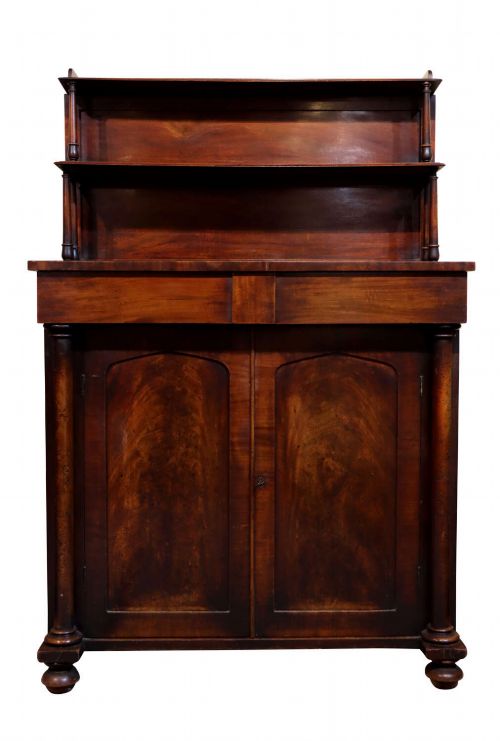
- A low side cupboard, often with a shelved superstructure or brass grille doors. The heading side cabinet overlaps with it.
- Flame mahogany
- Mahogany cut to show a flared, flame-like figure. Figured mahogany is the broader term for timber chosen for pronounced grain.
- Astragal glazed
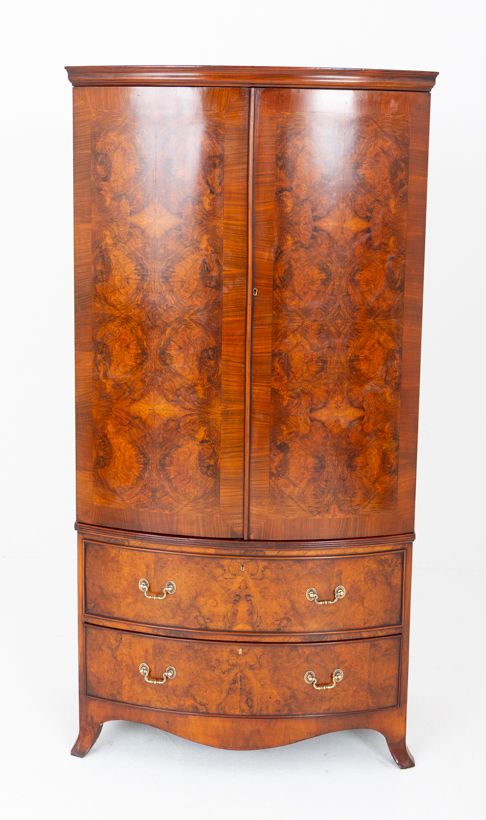
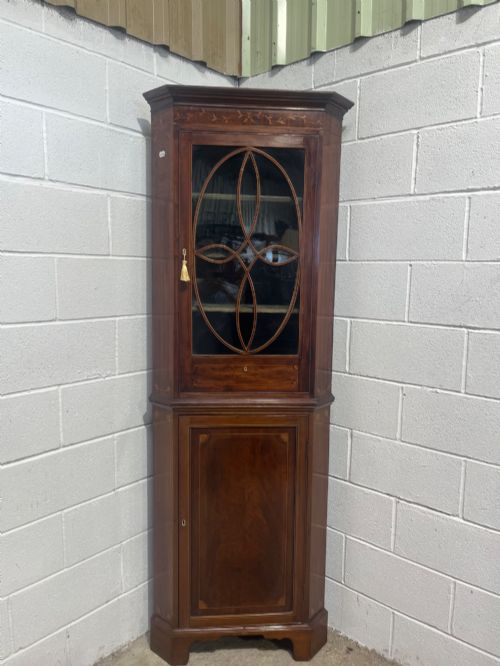
- Glazed doors divided by slender moulded glazing bars, seen on corner cupboards. Bow front means a convex curved front; breakfront, a centre section projecting forward of the sides.
Frequently Asked Questions
What is the difference between a linen press and a clothes press?
Construction is the same: doors over sliding trays, drawers beneath. The words describe what went inside, folded household linen or garments.
Dealers reach for linen press far more often. It appears in around eighty titles against thirteen for clothes press.
Are these cupboards always mahogany?
No. Mahogany names more than two thirds of titles, so it dominates, but it isn't the whole picture.
Rosewood comes next, then painted pine, with oak, satinwood, walnut and yew appearing in smaller numbers. Presses turn up in painted pine, oak and satinwood as well as mahogany.
How often are bedside cupboards sold in pairs?
Pairs are a regular feature rather than an oddity. Thirty-nine titles offer two, out of 315.
Bedside cupboards are the form most often paired, with pedestal and side cabinets close behind. Those pairs sit towards the upper end of the range.
Does Regency here mean strictly the Regency period?
It's used loosely for roughly the first third of the nineteenth century. Titles also invoke George III, George IV and William IV.
The dated field runs from 1800 to 1930, and 63 listings say only 19th Century. At the far end the heading takes in Regency-revival work made a century after.
Which makers turn up on Regency cupboards?
Very few. Gillows is the only name reaching three dealers on Sellingantiques.
It appears as an attribution or "in the manner of" rather than as a mark on the piece.
What unusual forms appear under this heading?
Odd things surface now and then: a pigeonhole estate cabinet, an apothecary chest with original labels, a plate-warmer pedestal, a food safe, a Welsh tack cupboard, a bread and cheese cupboard, and a library cabinet of twenty-four drawers.
Round shapes are rarer still. A tambour linen press of circular form, cylindrical bedside cupboards and a hexagonal pair of pedestal cabinets have all been listed.