

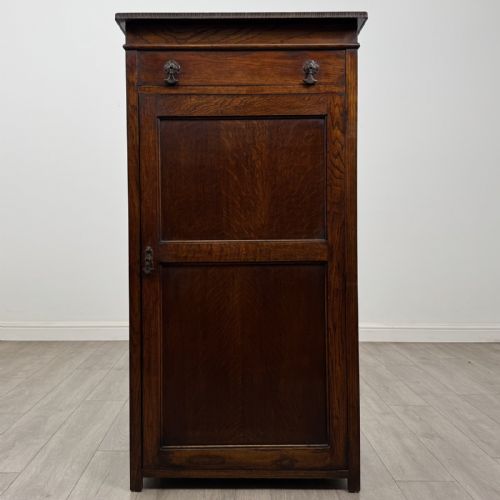
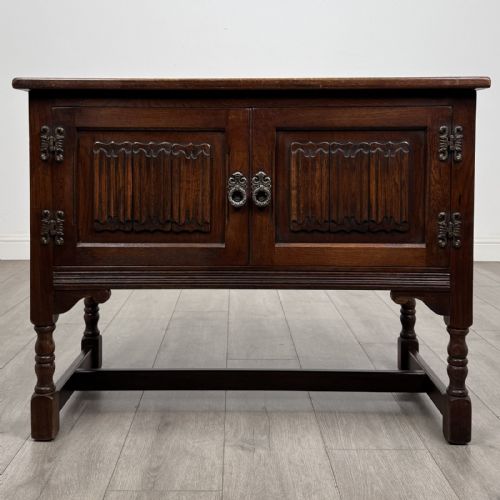
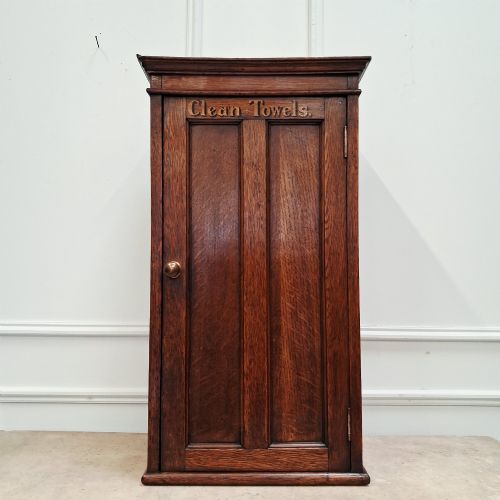
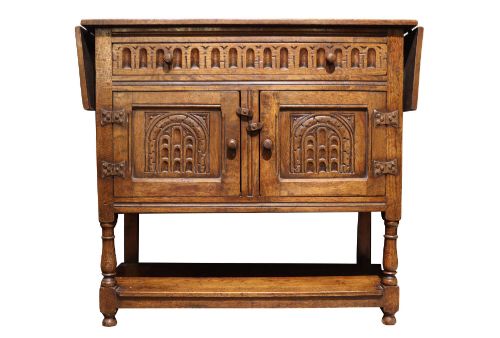
Antique Oak Cupboards
Joined and panelled oak storage furniture, made to hold food, linen, plate and clothes, running from small wall-hung boxes to full-height two-part case pieces.
Antique Oak Cupboards
Panelled oak cupboards became standard domestic joinery in Britain and northern Europe from the sixteenth and seventeenth centuries, when joined and panelled work took over from boarded chests for enclosed storage. Corner cupboards, bedside cupboards and fitted hall cupboards are later versions of the same idea, cut to suit a particular room.
The corner cupboard dominates. "Corner" appears in a fifth of titles, split between wall-hung and floor-standing types, and it clusters with Georgian and eighteenth-century dating. Bow fronts turn up on the hanging sort. The hanging version sits mostly in the lower part of the range, the two-part floor-standing version toward the top.
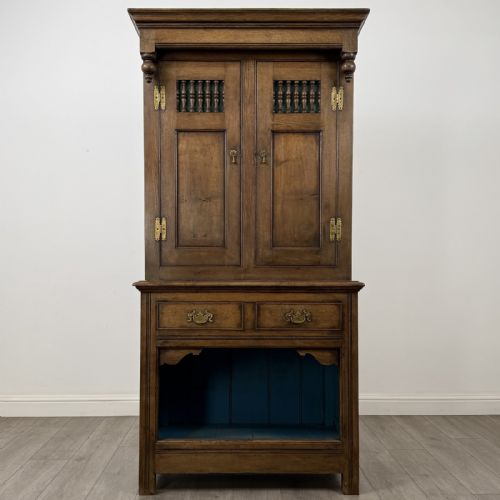
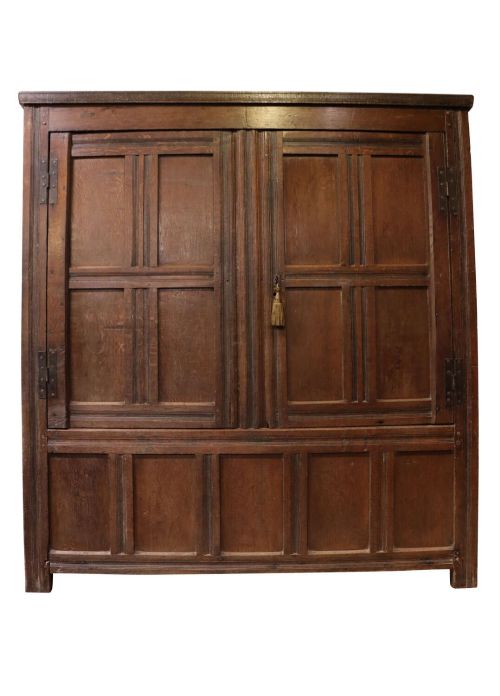
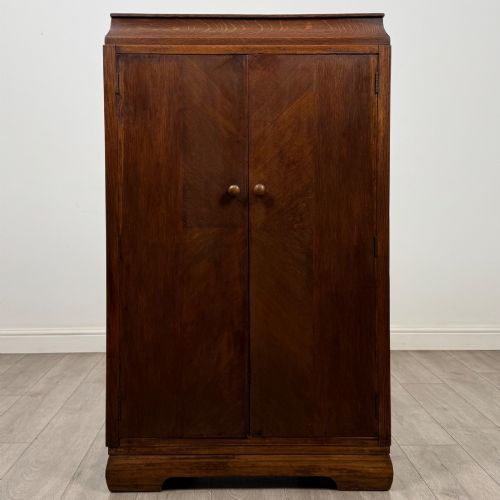
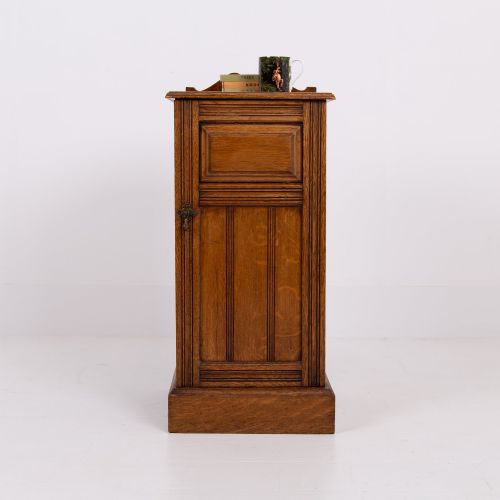
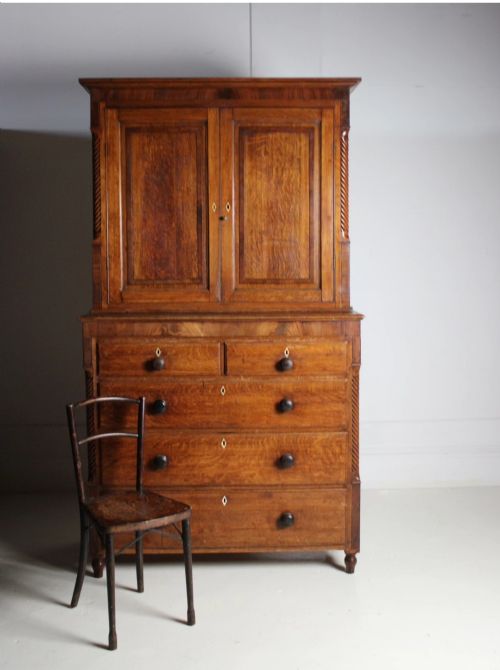
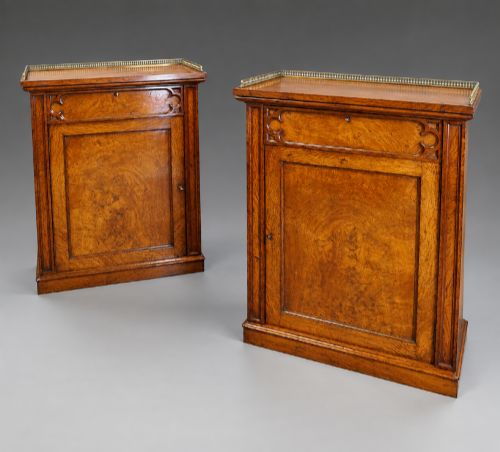
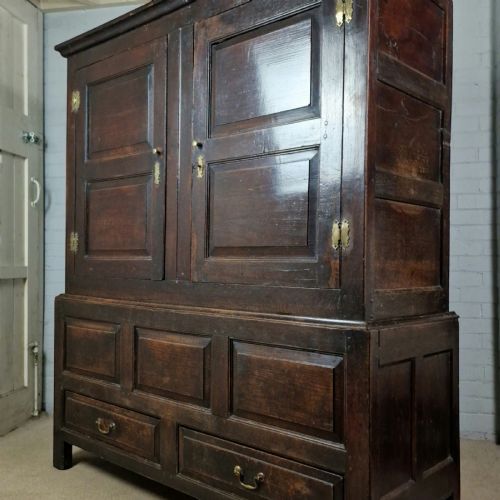
After that come court and press cupboards, including the Welsh deuddarn and tridarn, which make up a substantial second block concentrated in the upper range. Bedside cabinets and pot cupboards form another group, often French and often in pairs. Hall robes and wardrobes account for a sizeable 1920s and 1930s presence, and small utility cupboards for spice, livery, food and tack run right across the range.
Origin is mixed rather than settled. Welsh and French descriptions are both common, English less so, with Dutch, Flemish, Breton, Hungarian, Italian and Continental pieces appearing too. Dating is looser than it looks: the field runs 1670 to 1940, but only about a third of listings carry a clean year, and "18th Century" or "Georgian" is best read as a band.
Where The Range Splits
Form does most of the work. The top of the range belongs to sixteenth and seventeenth-century livery, court, vestry and deuddarn cupboards, and to large housekeepers' cupboards in two parts. Georgian hanging corner cupboards and single bedside cabinets sit at the other end, and they arrive in quantity.
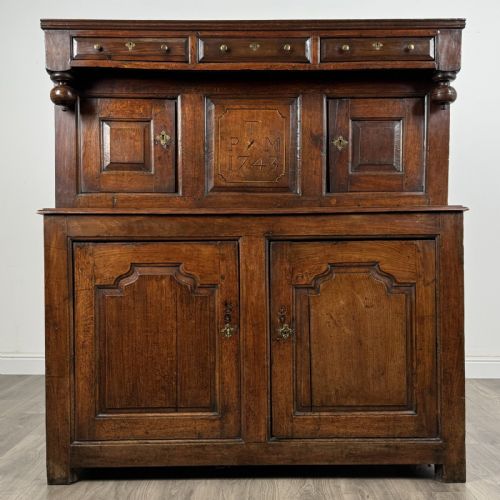
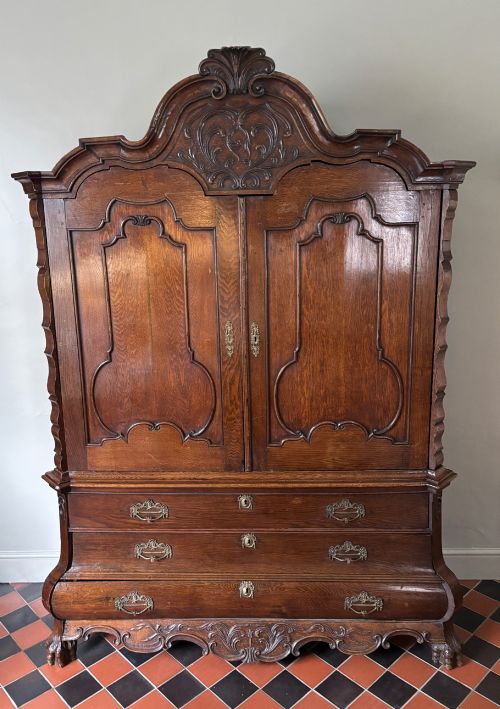
Carving and inlay lift a piece within its form. Carved appears in a couple of hundred titles, with panelled, inlaid and Gothic work behind it; sampled pieces at the top cite figural carving, carved cherubim, parquetry and one vestry cupboard of twenty-two panels. A carved or inscribed date does the same, and these turn up repeatedly on oak cupboards: 1680, 1685, 1696, 1701, 1723, 1728, 1743, 1763.
Region matters too. Welsh naming survives intact in the titles, with cwpwrdd deuddarn, tridarn and didarn all in use, and named attributions such as Montgomeryshire, Cardiganshire, Cheshire, Westmoreland, Devon and the West Country sit in the upper half. Among bedside cupboards, pairs sit consistently above singles, and "pair" appears in well over a hundred titles.
Antique Oak Cupboards Retail Price Guide 2026
Typical UK retail prices for oak cupboards, calculated from the Sellingantiques database of over a million retail prices indexed since 2003. This retail price guide relies exclusively on Sellingantiques data; no external sources or auction records are used, so the figures do not describe the wider market.
Welsh names hold on in the titles on Sellingantiques: deuddarn appears 40 times, alongside cwpwrdd tridarn, didarn and the Carmarthen coffer.
Waring & Gillows
The Antique Oak Cupboards Glossary
- Corner cupboard
- Triangular-backed cupboard made to fit a room corner, either hung on the wall or floor-standing, and sometimes in two parts.
- Bow front
- Convex curved door front, common on the hanging corner cupboards and named in around fifty titles.
- Press cupboard
- Enclosed cupboard for clothes or linen, often with a drawer base. "Press" carries more titles than "court".
- Linen press
- Tall two-part cupboard for linen, the term used in a good number of titles across the archive.
- Deuddarn
- Welsh two-stage cupboard, cwpwrdd deuddarn. Tridarn and didarn appear alongside it in the same titles.
- Linenfold
- Carved panel imitating folded cloth, recurring on the 1920s and 1930s hall robes and tallboys.
Antique Oak Cupboards: Frequently Asked Questions
What is a court cupboard?
An early two-tier oak cupboard, either open or enclosed. The term appears in well over a hundred titles on Sellingantiques, and court cupboards sit with livery and vestry cupboards at the top of the range.
Sampled dating for the form goes back as far as circa 1580 to 1600, earlier than the 1670 start of the dated field.
Which form comes up most often?
The corner cupboard, by a clear margin. It accounts for about a fifth of titles, with hanging corner cupboards, corner cabinets and bow fronts all named separately.
Most of these carry Georgian or eighteenth-century dating, and many have mahogany crossbanding round the doors.
Are oak bedside cupboards sold in pairs?
More often in pairs than singly. "Pair" appears in around 144 titles, and pairs sit consistently above single examples in the range.
French versions form a recognisable sub-group, some bleached, some marble-topped.
How reliable is the dating on these?
Only 803 of 2,296 listings carry a clean year. The rest sit in bands, and "18th Century" and "Georgian" are the two biggest.
Read those as bands rather than as a year. Where a date is carved or inscribed on the piece itself, the listing usually says so.
Dates recorded that way include 1680, 1685, 1696, 1701, 1723, 1728, 1743, 1763 and 1878.
What does deuddarn mean?
It's the Welsh term for a two-stage cupboard, cwpwrdd deuddarn. Tridarn is the three-stage version, and didarn also turns up.
Welsh naming survives intact in these listings, alongside county attributions such as Montgomeryshire and Cardiganshire.
Do unusual one-off forms turn up?
They do. Sampled titles include a vestry cupboard of twenty-two carved panels, a bread hutch, a ships cupboard, a fishing cupboard and a campaign cupboard in three separate units.
Small utility cupboards are steadier company: spice, livery, housekeepers', food and tack cupboards appear across the whole range.