

Antique Edwardian Cupboards
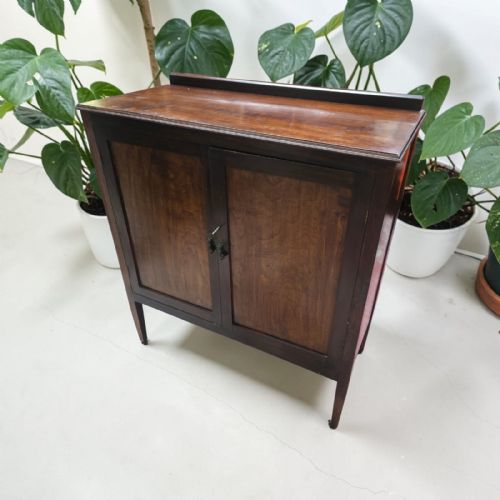
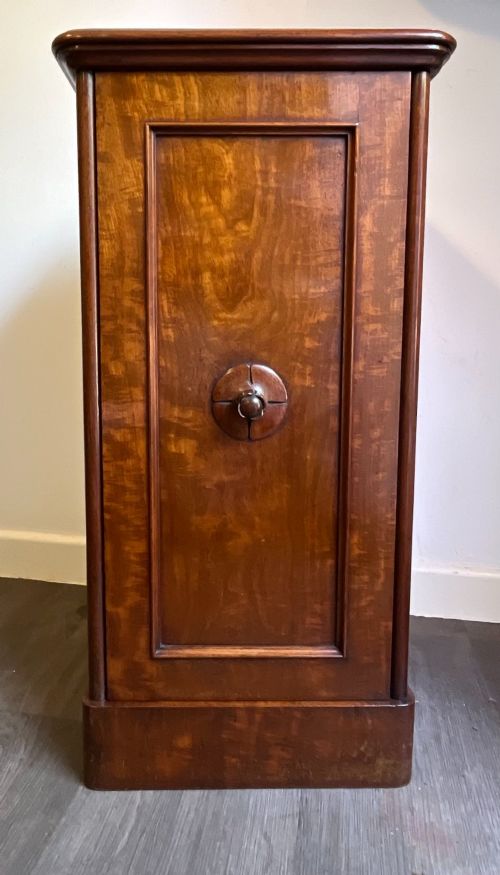
Enclosed storage with doors, made in quantity for Edwardian middle-class houses, and dominated here by the small mahogany bedside cabinet or pot cupboard.

Antique Edwardian Cupboards
Small to medium case furniture with doors, rather than large storage presses. The titles lead with the wood: mahogany runs through about two in five, then oak, walnut and satinwood. "Cabinet" appears in roughly a third of titles and does duty for "cupboard" throughout.
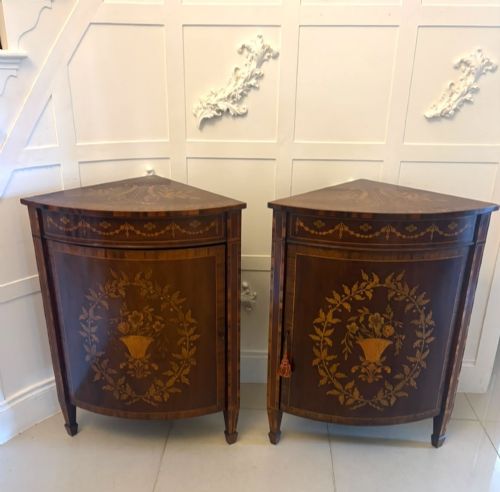
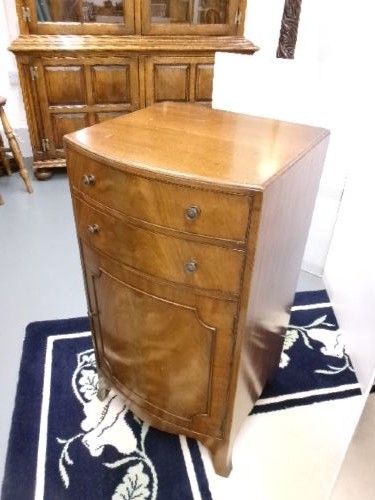
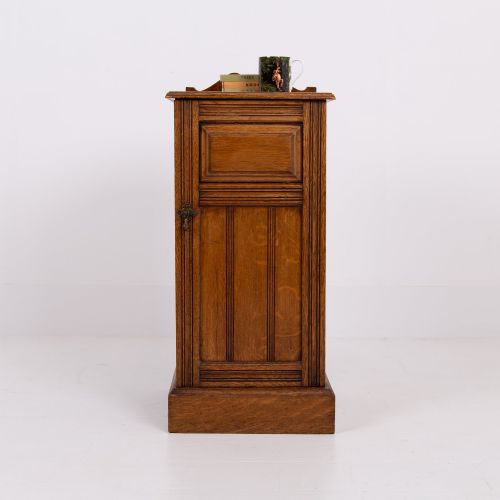
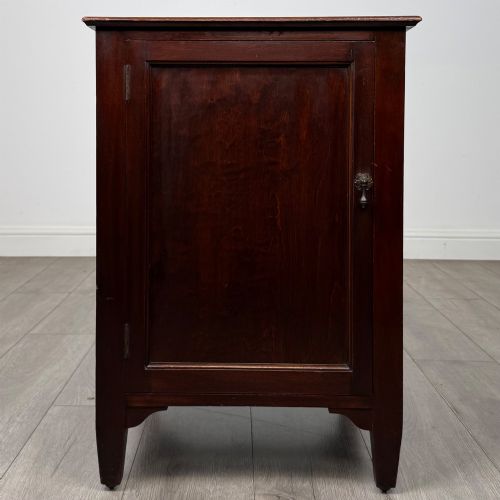
The bedside cabinet is the engine of the group. "Bedside" is in 166 of 562 titles, with pot cupboards and bedside chests alongside, and inlay is the usual decoration on them. They very often come in twos: "pair" turns up in 84 titles, matched cabinets and chests for either side of a bed.
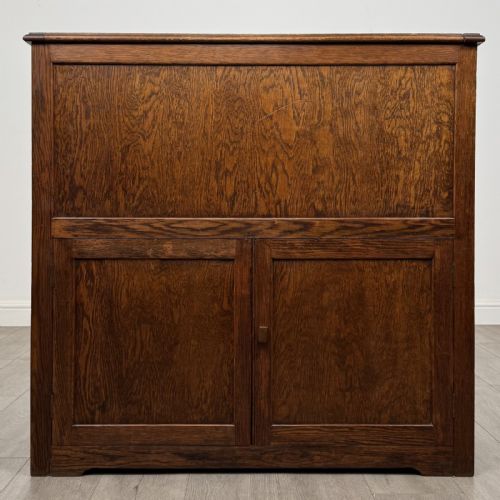
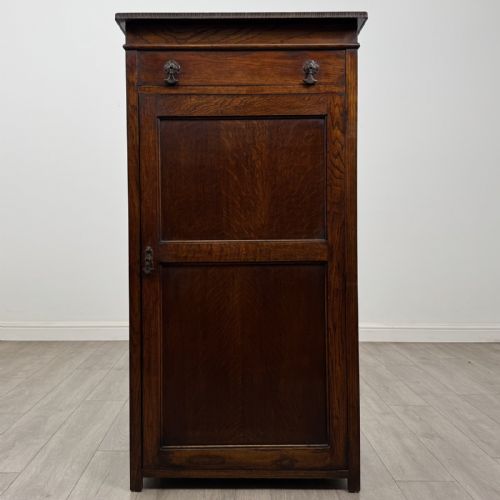
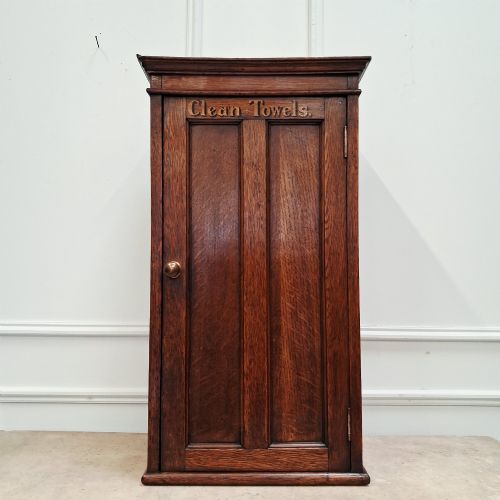
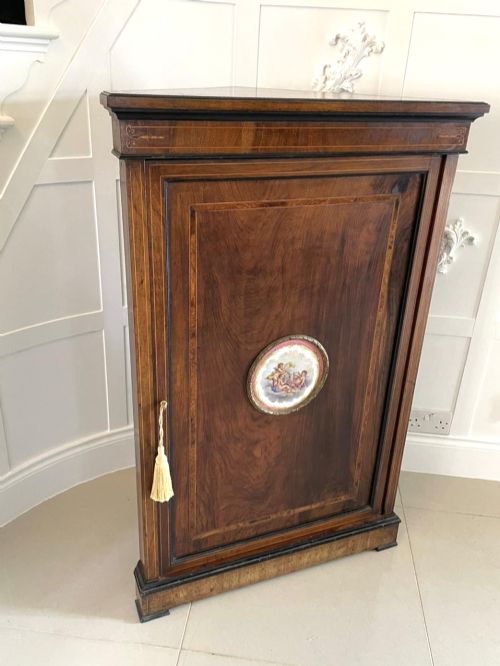
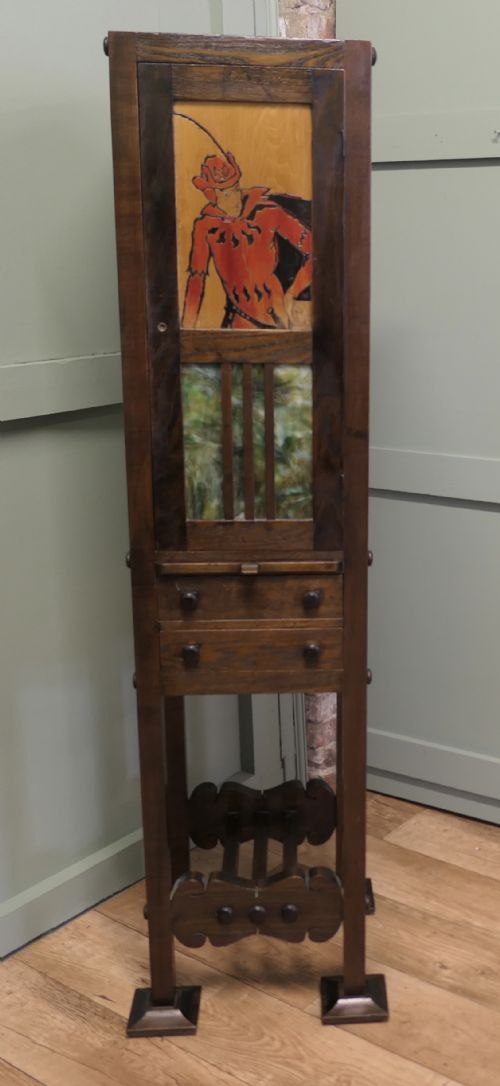
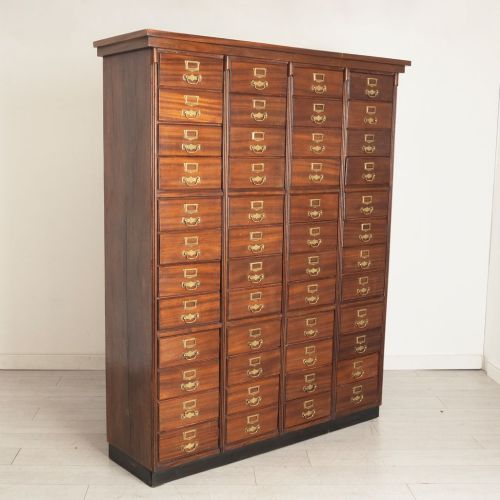
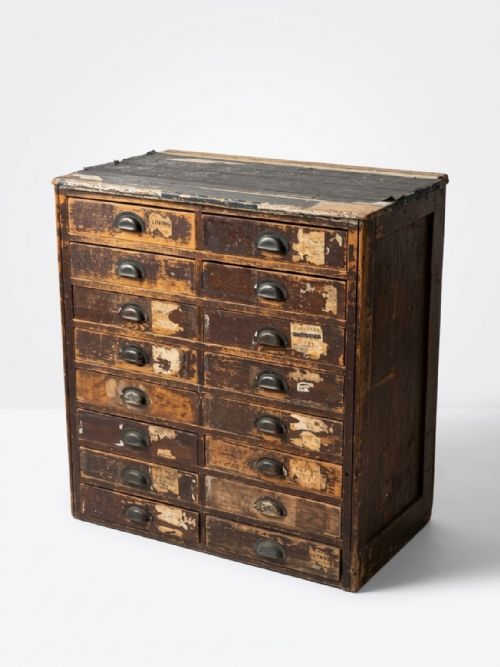
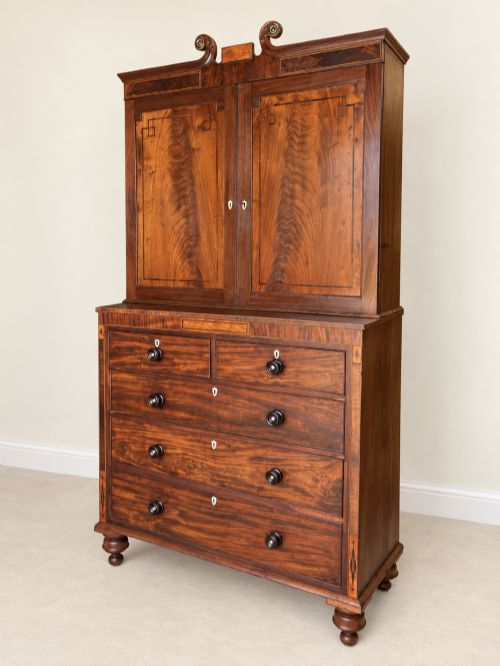
Around the bedside pieces sit corner cupboards, hanging and floor-standing, some astragal glazed; music, record and folio cabinets; and linen presses, wardrobes and hall robes. A persistent minority are working cupboards from trade and institution, including office, filing, laboratory, dental, watchmaker's, school and haberdashery pieces.
Dating is loose. 288 listings say simply "Edwardian" and only 184 carry a clean year, with the field spanning 1800 to 1940 and neighbouring labels such as 1920s, Victorian and Georgian in regular use. Revival taste is stated openly in the titles, Sheraton and Georgian revival among them.
Where The Range Splits
Timber sets the floor and the ceiling. Satinwood, burr walnut and figured or flame mahogany sit at the top, and the painted satinwood and marquetry cabinets cluster at the highest-priced end of the samples. Plain oak and pine sit low, with stripped and painted pine lower still.
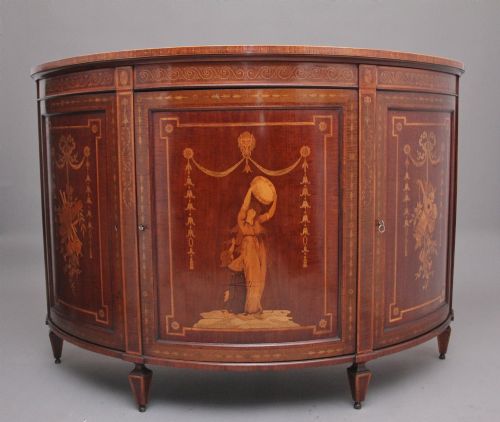
Decoration does the rest of the lifting. Inlay appears in 90 titles and is close to standard on the better bedside cabinets, while marquetry and painted classical ornament are scarcer and reach higher. Named revival styling, Sheraton and Georgian in particular, pulls in the same direction.
Two structural things matter. A true matched pair sits well above a single of the same description, which is why paired bedside cabinets and chests recur through the middle and upper range. Shaped fronts do the same job: bow, serpentine and demi-lune outrun their straight-fronted equivalents.
Antique Edwardian Cupboards Retail Price Guide 2026
Typical UK retail prices for edwardian cupboards, calculated from the Sellingantiques database of over a million retail prices indexed since 2003. This retail price guide relies exclusively on Sellingantiques data; no external sources or auction records are used, so the figures do not describe the wider market.
Around sixty-six Edwardian cupboards are listed on Sellingantiques each year, and 132 different dealers have handled one.
The Antique Edwardian Cupboards Glossary
- Pot cupboard
- Small enclosed bedside cupboard, originally for a chamber pot. Titles use it interchangeably with bedside cabinet.
- Bedside chest
- A bedside piece fitted with drawers instead of a door. Frequently sold as a pair.
- Linen press
- Tall cupboard with a shelved or sliding-tray upper section standing over a chest of drawers.
- Hall robe
- Narrow coat-and-hat cupboard for a hall, sometimes described as a corner robe or hall wardrobe.
- Astragal glazed
- A glazed door divided by slender moulded bars, common on corner cupboards.
- Sheraton Revival
- Early twentieth-century revival of late Georgian forms, with light woods, banding and painted decoration.
Antique Edwardian Cupboards: Frequently Asked Questions
Why are so many sold in pairs?
Bedside cabinets were made for either side of a bed, so matched twos were the normal output. "Pair" appears in 84 of 562 titles on Sellingantiques.
A true matched pair sits well above a single of the same type and description, and paired cabinets and bedside chests recur right through the middle and upper range.
What wood are they usually made from?
Mahogany leads, in around two in five titles. Oak follows, then walnut and satinwood.
Satinwood is the wood of the top of the range, with 35 titles using it and the painted and marquetry examples clustering at the highest-priced end. Pine appears at the other end, often stripped or painted.
Is a cabinet the same as a cupboard here?
In these titles, largely yes. "Cabinet" is in about a third of them and is used almost interchangeably with "cupboard".
So a bedside cabinet, a pot cupboard and a bedside chest all describe the same corner of the category, the chest being the version with drawers rather than a door.
How reliable are the Edwardian dates?
They are often a period bracket rather than a year. 288 listings say simply "Edwardian", 68 give 1900s and 56 give 1910s.
Only 184 of 562 carry a clean year, and the dated field as a whole runs from 1800 to 1940. Titles labelled Edwardian but dated 1890 or 1920 are not unusual.
Adjacent labels such as 1920s, 19th Century, Victorian and Georgian turn up regularly alongside.
Which makers turn up on these?
No maker recurs often enough to define the category. The trade names that appear in titles are one-off finds rather than a market.
With around 66 listed in a year and 132 different dealers having handled one, the category is spread widely rather than held by a specialist.
Do unusual working cupboards appear?
Yes, as a small but persistent minority. Office, filing, school, laboratory, tool and haberdashery cupboards all turn up.
The one-offs go further: a florist's seed chest, a dental cabinet, a watchmaker's cabinet, a hotel guest key box, a Cuban cigar shop display and a bank of 24 drawers.