Victorian Cupboards
Bedroom and household storage from the nineteenth century: small bedside and pot cupboards made to hold a chamber pot and later a lamp, alongside linen presses and larger kitchen and estate cupboards.

What You're Looking At
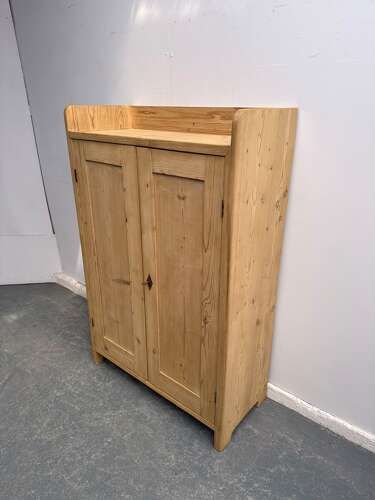
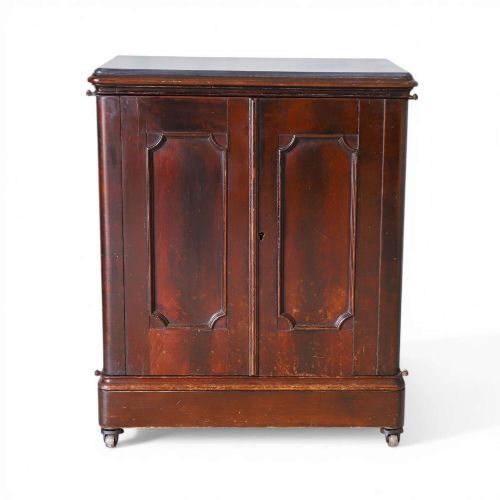
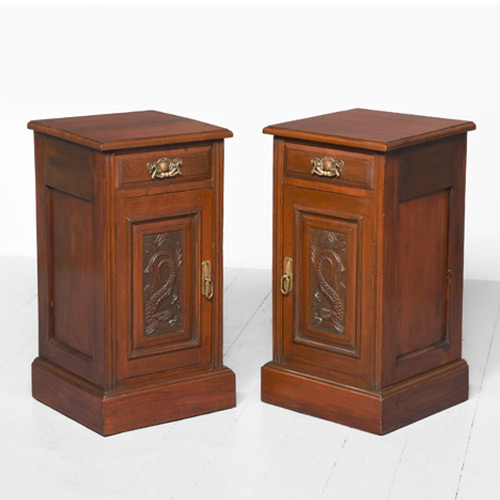
The heading covers a broad run of nineteenth-century case furniture, and bedroom pieces dominate it. Bedside appears in 453 of 1,447 titles, and the mahogany bedside cupboard is the form you'll meet first. Pot cupboards, bedside chests of drawers and cabinets on plinths sit in the same group.
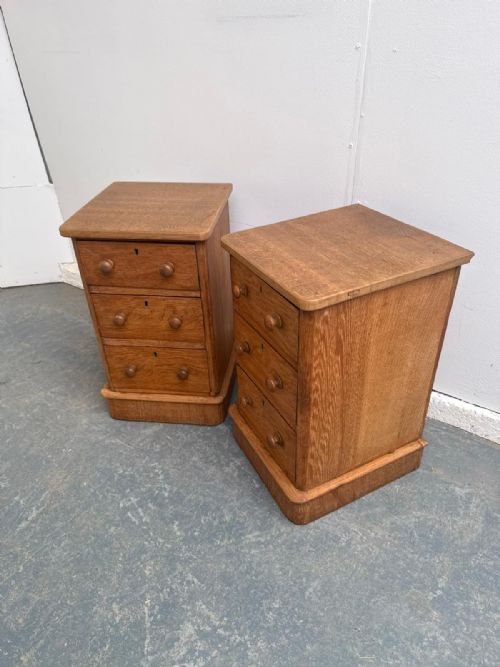
Pairs are the second thing to know. Nearly a quarter of titles describe two cupboards rather than one, which is unusual for case furniture and reflects how bedrooms were furnished. Sampled pairs include bedside chests, pedestal cabinets, pier cabinets and pot cupboards.
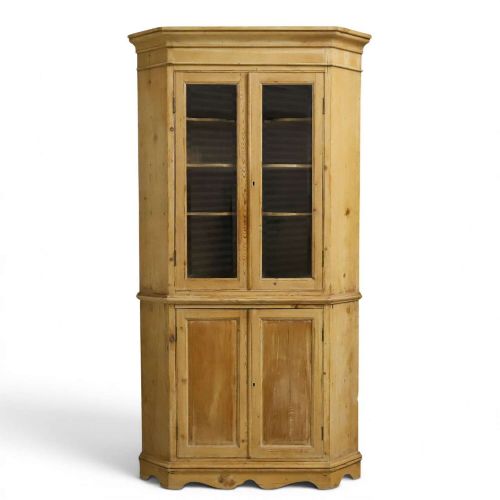
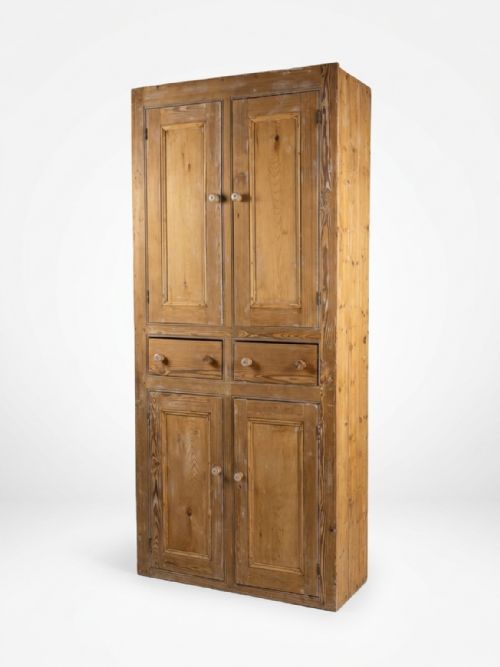
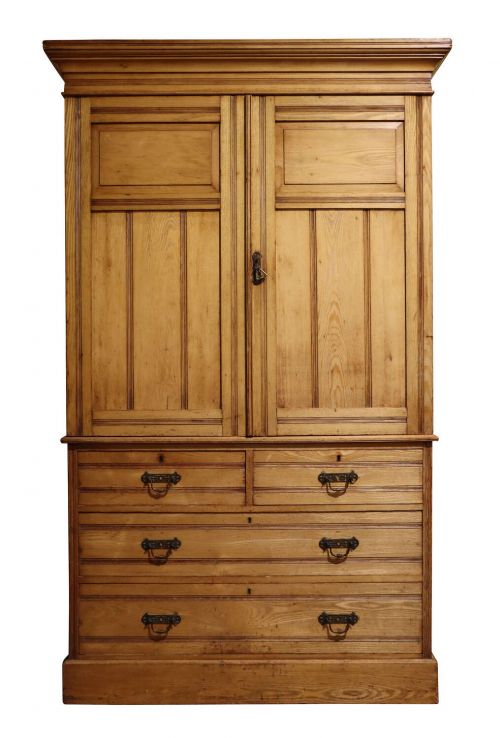
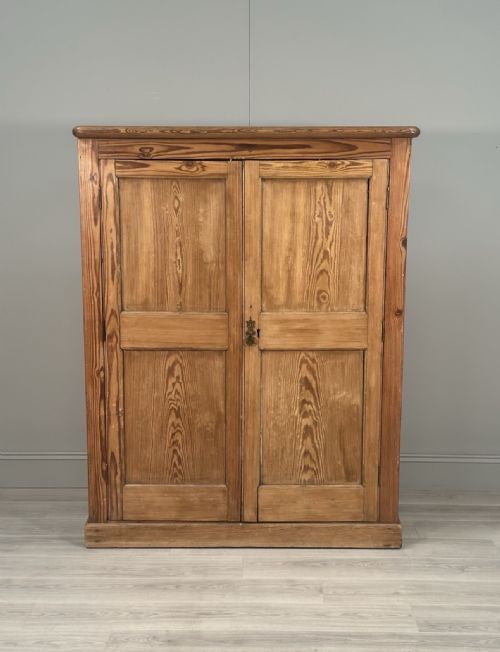
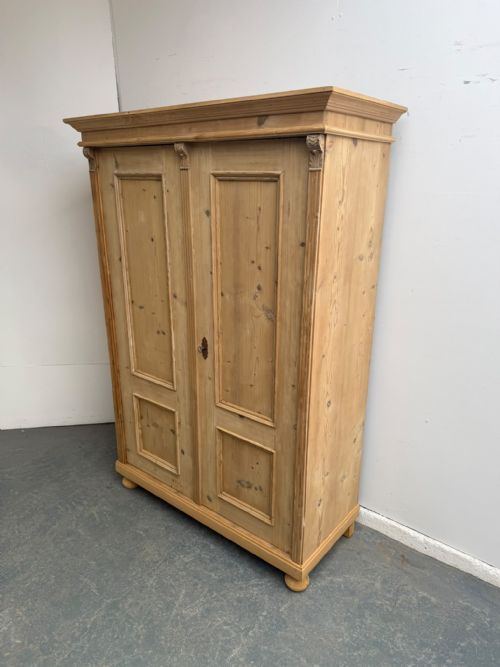
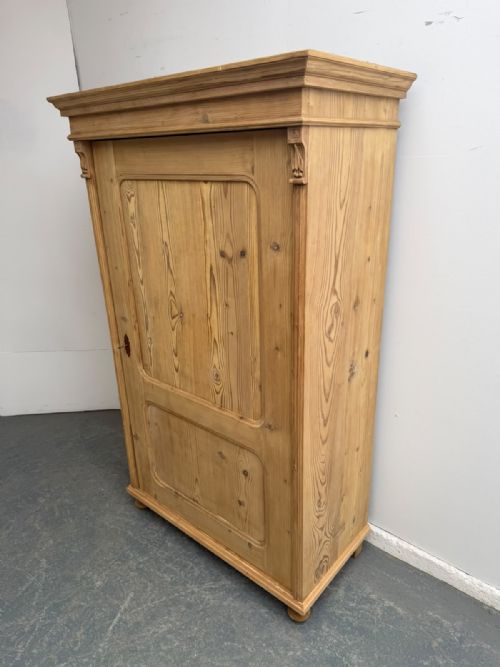
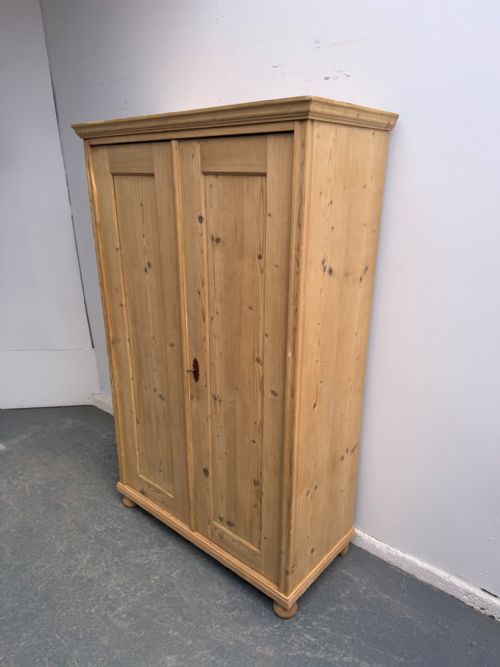
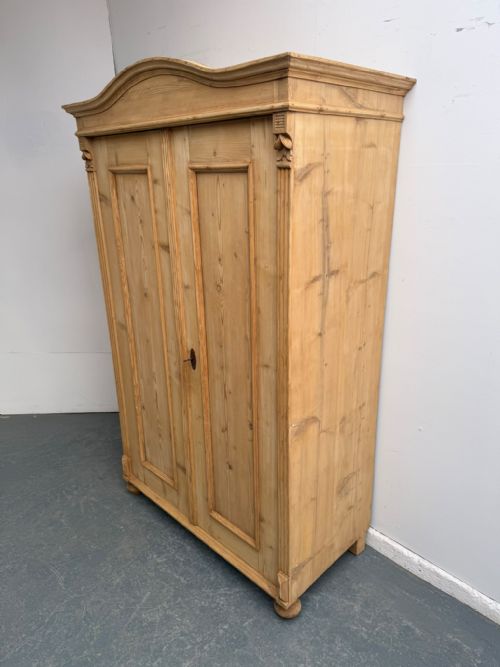
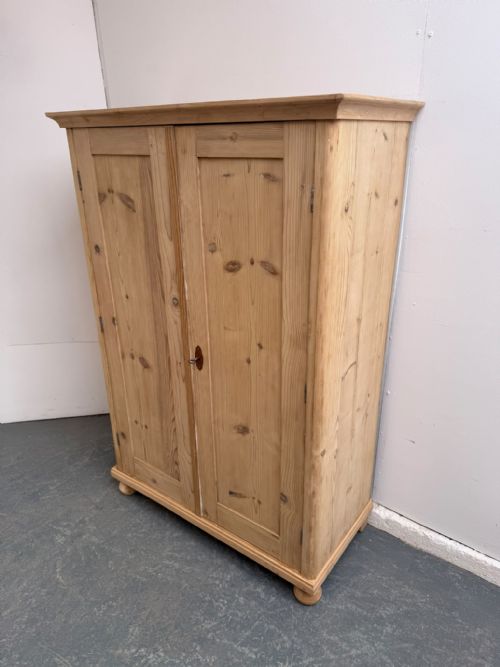
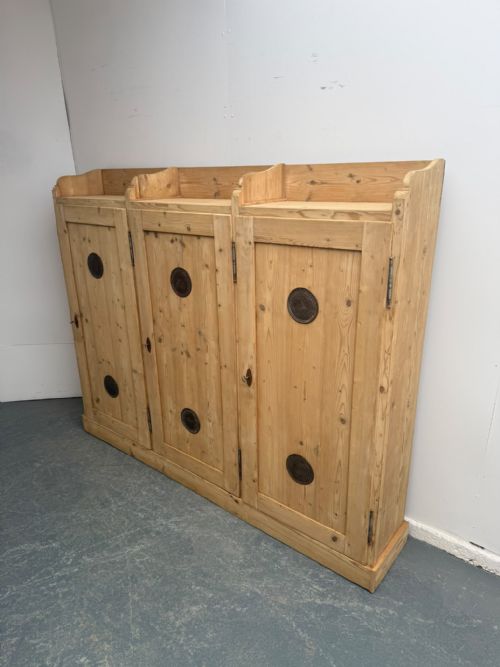
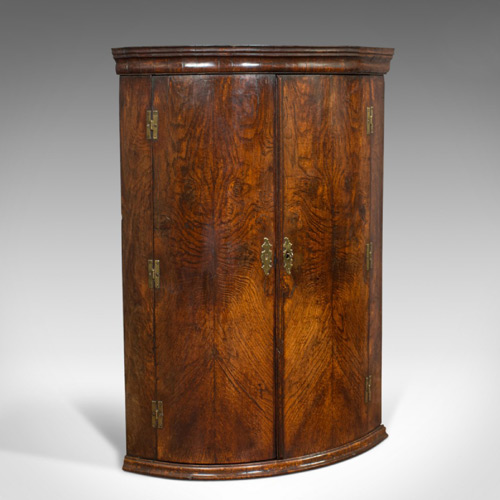
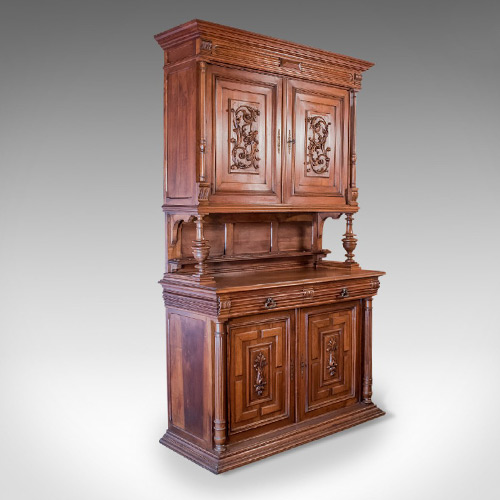
Above the bedside pieces sit the larger forms: linen and clothes presses with trays or shelves over a base of drawers, housekeeper's and larder cupboards, and corner and wall-hanging cupboards. Pine runs through the household end of that, often stripped and offered to wax or paint. Timber order across the archive is mahogany, then pine, walnut and oak.
Dating is loose. Most listings say simply Victorian or 19th Century; where a decade is given, the 1880s lead. The dealer date field stretches from 1800 to 1950, and a few sampled pieces carry Georgian, Regency or Edwardian labels, so the edges of the period blur. A minority are trade and institutional: shop, chemist's, school, estate and apothecary cupboards, with a small tail of miniature and apprentice chests.

Where The Range Splits
Timber and figure do most of the work. Burr walnut is named in 88 titles and is the usual mark of the better bedside cabinets; figured and flame mahogany, satinwood and kingwood pull the same way. Plain pine and plain mahogany bedside cupboards fill the bottom of the range.
Then decoration and number. Inlay, marquetry, marble tops and porcelain plaques lift a piece well clear of a plain case of the same form, and the highest sampled entries carry marquetry, ormolu and Sèvres plaques. A matched pair sits above two equivalent singles, which is why pairs cluster from the middle of the range upward.
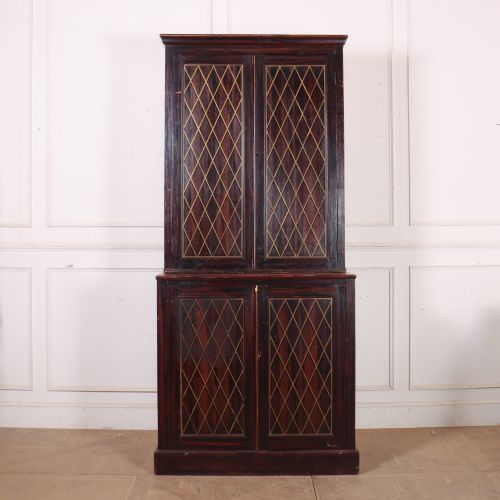
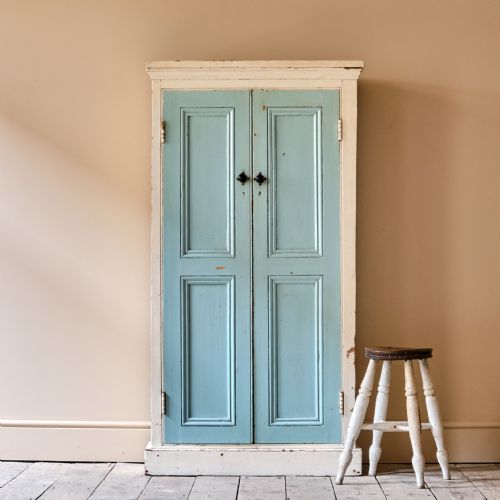
Scale counts at the household end. Large estate, housekeeper's and country-house cupboards reach the upper range, while hanging and corner cupboards sit low. Where a name is attached, titles sit above unattributed cupboards of the same type. Worth knowing that the very top of the archive is held by ebonised and boulle pier cabinets and marquetry corner cabinets rather than by cupboards proper.
Retail Price Guide 2026
Typical UK retail prices for victorian cupboards, calculated from the Sellingantiques database of over a million retail prices indexed since 2003. This retail price guide relies exclusively on Sellingantiques data; no external sources or auction records are used, so the figures do not describe the wider market.
Around 180 Victorian cupboards are listed on Sellingantiques each year, and 215 different dealers have listed one.

Holland & Sons
The Victorian Cupboards Glossary
- Pot cupboard
- Small bedside cupboard, originally for a chamber pot. Ninety-two titles use the term, and cylindrical column forms turn up alongside plain square cases.
- Bedside chest
- A small chest of drawers used at the bedside instead of a single-door cupboard. It accounts for 127 titles and is often sold as a pair.
- Linen press
- Tall cupboard with sliding trays or shelves above a base of drawers. Named in 105 titles, in mahogany and in pine; clothes press and dwarf clothes press describe the same idea.
- Housekeeper's cupboard
- Large two-part kitchen or estate cupboard, commonly pine. Twenty-seven titles use it, and pieces of this scale reach the upper range.
- To wax/paint
- Trade shorthand for stripped pine offered ready for a finish. Sixty-five titles carry it, and it appears nowhere else in the category's vocabulary.
- Burr walnut
- Figured veneer cut from a burr growth on the tree. Called out in 88 titles, and the timber that separates the better bedside cabinets from plain ones.
Frequently Asked Questions
What is a pot cupboard?
A small bedside cupboard, made to hold a chamber pot and later used for a lamp. Ninety-two titles in the archive use the term.
Shapes vary. Square-cased single-door cupboards are the common pattern, and cylindrical or column forms recur through the sampled listings, sometimes with a marble top.
Why are so many sold as pairs?
Bedrooms took a cupboard on each side of the bed, so cupboards were made and kept in twos. Pairs appear in 343 titles, nearly a quarter of the archive.
That matters for price. Matched pairs of bedside chests and cabinets sit from the middle of the range upward, while single bedside cupboards fill the bottom.
Which timbers turn up most often?
Mahogany leads with 513 titles, then pine at 268, walnut at 222 and oak at 110. Burr walnut is singled out in 88 of the walnut listings.
Satin birch and satin ash appear repeatedly as pale alternatives, and figured or flame mahogany is named where the cut shows a plume.
How exact is the dating on these?
Loose. Of 1,447 listings, 807 say simply Victorian and 171 say 19th Century, so only 388 pin a clean year.
Where a decade is given the 1880s dominate, with more listings than the 1860s and 1870s combined. The date field as a whole runs from 1800 to 1950.
Does a linen press count as a cupboard here?
Yes, and it's one of the larger forms in the category. Press appears in 127 titles and linen press in 105, in mahogany and in pine.
The usual arrangement is sliding trays or shelves behind a pair of doors above a base of drawers. Clothes press and dwarf clothes press describe the same construction at different heights.
Are there unusual pieces beyond bedroom furniture?
A steady minority are trade and institutional: shop, chemist's, school, estate and apothecary cupboards. Miniature and apprentice chests form a small persistent tail, 38 and 31 titles.
One-offs turn up too. The archive holds a dentist's instrument case, a watch and clock repairer's chest, a Hungarian shop fitting of fifty drawers, a Welsh oak deuddarn and a Ceylonese teak veranda gin cabinet.
Origins outside England appear once or twice each, among them French, Scottish, Italian, Danish, Flemish, Korean and Anglo-Indian pieces.