Antique Pine Cupboards
Plain panelled softwood storage furniture, from small bedside pot cupboards to full-height housekeeper's cupboards and linen presses, made for kitchens, service rooms and bedrooms where oak or mahogany was an expense.

What Are Antique Pine Cupboards?
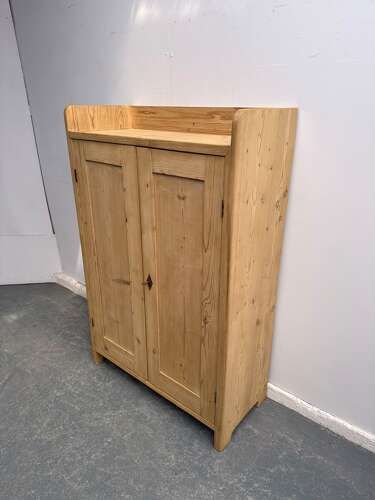
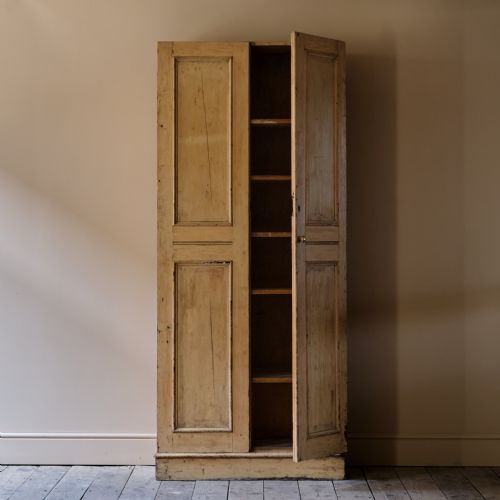
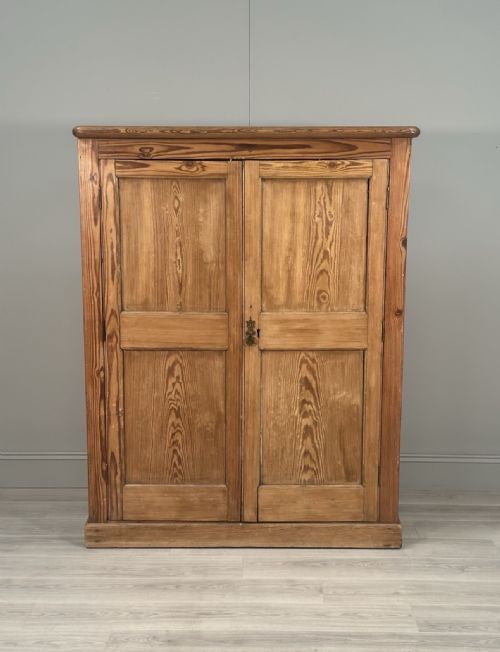
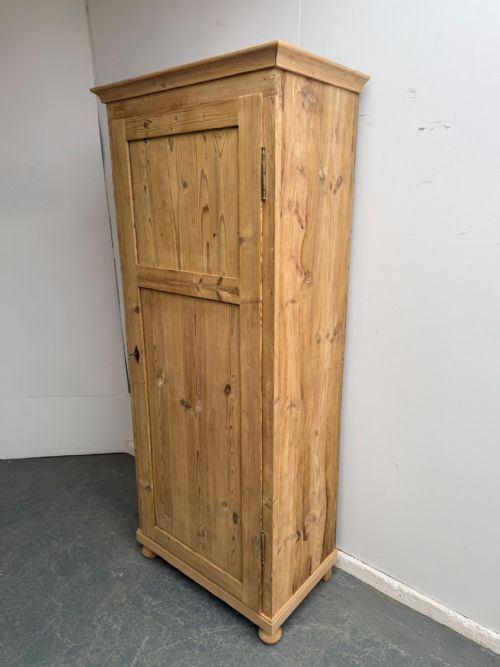
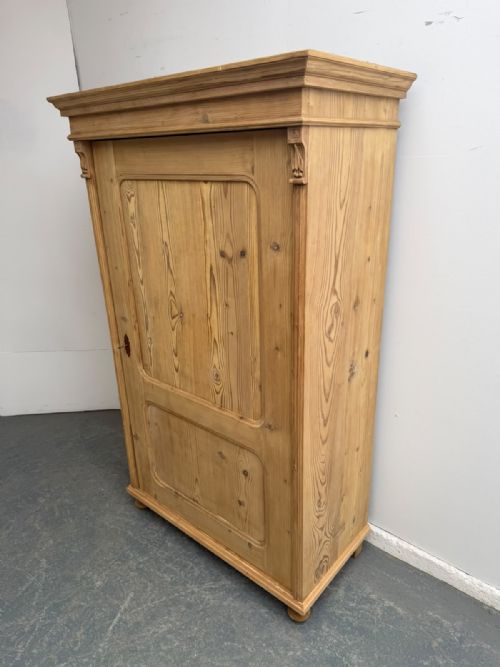
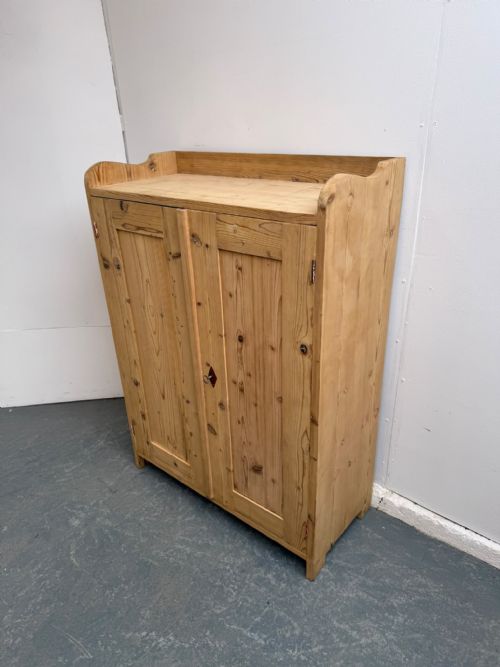
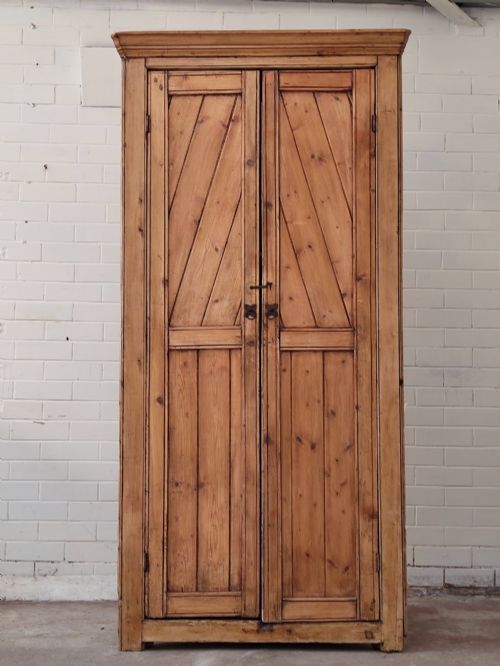
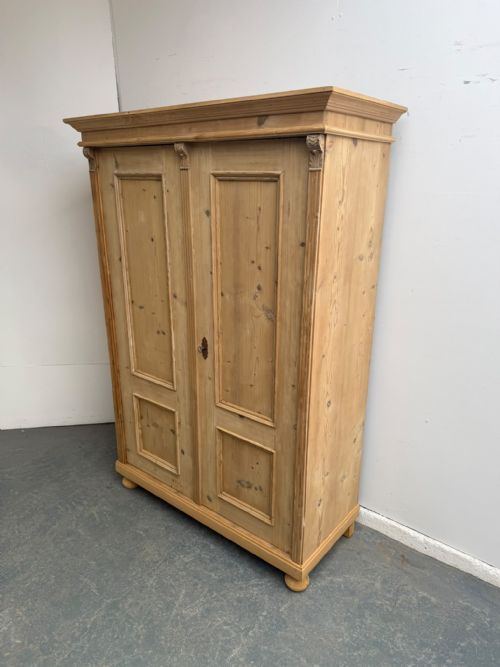
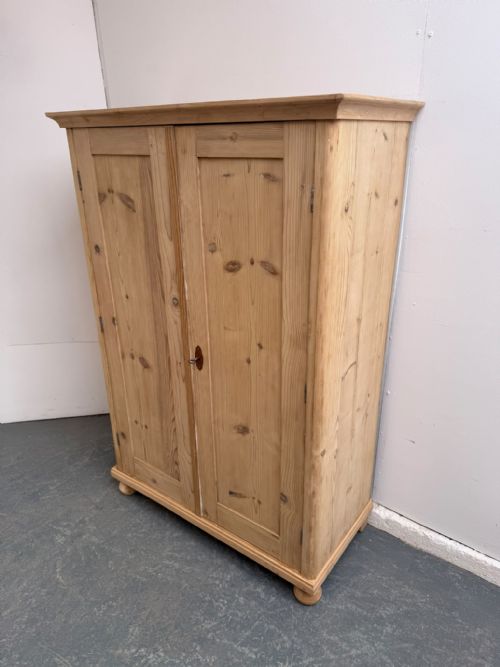
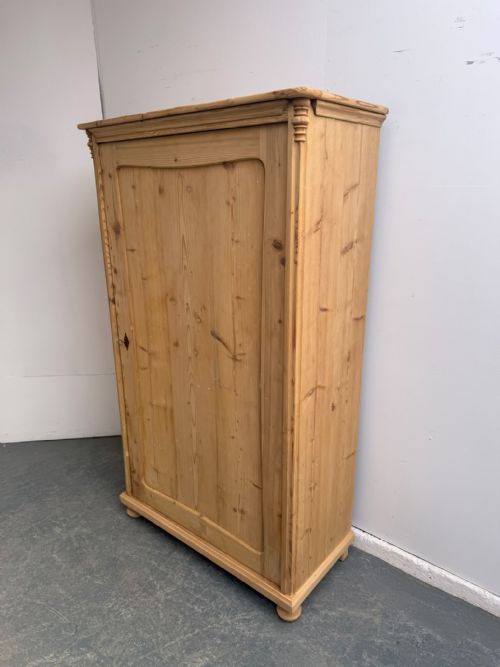
Softwood carcass work, mostly English and Continental, in pine or pitch pine. The form you'll meet most often is a one- or two-door panelled cupboard: 'door' turns up in 136 titles, with single-door and double-door versions both common. Titles tend to name the job rather than the shape, so larder, linen, school, hall, food and pot all appear as descriptions.
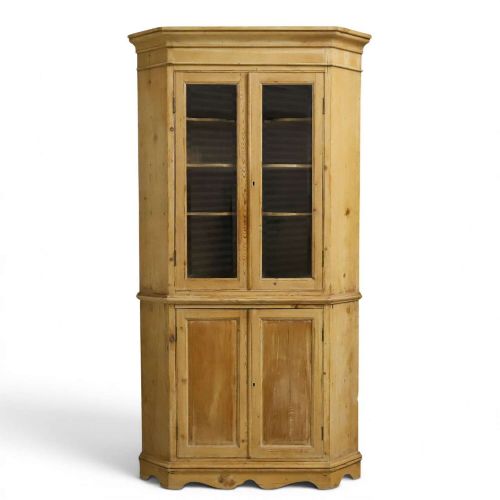
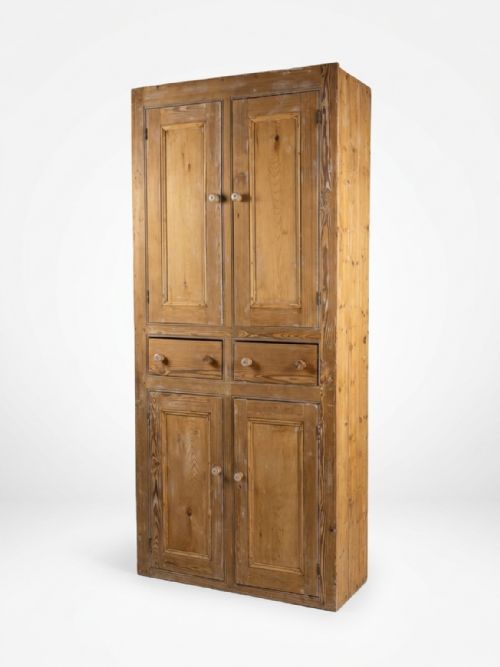
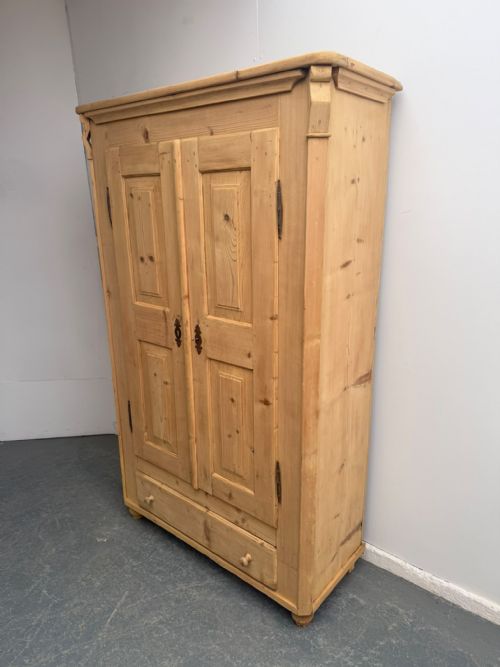
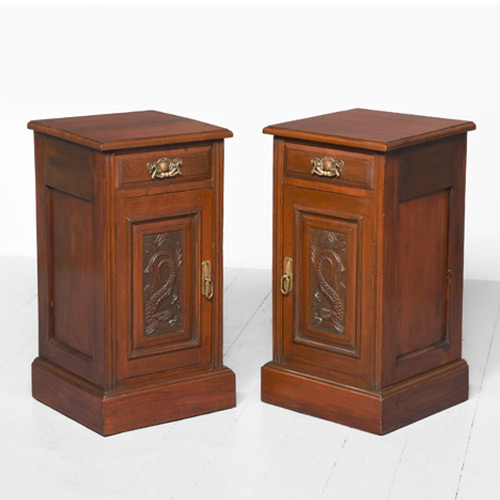
Two sub-groups sit either side of that plain cupboard. At the small end are bedside and pot cupboards, 115 titles between them and often sold as a pair. At the large end are wardrobes, linen presses and housekeeper's cupboards, with 66 titles saying 'housekeepers' and another 27 'housekeeper', making the estate service cupboard the most consistently named big form.
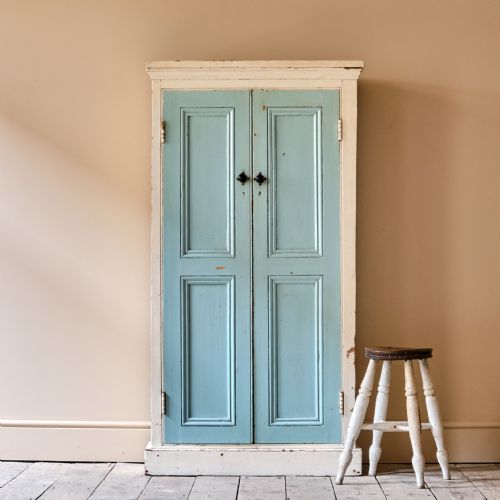
Surface is the other dividing line, and the loudest one. Painted appears in 240 titles and paint in another 99, together outnumbering every named function. Against that sit stripped and waxed pieces, and the 76 titles sold 'to wax/paint', meaning raw and unfinished. Painted or grained finishes were the norm on this sort of work; stripped pine is a later taste applied to it.
Dating is broad more than precise. The dated field runs 1750 to 1930, with '19th Century' and 'Victorian' tags accounting for well over half the dated entries. Decade tags cluster in the early twentieth century, which is where the bedside cupboards and knock-down wardrobes sit. Georgian and eighteenth-century pieces are thin by comparison.

Where The Range Sits
Surface does most of the work. Titles claiming original or old paint, including pieces scraped back to an earlier painted layer, recur through the upper half of the range. Stripped and re-waxed carcasses, and the ones offered raw for the buyer to finish, sit lower. The paint being there is the point.
Scale and completeness follow. 'Large' appears in 137 titles and 'tall' in 56, and it's the full-height, two-part pieces that hold the top: housekeeper's cupboards, linen presses, estate cupboards. Small bedside and pot cupboards anchor the bottom, even when they come in pairs.
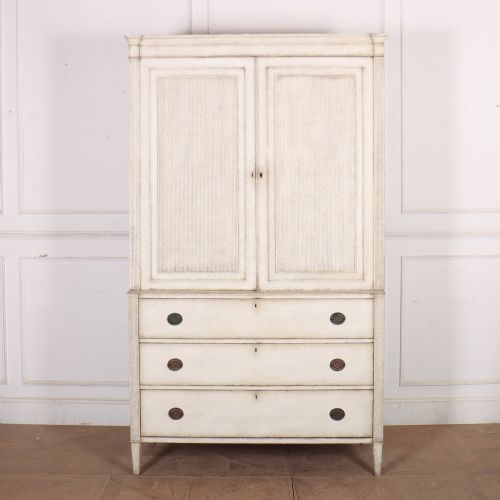
Then specificity. A cupboard with a named function or a named place behind it carries more than a plain storage cupboard, and 'storage' appears in 79 titles. Decorative painted Continental work, Swedish and Scandinavian in particular, clusters at the top, as do West Country, Welsh, Yorkshire and Cumbrian attributions.
Retail Price Guide 2026
Typical UK retail prices for pine cupboards, calculated from the Sellingantiques database of over a million retail prices indexed since 2003. This retail price guide relies exclusively on Sellingantiques data; no external sources or auction records are used, so the figures do not describe the wider market.
Pine cupboards have been listed on Sellingantiques since 2008, with over a thousand recorded since then.

The Antique Pine Cupboards Glossary
- Pot cupboard
- Small bedside cupboard, originally for a chamber pot. Frequently offered in pairs.
- Linen press
- Tall two-part cupboard, shelved or slide-fitted above with drawers below.
- Housekeeper's cupboard
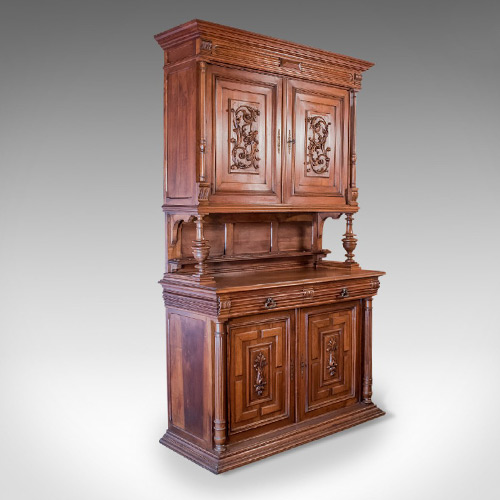
- Large service cupboard, doors above and drawers or a base cupboard beneath.
- To wax/paint
- Dealer shorthand for a piece sold in the raw for the buyer to finish. Used in 76 titles.
- Dismantles / knock-down
- Made to come apart for moving. Stated in 52 titles, thirty-eight of them wardrobes.
- Scumbled / grained
- Paint worked to imitate a figured hardwood, sometimes called simulated oak.
Frequently Asked Questions
What is a housekeeper's cupboard?
A large service cupboard, with doors above and either drawers or a base cupboard below. It's the most consistently named of the big pine forms on Sellingantiques, with 93 titles using housekeeper or housekeepers.
These full-height, two-part pieces hold much of the upper part of the range. An eighteenth-century one in original paint sits at the very top of what the archive records.
Why do so many pine wardrobes dismantle?
Because they were built that way. Fifty-two titles state that the piece dismantles or knocks down, and thirty-eight of those are wardrobes.
Flat-pack is an antique idea rather than a modern one. Much of this material sits in the early twentieth-century decade tags, alongside the bedside cupboards.
Is original paint better than stripped pine?
Titles claiming original or old paint recur through the upper half of the range, while stripped pieces and those sold raw sit lower.
Painted and grained finishes were the norm on softwood service furniture from the start. The bare, waxed look came later, applied to furniture that had been painted.
Painted is the single most common descriptor after the period itself: 240 titles say painted, another 99 say paint.
How old are pine cupboards on Sellingantiques?
The dated field runs from 1750 to 1930. Of 1,231 listings, 484 carry a clean year and the rest sit under broad tags.
'19th Century' and 'Victorian' between them account for well over half the dated entries. Georgian and eighteenth-century pieces are much thinner, and the 1750 end is only a handful of cupboards.
Which Continental pine cupboards turn up?
Swedish appears in 31 titles and French in 25. Beyond those, the archive has thrown up Danish, Dutch, German, Czech, Hungarian, Austrian, Baltic, Tyrolean and Italian cupboards, plus a single Japanese larder cupboard.
The decorative painted Scandinavian work, including Gustavian and folk-painted pieces, clusters at the top of the range.
Are pine bedside cupboards sold in pairs?
Often. Bedside and pot cupboards account for 115 titles, and 'pair' appears in 71.
They're the small end of the category and cluster at the lower end of the range. Much of this material carries early twentieth-century decade tags.