

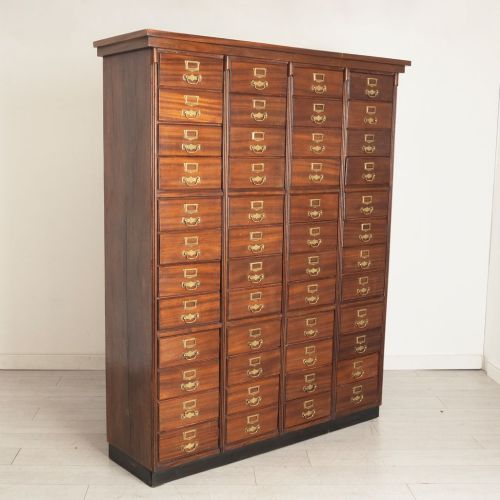


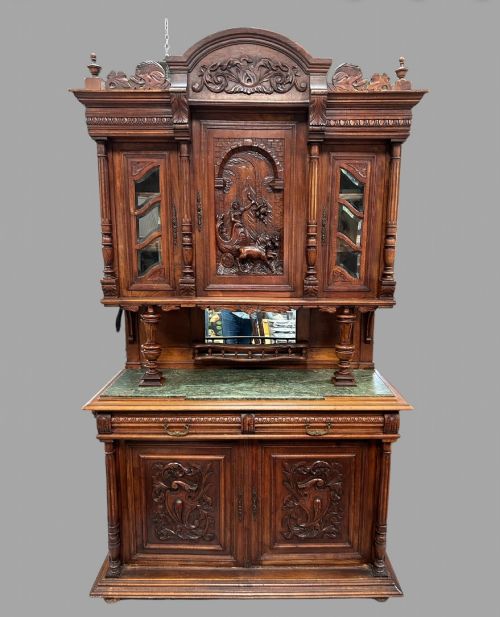
Antique Walnut Cupboards
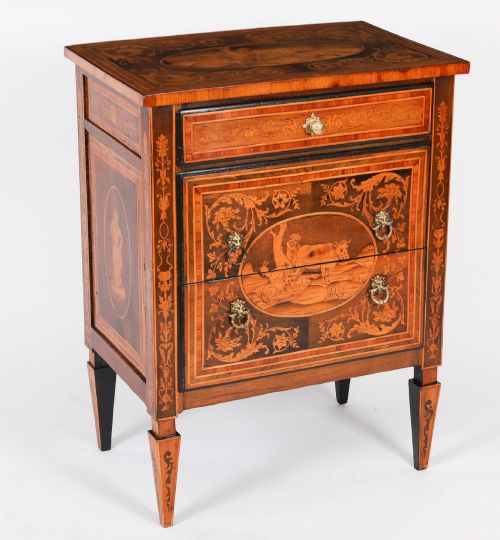
Walnut case furniture that shuts behind a door, from small bedside pot cupboards made for the chamber vessel to linen presses, armoires and interwar cocktail cabinets.
Antique Walnut Cupboards
Cupboards are among the oldest domestic forms, cases enclosed by doors for linen, food, chamber vessels or valuables, and walnut became a favoured cabinet timber in Europe from the seventeenth century for its colour and figure. This heading gathers the walnut end of that story, in solid timber and in veneer.
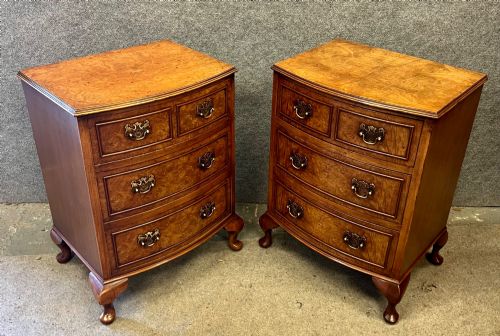
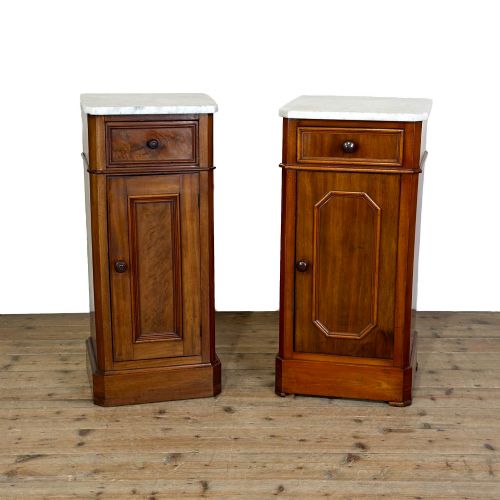
In practice the small bedroom piece dominates. 'Bedside' appears in 511 of 1,368 titles, with bedside cabinets, bedside chests and bedside cupboards all in use for much the same object, and 'pot cupboard' surviving as the older name for it. Almost three in ten titles say 'pair', so a large share arrive two at a time.
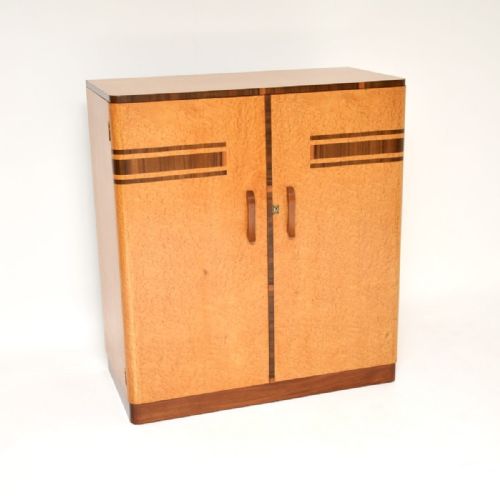
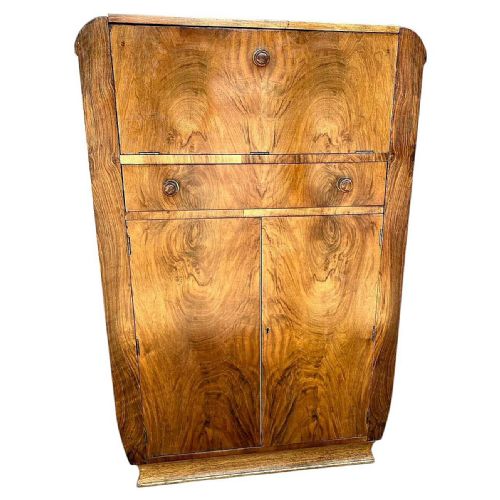
The interwar years hold the record: 301 listings are dated to the 1920s and 300 to the 1930s, more than half of everything with a firm decade. Burr walnut is named in 496 titles and figured walnut in 85, so surface pattern is how much of this material gets described. Art Deco accounts for 224 titles, and the cocktail or drinks cabinet is treated as a cupboard in its own right.
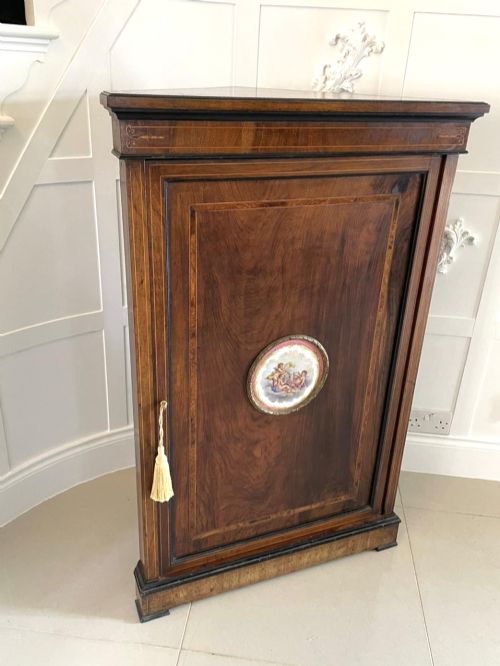
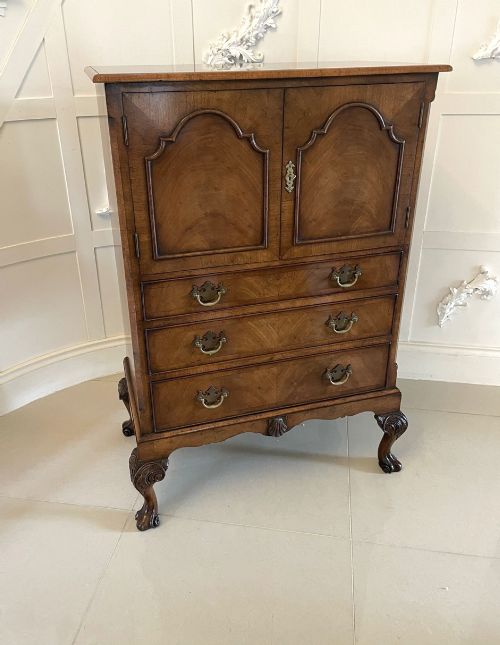
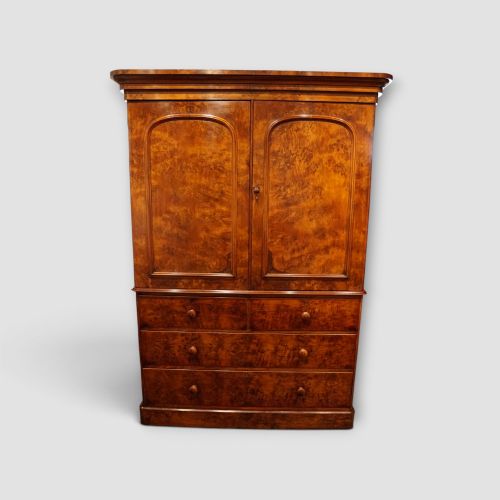
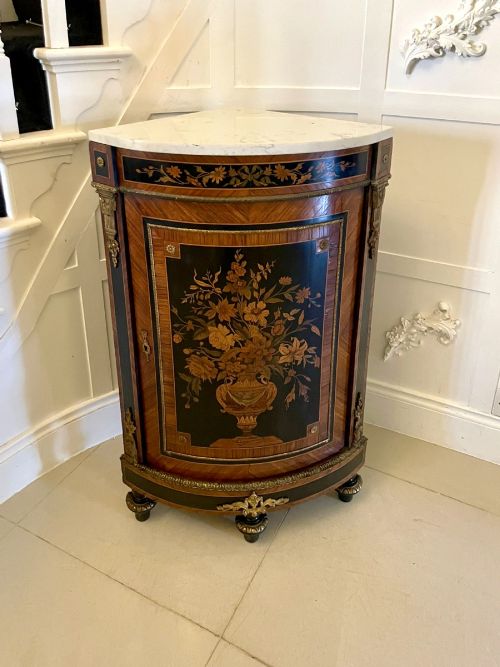
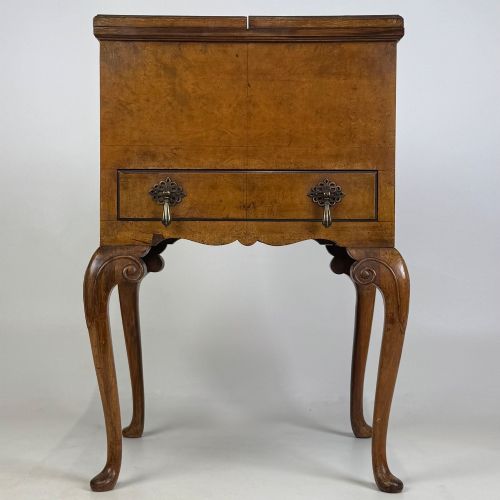
Around that sit the larger forms - linen presses and press cupboards, tallboys, French armoires, corner cupboards, side and pier cabinets - and a thin run of early work, including turn-of-the-eighteenth-century cabinets on stand and on chest. Note that Victorian, Georgian and Edwardian are period labels rather than years, so the title and the dated field are worth reading together.
What Moves The Price
Age does most of the work at the top. The earliest sampled pieces - seventeenth-century seaweed marquetry and oyster-veneer cabinets on stand, an early standing spice cupboard - occupy the highest reaches, while single Edwardian and later pot cupboards sit at the bottom of the range. Eighteenth-century corner cupboards and Queen Anne cabinets fall in between.
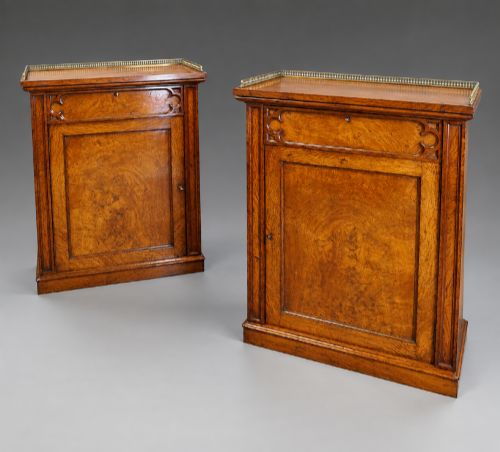
Within the bedroom pieces, two beats one. Pairs and matched pairs run through the middle and upper-middle of the sampled range, singles cluster near the foot, and the vocabulary for imperfect pairs carries real weight: 'near pair' and 'matched pair' mean two that were not made together.
Surface and applied decoration lift the rest. Dealers put burr or figured walnut in the title when the figure is there, and marquetry, inlay, carving, marble tops and porcelain or ormolu mounts all concentrate in the upper part of the sampled range. Titles carrying a firm's name sit in the middle and above, though only one name recurs across more than a few dealers.
Antique Walnut Cupboards Retail Price Guide 2026
Typical UK retail prices for walnut cupboards, calculated from the Sellingantiques database of over a million retail prices indexed since 2003. This retail price guide relies exclusively on Sellingantiques data; no external sources or auction records are used, so the figures do not describe the wider market.
Of the 1,368 walnut cupboards recorded on Sellingantiques, 403 titles say 'pair' - along with near pairs, matched pairs and matching pairs.
Maple & Co
The Antique Walnut Cupboards Glossary
- Pot cupboard
- Small bedside cupboard, originally for a chamber pot. The term appears in 30 titles and describes the same object as a bedside cabinet.
- Burr walnut
- Veneer cut from a knotty growth on the tree, giving the dense swirled figure named in 496 titles. 'Victorian burr' and 'deco burr' are fixed pairings in the titles.
- Near pair
- Two cabinets sold together that were not made as one. 'Matched pair' and 'matching pair' do similar work; 'pair' alone appears in 403 titles.
- Linen press
- Tall two-part cupboard with a shelved or sliding-tray upper section over a base, named in 51 titles. 'Press cupboard' covers the related form over a chest of drawers.
- Armoire
- Tall French cupboard or wardrobe, in 37 titles and often paired with 'french'. France is the commonest origin after Britain, with 174 titles.
- Demi-lune, bombé, serpentine
- Shaped fronts: half-moon, swelling and wavy. All three recur across the sampled side cabinets and commodes.
Antique Walnut Cupboards: Frequently Asked Questions
Why are so many of these bedside cupboards?
Because that is what the heading mostly holds. 'Bedside' appears in 511 of 1,368 titles, under several names: bedside cabinet, bedside chest, bedside cupboard, pot cupboard.
The larger forms - linen presses, tallboys, armoires, corner cupboards - are there, but each accounts for a few dozen titles rather than hundreds.
What period do most walnut cupboards date from?
The dated field runs from 1700 to 1950, and 896 of 1,368 listings carry a clean year. The 1920s and 1930s take 301 and 300 of those between them.
Victorian follows with 154, then a vague '19th Century' with 100 and 18th Century with 91. Earlier pieces exist but are thin on the ground.
Are pairs common in this category?
Yes. 'Pair' is in 403 titles, close to three in ten, almost always bedside cupboards made and sold as two.
Where the two were not made together, dealers say so: near pair, matched pair, matching pair. A set of three bedside drawers turns up as well.
What is a cocktail cabinet doing under cupboards?
The titles treat it as one, and there are enough to matter: 'cocktail' in 116 titles and 'drinks' in 74. It is a cupboard with an interior fitted for bottles and glasses.
It belongs to the 1920s and 1930s, the same decades that dominate the whole heading, and turns up in burr and figured walnut.
How often do maker's names appear?
Rarely. Only one name, Maple & Co, reaches as many as four dealers across the archive on Sellingantiques; everything else in the samples is a single dealer's stock.
So names come stamped, labelled or only attributed, and they are the exception rather than the rule.
Which unusual forms turn up in walnut?
One-offs, mostly. An eighteenth-century French panetière or bread safe, a dough bin cupboard, a food hutch, a hunts game cabinet, a Spanish vargüeño, an Ottoman chest, a cartonnière and a duet cabinet.
Dental cabinets are the odd persistent one, appearing four times across the samples.
Origins run the same way: a steady French presence with 174 titles and Italian with 33, against single sightings from Spain, Germany, Scandinavia, Egypt and Wales.