

Antique Press Cupboards
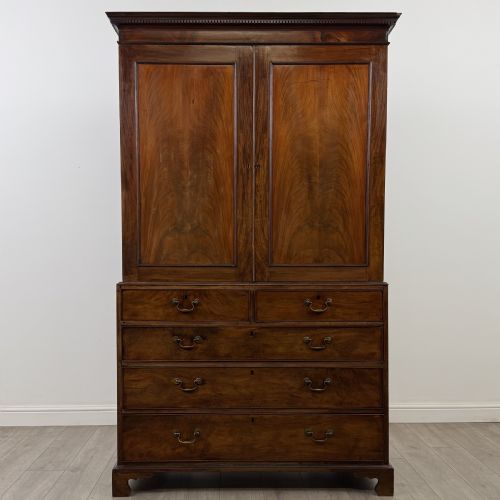
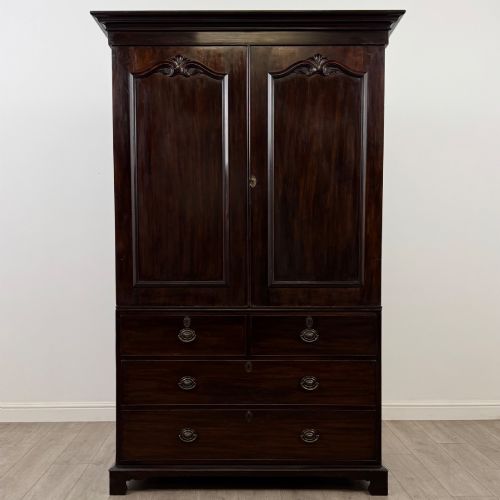
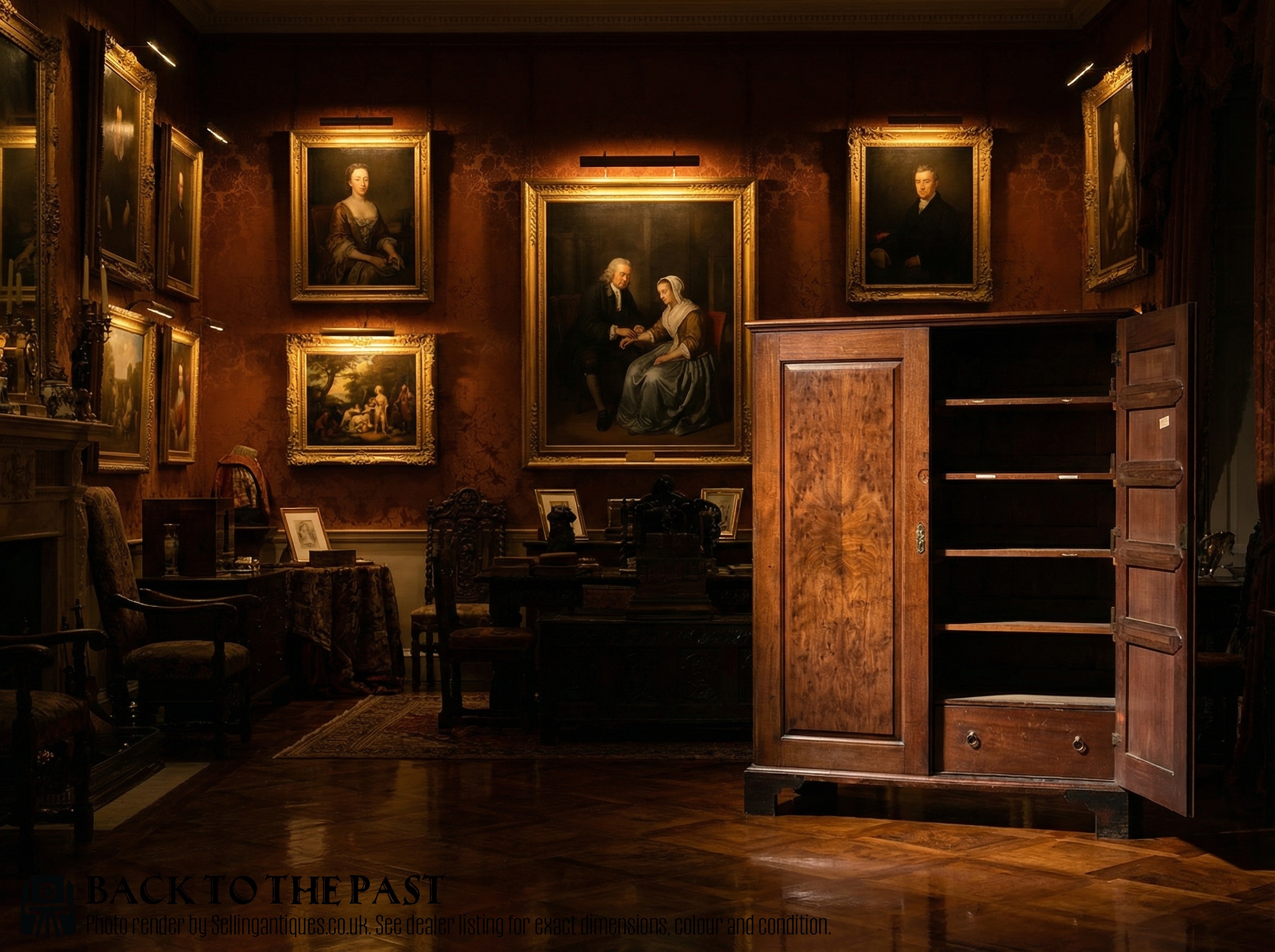
A two-part cupboard for folded clothes and household linen: panelled doors above, a chest of drawers below, made for the days before the hanging wardrobe took over.
Antique Press Cupboards
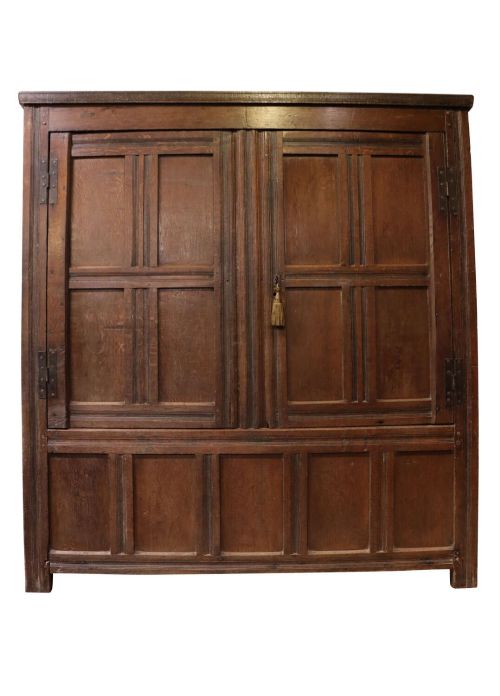
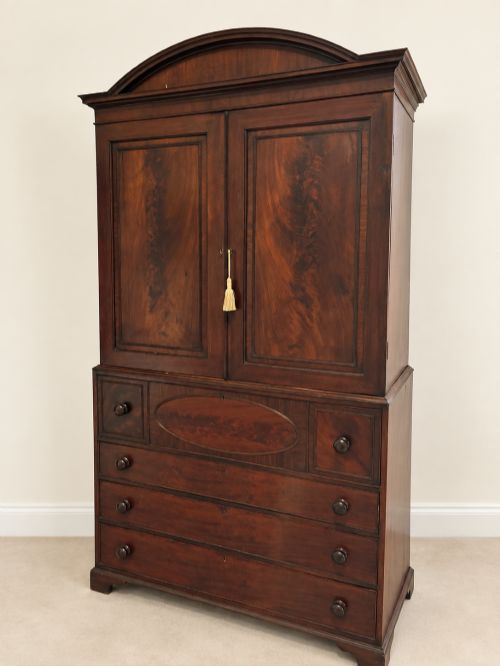
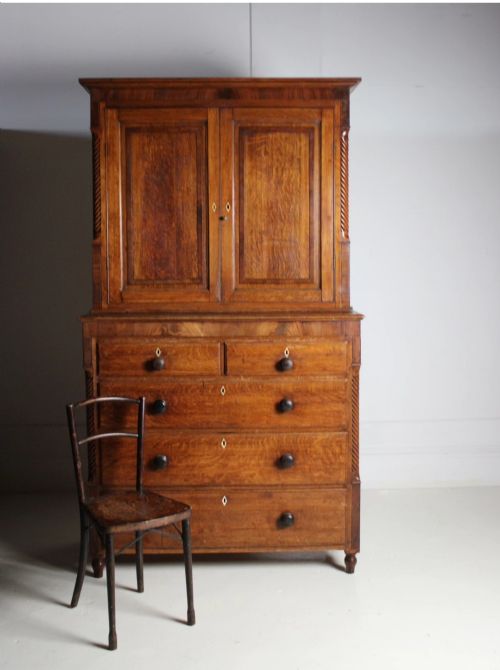
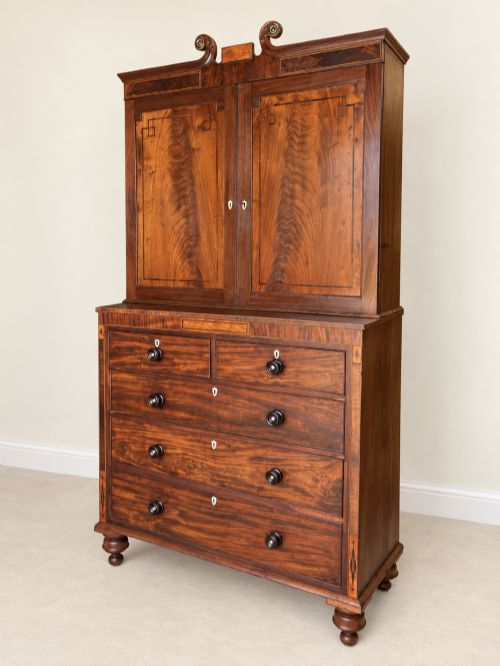
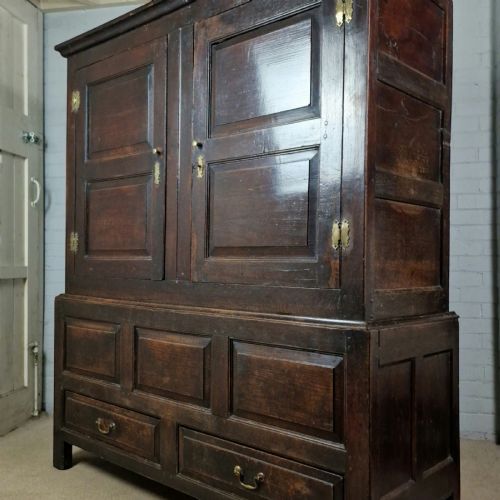
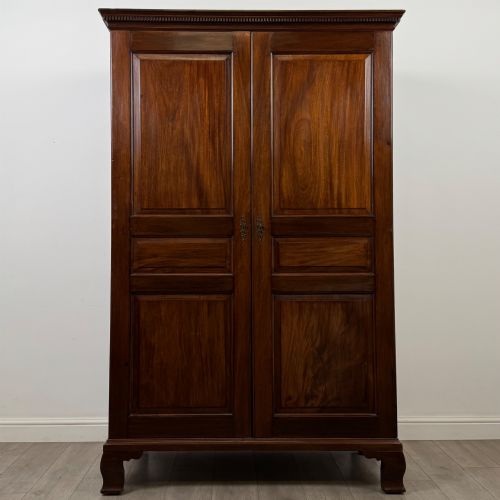
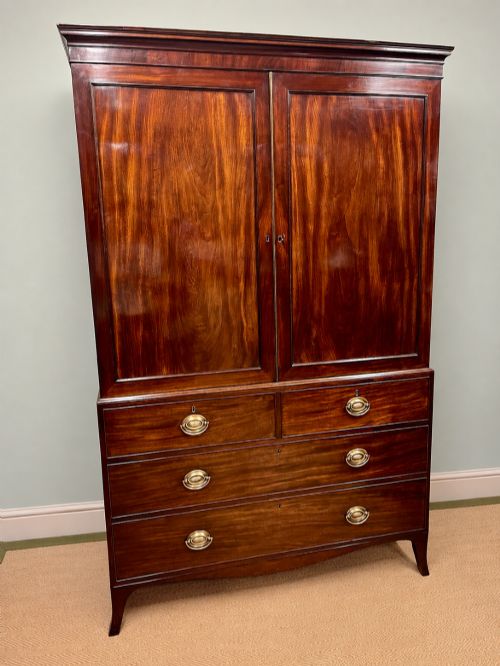
The form began as a two-stage joined cupboard of the 16th and 17th centuries, used for folded cloth, clothing and household goods. By the 18th century it had settled into the shape people now call a linen press: a cupboard with a pair of panelled doors sitting on a base of drawers, with sliding trays or shelves inside for folded linen. From the later 19th century the hanging wardrobe displaced it.
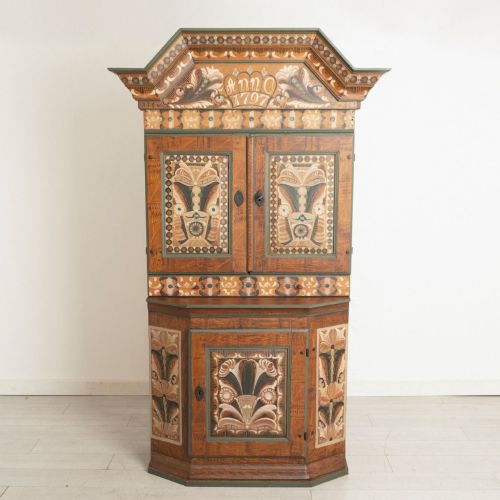
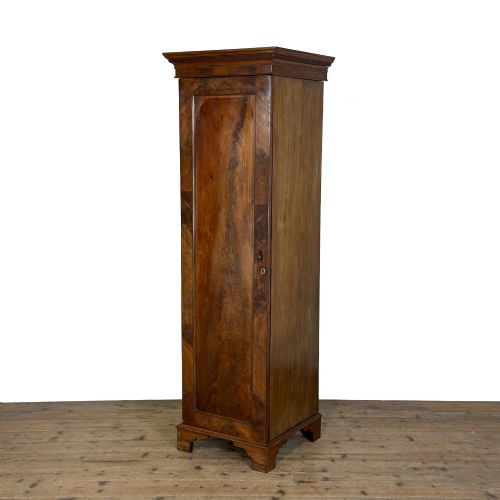
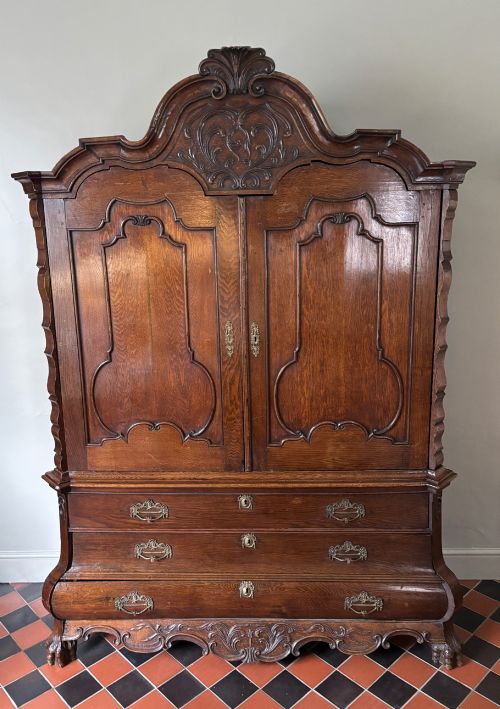
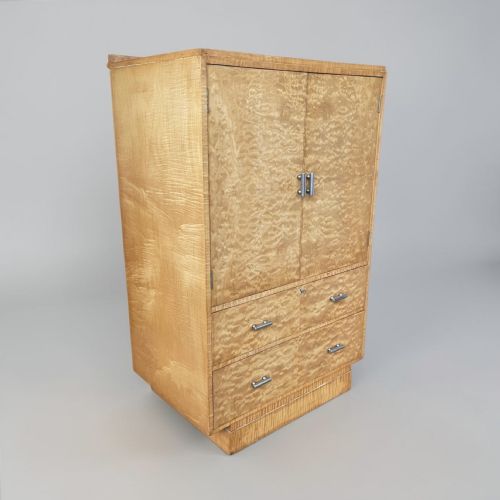
Dealers list the same object under several near-synonymous names. Linen press dominates, running through well over half the 1,329 titles on Sellingantiques, with clothes press, press cupboard and cupboard on chest covering the same two-part construction. The heading also gathers in the related cupboard forms: one-piece housekeeper's and livery cupboards, court cupboards and Welsh deuddarns, armoires and continental painted cupboards, and 20th-century compactums and tallboys.
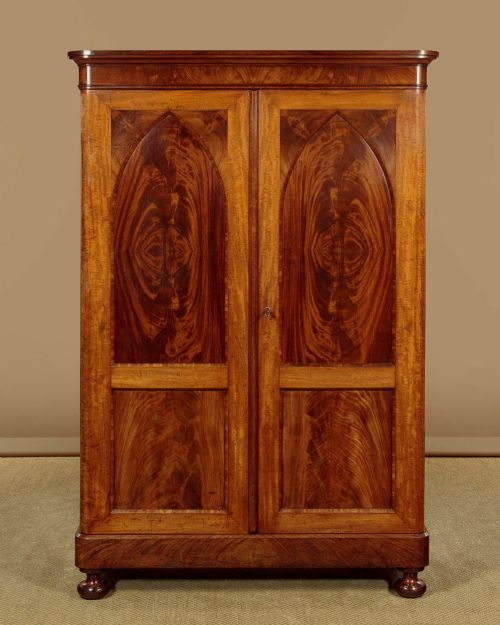
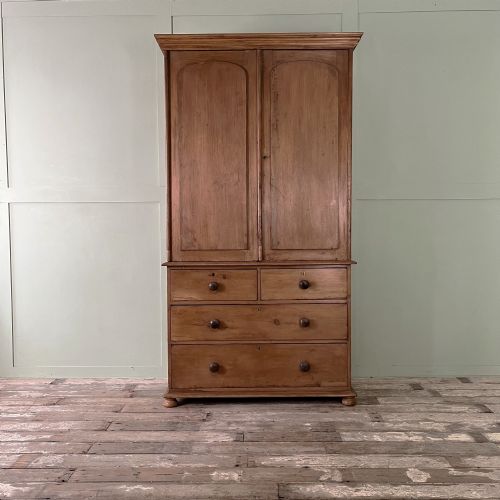
The piece you are most likely to meet is a Georgian or 19th-century mahogany two-part press. Mahogany runs through 566 titles against oak in 264, pine in 146 and walnut in 96, and a good number of titles read simply as a period, then mahogany, then linen press. Oak makes the second branch, much of it described as Welsh, with court cupboards and deuddarns inside it; pine and painted country cupboards form a third, rising in live stock.
Dating is loose across the category. Only 307 listings pin themselves to a clean year, and the two biggest period buckets, 19th Century and Georgian, are wide overlapping labels rather than dates. The same piece gets called Georgian by one dealer and 18th or 19th century by another. Firm decades do appear at the late end, with 1920s and 1900s walnut and oak, and a thin 17th-century oak tail is genuinely present.
What Sets Them Apart
Timber figure does most of the work in the mahogany and walnut branches. Flame mahogany, figured veneer and burr walnut all cluster in the upper half of the range, with satinwood, pollard oak and Cuban mahogany named among the higher titles, while plain pine and golden oak sit at the bottom. Inlay pushes the same way: marquetry, satinwood inlay, boxwood stringing and ebony lines recur in the stronger pieces, and carving does the same for oak.
Size cuts against expectation. Small is priced as a virtue, not a compromise, and titles lean hard on it: small, low, dwarf, narrow, neat proportions and diminutive between them cover well over a hundred listings, with a handful of genuinely miniature pieces including a Masonic press and an Anglo-Indian one. A neat mahogany press outruns a big plain one.
Age lifts the oak branch specifically. The 17th-century and pre-1700 pieces, including cupboards dated to around 1620 and court cupboards and deuddarns placed at 1660-1700, sit at the top of that group. In the pine and country branch it is surface that counts, and original paint counts most; original scumble and original cream paint recur, and the highest-priced painted housekeeper's cupboard is described that way. Named or attributed cabinetmaking work sits high throughout.
Antique Press Cupboards Retail Price Guide 2026
Typical UK retail prices for press cupboards, calculated from the Sellingantiques database of over a million retail prices indexed since 2003. This retail price guide relies exclusively on Sellingantiques data; no external sources or auction records are used, so the figures do not describe the wider market.
Gillows of Lancaster is the name that turns up from the most dealers on Sellingantiques in this category, across six of them.
Gillows of Lancaster·Heal & Son
The Antique Press Cupboards Glossary
- Linen press
- Two-part cupboard standing on a chest of drawers, the upper section fitted for folded linen. The commonest term in the category by a wide margin.
- Clothes press
- The same two-part form, named for clothing rather than linen. Fifty-seven titles use the word.
- Cupboard on chest
- A plain descriptive title for the two-part construction, used where a dealer avoids the word press.
- Sliding trays
- Shallow pull-out trays inside the upper cupboard for folded linen. Named in only a handful of titles, so not something to read into every listing.
- Deuddarn and tridarn
- Welsh two-stage and three-stage cupboards. Deuddarn turns up across the oak listings, tridarn once, and cwpwrdd deuddarn and bread-and-cheese cupboards appear by name.
- Compactum
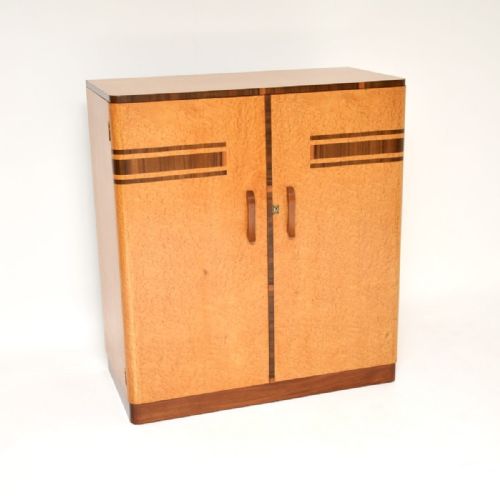
- A fitted wardrobe-press combining shelves, trays and hanging space, mostly the walnut and oak pieces of 1900 to 1930.
Antique Press Cupboards: Frequently Asked Questions
What's the difference between a linen press and a clothes press?
Very little in the object. Both names describe the two-part cupboard over drawers, one named for folded household linen and the other for clothing.
Linen is the term dealers reach for most, in well over half the titles. Clothes appears in 57. Press cupboard and cupboard on chest cover the same construction again.
Which timber is most common?
Mahogany, comfortably. It appears in 566 of the 1,329 titles, and mahogany linen press together in 355 of them.
Oak comes next with 264, then pine at 146 and walnut at 96. The oak carries a strong Welsh vocabulary, with welsh in 81 titles and welsh oak in 67.
How old are these usually?
The dated field runs from 1700 to 1950, but only 307 listings give a clean year. Most dealers date by period instead.
Georgian and 19th Century are the two largest labels, and both are wide. 18th Century, Victorian and Regency follow, with a thin 17th-century and pre-1700 tail in oak.
Are court cupboards and housekeeper's cupboards included?
Yes. The heading takes in the related cupboard forms alongside the two-part press, and court appears in 42 titles, housekeeper's in 37.
Livery cupboards, deuddarns and tridarns sit in the same oak group. Continental and colonial cupboards turn up too: French armoires, Dutch and Scandinavian painted pieces, Anglo-Indian and Chinese cabinets.
Does a smaller press sell for more than a large one?
In the mahogany and walnut branches, smallness reads as a virtue. Small appears in 51 titles and low in 27, with diminutive, narrow and neat proportions recurring.
Miniature examples surface occasionally, including a Masonic press, an Anglo-Indian one and a court cupboard.
How many come up for sale each year?
Around 135 a year on Sellingantiques, and 218 different dealers have listed one.
That spread tells you it isn't a specialist field. Almost any general furniture dealer handles one sooner or later.