
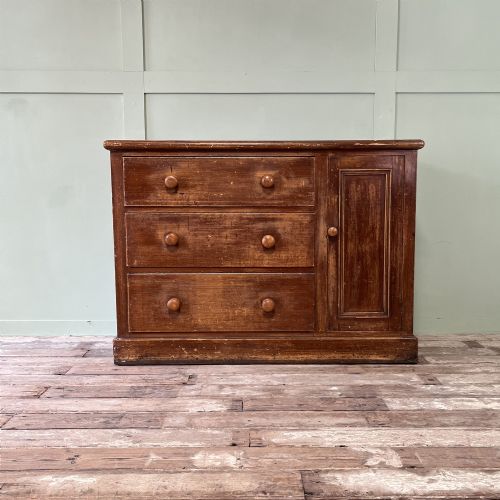
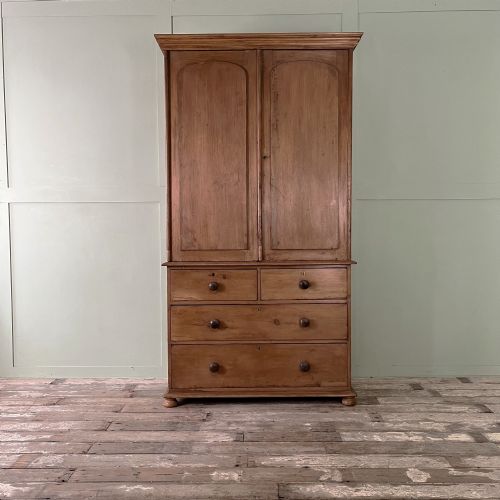
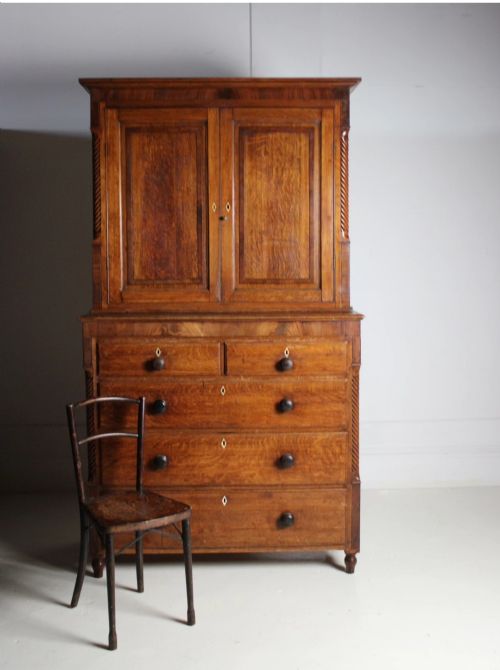
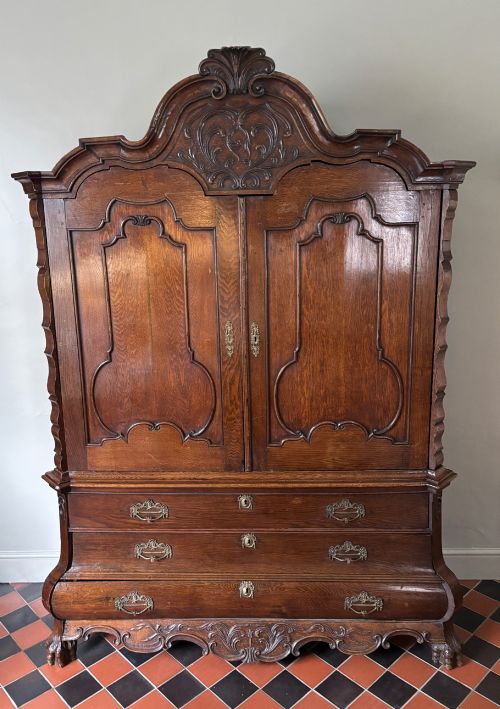
Antique Housekeepers Cupboards
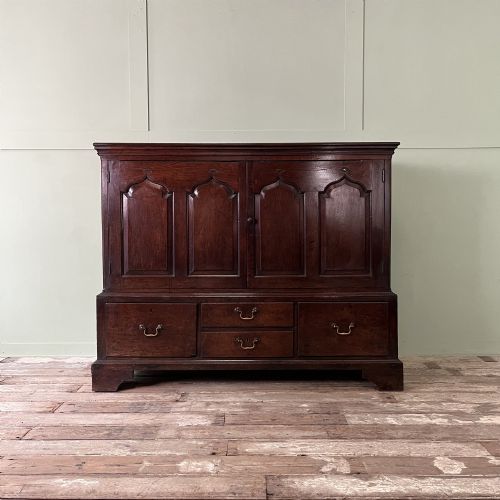
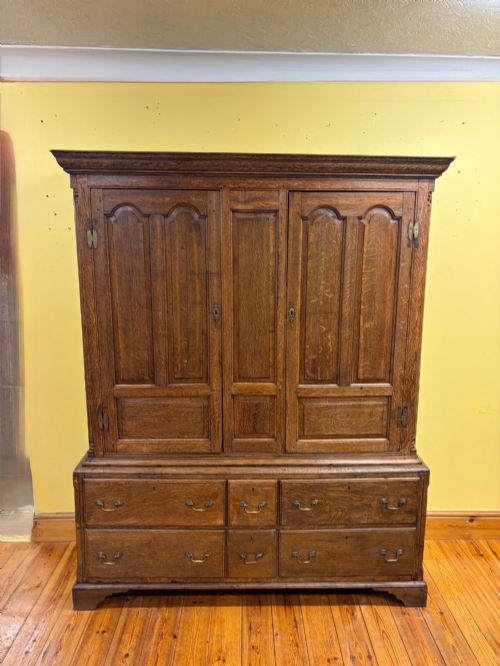
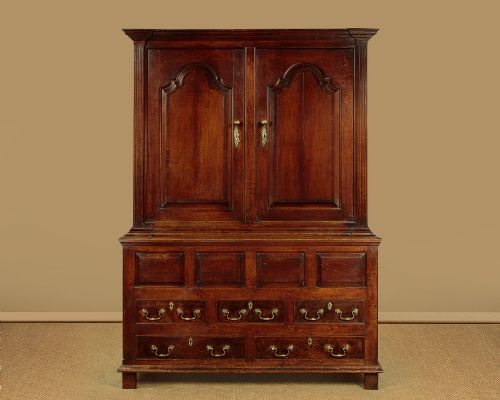
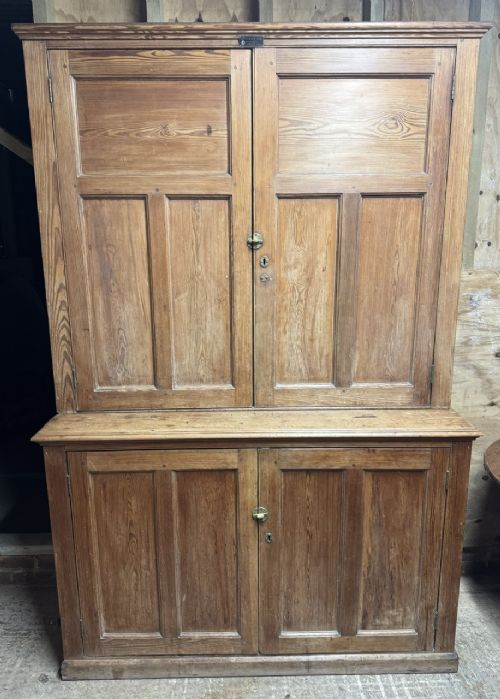
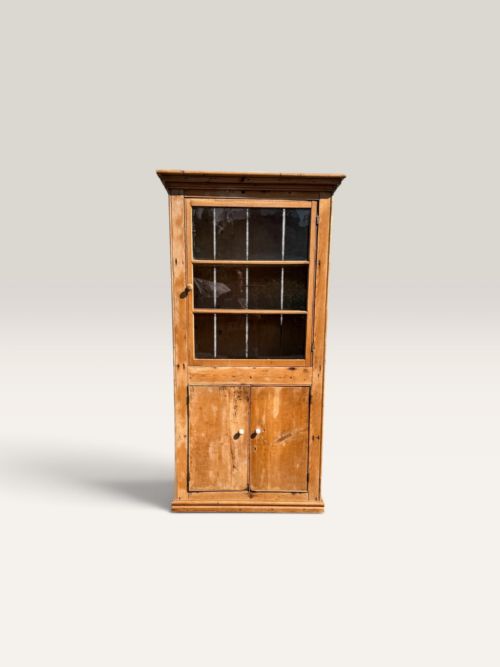
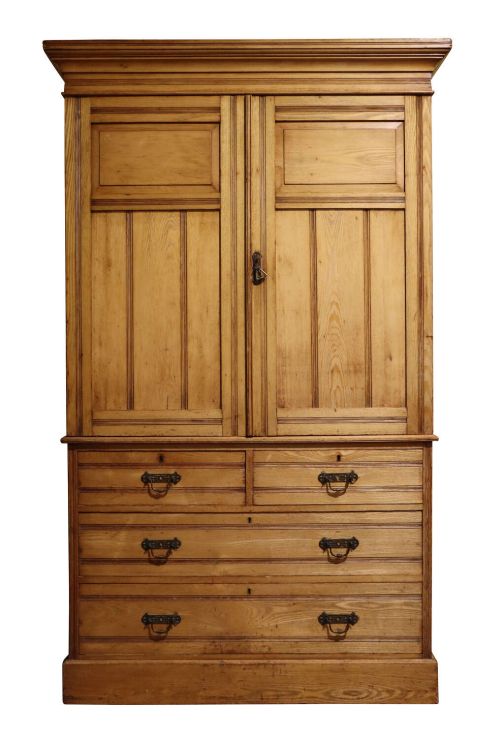
A tall two-part storage cupboard, panelled doors above a base of drawers or further cupboards, built to hold a household's linen, provisions and stores.
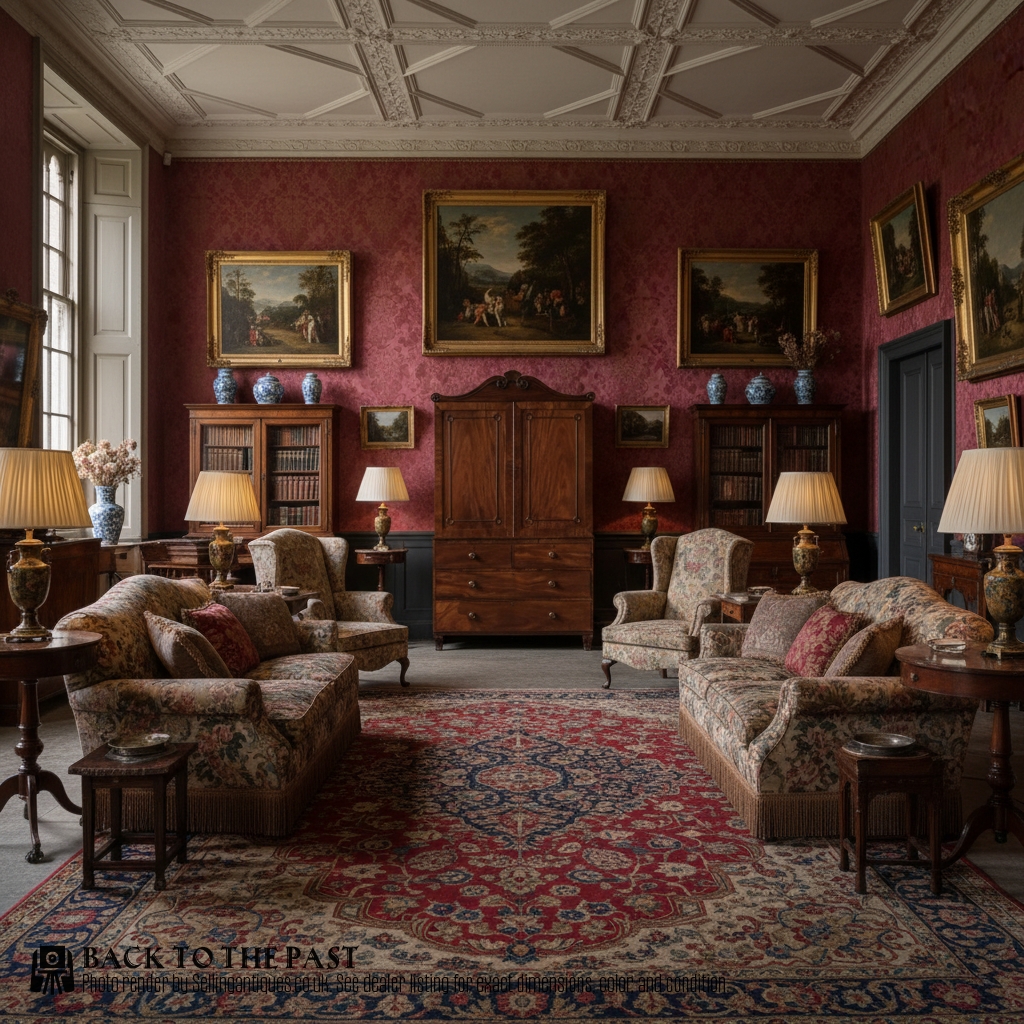
Antique Housekeepers Cupboards
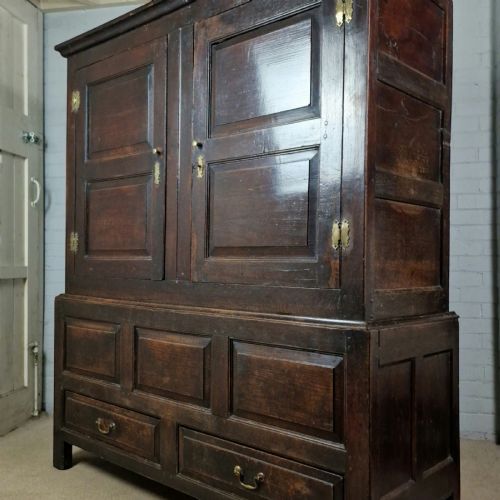
The form is British country furniture of the eighteenth and nineteenth centuries: a tall panelled cupboard, usually made in two parts that lift apart, meant for storage rather than display. It shades into the press cupboard, the linen press and the larder cupboard, and those names were used loosely by the makers and are still used loosely in listings.
What you will most often meet is a 19th-century English cupboard in pine or oak. The word cupboard appears in 399 of 422 titles on Sellingantiques, pine in 137 and oak in 130, with 125 listings tagged 19th Century and 71 Victorian. The housekeeper name itself is in only 58 titles, so material and period usually do the describing.
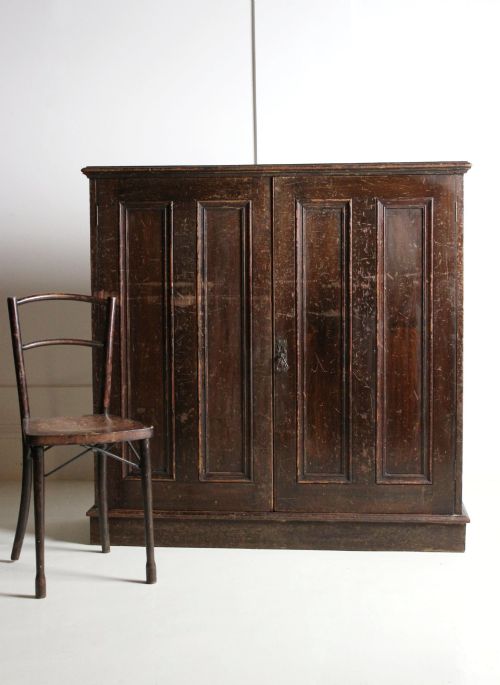
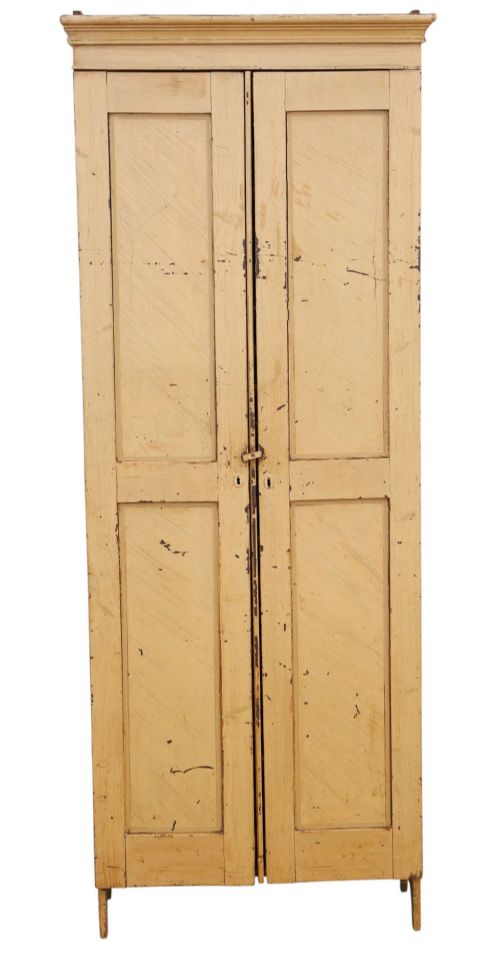
Paint runs right through the category, flagged in 75 titles. That covers original paint, later green, scumbled and faux graining, an oak grain effect and polychrome. At the other end sits stripped or unfinished pine, sold as it stands and described as to wax or to paint.
Around the pine and oak core sit smaller groups: oak press and two-stage cupboards, linen presses fitted with trays, Welsh and regional country pieces with their own vocabulary, and Continental cupboards and armoires. French and Swedish repeat; Dutch, Hungarian, Baltic, Italian and Spanish Basque examples appear one at a time. The dated field runs 1730 to 1940, though only 78 listings commit to a clean year.

What Sets Them Apart
Surface does more than anything else. The upper reaches are held by pieces described as in original paint or original painted, where an early painted surface has survived. Stripped pine and the to wax or to paint titles sit at the bottom, and those are almost all current stock rather than sold.
Date pulls the same way. Sixty-three listings are tagged 18th Century and six reach the 17th, and 18th-century pieces dominate the top of the range. The very highest-priced ground is occupied almost entirely by 18th-century English cupboards in original paint.
After that it comes down to scale and identity. Large appears in 44 titles, and breakfront and architectural forms show up only among the more expensive examples. A named region helps too, with West Country, Yorkshire, Welsh, Cheshire, Scottish and Irish attributions recurring among the dearer pieces, alongside figured timber, satinwood inlay and the small mahogany strand.
Antique Housekeepers Cupboards Retail Price Guide 2026
Typical UK retail prices for housekeepers cupboards, calculated from the Sellingantiques database of over a million retail prices indexed since 2003. This retail price guide relies exclusively on Sellingantiques data; no external sources or auction records are used, so the figures do not describe the wider market.
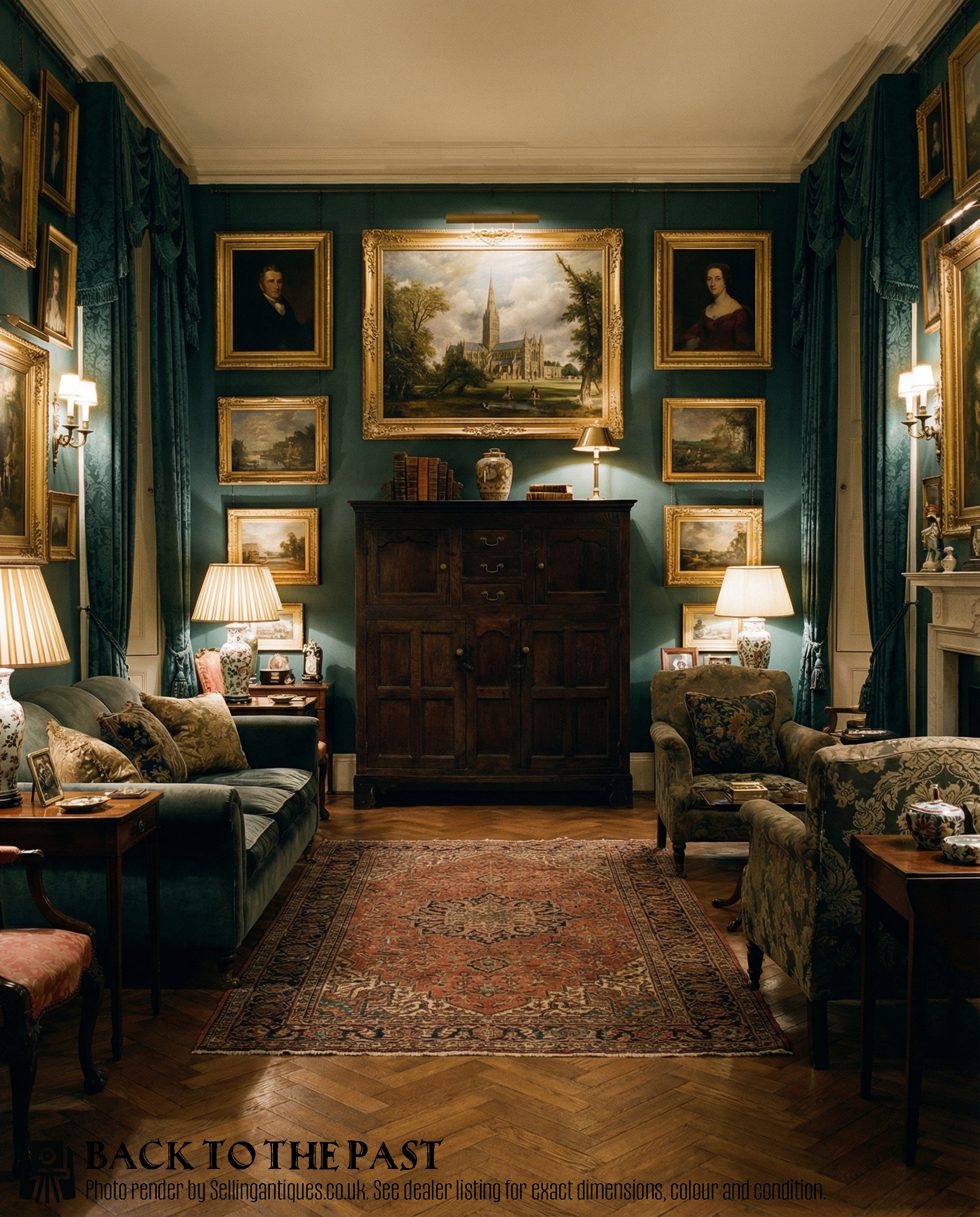
The most expensive housekeepers cupboard ever sold on Sellingantiques was an 18th century example in original paint, in November 2024.
The Antique Housekeepers Cupboards Glossary
- Press cupboard
- An enclosed cupboard section standing over a base, commonly in oak. Press appears in 53 titles, press cupboard in 25.
- Linen press
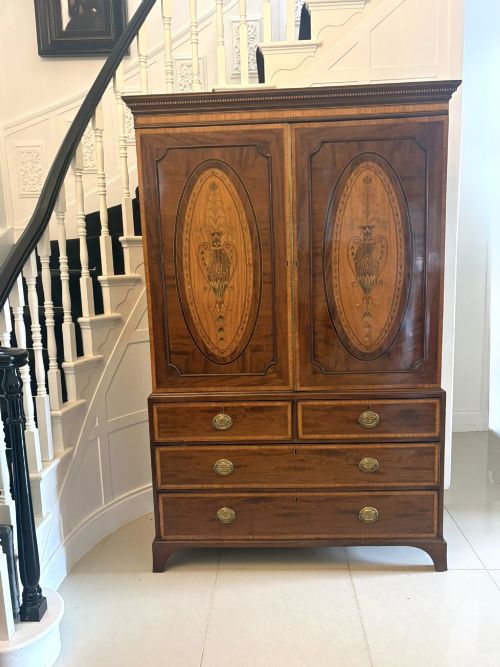
- A two-part cupboard fitted inside with sliding trays or shelves for linen. Thirty titles use the term, and it often sits alongside the housekeeper name on the same piece.
- Two-part or two-stage
- Made as separate upper and lower sections that lift apart for moving. Written in titles as 2 part or Two Stage.
- Fielded panel
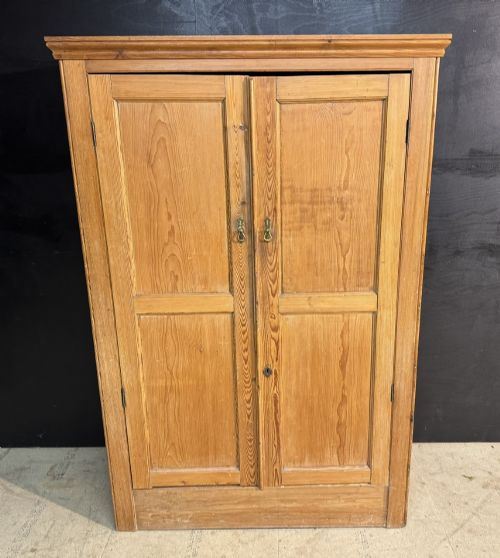
- A door panel with a raised, bevelled centre. It recurs through the pine cupboards offered ready to wax or paint.
- Scumble or grained
- Paint worked to imitate a figured timber such as oak. Turns up as scumbled, faux graining and Original Painted Oak Grain Effect.
- Deuddarn
- A Welsh two-tier cupboard, named in a couple of titles as Cwpwrdd Deuddarn. Welsh pieces are the largest regional group at 32 titles.
Antique Housekeepers Cupboards: Frequently Asked Questions
Why do so few carry the housekeeper's name?
The name appears in only 58 of 422 titles. Dealers more often describe these by material and period, so a piece of the same form may be listed as a pine cupboard, an oak press or a linen press.
The names overlapped from the start. Housekeeper's, press, linen and larder cupboard all cover a tall two-part storage cupboard, and they were used loosely by makers as well.
What timber are they usually made from?
Pine and oak account for the bulk, with pine in 137 titles and oak in 130. Both are country timbers, and both turn up painted.
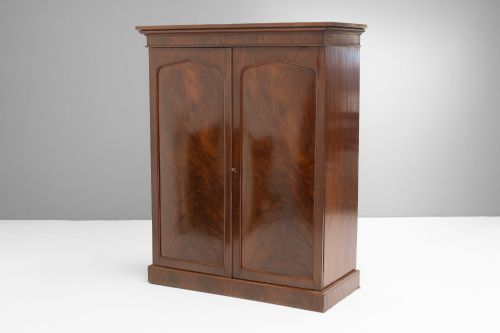
A smaller mahogany and walnut strand runs through the category, mahogany in 21 titles, sometimes with figured veneer or satinwood inlay. Those sit well above the plain pine end.
How old are most of these cupboards?
The 19th century dominates: 125 listings tagged 19th Century, 71 Victorian, 17 as 1800s, plus smaller runs for the 1890s, 1850s and 1900s.
The 18th century is a substantial second block, 63 as 18th Century, 36 Georgian and 9 Regency. Only six listings reach the 17th century.
Many labels are broad rather than precise, and 19th Century alone covers a hundred years.
Does original paint matter?
It is the strongest single divider in this category. Titles reading in Original Paint or Original Painted cluster at the top of the range, particularly on 18th-century English pieces.
Stripped pine and cupboards offered to wax or to paint sit at the cheaper end. Later paint, green repaints, scumbling and dry-scraped surfaces fall between the two.
Are Continental examples common?
They turn up in ones and twos rather than as a steady strand. French is the most frequent at 16 titles, then Swedish at 8.
Beyond those, single Dutch, Hungarian, Baltic, Italian, Austro-Hungarian, East European and Spanish Basque cupboards appear across the archive, some of them as armoires.
How often do these come up for sale?
Around 39 come to market in a year on Sellingantiques, and 104 different dealers have listed one.
That spread means it is a form almost any country-furniture dealer carries at some point rather than a specialist's line. Linen presses and linen cupboards are rising as a share of current stock.