

Antique Welsh Cupboards
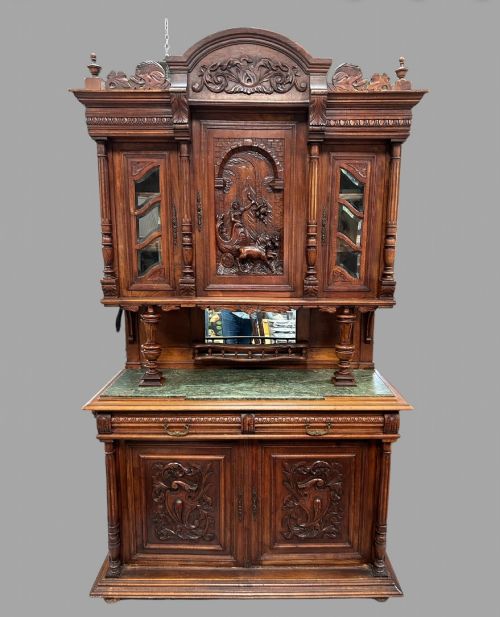
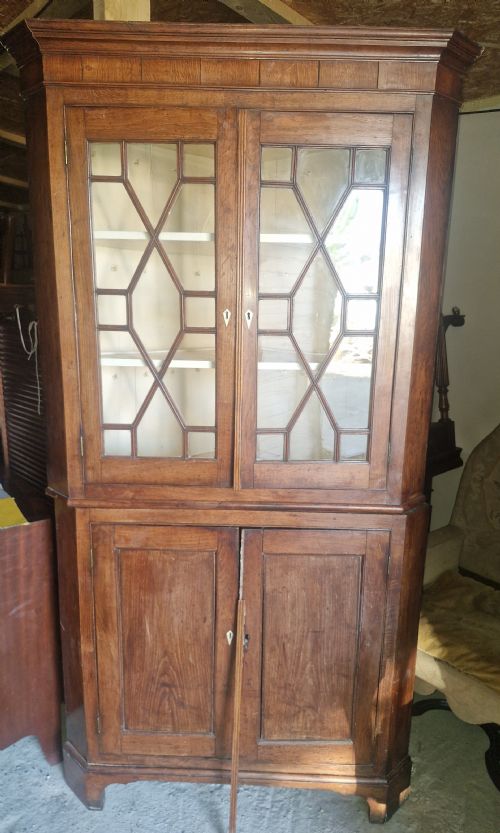
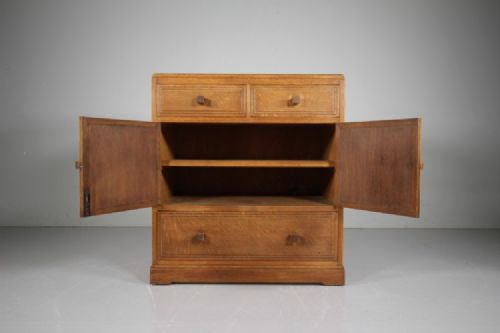
A Welsh cupboard is a farmhouse storage carcase in oak, built in stages for clothes, linen or ventilated food, from small wall-hung boxes up to tall two- and three-part presses.

Antique Welsh Cupboards
Oak dominates. It appears in 238 of 274 titles, so the piece you are most likely to be reading about is an oak press or two-stage cupboard, dated by its dealer to the 18th or 19th century. Pine, elm, fruitwood, walnut and mahogany turn up, but only a few times each.
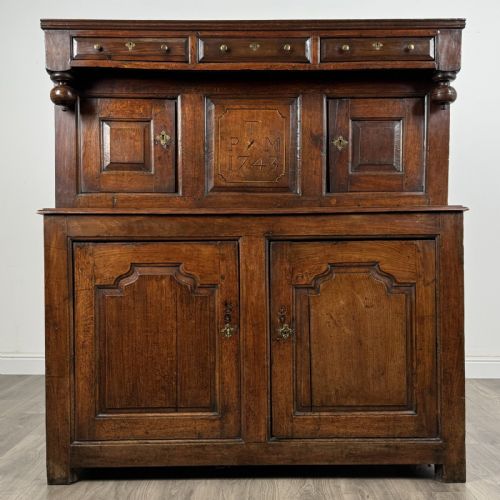
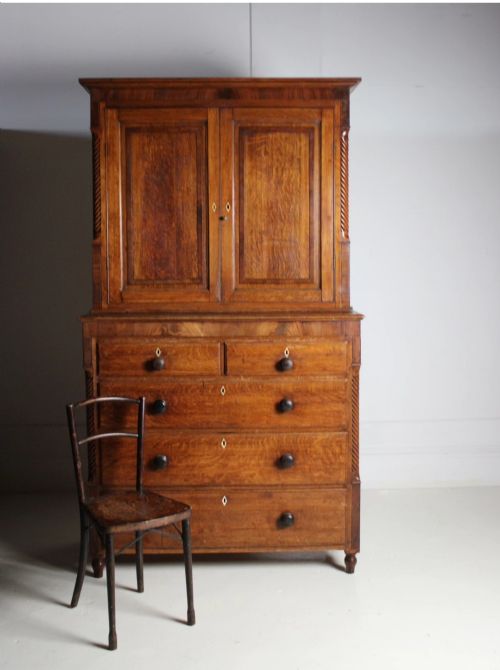
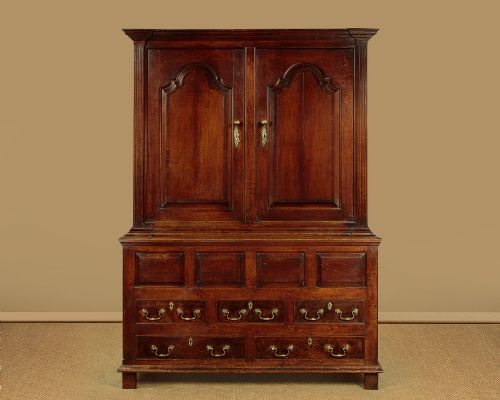
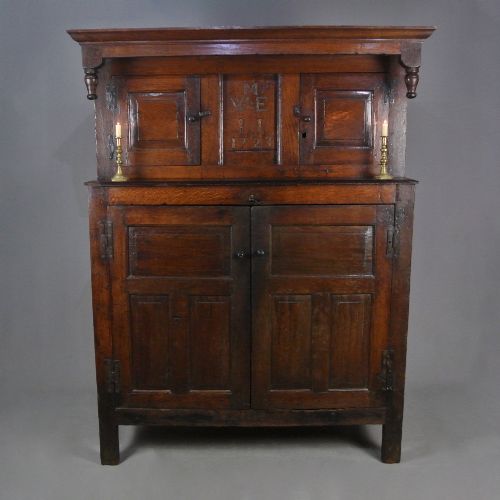
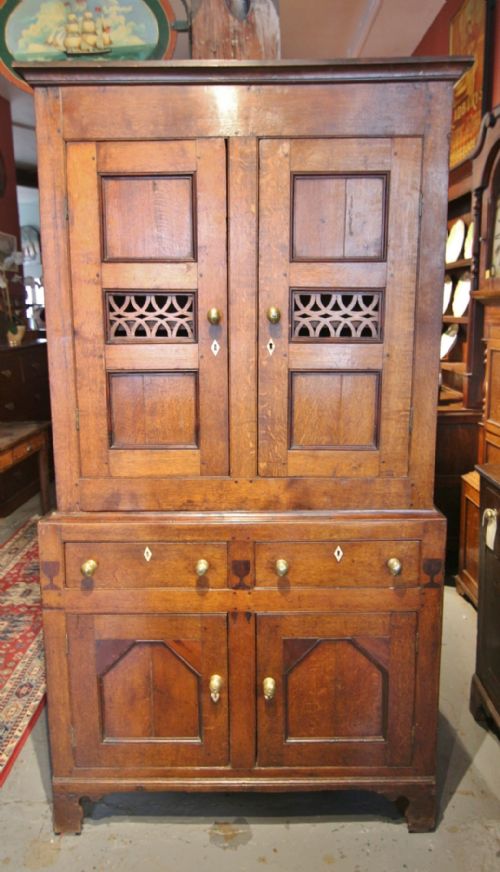
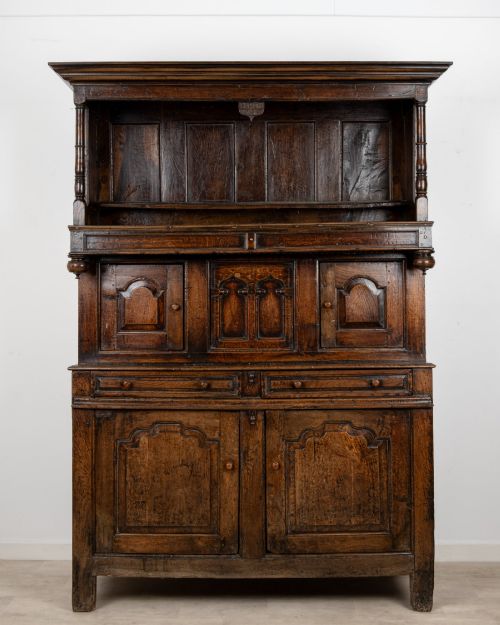
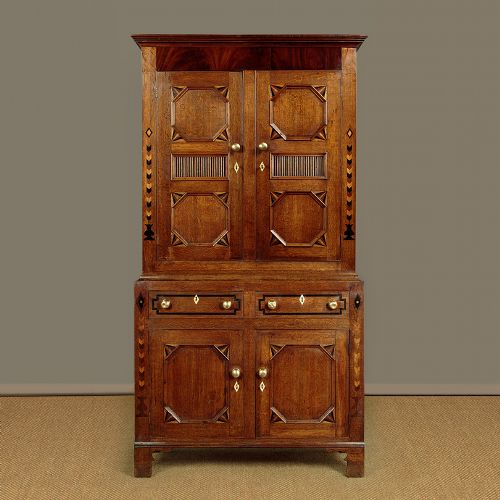
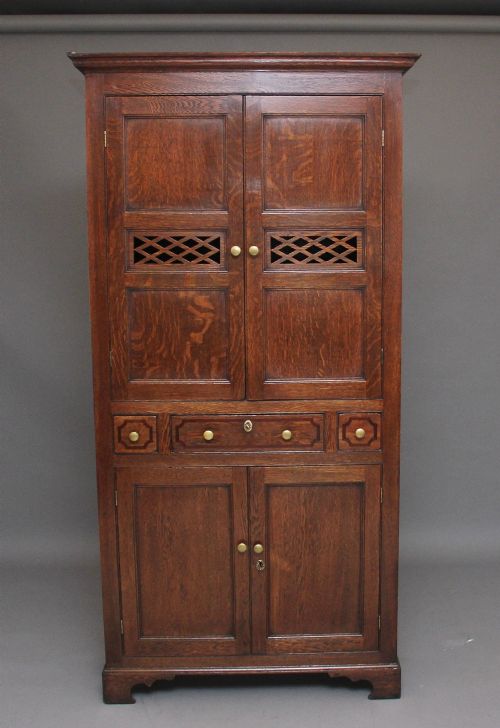
The form comes out of rural joinery, where one substantial carcase held a household's clothing, linen and food, and was made in separable stages so it could be shifted and put back together. Two-stage and three-stage cupboards with a recessed or open upper section, and pierced food cupboards made to let air round bread and cheese, were standard farmhouse fittings from the seventeenth century on.
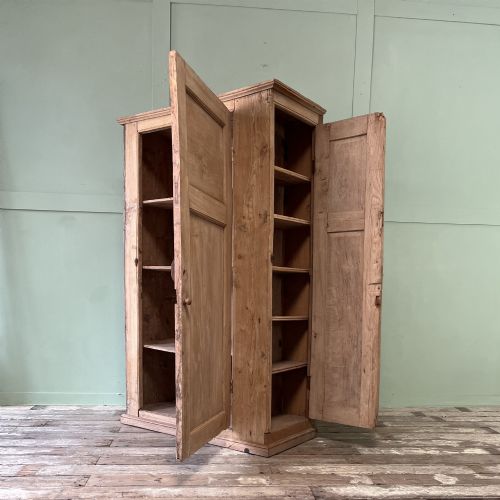
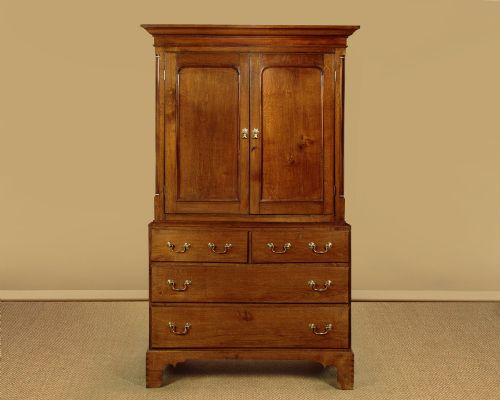
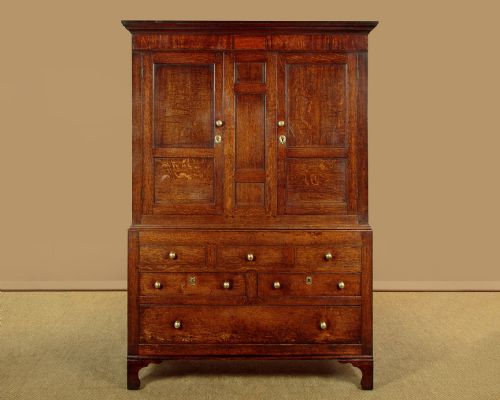
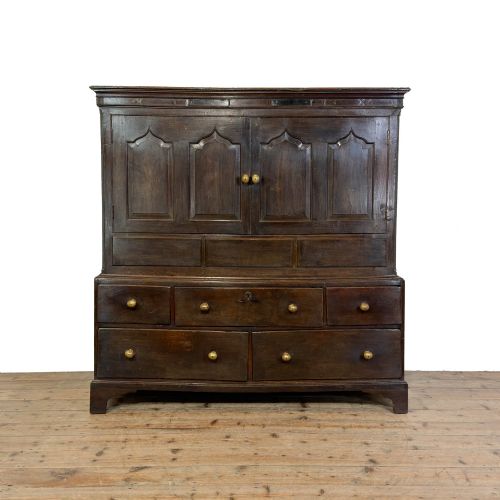
Four groupings account for most of what comes up. Press and linen press cupboards are the largest, at roughly a fifth to a quarter of titles. Cwpwrdd deuddarn, tridarn and court cupboards make about one in seven. Bread and cheese food cupboards run to roughly one in ten, and corner cupboards, hanging and floor-standing, to about one in eight. Kitchen, tack, housekeeper's and livery cupboards together add another fifth.
Welsh names survive in the listings themselves, often set beside the English ones: 'deuddarn' in 39 titles, 'cwpwrdd' in 22, and one food cupboard given as cwpwrdd bara caws. Dating is mostly by label rather than year. Only 42 of the 274 listings pin a clean date to a piece, and those run from 1690 to 1930.
Where The Range Splits
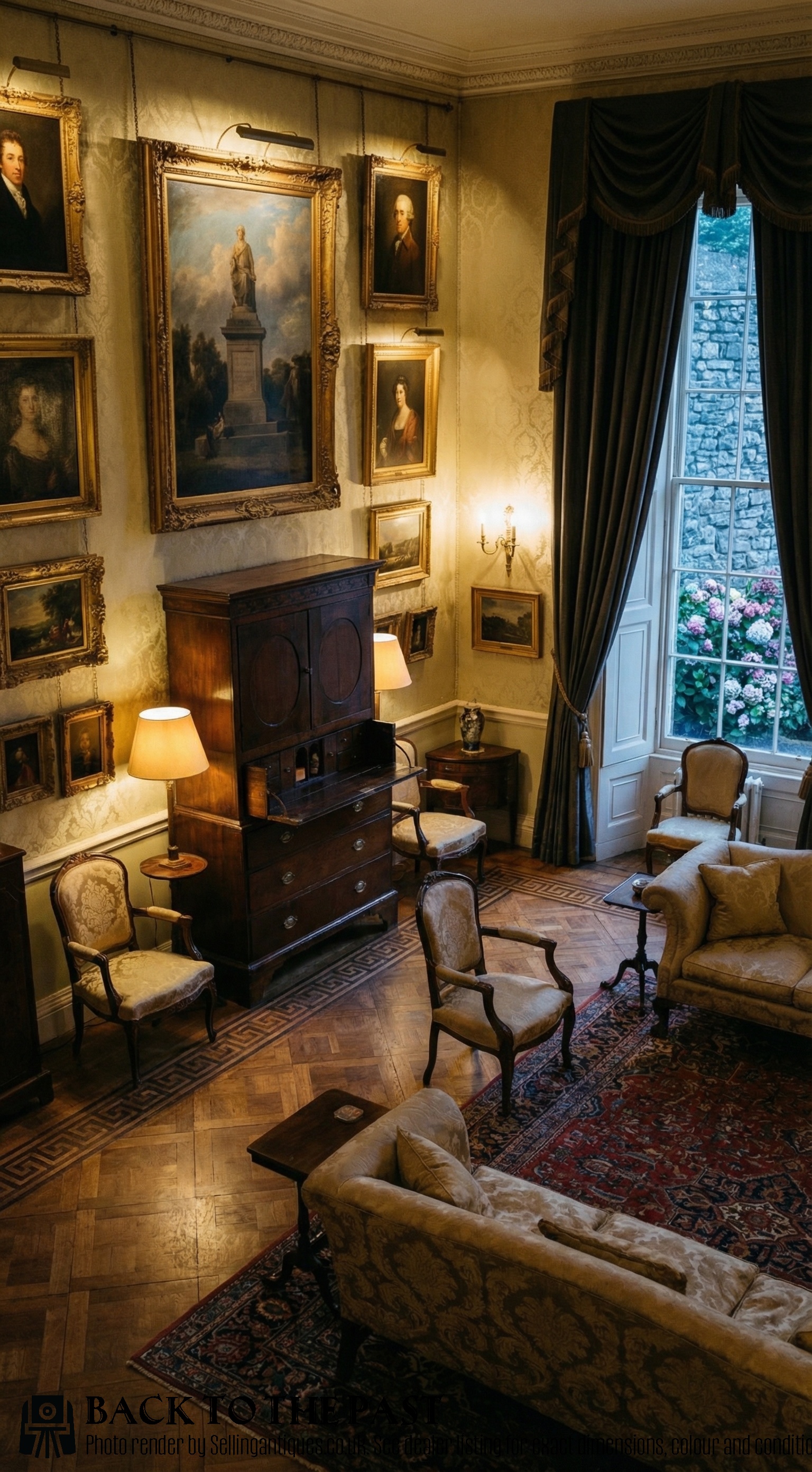
Stages and size do most of the work. Small wall-hung spice and food cupboards, some of them a foot or two across, hold the bottom of the range. Floor-standing cupboards hold the top, and among those the three-part tridarn sits above the two-part deuddarn, which sits above single-stage pieces. Tridarns are a handful against 39 deuddarns.
Age pushes in the same direction. Seventeenth and early eighteenth-century deuddarns and court cupboards cluster in the upper reaches, while plain nineteenth-century press cupboards populate the middle. The earliest dated piece on Sellingantiques is a carved cwpwrdd tridarn given as 1690, and it also sits at the very top.
Decoration separates otherwise similar cupboards. Titles specifying carved oak, inlaid decoration or an original painted finish sit noticeably higher than their undecorated equivalents. A named county does the same: Montgomeryshire, Cardiganshire and Carmarthenshire appear only occasionally, and mostly in the upper half.
Antique Welsh Cupboards Retail Price Guide 2026
Typical UK retail prices for welsh cupboards, calculated from the Sellingantiques database of over a million retail prices indexed since 2003. This retail price guide relies exclusively on Sellingantiques data; no external sources or auction records are used, so the figures do not describe the wider market.
Welsh cupboards have been listed on Sellingantiques since 2009, and more than two hundred have passed through.
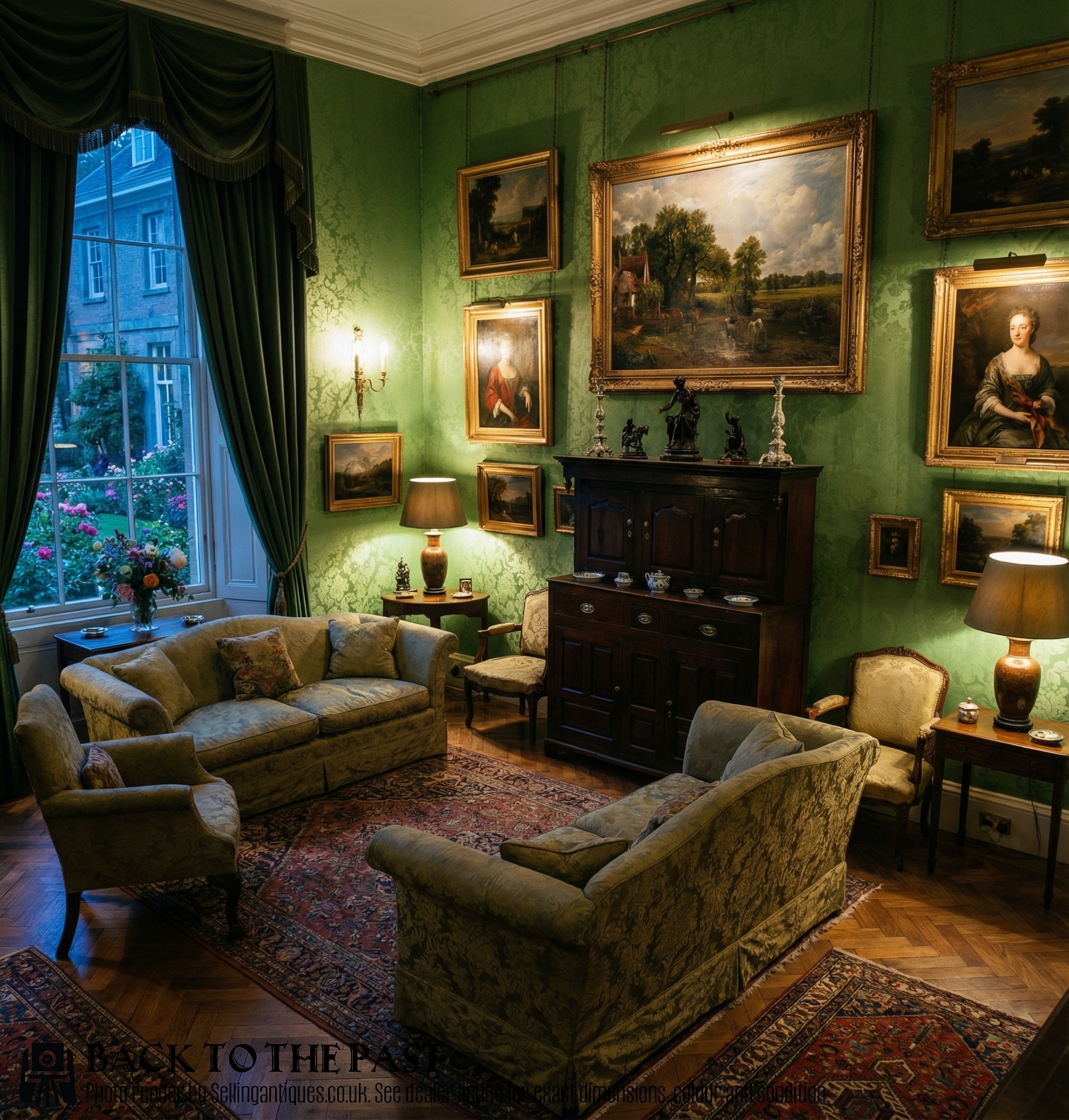
The Antique Welsh Cupboards Glossary
- Cwpwrdd deuddarn
- Welsh two-part cupboard, an enclosed base with a recessed upper stage. The single most common Welsh term in the titles, used 39 times.
- Press cupboard
- A tall cupboard for clothes or linen, often built in two stages. 'Press' runs to 59 titles, with 'linen press' in 18 of them.
- Bread and cheese cupboard
- Ventilated food cupboard, the front pierced or slatted to let air through. Twenty-two titles pair both words; one gives the Welsh, cwpwrdd bara caws.
- Cwpwrdd tridarn
- Three-part cupboard, the top stage usually an open canopy. A handful in the sample against the far commoner deuddarn.
- Court cupboard
- Early open-tiered form, named in nine titles, several of them overlapping with deuddarn.
- Tack, housekeeper's and livery
- Three use-names that recur: harness and stable gear, household stores, and allocated rations of food or clothing.
Antique Welsh Cupboards: Frequently Asked Questions
What does cwpwrdd deuddarn mean?
It is the Welsh name for a two-part cupboard: an enclosed base with a recessed upper stage above it, the two sections separable.
The word appears in 39 titles on Sellingantiques, often alongside an English description of the same piece. 'Cwpwrdd' on its own turns up in 22.
Are Welsh cupboards always oak?
Nearly. Oak is named in 238 titles out of 274.
The remainder is spread thinly across pine, elm, fruitwood, walnut and mahogany, each appearing only a few times.
How old are they?
Dealers place the bulk in the 18th century, with 77 listings, and the 19th, with 71. 'Georgian' appears in 42 and overlaps those. There is a seventeenth-century tail of 21.
Only 42 listings carry a clean year, and those run from 1690 to 1930. The rest use broad labels instead.
Two Welsh pieces carry a carved date in the title, 1726 and 1743, and one press cupboard is given as 1878.
What is a bread and cheese cupboard?
A food cupboard with a pierced or slatted front, made so air could move round bread and cheese kept inside. Twenty-two titles use both words.
One listing gives it the Welsh name, cwpwrdd bara caws. Another describes a food cupboard with a safe.
How many come up for sale?
Sixty-five dealers have listed Welsh cupboards on Sellingantiques, and roughly thirty-one come to market in a year.
The archive stands at 274 listings in total.
Do the listings say which part of Wales?
Only occasionally. Montgomeryshire, Cardiganshire and Carmarthenshire each appear once or twice in the titles, and those tend to sit in the upper half of the range.
Most listings say 'Welsh' and no more. A few sampled titles are English or French provincial, or given as possibly Welsh.