
Antique Cupboard on Stand
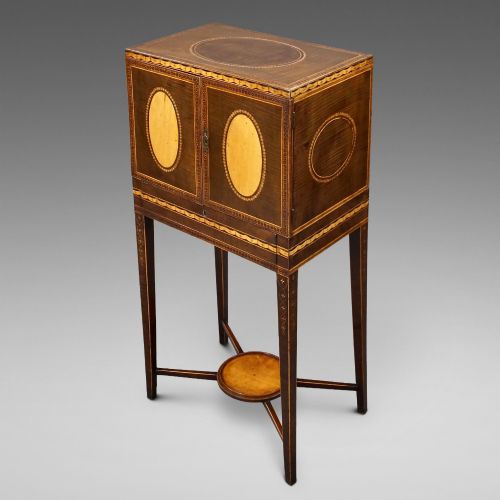
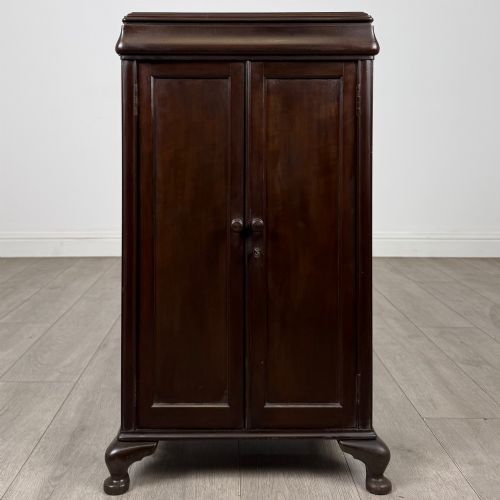
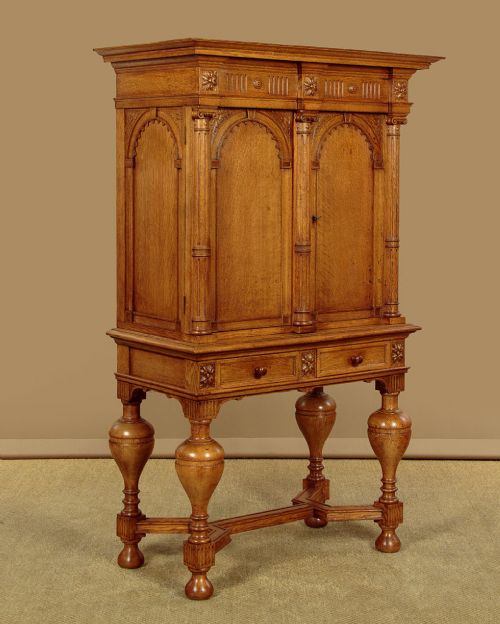
A cupboard or cabinet raised clear of the floor on legs, a stand or feet, made to lift the contents out of the damp and put the case where it can be seen and used.
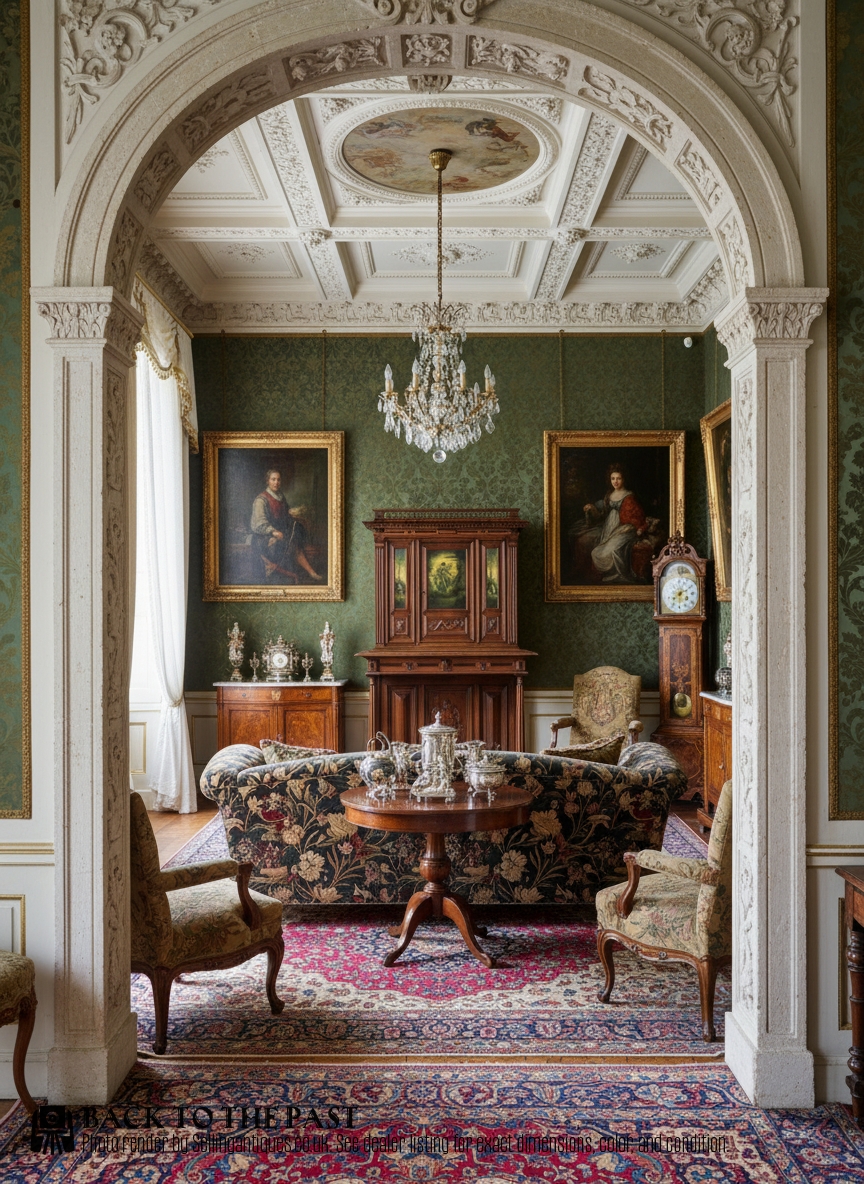
What They Are
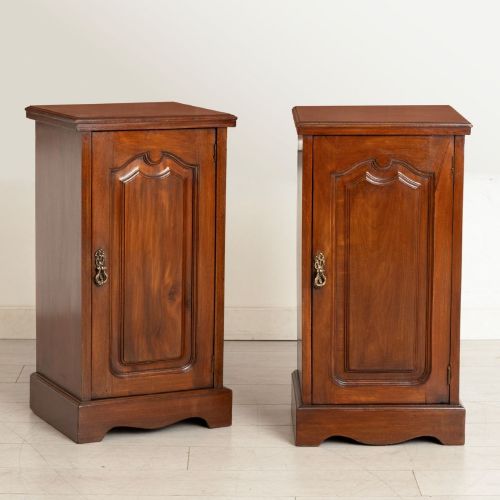
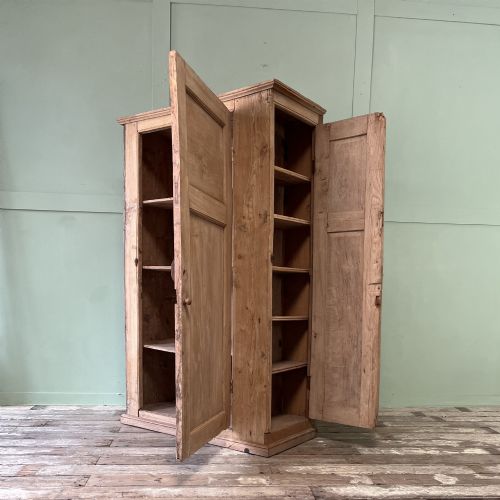
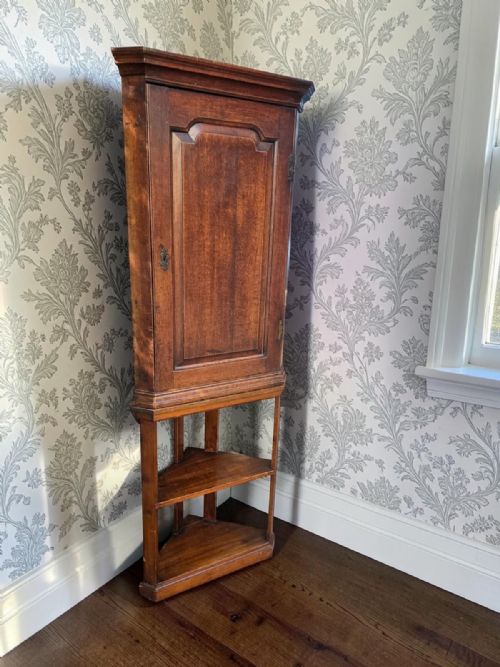
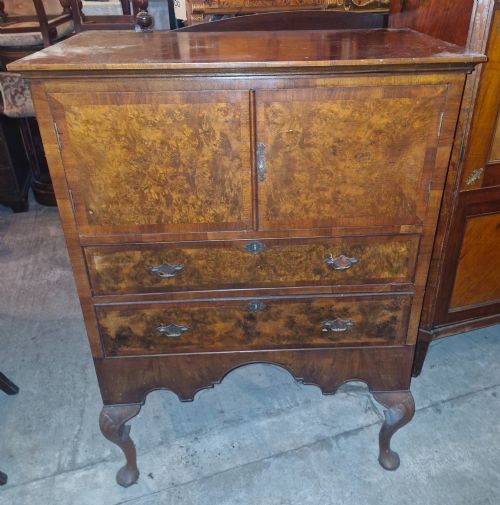
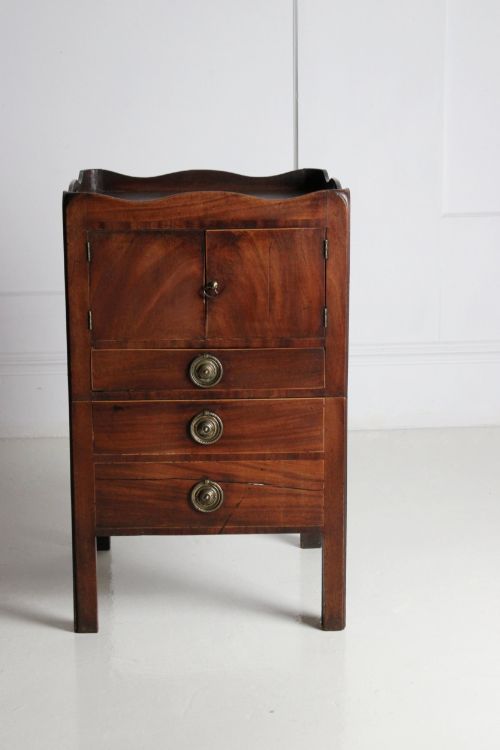
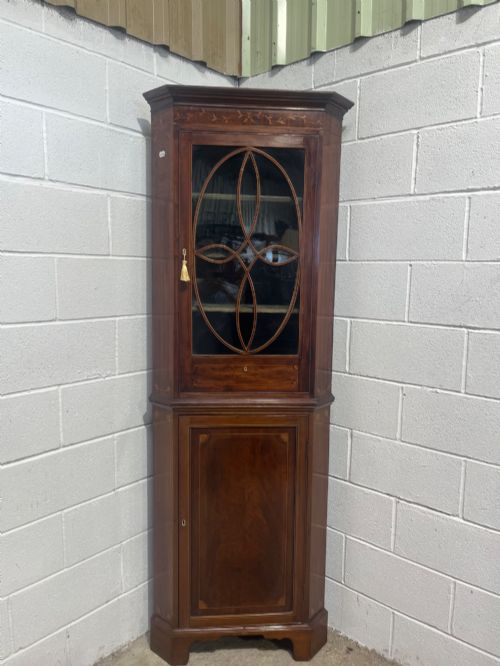
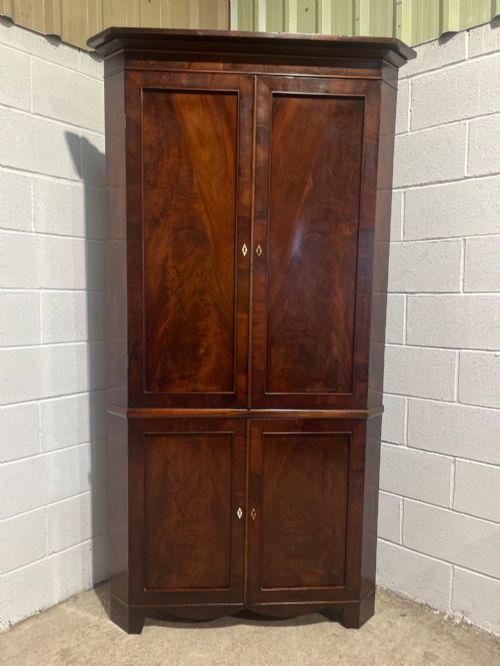
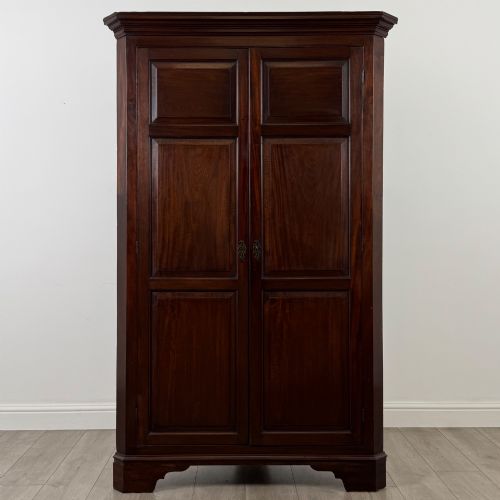
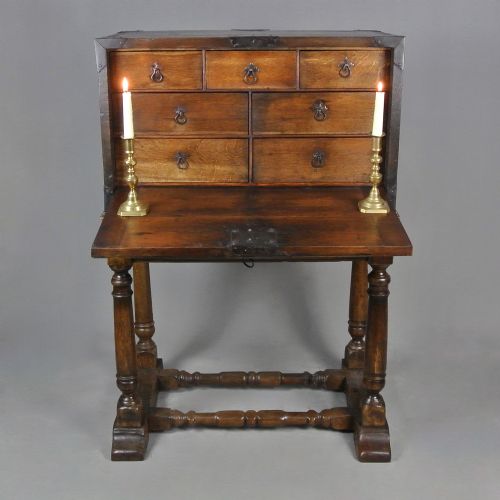
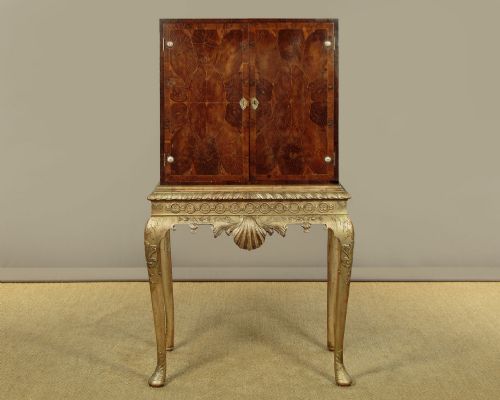
The heading covers three different things. Floor-standing corner cupboards are the largest group, with "corner" in 122 of 445 titles and "corner cupboard" in 93. Then small bedside and pot cupboards and night stands. Then the true cabinet on stand, a case of doors or drawers on an open legged base.
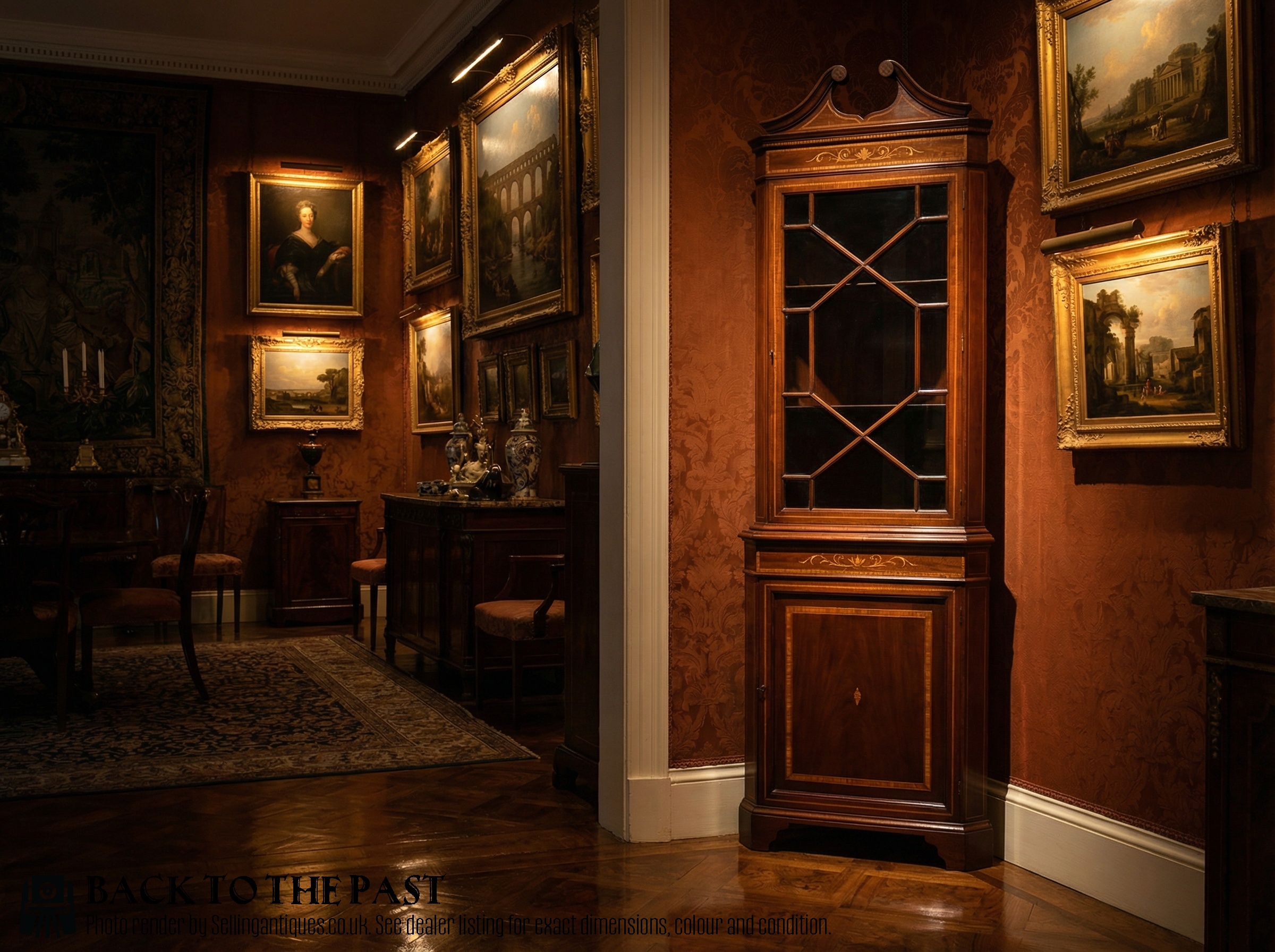
Timber gets named more often than form. Oak appears in 106 titles, mahogany in 103, walnut in 66 and pine in 14. The form you're most likely to meet is a floor-standing corner cupboard in oak or mahogany described as Georgian, often in two parts, with a bowed or bow-barrel front, panelled or glazed doors and bracket feet.
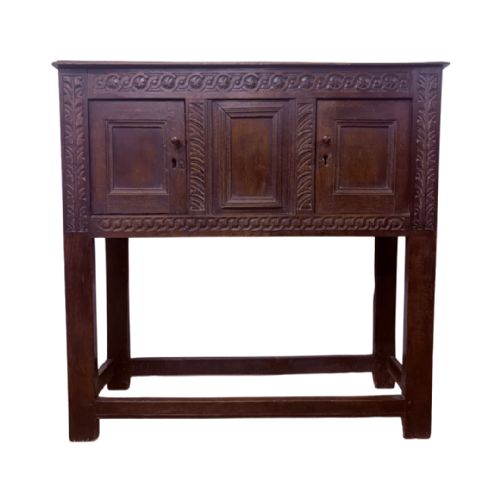
Raising a case off the floor took hold in the seventeenth century, and 27 listings still carry that date. The corner cupboard and the bedside pot cupboard came later, as ways of using an awkward angle of a room and of putting essentials beside a bed. Bedside cabinets and pot cupboards run through the archive, many of them sold as pairs.
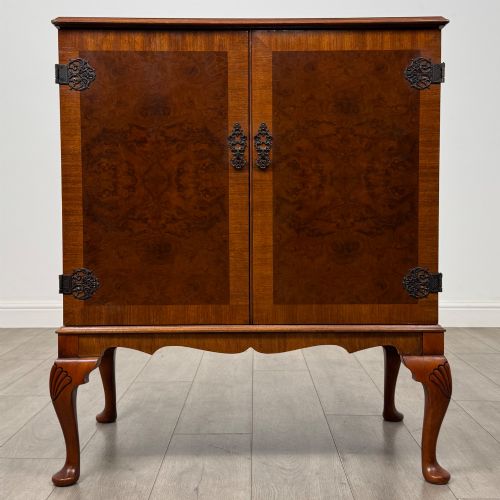
Dating is loose more often than not. Only 177 of the 445 listings carry a clean year; the rest are labelled 19th Century, 18th Century, Georgian, Victorian and so on. The twentieth century is stronger than you'd expect for a cupboard category, with 47 listed as 1920s and 27 as 1930s, largely burr walnut cocktail and drinks cabinets. Titles and dated fields sometimes disagree, so read both together.
Top And Bottom
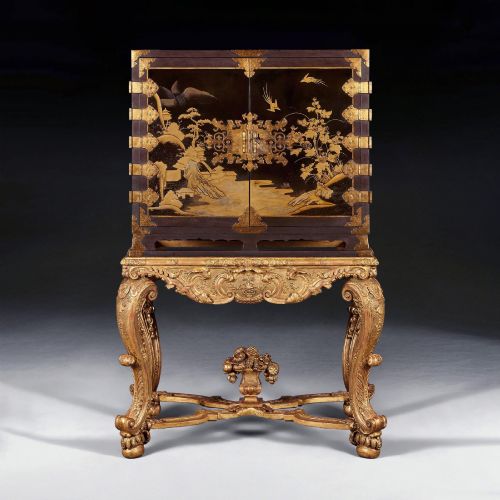
Form does most of the sorting. Corner cupboards and bedside pot cupboards fill the lower half of the range. Cabinets on a true open stand, including giltwood and bespoke bases, take almost all of the upper end, and they are where the decorated surfaces turn up.
Surface follows close behind. Lacquer, japanning, tortoiseshell, seaweed marquetry, oyster veneer, ebony and penwork sit at the top; "inlaid" appears in 26 titles, "carved" in 19, "painted" in 13. Plain oak and pine sit below the figured and exotic timbers, burr walnut, kingwood, amboyna, yew, satinwood, harewood, olive wood and cuban mahogany among them.
Age pulls the same way. Seventeenth and early eighteenth-century entries cluster at the top, and 74 listings from the 1920s and 1930s sit at the bottom and lower middle. Within any one type, pairs outrun singles, and "pair" appears in 36 titles.
Retail Price Guide 2026
Typical UK retail prices for cupboard on stand, calculated from the Sellingantiques database of over a million retail prices indexed since 2003. This retail price guide relies exclusively on Sellingantiques data; no external sources or auction records are used, so the figures do not describe the wider market.
Sellingantiques has carried cupboards on stands since 2008, with over two hundred listed in that time.

The Antique Cupboard on Stand Glossary
- Cabinet on stand
- A cabinet case sitting on a separate open, usually legged base. Case and stand are sometimes of different dates, and several chinoiserie entries are recorded that way.
- Two-part corner cupboard
- Upper and lower sections that separate, the top often glazed or shelved. Also listed as a double corner cupboard.
- Bow barrel front
- A convex curved front, common on the Georgian corner cupboards in this category. Plain bow front means the same thing.
- Pot cupboard
- A small bedside cupboard, historically for a chamber pot. Night stand covers the same job, sometimes with a tray top or tambour front.
- Japanned
- European imitation of Oriental lacquer, built up in coloured varnish. Chinoiserie is the wider term for decoration in a Chinese taste, painted or lacquered.
- Bargueño
- Iberian fall-front cabinet made to sit on its own stand. The Portuguese contador, a drawered version, appears among the one-offs.
Frequently Asked Questions
How many come up for sale each year?
Around 48 reach the market in a year on Sellingantiques, and 167 different dealers have listed one.
That spread tells you it isn't a specialist's field. Almost every general furniture dealer handles one sooner or later.
What is the most common form under this heading?
The floor-standing corner cupboard. "Corner" appears in 122 of 445 titles, "corner cupboard" in 93, "standing corner" in 66 and "floor standing" in 46.
Oak and mahogany carry most of them, and Georgian is the label attached most often, in 60 titles.
Which pieces sit at the top of the range?
Cabinets on a true open stand, and the earlier ones especially. Spanish tortoiseshell, Neapolitan ebony, olive-wood oyster veneer, seaweed marquetry and Indo-Portuguese work occupy the very top.
The seventeenth century is a real presence here, with 27 listings. The earliest dated piece in the samples is a small James I oak standing cupboard carrying the date 1619.
Are 1920s and 1930s cabinets included?
Yes, and in numbers: 47 listings fall in the 1920s and 27 in the 1930s.
Most of those are burr walnut cocktail and drinks cabinets, with "cocktail" in 21 titles and "burr walnut" in 19, plus pairs of bedside cabinets. They sit at the bottom and lower middle of the range.
Do bedside cupboards belong in this category?
They do. "Bedside" appears in 44 titles, "night" in 36 and "pot" in 18, covering pot cupboards, night stands and lamp stands.
Many were sold as pairs, and pairs consistently sit above single examples of the same form.
Why do the dates and titles sometimes disagree?
The dated field runs 1700 to 1930, but only 177 of the 445 listings carry a clean year. The rest are filed by century or reign, and the shorthand doesn't always land where the title points.
A George III cabinet on stand turns up filed as 17th Century, a Victorian walnut cabinet dated 1840 as 18th Century. The title carries the more specific description.