


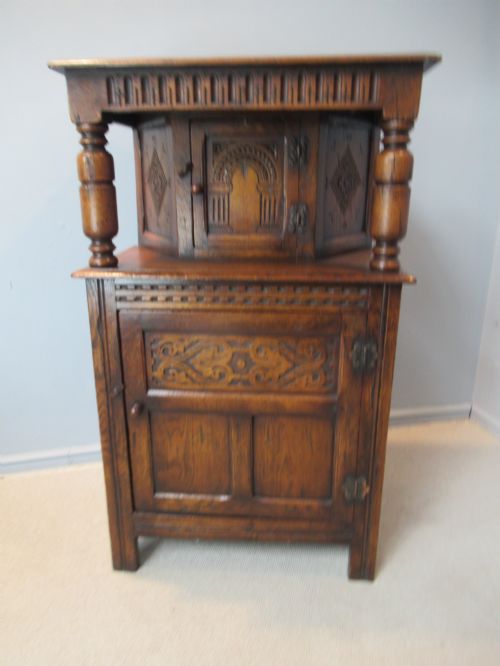

Antique Court Cupboards
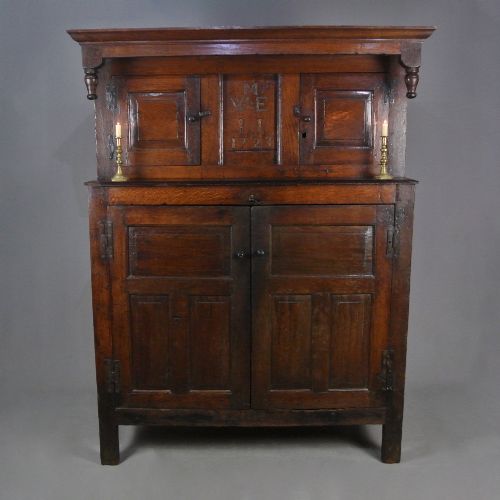
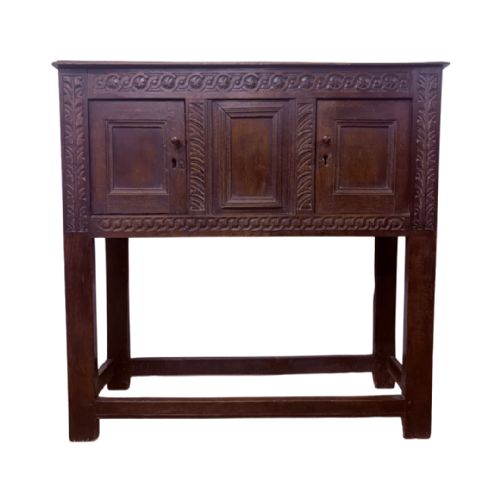
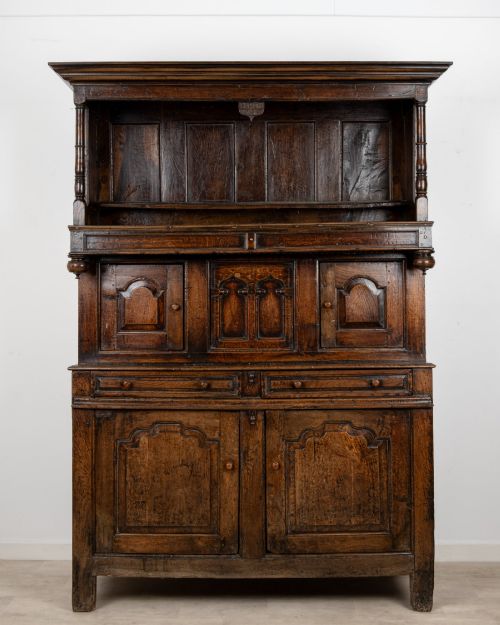
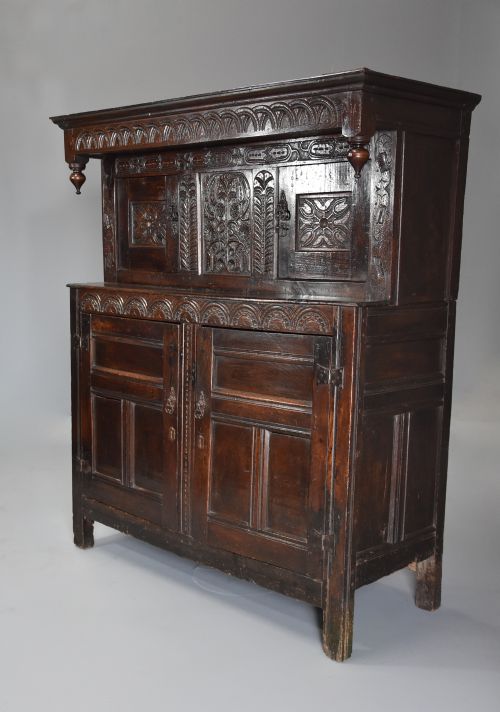
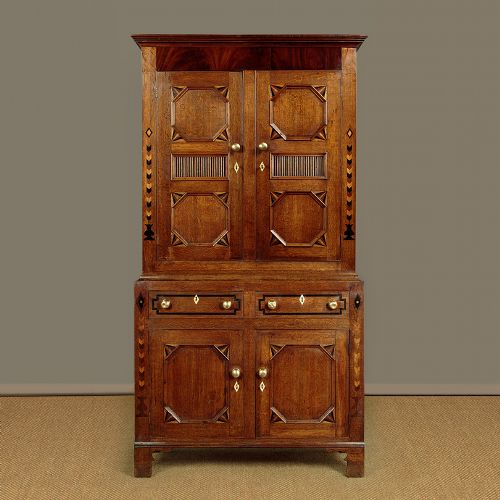
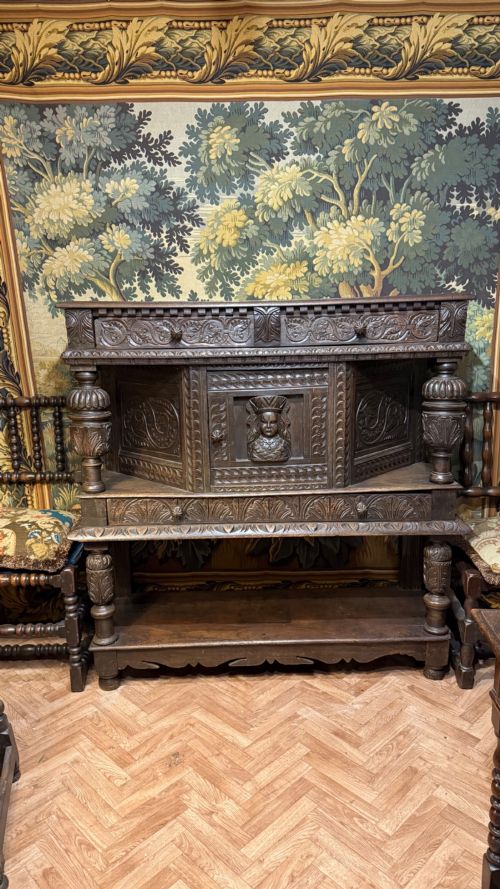
A joined oak cupboard in two or three stages, with an enclosed upper section over an open or enclosed base, made for storing food and displaying plate in a hall or parlour.
What Is A Court Cupboard?
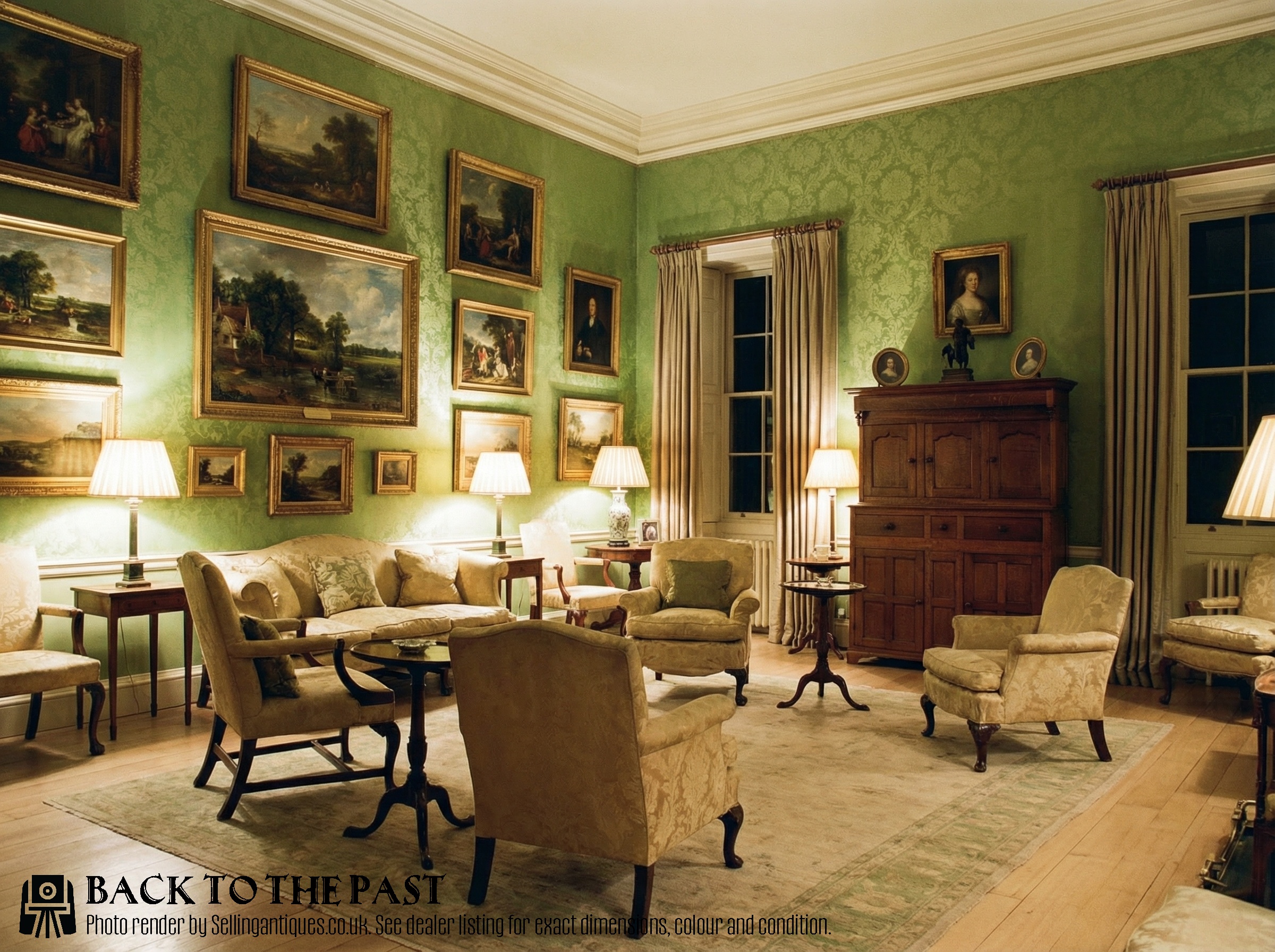
The form is English and Welsh joined furniture of the late 16th and 17th centuries: tiers of oak framing and panels on turned or block supports, with the upper stage enclosed. It was made to hold plate and serve food in the main room of the house, and the type was revived in oak from the later 19th century.
Terminology across the 208 listings is loose. The same body of furniture is titled court cupboard, press cupboard, livery cupboard, deuddarn, tridarn, hall cupboard or buffet, so the heading covers all of them. Oak dominates, in 177 titles, with carving named in 61.
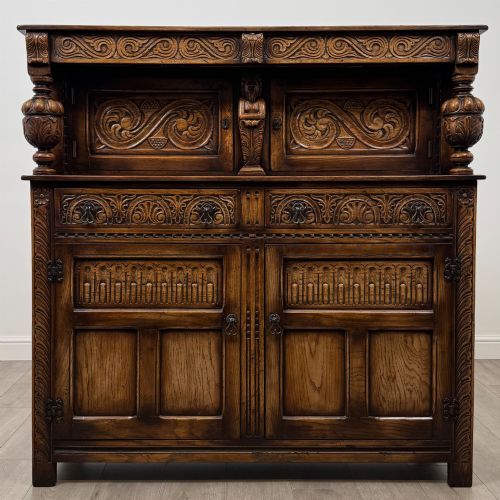
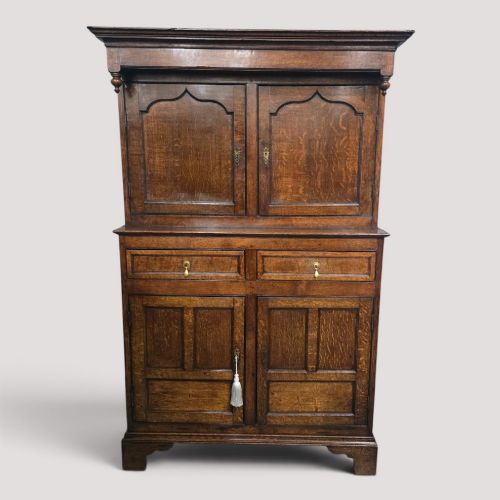
What you'll meet most often is a carved oak two-stage cupboard of 17th- or 18th-century date. Fifty-seven listings are placed in the 17th century, twelve more before 1700 and thirty-five in the 18th. Welsh pieces are the next largest group: deuddarn appears in twelve titles, and the three-tier cwpwrdd tridarn only a couple of times in the whole archive.
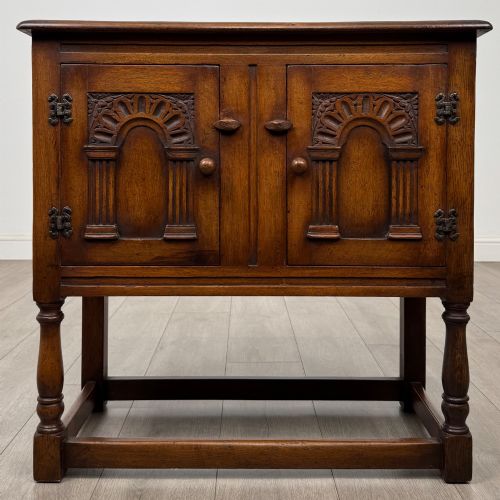
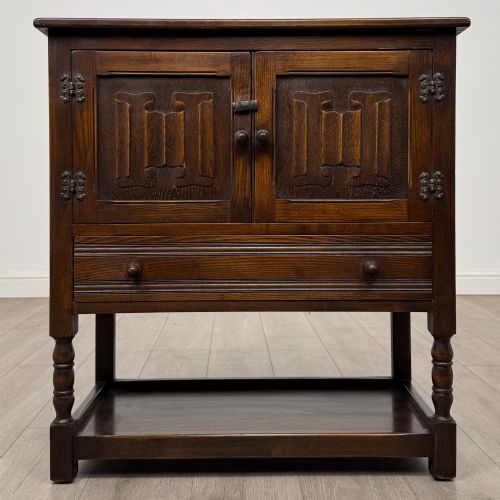
A revival strand sits alongside the antique dates rather than after them, dated to the 1920s, Edwardian years and 1900s, and styled Jacobean, Jacobethan, Elizabethan or Renaissance Revival, with Ipswich oak carving named on three. Continental examples are the rarest origins, single Flemish, Italian and French cupboards against a body of English and Welsh oak. Around twenty come to market on Sellingantiques in a year, listed by 88 separate dealers.
Where The Range Splits
Date does most of the work. Sixteenth- and 17th-century pieces sit at the top, and the early-20th-century revivals in Jacobean or Jacobethan style cluster at the bottom. Treat a bucket date such as "17th Century" as the dealer's own broad attribution; only 45 listings carry a clean year at all.
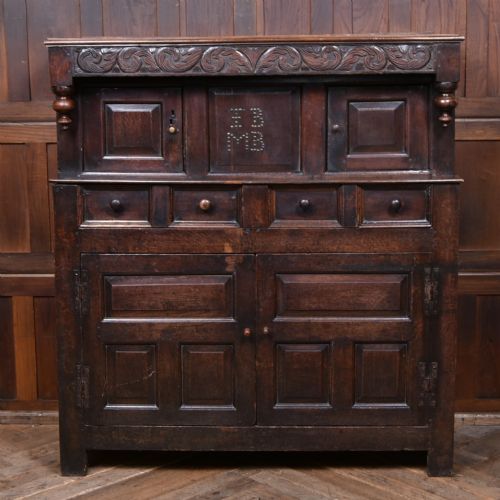
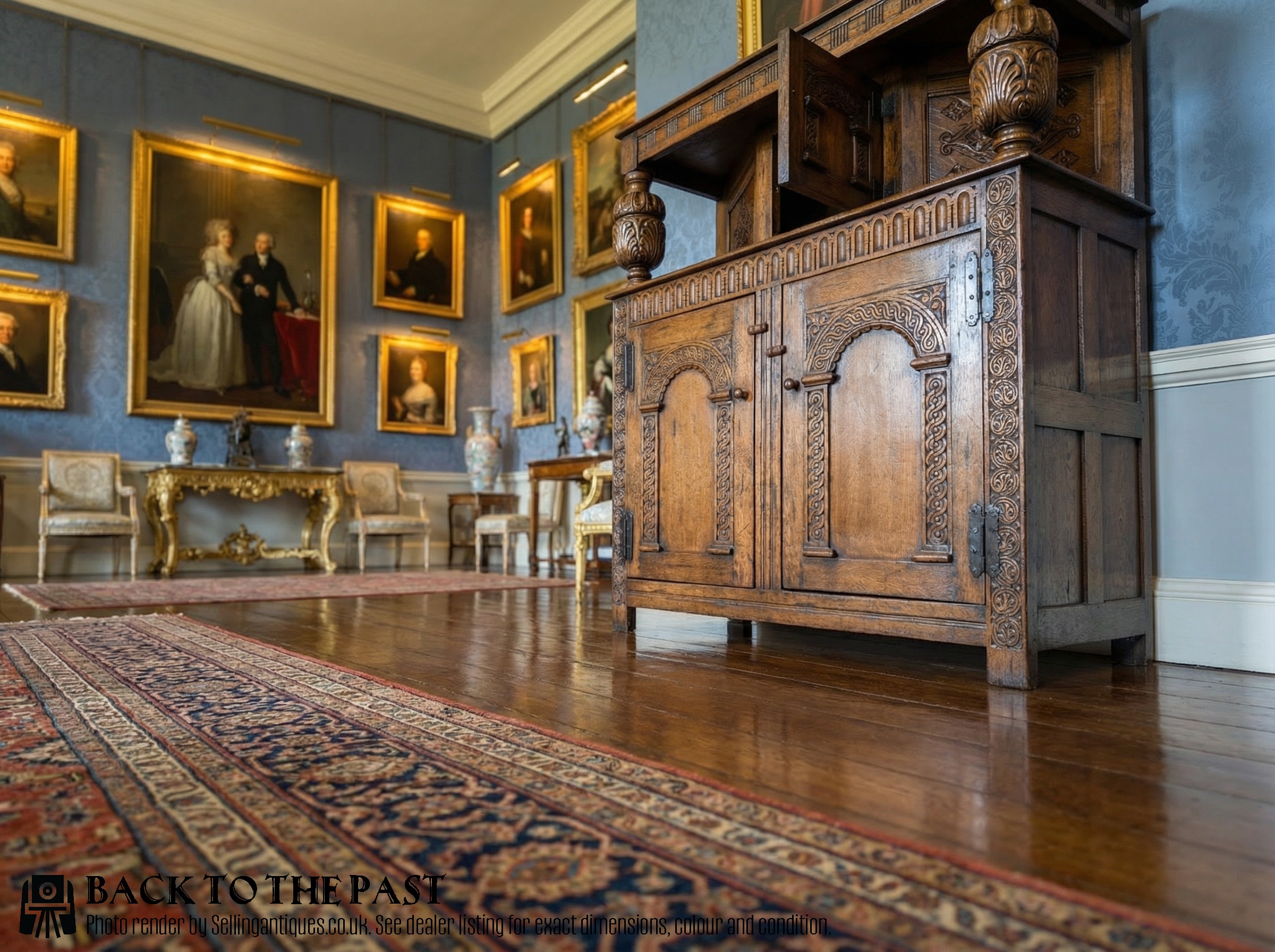
A carved date on the frieze lifts a cupboard sharply. Years read off the wood in titles include 1598, 1633, 1678, 1685, 1701, 1721 and 1743, and initialled-and-dated examples sit high in the range. Depth of carving pulls the same way: profusely carved, heavily carved and figural panels turn up on the higher-priced listings, while plain framed panels do not.
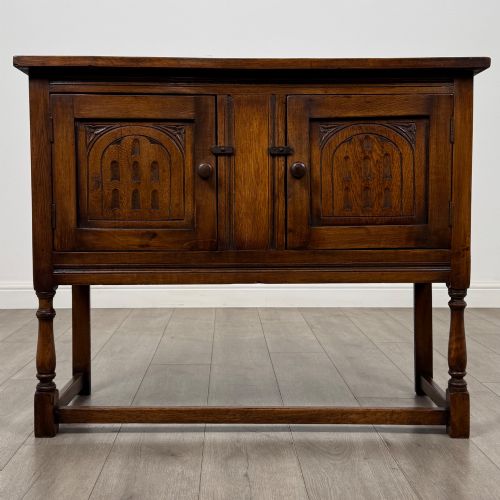
Scale and tier count matter after that. Three-part tridarns and large deuddarns sit near the top, and small, dwarf, cottage and miniature examples, nearly one title in ten, are frequent at the lower end. Named regional identity also reads upward, Welsh above all, with North Country, West Country, Westmorland, Co Durham and Lancashire attributions mostly above the middle. Inlay and marquetry are uncommon and sit in the upper part of the range.
Retail Price Guide 2026
Typical UK retail prices for court cupboards, calculated from the Sellingantiques database of over a million retail prices indexed since 2003. This retail price guide relies exclusively on Sellingantiques data; no external sources or auction records are used, so the figures do not describe the wider market.
The court in court cupboard comes from the French court, meaning short: it was the low cupboard, not the grand one.
The Antique Court Cupboards Glossary
- Court cupboard
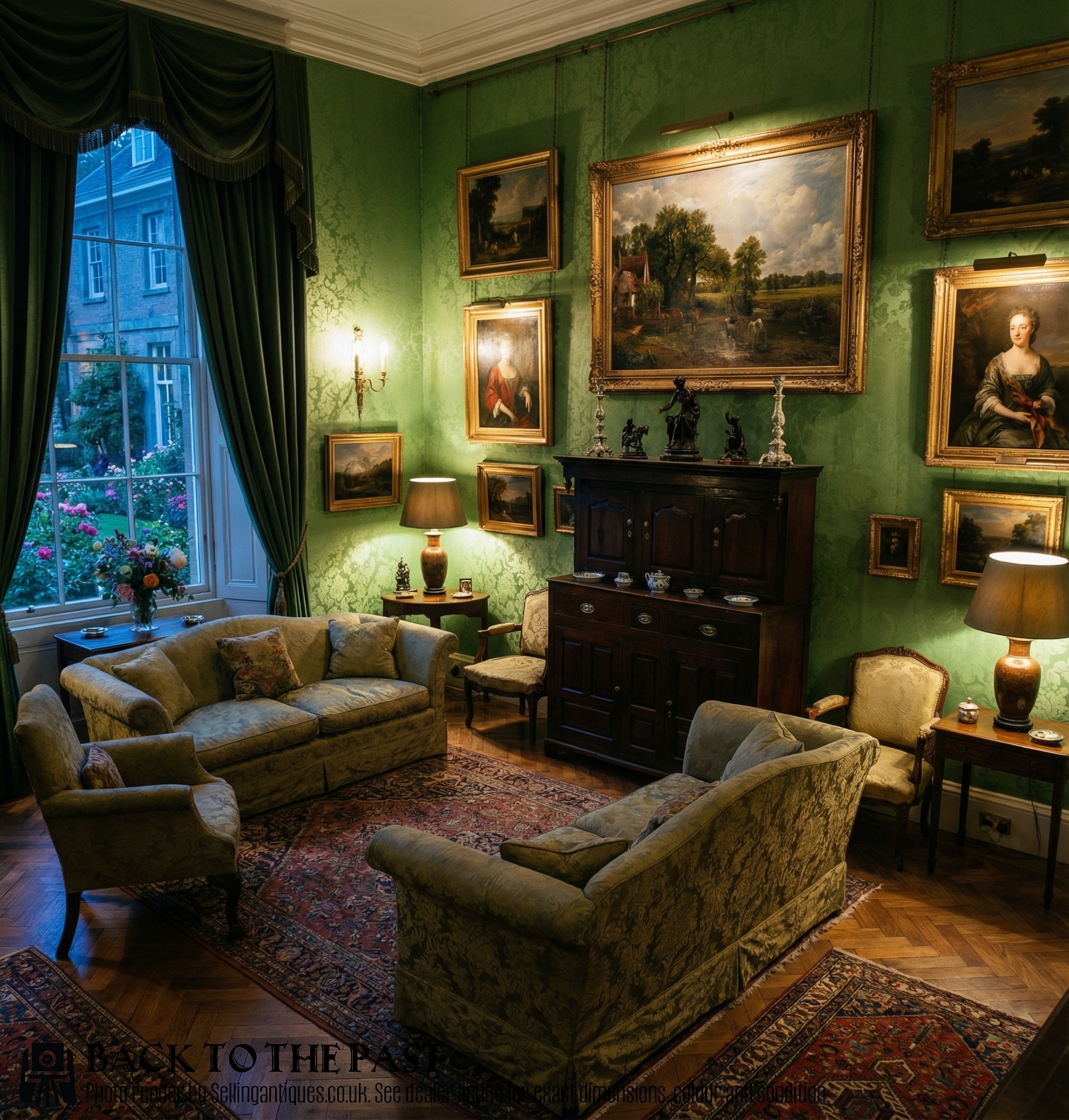
- A tiered joined cupboard, usually oak, with an enclosed stage over an open or enclosed base.
- Press cupboard
- One whose upper stage is fully enclosed. Used interchangeably with court cupboard in the titles here, thirteen of which carry the word press.
- Deuddarn
- Welsh two-tier cupboard, appearing in twelve titles, sometimes written cwpwrdd deuddarn. Tridarn is the three-tier version, its top stage open under a canopy.
- Livery cupboard
- Ventilated or open cupboard for storing food rations, named in nine titles, including standing and cottage-sized versions.
- Joined
- Made by a joiner with mortise-and-tenon frames and panels, rather than boards nailed together.
- Frieze
- The horizontal band beneath the cornice. It's carved on many examples, and where a date or set of initials is cut, this is usually where you'll find it.
Frequently Asked Questions
What's the difference between a court cupboard and a press cupboard?
A press cupboard has a fully enclosed upper stage. A court cupboard may have an open one, with the enclosed section above an open base.
In practice the site uses the words interchangeably. Press appears in thirteen titles, court in far more, and the same body of furniture sits under both.
Are Welsh deuddarn cupboards common on the site?
Welsh appears in 22 titles out of 208, deuddarn in twelve, so roughly one in ten of the category carries Welsh nomenclature. The proportion is rising in live stock.
The three-tier cwpwrdd tridarn is a different matter. It turns up only a couple of times in the whole archive, and sits high in the range when it does.
How old are most of these cupboards?
The dated field runs from 1670 to 1930. Fifty-seven listings sit in the 17th century, twelve more before 1700, thirty-five in the 18th and twelve in the 19th, with five placed in the 16th.
Most entries are century buckets rather than precise years. Only 45 carry a clean date, and that is often because the piece has a year carved into it.
Why do some titles give an exact year like 1685?
Because the year is cut into the wood, generally on the frieze, sometimes alongside initials. Dated appears in ten titles.
Years read off cupboards in this archive include 1598, 1633, 1677, 1678, 1685, 1696, 1701, 1711, 1713, 1717, 1721, 1723, 1728 and 1743.
Do these come in anything other than oak?
Oak accounts for 177 of the 208 titles. Walnut, elm and fruitwood each appear in single instances, one of the walnut pieces being an Italian carved cabinet.
Everything else in the category is oak, plain or carved, with carving named in 61 titles.
What are the 1920s Jacobean style cupboards?
They're revival pieces, made in oak in the older manner from the later 19th century onward. Fourteen listings are dated to the 1920s, with more Edwardian and 1900s entries behind them.
Titles style them Jacobean, Jacobethan, Elizabethan or Renaissance Revival, and Ipswich oak carving is named on three. As a group they sit at the lower end of the range.