


Antique Painted Cupboards
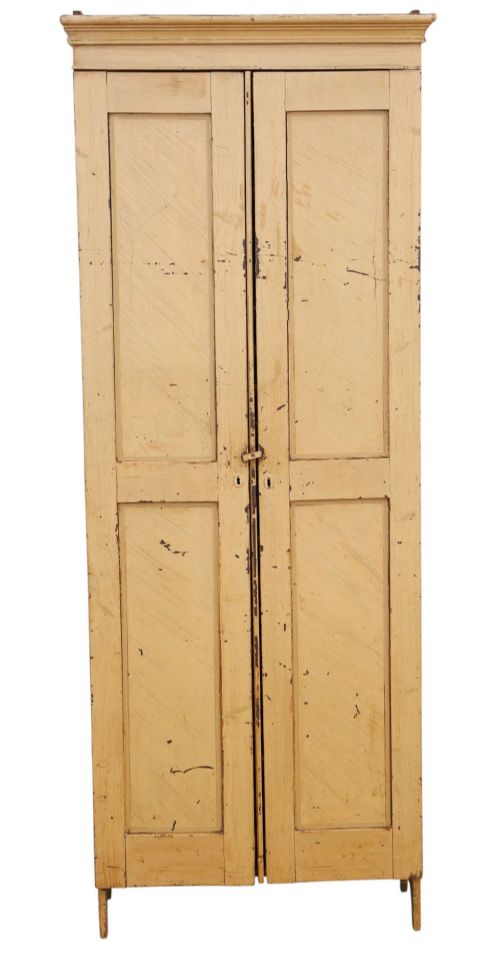
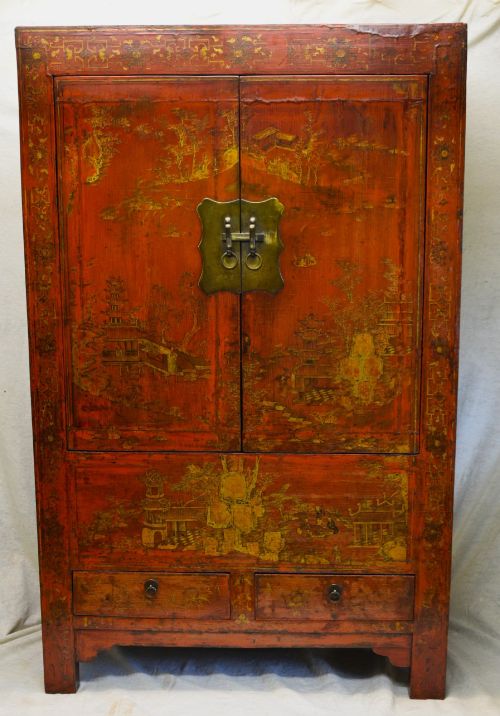
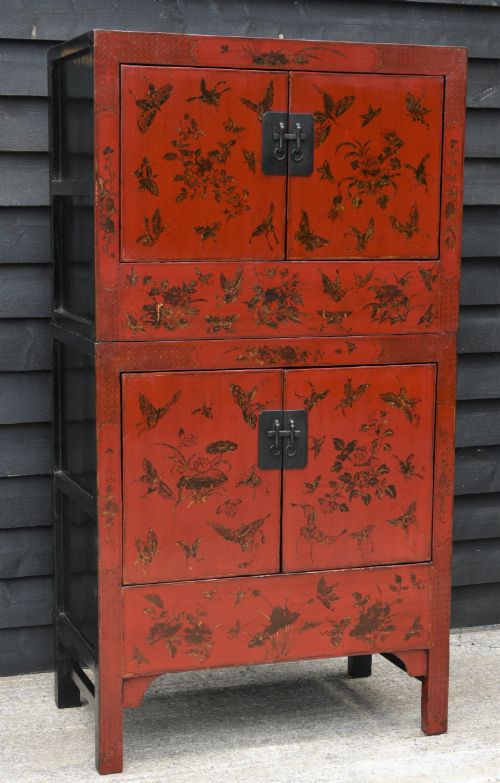
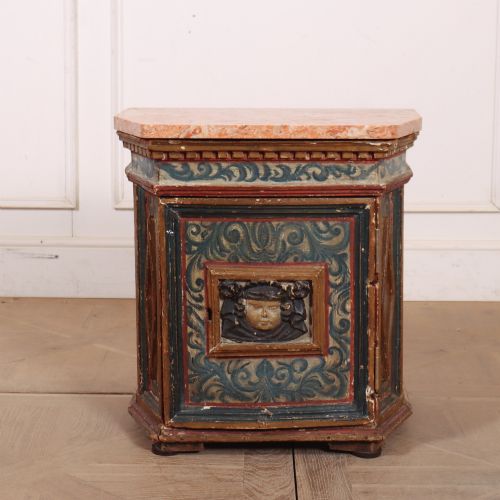
A cupboard whose surface carries paint, from farmhouse pine coloured to protect open-grained deal to japanned and chinoiserie cabinets made to supply decoration where veneer was out of reach.
Antique Painted Cupboards
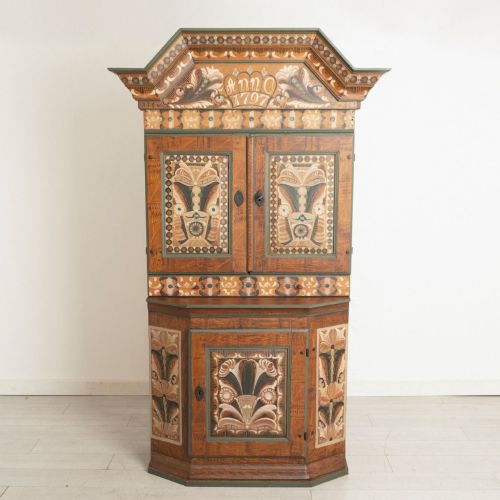
Paint was the normal treatment for softwood and secondary-timber furniture from at least the 17th century. It sealed open-grained deal, imitated costlier woods, and gave colour to cupboards built for linen, food and household stores in kitchens, dairies, farmhouses and service quarters across Britain and northern Europe.
The piece you are most likely to meet on Sellingantiques is a 19th-century English painted pine cupboard. Pine is named in more than a third of titles, so softwood rather than hardwood is the default body here, and '19th Century' and 'Victorian' between them account for nearly half of the dating.
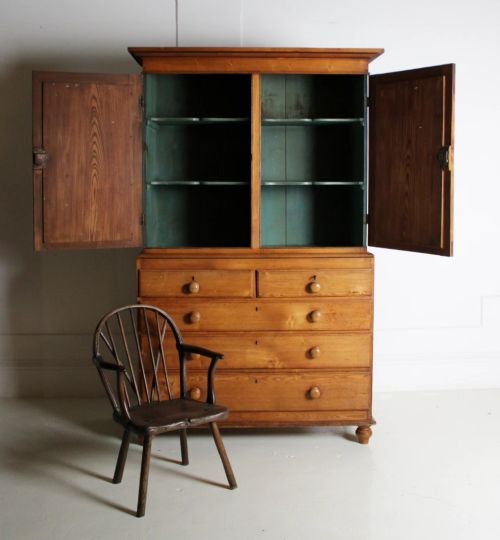
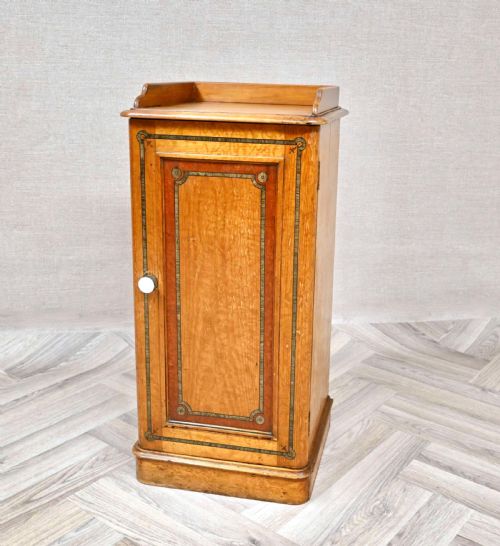
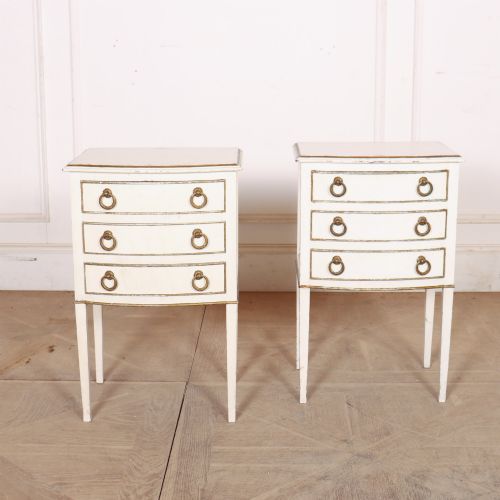
Two named types recur. At the small end, bedside and pot cupboards, often offered in pairs and frequently French. At the large end, tall two-part housekeeper's, press and linen cupboards, which fill the upper half of the range. Continental work runs alongside both, with Swedish origin claimed far more often than any other single country.
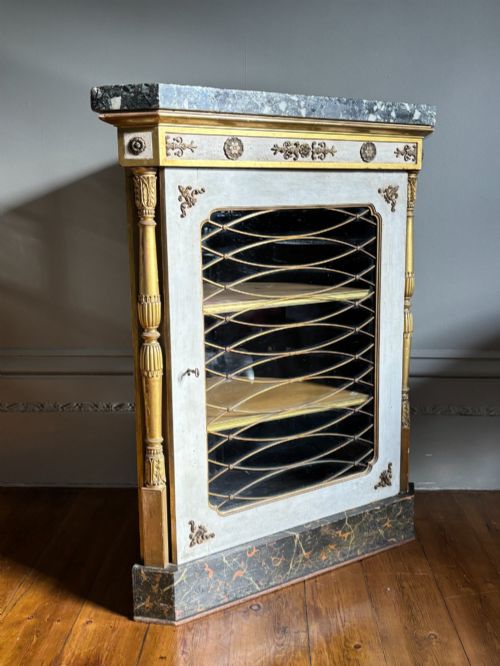
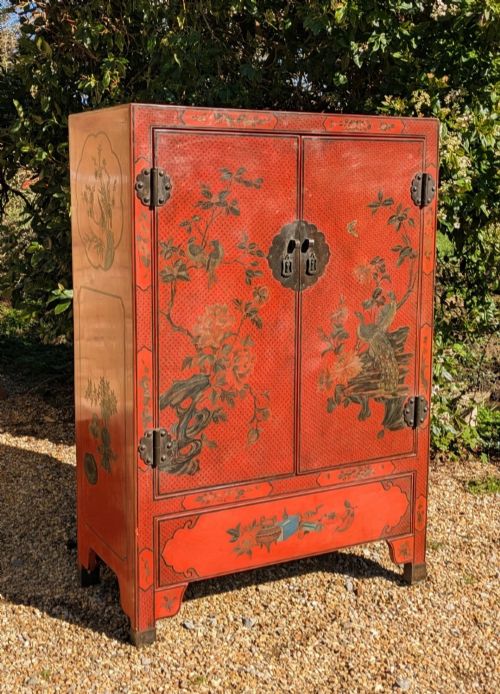
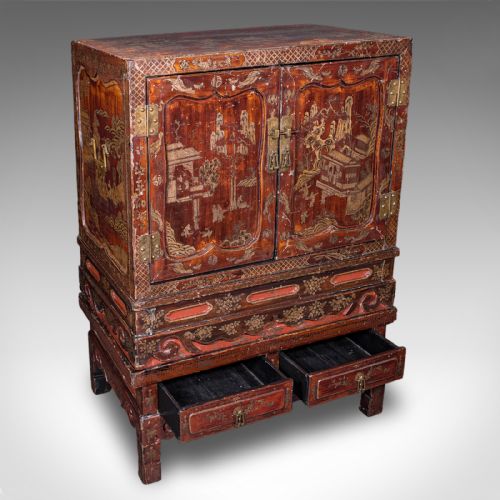
A decorative wing sits apart from the country pieces: painted satinwood, demi lune side cabinets, japanned and chinoiserie work, and polychrome decoration. Small in number, but it holds much of the top. And a distinct sub-group is sold stripped or waxed and described as ready 'to wax/paint', so the heading covers finished and finishable alike.
Where Value Sits
Surface does more work than anything else. Titles stating original paint recur throughout the upper half of the range, while 'later paint finish', 'later painted green' and pieces offered to wax or paint cluster lower. The first decorated skin is the thing being bought; a fresh colour over stripped pine is a different proposition.
Then scale and form. Tall two-part housekeeper's, press and linen cupboards hold the top almost entirely, particularly 18th and 19th-century examples still in their first paint. Small hanging wall cupboards, corner cupboards and single pot cupboards fill the other end. A pair of bedside cabinets sits consistently above a comparable single.
Age pushes in the same direction, though early material is thin: 18th-century listings and the odd 17th-century entry sit high, 1900s and 1920s pieces low. Running against the country grain, the decorative tier of chinoiserie, japanned and painted satinwood cabinets prices on its ornament rather than its size.
Antique Painted Cupboards Retail Price Guide 2026
Typical UK retail prices for painted cupboards, calculated from the Sellingantiques database of over a million retail prices indexed since 2003. This retail price guide relies exclusively on Sellingantiques data; no external sources or auction records are used, so the figures do not describe the wider market.
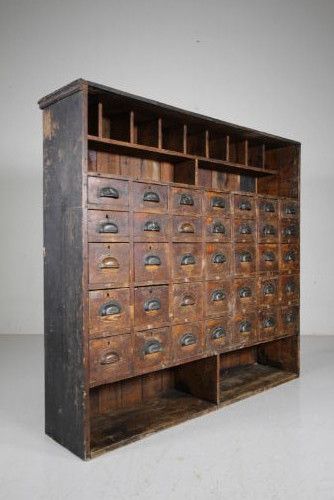
One-offs from the archive: a skeleton cupboard, a wrought-iron engineer's cabinet, a Victorian humidor painted for a cigar store and a bank of 40 drawers.

The Antique Painted Cupboards Glossary
- Original paint
- The first decorative surface rather than a later repaint, and the phrase that separates the upper half of this category from the lower.
- To wax/paint
- A dealer's shorthand for a stripped or bare piece sold ready for the buyer to finish. It appears in dozens of titles here.
- Housekeeper's cupboard
- A tall two-part storage cupboard, often with drawers below, for a household's stores and linen.
- Linen press
- Shelves or sliding trays above a chest of drawers, made for folded household linen. Some titles use press cupboard for the same thing.
- Pot cupboard
- A small bedside cupboard that originally housed a chamber pot. Often listed in pairs.
- Scumble
- A translucent coloured glaze dragged or combed over a ground to imitate figured timber; a grained piece is painted to pass for a better wood.
Antique Painted Cupboards: Frequently Asked Questions
Are most painted cupboards made of pine?
Pine is named in more than a third of the titles on Sellingantiques, more than any other timber by a wide margin. Softwood is the default body of a painted cupboard here.
Other woods turn up only occasionally. Oak appears in a handful of titles, with mahogany, walnut, elm and a few others scattered thinly across the rest.
What does original paint mean in a listing?
It means the surface is the first decorative finish the cupboard carried, rather than a colour applied later. The phrase runs right through the upper half of the range.
The alternatives are stated just as plainly. Titles saying later paint finish, later painted green, or offering a piece to wax and paint, sit lower down.
Which countries do these cupboards come from?
English is the commonest origin claimed, with French close behind, largely through painted bedside cabinets sold in pairs.
Swedish is the largest single Continental origin after those two. Danish, Baltic, Tyrolean, Austrian, Hungarian, Bohemian and Spanish Basque examples appear only once or twice each.
How old are painted cupboards on Sellingantiques?
The dated field runs from 1711 to 1930. Only a minority of listings carry a clean year, though; most sit in broad buckets, and 19th Century alone accounts for the largest group.
Early material exists but is thin. A modest number are tagged 18th Century, with a few 17th-century entries, and the two earliest samples are primitive cupboards carrying an 1711 date.
Why are bedside cupboards so often sold in pairs?
Bedside and pot cupboards were made for both sides of a bed, and pairs have stayed together. Pair appears in scores of titles, many of them French cabinets dated to the 1910s and 1920s.
A pair prices consistently above a comparable single.
Do painted cupboards include shop and trade fittings?
Yes, as a small but persistent seam. Sign-painted grocer's, stationer's, haberdashery, dairy and chemist's cupboards turn up, along with multi-drawer shop fittings running to sixteen, twenty-five and fifty drawers.
The one-offs go further still: a wrought-iron engineer's cabinet, a painted steel cupboard, a humidor painted for a cigar store and a Gothic cupboard in the Strawberry Hill taste.