



George III Secretaire
A george iii secretaire offers clever concealed writing space disguised as a chest or bookcase for your home.

What george iii secretaire pieces are
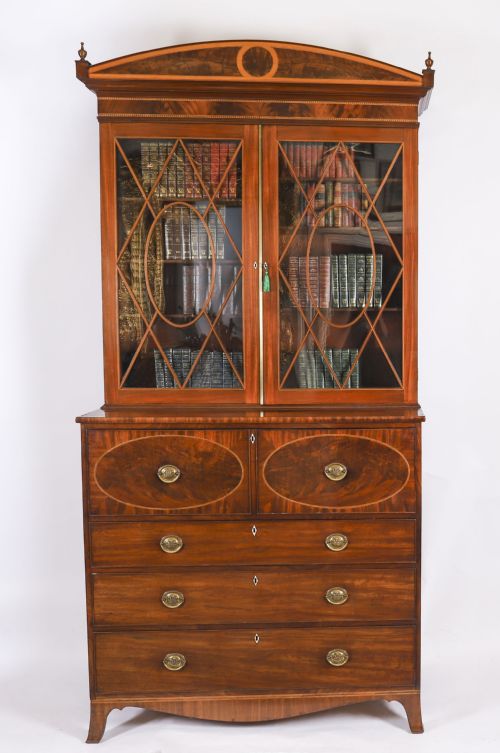
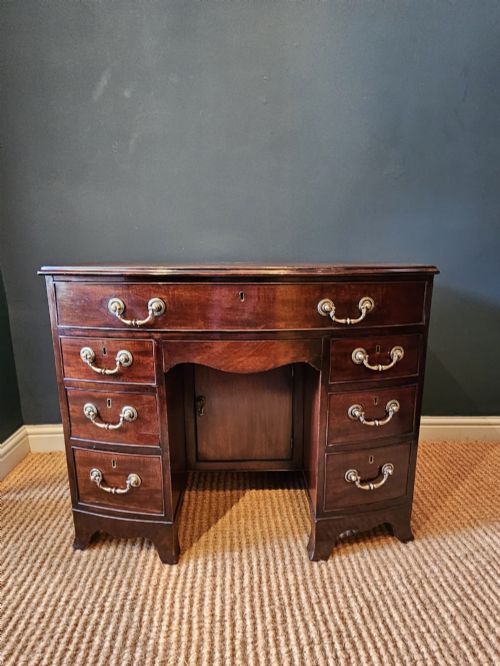
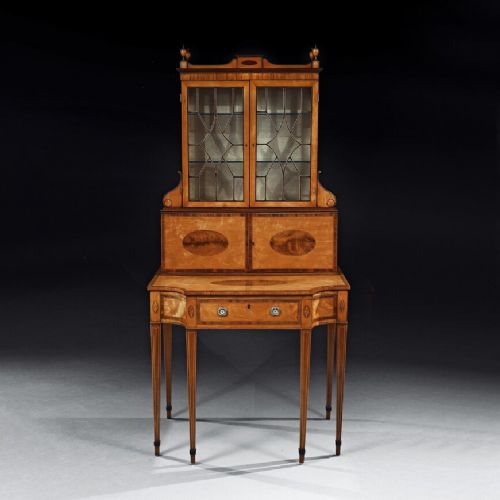
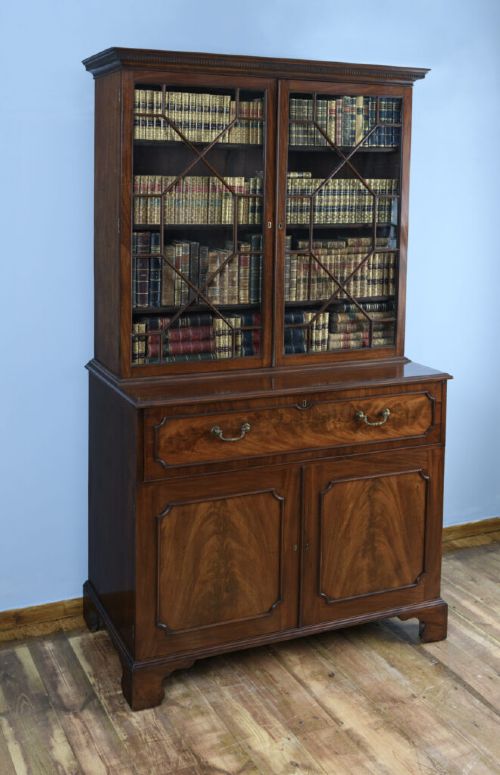
When you search for a george iii secretaire, you are looking at dual-purpose Georgian furniture designed for writing and storage. These pieces combine a standard chest of drawers or bookcase with a fitted drop-front desk drawer.
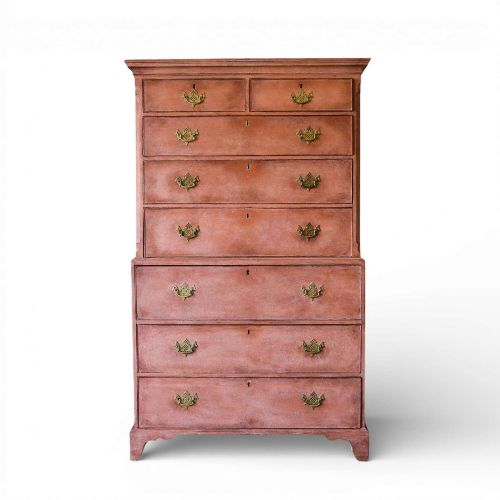
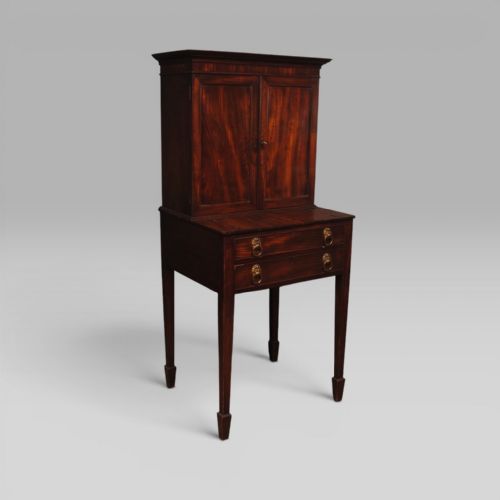
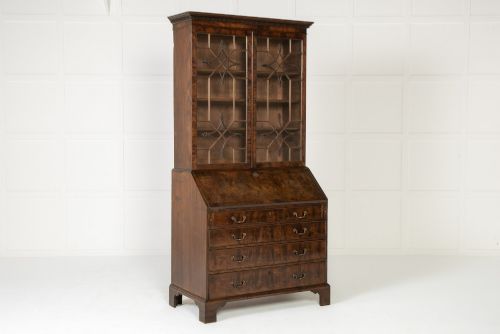
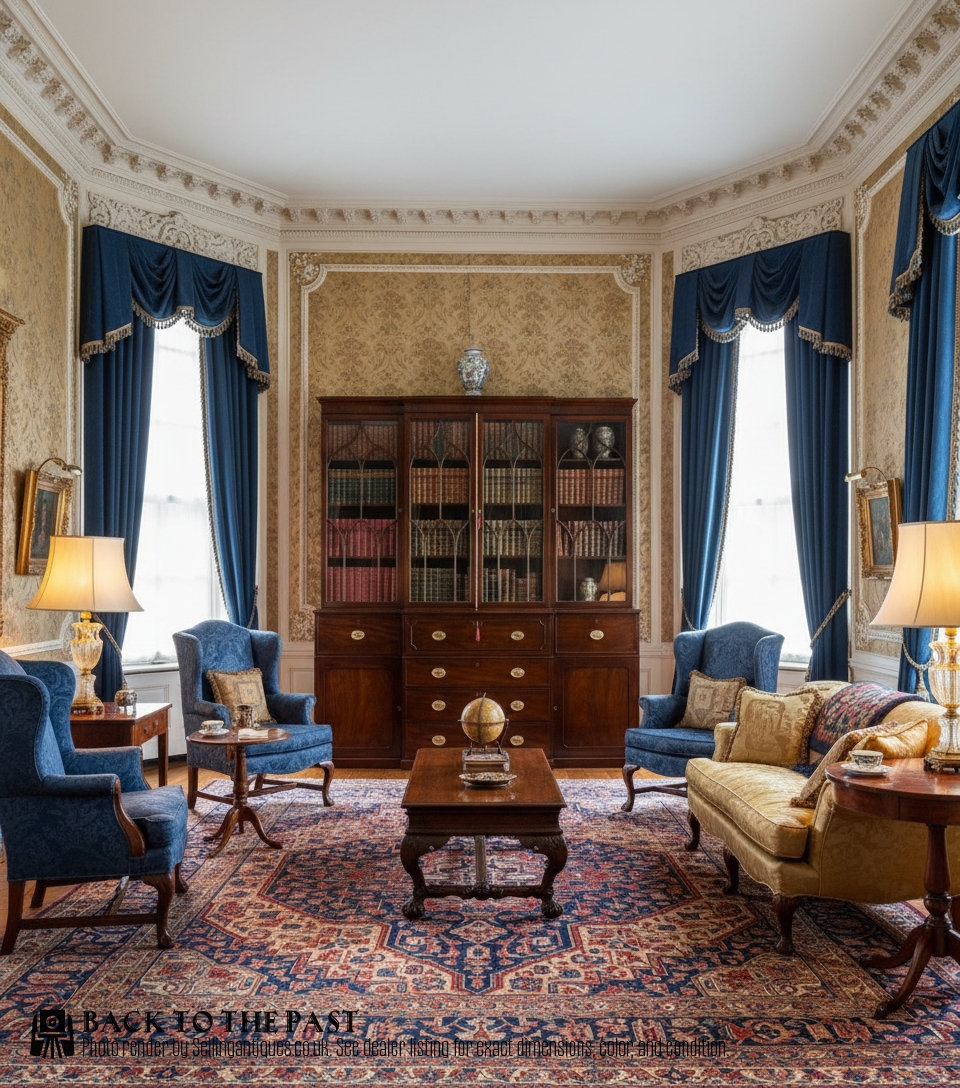
The version you are most likely to meet on this page is the tall secretaire bookcase fitted with glass doors above. You will also encounter compact secretaire chests, tall chest on chest variants, and low press cupboards originating from the eighteenth and nineteenth centuries.
Cabinet makers during this era engineered these drop-front compartments to conceal small internal drawers, pigeonholes, and sometimes secret compartments behind locking timber panels.
Materials and construction
Cabinet makers built these pieces primarily using solid mahogany and mahogany veneers, frequently selecting figured timber, flame mahogany, and burr walnut to create striking grain patterns on drawer fronts and doors. Workshops also integrated satinwood, purple heart, boxwood stringing, and brass hardware for decorative contrast.
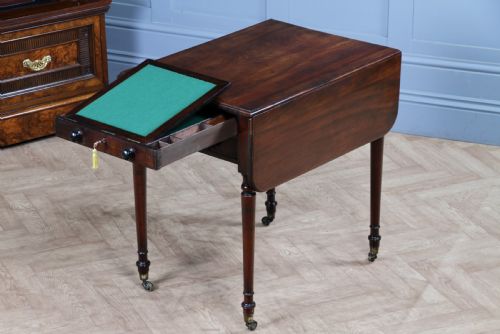
Glazed upper sections utilised glass panes held within wooden frames, whilst writing surfaces often incorporated baize or leather inserts inside the fall-front desk drawer. Secondary woods provided structural stability inside carcases and drawer linings.
Retail Price Guide 2026
Typical UK retail prices for george iii secretaire, calculated from the Sellingantiques database of over a million retail prices indexed since 2003. This retail price guide relies exclusively on Sellingantiques data; no external sources or auction records are used, so the figures do not describe the wider market.
Listings feature mahogany, flame mahogany, satinwood, burr walnut, brass, and glass across Georgian and nineteenth-century forms.
Standards of execution
The distinction between ordinary and exceptional examples rests upon the selection of timber figures and the precision of cabinetwork. Superior pieces display book-matched flame mahogany veneers and intricate contrasting stringing that align seamlessly across multiple drawer tiers.
Internal complexity dictates distinction within this category, separating basic drop-front drawers from elaborately fitted interiors featuring tiered pigeonholes and concealed compartments. The integration of original brass hardware and well-proportioned astragal glazing further elevates the standing of an individual cabinet.
Gillows
The George III Secretaire Glossary
- Secretaire
- A desk drawer featuring a hinged fall-front that drops down to reveal a writing surface and internal pigeonholes. This clever mechanism allows a tall chest or bookcase to function as a fully equipped bureau.
- Astragal glazed
- Glass doors divided into smaller panes by narrow wooden bars called glazing bars. These delicate wooden frameworks define the upper bookcase sections of many refined library cabinets.
- Chest on chest
- A tall case of drawers constructed in two separate stacking sections, with a smaller upper carcase resting on a wider base. This form frequently incorporates a secretaire drawer within the lower section of the upper tier.
- Flame mahogany
- Timber cut from the fork of a mahogany tree where branches join the main trunk, producing a rippling, flame-like grain pattern. Cabinet makers reserved these highly decorative veneers for prominent exterior surfaces.
- Press cupboard
- A large storage cabinet containing sliding trays or shelves behind doors, sometimes adapted with a central secretaire drawer. These utility pieces served to store linen and clothing in domestic interiors.
Frequently Asked Questions
What is a george iii secretaire?
It is a Georgian furniture form featuring a drawer that pulls out and folds down to create a writing desk. These items combine standard storage capabilities with hidden writing compartments.
They emerged during the eighteenth century to maximise domestic utility without cluttering polite rooms with dedicated standalone desks.
How were secretaire bookcases used?
Owners stored books behind upper glass doors while using the pull-down drawer for correspondence and account management. The internal pigeonholes kept paper and writing implements organised.
When the drop-front closed, the furniture presented the formal appearance of a standard chest or bookcase once again.
What woods were used?
Mahogany served as the primary timber, often enhanced by flame mahogany veneers, satinwood, burr walnut, and boxwood stringing. Secondary structural timbers supported the interior carcases and drawer linings.
Brass handles, escutcheons, and glass added functional and decorative contrast to the polished timber surfaces.