

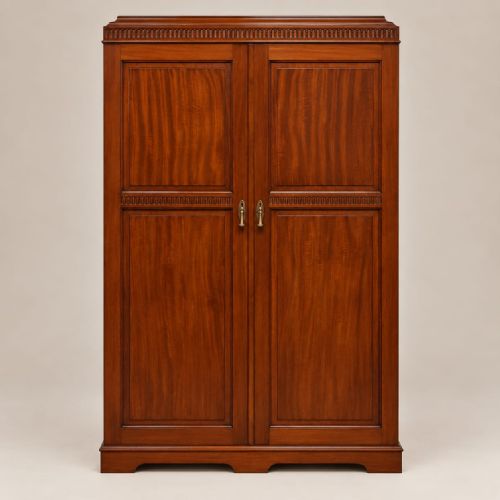
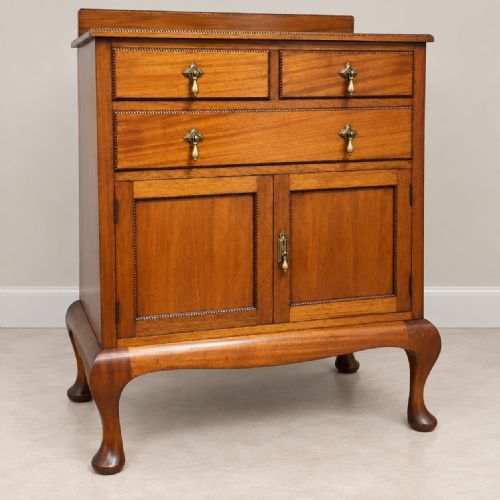
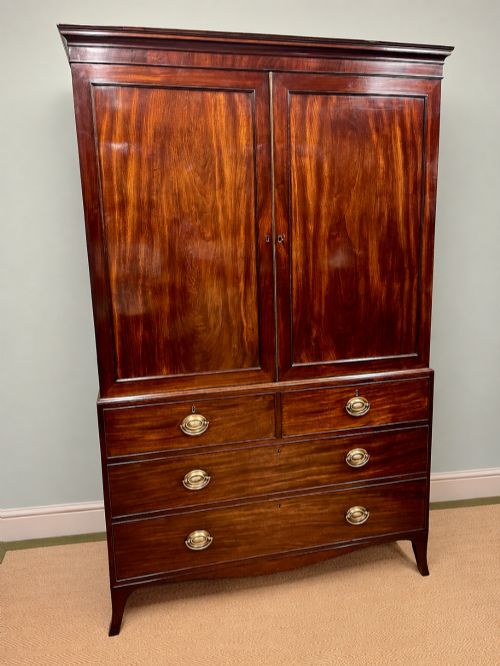
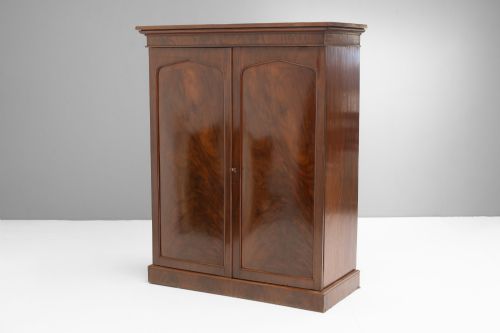
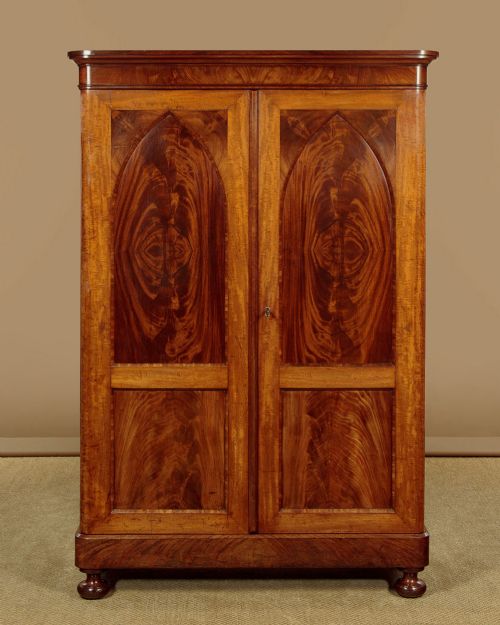
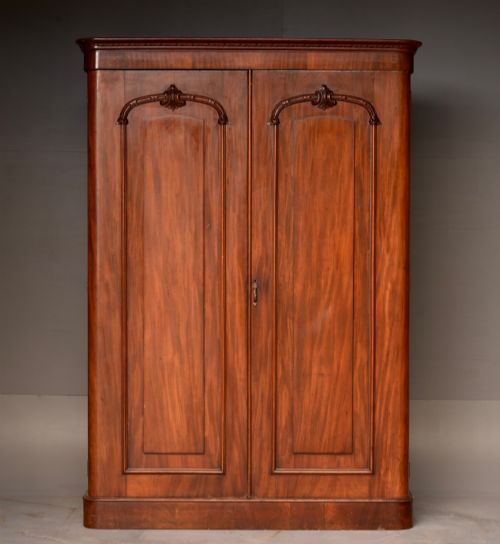
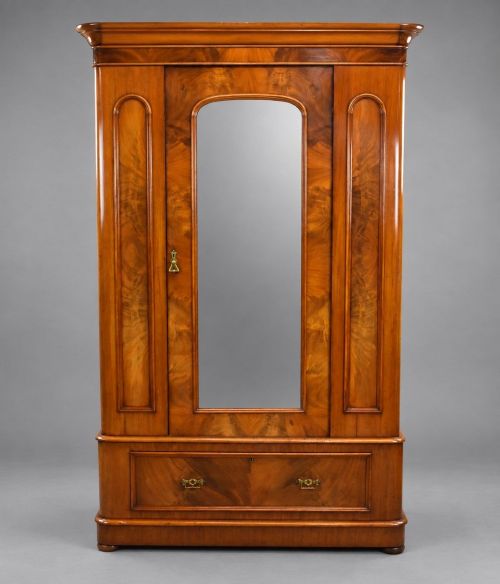
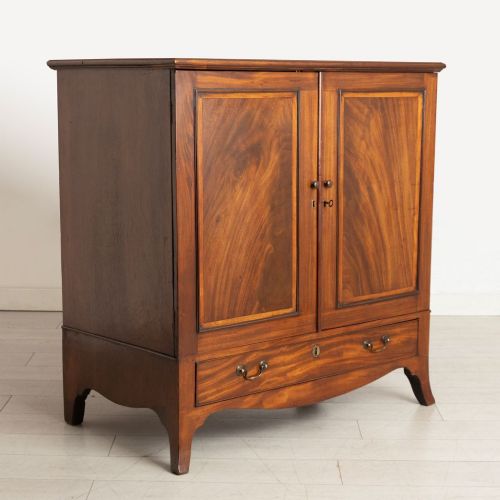
Mahogany Press Cupboard
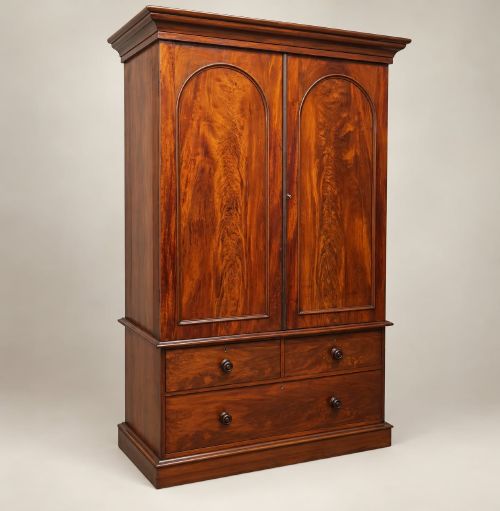
When you search for a mahogany press cupboard, you are looking at substantial storage furniture designed to hold folded linens and hanging clothes.
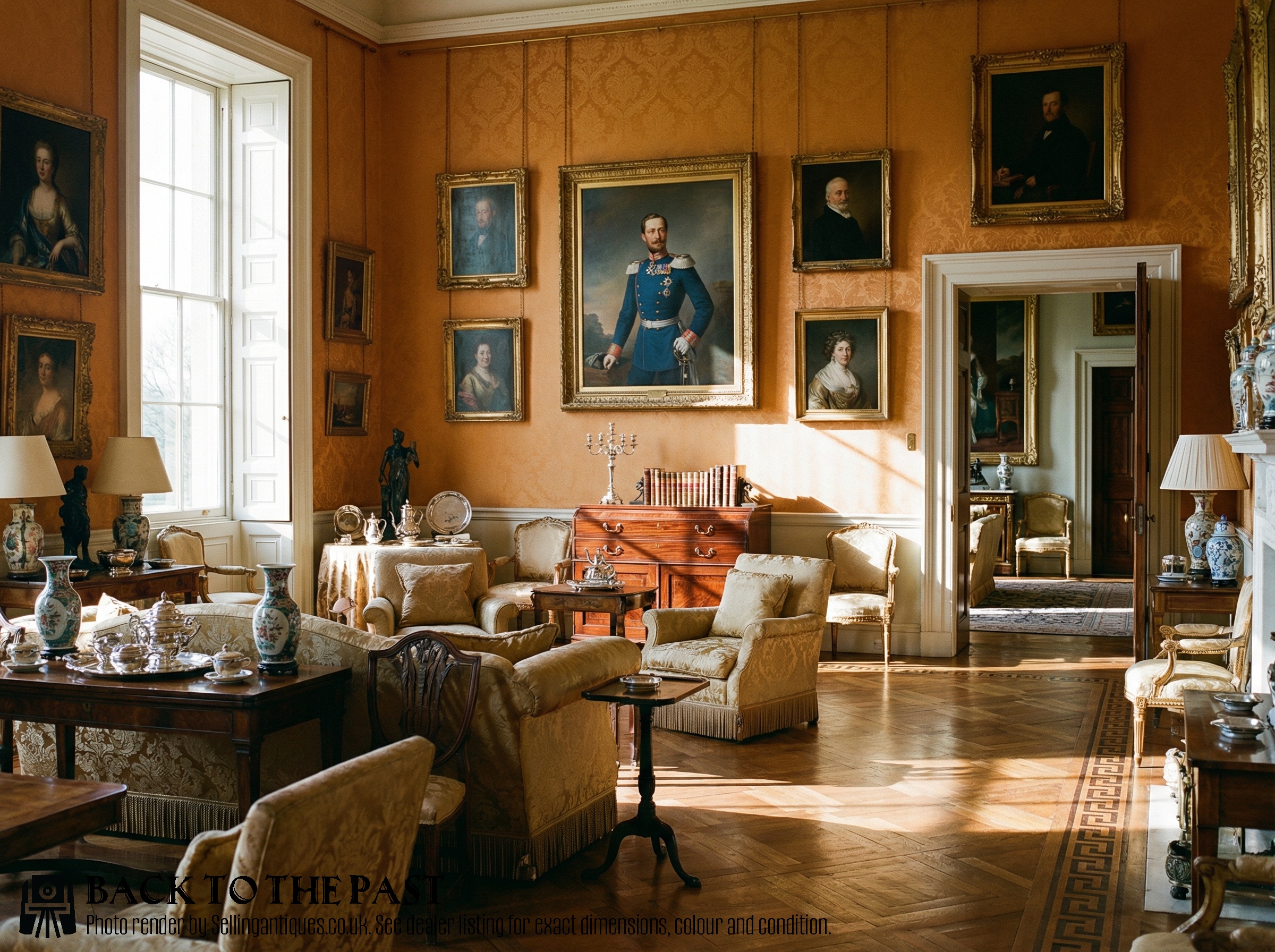
Mahogany Press Cupboard
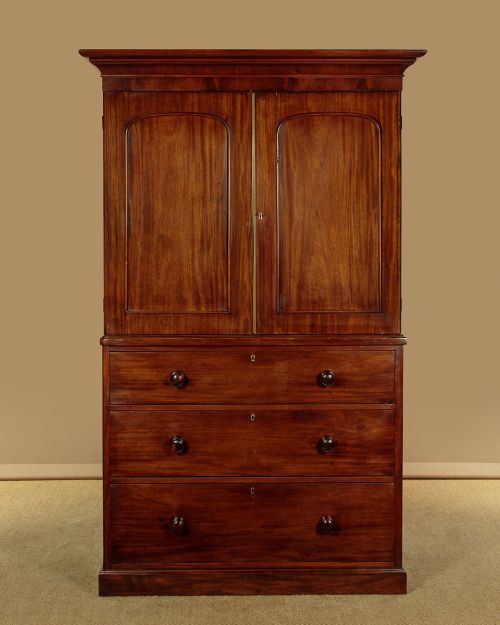
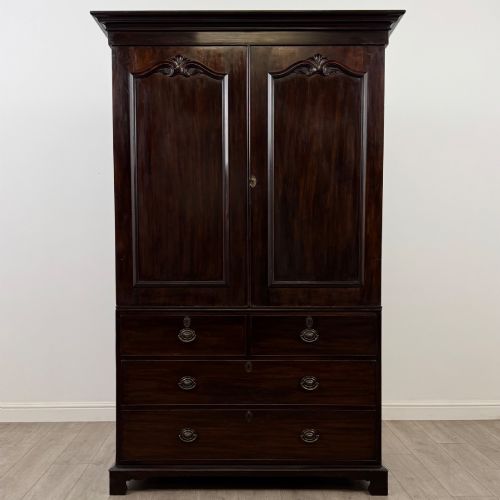
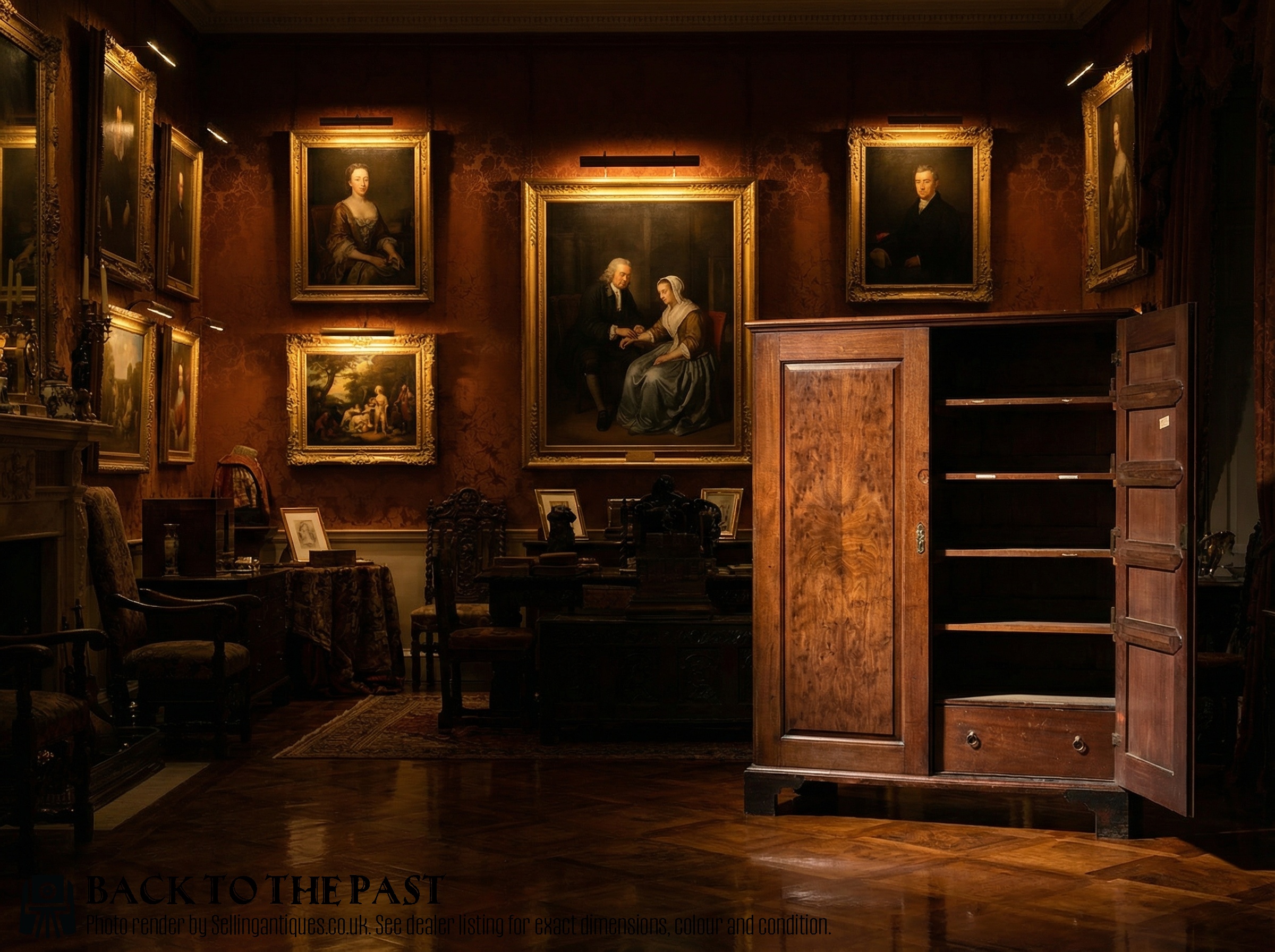
A mahogany press cupboard combines upper cabinet storage with lower drawers, historically used in large houses for organising household linens and clothing. The upper section typically encloses sliding trays or shelves, while the chest base provides deeper drawer storage.
On this page, you will encounter examples primarily from the Georgian, Victorian, and Edwardian periods. These range from grand architectural George III pieces to compact dwarf presses and later wardrobe combinations.
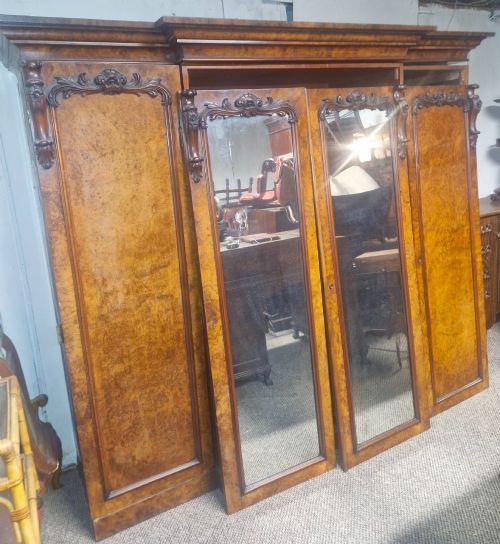
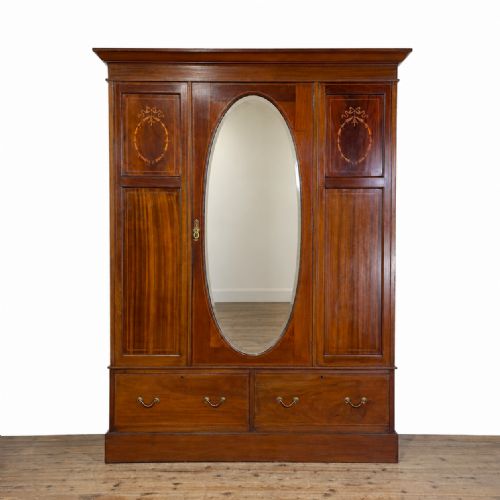
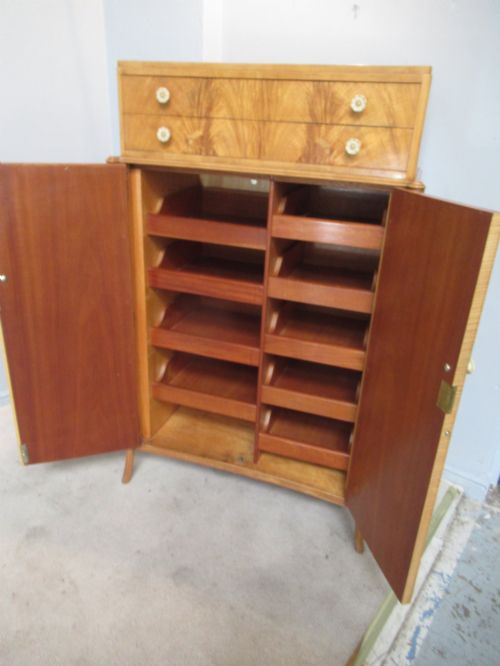
Forms vary from tall breakfront linen presses to low cupboards and gentleman's wardrobes. Many retain interior trays, while others have been converted internally for modern hanging space.
How They Were Made
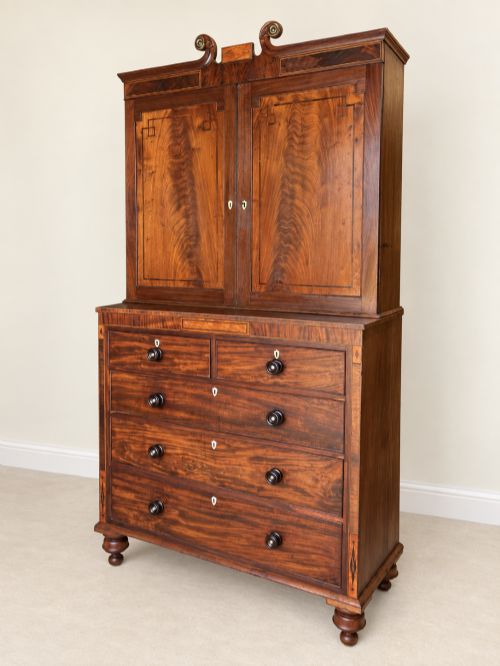
Cabinetmakers constructed these pieces using solid mahogany and supportive secondary timbers such as oak, often applying figured flame mahogany veneer to the primary exterior surfaces to create striking grain patterns. Cabinet construction involved precise dovetail joints for the internal drawers and sturdy pegged frames for the large panelled doors.
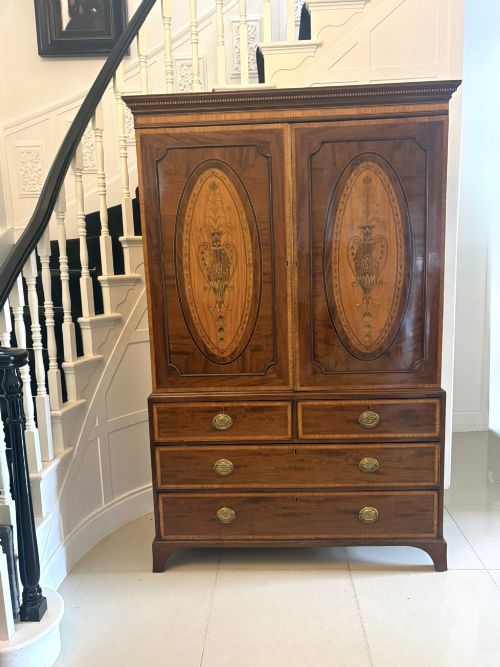
Decorative detailing relied on natural materials and subtle craftsmanship rather than applied ornaments. Artisans incorporated contrasting satinwood and boxwood inlay, brass hardware, and occasionally carved cornices like blind fretwork.
Surfaces were finished to highlight the rich natural warmth and deep reddish-brown tone of the timber. French polishing or wax finishes protected the wood while accentuating the varied figuring of the mahogany veneer.
Mahogany Press Cupboard Retail Price Guide 2026
Typical asking prices for mahogany press cupboard among the pieces listed under this phrase on Sellingantiques today, from the lower quarter to the upper quarter. They describe what is for sale here now, not the wider market.
Some antique press cupboards still bear faint traces of chalk inventory numbers written inside the drawers by Victorian housekeepers.
What Varies in Quality
The selection of timber dictates much of the visual merit, with master cabinetmakers reserving highly figured flame mahogany veneers for the principal drawer fronts and door panels. Simpler pieces utilise straight-grained mahogany boards with minimal decorative banding or inlay.
Proportion and architectural harmony separate standard domestic pieces from exceptional workshops. Finely balanced cornices, harmonious door panel divisions, and well-proportioned bracket feet or plinths demonstrate superior design intelligence.
Internal execution reveals the level of craftsmanship, particularly in the construction of the pull-out linen slides and the precision of the drawer dovetailing. Pieces retaining original brass handles and working locks hold greater integrity.
maples & co·Heal & Son·Gillows·Druce & Co.
The Mahogany Press Cupboard Glossary
- Press cupboard
- A large storage piece with upper doors enclosing shelves or sliding trays above a chest of drawers. This traditional form evolved specifically for domestic linen storage.
- Flame mahogany veneer
- A thin slice of wood cut from the fork of a mahogany tree where the branch meets the trunk, producing a distinctive flickering flame pattern. Cabinetmakers laid this carefully across drawer fronts for decorative impact.
- Gentleman's wardrobe
- A specialised storage piece featuring hanging space or sliding trays flanked by smaller drawers or compartments. These were designed for the specific wardrobe needs of gentlemen.
- Blind fretwork
- Carved decorative patterning applied flat to a wooden surface to resemble open fretwork without cutting through the timber. This technique appeared frequently on mid-Georgian cornices.
- Dwarf press
- A shortened version of the traditional linen press, built lower to the ground for smaller rooms. These retain the upper cupboard and lower drawer arrangement in a compact footprint.
Mahogany Press Cupboard: Frequently Asked Questions
What is a press cupboard used for?
Historically, these pieces served households as dedicated storage for folded linens, sheets, and garments before modern wardrobes became common. The sliding internal trays kept textiles flat and organised.
Today, they function well in bedrooms or hallways as substantial wardrobes and linen storage units, concealing modern items behind historic panelled doors.
How do I tell a Georgian press cupboard apart from a Victorian one?
Georgian examples, particularly from the George III period, often display architectural cornices, bracket feet, and understated cockbeading around the drawer edges. The timber tends to have a rich, warm patina developed over centuries.
Victorian pieces generally feature heavier proportions, plinth bases, and more robust mouldings. The flame mahogany veneer on Victorian models can be particularly dramatic and highly figured.
Can these cupboards be used as modern wardrobes?
Many press cupboards feature internal sliding trays that can accommodate folded clothes, knitwear, and boxes. Some examples have historical or recent internal adaptations to include hanging rails.
Buyers frequently assess the interior depth to ensure modern clothes hangers fit comfortably inside the upper cupboard section.
What is the difference between a linen press and a wardrobe?
A traditional linen press specifically combines an upper cabinet housing sliding trays with a lower chest of drawers base. Wardrobes are primarily designed for hanging garments from vertical rails.
Many antique pieces catalogued as gentleman's wardrobes blend these functions, offering both hanging space and internal trays behind double doors.