

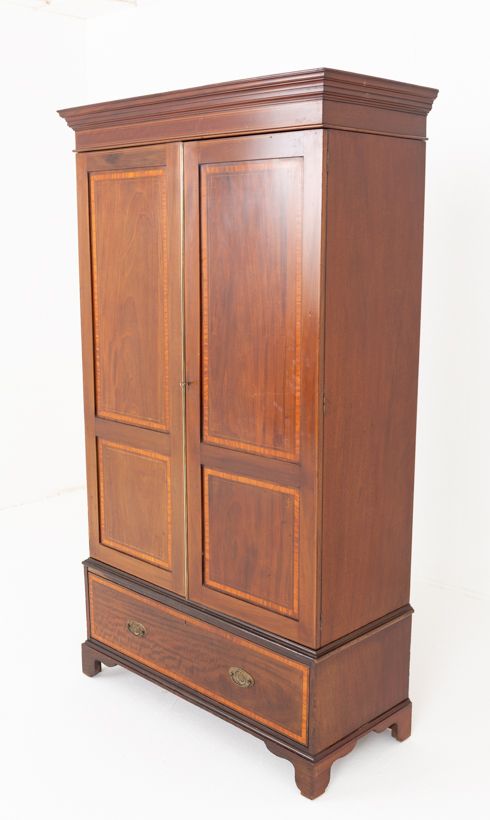
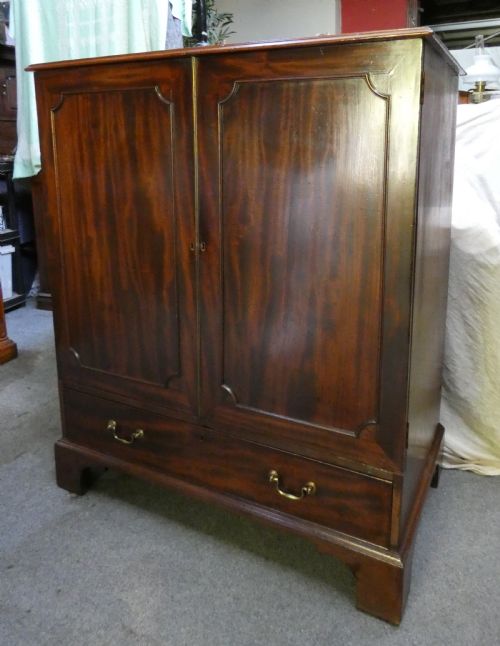
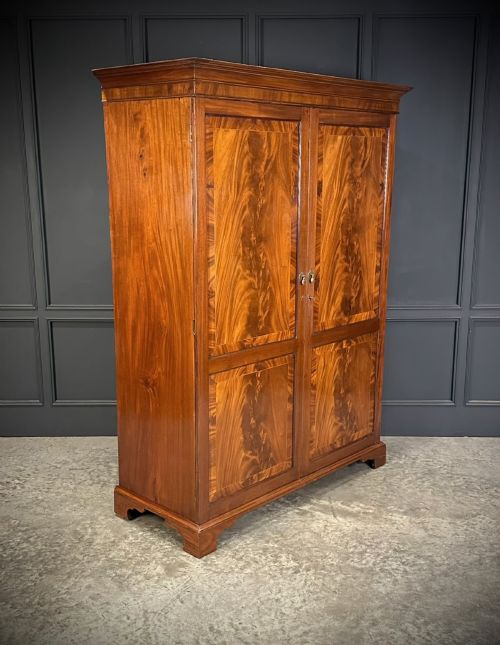
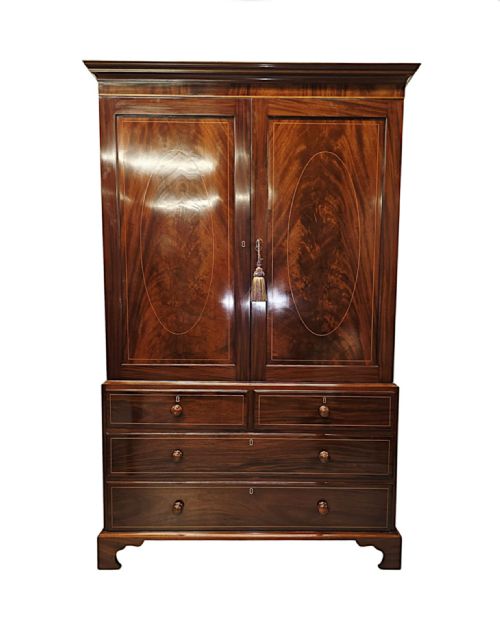
Georgian Mahogany Armoire
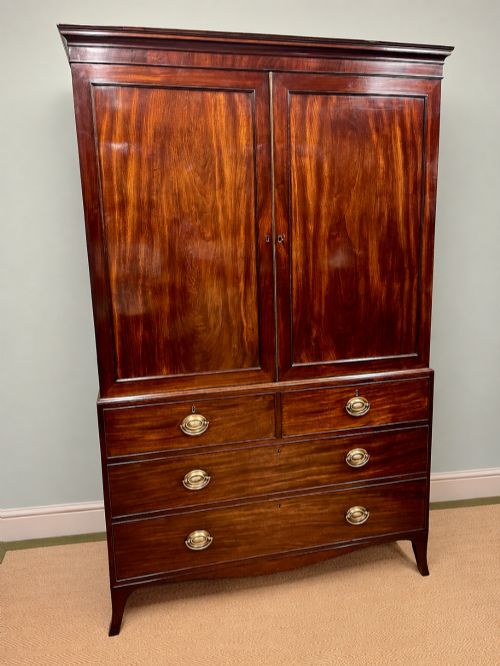
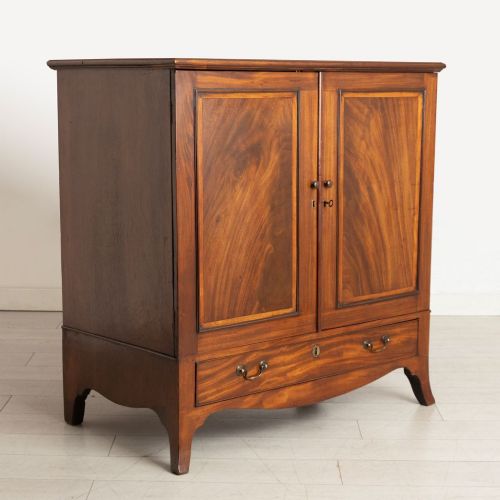
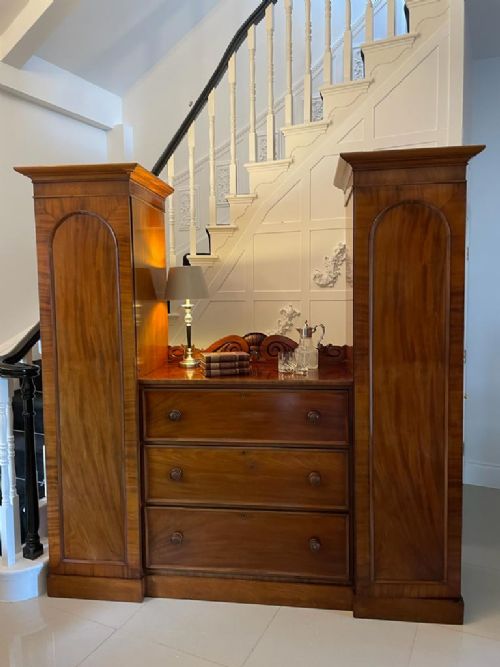
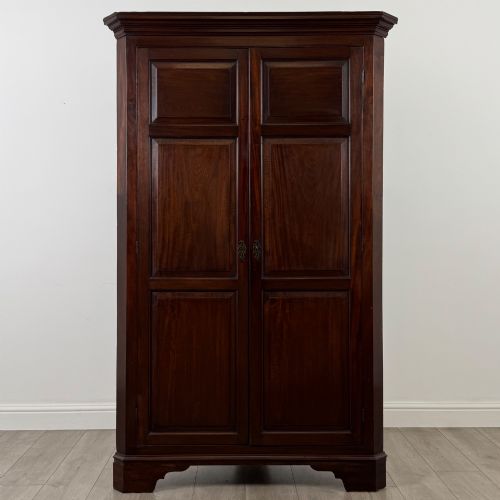
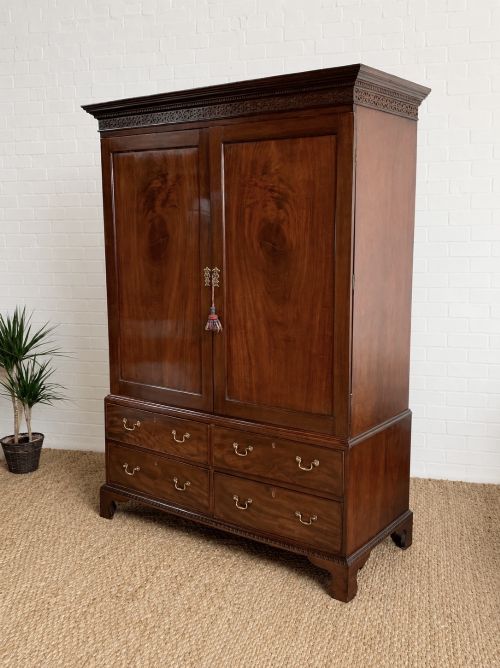
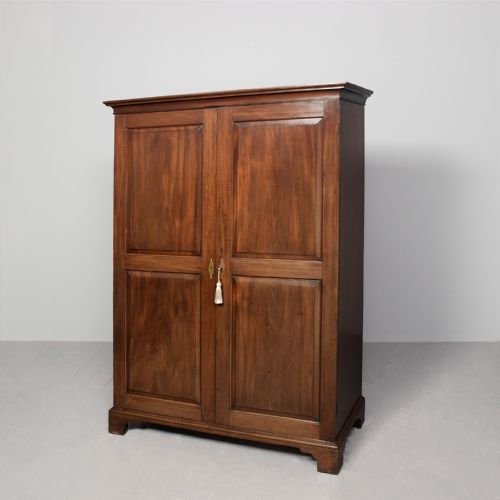
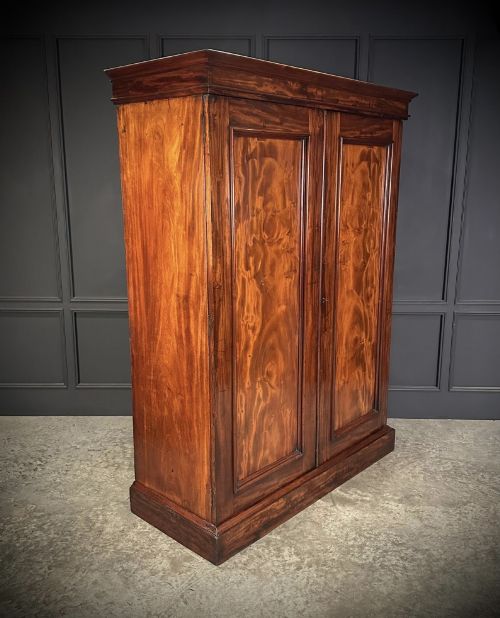
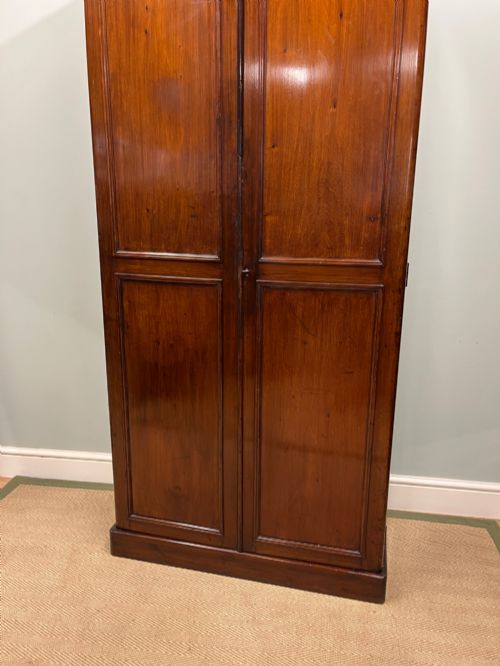
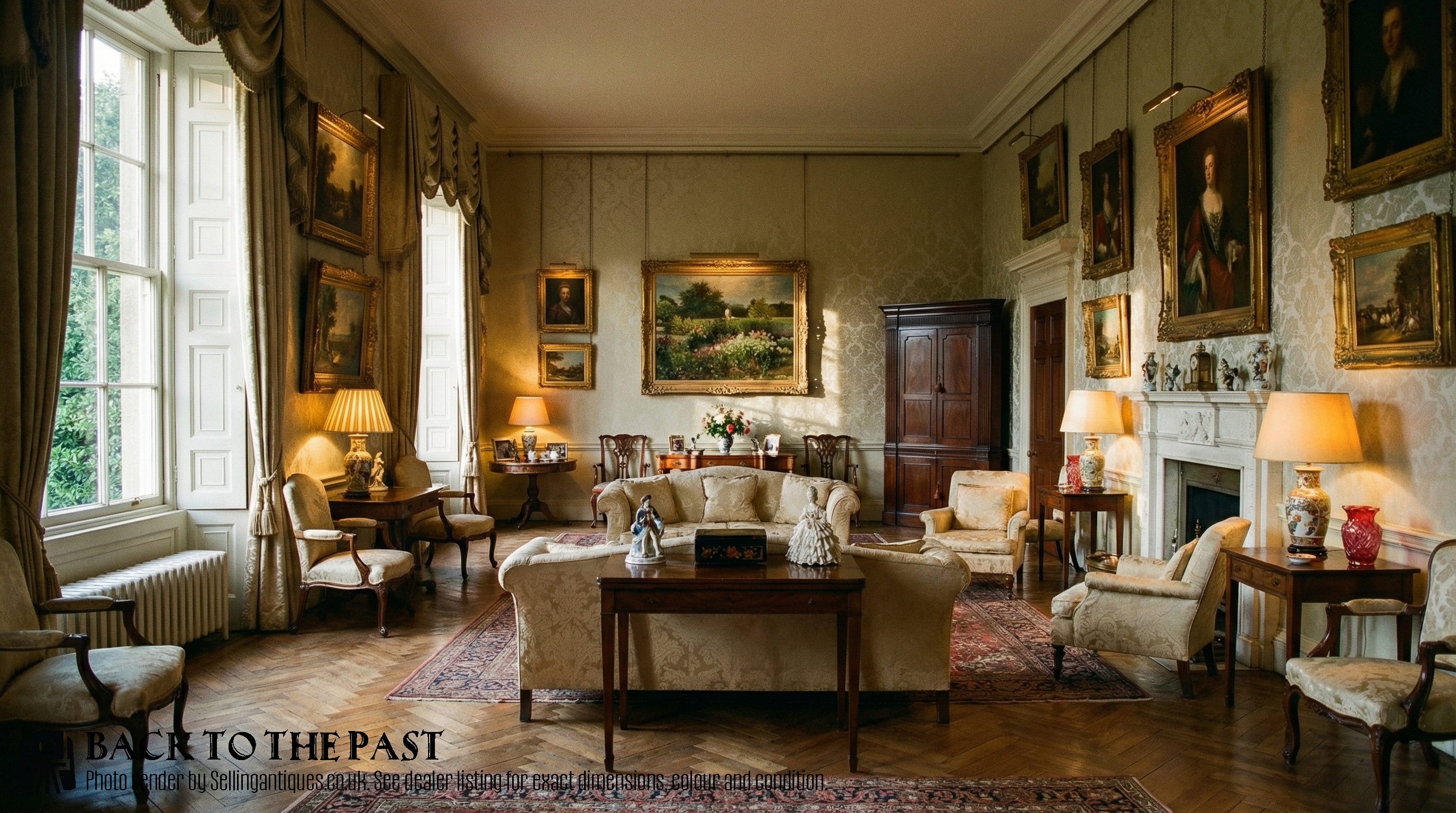
A georgian mahogany armoire brings substantial timber and deep grain into a bedroom, offering grand scale and fitted linen storage.
Georgian Mahogany Armoire
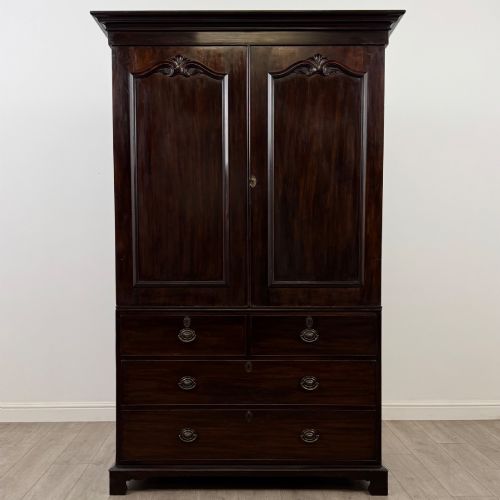
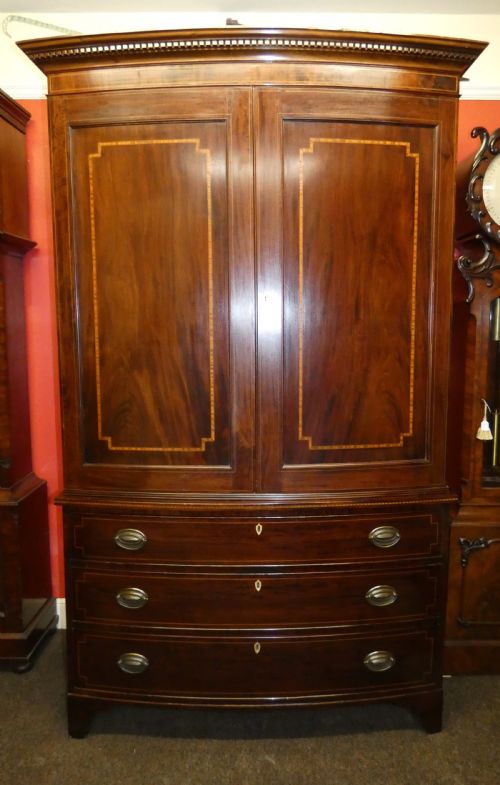
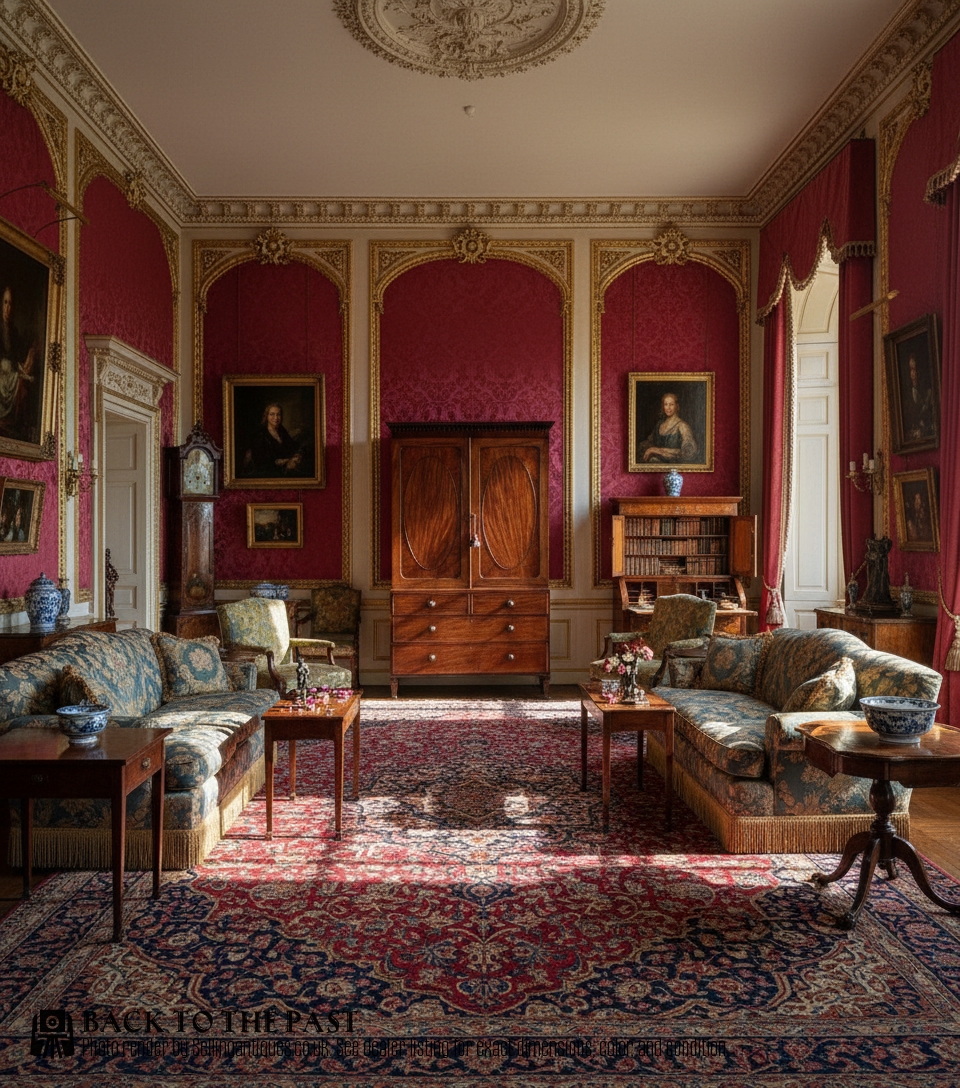
When you search for a georgian mahogany armoire, you encounter pieces that span the eighteenth and nineteenth centuries, including George III, Regency, and William IV eras. These large items frequently appear as linen presses, gentlemen's wardrobes, and press cupboards, combining upper sliding trays with lower chest drawers.
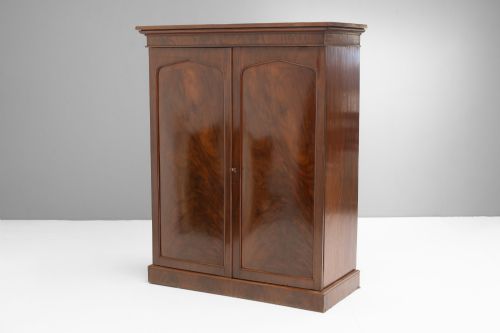
The dominant forms on this page include breakfront wardrobes, bowfront linen presses, and tall cabinets originating from Georgian and nineteenth-century workshops. Alongside authentic period pieces, you will also discover later revival items designed in the Georgian or Chippendale style.
Materials and construction
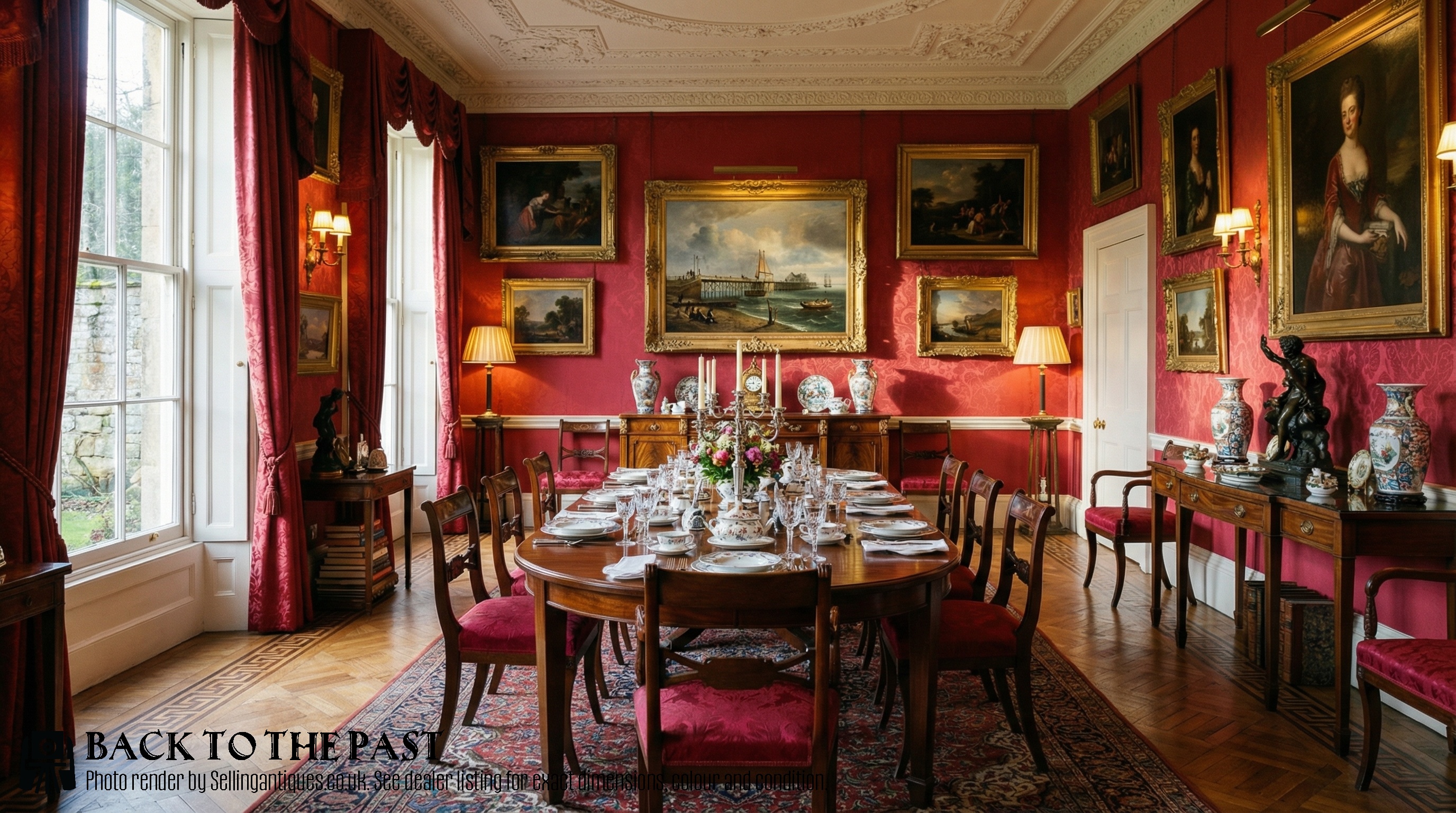
Cabinet makers utilised solid mahogany, often enhanced with figured flame mahogany veneer to create striking patterns across the large door panels and drawer fronts. Secondary timbers such as oak frequently form the internal drawer linings and structural framing.
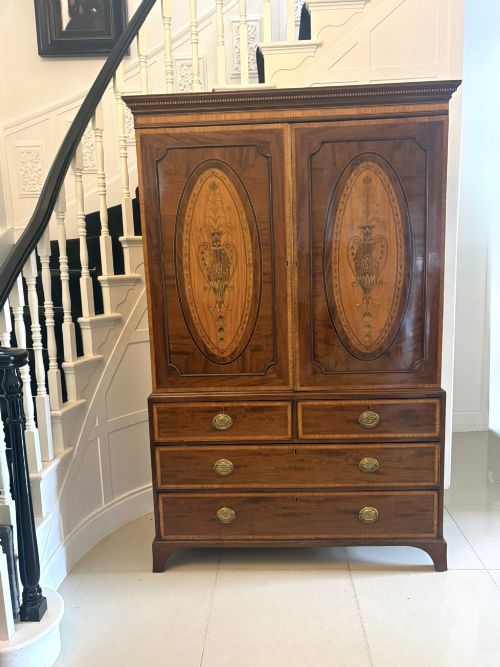
Surface enrichment relies on subtle contrasting details, incorporating satinwood, boxwood, and marquetry inlay alongside rosewood crossbanding. Cornices occasionally display carved blind fretwork, while brass hardware secures the heavy doors and drawers.
Georgian Mahogany Armoire Retail Price Guide 2026
Typical asking prices for georgian mahogany armoire among the pieces listed under this phrase on Sellingantiques today, from the lower quarter to the upper quarter. They describe what is for sale here now, not the wider market.
Listings feature mahogany, satinwood, and brass alongside oak secondary timbers across Georgian, Regency, and Victorian periods.
Defining quality
The distinction between ordinary and exceptional examples rests on the selection of timber and the vigour of the grain figures. Flame mahogany veneer laid evenly across expansive door panels elevates a piece far above plain timber surfaces.
Refinement in secondary details marks the superior specimens, such as crisp marquetry inlay, finely executed satinwood banding, and substantial brass mounts. The proportion between the upper press section and the lower drawers dictates visual balance.
The Georgian Mahogany Armoire Glossary
- Linen Press
- A tall two-part cabinet featuring an upper section with sliding trays for storing folded textiles above a chest of drawers.
- Flame Mahogany
- Timber cut from the fork of the mahogany tree to produce a dramatic, flickering grain pattern used on prominent surfaces.
- Crossbanding
- A narrow strip of veneer laid perpendicularly to the main grain around the border of a drawer front or door.
- Blind Fretwork
- Carved ornamental woodwork applied to a flat surface in a geometric interlaced pattern without piercing through the timber.
Georgian Mahogany Armoire: Frequently Asked Questions
What is a linen press?
A linen press is a tall storage piece designed specifically to keep freshly laundered textiles flat and organised.
The upper section encloses sliding wooden trays, while the lower base contains chest drawers for additional garments.
How do I date a wardrobe?
Dating relies upon timber selection, structural proportions, and decorative motifs characteristic of specific reigns and periods.
Cabinet construction methods and secondary woods like oak also provide clear indicators of the era of manufacture.
Where were they placed?
These large wardrobes stood in principal bedrooms, dressing rooms, and large hallways of substantial town and country houses.
Their substantial presence meant they served as permanent architectural furniture within domestic interiors.
How do I maintain mahogany?
Maintain timber surfaces by applying quality beeswax polish sparingly and buffing with a soft cloth to preserve the sheen.
Keep pieces away from direct heat sources and strong sunlight to prevent the timber and veneer from drying out.