

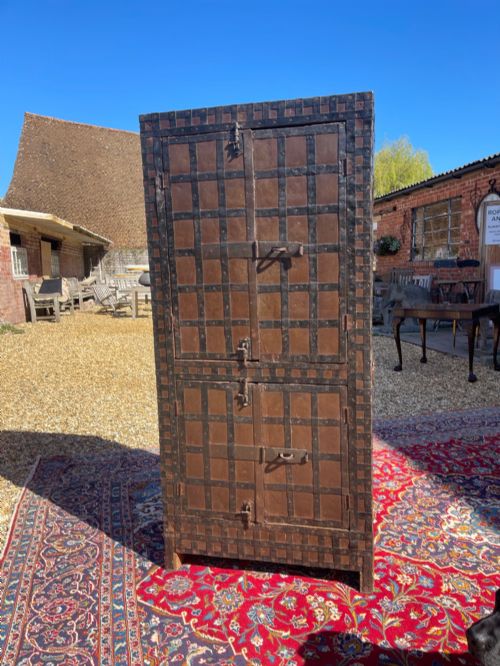


Nineteenth Century Wardrobe
A nineteenth century wardrobe holds the quiet gravity of a bedroom designed before the age of flat-pack furniture, offering deep hanging space and architectural presence.
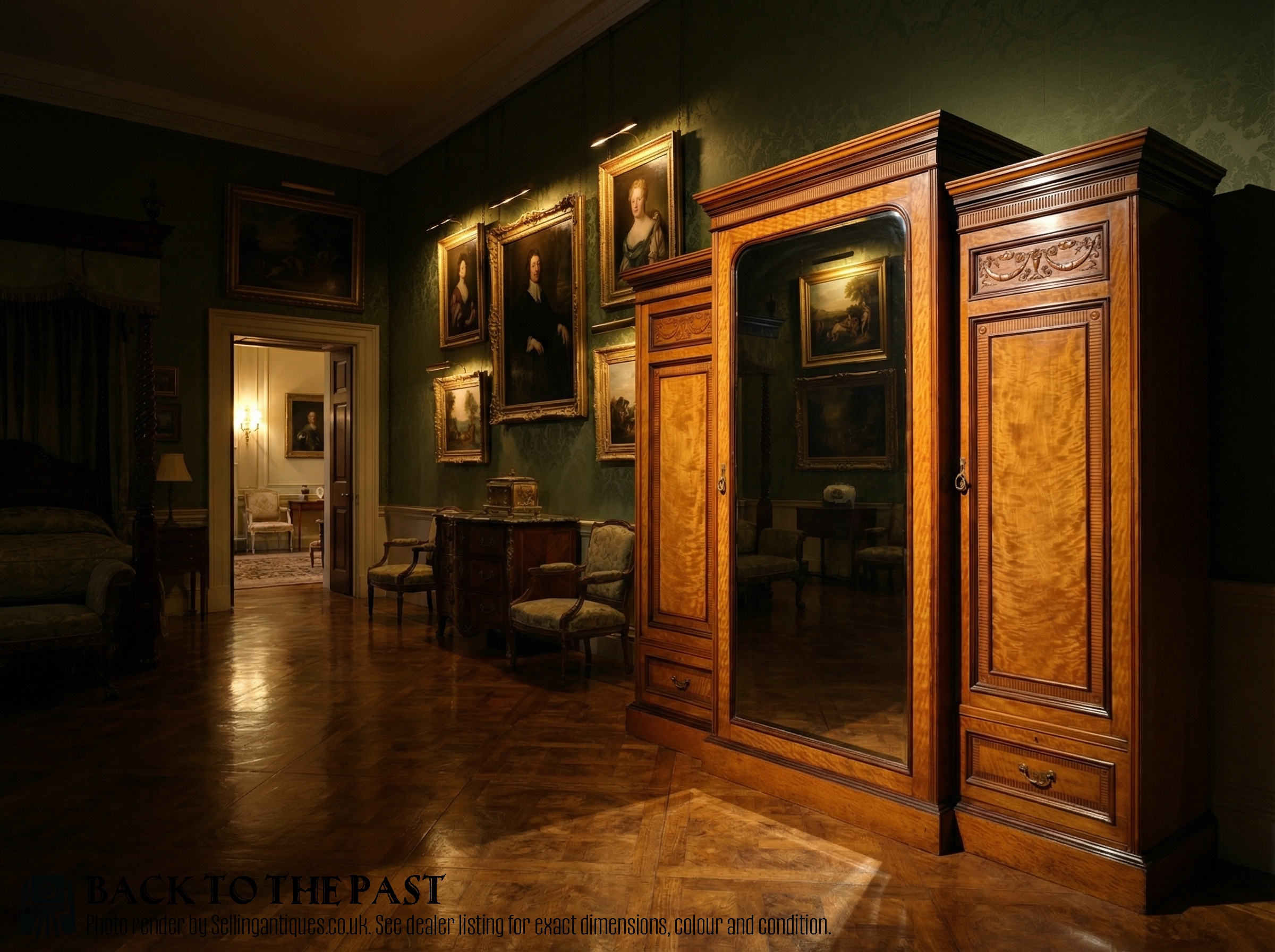
Nineteenth Century Wardrobe
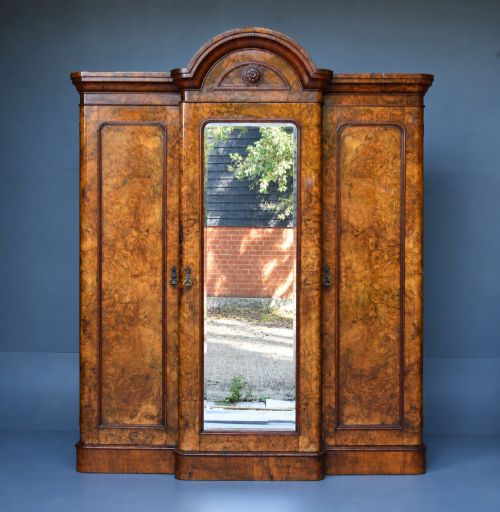
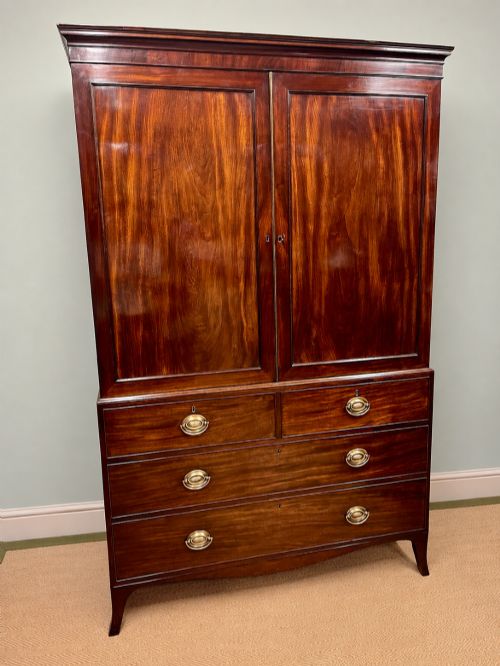
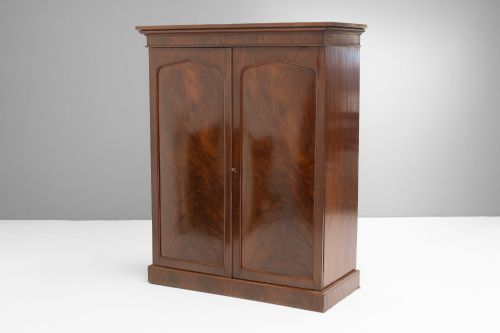
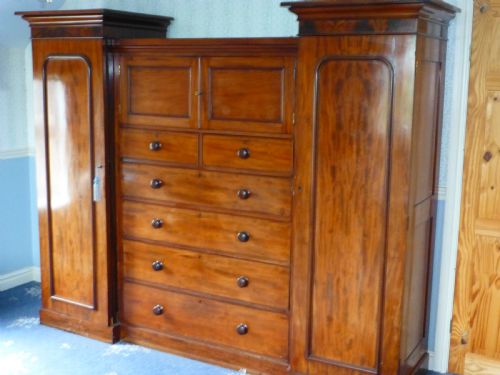
A nineteenth century wardrobe encompasses large case pieces built to store garments and linen, appearing frequently in Victorian, Regency, and William IV iterations. The selection spans straightforward double door designs, expansive triple wardrobes, and multi-section compactums equipped with internal drawers and hanging compartments.
Buyers also encounter related forms such as linen presses, armoires, and press cupboards constructed from regional timbers. These pieces range from British vernacular oak and Welsh pieces to continental French Empire and Swedish birch examples, alongside colonial pieces from India.
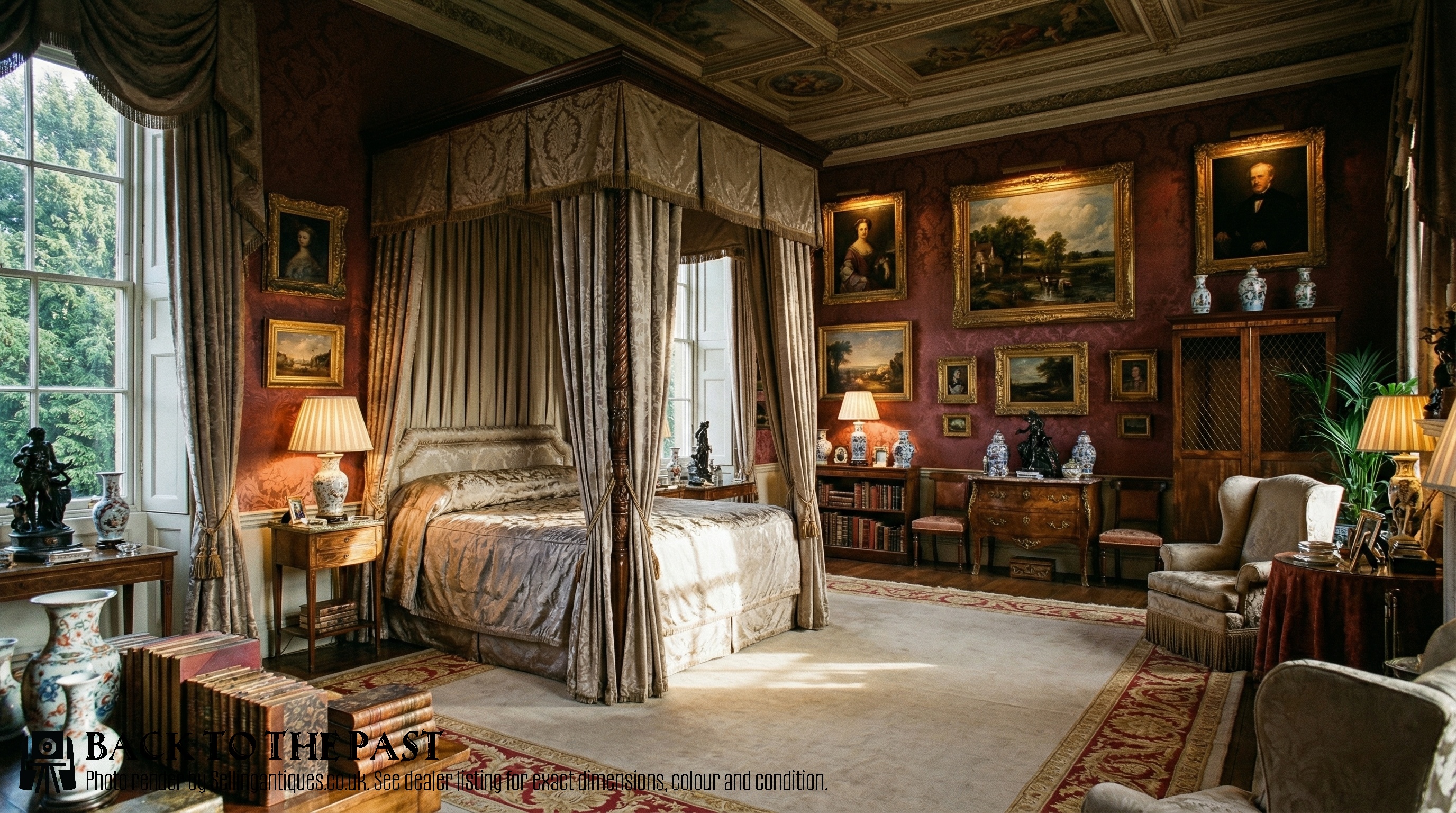
Materials and construction methods
Makers utilised dense hardwoods like mahogany, walnut, and burr walnut, frequently applying flame mahogany veneer over secondary timbers to achieve striking grain patterns on the main doors. Regional workshops also turned to oak, pine, ash, and satin birch, sometimes employing painted finishes or scumbled effects.
Metal hardware played a functional and decorative role, with brass handles, escutcheons, and occasional ormolu mounts securing heavy doors. Structural integrity relied on deep plinths, substantial cornices, and panelled construction to support the massive weight of large timber carcases.
Nineteenth Century Wardrobe Retail Price Guide 2026
Typical asking prices for nineteenth century wardrobe among the pieces listed under this phrase on Sellingantiques today, from the lower quarter to the upper quarter. They describe what is for sale here now, not the wider market.
Listings feature extensive use of burr walnut, flame mahogany veneer, and solid oak across nineteenth century wardrobe carcases.
Factors of distinction
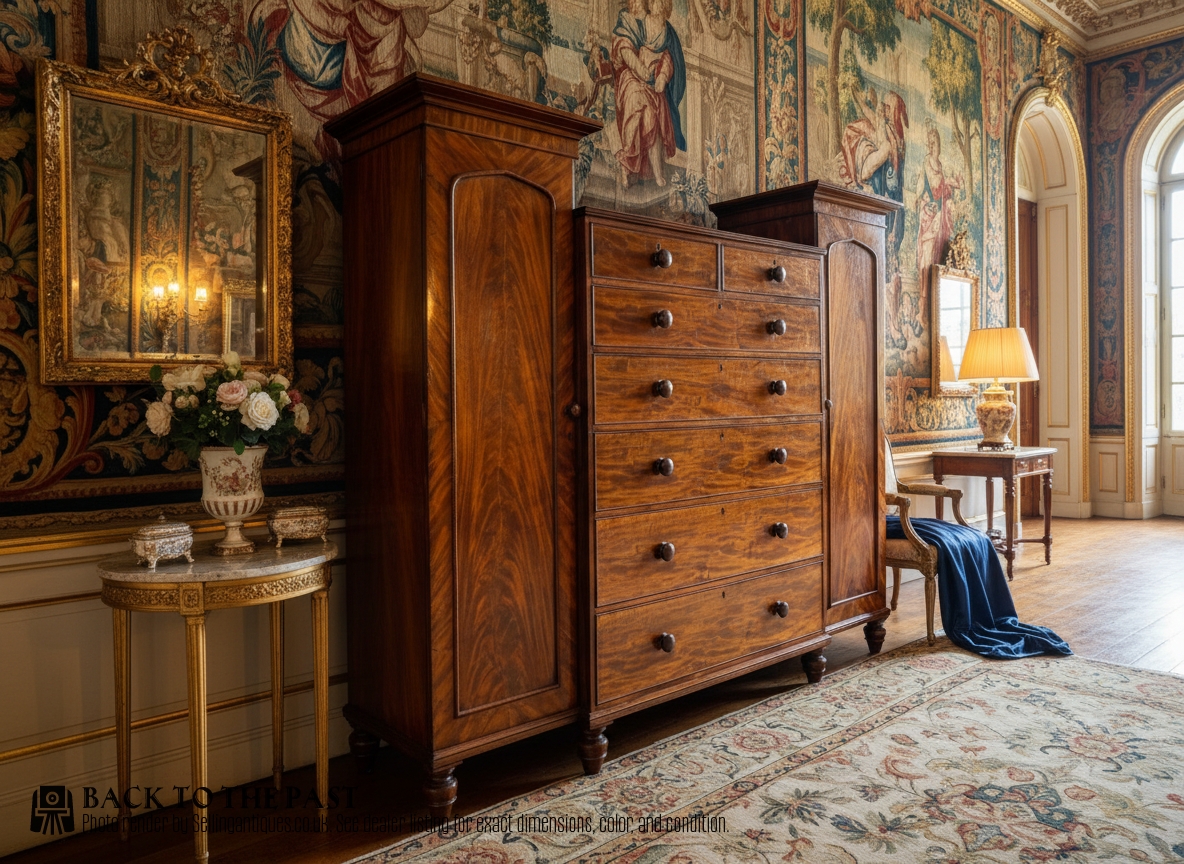
Quality rests heavily on the choice of timber and veneer matching, where book-matched burr walnut or flame mahogany elevates a straightforward carcase into high cabinet work. The ambition of the internal layout also dictates standard, moving from simple hanging rails to complex fitted compactums with linen slides and integrated drawers.
The refinement of exterior carving, applied mouldings, and original brass or gilt bronze mounts separates utilitarian chambers from pieces originating in notable workshops. Proportion and architectural balance define the upper tier, ensuring that monumental armoires maintain visual harmony rather than appearing heavy.
Gillows·Spillman and Co London·Lamb of Manchester
The Nineteenth Century Wardrobe Glossary
- Compactum
- A multi-compartment wardrobe designed for comprehensive clothing storage, combining hanging space, shelves, and internal drawers within a single large carcase.
- Linen press
- A tall cupboard featuring sliding trays or presses in the upper section for folded textiles, placed above a base fitted with wider drawers.
- Breakfront
- A cabinetry format where the central section projects forward from the flanking wings, creating a layered architectural facade.
- Ormolu
- Gilt bronze mounts applied to furniture for decorative accent, seen most frequently on continental pieces.
- Scumbled
- A paint finish manipulated with tools or rags to simulate the varied grain of more expensive timbers on a simpler wood base.
Nineteenth Century Wardrobe: Frequently Asked Questions
How do I fit a tall wardrobe into a modern room?
Nineteenth century wardrobes were often constructed in modular sections with a separate cornice, base, and carcase sides, allowing them to be disassembled and reassembled on site by a professional.
Measure your ceiling height carefully before purchase, leaving clearance above the cornice to allow the final decorative moulding to drop securely into place.
What is the difference between an armoire and a wardrobe?
Armoire is a traditional continental term for a large cupboard or wardrobe, while nineteenth century British usage typically applied wardrobe or press to describe similar hanging and storage furniture.
French and Swedish examples often display distinctive pediment carvings and lighter painted or birch surfaces compared to darker British mahogany and walnut carcases.
Can I adjust the internal hanging space?
Most interiors reflect nineteenth century tailoring practices, featuring fixed timber hanging pegs or simple wooden rails rather than modern adjustable metal hanging rods.
Adapting the interior usually requires inserting a discrete brass rail mounted to existing side brackets without altering the original structural timber of the carcase.
How do I identify a Regency period piece?
Regency pieces dating from the early nineteenth century favour classical restraint, clean architectural lines, and dark mahogany surfaces accented with fine brass inlay or restrained reeding.
Unlike heavily carved later Victorian iterations, Regency wardrobes rely on strict geometric proportions and subtle timber figuring for their visual impact.