





Mahogany Compactum Wardrobe
A mahogany compactum wardrobe offers substantial fitted storage combining hanging space, drawers and shelving within one impressive architectural frame.
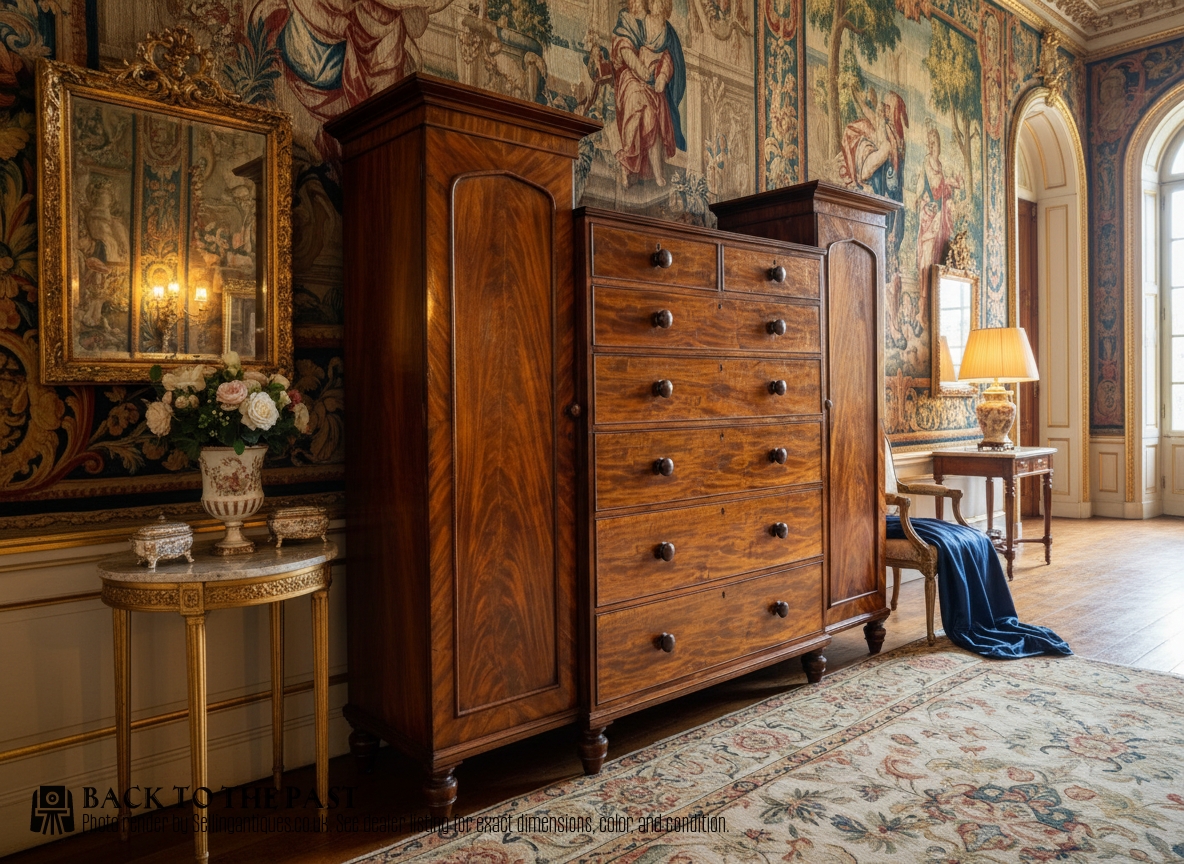
Mahogany Compactum Wardrobe
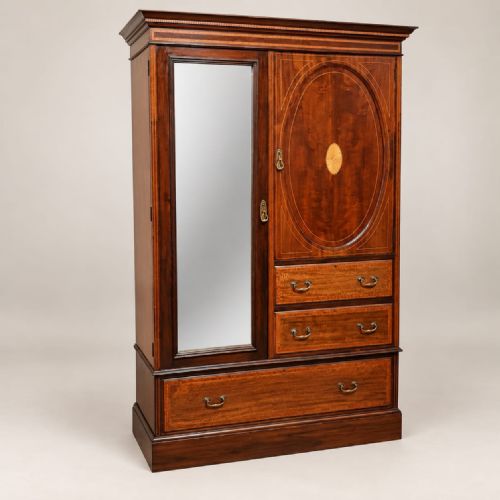
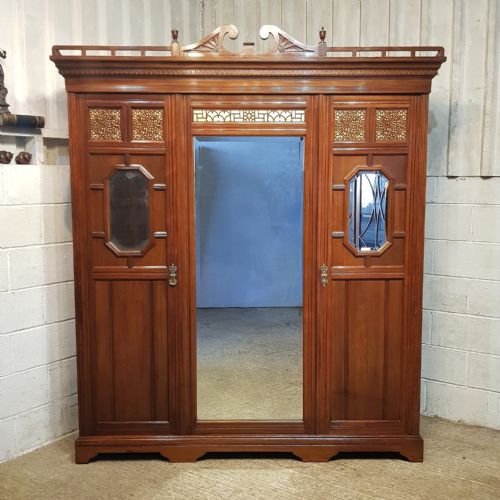
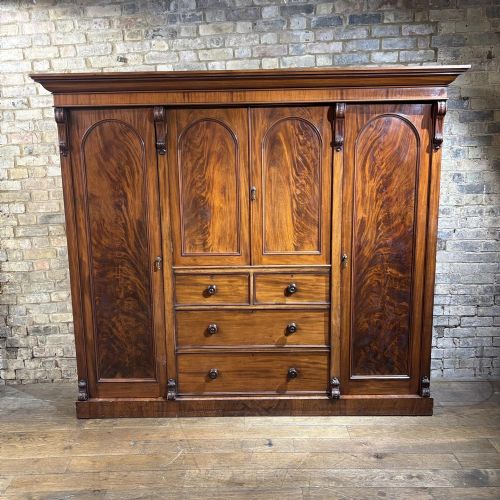
A mahogany compactum wardrobe is a large multi-section storage piece designed to replace several bedroom furniture items by integrating hanging compartments, linen presses and banks of drawers. When searching for this phrase, buyers encounter substantial timber constructions dating primarily from the Georgian, William IV, Victorian and Edwardian periods.
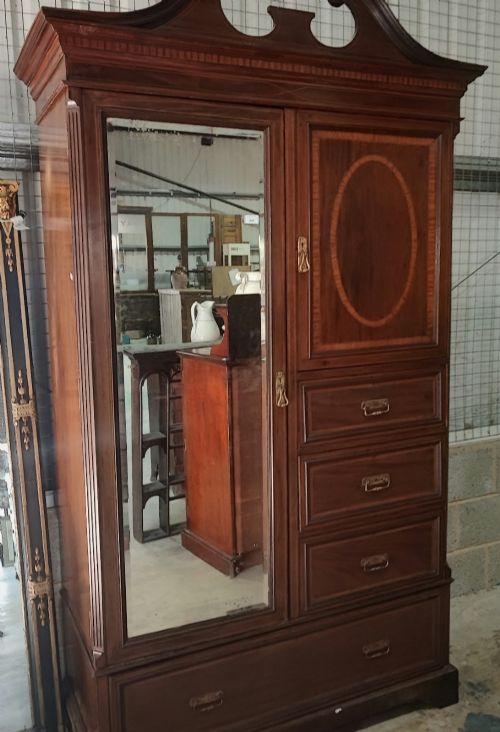
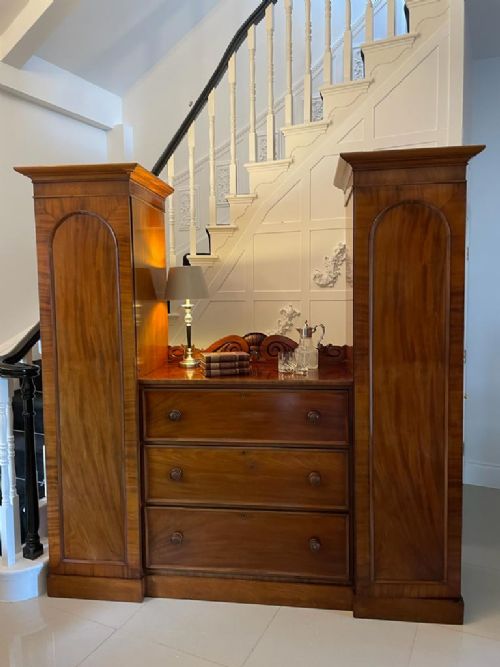
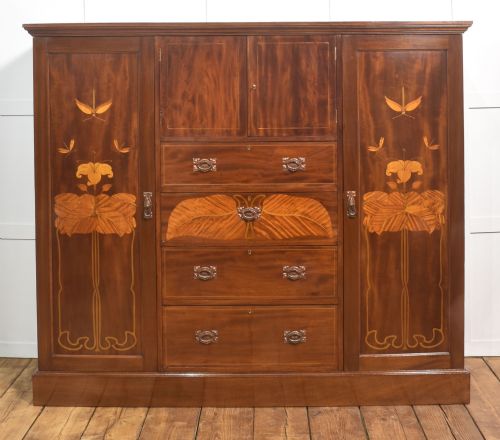
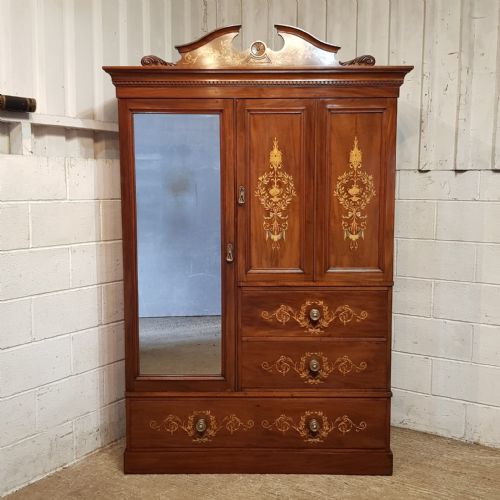
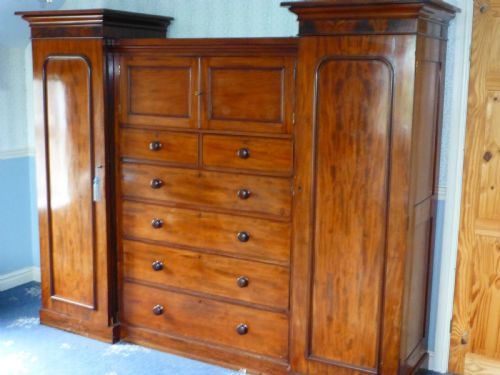
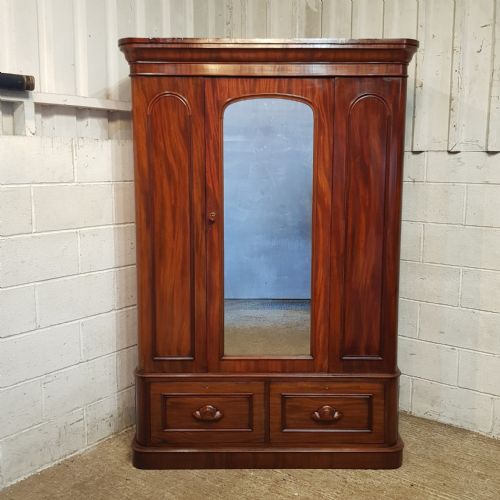
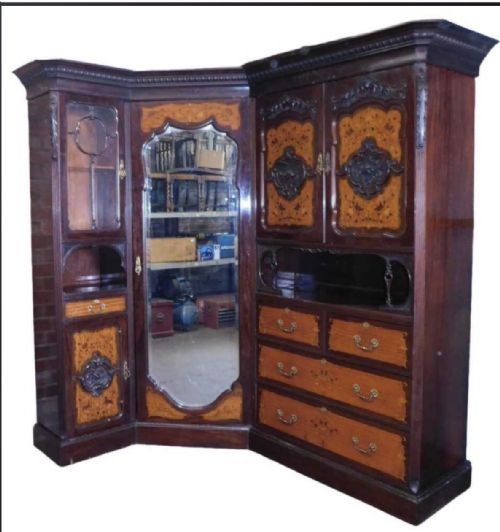
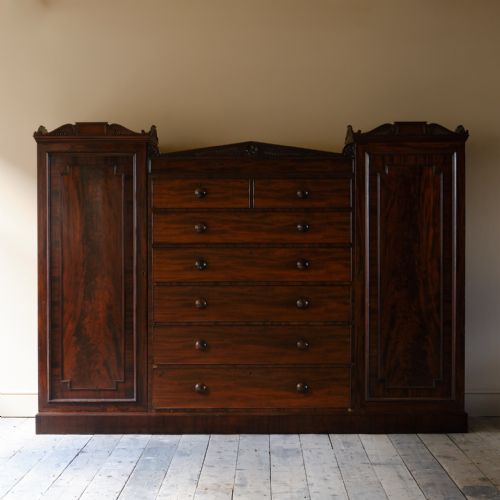
The pieces appearing most frequently range from double and triple door designs to grand breakfront formats and corner configurations. Makers often incorporated satinwood inlay, glass mirrored doors and maple secondary woods to lighten the imposing mahogany exterior.
Originating as practical solutions for comprehensive domestic storage, these functional items served country houses and urban townhouses alike. Today they remain sought after for their internal modular capacity and rich timber patination.
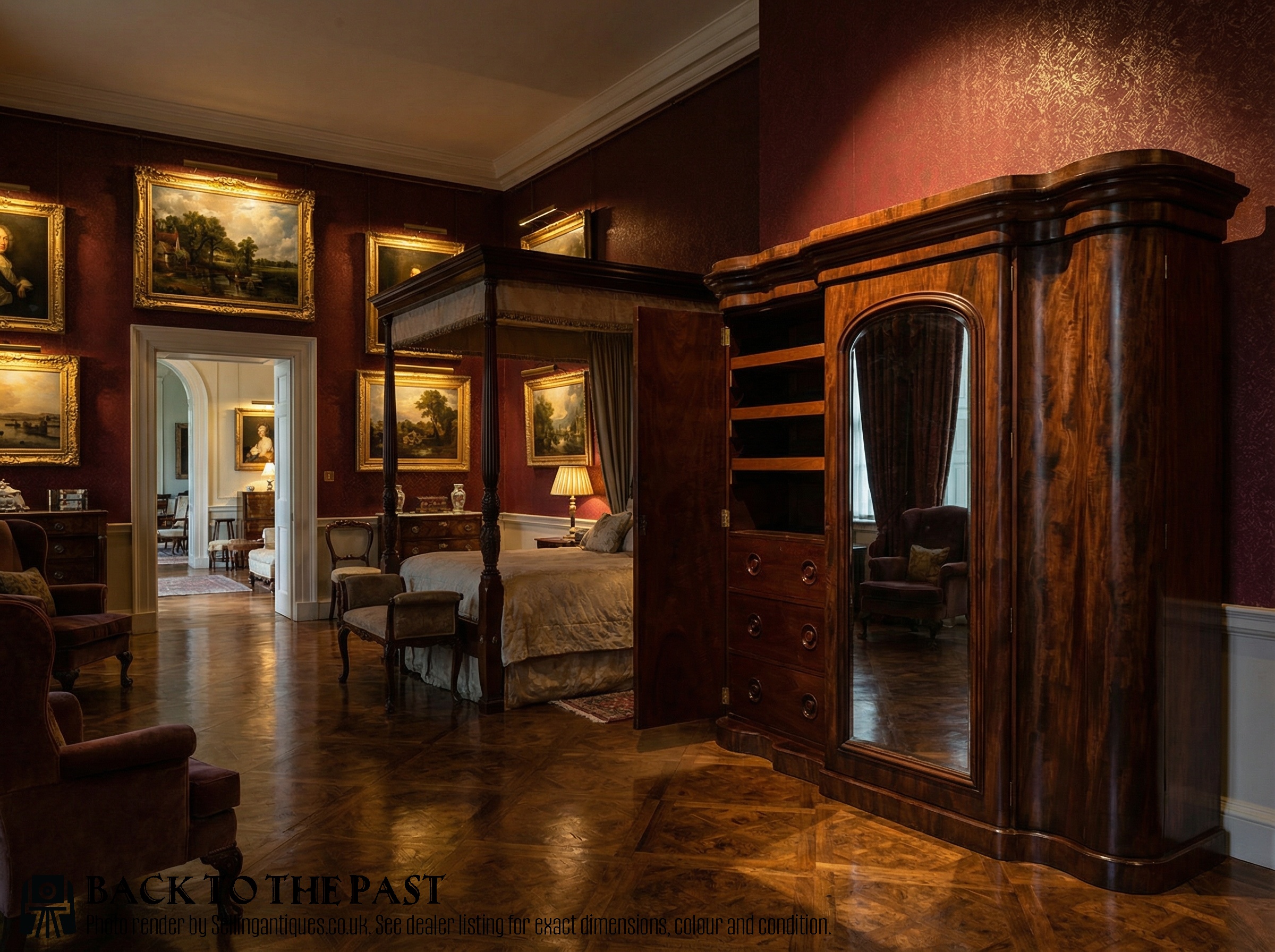
How They Were Made
Cabinetmakers constructed these wardrobes using solid mahogany and pine carcasses embellished with flame mahogany veneer or curl mahogany to achieve striking grain patterns. Artisans frequently applied contrasting satinwood inlay and marquetry details, particularly during the Edwardian and Sheraton Revival phases.
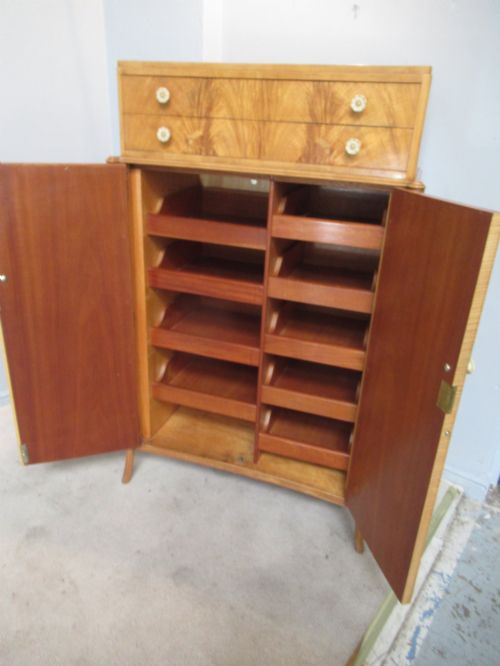
Internal components relied on traditional joinery, housing sliding linen trays, pull-out drawer banks and fitted compartments alongside brass hanging rails and hardware. Larger breakfront and triple door versions required modular dismantling systems so workers could transport and assemble the heavy timber frames on site.
Mahogany Compactum Wardrobe Retail Price Guide 2026
Typical asking prices for mahogany compactum wardrobe among the pieces listed under this phrase on Sellingantiques today, from the lower quarter to the upper quarter. They describe what is for sale here now, not the wider market.
The archive records major cabinetmakers including Gillows of Lancaster alongside Edwards and Roberts.
What Varies In Quality
Quality depends heavily on the choice of timber and the dexterity of the veneer work, where symmetrical flame mahogany or carefully cut curl mahogany denotes superior craftsmanship. The crispness of inlaid satinwood stringing and the integration of hand-carved decorative motifs further separate standard production pieces from high workshop output.
Internal configuration and joinery integrity dictate overall standard, particularly in how smoothly sliding linen trays and deep drawer banks operate within the main carcass. Well-executed architectural cornices, original brass fittings and intact mirrored doors contribute significantly to the standing of any individual example.
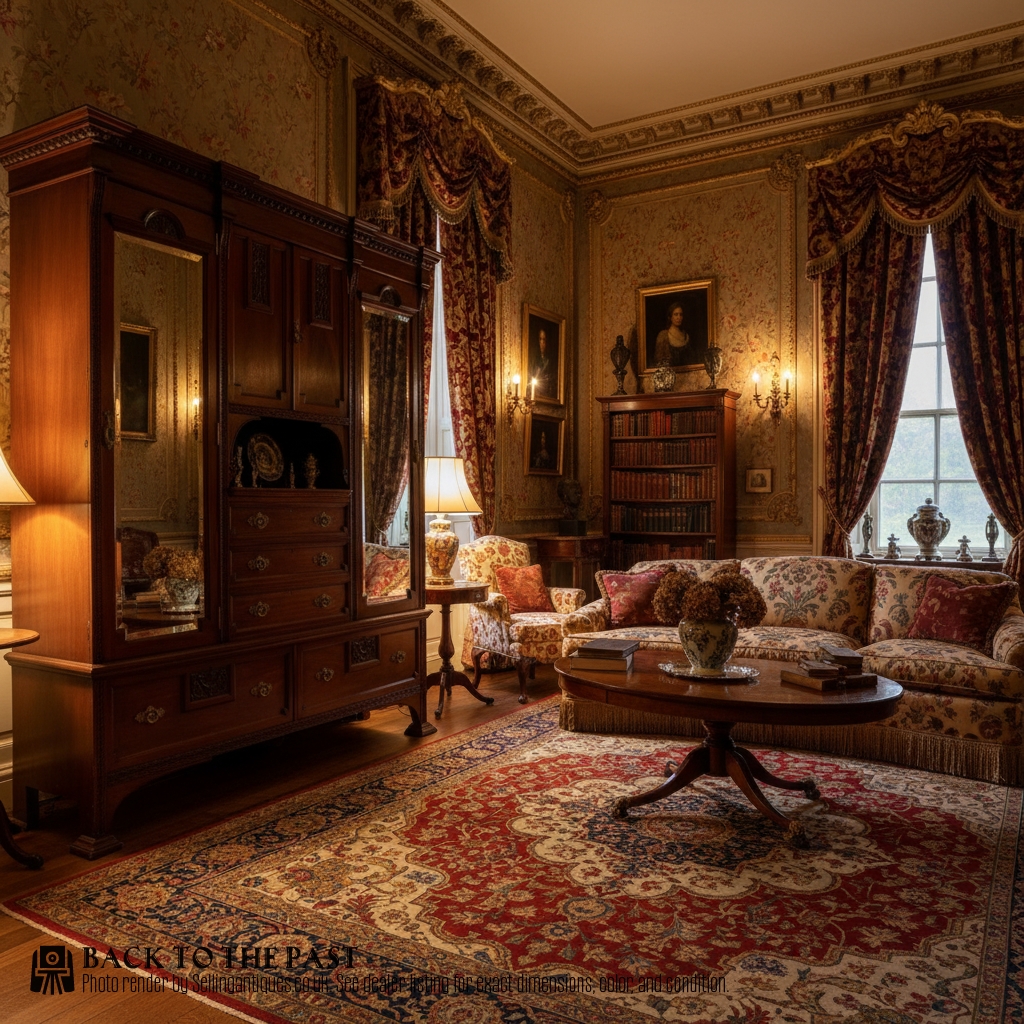
Edwards and Roberts·Gillows·Heal and Son·Compactom Ltd
The Mahogany Compactum Wardrobe Glossary
- Compactum
- A multi-functional wardrobe that combines hanging spaces with internal drawers, shelves and linen presses. This efficient internal division distinguished it from simpler single-purpose hanging cupboards.
- Breakfront
- A cabinet design where the central section projects forward from the flanking wings. This architectural arrangement creates depth and visual balance on large triple or four-door wardrobes.
- Flame Mahogany
- A wood veneer cut from branches or forks where the grain creates a distinctive flickering flame pattern. Cabinetmakers reserved this decorative surface for prominent door panels and drawer fronts.
- Satinwood Inlay
- A contrasting blonde timber cut into thin strips and embedded into the dark mahogany surface to form geometric borders or floral motifs. It gained widespread popularity during the Edwardian Sheraton Revival period.
- Linen Press
- A tall cupboard featuring sliding trays enclosed by doors, traditionally used for storing folded textiles. In many compactum configurations, this section sits centrally above a bank of lower drawers.
Mahogany Compactum Wardrobe: Frequently Asked Questions
What is a compactum wardrobe?
A compactum wardrobe is a large fitted furniture piece that combines hanging space, drawers and sliding trays within a single multi-door cabinet. It was designed to provide comprehensive bedroom storage without needing separate chests of drawers or linen presses.
These pieces typically divide into distinct sections, separating hanging compartments from internal drawer stacks and shelving units. This integrated layout allowed Victorian and Edwardian households to organise varied garments efficiently.
How do I assemble a breakfront wardrobe?
Breakfront wardrobes usually dismantle into modular sections consisting of a central carcase, two side wings, a heavy cornice and a plinth base. They were engineered this way so workers could maneuver the massive timber structures up staircases and into bedrooms.
Assembly requires leveling the base first, positioning the separate cabinet modules side by side, and securing them together before fitting the decorative cornice on top. Professional installation is often recommended due to the sheer weight of the solid mahogany and mirror glass components.
How do I tell Victorian from Edwardian wardrobes?
Victorian wardrobes generally feature heavier proportions, dark solid mahogany or rich flame mahogany veneers, and deep architectural cornices. Styles from this era often embrace Gothic Revival or robust classical elements with minimal inlay.
Edwardian pieces tend to display lighter visual weights, frequently incorporating pale satinwood inlay, Sheraton Revival motifs and occasional maple secondary timbers. Many Edwardian examples also introduce large bevelled mirror doors to brighten smaller bedroom spaces.
How do I care for mahogany furniture?
Mahogany furniture benefits from stable indoor humidity and protection from direct sunlight, which can bleach or dry out the timber surface over time. Regular dusting with a soft, dry cloth helps maintain the natural patination without building up heavy wax residues.
Avoid placing these heavy wardrobes near direct heat sources like radiators, which cause the solid timbers and applied veneers to shrink and split. Treating the wood occasionally with appropriate polish preserves the depth of the grain.