
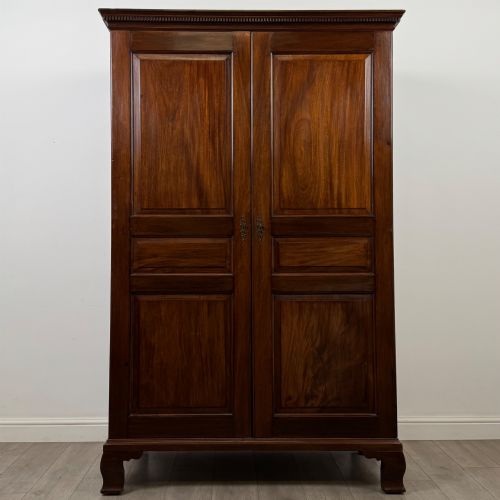
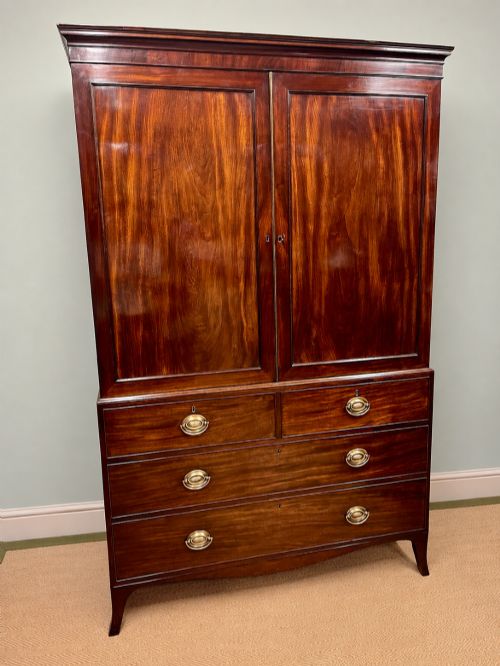
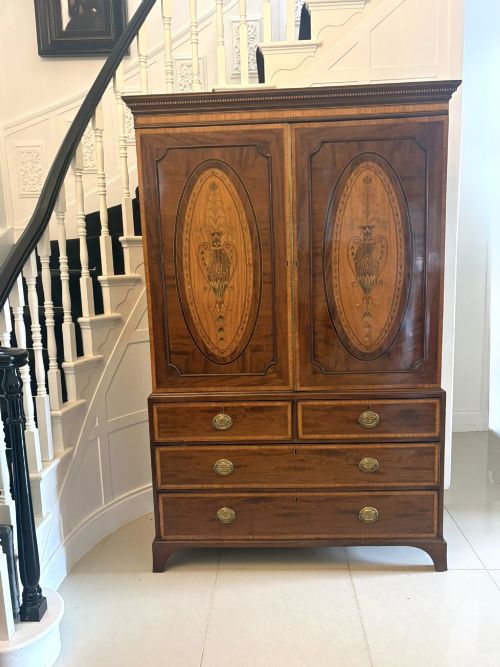
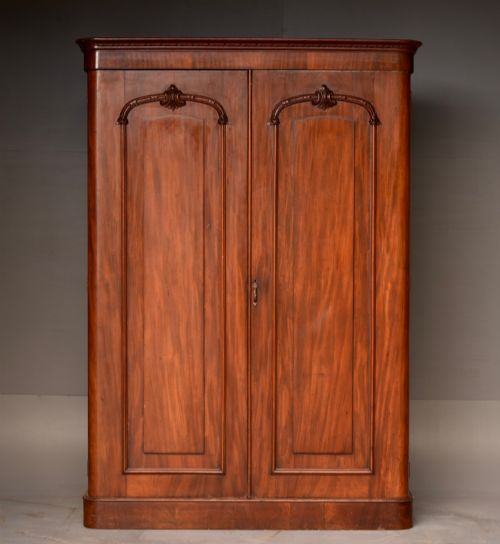
Mahogany Clothes Cupboard
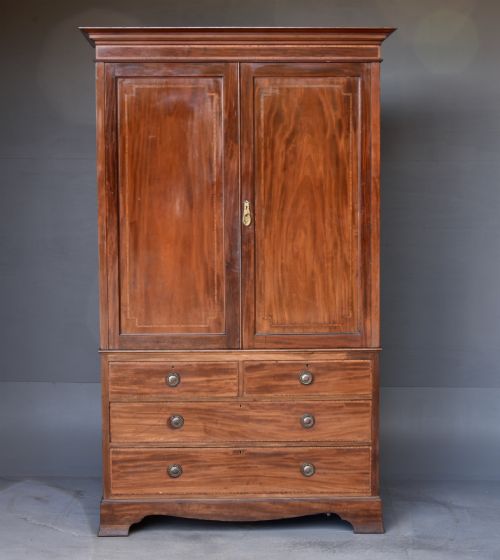
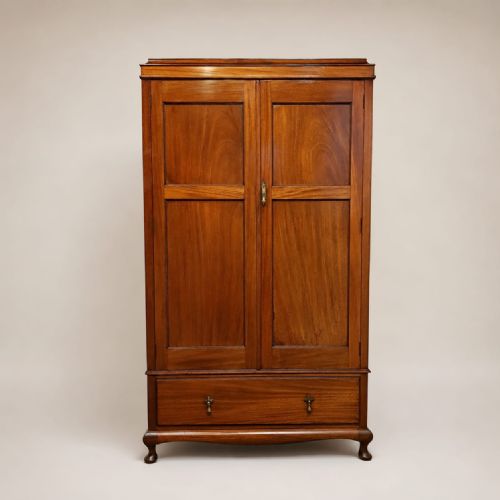
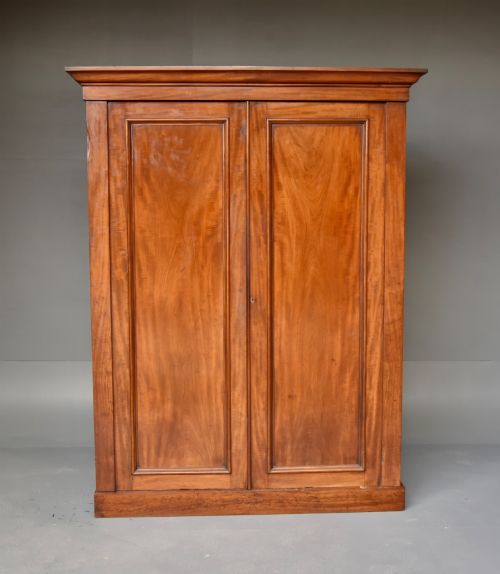
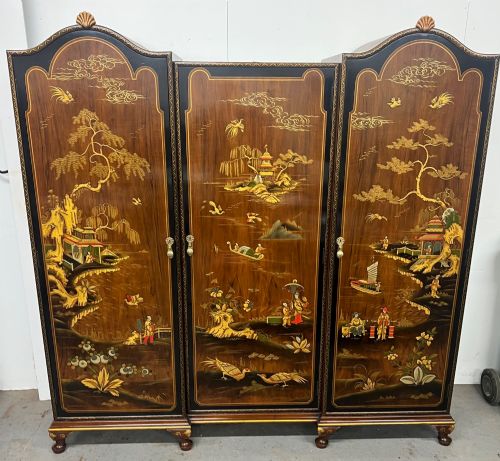
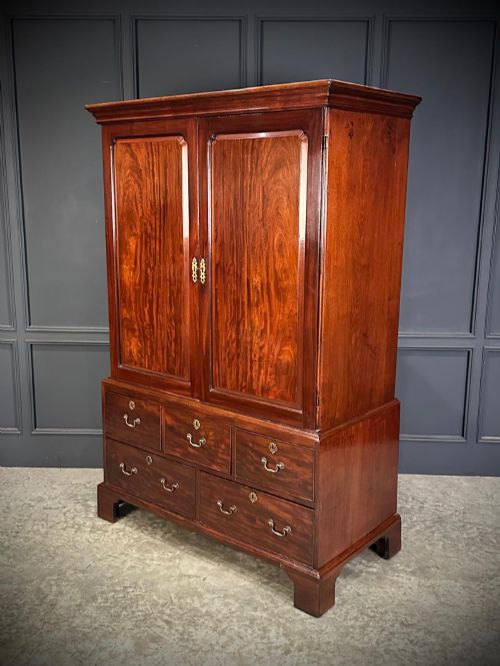
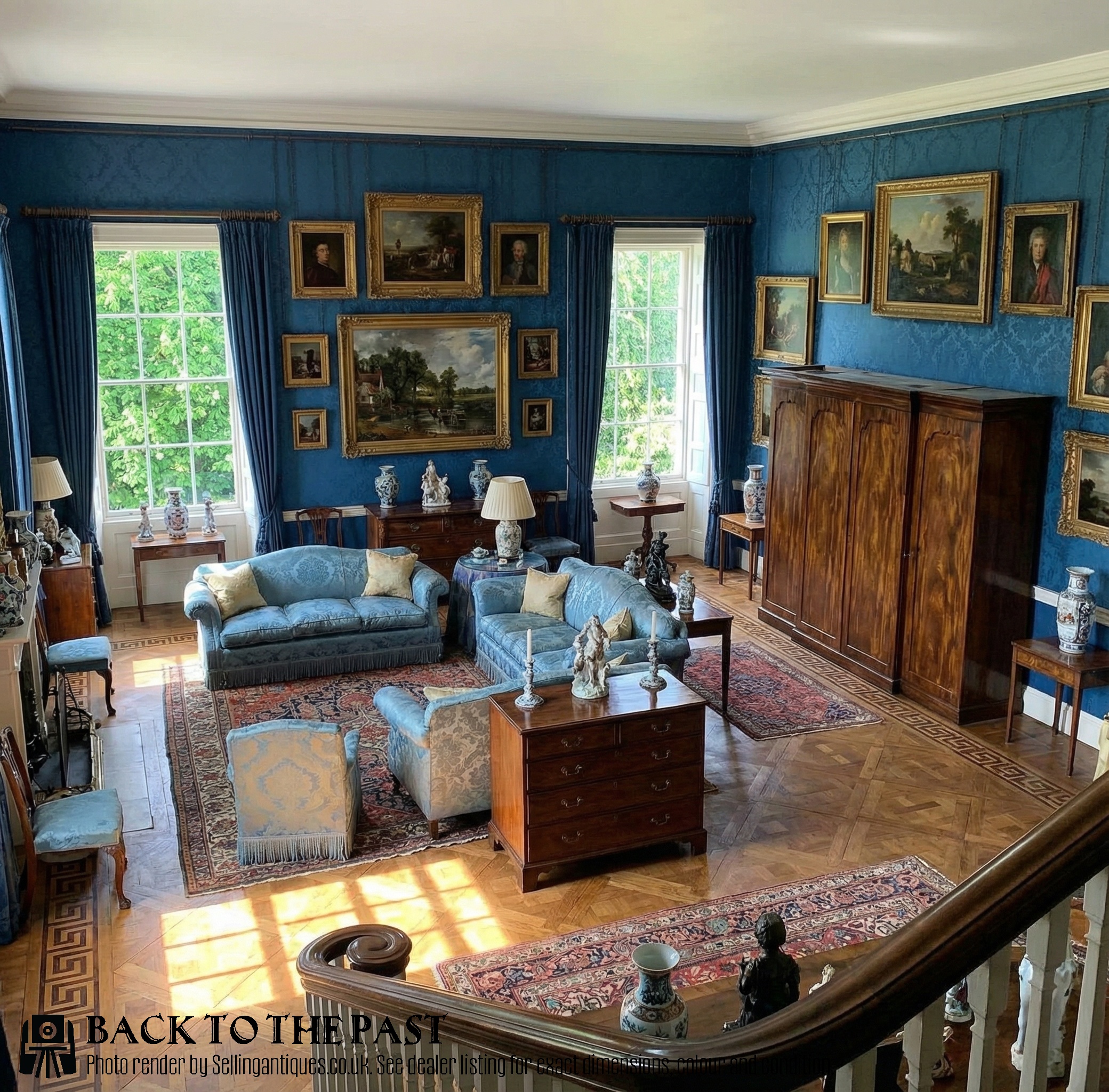
A mahogany clothes cupboard offers generous storage through panelled doors and internal hanging space or linen slides.
Mahogany Clothes Cupboard
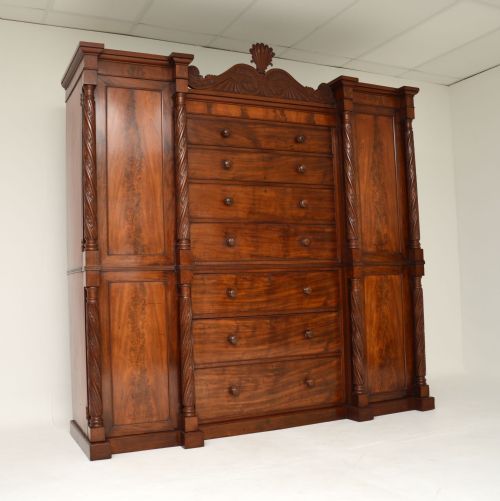
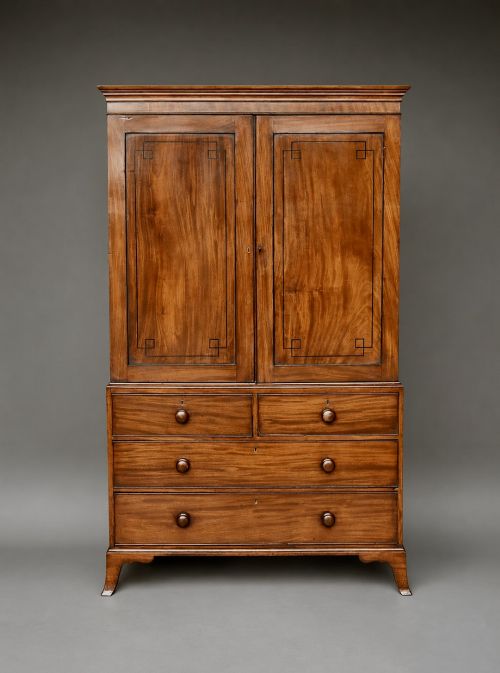
A mahogany clothes cupboard encompasses large wardrobes, compactums, and linen presses designed to organise garments and household textiles in bedrooms and dressing rooms.
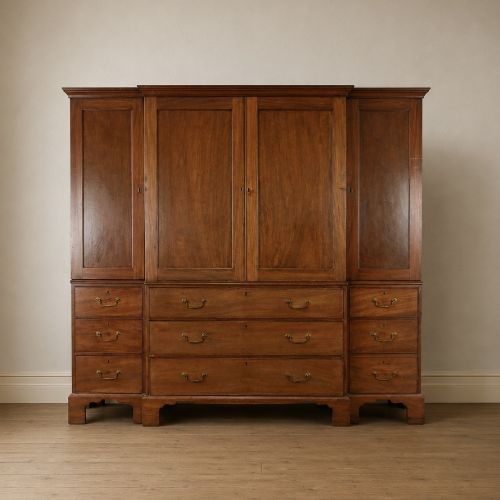
The versions most commonly met on this page span the Georgian, Regency, and Victorian periods, often taking the form of tall double or triple wardrobes with internal shelving or hanging rails.
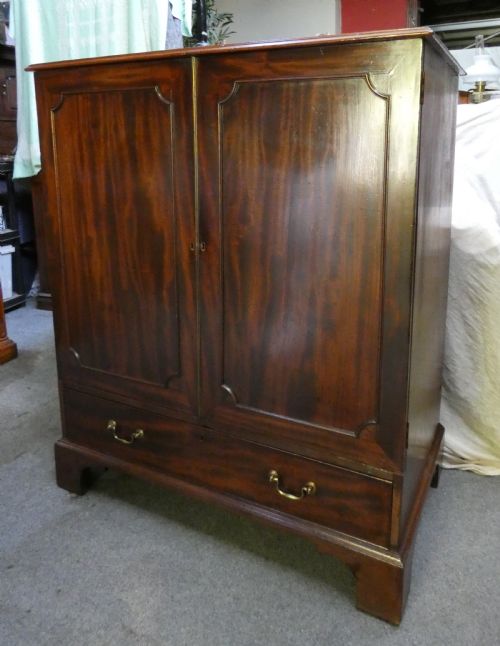
Makers also produced smaller dwarf press cupboards and combination pieces featuring lower banks of drawers, reflecting changing domestic requirements across the eighteenth and nineteenth centuries.
Materials and Construction
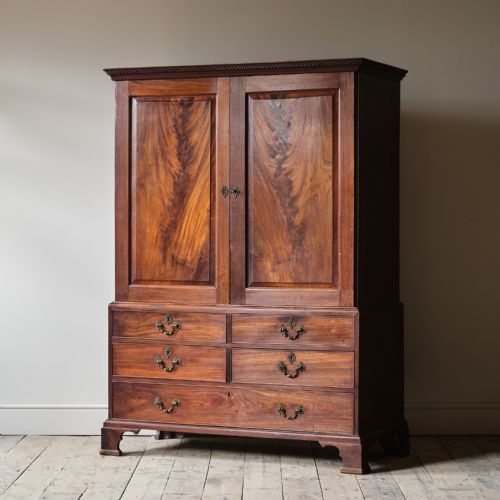
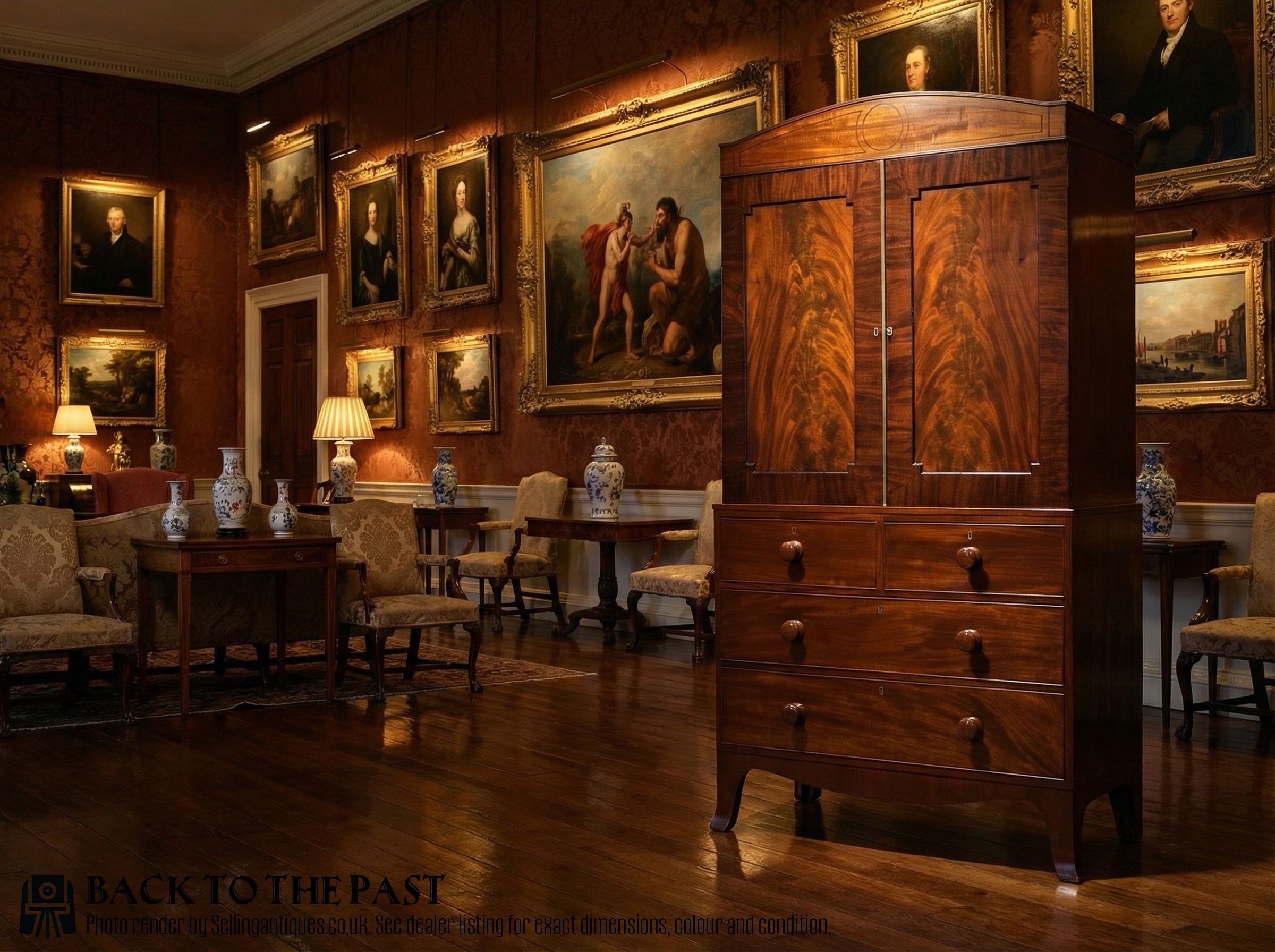
Cabinet makers utilised solid mahogany alongside flame mahogany veneer to create rich, figured surfaces across the doors and cornices.
Secondary timbers such as oak provided structural stability for internal drawers and carcass frames, while brass hardware and boxwood inlay added functional and decorative detail.
Mahogany Clothes Cupboard Retail Price Guide 2026
Typical asking prices for mahogany clothes cupboard among the pieces listed under this phrase on Sellingantiques today, from the lower quarter to the upper quarter. They describe what is for sale here now, not the wider market.
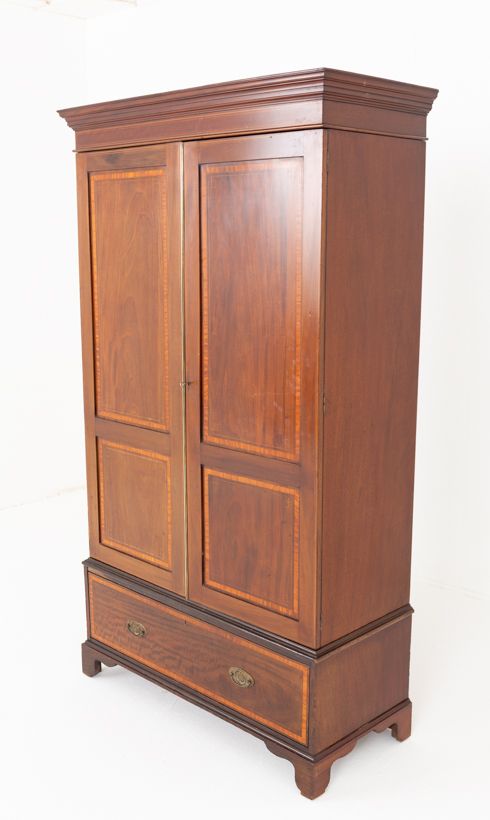
Listings feature mahogany clothes cupboards spanning the eighteenth, nineteenth, and early twentieth centuries, incorporating satinwood inlay and brass fittings.
Assessing Quality
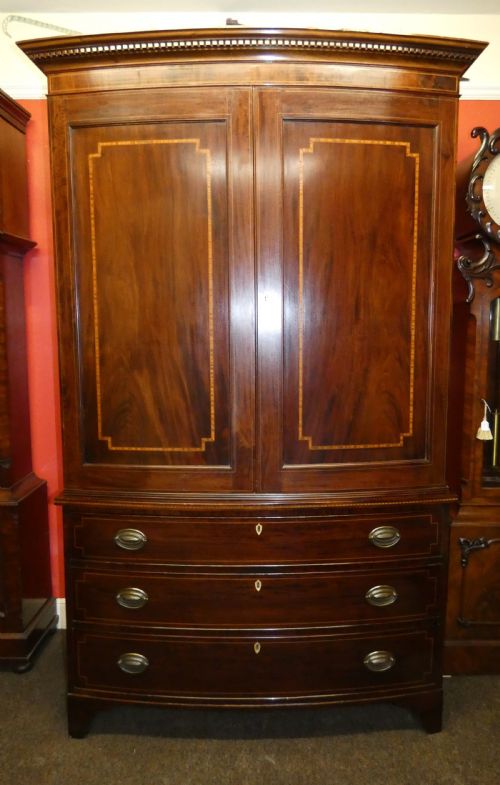
Quality rests primarily in the choice of timber and the precision of the cabinet work, particularly in the selection of symmetrical flame mahogany veneers and crisp boxwood stringing.
Finer pieces distinguish themselves through thoughtful interior configuration, such as original sliding trays within linen presses, alongside subtle architectural details like blind fretwork cornices and well-fitted drawer linings.
Maples & Co·Druce & Co·Heals·Gillows
The Mahogany Clothes Cupboard Glossary
- Linen press
- A tall cabinet featuring upper doors enclosing sliding trays for folded textiles, mounted above a chest of lower drawers. This form evolved to protect household linens from dust before fitted wardrobes became standard.
- Compactum
- A multi-functional wardrobe featuring a combination of hanging space, drawers, and shelving within a single unified carcass. These pieces were designed to maximise storage efficiency in Victorian and Edwardian dressing rooms.
- Flame mahogany veneer
- A thin slice of timber cut from the fork of the mahogany tree to create a distinctive flickering flame pattern. Cabinet makers applied these decorative veneers to primary display surfaces like doors and drawer fronts.
- Blind fretwork
- Carved ornamentation applied to cornices or stiles that appears pierced but is set against a solid background. This decorative technique is frequently found on eighteenth-century pieces.
- Dwarf press
- A low-format clothes cupboard designed to sit beneath windows or within smaller rooms while retaining the traditional internal configuration of hanging space or linen slides.
Mahogany Clothes Cupboard: Frequently Asked Questions
How do I use a linen press today?
The internal sliding trays suit folded knitwear, bed linen, or towels in a modern bedroom.
Alternatively, some owners remove the slides to install a hanging rail for standard garments.
What is the difference between a press and a wardrobe?
A wardrobe is built primarily with vertical hanging space behind full-length doors for coats and dresses.
A linen press combines upper storage shelves or sliding trays with a chest of drawers below.
How do I date a mahogany wardrobe?
Georgian examples generally display clean architectural lines with cornice moulding and bracket feet or plinths.
Victorian and Edwardian iterations often feature heavier breakfront proportions, mirrored doors, or extensive panel carving.
Will these large cupboards dismantle for transport?
Many period wardrobes and presses were constructed to dismantle into sections including the cornice, base, and side panels.
This modular design allowed historic pieces to navigate tight staircases and narrow bedroom doorways.