

Large Wooden Armoire
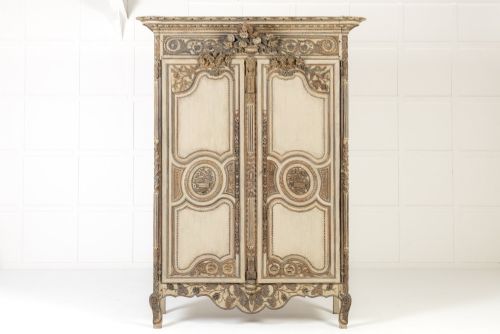
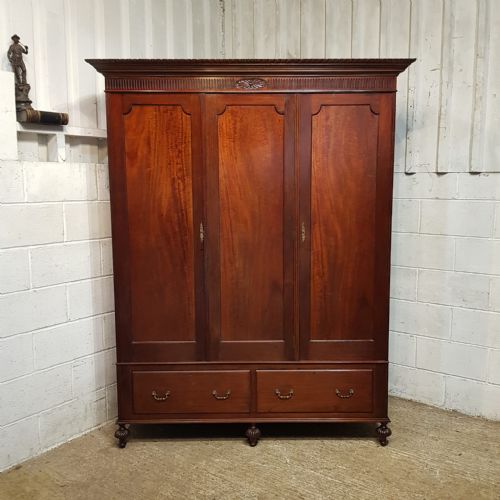
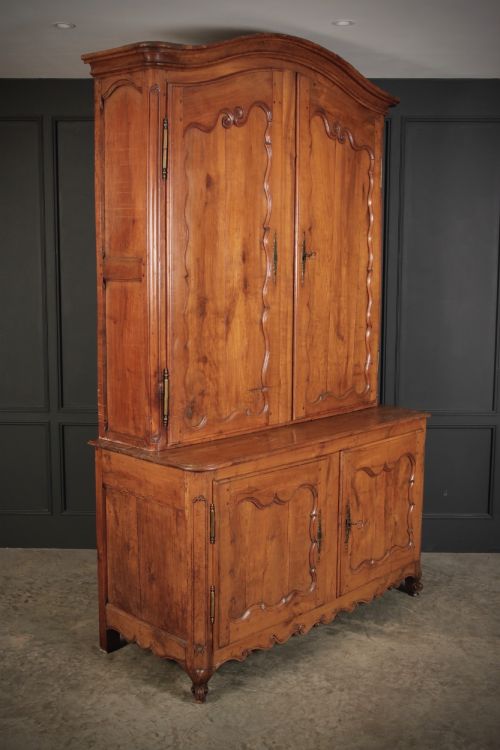
A large wooden armoire provides substantial hanging space and shelving, combining practical bedroom storage with imposing architectural presence.
Large Wooden Armoire
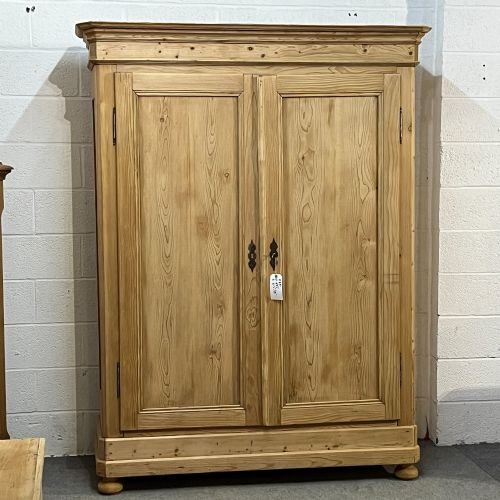
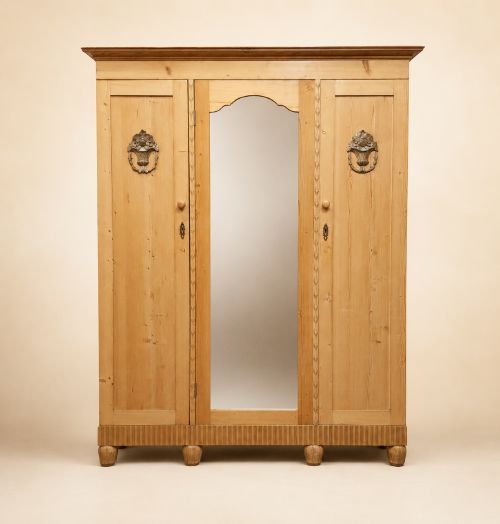
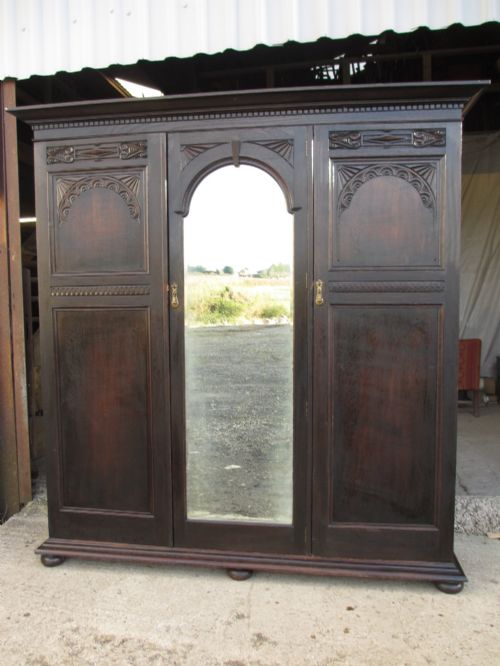
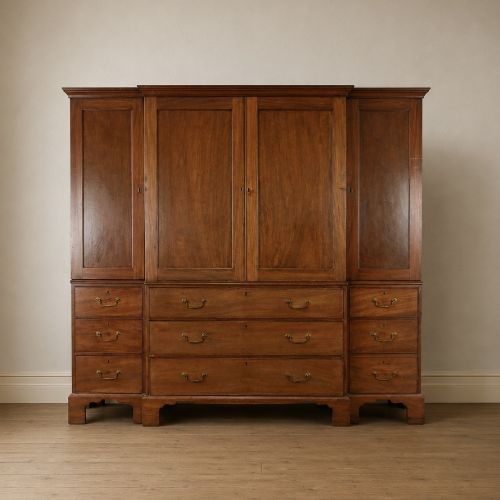
A large wooden armoire serves as a primary storage piece for garments and household linens, taking the form of wardrobes, compactums, and linen presses. These substantial items appear frequently from the Victorian and Edwardian eras, alongside pieces originating in the eighteenth century.
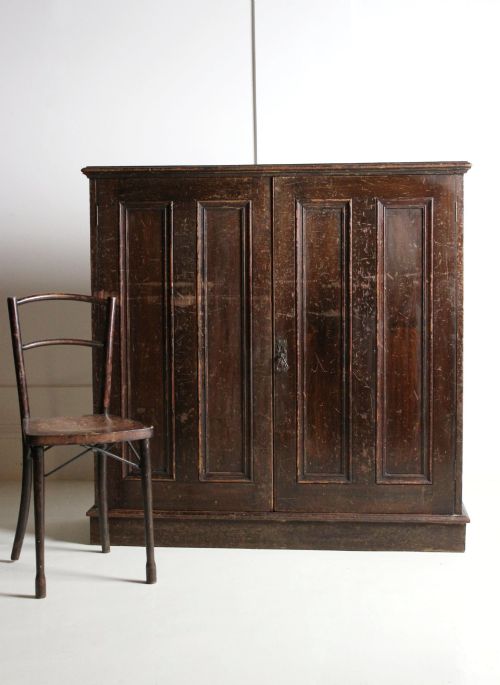
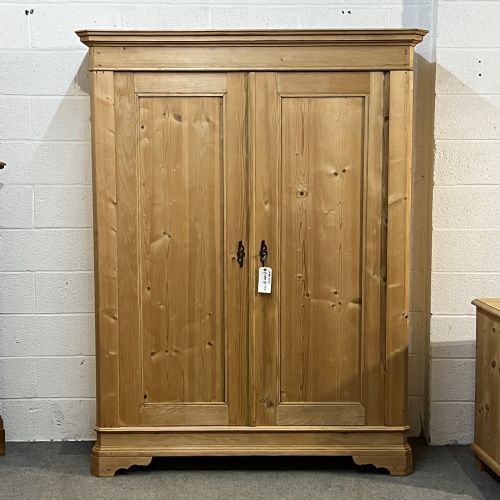
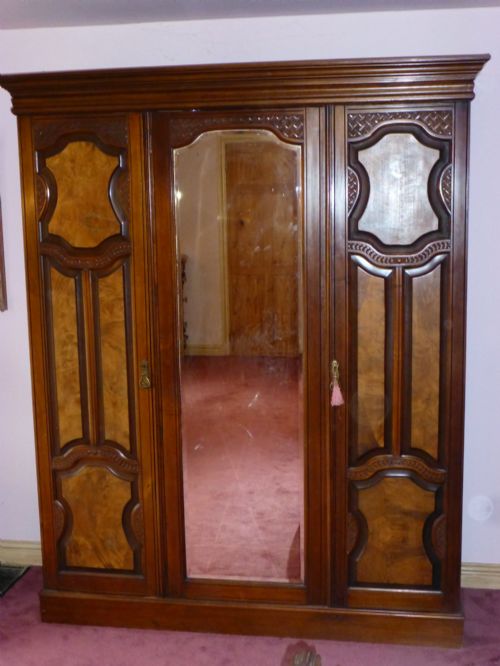
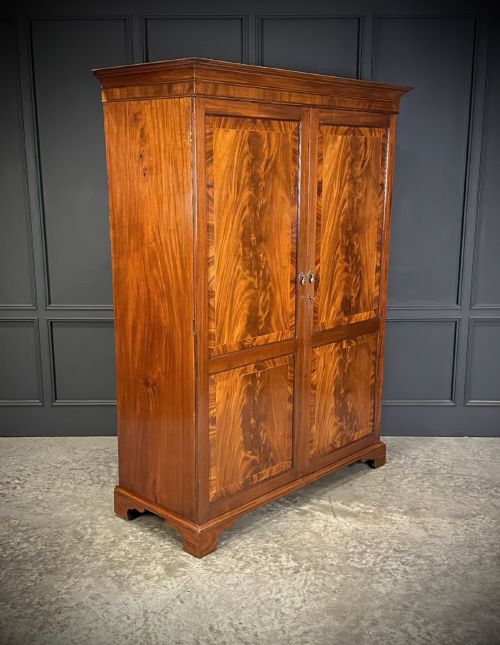
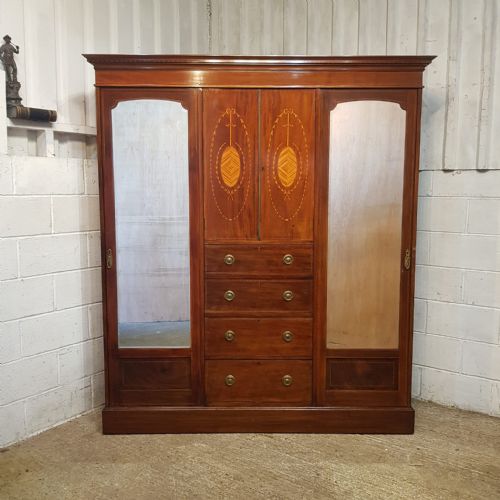
The version most commonly encountered on this page is the multi-door mahogany or pine wardrobe, often fitted with internal drawers or mirrored panels. Oak, walnut, and cherry wood examples also surface regularly, representing various regional British and continental European cabinet-making traditions.
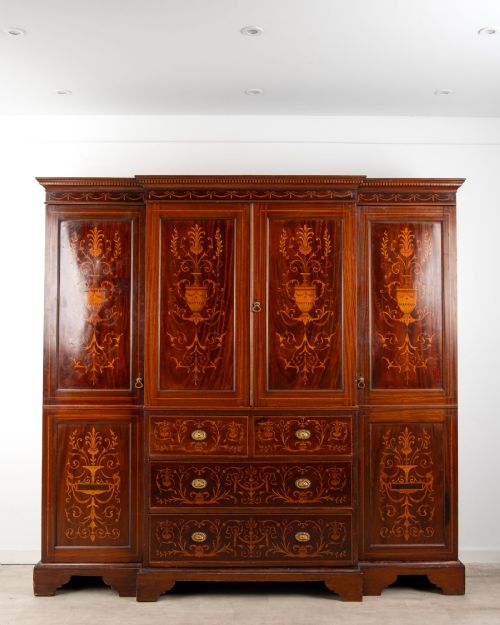
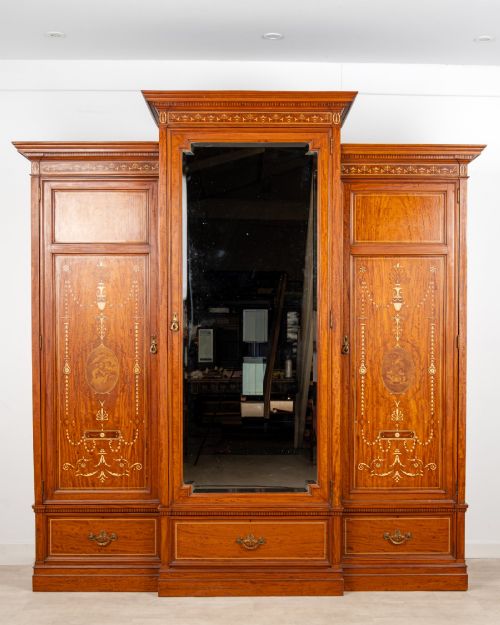
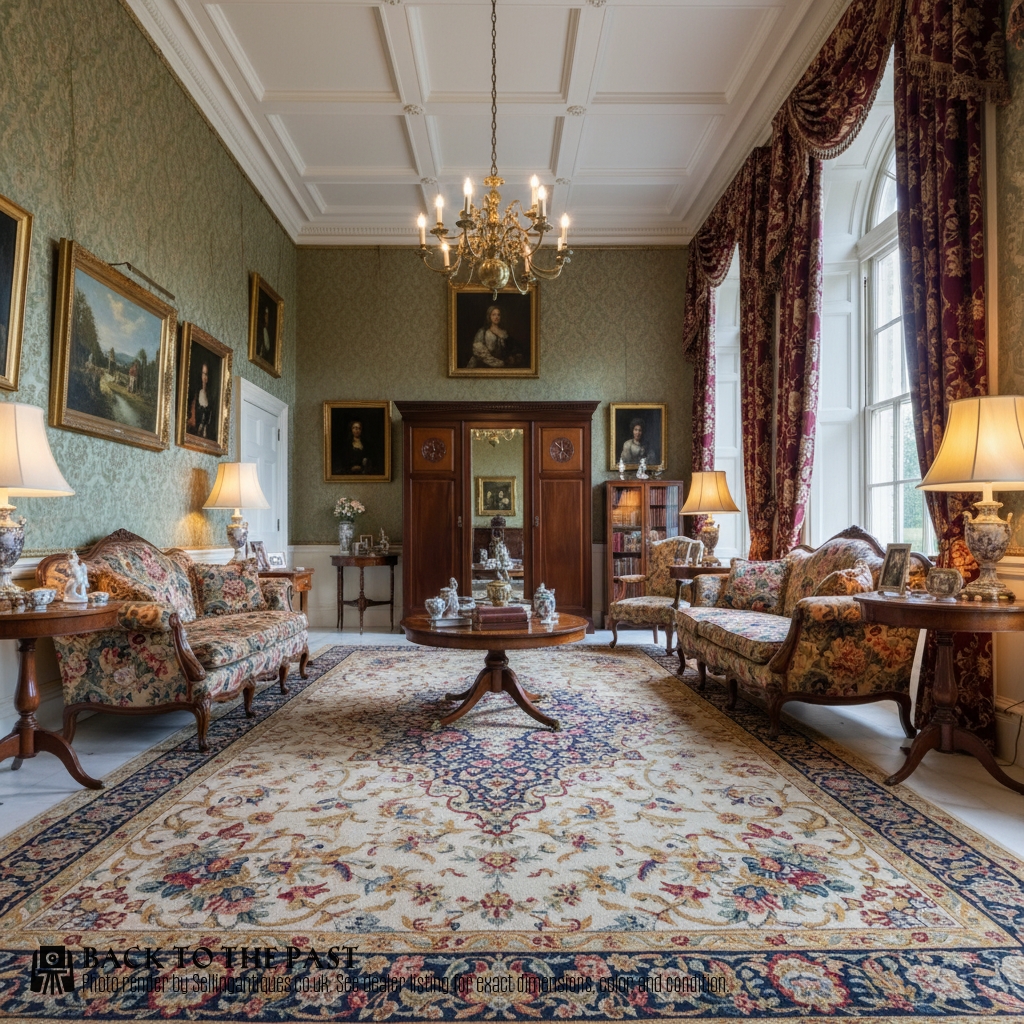
Makers utilised these large carcases to display fine timber grains, particularly flame mahogany and burr walnut veneers. Buyers select these tall storage units to anchor a bedroom or dressing room scheme with period character and utility.
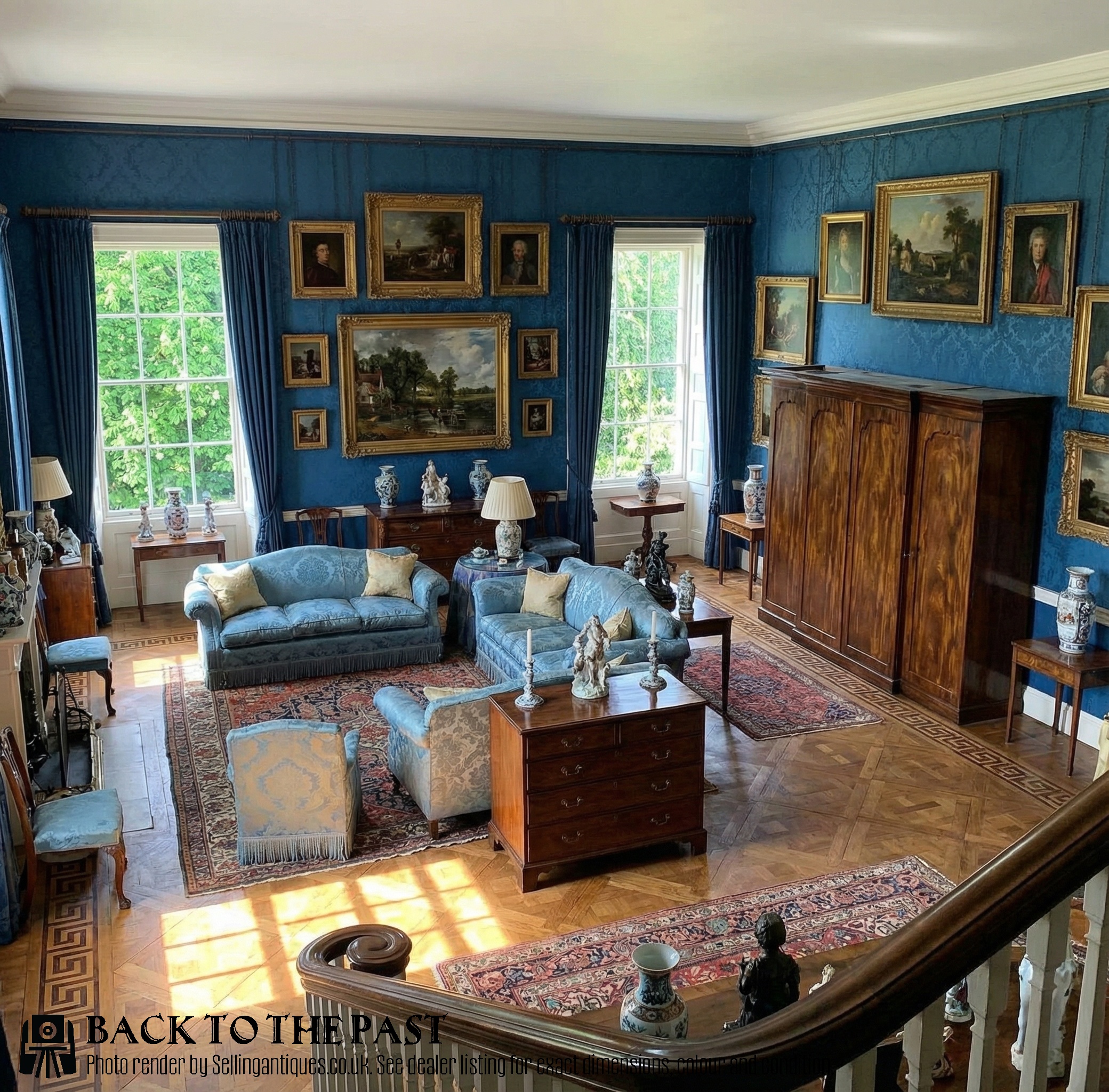
Materials and construction methods
Cabinet-makers constructed these large armoires using solid timbers such as pine, oak, and mahogany for the primary carcase and framing. They often applied decorative veneers like flame mahogany and burr walnut to the principal door panels and drawer fronts to create striking visual patterns.
Joinery techniques relied upon substantial framing, panelled doors, and dovetailed drawer construction to support the considerable weight of the timber. Iron and brass hardware, including hinges, locks, and handles, secured the heavy doors and internal fittings.
Large Wooden Armoire Retail Price Guide 2026
Typical asking prices for large wooden armoire among the pieces listed under this phrase on Sellingantiques today, from the lower quarter to the upper quarter. They describe what is for sale here now, not the wider market.
Distinctions in quality and execution
The calibre of a large wooden armoire rests upon the selection of timber and the precision of its construction. Pieces featuring highly figured burr walnut or flame mahogany veneers demonstrate superior material selection by the cabinet-maker.
Subtleties in hand-carved ornamentation, original hardware, and well-executed internal compartments elevate an armoire above standard utility pieces. The integrity of the original carcase and smooth operation of large panelled doors indicate careful historical assembly.
Holland and Sons·Maple and Co
The Large Wooden Armoire Glossary
- Armoire
- A tall cupboard or wardrobe used primarily for hanging clothes and storing folded textiles. Historically, these pieces originated in continental Europe before becoming widespread in British homes.
- Compactum
- A fitted wardrobe that incorporates drawers, sliding trays, and hanging space within a single multi-door unit. This design maximises interior storage capacity.
- Linen press
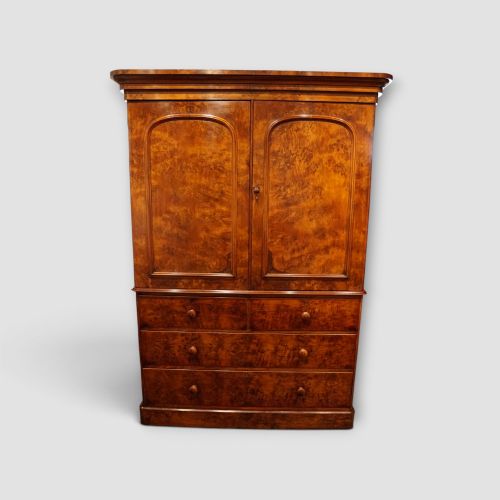
- A tall storage cabinet featuring sliding shelves or trays in the upper section and drawer storage below. These pieces were traditionally built for storing household linens and garments flat.
- Breakfront
- A piece of furniture featuring a central section that projects forward from the flanking wings. This architectural arrangement creates depth and shadow on large cabinet facades.
- Veneer
- A thin layer of finely figured wood applied over a secondary timber carcase. This technique allows makers to display decorative grains while maintaining structural stability.
Large Wooden Armoire: Frequently Asked Questions
What is a compactum wardrobe?
A compactum wardrobe is a multi-functional storage piece that combines hanging space, linen slides, and internal drawers within one unified structure. These units offer varied internal organisation compared to standard hanging wardrobes.
Cabinet-makers designed them to contain an entire wardrobe's worth of clothing and accessories within a single footprint. They remain practical choices for modern bedrooms requiring extensive fitted storage.
How do I distinguish a linen press from a wardrobe?
A linen press traditionally houses sliding wooden trays or shelves behind its upper doors, accompanied by a chest of drawers in the base section. Wardrobes focus primarily on vertical hanging space for garments.
Historical linen presses were built specifically for flat textile storage before modern closets became standard in domestic architecture. Many examples feature substantial panelled upper doors enclosing these internal trays.
Are these large armoires delivered in one piece?
Many large period armoires and wardrobes were constructed as knockdown pieces designed to be dismantled for transport and reassembled on site. This clever joinery allowed bulky furniture to pass through domestic doorways.
Buyers should verify whether a specific piece retains its original knockdown bolts and dismantling capability. Professional installation ensures the heavy carcase remains structurally sound.
How do I care for antique wood finishes?
Antique timber surfaces benefit from regular dusting with a soft, dry cloth and occasional applications of traditional beeswax. Avoiding direct sunlight and sustained moisture preserves the polish and prevents wood movement.
Maintaining stable room temperatures prevents the timber and applied veneers from drying out or splitting. Gentle upkeep maintains the natural lustre of mahogany, walnut, and pine over time.