





Late Victorian Wardrobe
A late victorian wardrobe provides substantial storage, uniting period craftsmanship with the rich figures of mahogany, walnut, and pine.

Late Victorian Wardrobe
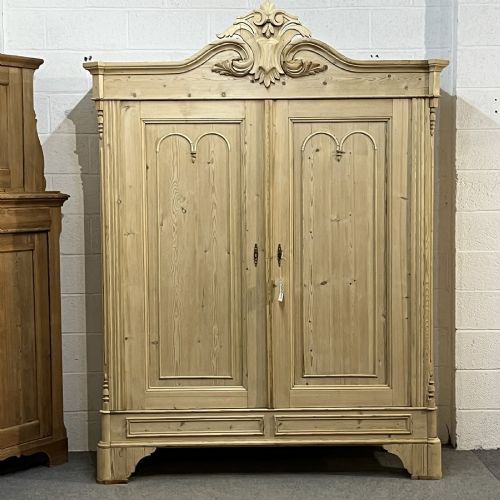
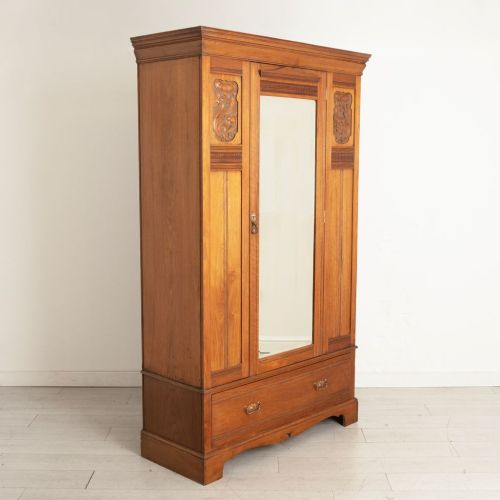
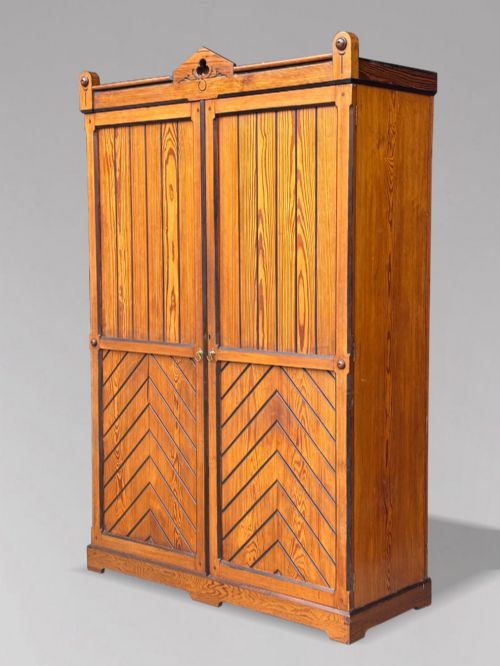
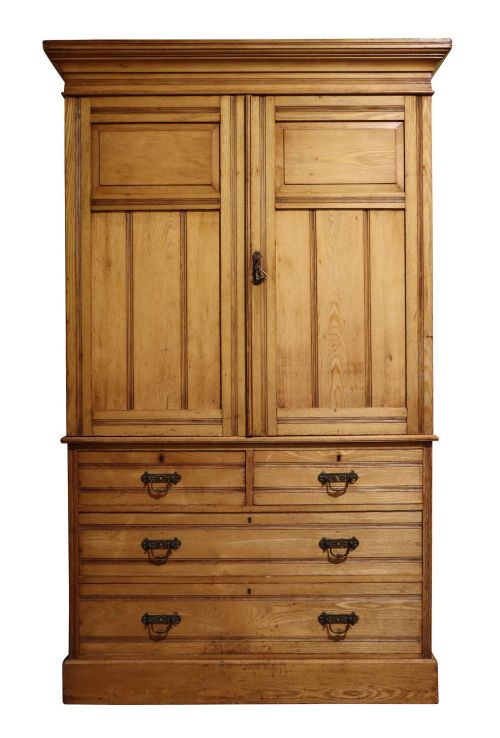
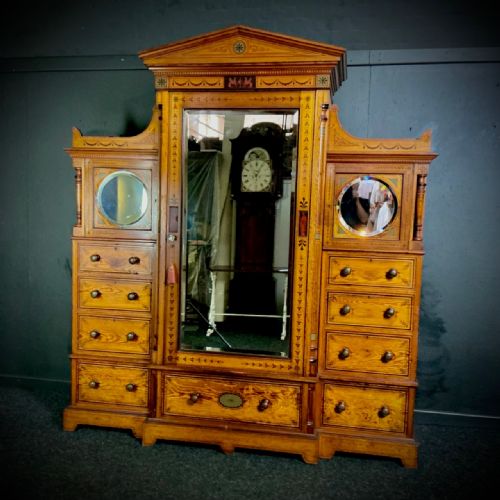
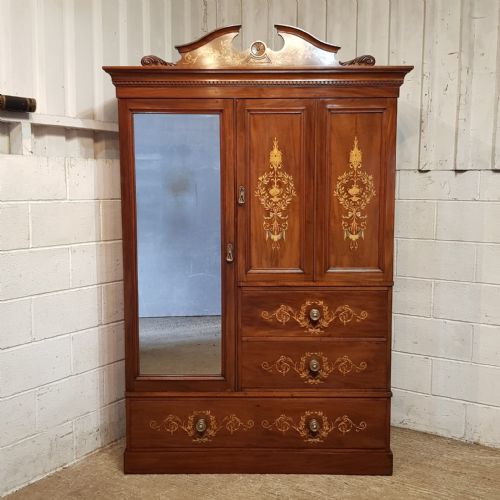
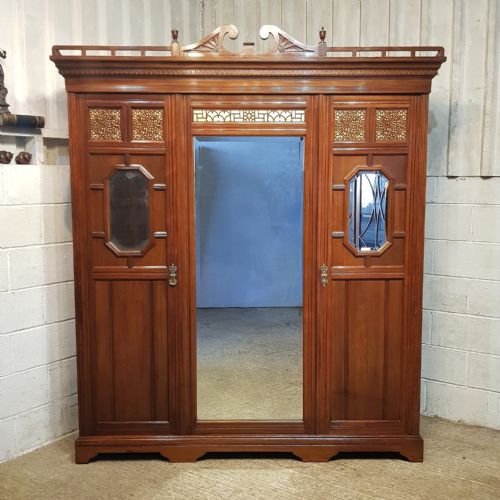
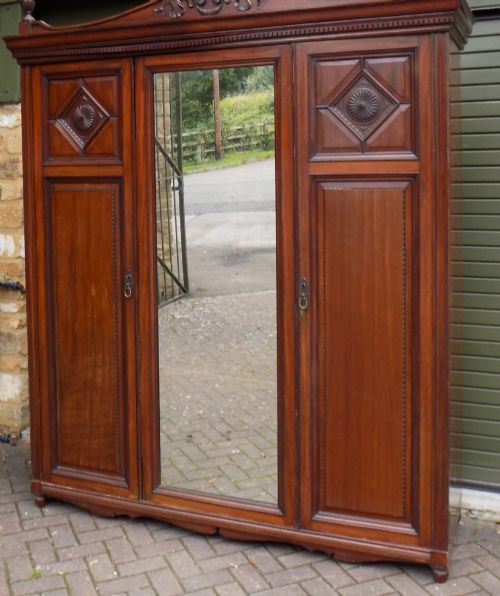
A late victorian wardrobe encompasses large bedroom storage pieces produced during the closing decades of the nineteenth century and the very beginning of the twentieth. These range from simple single door cupboards and compactum designs to expansive triple and breakfront wardrobes.
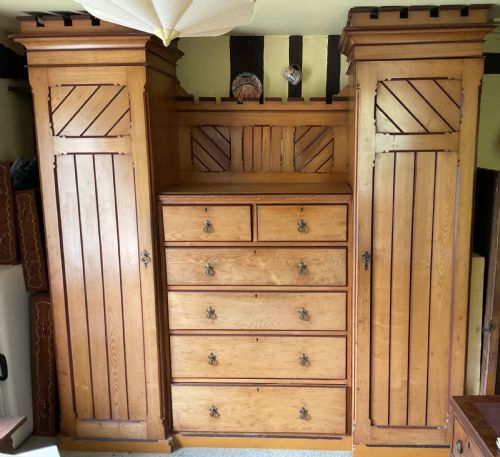
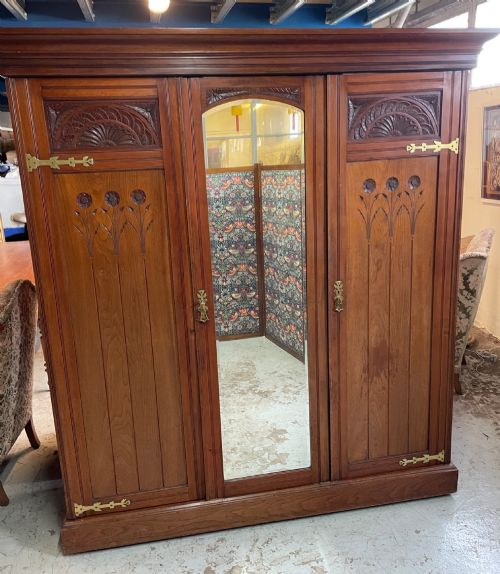
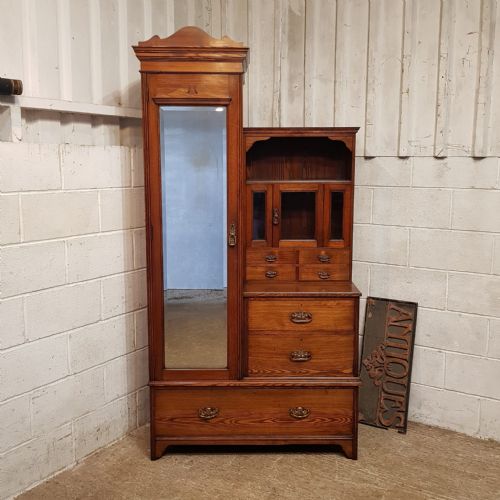
The most common formats met on this page include mahogany triple wardrobes and walnut combination pieces that integrate drawers, hanging space, and sometimes mirrored doors. Pieces often reflect styles such as Arts and Crafts, Aesthetic Movement, and traditional Victorian revival forms.
Makers and workshops of the period utilised timbers like ash, satin walnut, and burr oak alongside standard mahogany and pine. Buyers frequently encounter pieces that formed part of larger bedroom suites or smaller single items designed for specific domestic spaces.
Materials and Construction
Carpenters of the period relied heavily on solid mahogany, walnut, and pine as primary carcase timbers, frequently applying burr veneers or decorative inlay to principal surfaces. Secondary woods such as ash and satin birch appear in regional pieces and Arts and Crafts examples.
Construction techniques combined traditional joinery with emerging mechanical capabilities, incorporating bevelled mirror glass doors, brass hanging hooks, and elaborate handles. Many larger wardrobes utilised modular carcases that dismantled into manageable sections for transport into Victorian bedrooms.
Late Victorian Wardrobe Retail Price Guide 2026
Typical asking prices for late victorian wardrobe among the pieces listed under this phrase on Sellingantiques today, from the lower quarter to the upper quarter. They describe what is for sale here now, not the wider market.
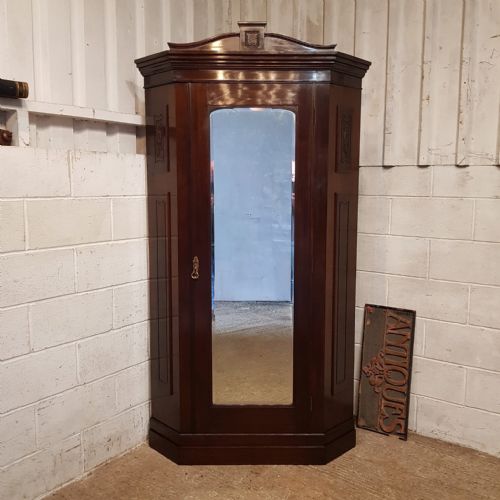
Some single wardrobes earned the nickname sentry boxes because their narrow frames stood guard over awkward bedroom corners.
Distinguishing Quality in Construction and Finish
The distinction between standard commercial output and superior craftsmanship rests on timber selection and decorative restraint. Pieces featuring book-matched burr walnut veneers, delicate marquetry inlay, or original brass hardware represent a higher tier of production.
Structural integrity and internal configuration also determine standing, with combination wardrobes and compactums offering sophisticated internal drawer arrangements demonstrating advanced workshop capability. Original mirror glass, intact cornices, and well-fitted panel doors maintain the integrity of the piece.
Maple & Co.·Shapland & Petter
The Late Victorian Wardrobe Glossary
- Compactum
- A multi-compartment wardrobe that combines hanging space with internal drawers, shelves, and sometimes a central press section. These configurations maximise storage efficiency within a single footprint.
- Combination Wardrobe
- A piece uniting wardrobe hanging capacity with chests of drawers or linen cupboards. They offer diverse internal storage solutions typical of late nineteenth-century bedroom furniture.
- Breakfront
- A cabinet design where the central section projects forward from the flanking wings. This architectural arrangement creates depth and shadow on large triple wardrobes.
- Inlay
- A decorative technique where contrasting timbers, brass, or shell are set flush into the surface of the wood. It defines the stylistic detailing on many late nineteenth-century pieces.
- Sentry Box
- A narrow single-door wardrobe designed to occupy minimal floor space while providing vertical hanging room. They appear frequently in ash and walnut.
Late Victorian Wardrobe: Frequently Asked Questions
How do I dismantle a triple wardrobe?
Most large late nineteenth-century wardrobes separate into distinct components consisting of a heavy moulded cornice, a plinth base, two flanking wings, and a central hanging or drawer section. The panels typically lock together using internal bolts or tongue-and-groove joints.
Marking each section during disassembly ensures proper alignment when rebuilding the piece in a new room. Having two people manage the heavy mirror doors prevents damage to the hinges.
Will a large wardrobe fit my bedroom?
Triple and breakfront pieces possess substantial footprints and considerable height, requiring careful measurement of both floor space and ceiling clearance before acquisition. Doorways and stairwells must also accommodate the individual carcase sections.
Compactum models and single door wardrobes offer alternative storage solutions for rooms with restricted proportions. Modular construction allows the main body to pass through standard internal doors once dismantled.
How should I care for polished wood?
Maintaining nineteenth-century polished surfaces involves dusting regularly with a soft, dry cloth and avoiding modern silicone sprays or abrasive cleaners. Natural beeswax applied sparingly preserves the lustre of mahogany and walnut.
Keeping timber furniture away from direct sunlight and steady radiator heat prevents the wood from drying out and stops veneers from lifting. Stable indoor humidity protects both the timber carcase and internal mirror glass.
What is an Aesthetic Movement wardrobe?
An Aesthetic Movement wardrobe reflects late nineteenth-century design reforms that prioritised artistic expression, simple geometric lines, and often ebonised finishes with delicate brass details. These pieces break away from heavy revivalist ornamentation in favour of lighter, more curated forms.
Such items frequently utilise alternative timbers like satin birch or ash and complement contemporary Arts and Crafts interiors. Their understated decoration highlights the natural grain and structural joinery.