


Combination Wardrobe Chest
A combination wardrobe chest merges hanging space with deep drawer storage, offering a complete bedroom furniture solution in one substantial piece.

Combination Wardrobe Chest
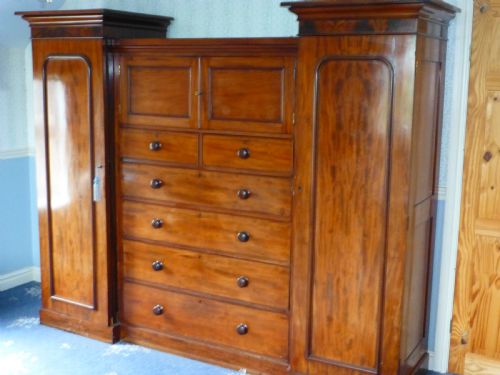
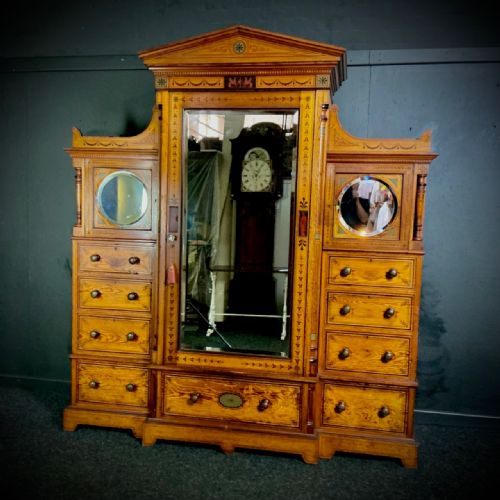
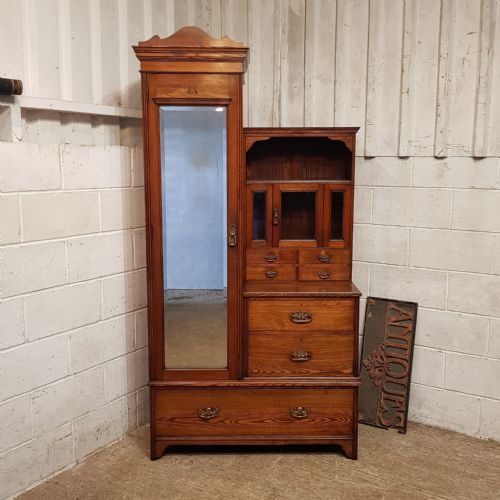
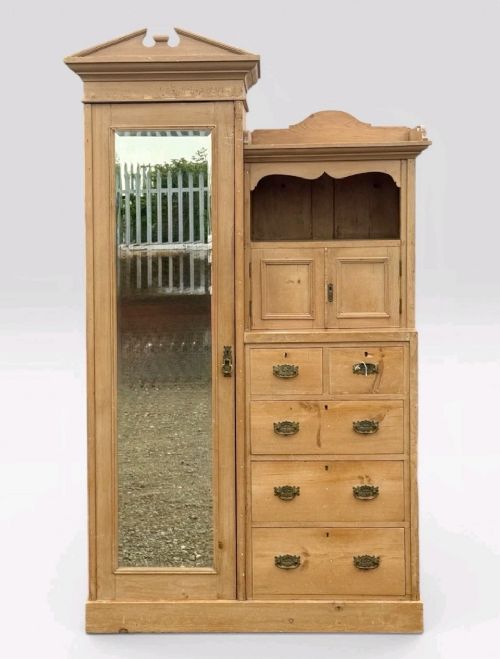
A combination wardrobe chest is a large bedroom storage piece that integrates hanging compartments with a bank of drawers. These versatile hybrids bridge the gap between traditional wardrobes and tall chests of drawers.
You will most commonly encounter Victorian examples on this page, alongside Edwardian and earlier pieces. The selection ranges from compact single units to expansive breakfront formats.
Makers designed these items to maximise storage floor space in smaller domestic rooms by stacking or uniting different compartments. They combine hanging rails, linen presses and sliding trays within a single cabinet footprint.
How they were made
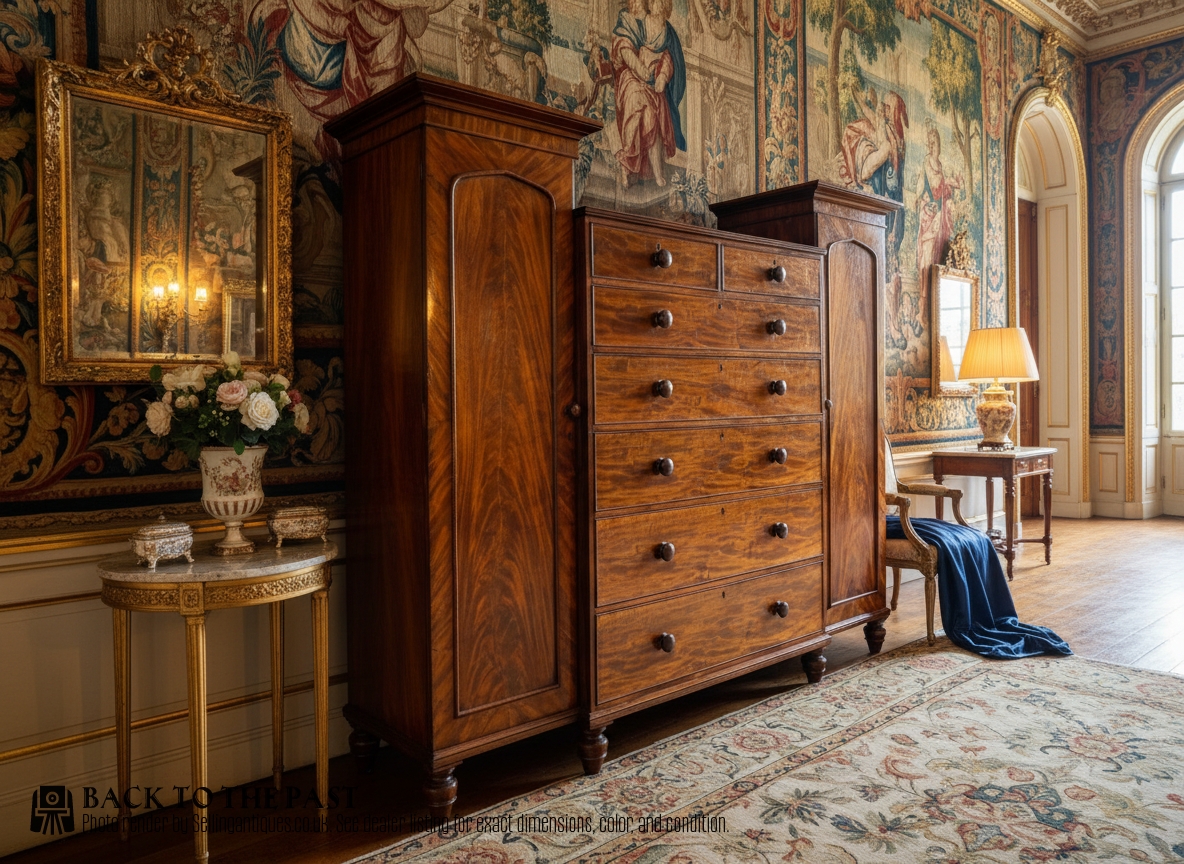
Cabinet makers utilised solid and veneered timbers including mahogany, ash, pine and burr walnut. Finer examples display figured veneers on drawer fronts and door panels, framed by sturdy carcases.
Brass hardware such as drop handles, escutcheons and barrel bolts secured the heavy doors and drawers. Glass elements appear occasionally in mirrored doors, while internal sliding trays provided organised linen storage.
Combination Wardrobe Chest Retail Price Guide 2026
Typical asking prices for combination wardrobe chest among the pieces listed under this phrase on Sellingantiques today, from the lower quarter to the upper quarter. They describe what is for sale here now, not the wider market.
Some tall wardrobes double as sentry boxes, proving that nineteenth-century joiners took vertical floor-saving very seriously indeed.
What varies in quality
The choice of primary timber and veneer selection dictates the baseline quality of a combination wardrobe chest. Dense hardwoods like mahogany and figured walnut mark out finer workshops from utilitarian pine constructions.
Construction methods such as dovetailed drawer boxes and panelled backs separate standard utility pieces from high-end cabinet work. Integrated architectural details like inverted breakfronts and carved mouldings indicate superior design ambition.
Gillows·Shapland & Petter
The Combination Wardrobe Chest Glossary
- Compactum
- A multi-functional wardrobe featuring fitted interior compartments, drawers and hanging space designed to hold an entire wardrobe efficiently.
- Breakfront
- A cabinet front where the central section projects forward from the recessed outer sections.
- Linen press
- A tall storage cupboard containing sliding trays or shelves originally intended for household linens before hanging garments predominated.
- Sentry box
- A narrow, tall wardrobe design tailored for tight spaces where floor area is restricted.
- Chifferobe
- A hybrid furniture form combining the vertical storage of a wardrobe with the horizontal drawers of a chest.
Combination Wardrobe Chest: Frequently Asked Questions
What is a combination wardrobe chest?
A combination wardrobe chest is a large bedroom storage item that unites clothes hanging space with built-in drawer storage. It provides a complete furniture solution by housing multiple storage formats inside one carcase.
These pieces typically date from the nineteenth and early twentieth centuries, reflecting changing domestic storage needs. They range from utilitarian pine cupboards to sophisticated mahogany and walnut breakfront designs.
How do I fit one in a room?
Measuring your ceiling height and available floor space carefully is essential before introducing one of these large storage units into a room. Many period examples feature modular construction or partially dismantle to ease transport and placement.
Positioning the piece away from direct heat sources helps protect timber carcases and veneered surfaces from splitting. Ensure there is adequate clearance for doors to swing fully open and drawers to extend.
How do I date these pieces?
Stylistic clues, timber choices and construction techniques help establish the age of a combination wardrobe chest. Victorian and Edwardian examples often display specific revival motifs or distinctive brass hardware patterns.
Examining internal drawer construction, such as hand-cut dovetails versus machine-made joints, provides further chronological context. Regional country pieces in pine contrast with sophisticated London or provincial cabinet maker output.
How were they used historically?
These units served as the primary bedroom storage furniture for households before fitted wardrobes became standard in modern architecture. They accommodated folded garments, undergarments and longer hanging coats within a single footprint.
Servants and homeowners utilised the internal sliding trays and deep drawers to keep textiles organised and protected from dust. The integration of hanging and drawer space reflected the growing complexity of period wardrobes.