
Carved Mahogany Tallboy
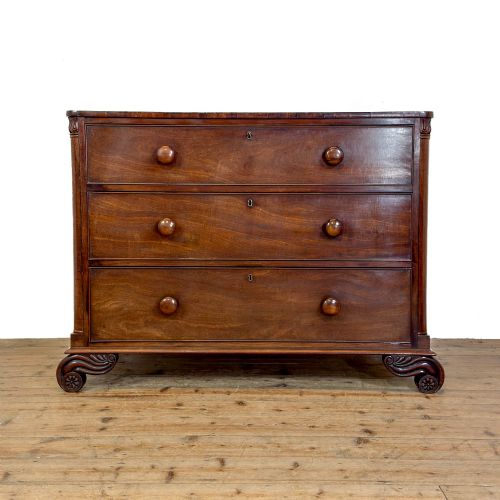
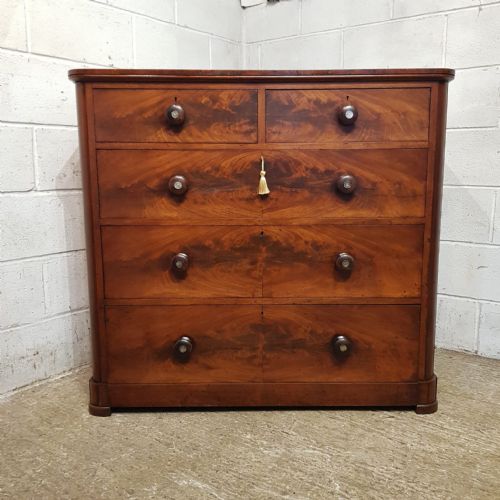
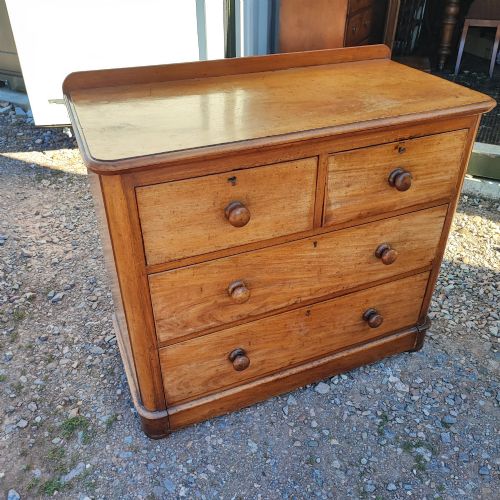
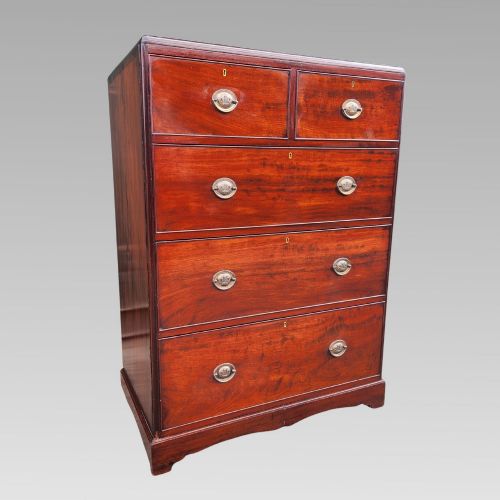
A carved mahogany tallboy brings monumental presence to a room, offering soaring vertical storage dressed in deep timber grain.
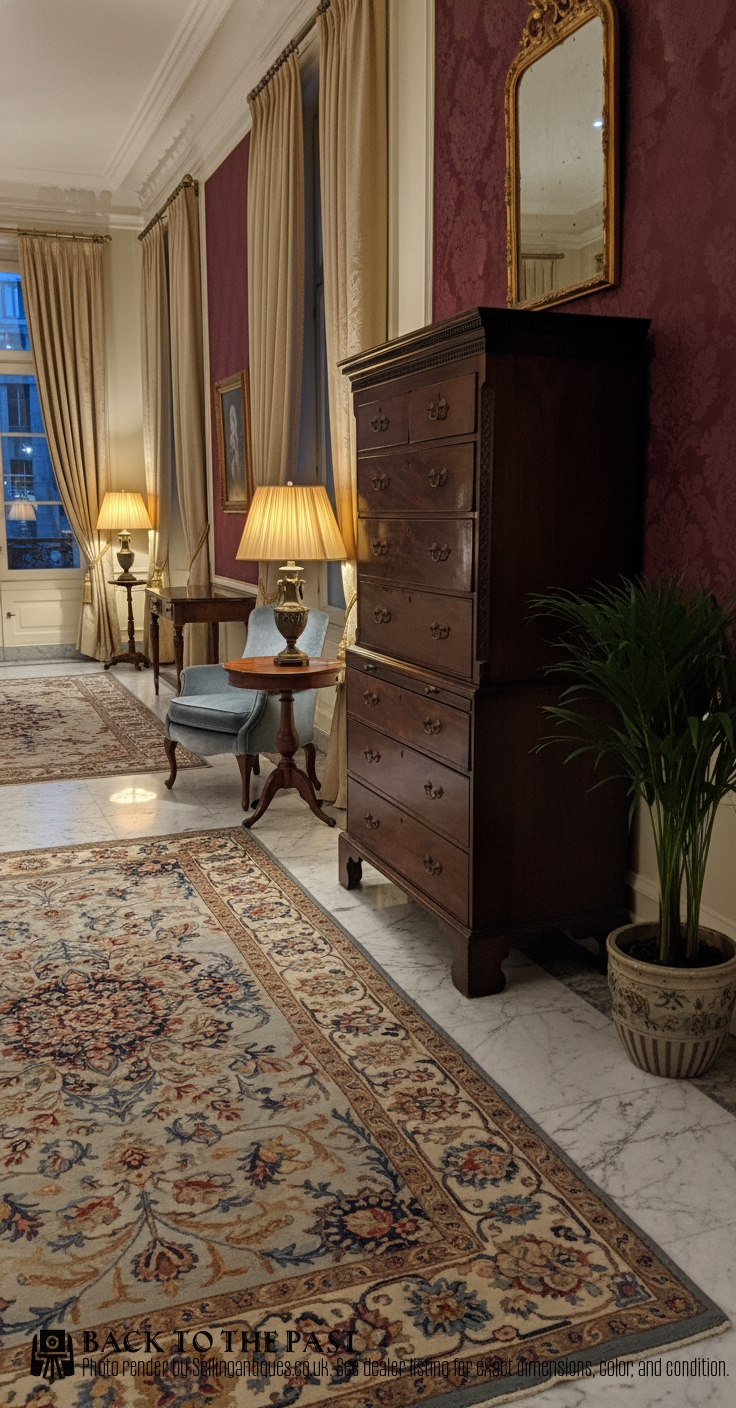
Carved Mahogany Tallboy
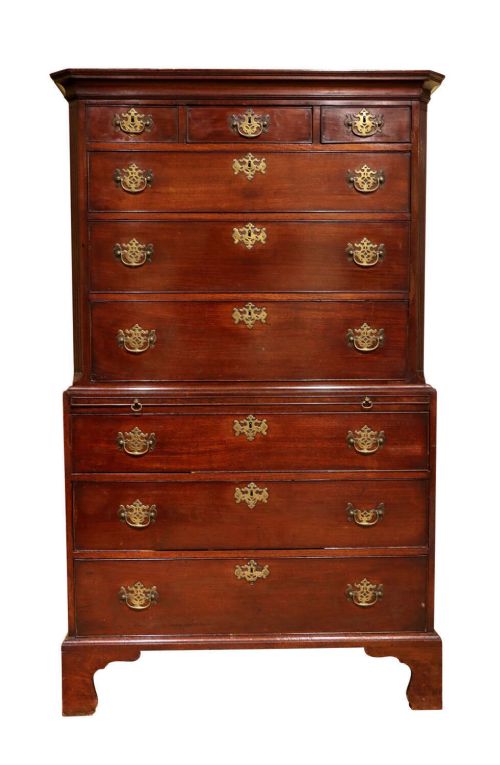
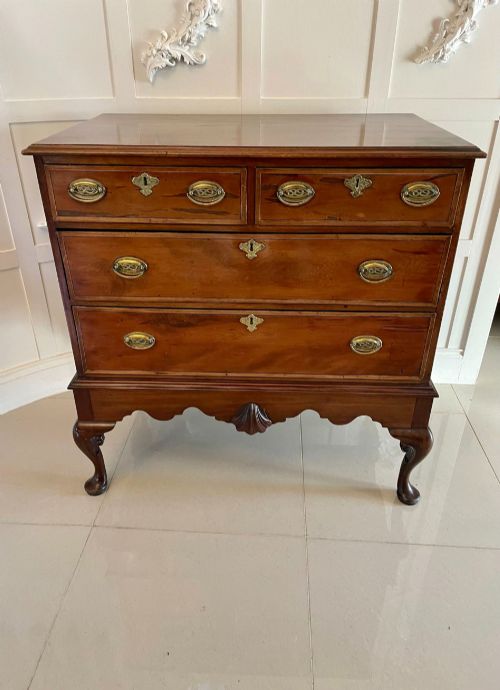
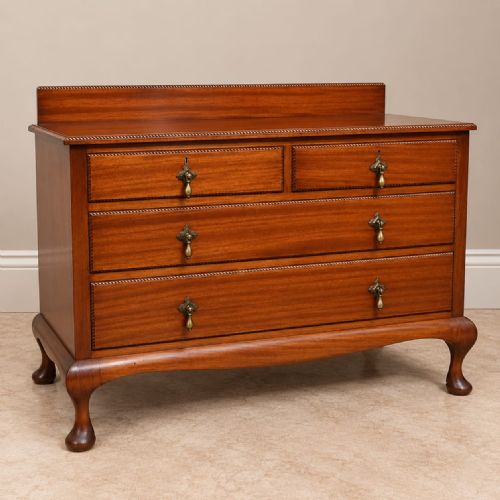
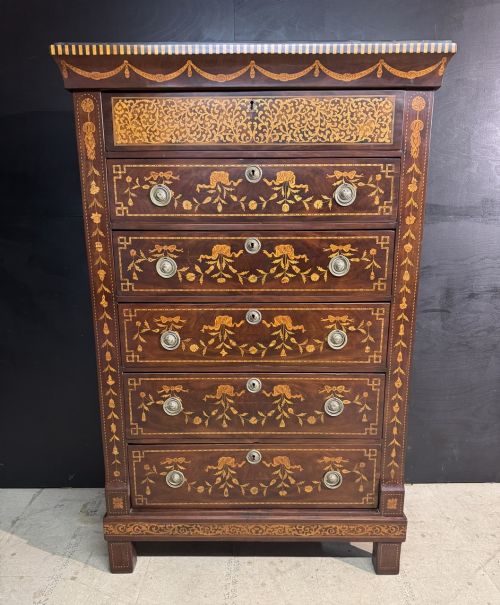
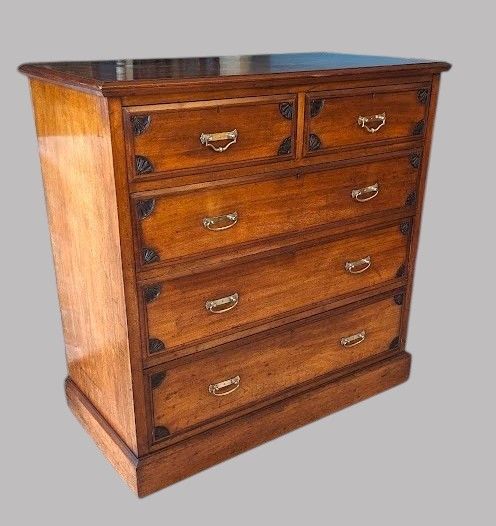
A carved mahogany tallboy is a tall storage piece combining multiple drawer tiers, frequently built as a chest on chest or a linen press. Buyers seeking this phrase encounter grand eighteenth-century Georgian examples alongside nineteenth-century Victorian and Edwardian interpretations.
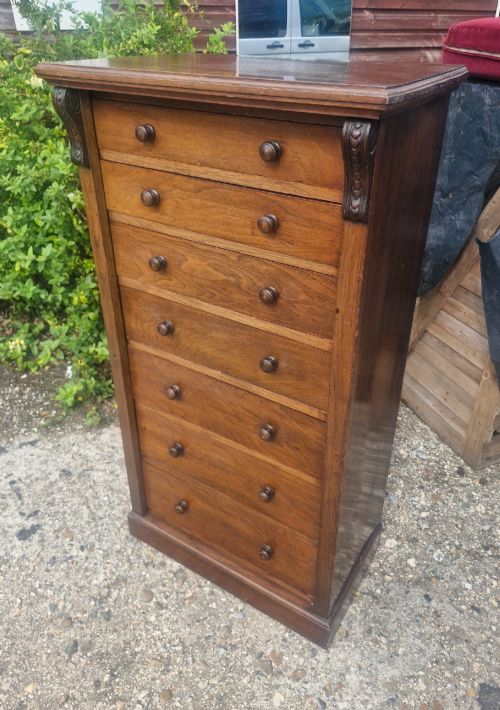
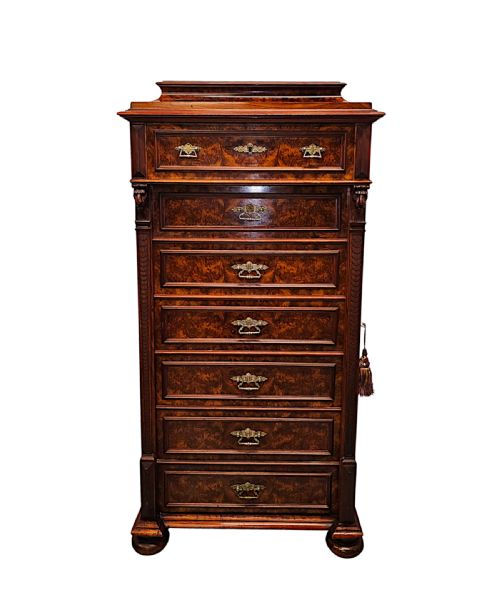
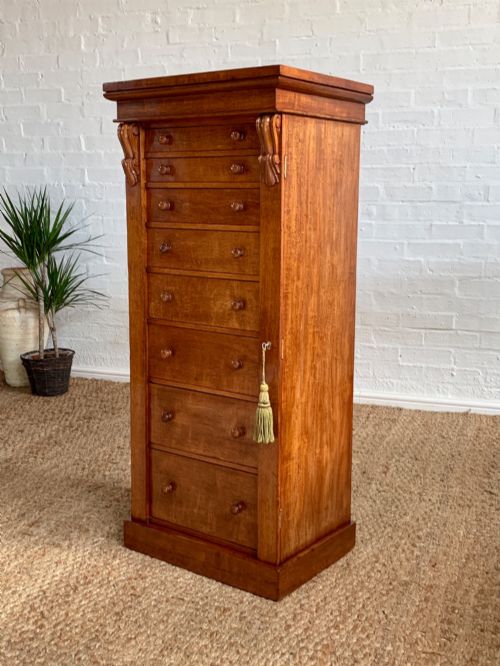
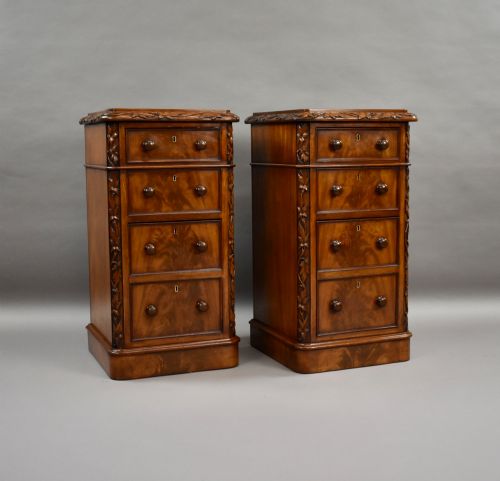
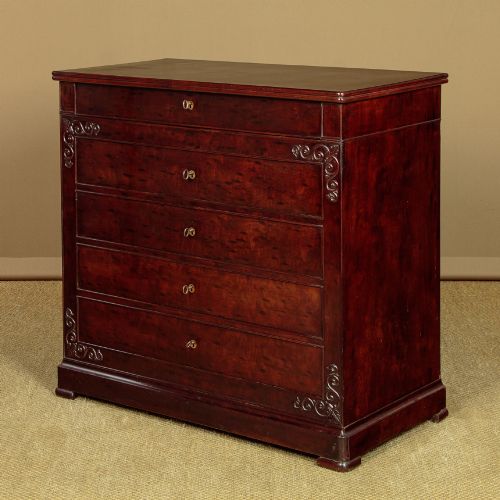
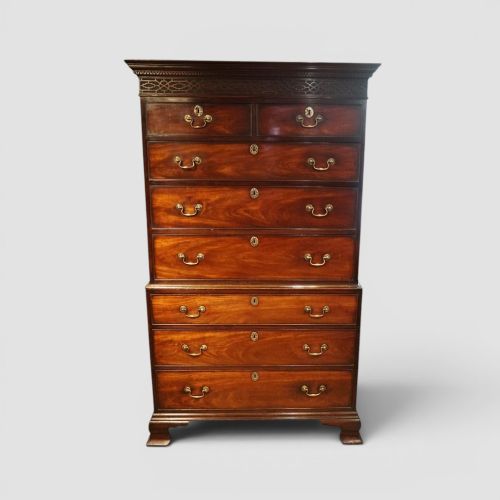
The most common form on this page is the chest on chest, stacking a substantial upper section upon a matching lower base. Alongside these stand Wellington chests, linen presses, and bedside chests constructed from the same dense timbers.
Origins stretch from George III workshops to later revival periods, bringing distinct regional proportions and decorative carving. Every piece balances functional vertical storage with formal cabinet-making ambitions.
How they were made
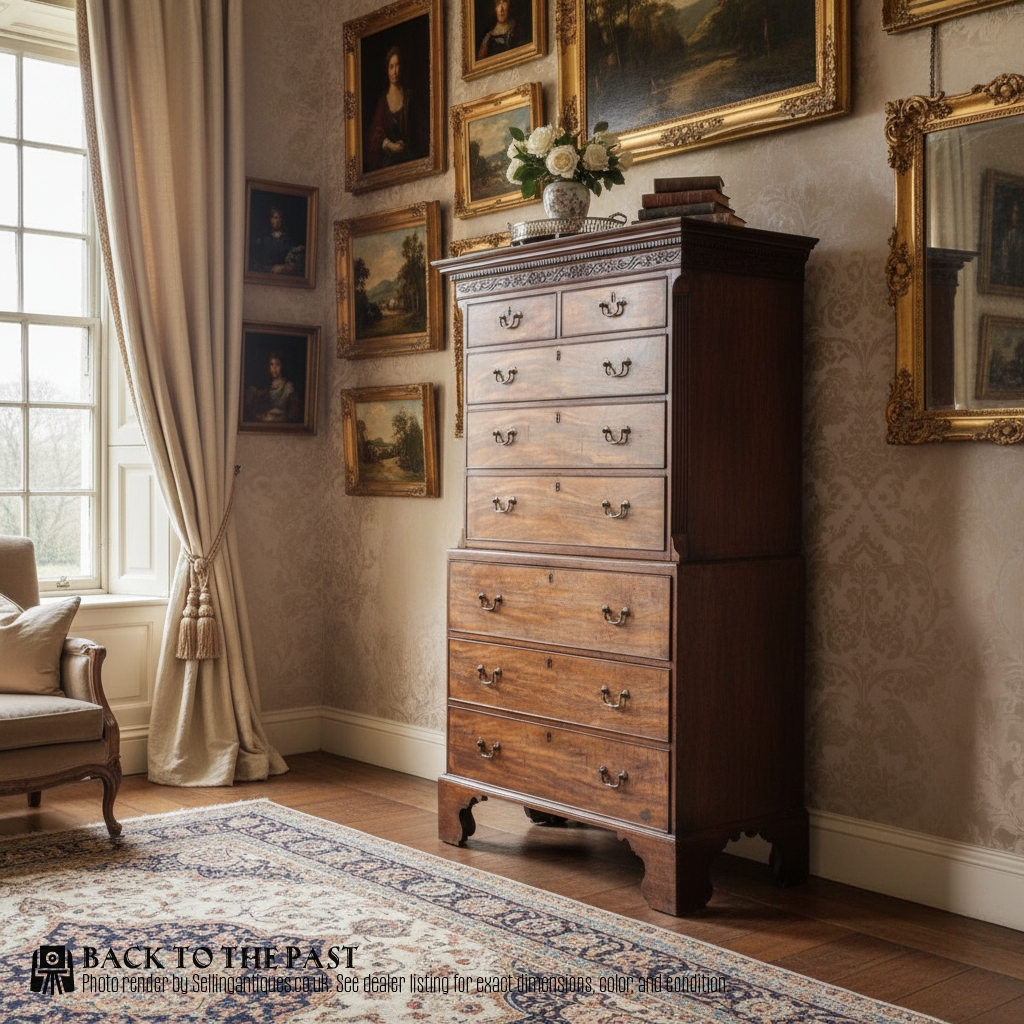
Cabinet-makers relied on solid mahogany and flame mahogany veneer applied to secondary woods such as oak, pine, and fruitwood. Timber selection dictated how light played across the polished surfaces, particularly when figured veneers were matched symmetrically across drawer fronts.
Structural integrity came from dovetailed drawer construction and mortise and tenon frames, while decorative enrichment was carved directly into the solid cornices and friezes. Brass hardware, including pierced brasses and turned knobs, secured the operational fronts.
Secondary timbers like pine and oak provided internal stability for drawer linings and carcases, ensuring the heavy assemblies remained true over centuries of use.
Carved Mahogany Tallboy Retail Price Guide 2026
Typical asking prices for carved mahogany tallboy among the pieces listed under this phrase on Sellingantiques today, from the lower quarter to the upper quarter. They describe what is for sale here now, not the wider market.
Wellington chests acquired their locking side bars to keep staff from snooping through personal journals stored inside.
What varies in quality
Quality rests in the crispness of the carved detail on cornices and canted pilasters, separating routine workshop output from master cabinet-making. Sharp, undercut foliage and blind fretwork indicate significant time invested at the bench.
The integrity of the timber selection and veneer matching defines the visual impact across the upper and lower sections. Retaining original brass handles and smooth drawer runners distinguishes pieces that have survived with integrity intact.
The Carved Mahogany Tallboy Glossary
- Tallboy
- A tall chest of drawers, often constructed as two distinct sections stacked one upon the other. It maximises vertical storage floor space.
- Chest on chest
- A specific tallboy configuration featuring a smaller upper chest resting on a larger lower chest. This form originated in the early eighteenth century.
- Wellington chest
- A tall, narrow chest of drawers secured by a hinged locking side pilaster. These pieces typically contain seven or eight graduated drawers.
- Blind fret cornice
- A decorative carved band applied to the top moulding of a cabinet, mimicking pierced fretwork without piercing the wood all the way through.
- Flame mahogany veneer
- Timber sliced from the fork of the mahogany tree where branches meet the trunk, creating a fiery, undulating grain pattern.
Carved Mahogany Tallboy: Frequently Asked Questions
Where should I place a tallboy?
A tallboy requires a wall with sufficient vertical clearance and floor space to accommodate its substantial height and depth. Bedrooms and dressing rooms suit them best, providing practical storage for folded garments and linens.
Because these pieces command significant visual weight, positioning them away from cramped hallways lets the proportions and timber grain be appreciated fully.
How do I tell a George III tallboy from a Victorian one?
George III tallboys generally exhibit lighter proportions, finer bracket feet or ogee feet, and understated cock-beading around the drawers. Carved details tend to follow classical architectural motifs like dentil cornices and blind fretwork.
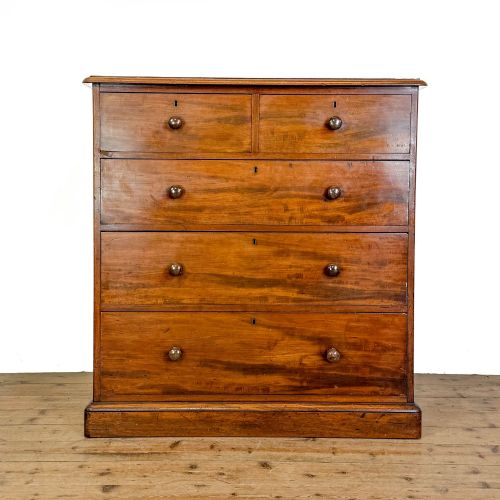
Victorian examples often feature heavier plinths, turned feet, and highly figured flame mahogany veneers with bolder brass hardware or turned wooden knobs.
Can I store heavy items in the drawers?
The deep lower drawers are engineered to bear considerable weight, making them suitable for bulky linens and heavier clothing items. Upper drawers suit lighter garments.
Checking that drawer runners operate smoothly without sagging ensures the internal framing supports the contents evenly across all tiers.
What is the difference between a tallboy and a linen press?
A tallboy consists entirely of stacked drawers from top to bottom, designed specifically for apparel storage. A linen press replaces some or all of the upper drawer tiers with panelled doors enclosing sliding shelves.
Both pieces serve as tall vertical storage cabinets, but the linen press was traditionally built to store flat textiles.