

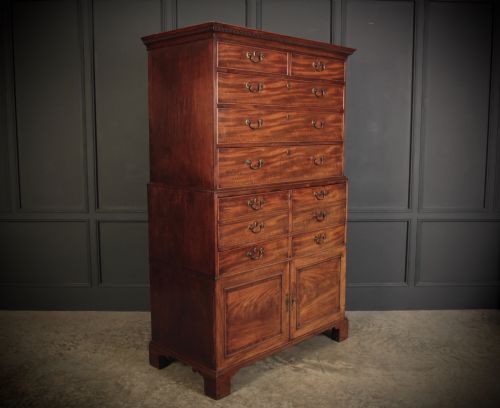
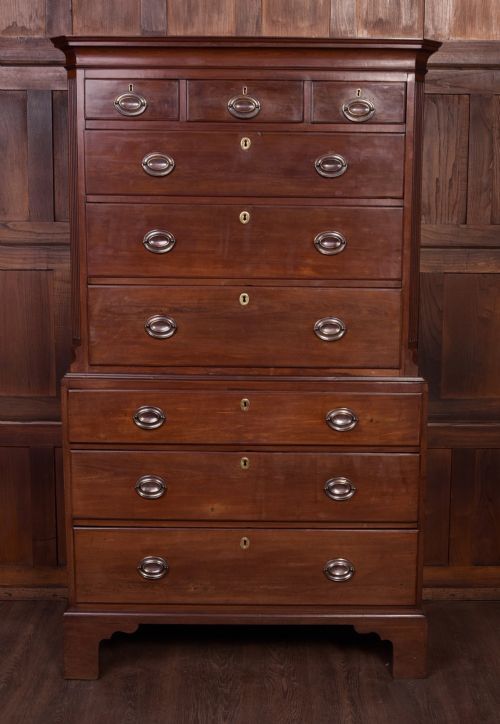


Antique Mahogany Highboy
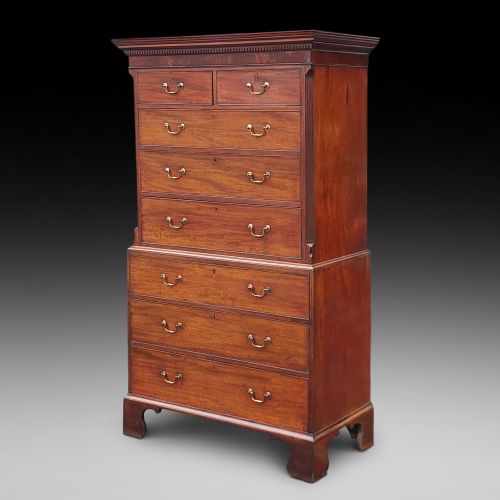
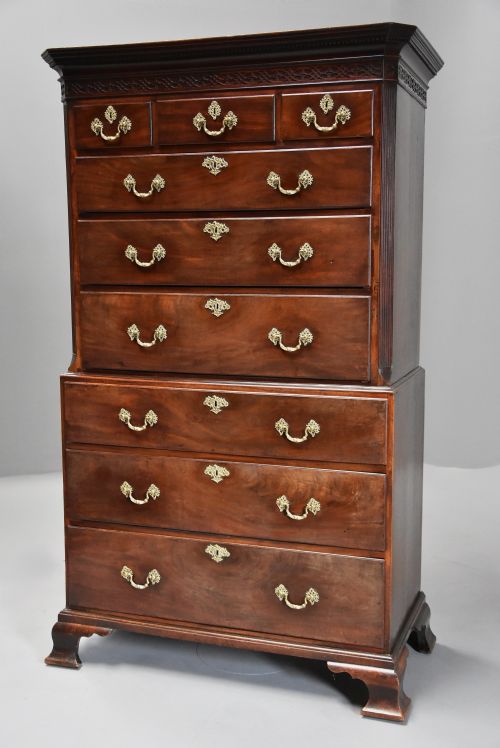
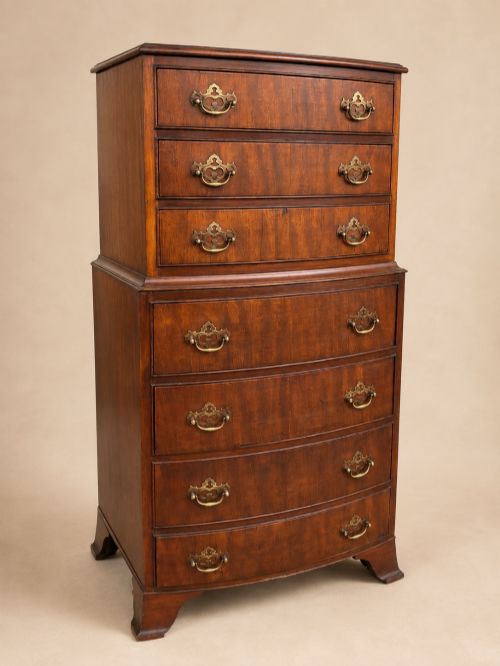
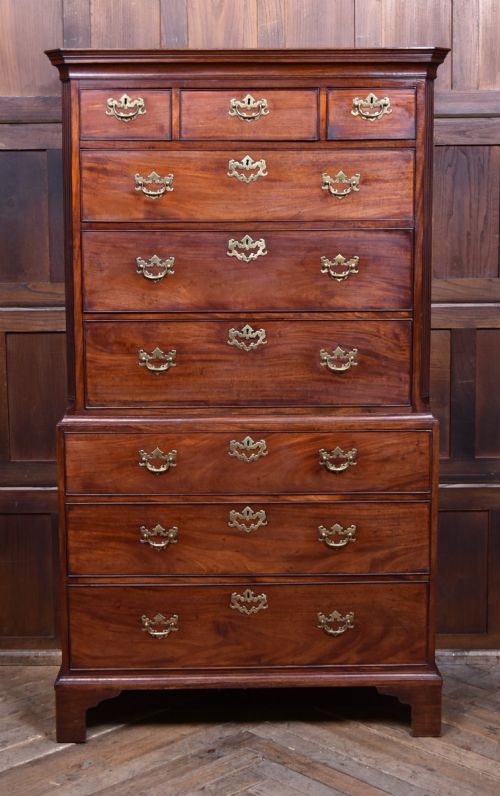
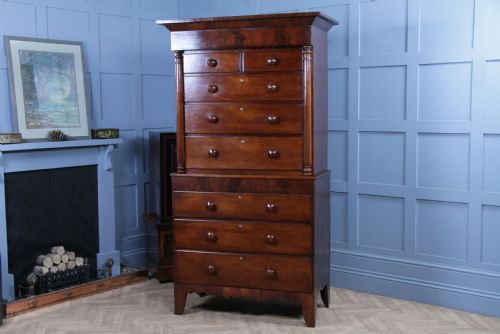
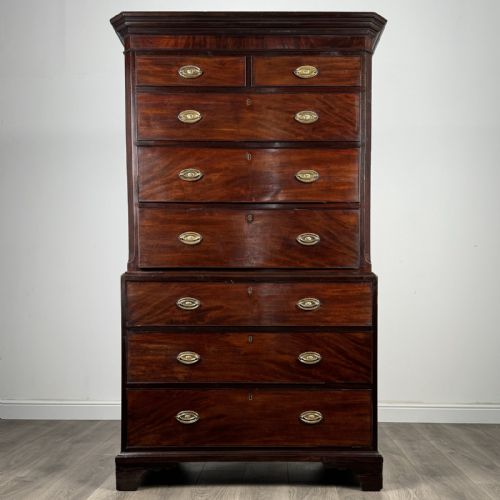
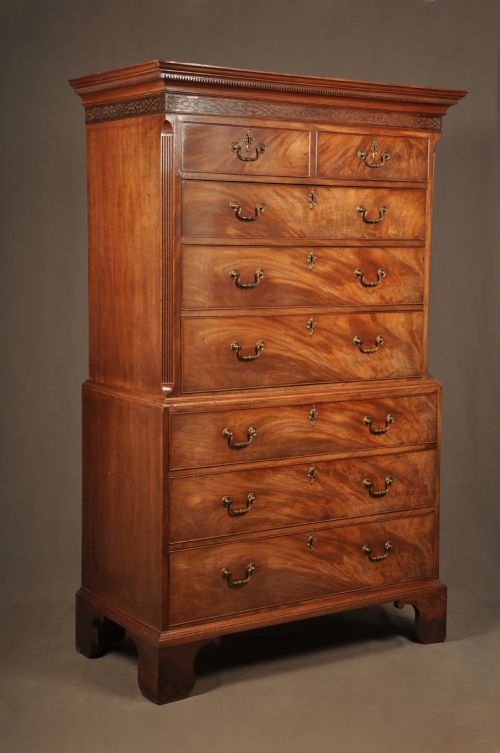
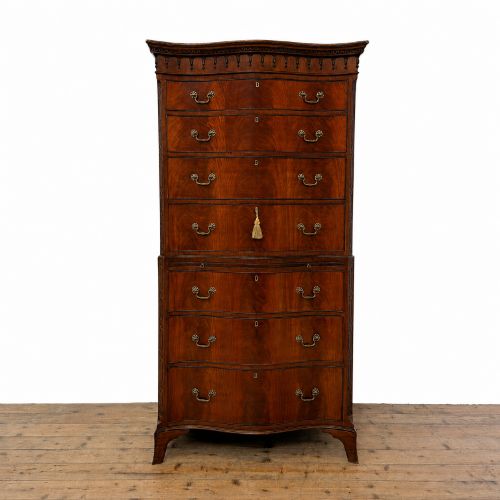
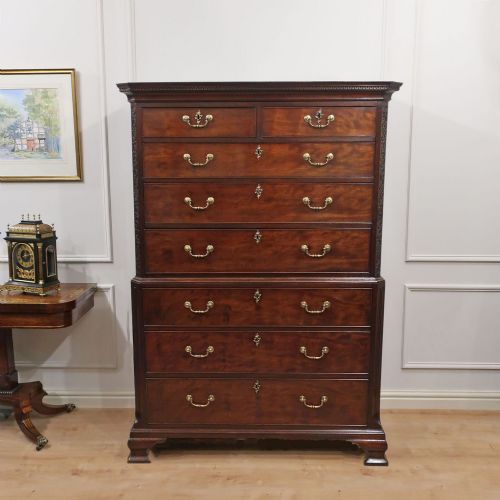
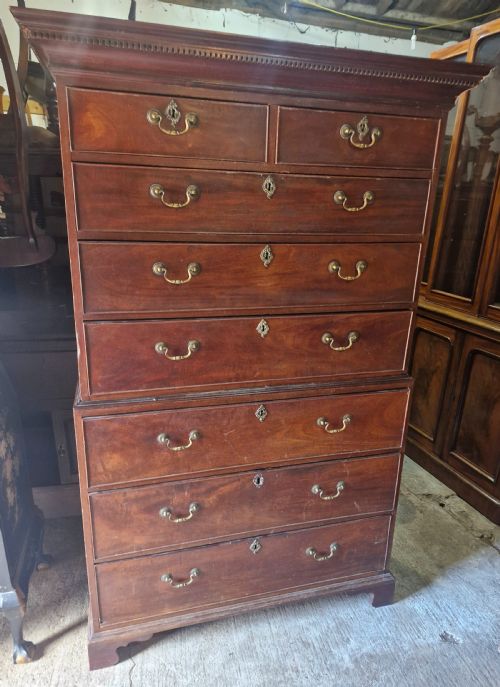
An antique mahogany highboy delivers monumental vertical storage through a two-part chest on chest structure built to command the room.

Antique Mahogany Highboy
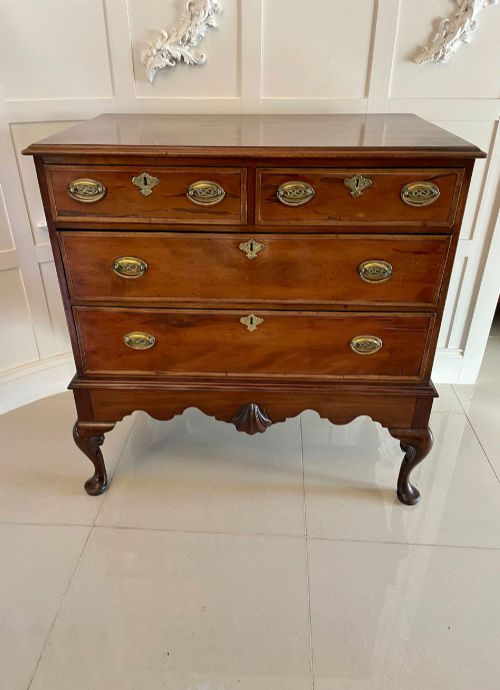
When you search for an antique mahogany highboy, you encounter a towering case furniture piece designed to stack one substantial chest directly upon another, or occasionally upon a low stand. These forms primarily emerge from the Georgian and George III periods through the eighteenth and nineteenth centuries, spanning regional variations like Scottish, Irish, and Dutch interpretations.
The most common formats on this page are the traditional chest on chest and the tallboy, frequently fitted with numerous small and large drawers, and occasionally housing a fitted writing drawer or secretaire compartment. Pieces range from formal straight fronts to bowfront and serpentine profiles, alongside revival iterations produced into the twentieth century.

Materials and Construction
Cabinet makers utilised dense imported mahogany for primary external surfaces, often selecting richly figured grain timbers for drawer fronts and incorporating secondary structural woods like oak and pine within the internal carcase framing.
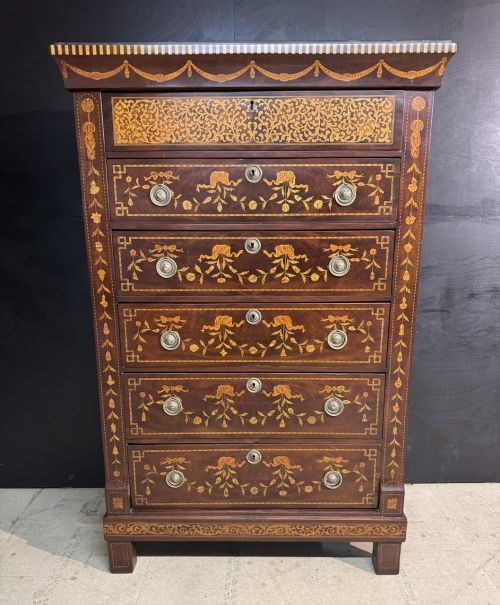
Detailing relied on precision joinery augmented by decorative elements such as boxwood and fruitwood inlay, satinwood banding, and marquetry work, while structural integrity and movement were controlled by solid brass handles and escutcheons.
Antique Mahogany Highboy Retail Price Guide 2026
Typical asking prices for mahogany highboy among the pieces listed under this phrase on Sellingantiques today, from the lower quarter to the upper quarter. They describe what is for sale here now, not the wider market.
Listings feature pieces spanning the Georgian era through the twentieth century, constructed primarily in mahogany alongside oak, pine, and inlay.
Judging Quality
Superior examples distinguish themselves through the depth and warmth of the original timber patina and the harmonious proportion between the upper and lower case sections. Finer pieces demonstrate meticulous alignment of drawer linings, crispness of carved mouldings, and integrity in the brass hardware.
Construction methods also separate standard production from masterwork execution, seen in the choice of secondary timbers for drawer bottoms and the precision of inlaid stringing or marquetry panels. The presence of integrated writing compartments or sophisticated serpentine fronts further elevates the standing of an individual carcase.
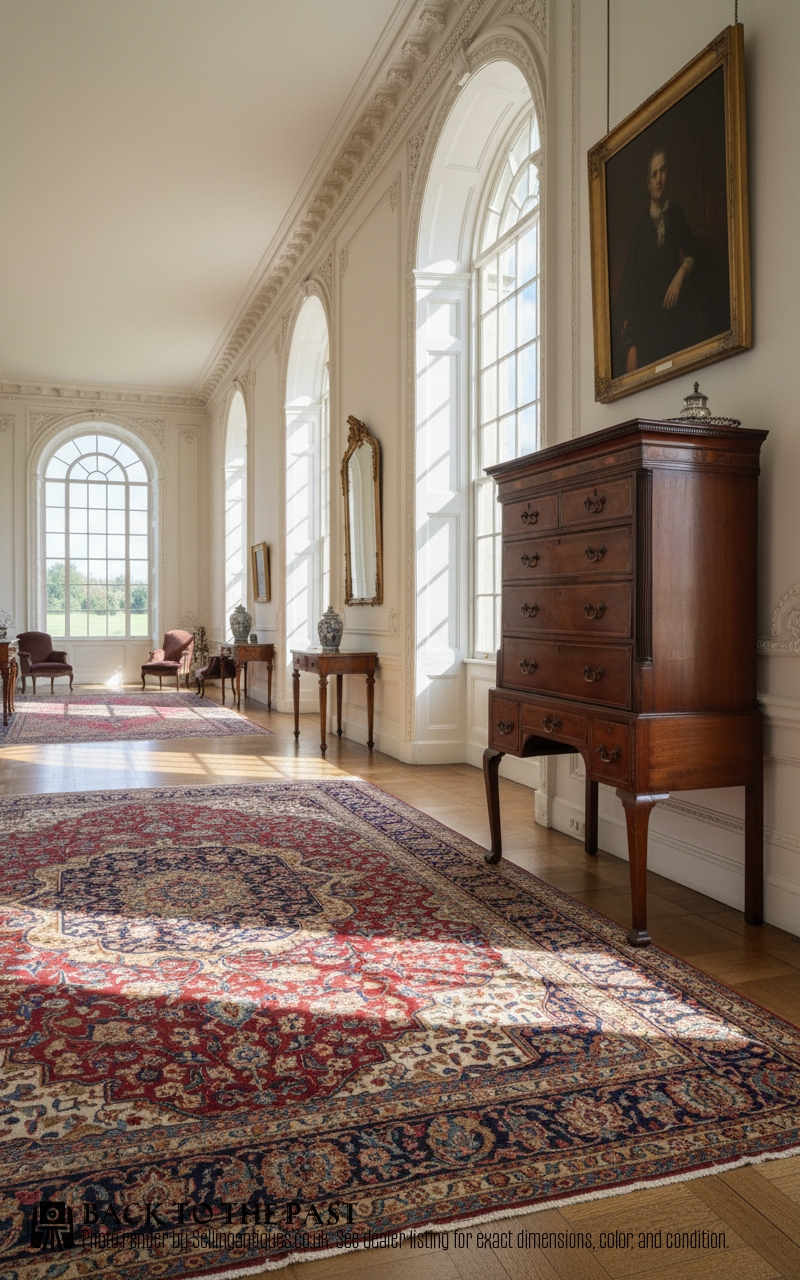
The Antique Mahogany Highboy Glossary
- Chest on chest
- A tall storage unit formed by stacking a slightly narrower upper chest onto a deeper lower chest of drawers. This configuration maximises vertical capacity while maintaining classical proportions.
- Tallboy
- An alternative terminology for a tall chest of drawers, frequently used interchangeably with chest on chest in British cabinet making traditions. These pieces often incorporate seven or eight graduated drawers.
- Chest on stand
- A form where the main drawer section rests upon a raised table base supported by legs. This variant lightens the visual weight of the tall storage block.
- Secrétaire
- A drawer modified with a drop-front to serve as a writing desk while concealing internal pigeonholes and small compartments. Such adaptations add functional versatility to the upper chest.
- Marquetry
- The art of forming decorative patterns using fitted veneers of various exotic and native woods. Eighteenth-century Dutch makers utilised this technique extensively on tall case furniture.
Antique Mahogany Highboy: Frequently Asked Questions
What is an antique mahogany highboy?
An antique mahogany highboy is a tall, two-section storage chest designed during the Georgian and later eras to provide extensive drawer capacity within a compact floor footprint.
These pieces combine functional vertical stacking with architectural styling, utilising dense mahogany timbers and sophisticated joinery to create a commanding presence in a room.
How do I tell different periods apart?
Identifying the period relies on examining hardware styles, timber selection, and overall proportions. Eighteenth-century pieces typically exhibit hand-cut dovetails and rich, aged patinas, while later revivals often display standardised construction details and different secondary woods.
Stylistic shifts from straight Georgian lines to later serpentine and bowfront shapes also provide clear chronological markers for dating a specific carcase.
How were these pieces used originally?
These tall chests served as primary bedroom furniture for storing garments, linens, and personal valuables securely above the floor level. The inclusion of specialised writing drawers in certain models allowed them to function as combined storage and correspondence hubs.
The division into multiple smaller upper drawers and deeper lower drawers accommodated different categories of textiles and household items.
How do I live with a tall chest?
Living with a tall case piece requires mindful placement to accommodate its substantial height and depth within a modern interior. Securing the upper and lower sections properly and anchoring the unit to a wall ensures stability given the vertical centre of gravity.
Positioning the furniture away from direct heat sources and strong sunlight preserves the rich mahogany surface and prevents timber movement in the joints.