
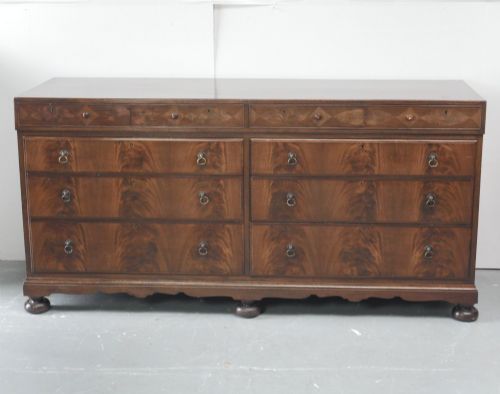
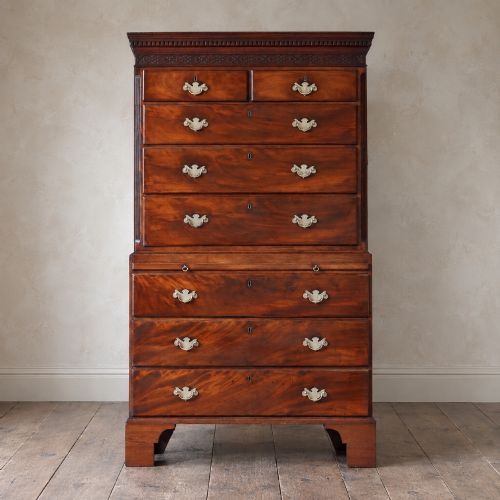
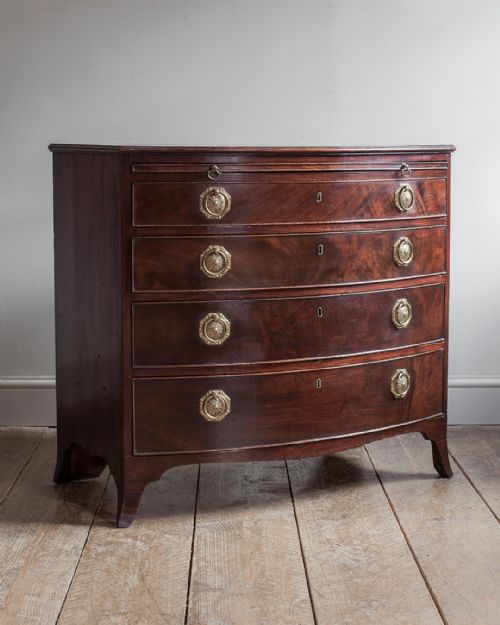
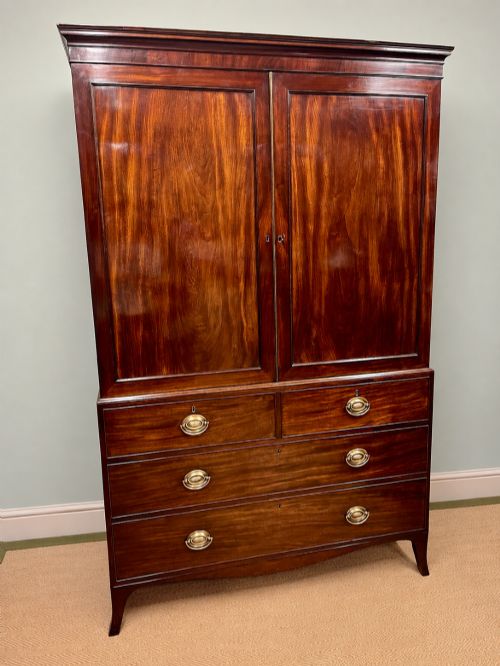


Dark Wood Chest on Chest
These dark wood chest on chest pieces offer commanding vertical storage and rich mahogany grain, built to anchor a traditional room.
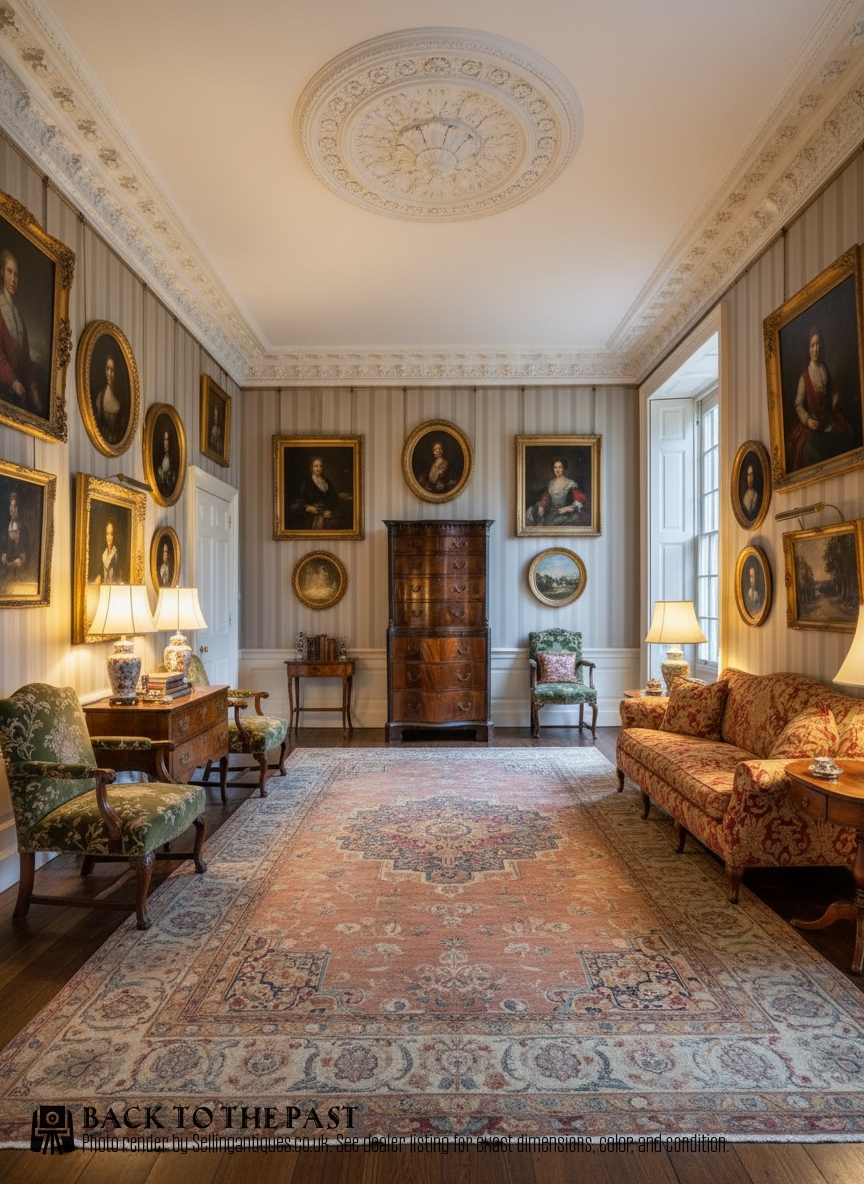
What a dark wood chest on chest is
A dark wood chest on chest comprises two distinct sections stacked vertically, doubling storage capacity without expanding the footprint on the floor. These pieces frequently appear in Georgian and later revival forms, serving as substantial storage furniture for bedrooms and dressing rooms.
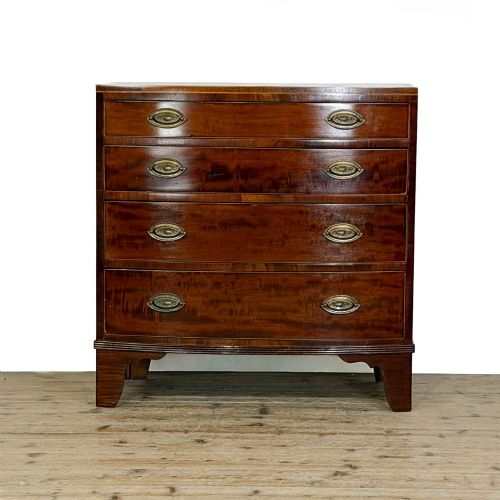
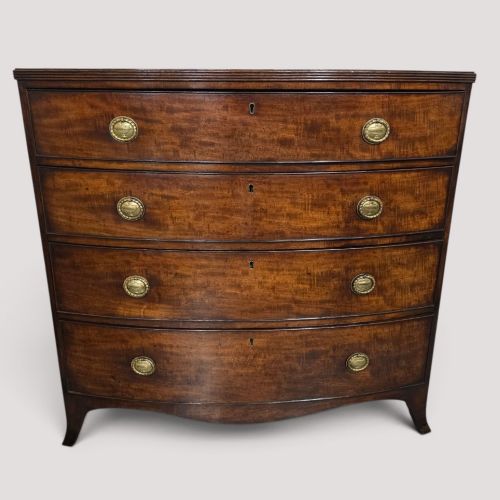
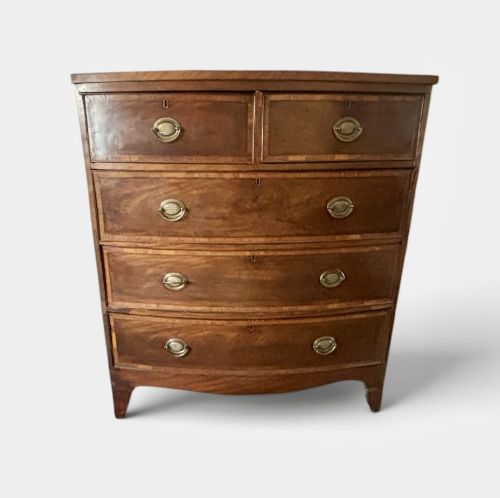
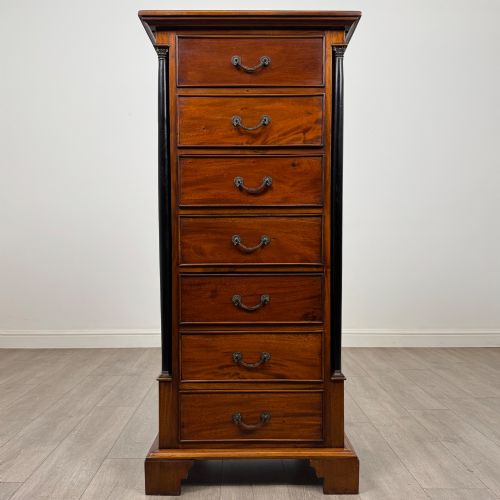
The layout typically places smaller drawers at the top above larger ones below, creating a tall profile often known as a tallboy. Examples span plain rectilinear Georgian carcases to sophisticated bow-fronted and serpentine shapes.
How they were made
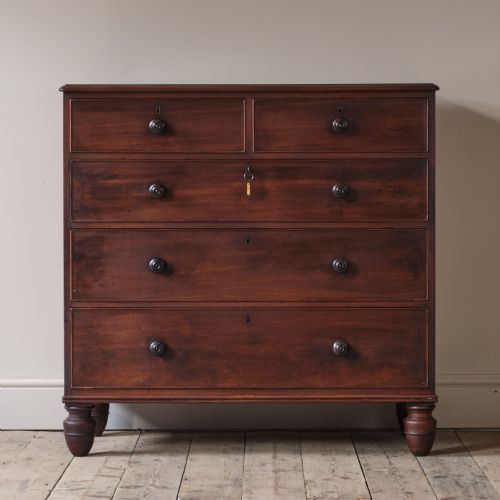
Construction relies heavily on solid mahogany and decorative wood inlay, complemented by cast brass handles and escutcheons. Cabinetmakers joined the upper and lower carcases with precision, housing multiple graduated drawers within solid frames.
Specialised variations incorporate a fitted writing drawer inside the structure, adding a secretaire function to the standard chest. Surface finishes enhance the natural grain of the wood through traditional polishing methods.
Retail Price Guide 2026
Typical UK retail prices for dark wood chest on chest, calculated from the Sellingantiques database of over a million retail prices indexed since 2003. This retail price guide relies exclusively on Sellingantiques data; no external sources or auction records are used, so the figures do not describe the wider market.
Current listings feature mahogany as the primary timber, spanning the Georgian period, the 19th century, and a 1920 revival piece.
What varies in quality
Quality rests upon the selection of timber figures, the sharpness of the wood inlay, and the architectural proportion between the upper and lower sections. Finer examples display carefully matched grain patterns across the drawer fronts and robust secondary timbers inside.
The complexity of the silhouette also separates standard pieces from the exceptional, particularly where cabinetmakers shaped the front into gentle curves or serpentine lines. Original brass hardware and smoothly running drawers further distinguish the better workshops.
The Dark Wood Chest on Chest Glossary
- Tallboy
- An alternative name for a chest on chest, denoting a tall set of drawers built in two stacked sections.
- Secretaire
- A drawer fitted with a drop-front writing surface and small internal compartments for stationery.
- Serpentine-front
- A curved drawer front that undulates outward in the centre and inward at the sides.
- Bow-front
- A cabinet front that curves outward in a convex shape across its entire width.
- Escutcheon
- A protective brass plate surrounding a keyhole on a drawer front.
Frequently Asked Questions
What is a chest on chest?
A chest on chest is a tall piece of furniture made by stacking one set of drawers directly on top of another. This design provides maximum storage capacity while maintaining a compact vertical footprint.
The upper section usually contains narrower drawers, while the lower section holds wider ones. This two-part construction also made these heavy pieces easier to transport up staircases historically.
How do I style a tallboy?
A tallboy works best anchored against a sturdy wall in a bedroom or dressing room where its height can balance other large furniture. Because of its commanding presence, it needs adequate floor space to prevent the room from feeling overcrowded.
Keep the top surface relatively clear or use a single understated object to maintain clean vertical lines. Pairing the dark wood tones with neutral walls allows the mahogany grain to stand out as a focal point.
What is a secretaire chest?
A secretaire chest includes a specialised drawer that pulls out and drops down to reveal a writing surface and small pigeonholes. This clever dual-purpose design allowed the owner to write letters without needing a separate desk.
When closed, the secretaire drawer looks identical to the standard drawers above and below it. This hidden compartment adds both utility and a layer of craftsmanship to the piece.
How do I date a Georgian chest?
Dating a Georgian chest involves examining the timber species, drawer construction techniques, and overall architectural style. Pieces from the 18th century often feature dense mahogany, hand-cut dovetails, and subtle wood inlay.
Revival pieces from later periods typically show machine-sawn timber elements and slightly different internal secondary woods. Comparing the brass hardware style to known historical periods also helps narrow down the decade of manufacture.