

Mahogany Bowfront Drawers
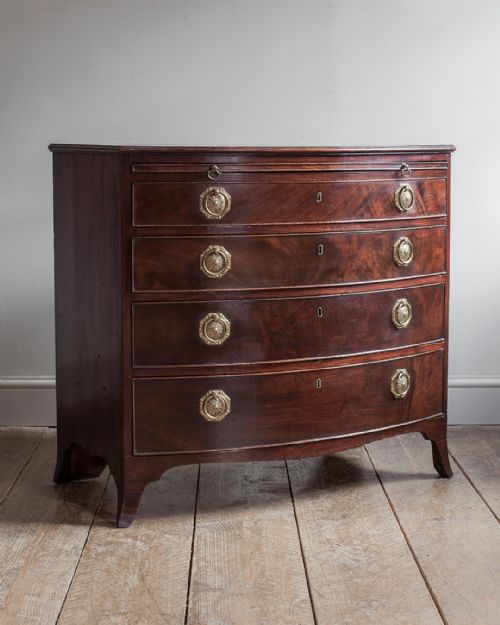
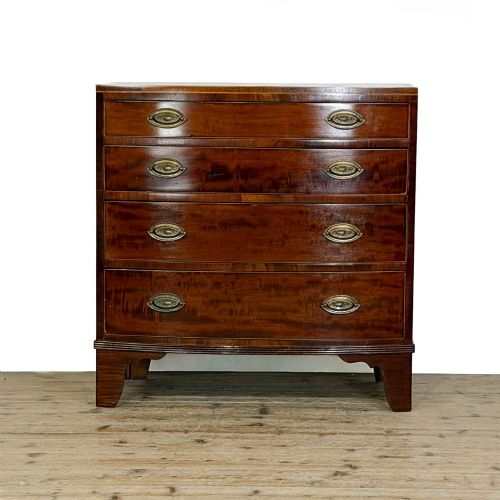
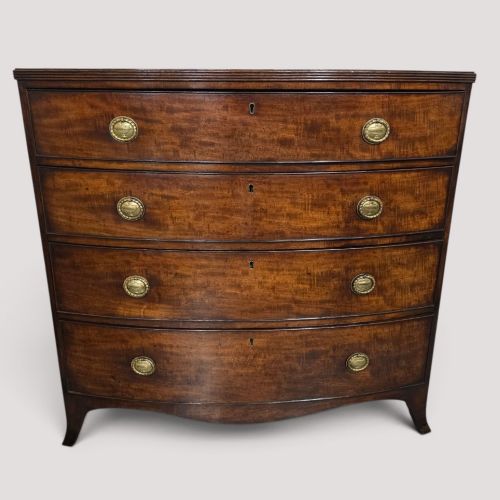
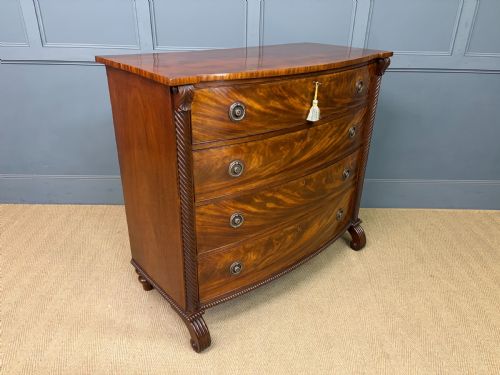
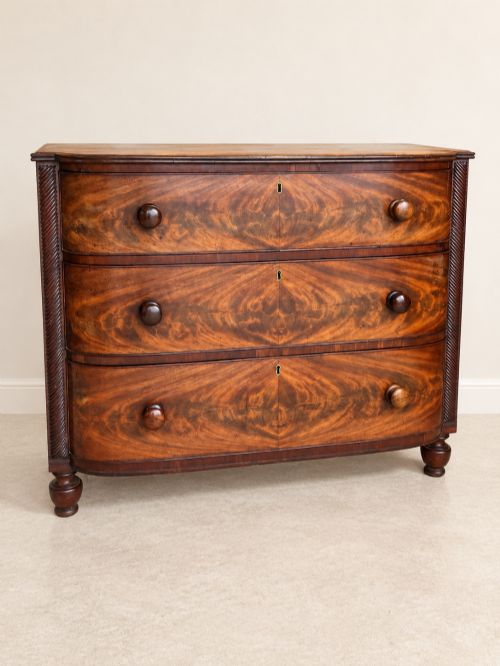
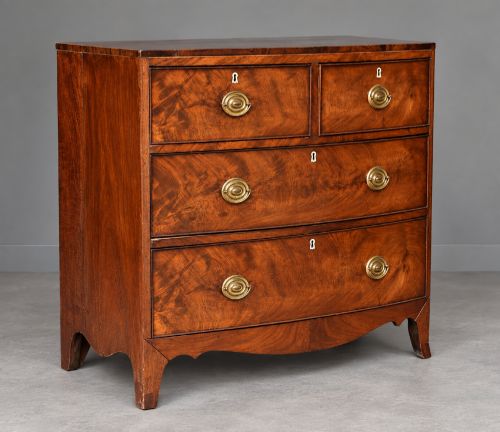
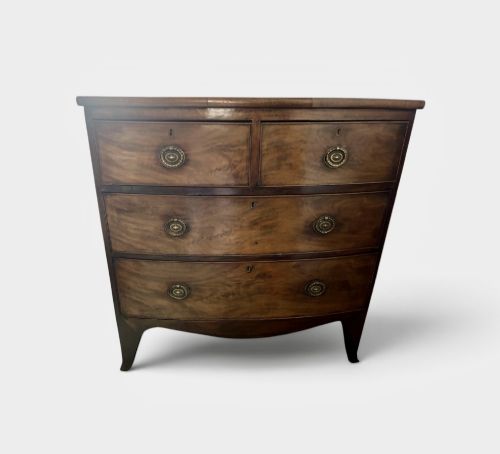
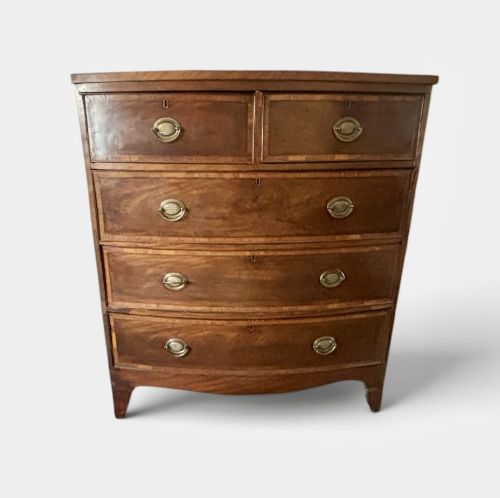
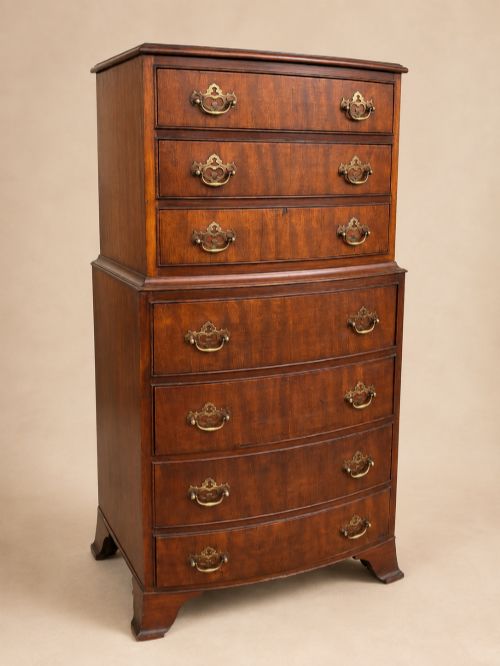
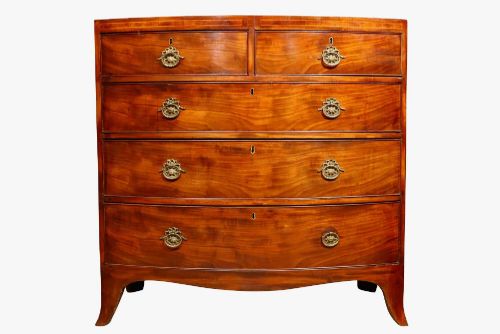
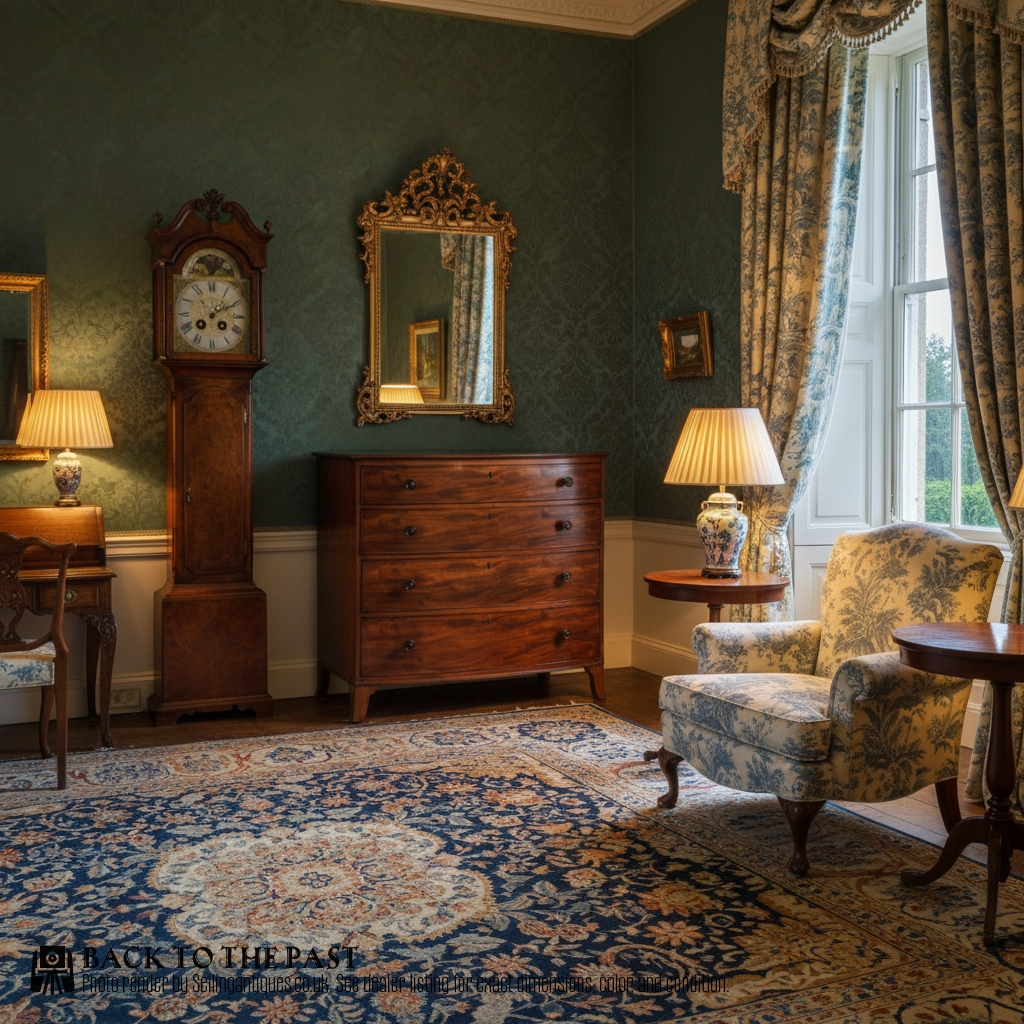
Mahogany bowfront drawers offer a curved front profile combined with rich timber grain, serving as practical storage furniture.
Mahogany Bowfront Drawers
A buyer seeking mahogany bowfront drawers will find pieces primarily originating from the Georgian, Regency, and Victorian periods, alongside later Edwardian examples.
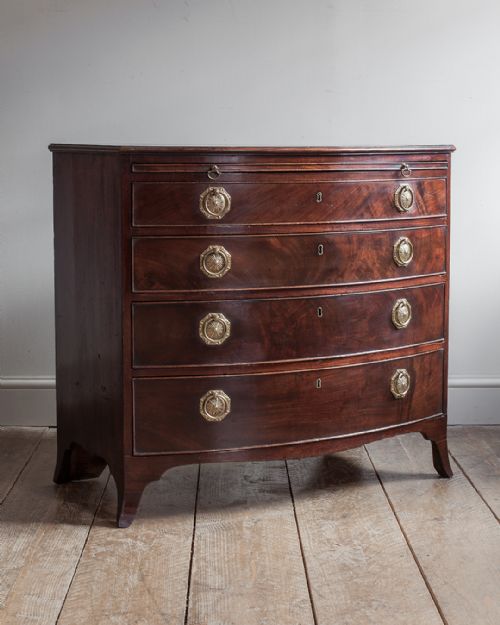
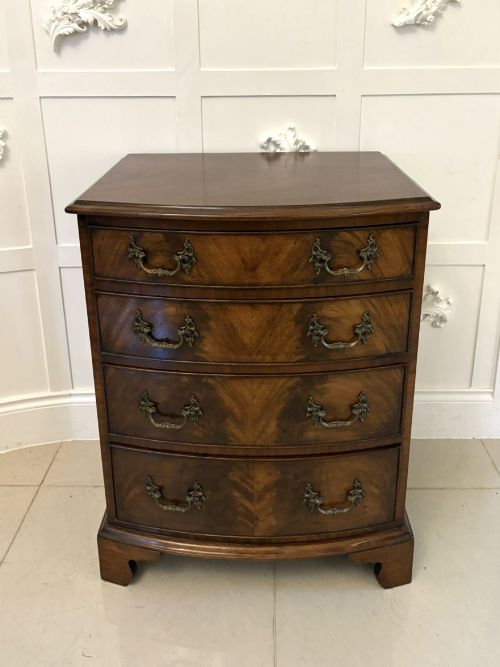
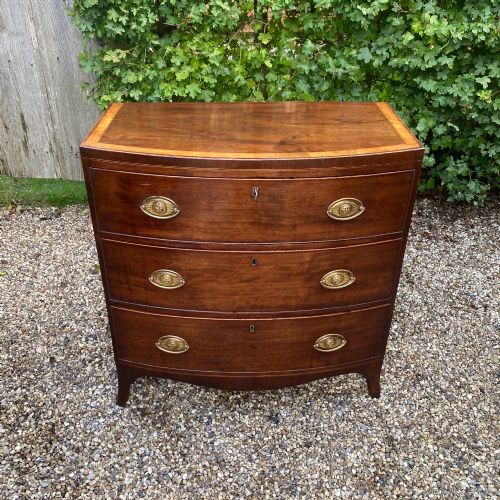
The standard form is a chest of drawers featuring a convex curved front that softens the silhouette of the traditional case piece.
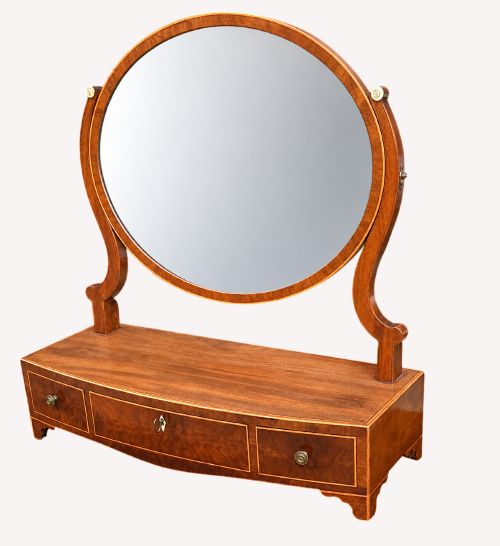
While chests of drawers dominate the selection, related forms such as dressing table mirrors, sideboards, and miniature furniture also appear.
Materials and Technique
Cabinet makers constructed these carcases using solid mahogany for the main structure, frequently selecting flame mahogany veneer to create figured patterns on the drawer fronts.
Secondary timbers such as pine provided internal framing for drawer sides and backs, while contrasting stringing lines utilised satinwood.
Brass handles, escutcheons, and occasional bone details completed the hardware and inlay work on the finished pieces.
Mahogany Bowfront Drawers Retail Price Guide 2026
Typical asking prices for mahogany bowfront drawers among the pieces listed under this phrase on Sellingantiques today, from the lower quarter to the upper quarter. They describe what is for sale here now, not the wider market.
Certain Welsh and provincial chests hide secret drawers tucked away beneath the top moulding for safekeeping.
Craftsmanship and Proportion
The distinction between tiers rests upon the choice of timber veneer, where deeply figured flame mahogany commands higher regard than plain grain.
Proportion and scale dictate quality, with smaller chests and narrow formats demonstrating finer cabinet work than standard utility pieces.
Subtle details such as satinwood banding, crossbanding, and well-executed curved drawer construction elevate the status of the furniture.
The Mahogany Bowfront Drawers Glossary
- Bowfront
- A convex curved front profile typical of case furniture designed to soften hard angles in a room. This shape required skilled joinery to bend wood or shape solid timber accurately.
- Flame mahogany
- A highly figured timber veneer displaying a distinct flame-like pattern across the grain. Cabinet makers reserved this material for prominent surfaces like drawer fronts.
- Crossbanding
- A strip of veneer laid perpendicular to the grain of the surrounding surface to form a decorative border. This technique framed drawer fronts and tabletops.
- Satinwood
- A pale, durable timber utilised for contrasting inlay work and stringing lines on mahogany furniture. It provides a bright visual accent against darker woods.
- Tallboy
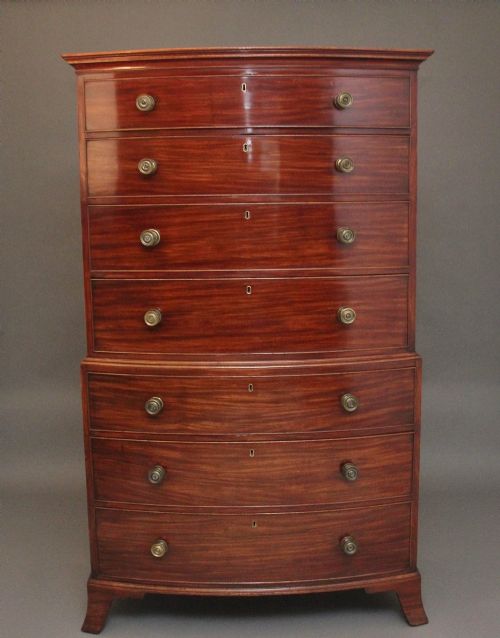
- A tall chest of drawers formed by stacking one case upon another, often combining a chest with a wardrobe or smaller upper drawers.
Mahogany Bowfront Drawers: Frequently Asked Questions
Where should I place these in a room?
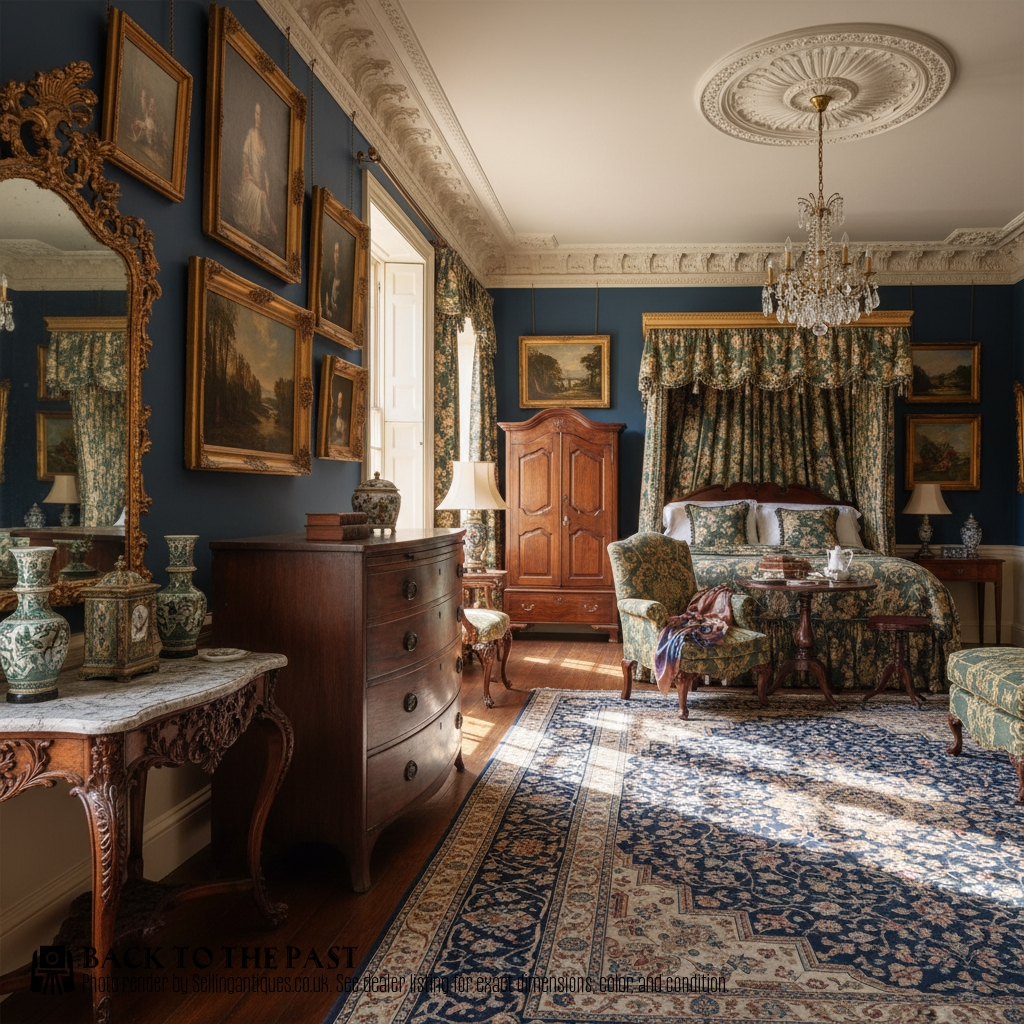
These chests function well in bedrooms or hallways where the curved front adds visual interest without blocking narrow walkways. Their modest footprint makes them adaptable to smaller spaces.
Keeping them away from direct sunlight and heat sources protects the polished mahogany surface and delicate veneer work from drying out.
Are small chests harder to find?
Smaller formats often command greater attention because cabinet makers produced fewer of them relative to standard full-sized bedroom chests. Their compact dimensions suit modern room proportions.
Examples marked as small or narrow frequently display higher refinement in their joinery and decorative banding.
What is satinwood banding used for?
Satinwood banding provides a pale border that contrasts sharply against the dark red tones of mahogany. Craftsmen inlaid this wood around drawer edges to frame the primary grain.
This decorative technique indicates a higher grade of manufacture intended for formal reception rooms or principal bedchambers.